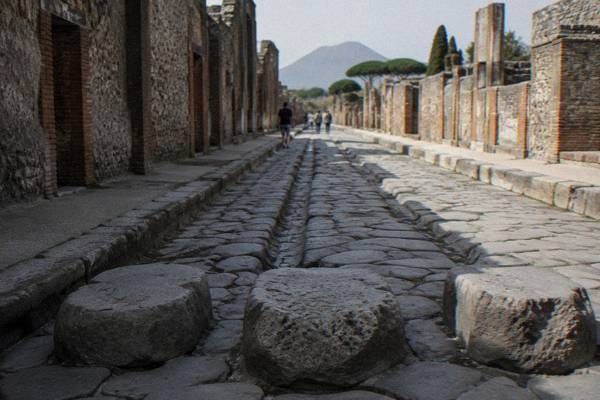
What Language Did They Speak In Pompeii?
The languages of ancient Pompeii: Latin in daily life, Greek in graffiti and trade, and the traces of Oscan from before Roman rule, in the buried city beside modern Pompei in Italy.
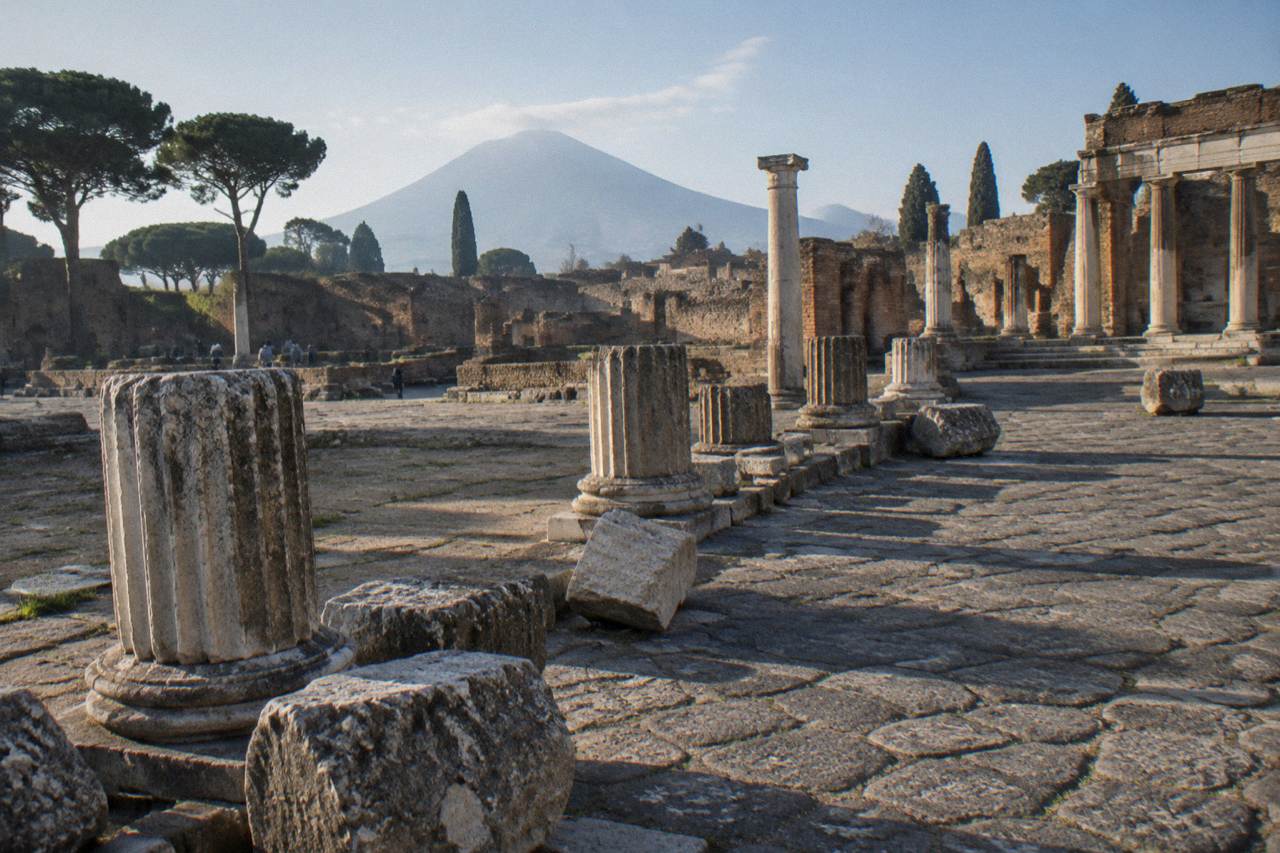
Pompeii, the ancient Roman city buried by the eruption of Mount Vesuvius in AD 79 and today an archaeological park in Campania, southern Italy, was a loudly multilingual place. Its streets, tavern counters and house walls preserve the written traces of three languages: Latin, which dominated daily life under Roman rule; Greek, used in trade, culture and casual scribbles; and Oscan, the local tongue of southern Italy before Rome absorbed the region. The city froze mid-sentence, which is why its words survived at all.
The question "What language did they speak in Pompeii?" sounds simple, and the short answer, Latin, is correct for the city's final decades. The longer answer is richer, because the volcanic ash that ended the city also preserved its handwriting, from formal stone inscriptions honouring benefactors to jokes and insults scratched on plaster. Visitors walking the site beside the modern town of Pompei, about 24 km by road from Naples, are walking through one of the largest surviving bodies of everyday writing from the Roman world.
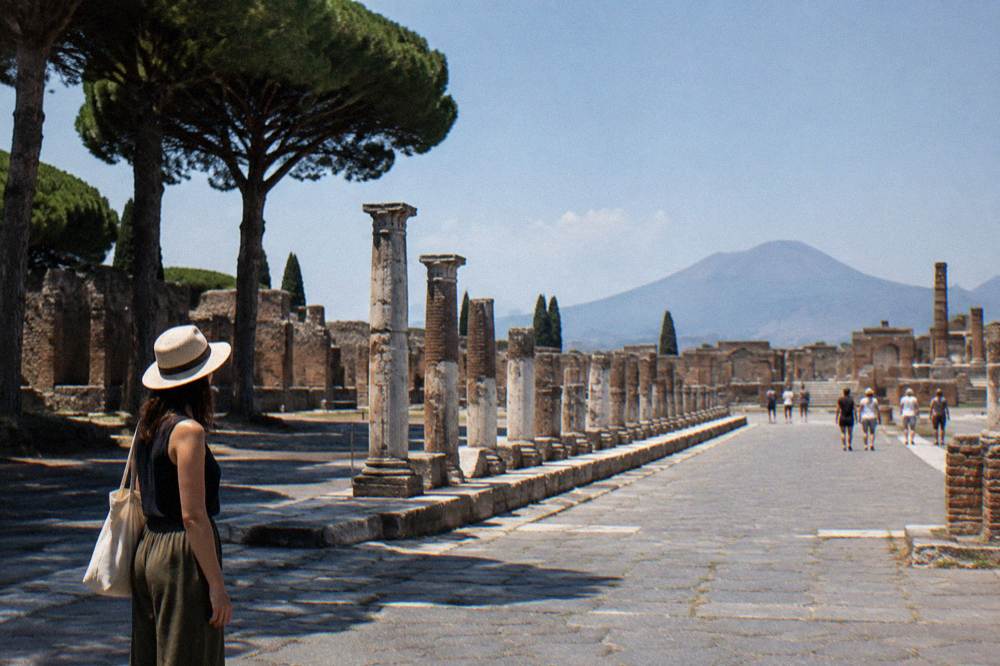
What Language Did They Speak In Pompeii?
The people of Pompeii spoke Latin as the ordinary language of daily life in the city's final period under Roman rule, alongside Greek, which was used widely in commerce, culture and informal graffiti, and Oscan, the earlier local language of the Bay of Naples, which survives in a small number of official inscriptions. The eruption of Vesuvius in AD 79 preserved all three in writing on the city's walls, making Pompeii one of the richest sources of everyday Roman text anywhere.
Latin was the language of the forum, the law courts, the election notices painted on facades and the stone dedications that still line the streets. It arrived with Roman political control of Campania, and by the time of the eruption it was the voice of administration, business and ordinary conversation for the city's population.
Greek occupied a different, layered position. As the prestige language of culture around the Bay of Naples, it appears in graffiti, in commercial contexts and in the sort of playful, literate scrawl that educated residents left for each other. A port city doing business across the Mediterranean had practical reasons to keep it alive too.
Oscan is the quiet third voice. It belonged to the local peoples of southern Italy before Roman dominance, and Pompeii's public inscriptions include examples written in it, evidence that the city's identity was older than its Latin facade. The park itself sits within that older Oscan-speaking world, even if its last generations had largely moved on.
Why Did One City Use Three Different Languages?
Pompeii used three languages because its history stacked them on top of each other: Oscan was the inherited local speech of Campania, Latin arrived with Roman political and administrative control, and Greek carried the cultural and commercial weight of the Greek-colonised Bay of Naples. Language in Pompeii tracked power and identity, and the eruption of AD 79 caught the moment when Latin was on top but the others had not faded.
The Bay of Naples had been a Greek cultural sphere long before Rome's rise, with Greek settlements and trade networks shaping the coast. That inheritance gave Greek a lasting role in educated life and in the port-side economy of a city that shipped wine, garum and wool across the sea.
Oscan represents the earlier political reality of the region, when local communities governed themselves in their own tongue. Its surviving inscriptions at Pompeii tend to be formal and official, the sort of text a city commissions about its own institutions, which is precisely what makes them valuable: they show self-government in a language Rome later replaced.
Latin, once Roman rule took hold, became unavoidable for anyone dealing with contracts, elections, lawsuits or the paperwork of empire. The famous painted election notices that still decorate walls along the Via dell'Abbondanza are in Latin, because the political life they served was Roman. For the deeper story of those painted slogans and scratched messages, see what the graffiti in Pompeii says, a companion page on this site.
| Language | Role in Pompeii | Where it survives |
|---|---|---|
| Latin | Administration, elections, law, daily speech of the final period | Painted election notices, stone inscriptions, graffiti |
| Greek | Trade, culture, literate play among educated residents | Graffiti, commercial texts, literary quotations |
| Oscan | Earlier official language of local self-government | A small number of formal public inscriptions |
A guide who reads the walls can turn a walk through the ruins into a conversation with the residents, which is one reason archaeologist-led visits reward the time. The Check availability link beside this paragraph leads to the live listing for a skip-the-line guided tour of Pompeii led by an archaeologist, the format this site recommends for anyone whose interest runs to the words as much as the stones.
What Can The Graffiti Tell Us About Everyday Speech?
The graffiti of Pompeii show that ordinary residents wrote confidently and constantly: they recorded debts, declared love, advertised gladiator shows, insulted rivals and left jokes for strangers, in Latin and in Greek, on public walls. Because these were spontaneous, unofficial texts rather than carved monuments, they are the closest surviving evidence of how the city's language was actually used in the street rather than in the forum.
The sheer volume is the point. Walls along the main streets carry hundreds of painted and scratched messages, from electoral sloganeering to the sort of crude remark a modern visitor might expect in a station toilet. Some quotations name Greek poets, a reminder that a provincial Roman city could be bookish. Others are lists, prices and receipts, the humble paperwork of commerce.
For a city that lost everything in a single day, the casual writing is a rare intimacy. It gives voices to people who appear nowhere else in the historical record: barmaids, gladiators' fans, bored teenagers, tenants and landlords. Scholars of ancient handwriting treat the site as a working archive of ordinary Latin and Greek usage, not just a monument.
The painted notices also tie the language question to the city's final political seasons. The elections promoted in Latin on the walls were part of Roman municipal life, and the candidates' names belong to the city's closing years. Readers curious about whether the residents had any warning of what was coming can follow whether Pompeii knew Vesuvius was going to erupt, and for the eruption itself the site's guide to when Vesuvius erupted sets out the traditional 24 August date and the debate around it.
The stones themselves do not announce their meaning, and the descriptions on site are concise. A guided visit changes that: the companion page on the best tour for Pompeii compares the formats, and the tour above is a strong choice for a first visit centred on the ruins.
How Do Modern Visitors Read The Ancient Words Today?
Modern visitors encounter Pompeii's languages through three channels: the surviving inscriptions and graffiti in place on the walls, descriptive panels maintained by the Parco Archeologico di Pompei around the excavated area of 44 hectares, and human guides or audio guides who translate and contextualise what the texts mean. The park, beside the modern town of Pompei about 24 km by road from Naples, presents the writing as part of the fabric of the site rather than in a single museum hall.
Reading them unaided takes Latin and patience. The painted notices use abbreviations, the scratched graffiti are often fragmentary, and weathering has eaten at plaster surfaces exposed since excavation. Panels at key spots along the routes explain the headline items, and the park's own materials fill in background, but the texts that carry real flavour tend to need an interpreter.
That is where the guided formats earn their place. An archaeologist-led walk points out messages a passer-by would walk past, explains the abbreviations and puts names to the characters in the painted record. Visitors weighing whether that matters for them should read whether a guided tour of Pompeii is worth it and whether you can tour Pompeii on your own, two pages on this site that set out the trade-offs honestly.
The regional picture helps too. Frescoes, mosaics and inscriptions from the buried cities fill the Naples museum, and the story of the language of the dead has taken a scientific turn in recent years: see what the DNA revealed about Pompeii for the genetics side of the same population.
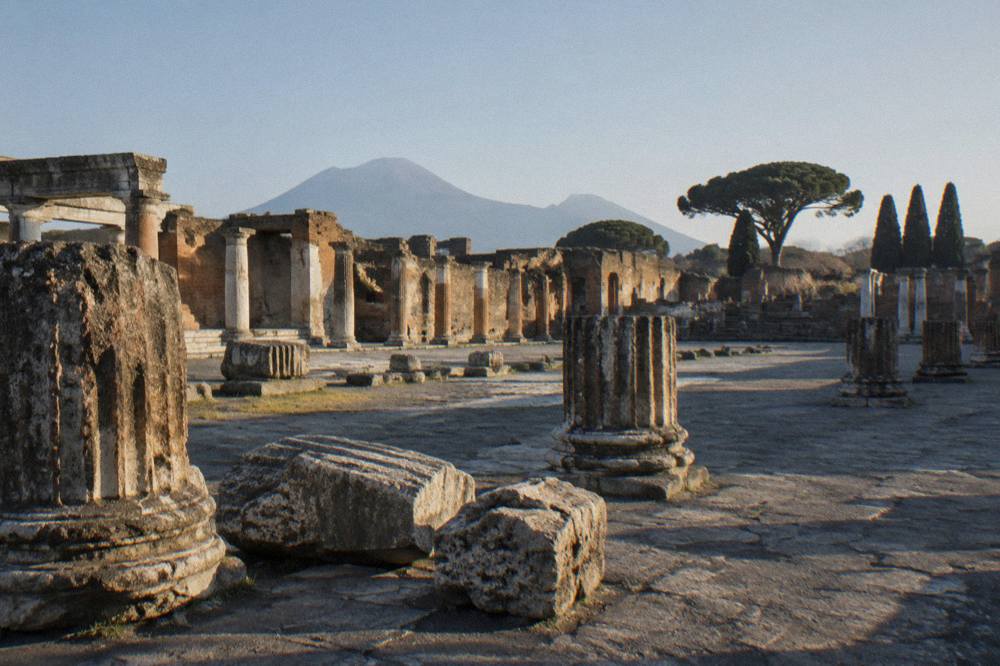
What Practical Facts Matter Around The Visit?
Entry to the Pompeii archaeological park in 2026 costs EUR 20 for the Pompeii Express ticket covering the ancient city, EUR 25 for Pompeii+ including the suburban villas and Boscoreale, and EUR 30 for the 3-day ticket; the smaller park sites cost EUR 8 each and the annual MyPompeii Card costs EUR 45. These prices end on 31 December 2026, when a single EUR 25 ticket for all park sites begins.
The ticket change matters for planning. From 1 January 2027 the single EUR 25 ticket is valid 30 days with one entry per site, while Oplontis, the Stabiae museum and Boscoreale stay EUR 8 individually and the MyPompeii Card stays EUR 45. Nominative tickets and the 20,000 daily cap, in force since 15 November 2024, are retained, and ID can be checked at every entry.
Free and reduced entry rules are worth knowing. Entry is free for everyone on the first Sunday of the month and for visitors under 18, and EU citizens aged 18 to under 25 pay a reduced EUR 2. Free first Sundays are the crowded ones: the park has recorded more than 36,000 visitors on a single free Sunday, so they are not a quiet option.
| 2026 ticket | Price | Covers | After 1 Jan 2027 |
|---|---|---|---|
| Pompeii Express | EUR 20 | Ancient city only | Single ticket, EUR 25, all park sites |
| Pompeii+ | EUR 25 | City, suburban villas, Villa Regina, Boscoreale, shuttle | Replaced by the EUR 25 single ticket |
| 3-day ticket | EUR 30 | Pompeii+ plus Oplontis, Stabiae villas, Stabiae museum, Boscoreale | Replaced by the EUR 25 single ticket |
| Other sites individually | EUR 8 | Boscoreale, Oplontis, Stabiae museum | Stay EUR 8 individually |
| MyPompeii Card | EUR 45 | Annual pass | Stays EUR 45 |
Getting there is straightforward on the region's rail network, with the Circumvesuviana station Pompei Scavi-Villa dei Misteri serving the site; timetables are published by the operator EAV. Note that the Campania Express service has been suspended since 1 October 2026 until further notice. Planning basics, including buying tickets to Pompeii in advance and which train station is best for Pompeii, are covered in detail on their own pages.
Visitors pairing the ruins with the volcano often ask whether to do Pompeii or Vesuvius first; the answer shapes the day, and a combined format can remove the sequencing question entirely.
What Remains Untranslated Or Uncertain?
A meaningful share of Pompeii's writing remains fragmentary, abbreviated or ambiguous: scratched graffiti are often incomplete, painted notices use shorthand a modern reader cannot expand with certainty, and Oscan inscriptions require specialist knowledge to interpret. Scholars still publish new readings and corrections, so any translation given on a wall panel or in a guidebook is an informed reconstruction rather than a settled fact, and the park's own research continues to refine the record.
Humility suits the subject. Ancient handwriting has ligatures, missing letters and dialect forms, and a joke that depended on local context in AD 79 can lose its punch entirely. The best guides present translations as working interpretations, and the academic literature around the site is a live argument rather than a closed book.
The date of the destruction itself is part of the same caution. The traditional manuscript date is 24 August AD 79, while the park's own e-journal states that the alternative 24 October date has no evidentiary basis; the question is treated as open. Readers who want the fuller picture can follow whether Pliny survived Pompeii and how anyone got out.
There is also the layer of what has not been found. The excavated area covers 44 hectares within a UNESCO-inscribed property of 98 hectares, so a substantial part of the ancient city still lies beneath the ground, and with it, presumably, more writing. This site's page on how much of Pompeii still lies buried today and the guide to Pompeii's history cover what is known and what is not.
For a wider sweep of the practical side, the Pompeii Travel Guide homepage gathers the site's planning pages, from entrances and opening hours to itineraries, in one place.
Common Questions About Language In Pompeii
What language did they speak in Pompeii?
Latin was the everyday language of Pompeii in its final period under Roman rule, used in administration, elections and daily speech. Greek was widely present in trade, culture and graffiti, and Oscan, the earlier local language of Campania, survives in a small number of formal inscriptions. The eruption of Vesuvius in AD 79 preserved all three on the city's walls.
Did ordinary people in Pompeii read and write?
The graffiti record suggests yes, at least at a functional level. Messages were scratched and painted by barmaids, shopkeepers, gladiator fans and tenants, not only by elites. The volume of casual writing indicates that basic literacy was common enough in the city for walls to serve as a public messaging system.
Is Greek found at Pompeii?
Yes. Greek appears in graffiti, commercial texts and literary quotations around the site. The Bay of Naples had long been part of a Greek cultural and commercial sphere, and Pompeii, a port city doing business across the Mediterranean, kept the language in active everyday use alongside Latin.
What is Oscan and why does it matter at Pompeii?
Oscan was the language of the local peoples of southern Italy before Roman dominance. Its surviving inscriptions at Pompeii tend to be official and formal, evidence of the city's earlier self-government in its own tongue. They show that Pompeii's identity predates the Latin-speaking administration that ran it in AD 79.
Can I see the ancient inscriptions when I visit?
Yes. Painted election notices, stone dedications and scratched graffiti are visible on walls throughout the excavated area, and descriptive panels maintained by the park explain the headline items. A guide who reads the texts adds a great deal, since abbreviations and weathering make many of them hard to interpret unaided.
Do the tours explain the languages and graffiti?
The archaeologist-led formats do, and they are the ones this site recommends for visitors interested in the words as well as the architecture. Guides point out messages a passer-by would miss, expand the abbreviations and put names to the people in the painted record. The tokens on this page carry the live prices and ratings for those formats.
Pompeii's languages are not a footnote to the ruins; they are the ruins, at least for anyone who wants the city to speak. Latin ran the place, Greek gave it polish and reach, and Oscan remembered what it had been before Rome. Walk the streets slowly, bring a guide who can read the walls, and the silence of AD 79 turns back into conversation.