Pompeii Graffiti
Thousands of handwritten messages survive on the walls of Pompeii, the Roman city buried by Mount Vesuvius in AD 79 and now an archaeological park in Campania, southern Italy, beside the modern town of Pompei.
Short answer
Pompeii graffiti is the body of handwritten wall inscriptions, painted notices and charcoal scribbles preserved on the buried city's walls. A 2026 Pompeii Express ticket costs EUR 20 and the park is open 9:00 to 19:00 in summer season, with the excavated area covering 44 hectares, so a graffiti walk works best paired with a guided tour.
The walls of Pompeii, the Roman city buried by the eruption of Mount Vesuvius in AD 79 and now an archaeological park in Campania, southern Italy, carry one of the largest collections of everyday writing to survive from the ancient world. The inscriptions, scratched, painted and charcoal-scribbled, sit beside the modern town of Pompei, about 24 km by road from Naples, and they record everything from election slogans to greetings between friends. For visitors, the graffiti turn a walk through stone streets into something closer to reading other people's mail, two thousand years old and still legible in places. This guide covers what the writings are, where to look for them, how tickets and entrances affect a graffiti-focused visit, and how the subject connects to the debate over the eruption date itself.
What Is Pompeii Graffiti And Where Do You See It?
Pompeii graffiti is the collective name for the handwritten wall inscriptions preserved on the city's buildings when the eruption of Mount Vesuvius, traditionally dated to 24 August AD 79, a date scholars still debate, sealed the city under volcanic debris. The writings appear in painted letters, incised scratches and charcoal marks across the 44 hectare excavated area, and a standard 2026 Pompeii Express ticket at EUR 20 covers the ancient city where they survive.
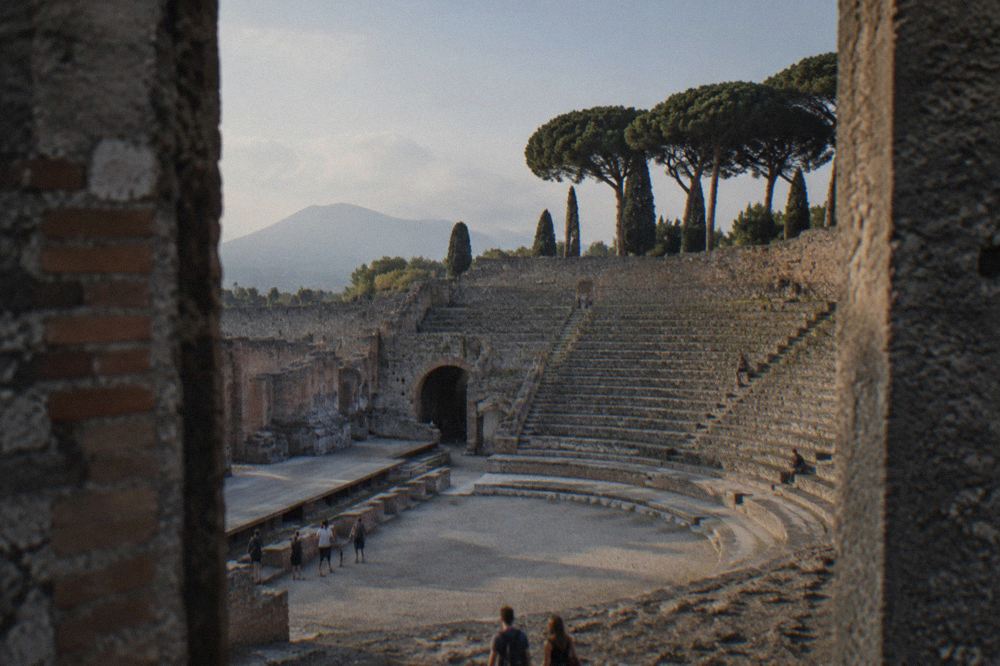
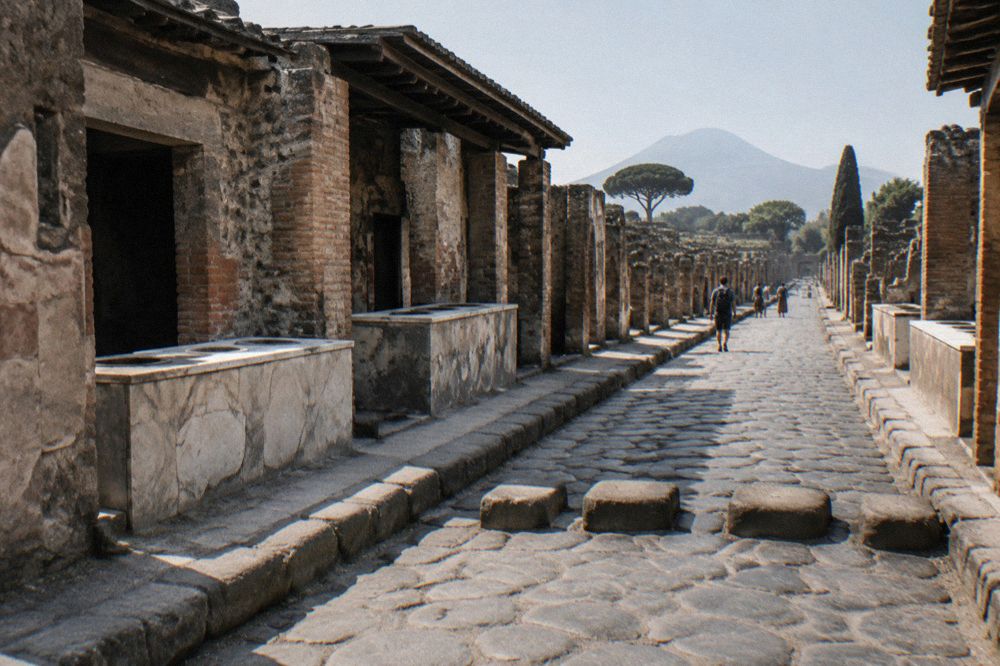
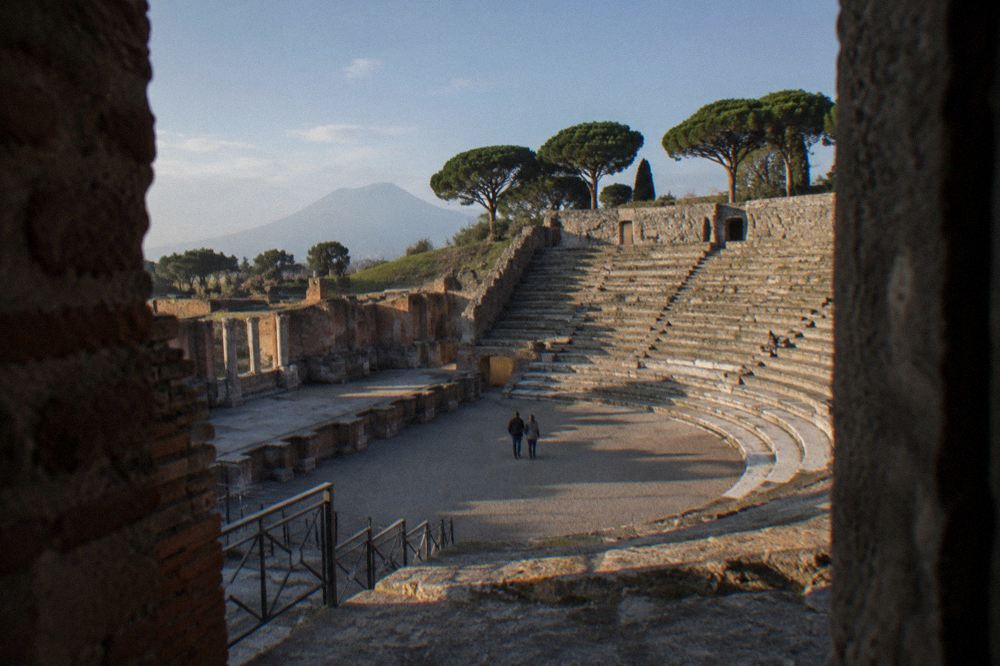
The excavated area open to the public is large, 44 hectares according to the UNESCO listing for the site, and the graffiti are scattered across it rather than gathered in one place. Some sit at eye level on plastered shopfronts along the main streets; others survive in quieter rooms where plaster was sheltered from weather. The effect is unusual among archaeological sites: rather than a museum case of curated objects, the writings remain on the walls where they were made, in a city that also holds the forum, the amphitheatre and the suburban villas covered in detail on our Villa of the Mysteries guide and the wider Pompeii history overview.
Treat the graffiti as one thread of a visit rather than the whole of it. The park's named ticket offices sit at Porta Marina, Piazza Esedra and Piazza Anfiteatro, and each gives access to the same ancient city; no entrance is graffiti-specific. What varies is the walking route you can build from each gate, which matters because the inscriptions reward slow looking rather than a dash between famous buildings.
Reading the walls well also depends on timing. The park caps entries at 20,000 visitors per day, a limit in force since 15 November 2024, and splits the day into time bands: from 9:00 to 13:00 up to 15,000 visitors may enter, and from 13:00 to 17:30 up to 5,000 more. A graffiti walk benefits from the quieter afternoon band, when the streets thin out and standing in front of a wall attracts less of a crowd.
| Ticket, 2026 prices | Price | What it covers |
|---|---|---|
| Pompeii Express | EUR 20 | The ancient city only, where the graffiti survive |
| Pompeii+ | EUR 25 | Adds the suburban villas route and Boscoreale antiquarium with shuttle |
| 3-day ticket | EUR 30 | Pompeii+ plus Oplontis, the Stabiae sites and Boscoreale |
| Other park sites, each | EUR 8 | Oplontis, the Stabiae museum, Boscoreale individually |
| My Pompeii Card | EUR 45 | Annual pass, EUR 10 reduced |
One planning note belongs here because it changes quickly: these 2026 prices end on 31 December 2026, and from 1 January 2027 a single EUR 25 ticket covers all park sites, valid 30 days with one entry per site, while Oplontis, the Stabiae museum and Boscoreale stay at EUR 8 each and the My Pompeii Card stays at EUR 45. Reduced entry of EUR 2 applies to EU citizens aged 18 to under 25, entry is free for under 18s, and everyone enters free on the first Sunday of the month. Full rules and current prices live on the Pompeii tickets guide.
What Kinds Of Graffiti Did Pompeii's Residents Write?
The surviving wall writings of Pompeii fall into a handful of recognisable categories: election notices urging support for named candidates, announcements of gladiator games and other events, commercial messages painted by shopkeepers, personal greetings and jokes between individuals, and short literary quotations. No verified count of the total inscriptions appears in the site's published material, so any figure you see elsewhere should be treated with caution.
The election notices are the easiest category to spot. Painted in large red and black letters on house facades, they follow a fixed formula: the name of the candidate, the office sought, and the name of the supporter who paid for the notice. Whole streets carry them, sometimes stacked in layers as rival supporters claimed the same stretch of wall. They give the graffiti their strongest claim on visitors' interest, because they show ordinary residents engaging with city politics in public, in a form anyone walking past could read.
The personal scribbles are smaller and harder to find. Charcoal greetings, jokes and messages between named individuals survive where plaster was protected from the elements, and these are the writings that gave the genre its reputation for intimacy. Commercial notices, price lists and advertisements painted outside shops and workshops form a third visible group, clustered along the busier commercial streets. Together they amount to something a modern visitor recognises immediately: a city talking to itself in public.
| Category of graffiti | Typical form | Where it tends to survive | What it shows |
|---|---|---|---|
| Election notices | Large painted letters on facades | Main streets and junctions | Local politics and named supporters |
| Event announcements | Painted posters, gladiator games | Around the amphitheatre quarter | Entertainment culture |
| Commercial messages | Painted signs and price notices | Shopfronts and workshops | Everyday trade |
| Personal greetings | Charcoal or incised lines | Sheltered walls and interiors | Private voices in public space |
| Literary quotations | Painted verse lines | House walls | Education and reading habits |
Our dedicated answer page, what the graffiti in Pompeii say, goes deeper into the wording of specific categories for readers who want the detail before travelling. For the visit itself, the practical point is simple: painted notices announce themselves, but charcoal and scratched lines demand close, patient looking, and faded sections can be impossible to read in harsh midday light. Morning and late afternoon sun angle across the walls and make faint incisions far easier to see, a small fact that reshapes a whole day's plan.
How Do You Read The Graffiti On A Visit To Pompeii?
Reading graffiti at Pompeii takes three things: an awareness that much of the best material sits on walls you might walk past, an understanding that fading and erosion hide a large share of what once existed, and a guide or printed resource that translates the abbreviated Latin. Visitors cannot touch the walls, and the park's regulations prohibit interfering with any surface, so the reading is entirely visual and works best with preparation before arrival.
Preparation matters more here than at almost any other part of the site. The inscriptions are abbreviated, in Latin, and often damaged, and a visitor with no background sees shapes rather than sentences. Guides who work the site daily know which walls currently hold readable text and which have bleached beyond legibility, and an archaeologist-led small group tour, linked in the final section of this guide, exists precisely for this kind of close reading. Independent travellers can pair the visit with the site's own interpretive material and the museum displays at the Antiquarium.
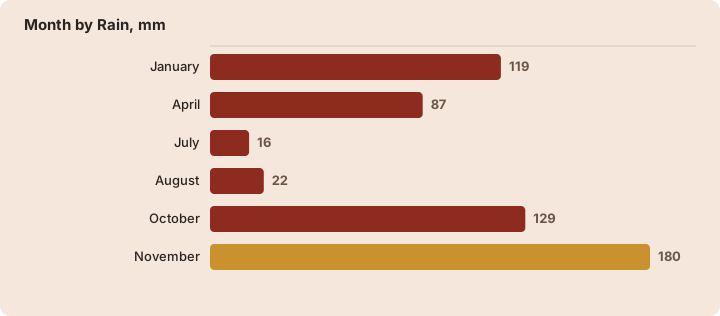
Light and season shape what you can see. The 1991-2020 climate normals for the Pompei grid point, computed from the Open-Meteo historical archive, show why summer visits are hard on wall reading: about 29.4 C mean daily maximum in August against about 12.2 C in January, with November the wettest month at about 180 mm of rain and July the driest at about 16 mm. Harsh overhead sun flattens faint scratches into the plaster; low light reveals them. Rain, on the other hand, deepens colour temporarily but makes unpaved stretches unpleasant.
The park's practical rules also affect the walk. Bags are limited to 30x30x15 cm, with larger items left at the left luggage facility, and tickets are nominative, non-transferable and issued with identity checks possible at every entry, rules in force since the cap began in November 2024. None of this stops a graffiti walk, but arriving with a small bag and a printed ticket in your own name removes friction at the gate.
| Month | Mean daily max, C | Mean daily min, C | Rain, mm | Graffiti viewing note |
|---|---|---|---|---|
| January | about 12.2 | about 6.6 | 119 | Low winter sun shows incisions well |
| April | about 17.7 | about 10.4 | 87 | Comfortable walking temperatures |
| July | about 28.7 | about 21.1 | 16 | Harsh light; go early |
| August | about 29.4 | about 21.8 | 22 | Hottest month; shade is scarce |
| October | about 21.3 | about 15.1 | 129 | Good light, rising rain risk |
| November | about 16.9 | about 11.5 | 180 | Wettest month; check forecasts |
Seasonal planning is covered more fully in the Pompeii weather and best time to visit guide, which folds these climate figures into a full year-round argument.
Which Tickets And Entrances Work Best For A Graffiti Walk?
For a graffiti-focused visit, the 2026 Pompeii Express ticket at EUR 20 is sufficient, because all the surviving inscriptions sit within the ancient city itself, and the Porta Marina entrance offers the shortest walk into the inscription-rich central streets. The Pompeii+ ticket at EUR 25 adds the suburban villas route via the Porta Ercolano, Street of the Tombs entrance, worth it only if the villas are also on your list.
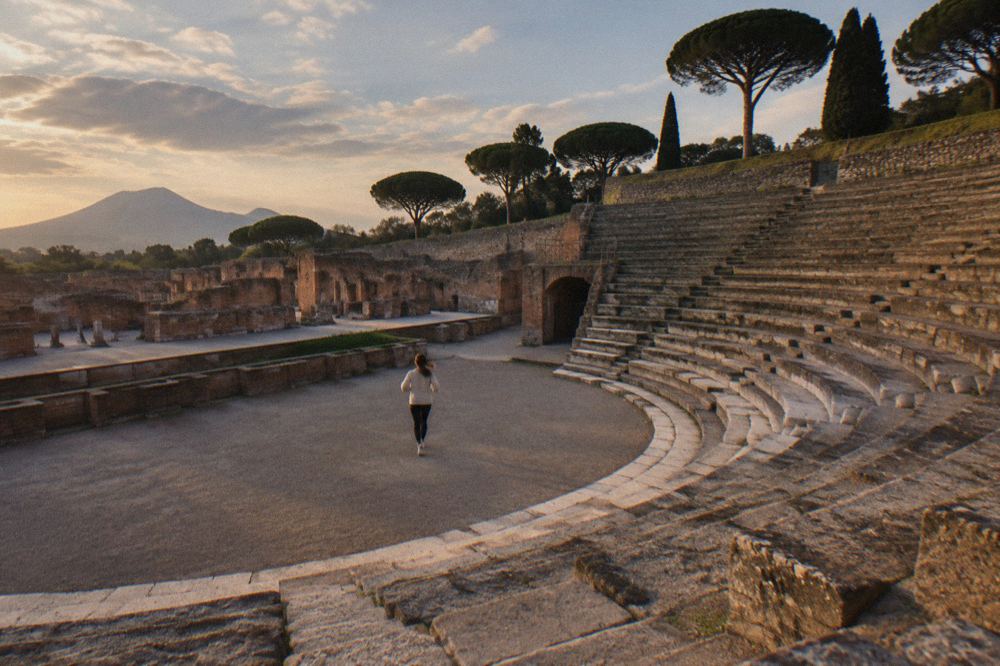
The three ticket offices, Porta Marina, Piazza Esedra and Piazza Anfiteatro, are simply different gates into the same city, so the choice is about route shape rather than access. Porta Marina, beside the Pompei Scavi-Villa dei Misteri Circumvesuviana station, puts you into the forum area quickly. Piazza Anfiteatro, at the eastern end, suits visitors building a walk around the amphitheatre quarter and its painted notices. Piazza Esedra sits between the two and connects to the Antiquarium lift used by the "Pompeii for All" accessible route.
| Entrance, ticket offices | Best for a graffiti walk | Notes |
|---|---|---|
| Porta Marina | Central streets and forum area | Closest to the Scavi rail station |
| Piazza Esedra | Mid-city routes, Antiquarium access | Lift on the accessible route |
| Piazza Anfiteatro | Amphitheatre quarter notices | Quieter eastern end |
| Porta Ercolano, Street of the Tombs | Suburban villas route | Express holders add this for EUR 8, card only |
Hours govern everything. From 16 March to 14 October the park opens at 9:00 with last entrance at 17:30 and closes at 19:00; from 15 October to 15 March last entrance falls at 15:30 with a 17:00 close. Pompeii itself has no weekly closing day, though the smaller park sites at Oplontis and Stabiae close on Tuesdays, and the whole site closes on 25 December and 1 January unless otherwise communicated. The Pompeii opening hours and Pompeii entrances guides carry the full detail.
Getting there has one recent change every planner must know: the Campania Express train service has been suspended since 1 October 2026 until further notice, so arrival plans built on it need redoing. The Circumvesuviana line still serves Pompei Scavi-Villa dei Misteri, with scheduled times from EAV's own published data of roughly 29 to 35 minutes from Napoli Garibaldi, and the Circumvesuviana train guide covers the line in full, with the Naples to Pompeii and Sorrento to Pompeii pages handling each direction.
For visitors weighing the cost of a ticket product against plain entry, the Pompeii guided tour versus self-guided comparison lays out the trade-offs, and graffiti reading sits firmly on the guided side of that argument, since faded Latin rewards translation on the spot.
What Do Pompeii's Election Notices Tell You About Roman Politics?
The painted election notices of Pompeii show a local political culture conducted in public view, with supporters paying to have candidates' names placed on house walls in a fixed formula of name, office and endorser. They reveal a competitive, written, highly visible form of campaigning, and their density on commercial streets indicates where political life and daily life overlapped.
What strikes visitors is the repetition. The same candidate's name appears wall after wall, endorsed by different groups of supporters, which reads today like a saturation advertising campaign. The formula rarely varies, suggesting conventions everyone understood, and the endorsements name real residents, so the notices double as a directory of the city's public figures and their networks. The full index of guides sits on Pompeii Travel Guide.
The notices also carry the strongest practical lesson for a graffiti walk: they are the category most likely to be readable without help. Large painted letters survive better than charcoal, and their placement on prominent facades means a visitor following the main streets passes them constantly. Beginning with the election notices builds the eye before hunting the fainter personal scribbles, a sequencing trick guides use and independent visitors can copy.
| Feature of an election notice | What it tells the reader |
|---|---|
| Candidate's name | Who stood for office in the city |
| Office named | The structure of local government |
| Supporter's name | Who funded the publicity and why it paid to be seen |
| Position on the wall | Which property owners granted or sold wall space |
| Layering of notices | How campaigns competed for the same surfaces |
The political world these notices capture ended with the eruption, traditionally dated to 24 August AD 79, a date scholars still debate. The wall campaigns were frozen mid-cycle, which is precisely why they matter: they show politics in motion rather than a summary written afterwards.
Did Graffiti Change How The Eruption Is Dated?
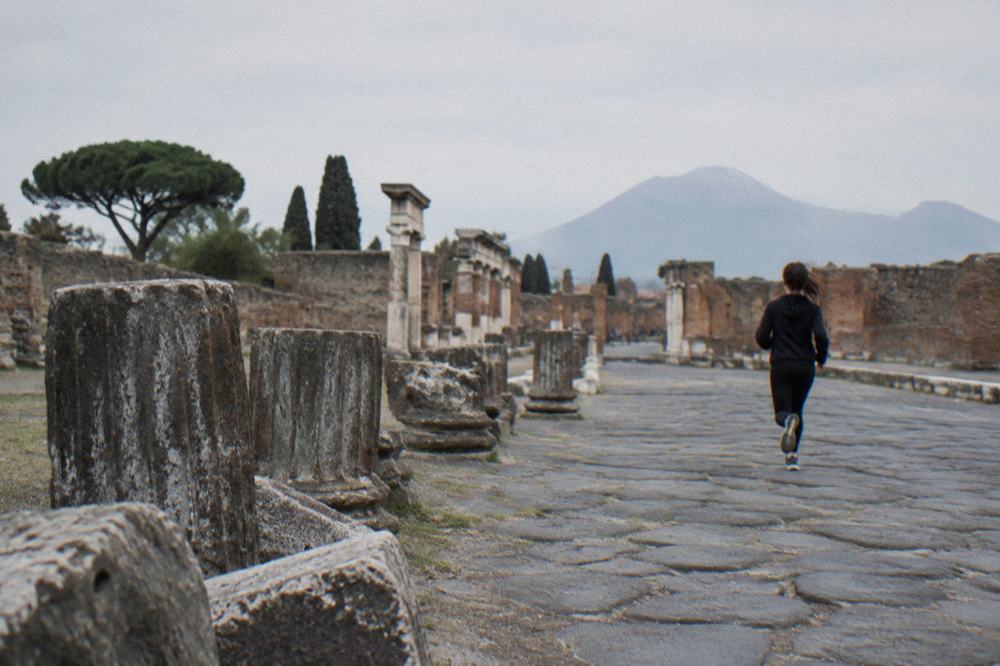
A charcoal graffito found in 2018 reopened the long running debate over when Vesuvius erupted, because scholars who have examined it date its text to mid-October, which conflicts with the traditional date of 24 August AD 79. The Archaeological Park's own e-journal states that the alternative 24 October date has zero evidentiary basis and stems from a 1929 misreading, while adding that 24 August is not necessarily correct either, so the question remains open.
This is the one point where the graffiti story touches a live scholarly argument, and it deserves careful handling. The oldest manuscripts of Pliny the Younger, whose letters describe the eruption, give a date equivalent to 24 August. Later scholarship produced the October alternative, and the park's journal has addressed the dispute directly, rejecting the specific 24 October claim as a misreading while refusing to certify the August date. The 2018 graffito is best described, as here, as a find that reignited the question rather than settling it.
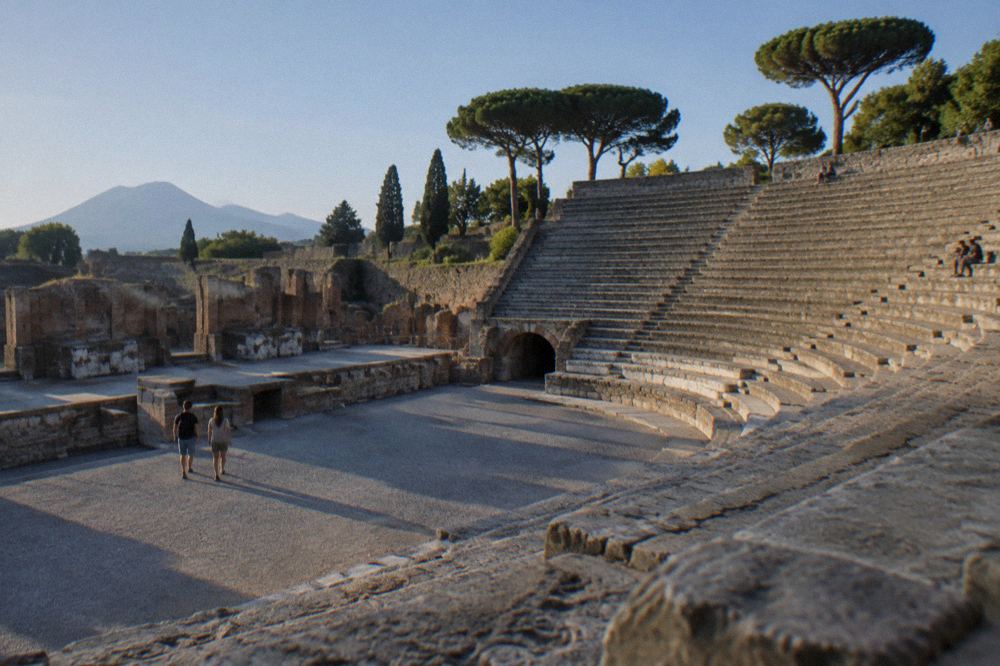
For visitors, the debate adds a layer of meaning to every written wall. The inscriptions were made by people who did not know the date the city would stop, and the eruption sealed them mid-sentence, as it were. The tension between the certainty of the handwriting and the uncertainty of the chronology is part of what makes the graffiti compelling rather than merely quaint. Readers wanting the full timeline should turn to the when did Vesuvius erupt explainer, and the wider Pliny the Elder and Vesuvius page for the eyewitness story.
How Do The Graffiti Compare With Herculaneum's Writing?
Herculaneum, the neighbouring buried town at modern Ercolano, preserves written material in a different form: carbonised papyrus rolls from the Villa dei Papiri, alongside its own wall inscriptions, and its entry costs EUR 16 full or EUR 2 reduced for EU citizens aged 18 to under 25 in 2026. The Villa dei Papiri and the Ancient Theatre at Herculaneum are closed for works, which shapes what a writing-themed visit there can currently include.
The comparison is instructive rather than competitive. Pompeii's graffiti are everyday writing in public space, and Herculaneum's papyri are a private library carbonised by the eruption, two radically different windows onto literacy in the same region and the same catastrophe. The Pompeii versus Herculaneum guide works through the whole comparison, and many travellers combine both sites in a single day using the Pompeii and Herculaneum in one day itinerary.
| Site | 2026 full ticket | Hours, 16 Mar to 14 Oct | Status note |
|---|---|---|---|
| Pompeii ancient city | EUR 20 Express | 9:00, last entry 17:30, close 19:00 | Open daily except 25 Dec and 1 Jan |
| Herculaneum | EUR 16 | 8:30 to 19:30, last entry 18:00 | Villa dei Papiri and Ancient Theatre closed |
| Herculaneum, winter season | EUR 16 | 8:30 to 17:00, last entry 15:30 | Free first Sundays plus four further dates |
Herculaneum is also free on the first Sunday of each month, with tickets collected on the day at the office, and additionally on 25 April, 2 June and 4 November, a wider free schedule than Pompeii's first-Sunday rule. For travellers basing themselves in Naples, the Pompeii tours from Naples roundup collects the practical combinations.
Can A Guided Tour Help You Find The Graffiti?
A guided tour helps with graffiti more than with almost any other part of Pompeii, because the inscriptions need translation, context and knowledge of which walls currently hold legible text, and an archaeologist guide provides all three. The featured option on this site is a skip-the-line small group tour led by an archaeologist, running two hours from inside the park, and its price, rating and review count render on its live listing rather than in this prose.
The reason is simple: a wall is not a label. Even perfectly preserved Latin, abbreviated by the writers and eroded by centuries, resists casual reading, and much of what a guide contributes is the sentence behind the scratches. Small group formats give room to stop, which a large group schedule rarely allows, and archaeologists who work the site can distinguish ancient handwriting from later damage, a skill that saves visitors from excited misreadings.
Independent visitors are not shut out. The entry ticket with audio guide product covers the site at a gentler price point, and the park's own interpretive signs carry translations at key points. The honest split, argued in the is it worth getting a guided tour of Pompeii comparison, is that buildings explain themselves reasonably well while writing does not, so the guided premium buys most where words are the subject.
For the featured archaeologist-led small group tour, check dates and free-cancellation terms directly: Check availability. Travellers pairing the walls with the volcano behind the story can also look at the Vesuvius access products, since the crater trail pairs naturally with a Pompeii day, as laid out in the Pompeii and Vesuvius in one day plan.
What Should You Remember Before A Graffiti Walk In Pompeii?
Plan a graffiti walk around the quieter 13:00 to 17:30 entry band, buy the EUR 20 Pompeii Express ticket for 2026 or wait for the single EUR 25 ticket arriving on 1 January 2027, enter at Porta Marina or Piazza Anfiteatro depending on your route, keep your bag under 30x30x15 cm, and bring a guide or translation resource, since the walls themselves come with no subtitles.
A few practical anchors close the argument. Winter hours from 15 October pull last entry back to 15:30, which shortens any afternoon plan, and the first Sunday of each month brings free entry and, on one recorded occasion, more than 36,000 visitors in a single day, so a quiet reading walk should avoid it.
| Planning item | 2026 detail | Note for graffiti seekers |
|---|---|---|
| Entry band choice | 13:00 to 17:30, max 5,000 | Quieter band for wall reading |
| Bag limit | 30x30x15 cm | Larger bags to left luggage |
| Tickets | Nominative, ID may be checked | Non-transferable |
| Free entry day | First Sunday monthly | Crowded; record day passed 36,000 |
| Winter last entry | 15:30 from 15 Oct | Shortens afternoon walks |
Common Questions About Pompeii Graffiti
What did the graffiti in Pompeii say?
The surviving writings include election notices backing named candidates, announcements of gladiator games, commercial messages from shops, personal greetings and jokes, and lines of poetry. Our dedicated page on what the graffiti in Pompeii say covers the categories in detail.
Can you still see graffiti at Pompeii today?
Yes. Painted notices and scratched or charcoal inscriptions survive on walls across the 44 hectare excavated area, though fading and erosion mean legibility varies, and some texts are easier to read in raking morning or late afternoon light.
Do you need a guide to understand Pompeii's graffiti?
It helps a great deal. The inscriptions are abbreviated Latin, often damaged, and a guide who knows which walls currently hold legible text saves hours. The skip-the-line small group tour led by an archaeologist is the featured option on this site.
Is graffiti reading included in the standard Pompeii ticket?
Yes, in the sense that all surviving graffiti sit inside the ancient city covered by the EUR 20 Pompeii Express ticket in 2026. From 1 January 2027 a single EUR 25 ticket covers all park sites, valid 30 days with one entry per site.
Are the graffiti connected to the debate over the eruption date?
One charcoal graffito found in 2018, dated by many scholars to mid-October, reopened the question of whether the traditional 24 August AD 79 date is correct. The park's own journal rejects the specific 24 October claim as baseless while leaving the date open.
Does Herculaneum have graffiti too?
Herculaneum has its own wall inscriptions, plus the carbonised papyrus rolls of the Villa dei Papiri, though that villa and the Ancient Theatre are currently closed for works. Entry costs EUR 16 full in 2026.
The graffiti of Pompeii reward exactly the kind of visitor this site serves: someone who wants the walls read, not just photographed. Start with the big painted notices to train the eye, work toward the fainter personal lines as the light drops, and let the guides and tours listed here carry the translation. However the date debate resolves, the handwriting itself is settled, and it is waiting on the walls of Campania's most famous buried city.