What Food Is Pompeii Famous For?
What food is Pompeii famous for? Ancient bread, garum fish sauce, thermopolia street counters and Vesuvius wine, plus what to eat around the park today.
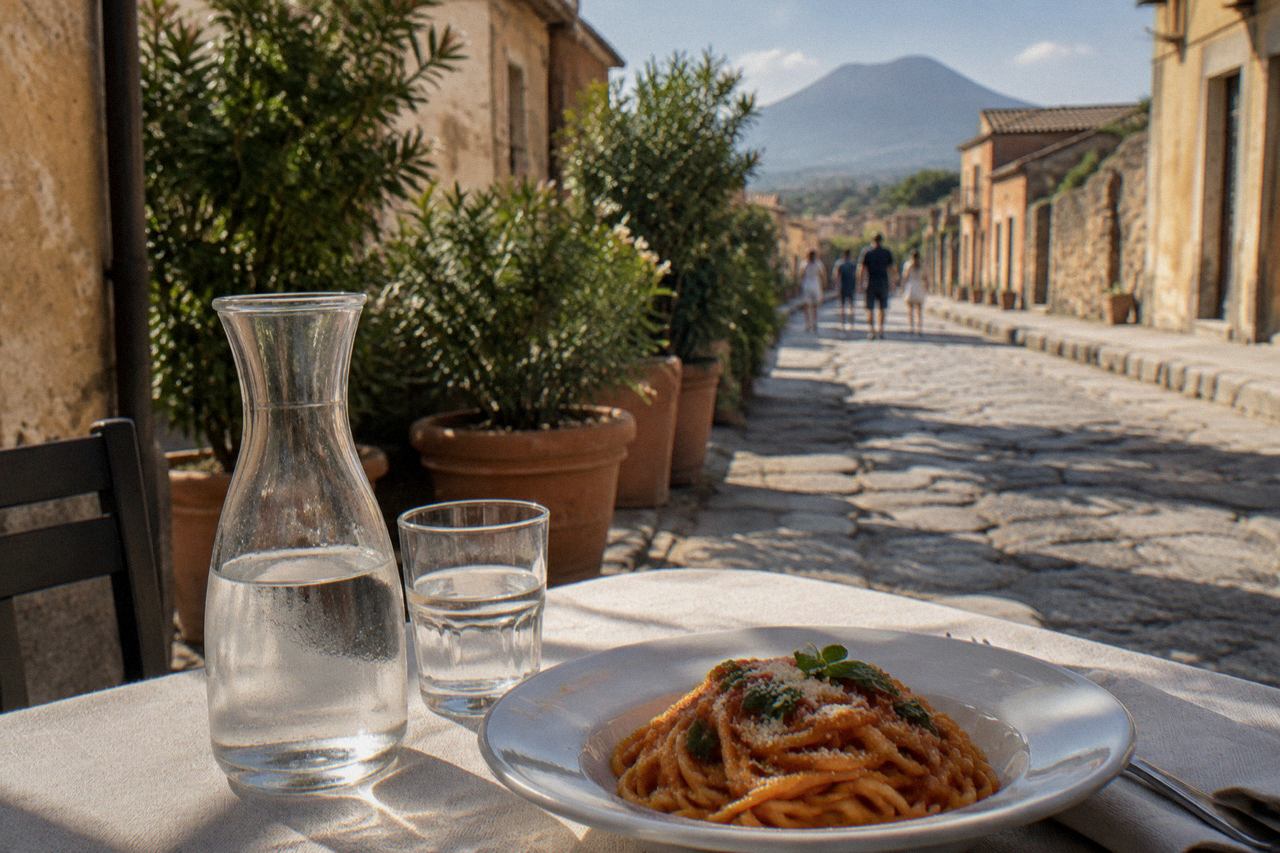
Pompeii, the ancient Roman city buried by the eruption of Mount Vesuvius in AD 79 and now an archaeological park in Campania, southern Italy, is one of the few places in the world where food itself became an artefact. The ash that ended the city preserved its loaves of bread still in the oven, its amphorae of fish sauce, its counters with jars set into the marble, and even the remains of its last meals. That double fame, both an ancient food scene frozen mid-service and a modern one built around pizza, buffalo mozzarella and Vesuvius wine, is what draws food-minded travellers to the park about 24 km south-east of Naples.
What Food Is Pompeii Famous For?
Pompeii is famous for four foods above all: the round, scored loaves of Roman bread found carbonised in the city's ovens; garum, the fermented fish sauce the Romans put on nearly everything; the street food sold at thermopolia, marble snack counters with jars sunk into them; and Lacryma Christi wine grown on the slopes of Vesuvius. The modern town of Pompei and nearby Naples add pizza, buffalo mozzarella and pasta to that inheritance. No other archaeological site shows an entire ancient food economy this completely.
That completeness is the point. Excavation has uncovered bakeries with mills and ovens intact, shops with dolia sunk into their counters, and the thermopolium of Vetutius Placidus on the Via dell'Abbondanza, its counter decorated with frescoes and its jars still holding traces of what was served. If the eating side of the visit matters to you, our guide to eating in and around the park covers the practical options on site, and the question of whether a guided tour is worth it for Pompeii is worth settling early, since food-focused guides exist.
The Ancient Foods Unearthed In The Ruins
The ruins hold bread, fish sauce, olives, eggs, figs, walnuts and legumes, all preserved by the eruption of AD 79. Eighty-one carbonised loaves were found in the oven of the bakery of Modestus alone, and garum, a sauce made from fermented fish, was produced and sold in the city in industrial quantities. These finds, on display in the park's Antiquarium and in Naples, are why Pompeii is treated as the best single source on what ordinary Romans actually ate.
The bread deserves its fame. Roman Pompeian loaves were round, divided into eight wedges scored across the top, and stamped with the baker's mark, and the loaves recovered from Pompeii's ovens look so recognisable that modern bakeries around the volcano sell faithful reproductions. The bakery of Modestus, with its donkey-driven millstones of volcanic stone and its brick oven, is one of several bakeries visible on the site, and it captures an entire production line from grain to loaf.
Garum was the city's other great product, a salty fermented fish sauce shipped across the Roman world in amphorae. Production was big business in Pompeii, and the remains of garum workshops, along with the distinctive pointed amphorae used to move it, have been documented extensively in the park's own excavation reports. Alongside these staples, the excavation record lists olives, dates, pulses and fruit, giving a rounded picture of a Roman pantry rather than a single dish.
| Ancient food | Evidence in the park | Where to see it |
|---|---|---|
| Round eight-wedge bread | Carbonised loaves, ovens and mills at the bakery of Modestus | In the ruins and in the park's Antiquarium |
| Garum fish sauce | Workshop remains and pointed amphorae | Park displays and the Naples archaeological museum |
| Thermopolium street food | Counters with sunk jars and frescoes, including Vetutius Placidus | Along the Via dell'Abbondanza |
| Olives, figs, nuts | Carbonised food remains from shops and houses | Park displays |
| Wine | Vineyards within the city and on Vesuvius's slopes | The park's replanted vineyard and estates around the volcano |
Thermopolium: The Roman Fast Food Of Pompeii
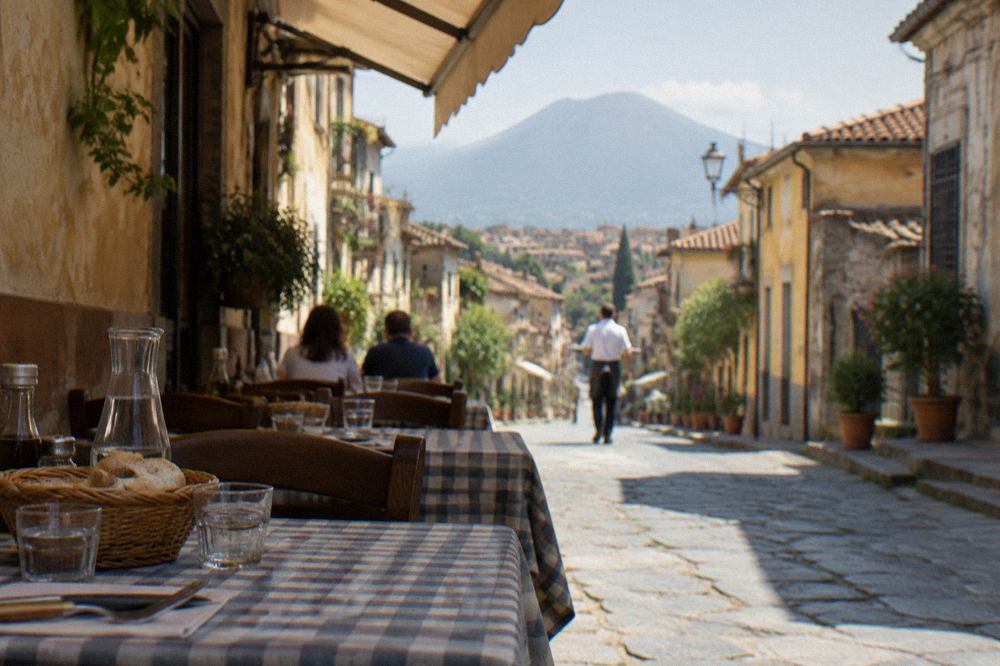
Thermopolium counters were Pompeii's snack bars, counters of masonry or marble with dolia, large clay jars, sunk into them to hold hot food and drink. Dozens have been identified across the excavated city, and the thermopolium of Vetutius Placidus, with its painted advertisement and its jars still in place, is the best known. They served the same role a street-food stall serves today: hot, cheap, ready food for people who had no kitchen at home.
What makes them remarkable is how familiar they look. The customer stood at the street-facing counter, pointed at a jar, and walked away with a takeaway, whether that was a spiced wine, a soup or a stewed dish. The frescoes on the Vetutius Placidus counter are often read as an ancient menu, advertising what was in the jars. Scholars of the site point out that a city of this size supported a dense network of these shops, which tells you a great deal about how ordinary Pompeians lived, ate out, and socialised on the street.
For visitors, these counters are usually the moment the city stops feeling like a museum and starts feeling like a place. They sit along the main streets at eye level, part of the everyday fabric rather than behind glass, and a guide will usually build a stop at one into any food-themed walk of the ruins. If you are weighing whether to tour Pompeii on your own or with a guide, know that the thermopolia reward explanation: the jars, the frescoes and the counter layout mean little without the story.
Naples, Pizza And The Street Food Connection
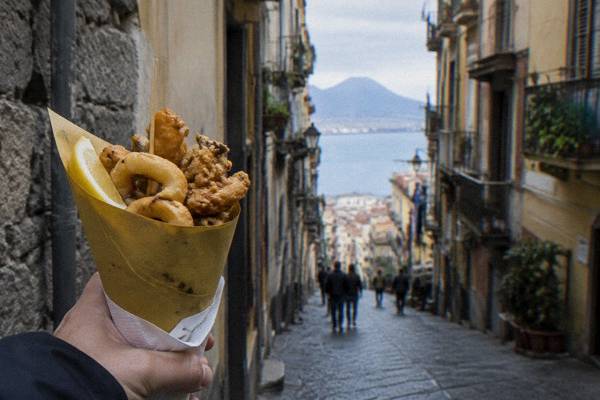
The modern food fame of the area really belongs to Naples, about 24 km north-west, the city that invented pizza and remains Italy's great street-food capital. Fried pizza, cuoppo, the folded fritters called pizza fritta, sfogliatella pastries and ragu-topped pasta all come from there, and the Authentic Naples Street Food Tour With a Local Expert Guide walks visitors through those specialities in the old town. Pompeii's ancient snack counters and Naples's modern ones are two ends of the same street-food tradition.
That continuity is more than a nice line. The region has been eating on the street for two thousand years, from the thermopolium jars of AD 79 to the friggitorie and cuoppi sold in Naples's Spanish Quarter. The modern town of Pompei, next to the excavations, sits on the edge of that food culture, and Naples itself is close enough that a street-food walk fits neatly onto the same day as the ruins for anyone with an appetite for both archaeology and dinner. The full index of guides sits on Pompeii Travel Guide.
The street food tour from the roster above starts in central Naples and covers the classic stops with a local guide. If that appeals, you can Check availability and read the full details on its tour page. It is the natural pairing for a Pompeii day: the ruins in the morning, the old town's fryers and counters in the evening.
Vesuvius Wine And The Lacryma Christi Tradition
Pompeii is also famous for wine. Vineyards grew inside the ancient city and across the volcanic slopes of Vesuvius, and the eruption preserved vine roots, trellising stakes and even carbonised fruit, letting archaeologists replant a vineyard inside the park using the patterns the ash recorded. Today the Lacryma Christi denomination, red, white and sparkling, is grown on the volcano's soils, and wineries around the national park welcome visitors for tastings and lunches.
The replanted vineyard inside the excavations is one of the site's quiet surprises: a working plot of vines within the walls, planted where excavation showed ancient rows had grown. It exists because the eruption's ash layer preserved cavities where roots and stakes had rotted away, and casts could be taken from them. The wine made from it connects directly to the Roman wine culture documented in the city's frescoes and amphorae, in which local wine was a everyday staple rather than a luxury.
Around the volcano, family estates in the Vesuvius national park pour the same denomination alongside lunches built from the area's produce. The roster carries several ways to taste it, from a horse-riding tour on Vesuvius that ends with wine tasting and dinner to a combined Pompeii tour and Vesuvius wine-tasting lunch from Naples. For anyone whose interest in ancient food runs deeper than a tasting, the two-hour private tour with an archaeologist guide below can be angled toward the bakeries, shops and food scenes of the ruins.
Planning A Food-Focused Day At Pompeii
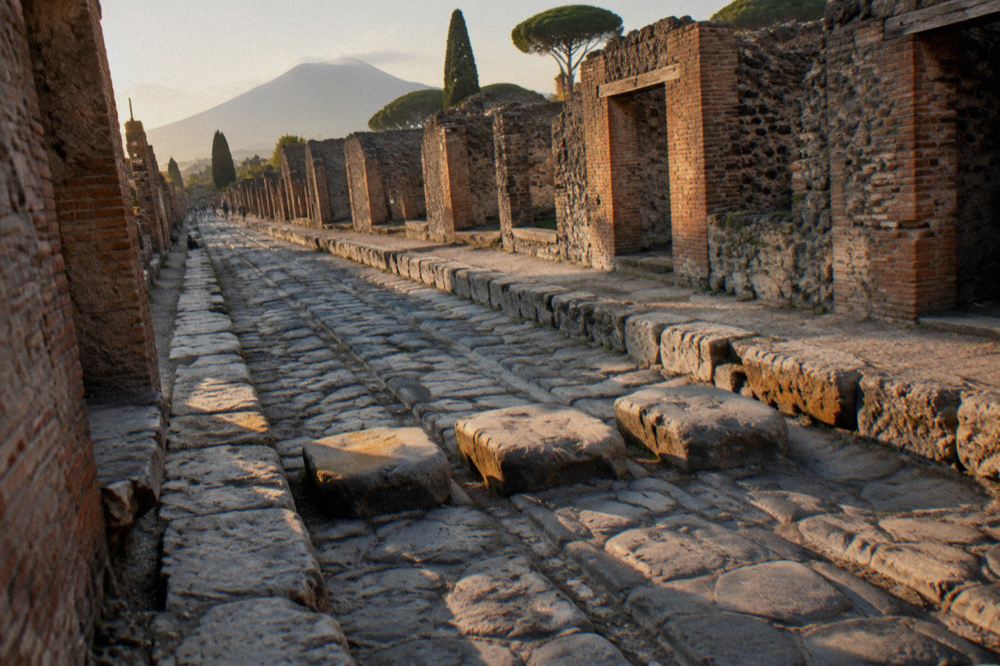
A food-focused day works best as ruins in the morning, food in the afternoon. Inside the park, target the bakery of Modestus, the thermopolium of Vetutius Placidus and the replanted vineyard, all reachable on a standard route from the Porta Marina or Piazza Esedra entrances. Afterwards, eat in the modern town of Pompei or return toward Naples for pizza and street food. Book park entry in advance, since nominative tickets and a 20,000-visitor daily cap have applied since 15 November 2024.
The ancient food sights are scattered rather than clustered, and seeing the bakery, the thermopolium and the vineyard comfortably takes a half-day walk, which is why the question of how long to spend at Pompeii is worth reading before you commit to a schedule. The walking is on ancient stone, so comfortable shoes matter; the dress code is relaxed, but our guide to what to wear at Pompeii covers the practicalities.
| Stop on a food-focused day | What you see or eat | Timing |
|---|---|---|
| Bakery of Modestus | Volcanic-stone mills and the brick oven that held carbonised loaves | Morning, inside the park |
| Thermopolium of Vetutius Placidus | Snack counter with frescoes and sunk jars | Morning, on the Via dell'Abbondanza |
| Replanted vineyard | Vines grown on the pattern of ancient rows | Midday, inside the park |
| Modern Pompei | Pizzerias and cafes beside the Sanctuary | Early afternoon |
| Naples old town | Pizza fritta, cuoppo and sfogliatella | Late afternoon and evening |
For the day's structure, the pairing that suits food lovers best is a small-group Pompeii walk followed by a Vesuvius wine lunch, or a ruins morning followed by the Naples street-food walk described above. Both work as day trips from Naples, and neither requires a car, since the Circumvesuviana line's Pompei Scavi-Villa dei Misteri station sits beside the excavations. Whichever you choose, book the park ticket and any tour ahead, because the daily cap and the time-slot system leave little room for turning up on spec in high season.
Pompeii's food fame, in the end, rests on a strange gift: the eruption that destroyed the city also preserved its dinner. Few places let you stand at a two-thousand-year-old counter, look at the jars, and then walk out of the gate and order the same kind of meal, cooked to a modern recipe, a short drive away. That is the loop worth planning around.
Common Questions About Food At Pompeii
What food is Pompeii famous for?
Carbonised Roman bread, garum fish sauce, the street food sold at thermopolia like the counter of Vetutius Placidus, and Lacryma Christi wine from the slopes of Vesuvius. The modern area adds pizza, buffalo mozzarella and Naples street food.
Can you eat inside the Pompeii archaeological park?
Options inside the park are limited to a small number of cafeterias and snack points; there is no restaurant within the excavations.
Was pizza invented in Pompeii?
No. Pizza as the world knows it comes from Naples, where it developed into its modern form. Pompeii's own claim is much older: flatbreads existed in the Roman diet, but the famous Pompeian bread was a round, eight-wedge loaf baked in ovens like the one at the bakery of Modestus.
Can you still see the bread found at Pompeii?
Yes. Carbonised loaves and the bakery equipment are displayed at the site, including the park's Antiquarium, and related material is held at the National Archaeological Museum in Naples, which also holds the finest Pompeian frescoes and mosaics.
What did people at Pompeii drink?
Wine, water and spiced drinks. Vineyards grew inside and around the city, wine was a daily staple for Romans, and the jars sunk into thermopolium counters held hot food and drink for takeaway customers.
Where can you taste Vesuvius wine near Pompeii?
At wineries inside and around the Vesuvius national park, where the Lacryma Christi denomination is produced. Several tours from the roster combine a Pompeii visit with a Vesuvius wine tasting and lunch, and one adds horse riding on the volcano with wine tasting and dinner.
From a loaf still scored into eight wedges to a jar of garum and a glass of wine off the same volcano, the food story of Pompeii runs unbroken from AD 79 to the tables of modern Campania, and it is the most appetising reason to give this park more than a hurried hour.