Pompeii Food
Pompeii is one of the very few places in the world where you can stand in front of a 2,000-year-old takeaway counter, a bakery with its mills and oven still in place, and loaves of bread that were baking when Vesuvius erupted in AD 79. This guide covers the food evidence inside the archaeological park in Campania, southern Italy, the eating options around the modern town of Pompei, and the food and wine experiences that pair well with a visit.
Short answer
Inside the Pompeii archaeological park in Italy, food is an archaeological subject: you can see bakeries with stone mills, thermopolia with marble-clad serving counters, a garum fish-sauce shop, and carbonised loaves from AD 79. There is no restaurant inside the excavations; eating happens in the modern town of Pompei nearby. Entry costs EUR 20 in 2026 (Pompeii Express), and a single EUR 25 ticket replaces the range from 1 January 2027.
Pompeii, the ancient Roman city buried by the eruption of Mount Vesuvius in AD 79, is today an archaeological park in Campania, southern Italy, beside the modern town of Pompei and about 24 km by road from Naples. What makes it remarkable for anyone interested in food is the sheer ordinariness of what was preserved: not palace banquets but street counters, neighbourhood bakeries, a fish-sauce shop, and round loaves carbonised in an oven while the city died around them. No other site in the Mediterranean shows the daily food economy of a Roman town with this density of intact evidence, and this guide walks through it, then follows the thread out of the excavations into the modern town of Pompei, the vineyards on Vesuvius, and the street food of Naples.
What Ancient Food Evidence Can You See Inside Pompeii?
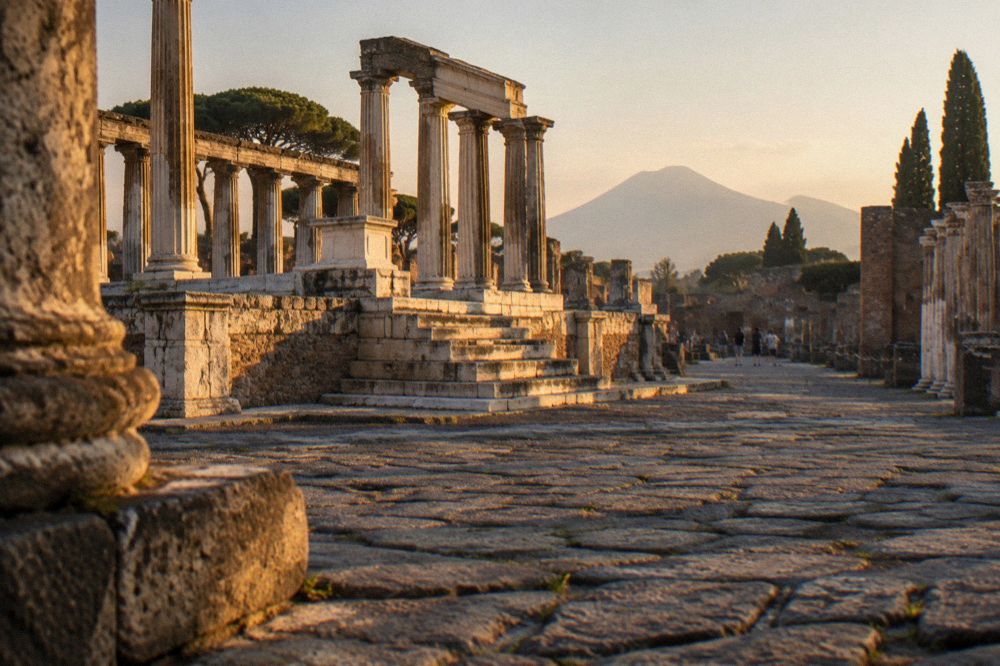
Inside Pompeii you can see entire food businesses rather than scattered finds: bakeries with their stone mills and wood-fired ovens still in place, several thermopolia with jar-holed marble counters, a shop that sold garum (the Roman fish sauce), and loaves of bread that carbonised during the eruption of AD 79, traditionally dated to 24 August. Together these make Pompeii the best place in Italy to see how ordinary Romans bought and ate their food.
The eruption sealed the city so quickly and so completely that organic material survived in mineral form. The round loaves found in Pompeii's ovens, scored into wedges and stamped with the baker's name, are the most famous examples, and casts of the bread are displayed in the park's Antiquarium. The stamped loaves are the reason bakers can be identified by name, which is rare anywhere in the Roman world. For the wider story of the city and what happened to it, the Pompeii history guide carries the full narrative.
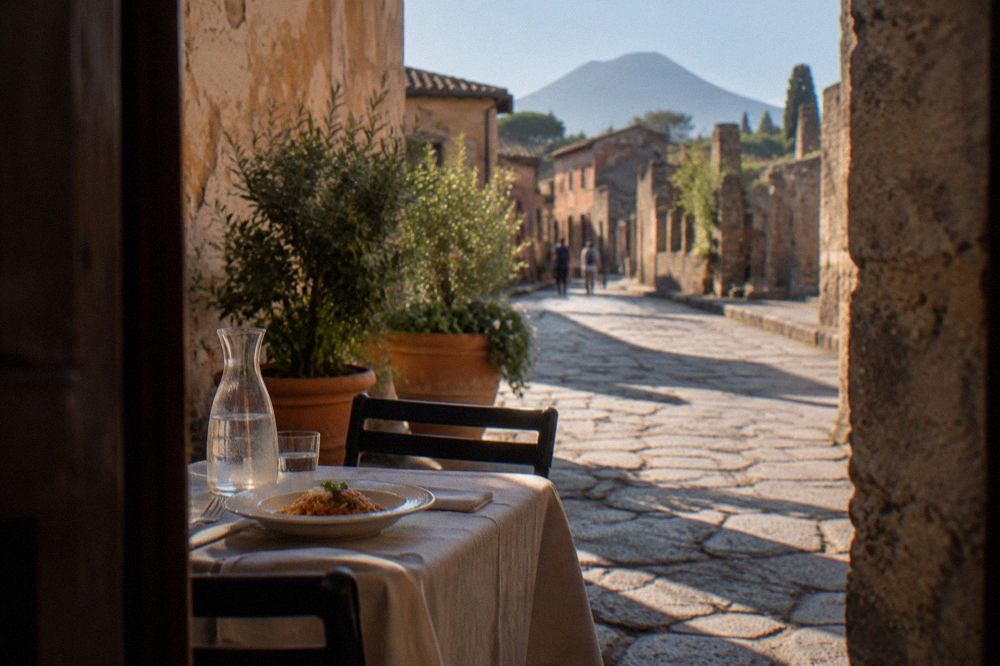
The thermopolium is the site's signature food structure. These were hot-food counters: masonry blocks set with deep clay jars, called dolia, that held prepared dishes kept warm from below, and many were fronted with polished marble or painted with advertisements. Some counters carry painted images of the food sold, a menu painted directly onto the shop itself. The best-known example in the city is the thermopolium in Regio V, and the site maintains a dedicated page for the thermopolium of Vetutius Placidus tradition of counter dining, the direct ancestor of today's takeaway culture in Naples, where pizza by the slice and fried street food are still eaten standing at a counter.
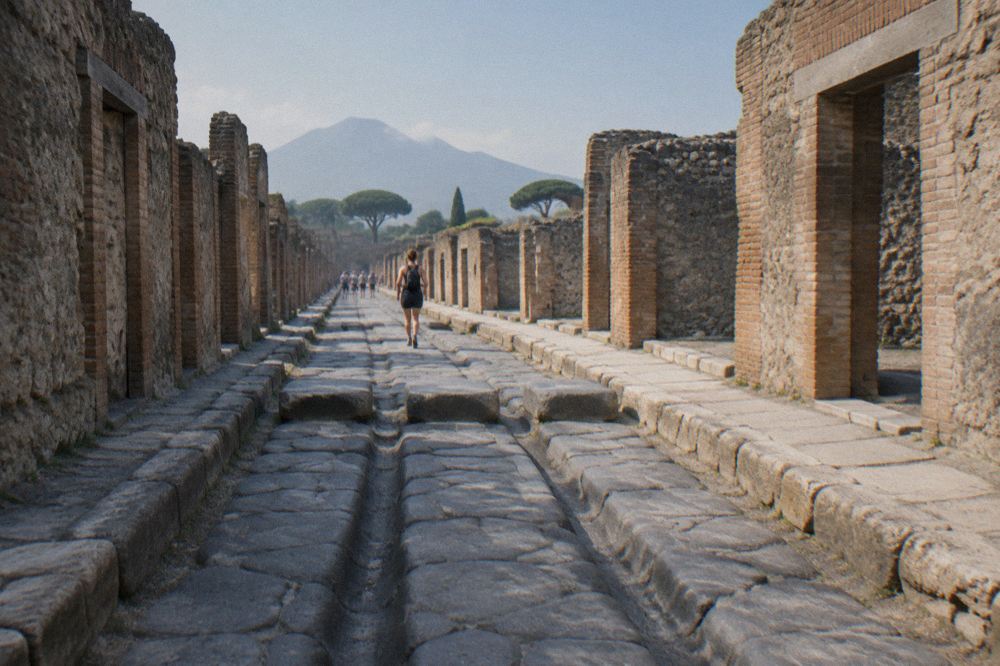
The bakeries are equally vivid. Pompeii's mills were made of volcanic stone, an upper hourglass-shaped hopper turned by donkey or slave power over a fixed lower cone, feeding flour into the neighbouring oven, a construction nearly identical in plan to the wood ovens still used for bread and pizza across Campania. The dough and loaves recovered from the ovens, and the carbonised grain found in storerooms, tell researchers what the bread itself was like. Sites such as the bakery associated with Modestus, where dozens of loaves were found in the oven, anchor this part of the visit.
| Food evidence in the park | What it is | What it tells you |
|---|---|---|
| Bakery mills and ovens | Volcanic-stone mills with brick domed ovens | Bread was milled and baked on site, sold in the street outside |
| Thermopolium counters | Mason counters with dolia jars, marble tops, painted signs | Hot prepared food and drinks sold over a counter, eaten standing |
| Carbonised loaves | Round scored loaves, some stamped with the baker's name | Standard bread shape, portioning and producer branding in AD 79 |
| Garum shop | A shop producing and selling Roman fish sauce | Fermented fish sauce was a mass-market condiment, made and retailed locally |
| Food-themed frescoes and graffiti | Painted menus, price notices and political notes on food shops | Prices and advertising were part of street food culture |
A note on what is open: houses and commercial spaces in the park rotate through maintenance closures. The Praedia of Julia Felix, a large complex that included gardens and commercial premises, has been closed to the public since 7 September 2026 for maintenance. Nothing on this page should be read as a promise that a specific room is open on the day you arrive; check the park's own communications before your visit for the current state of individual buildings.
Where Can You Actually Eat Inside The Archaeological Park?
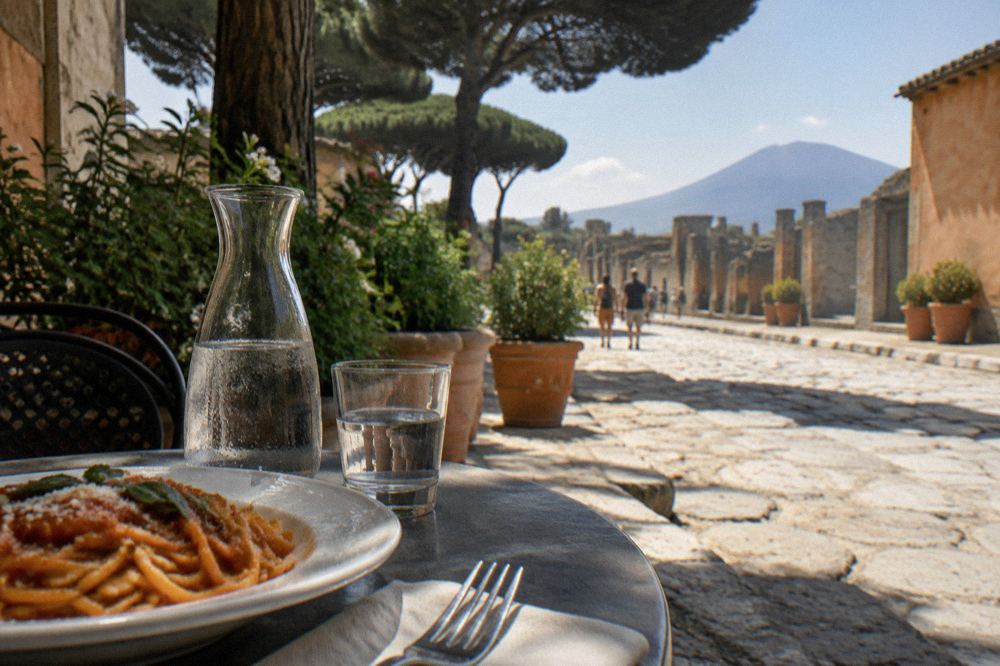
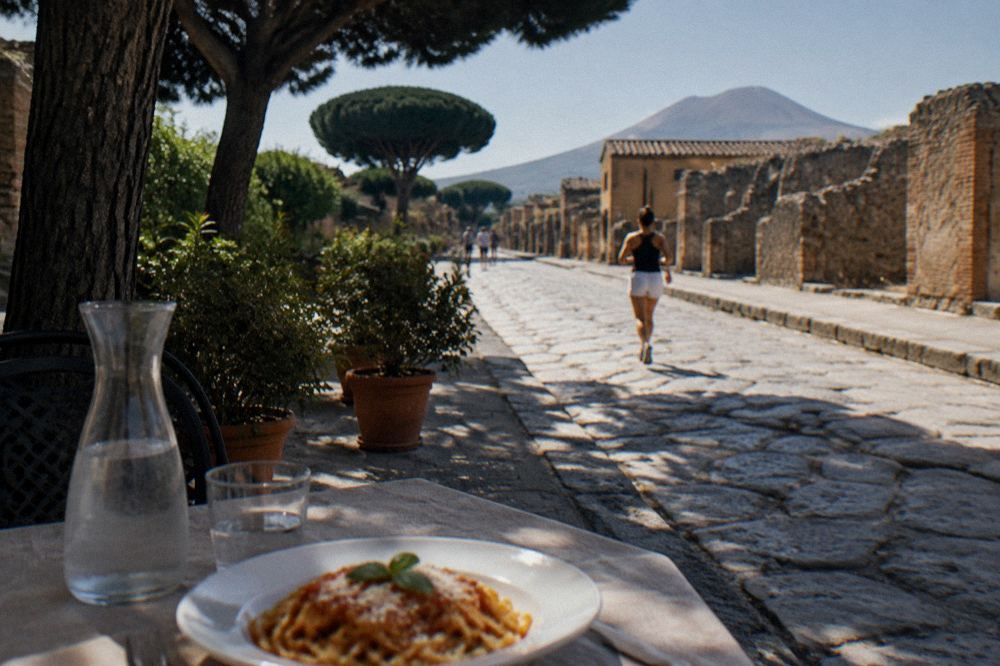
You cannot eat a proper meal inside the excavated city of Pompeii itself, since it is an archaeological site rather than a dining venue; food is limited to small catering points near the entrances at Porta Marina, Piazza Esedra and Piazza Anfiteatro, consumed in designated rest areas. Water fountains run inside the site, and the 30 x 30 x 15 cm bag limit means a small picnic at most, so plan lunch for modern Pompei or your onward stop.
The practical consequence of this is that a food-focused Pompeii day is really two halves: the ancient half inside the walls, where food is something you look at, and the living half outside them, where food is something you eat. The excavations cover a large area, an excavated zone of 44 ha within a World Heritage property of 98 ha shared with Herculaneum and Torre Annunziata, and shade is limited, so the standard advice about water, a hat and sturdy shoes applies doubly in summer, when the mean daily maximum at Pompei is about 29.4 C in August according to the 1991-2020 climate normals.
Bring food in, within the bag limit, or eat before and after. The modern town of Pompei, which adjoins the park, has the full range of everyday Italian eating: bars with pastries and coffee, pizzerias, trattorie and gelaterie within a short walk of the Circumvesuviana station Pompei Scavi-Villa dei Misteri. The dedicated where to eat in Pompei guide covers specific neighbourhoods and meal planning, and the where to stay in Pompei guide is useful if you would rather base yourself beside the site than commute.
For anyone building the day around both halves, the pairing that works well is a morning inside the excavations, lunch in the modern town, and a food experience in the afternoon or evening: a Vesuvius wine tasting, a cooking class, or a street food walk if Naples is your base. That is the shape the rest of this guide follows.
How Do Tickets And Timing Shape A Food-Focused Visit?
Entry to Pompeii in 2026 costs EUR 20 for the Pompeii Express ticket, the ancient city only, or EUR 25 for Pompeii+, which adds the suburban villas route entered at Porta Ercolano and the Street of the Tombs, and a 3-day ticket costs EUR 30; from 1 January 2027 a single EUR 25 ticket covering all park sites, valid 30 days with one entry per site, replaces this structure. Time your food plans around the ticket, not the other way round.
The ticket matters for a food-themed visit because the suburban villas route, included in Pompeii+ and addable to an Express ticket for EUR 8, card only, at the Porta Ercolano entrance, passes through the area where villa agriculture and wine production sat at the edge of the city. The wider Pompeii tickets guide carries the full detail, including the nominative ticket rules introduced on 15 November 2024, the 20,000 visitors-per-day cap, and the vivaticket online channel linked from the park's own page.
| Ticket | 2026 price | Covers | Change from 1 January 2027 |
|---|---|---|---|
| Pompeii+ | EUR 25 | City plus suburban villas route, Villa Regina and Antiquarium at Boscoreale, shuttle | Replaced by single EUR 25 ticket |
| 3-day ticket | EUR 30 | Pompeii+ plus Oplontis, the Stabiae villas and museum, Boscoreale | Replaced by single EUR 25 ticket |
| Other park sites | EUR 8 each | Oplontis, Stabiae museum, Boscoreale individually | Stay EUR 8 individually |
| My Pompeii Card | EUR 45 | Annual pass | Stays EUR 45 |
Opening hours shape lunch. From 16 March to 14 October the site opens at 9:00, last entrance is 17:30 and closing is 19:00; from 15 October to 15 March last entrance falls at 15:30 with a 17:00 close. In high season the time-slot system splits entries at 13:00, with up to 15,000 entries before and up to 5,000 after, so an afternoon arrival is the calmer food-first option, leaving the morning for the modern town's market-and-coffee routine before you enter. Treat free first Sundays with care: the park itself recorded more than 36,000 visitors on a single free Sunday, so they are the most crowded days rather than a bargain with a quiet site attached.
| Period | Opens | Last entry | Closes |
|---|---|---|---|
| 16 March to 14 October | 9:00 | 17:30 | 19:00 |
| 15 October to 15 March | 9:00 | 15:30 | 17:00 |
| Time band | 09:00-13:00 | Up to 15,000 entries | 12,000 Express, 3,000 Plus |
| Time band | 13:00-17:30 | Up to 5,000 entries | 3,000 Express, 2,000 Plus |
One more date-bound fact worth planning around: the park's most crowded free-admission days can slow entry queues at all three ticket offices, and ID checks apply at every entry because tickets are nominative. Build an extra buffer if your afternoon plans are fixed, such as a booked tasting or a cooking class start time.
Is Vesuvius Wine Part Of The Pompeii Food Story?
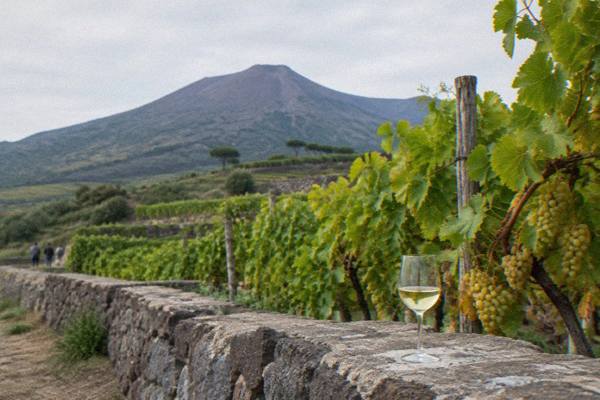
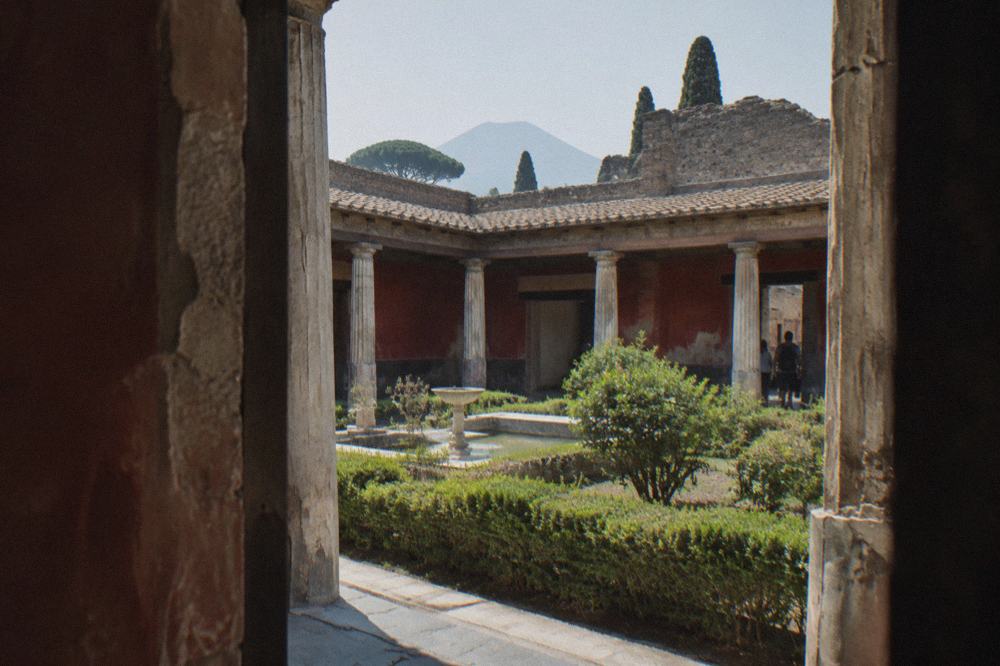
Yes, deeply so: the foothills of Vesuvius above the ancient city form a working wine district whose flagship grape, grown on volcanic soil inside the national park, descends from vines cultivated there at the time of the AD 79 eruption. Replanted vineyards inside the excavations have recreated a Roman-era vine plot beside the city walls, and bookable tours pair Pompeii with tastings and lunch on the volcano's slopes.
The connection is not marketing gloss. Carbonised vine roots and the remains of trellising have been documented in the excavations, and the park has replanted vineyards on the ancient plots, producing a small quantity of wine from the reconstruction each year. The industry around the modern town of Pompei and the villages on the volcano's slopes, Sant'Antonio Abate, Trecase, Boscotrecase and others, grows the same family of varieties on ash-rich soils. For the practical side of visiting the volcano itself, including the EUR 11.68 online-only Gran Cono ticket, see the Mount Vesuvius tickets guide.
The most food-centred way to taste this is a day that puts Pompeii in the morning and a Vesuvius winery at lunch. Operators run exactly this shape of day from Naples and from Sorrento, and the difference between them is mainly the transport and the meal format, light lunch with tasting versus a full restaurant meal. One Naples-departing option pairs the Pompeii tour with a Vesuvius wine tasting and lunch, and its live listing carries the current price, rating and departure details:
Pair either with a morning inside the park and you have the full arc of the story, from the carbonised vines of AD 79 to a glass poured a few kilometres away.
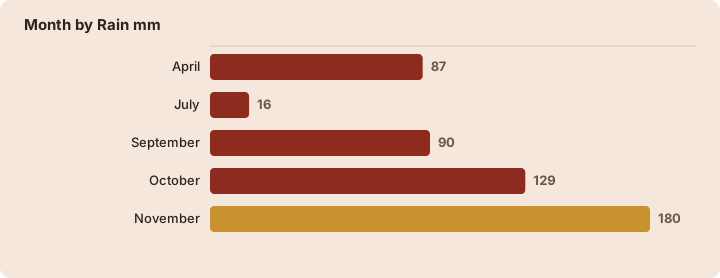
Season matters for wine planning. The climate at Pompei is Mediterranean, with the wettest month about 180 mm of rain in November and the driest about 16 mm in July, per the 1991-2020 normals. Harvest visits in late September and October sit in a mild window, mean daily maxima of about 25.3 C and 21.3 C respectively, while midsummer tasting days are hot on exposed terraces; the Pompeii weather and best time guide has the full monthly picture.
| Month | About Tmax C | About Tmin C | Rain mm | Notes for food planning |
|---|---|---|---|---|
| April | 17.7 | 10.4 | 87 | Comfortable walking, spring produce |
| July | 28.7 | 21.1 | 16 | Driest, hot counters by midday, water essential |
| September | 25.3 | 18.6 | 90 | Harvest season for Vesuvius wineries |
| October | 21.3 | 15.1 | 129 | Mild, later opening hours to 14 Oct |
| November | 16.9 | 11.5 | 180 | Wettest month, winter hours from 15 Oct |
Which Food Tours Pair Well With A Pompeii Visit?
The strongest pairings are a Naples street food walk, which turns the thermopolium story into a living one on the city's counters; a Vesuvius wine tasting with lunch, which grounds the volcanic-soil side of the story; and a cooking class in Naples, which teaches the dough culture that grew out of this region's bread ovens. All of them run independently of your Pompeii ticket, so they can be booked for the same trip or a different day, and each starts from Naples or the Pompeii area.
Naples is where the through-line from Pompeii's counters to modern street food is clearest. The city invented pizza, and its fried-food counters, pizzerias and markets operate at a pace that has not fundamentally changed shape since the thermopolium era. A guided street food walk with a local guide, departing in Naples, is the related experience this site features for the food theme; it runs as a walking tour through the historic centre with tastings at established stops. The internal Pompeii tours overview lists every bookable experience if you want to compare the full range, and the dedicated Naples to Pompeii transport guide covers getting between the two on the Circumvesuviana, whose trains run from Napoli Garibaldi to Pompei Scavi-Villa dei Misteri in 29 to 35 minutes.
Cooking classes complete the picture. A pizza and tiramisu class in Naples puts you hands on dough in the city that made the dish, and a shorter pizza-dough-focused class covers the same technique in a tighter format. For readers weighing whether a guided visit adds enough to justify the cost against going alone, the guided tour versus self-guided guide sets out the trade-offs; on a food-themed day a guide earns their fee at the bakeries and counters, where the details, the stamping of loaves, the warming of dolia, the economics of garum, are easy to miss without narration.
| Experience type | Where it starts | What it adds to a food theme |
|---|---|---|
| Naples street food walk | Naples historic centre | Living counter culture, fried food, pizza by the slice |
| Vesuvius wine tasting with lunch | Naples or the Vesuvius slopes | Volcanic-soil wines descended from Roman vineyards |
| Pompeii tour with lunch and tasting | Pompeii area | Guided ruins visit plus a sit-down regional meal |
| Pizza and tiramisu cooking class | Naples | Hands-on dough and dessert technique in pizza's home city |
| Archaeologist-led Pompeii tour | Pompeii entrances | Expert narration of bakeries, counters and shops |
Cruise passengers and Rome-based travellers have their own pairings. Shore excursions from Naples port can fold Pompeii into a food stop, covered in depth on the Pompeii shore excursions guide, while the long day trips from Rome, twelve hours and more, leave little room for tastings and are better treated as pure sightseeing days; the Rome to Pompeii day trip guide explains the trade-offs.
How Do You Build A Full Food-Focused Day Around Pompeii?
A workable shape is: coffee and pastry in the modern town of Pompei before the 9:00 opening, a morning inside the excavations routed through the bakery and thermopolium stops, lunch in the modern town or at a Vesuvius winery, and either a cooking class or a street food walk in the late afternoon if Naples is your base. With the Circumvesuviana taking 29 to 35 minutes from Napoli Garibaldi to Pompei Scavi-Villa dei Misteri, the whole arc fits comfortably into one day from Naples.
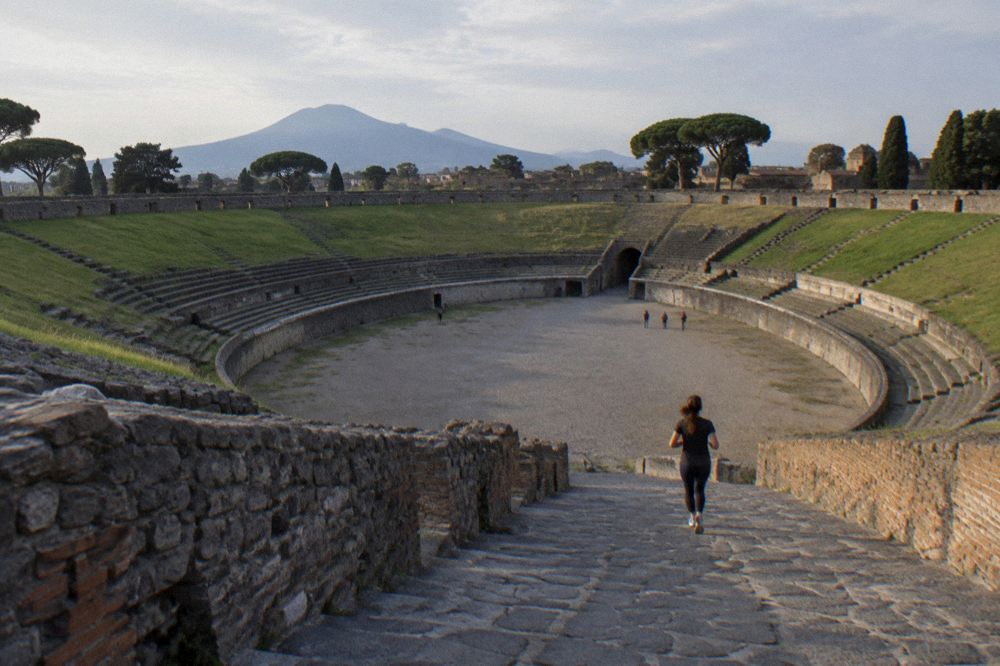
Routing matters inside the park. The food evidence sits scattered across the excavated city, and the entrance you choose changes the walking. Porta Marina, the entrance by the Circumvesuviana station, puts the forum side of the city first; Piazza Esedra and Piazza Anfiteatro serve the amphitheatre end; the suburban villas route runs from Porta Ercolano and the Street of the Tombs. The site's own map page helps here, and this site's Pompeii map guide plus the interactive map section show the layout before you commit to a route. If time is short, the guide to seeing Pompeii in two hours can be adapted to a food route by swapping in the bakery and counter stops near the forum.
Two practicalities shape the day. First, the bag rule: 30 x 30 x 15 cm maximum, anything larger to left luggage, so shop for picnic supplies accordingly or skip the picnic entirely. Second, water: fountains operate inside the site, but in July and August, when mean daily maxima reach about 28.7 C and 29.4 C, plan to refill rather than carry a day's supply. The what to wear to Pompeii question is covered on this site for footwear and summer clothing.
If your day trip starts from further along the coast, the pairing guides cover each corridor: Sorrento to Pompeii and Amalfi Coast to Pompeii. Sorrento-based travellers with a food theme could do worse than an express guided tour by train, which pairs the rail ride with a guided visit inside the site, leaving the afternoon free for a tasting; its figures render on its own listing page linked from the tours hub.
What Should You Know About Modern Pompei's Food Scene?
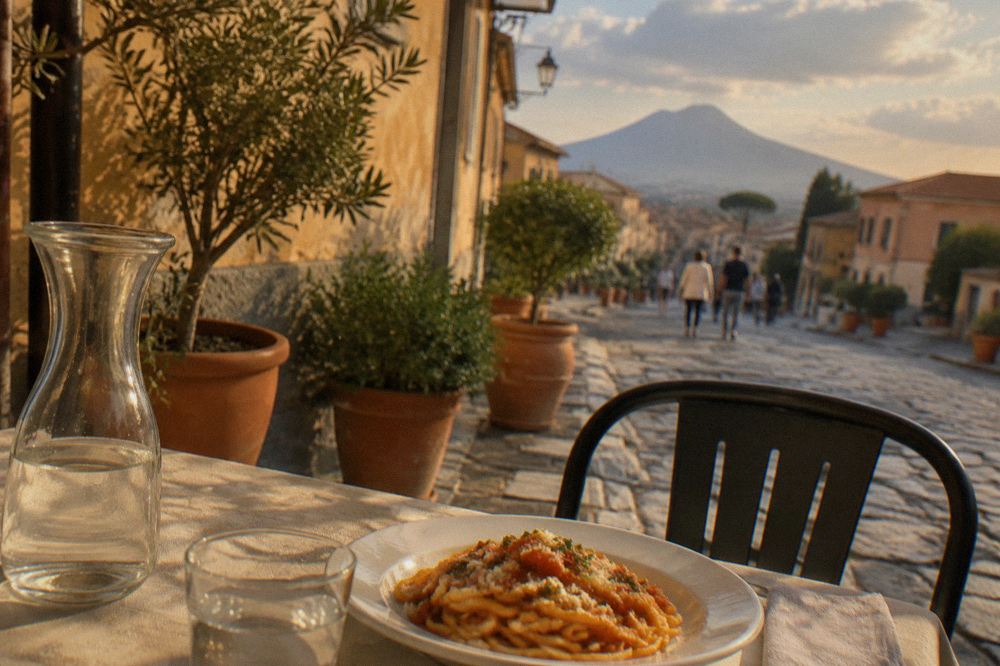
Modern Pompei is a working pilgrimage town built around its Sanctuary, so its food scene is everyday eating rather than destination dining: morning bars for coffee and pastries, pizzerias serving the region's wood-oven style, trattorie with pasta and vegetable dishes of the Vesuvian plain, and gelaterie between the station and the Sanctuary. Everything is cheaper and quicker than the coast and sits within walking distance of the Pompei Santuario and Scavi Circumvesuviana stations.
The town's own identity is twofold: a commuter and service town for the Vesuvian plain, and a pilgrimage destination centred on the Sanctuary of the Madonna of the Rosary, which brings a steady flow of Italian visitors and, with them, an unpretentious restaurant layer that serves them. Local specialities across the plain include pasta with beans or with courgettes, buffalo-milk dairy products, apricots from the Vesuvian slopes, and hazelnut-based sweets; the deep answer to what food Pompeii is famous for covers the ancient and modern sides together.
Timing your meals around the park is the main skill. Italian lunch service typically runs early to mid-afternoon, which aligns neatly with a morning inside the excavations. In the summer season, when last entry is 17:30 and closing 19:00, an afternoon entry pushes dinner late by local standards, so the comfortable pattern is an early lunch in town, the afternoon inside the site, and an evening slice of pizza rather than a full restaurant sitting.
| Stop on the food trail | Location | Best time of day | What to expect |
|---|---|---|---|
| Morning bar | Modern Pompei, near either station | Before 9:00 opening | Espresso and pastries, standing at the counter |
| Market and deli stops | Naples historic centre | Late afternoon | Street food walk territory, fried snacks |
| Vesuvius winery lunch | Slopes above Pompei | Midday | Tasting menus built on volcanic-soil wines |
| Pizzeria dinner | Modern Pompei or Naples | Evening | Wood-oven pizza in the regional style |
| Picnic rest area | Inside the archaeological park | Any time | Own food only, bag limit 30 x 30 x 15 cm |
Why Does Pompeii Matter To The History Of Italian Food?
Because it freezes a whole town's food system at a single moment in AD 79, Pompeii supplies the physical evidence for how Romans ate outside elite dining rooms: standardised bread stamped by named bakers, hot takeaway sold from marble counters, a fermented fish sauce industry operating at commercial scale, and frescoes and graffiti that record prices and advertising. Many structural features of modern Italian street food, the counter, the wood oven, the neighbourhood walk-in bakery, have direct ancestors standing in plain view at this site in Campania.
The eruption that preserved all this is traditionally dated to 24 August AD 79, following the oldest manuscripts of Pliny the Younger's letters, though the date is debated: the park's own e-journal states that the alternative 24 October date has no evidentiary basis, tracing it to a 1929 misreading, while noting that 24 August is not guaranteed either. What is not debated is the completeness of the preservation, which is why food historians treat the site as a primary source rather than an attraction.
The through-lines are the pleasure of a visit here. The carbonised loaf and the modern cafone-style bread of the Vesuvian plain share a shape. The thermopolium's dolia and the Neapolitan fried-food counter share a business model. The wood oven of a Pompeii bakery and the oven of a pizzeria three kilometres away share a construction logic, because the same materials, the same fuel and the same physics were available to both. Seeing this continuity, rather than a collection of ruins, is what a food-focused Pompeii day is actually for, and it is the reason this Pompeii Travel Guide treats food as one of the site's core subjects rather than a footnote.
Common Questions About Pompeii Food
Can you eat inside the Pompeii archaeological park?
Not as a restaurant meal. Eating inside the excavations is limited to designated rest areas with your own food or items from the small catering points near the entrances at Porta Marina, Piazza Esedra and Piazza Anfiteatro. Water fountains operate inside the site, and bags are limited to 30 x 30 x 15 cm.
What food was found in Pompeii?
Round carbonised loaves, some stamped with the baker's name, were recovered from ovens, along with carbonised grain, nuts and fruit, and the physical infrastructure of food businesses: bakery mills and ovens, thermopolium counters with their dolia jars, and a garum fish-sauce shop.
What is a thermopolium?
A Roman hot-food counter: a masonry block set with deep jars that held prepared dishes kept warm from below, often fronted with marble and painted with pictures of the food and price notices. Pompeii preserves several in place.
Did pizza exist in Roman Pompeii?
No. Pizza as known today developed in Naples centuries later. What Pompeii shares with pizza culture is the equipment and the habit: wood-fired domed ovens of similar construction, flour milled and baked on the premises, and food eaten standing at a neighbourhood counter.
Where should you eat lunch when visiting Pompeii?
In the modern town of Pompei, which adjoins the excavations and offers bars, pizzerias and trattorie within a short walk of the Circumvesuviana stations, or at a winery lunch on the slopes of Vesuvius if your day includes a tasting.
Can you combine Pompeii with wine tasting on Vesuvius?
Yes. Bookable day experiences pair a guided Pompeii visit with wine tasting and lunch on the volcano's slopes, departing from Naples or based in the Pompeii area, and the vineyards grow on the volcanic soil that descends from the same eruption that buried the city.
Pompeii rewards a food-focused visit precisely because the story continues past the ticket gate: the counters inside the walls find their heirs in the bars of modern Pompei and the fryers of Naples, and the vines buried in AD 79 have descendants on the same slopes. Plan the ancient half and the living half as one day, and the site stops being a collection of stones and becomes the oldest food neighbourhood in Italy still worth talking about.