Why Is Pompeii A Dark Tourist Site?
Pompeii draws four million people a year to a place where people died. This page explains why the ancient city in Campania, Italy, is classed as a dark tourism destination and how to visit it thoughtfully.
Pompeii is the ancient Roman city that Mount Vesuvius buried in AD 79, now an archaeological park in Campania, southern Italy, beside the modern town of Pompei and about 24 km by road from Naples. It is called a dark tourism site because the visitor attraction and the disaster are the same object: people come in large numbers, roughly four million a year, to walk streets that a fatal eruption froze in time. The plaster casts of the dead, the ghostlike voids they left in the ash and the sheer intimacy of the preserved houses are what push Pompeii from ordinary archaeology into the territory of death-related travel.
Why Is Pompeii A Dark Tourist Site?
Pompeii is a dark tourist site because the catastrophe is the attraction: the city died in the eruption of AD 79, traditionally dated to 24 August, and roughly 44 hectares of excavated streets, houses, shops and bodies-in-place are what people travel to see. Scholars of dark tourism, the study of travel to places tied to death and suffering, place Pompeii in the category because visitors do not merely learn about the disaster, they stand inside it, on the exact ground where it happened.
The term dark tourism was coined to describe journeys to sites of tragedy: battlefields, prisons, genocide memorials, disaster zones. Pompeii fits the definition with an unusual twist. At a battlefield or a memorial, the death is usually marked, interpreted, held at a respectful distance. At Pompeii the death event is the fabric of the site. The ash that killed the city is also the material that preserved the bakery counters, the election slogans painted on walls, the laundry of the last afternoon. Destruction and conservation are the same substance, which is why the place feels simultaneously like a museum and like an open grave.
There is a second reason the label sticks. Pompeii is not a sombre, lightly visited ruin. It is one of the busiest archaeological sites in the world, with a cap of 20,000 visitors per day introduced on 15 November 2024 precisely because demand exceeded comfort. The site recorded 4,069,377 visitors in 2024 and 4,000,090 in 2025. When a place of mass death also functions as a mass leisure destination, with selfie sticks in the Forum and queues at the thermopolia counters, the tension between remembrance and entertainment is exactly what dark tourism scholarship studies.
That tension is not new, and it is not unique to the modern age. Writers and grand tourists were already flocking to the excavations in the centuries after rediscovery, drawn by the same combination of horror and fascination. If you want the wider frame on the disaster itself, the companion page on how many people died at Pompeii covers the human toll in detail.
What Dark Tourism Means At A Place Like Pompeii
Dark tourism is the academic and popular name for travel to sites associated with death, disaster and suffering, and Pompeii sits firmly within it because the eruption of AD 79 killed the city that visitors now tour. The concept matters here for one practical reason: it frames the visit as an encounter with real deaths rather than a theme-park style ruin, which changes what a thoughtful visitor looks at, photographs and says. The label is descriptive, not an insult, and it is widely used in heritage studies.
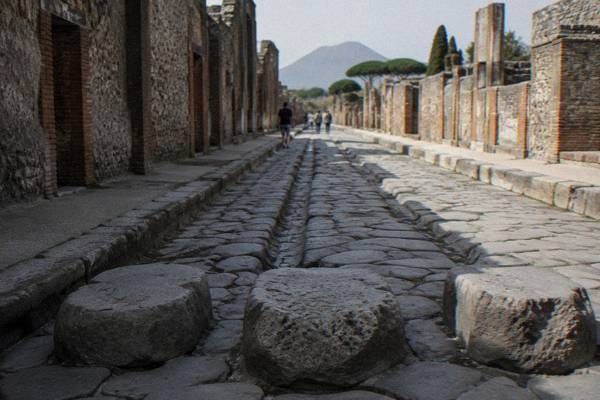
The useful distinction scholars draw is between sites where death is represented and sites where death is encountered in place. A museum case with Roman artefacts represents the past; the object has been moved, cleaned and reframed. Pompeii is the opposite. The amphitheatre stands where it stood. The stepping stones sit in the same street crossings. The casts of victims lie close to where those people fell, or were placed in the archaeology after the excavations that followed the site's rediscovery. Nothing about the layout was designed for visitors, which is part of both the power and the discomfort.
Depth of engagement also varies, and researchers describe a spectrum from casual to deeply intentional visits. Someone stepping off a coach for an hour of photographs is at one end; someone who has read the Pliny letters and walks the Villa of the Mysteries slowly is at the other. Both are dark tourists by definition, because both have travelled to a death site, but the quality of the encounter differs enormously. If you are weighing how much structure you want, the page on touring Pompeii on your own versus with a guide sets out the trade-offs.
There is also a commodification question that the label forces into the open. Around the park entrances, the eruption is sold: reproduction casts, volcano postcards, panoramas from camera cranes. Scholars do not treat this as hypocrisy so much as a permanent feature of death sites that succeed. The honest position, and the one this site takes, is that visiting Pompeii is legitimate and valuable, and that the visit deserves a degree of attention the merchandising does not encourage. A well-run guided walk is one way to get that attention, and the archaeologist-led small group format in particular tends to treat the city as evidence rather than backdrop.
The Body Casts And Why They Disturb Visitors
The body casts are the single strongest reason Pompeii reads as a dark tourism destination: they are plaster forms taken from the voids left by people who died in the eruption of AD 79, when ash hardened around the bodies and the remains decayed inside it. Excavators poured liquid plaster into those cavities and produced figures in the exact postures of death, crouching, shielding a face, curled with a child. Visitors come face to face with individual dying moments, not with anonymous statistics.
The technique emerged during the early excavations of the buried city, when diggers noticed strange cavities in the hardened ash and realised what they represented. The casts that resulted are not the bones themselves, though skeletal remains are involved in some cases; they are moulds of the space a body occupied at the end. That distinction barely softens the effect. A cast of a person covering their mouth in the pyroclastic surge communicates the final seconds with a directness no written account matches.
Not everyone finds the casts distressing, and reactions reported in guest reviews range from awe to tears to quiet reflection. What almost nobody reports is indifference. The Garden of the Fugitives, where a group of victims was cast where they fell, is the site's most sombre enclosure, and it is deliberately presented with restraint. Photographs are permitted under the park's regulations, which also set a bag size limit of 30x30x15 cm, but many visitors choose not to raise a camera at all. There is no rule requiring solemnity, only the ordinary ethics of a place where you are, in effect, standing at a graveside.
The casts also explain why Pompeii's dark pull differs from that of a battlefield. War sites ask you to imagine events; Pompeii presents bodies. This is why the Pompeii body casts have their own dedicated guide on this site, and why questions about where those people are displayed and what the DNA studies revealed have become frequent search queries in their own right.
How Pompeii Became A Mass Destination For Death-Adjacent Travel
Pompeii became a mass dark-tourism destination through scale and access: four million people a year now reach a site whose entire draw is a catastrophe, by train to the Pompei Scavi-Villa dei Misteri station or by coach from Naples, Sorrento and Rome. The park's own numbers show the growth, from 2,972,159 visitors in 2022 to more than four million in each of 2024 and 2025, forcing the 20,000-per-day cap in place since 15 November 2024.
The visitor figures tell the story plainly.
| Year | Pompeii site visitors | All park sites combined |
|---|---|---|
| 2022 | 2,972,159 | n/a |
| 2023 | 3,985,424 | 4,079,235 |
| 2024 | 4,069,377 | 4,177,753 |
| 2025 | 4,000,090 | 4,118,926 |
Monthly figures for 2024 show the rhythm of the demand: May peaked at 516,923 visitors, October followed at 481,255, and September at 468,340, while January fell to 112,121. The site is not a quiet ruin that a few dark tourists seek out. It is a mainstream holiday component, folded into Amalfi Coast itineraries and cruise shore excursions, which is precisely the combination dark tourism researchers find interesting: pleasure travel with a death site embedded in it. Everything else covered here is indexed on Pompeii Travel Guide.
Access explains the scale. The Circumvesuviana railway stops at Pompei Scavi-Villa dei Misteri, a short walk from the Porta Marina entrance, and road distances are short: about 24 km from Naples, 26 km from Sorrento and 31 km from Salerno. Day trips run from Naples, Sorrento and even Rome, twelve-hour operations that pair the ruins with the coast. The eruption date itself, traditionally 24 August AD 79 with an ongoing scholarly debate the park's own journal has addressed, adds a mythic layer that marketing never has to work hard to activate.
The commodification that follows this scale is the standard shadow of successful dark tourism. Reproduction artefacts, volcano motifs and panorama rides cluster around the entrances. None of it diminishes the site's seriousness, but it does mean the visitor has to bring that seriousness personally. Choosing a guide who treats the material as archaeology, such as the small group archaeologist tour, which can also be checked on the operator's live listing Check availability, is one of the simplest ways to keep the visit anchored in the history rather than the spectacle.
Is Visiting Pompeii Ethically Difficult?
No credible heritage argument says you should not visit Pompeii: it is a protected archaeological park, publicly run, whose ticket revenue funds conservation, and the descendants question that complicates some dark sites does not apply in the same way after nearly two millennia. The ethical weight sits instead in behaviour: whether visitors treat human remains, casts and skeletons as spectacle or as evidence, and whether the visit includes any actual learning about the people who died there.
The strongest ethical anchor is context. The people of Pompeii were Romans with names, trades and political squabbles recorded in painted graffiti; the city had bakeries, brothels, election notices and bar counters. A visitor who learns even a little of this meets victims rather than props. The park helps, with interpretive signage and the Antiquarium, and a good guide helps far more. The question of whether a guided tour of Pompeii is worth it is, in dark-tourism terms, a question about whether the dead get read as people.
A second anchor is the eruption itself. Vesuvius remains an active volcano, and the communities around it, the modern town of Pompei among them, live with that fact. The disaster is not a closed historical chapter but a live geological risk, which is why the national park that manages the crater runs its own visitor operation with timed tickets and automatic closure on orange weather alerts. Some visitors find that the most sobering element of the whole day: standing in the buried city and looking up at the still-active cause of it. The companion guide to Mount Vesuvius covers the volcano side.
The third question is consumption. Souvenirs, photographs and social media are not banned, and the park permits non-commercial photography under its visitor regulations. The ethical line most heritage professionals draw is around human remains: photograph casts if you wish, but treat them as you would a grave, and skip the jokey poses. Behaviour around the site's animals, shelter dogs included, is covered separately in the Pompeii dogs guide. None of this is policed harshly; all of it is simply the difference between tourism at a death site and tourism that forgets the death.
How To Visit Pompeii Thoughtfully As A Dark Site
Visit Pompeii thoughtfully by preparing before you arrive, choosing interpretation over spectacle on the ground, and behaving around remains as you would in any burial place: book a timed entry under the 20,000 daily cap, spend time at the casts and the Garden of the Fugitives with the same quiet you would bring to a cemetery, and let at least part of the visit be about the residents rather than the photographs. None of this requires solemnity all day, only proportion.
Practical choices carry most of the weight. Entry in 2026 is EUR 20 for the Pompeii Express ticket covering the ancient city, or EUR 25 for Pompeii+ including the suburban villas, with a single EUR 25 ticket for all park sites arriving on 1 January 2027, so ticketing and timing decisions are covered in detail on the Pompeii tickets page. Time slots split at 13:00 in the summer season, with caps of 15,000 morning and 5,000 afternoon entries. Free entry on the first Sunday of the month is popular but crowded, having produced the 36,000-visitor record day, which is the wrong atmosphere for a reflective visit.
A few habits make the dark dimension of the visit land properly. Read Pliny the Younger's letters to Tacitus before you go, the first eyewitness account of a volcanic disaster in literature, and you will recognise the column of ash and the darkness he describes. Walk one residential street slowly and imagine it occupied. Stand at a thermopolium counter and consider the last ordinary transaction. And when you reach the casts, give them the minutes they deserve; the question of how long the crater walk takes is answered on the Vesuvius crater trail page, and rushing the city itself answers nothing.
Common Questions About Pompeii As A Dark Tourist Site
Why is Pompeii a dark tourist site?
Pompeii is a dark tourist site because its entire appeal rests on a disaster that killed the city: the eruption of AD 79, traditionally dated to 24 August, buried the streets and their inhabitants, and visitors now walk the excavated result, including casts of victims, in numbers around four million a year. The death event and the attraction are the same object.
Is it disrespectful to visit Pompeii?
No, visiting is not disrespectful in itself: the site is a publicly run archaeological park whose ticket revenue supports conservation. Disrespect is a matter of behaviour, chiefly around human remains and casts, which deserve the same restraint you would show at any burial site.
Are the Pompeii body casts real bodies?
The casts are plaster forms poured into cavities the ash left around bodies that decayed inside it, so they preserve the exact posture of the victims rather than the remains themselves. Some casts are associated with skeletal material. They are genuine records of individual deaths from the eruption of AD 79.
Do people find visiting Pompeii upsetting?
Some do. Guest reviews describe reactions from awe to tears, especially at the Garden of the Fugitives, where victims were cast where they fell. Others experience the site as fascinating archaeology with little emotional weight. Both responses are normal at a place that functions as both ruin and grave.
What is dark tourism?
Dark tourism is the study and practice of travelling to places associated with death, disaster and suffering, from battlefields and prisons to catastrophe sites. Pompeii is a textbook case because the destruction is what preserved the city, so the visitor encounters the fatal event directly rather than through a museum representation.
Pompeii earns its dark tourism label honestly, and the label is not a warning against going. The city rewards visitors who arrive knowing that the streets were fatal to walk on the last afternoon they were ordinary, and who carry that fact gently through the site. If a visit is planned with that awareness, the experience becomes what the best dark tourism can be: memory, understanding and a very human unease, in equal measure.