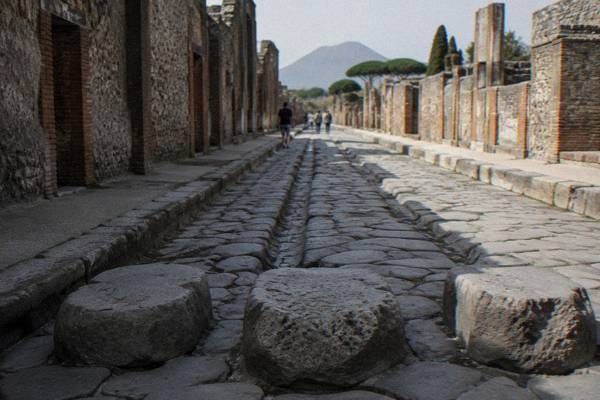
Pompeii Entrance
The archaeological park of Pompeii in Campania, southern Italy, is entered through three ticketed entrances plus one gate for the suburban villas route. This guide explains where each one is, which to choose and what the 2026 ticket rules mean for your arrival.
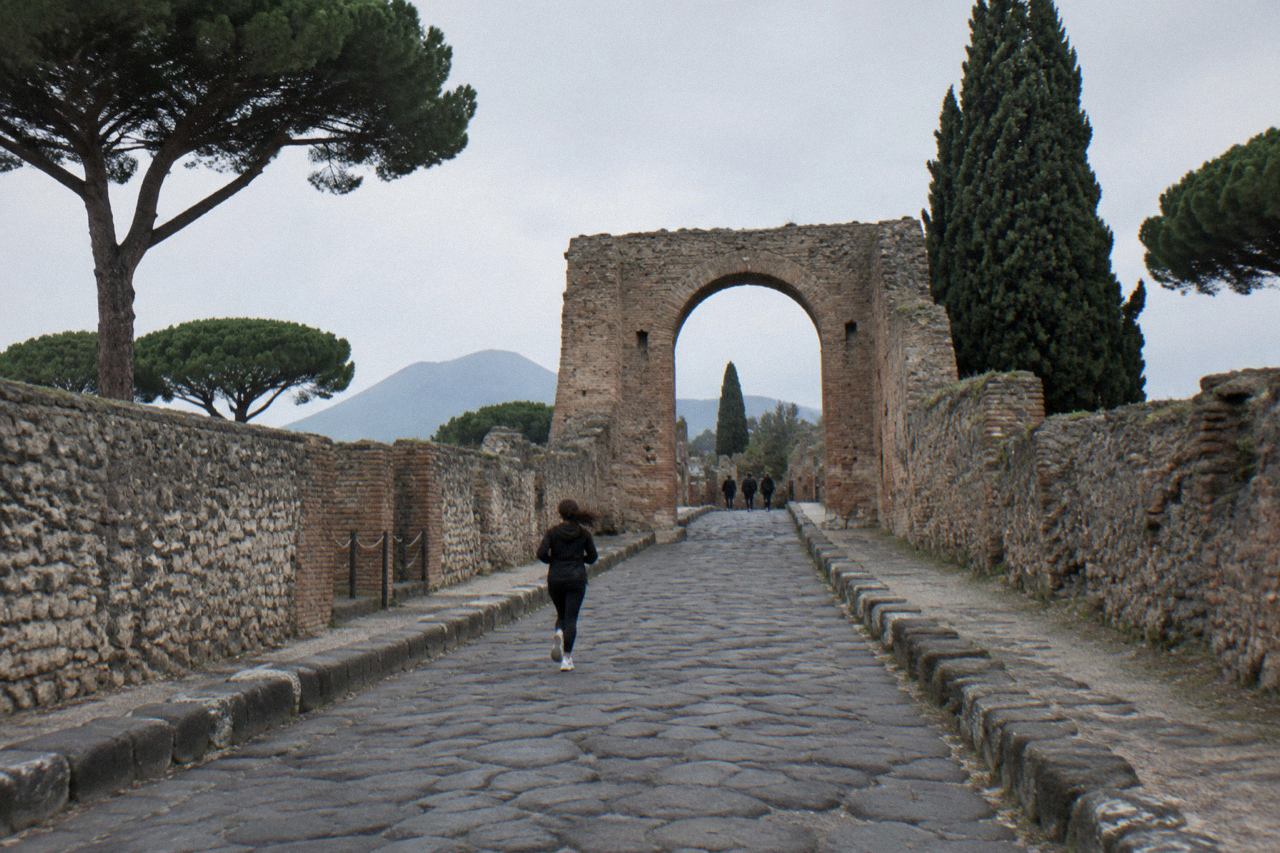
Short answer
Pompeii has three ticket-office entrances: Porta Marina, Piazza Esedra and Piazza Anfiteatro, plus the Porta Ercolano / Street of the Tombs entrance for the suburban villas route. A 2026 Pompeii Express ticket costs EUR 20 and Pompeii+ costs EUR 25. From 1 January 2027 a single EUR 25 ticket covers all park sites. The daily cap is 20,000 visitors.
The archaeological park of Pompeii, the ancient Roman city buried by the eruption of Mount Vesuvius in AD 79, sits beside the modern town of Pompei in Campania, southern Italy, about 24 km by road from Naples. It is a vast site: the excavated area alone covers 44 ha, with the inscribed UNESCO property extending to 98 ha. With a site that size, the entrance you choose shapes your whole day, because each gate opens onto a different part of the ancient city and pairs with a different itinerary. This guide covers every gate, the 2026 ticket structure attached to each, the daily visitor cap and the time-slot system, so you can arrive at the right door at the right time.
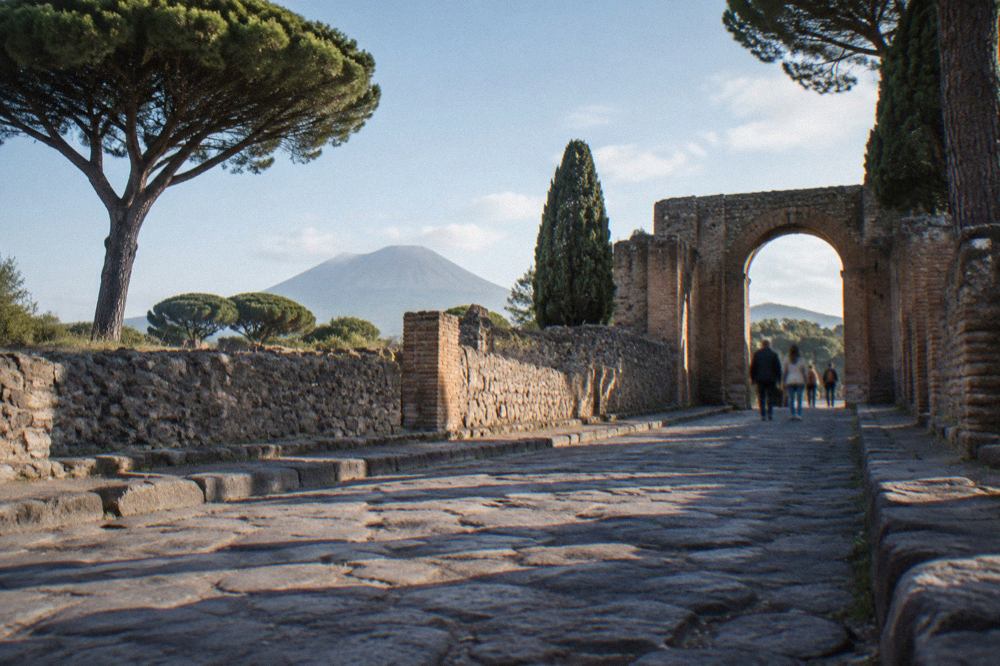
The park sold 4,000,090 tickets in 2025 across the Pompeii site itself, so the gates are genuinely busy for much of the year. Where you join the queue matters, and so does when. The details below come from the park's own ticketing and visitor-regulation pages, and every price carries its 2026 validity, because the structure changes on 1 January 2027.
How Many Entrances Does Pompeii Have?
Pompeii has three entrances with ticket offices, Porta Marina, Piazza Esedra and Piazza Anfiteatro, plus a fourth gate at Porta Ercolano / Street of the Tombs used for the suburban villas route, where Express ticket holders can add that route for EUR 8, card payment only. Each gate is named on the park's official ticketing page, and no other entrance exists for visitors. Knowing the four names is the single most useful piece of planning for the site.
Porta Marina is the historic main gate on the seaward side of the city, the one closest to the Circumvesuviana railway station Pompei Scavi-Villa dei Misteri. The three are connected inside the park, so you can enter at one and, within the ticket rules, structure your walk to finish near another.
The fourth name, Porta Ercolano / Street of the Tombs, is different in kind. It is not a full ticket office but the access point for the suburban villas route, which takes in the Villa of the Mysteries and Villa diomedes outside the city walls. Holders of the 2026 Pompeii Express ticket, which covers the ancient city only, can add this route on the spot for EUR 8, payable by card only, at that gate. Holders of the Pompeii+ ticket already have it included.
For orientation before you go, the Pompeii map guide and the park overview on the map page show all four gates in relation to the excavations, the modern town and the station.
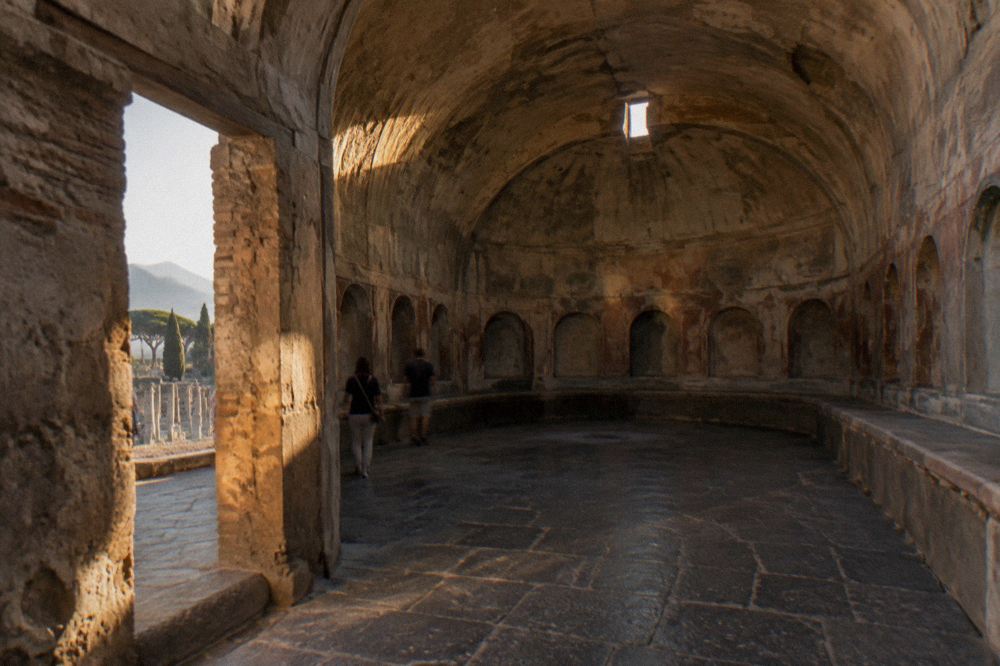
Which Pompeii Entrance Should A First-Time Visitor Use?
Porta Marina is the entrance to choose on a first visit, because it opens directly onto the Forum end of the city, where the Basilica, the Temples and the main thoroughfares begin, and it sits beside the Pompei Scavi-Villa dei Misteri railway station that carries arrivals from Naples and Sorrento. The trade-off is that it draws the largest share of the daily 20,000-visitor cap, so queues form early in the morning.
The classic first-visit walk runs from Porta Marina up to the Forum, along the main streets past the Baths and the Lupanar, and finishes near the Amphitheatre. Enter at Porta Marina and that sequence unrolls naturally in one direction. Enter at Piazza Anfiteatro instead and you walk it in reverse, which some travellers prefer precisely because it thins the crowds at the start of the day.
The station pairing is the other half of the decision. The Circumvesuviana line from Napoli Garibaldi calls at Pompei Scavi-Villa dei Misteri, and that station serves the Porta Marina side of the park; the Circumvesuviana train guide covers the line in detail. If you are coming from Naples, the pairing of that station with Porta Marina is hard to beat, and the Naples to Pompeii guide walks through the whole journey. From Sorrento the same line runs north, covered in the Sorrento to Pompeii guide, and the express-tour-by-train products from Sorrento use this same arrival.
One suspended service matters here: the Campania Express, the premium stopping train on the same network, has been suspended since 1 October 2026 until further notice, per the operator EAV's own page on the service, so no arrival plan should rely on it; the Campania Express guide explains what changed and how refunds work.
Choosing an entrance also means choosing what kind of visit you want. A guided small-group walk with an archaeologist meets at a fixed gate and follows a set route, which removes the orientation problem entirely; the trio above shows three formats, from a small-group tour of the city to full-day experiences that pair the ruins with Vesuvius and its wine, or with a cooking class in Naples.
What Is The Porta Marina Entrance Like?
Porta Marina is the park's original and busiest entrance, set into the western wall of the ancient city below the Forum, reached on foot from the Pompei Scavi-Villa dei Misteri station. It has a ticket office, security screening and access up into the city via the steep old Roman roadway, and in the summer season its last admission is 17:30 with the park closing at 19:00.
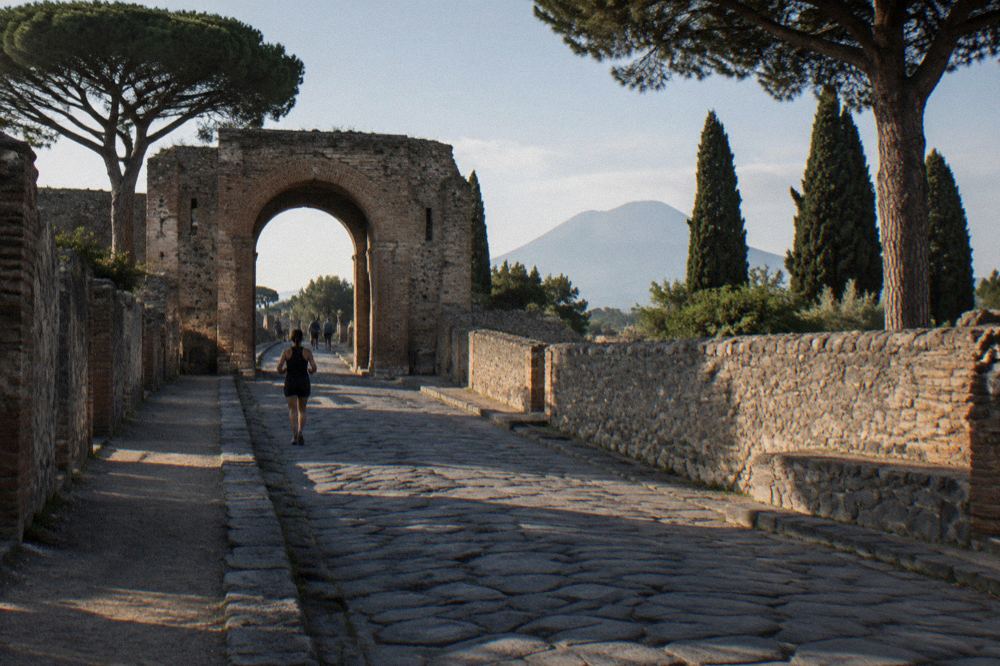
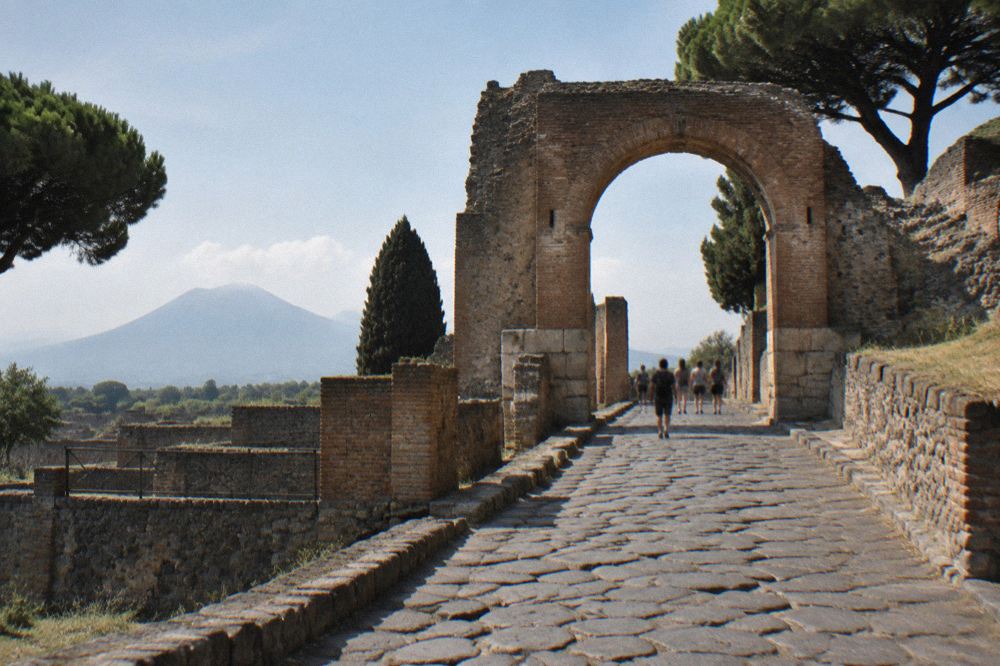
The gate itself is a piece of archaeology: a double-arched passage the Romans cut through the city's western defences, steep enough that ancient carts were barred from it. Emerging at the top puts you a short walk from the Temple of Apollo and the Forum, the ceremonial heart of the city, with Mount Vesuvius framed directly ahead. That first view is why the gate keeps its following despite the queues.
Practically, Porta Marina bears the heaviest arrivals of the three ticket offices because it pairs with the railway. The time-slot system spreads the load: in the current season, running 16 March to 14 October, the 9:00-13:00 window carries up to 15,000 entries and the 13:00-17:30 window up to 5,000, per the park's ticketing page. Arriving for the first slot of the morning, or after 13:00, is the reliable way to shorten the wait at this gate.
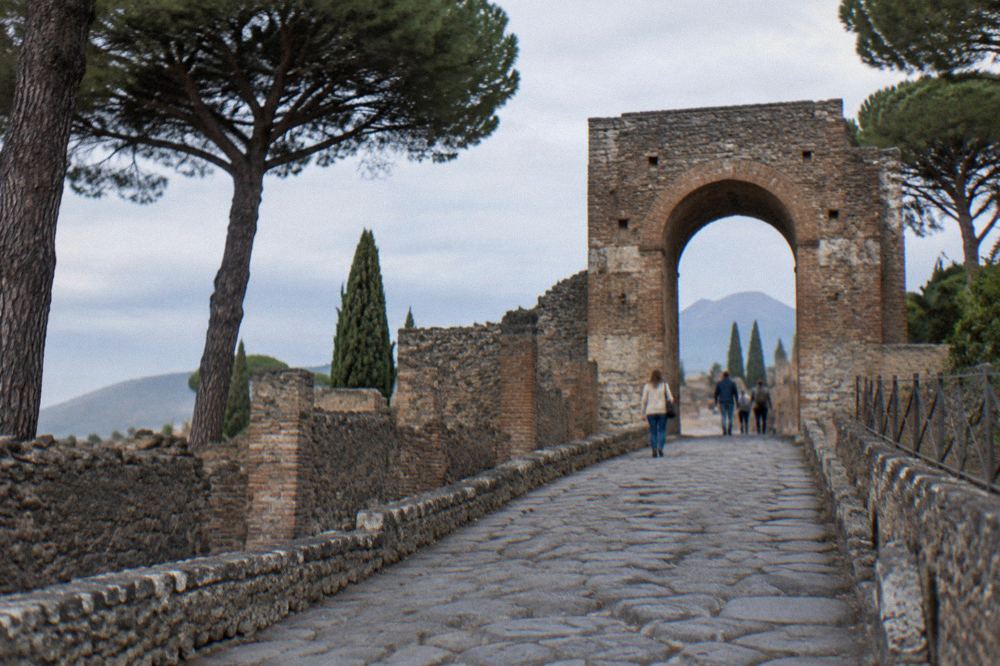
The steepness at Porta Marina is worth knowing in advance. The passage climbs from the ticket area into the city, and travellers with pushchairs or limited mobility find it the hardest of the gates. The park's accessible route, described in a later section, starts elsewhere.
After the morning inside the walls, food is the next question: the where to eat in Pompeii guide covers the restaurants and snack bars of the modern town, which sit closer to the eastern and northern gates than to Porta Marina.
One pattern worth copying: enter at Porta Marina in the first slot, walk the city west to east over four or five hours, and leave through Piazza Anfiteatro straight into the modern town for lunch. Trains back toward Naples or Sorrento board at the same Scavi station, so the exit adds a walk back west, but many travellers prefer finishing near the town's cafés. You can also check availability for a pizza and tiramisu cooking class in Naples and turn the return journey into dinner plans, since the class sits in the city the train returns you to.
What Is The Piazza Esedra Entrance Like?
The Piazza Esedra entrance shares the same hours, ticket prices and security rules as Porta Marina, but its queues move differently, filling in waves when tour groups arrive rather than steadily through the morning.**
The Esedra gate suits two kinds of visitor. The first is anyone who wants to walk the city in reverse, starting at the Amphitheatre and the Great Palaestra and finishing at the Forum with the view of Vesuvius as a finale.
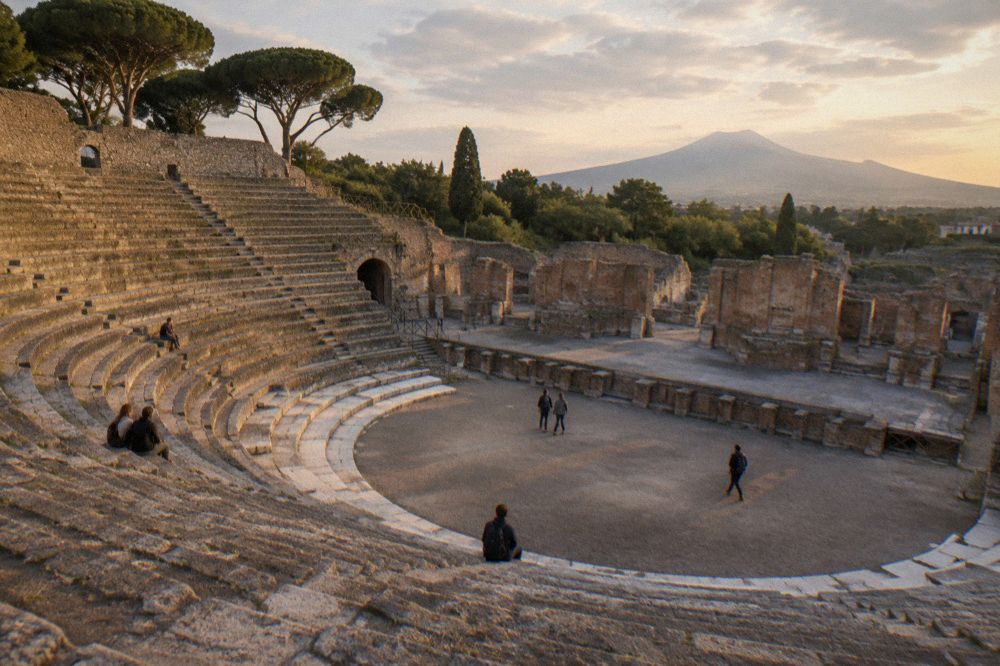
Inside the gate, the palaestra's colonnade and the Amphitheatre are a few minutes' walk apart. The amphitheatre is the oldest surviving Roman stone amphitheatre of its kind and one of the park's most impressive structures; the dedicated Pompeii Amphitheatre guide covers it. From there the route west runs past the Large Theatre and the Odeon toward the city centre.
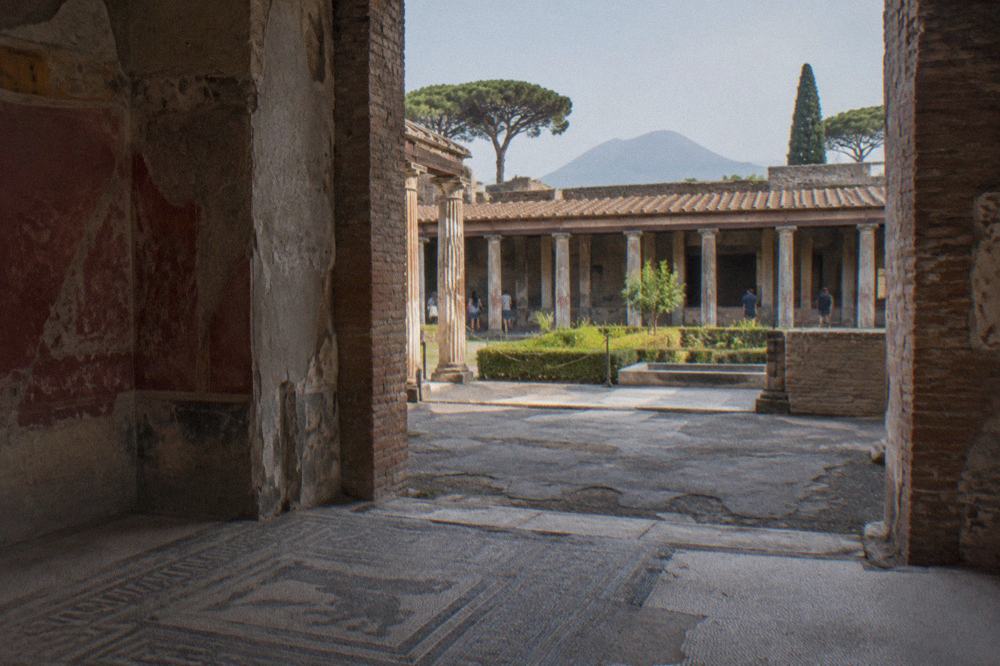
Because group traffic concentrates here, the rhythm at Esedra differs from Porta Marina even though the caps are park-wide rather than per gate. The 9:00-13:00 window takes up to 15,000 visitors across all entrances and the 13:00-17:30 window up to 5,000, so an afternoon entry through Esedra is often the calmest arrival of the day in high season. In winter, from 15 October to 15 March, last entrance moves to 15:30 and the park closes at 17:00.
What Is The Piazza Anfiteatro Entrance Like?
Visitors with mobility difficulties enter at Piazza Anfiteatro and may exit at Piazza Anfiteatro or Piazza Esedra via the Antiquarium lift, per the park's visitor regulations. It is also the quietest of the three offices for much of the day.**
For families, this gate has a further advantage: the walk from here into the city can be shortened at will, and the Pompeii with kids itinerary uses the Amphitheatre quarter as its anchor for exactly that reason. Children tire on Pompeii's uneven stones, and an exit that returns you quickly to the modern town, its cafés and its gelaterias is worth real money by mid-afternoon.
The gate also serves the northern approach from the town's residential streets and car parks; the park-side infrastructure around it is more modern and flatter than the Porta Marina approach. The Pompeii parking guide detail belongs to its own page, but in short, drivers arrive on this side of the site more often than on the seaward side.
Accessibility is the defining feature. The "Pompeii for All" route begins at this entrance and runs along a prepared path through the site, and the regulations page names Piazza Anfiteatro and Piazza Esedra as the paired entry and exit points for it. The full detail sits on the park's accessibility pages and in the Pompeii accessibility guide.
What Is The Porta Ercolano / Street Of The Tombs Entrance For?
Porta Ercolano / Street of the Tombs is the access point for Pompeii's suburban villas route, covering the Villa of the Mysteries and Villa diomedes outside the northwest wall. In 2026, holders of the EUR 20 Pompeii Express ticket can add this route for EUR 8, card payment only, at this gate; holders of the EUR 25 Pompeii+ ticket already include it, along with Villa Regina and the Antiquarium at Boscoreale plus the shuttle.
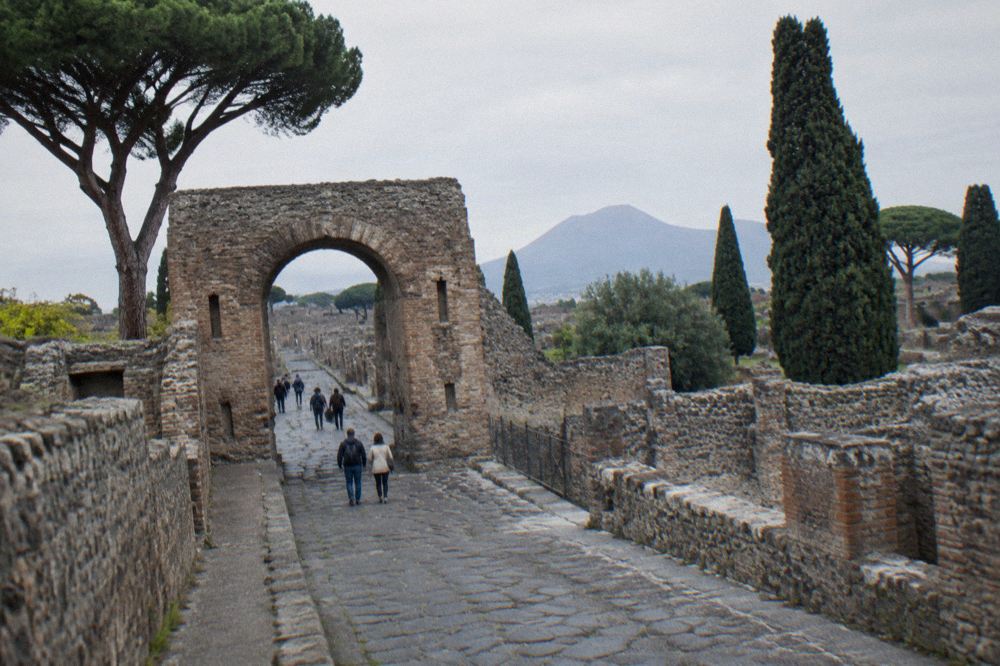
The Street of the Tombs itself is one of the most evocative stretches at Pompeii: the Roman road out of the city toward Herculaneum, lined with the family tombs of the town's wealthier citizens, exactly as travellers in antiquity would have seen it. It ends at the Villa of the Mysteries, the best-preserved of the suburban villas, famous for its cycle of frescoes; the Villa of the Mysteries guide covers the building and its paintings in full.
Timing matters at this gate. Because it is an add-on rather than a full entrance, the flow here is thinner, and an afternoon visit to the villas after a morning in the city is a pattern the park's own ticket design invites. The Villa of the Mysteries also sits closest of all the major monuments to the Pompei Scavi railway station side of the site, which makes it a natural last stop before departure for anyone heading back toward Naples or Sorrento.
Whether the villas are worth the extra EUR 8 is a fair question with a clear answer for anyone with more than a few hours: the frescoes of the Villa of the Mysteries are among the finest survivals of Roman painting, and the setting outside the walls shows a side of the city the Forum cannot. The is it worth doing the villas at Pompeii question is examined in its own article, but the short version is that the route rewards the second half of a full day.
Which Pompeii Entrance Is Closest To The Train?
The Pompei Scavi-Villa dei Misteri station on the Circumvesuviana Napoli-Sorrento line serves the Porta Marina side of the park, and it is the arrival point for journeys from both Naples and Sorrento. Scheduled running times computed from the operator EAV's own timetable data give Napoli Garibaldi to Pompei Scavi as 29 to 35 minutes, and Pompei Scavi to Sorrento as 34 to 40 minutes.
Those times come from EAV's published timetable feed rather than an estimate, and they make the station-to-gate pairing the backbone of independent travel to the ruins. From Naples the route is direct; the detail of buying tickets and finding the right platforms at Napoli Garibaldi is covered in the Naples to Pompeii guide. From Sorrento the line runs the other way down the peninsula, covered in Sorrento to Pompeii, and the best way to visit Pompeii from Sorrento question has its own answer page.
The Pompei town station, Santuario, serves the modern town and the Sanctuary rather than the excavations; the distinction between the two stations trips up a remarkable number of itineraries.
From Rome, the standard plan is a high-speed train to Naples and then the Circumvesuviana, and the Rome to Pompeii day trip guide and the Rome to Pompeii by train guide compare it against the escorted coach day trips that arrive directly at the Piazza Esedra side. Both end at the same gates.
What Tickets Do You Need At Each Entrance In 2026?
In 2026, the Pompeii Express ticket costs EUR 20 and covers the ancient city at all three ticketed entrances; Pompeii+ costs EUR 25 and adds the suburban villas route plus Villa Regina, the Boscoreale Antiquarium and the shuttle; the 3-day ticket costs EUR 30 and adds Oplontis, the Stabiae sites and Boscoreale. Under-18s enter free, EU citizens aged 18 to under 25 pay EUR 2 reduced, and everyone enters free on the first Sunday of the month.
The structure changes on 1 January 2027: a single EUR 25 ticket will cover all park sites, valid 30 days with one entry per site, while the three smaller sites, Oplontis, the Stabiae museum and Boscoreale, stay EUR 8 individually and the MyPompeii Card stays EUR 45. The park's release of 14 September 2026 confirms the nominative ticket and the 20,000 daily cap are retained. Nothing printed in the 2026 table below should be treated as evergreen.
| Ticket (2026) | Price | Covers | Notes |
|---|---|---|---|
| Pompeii Express | EUR 20 | Ancient city only | Suburban villas add-on EUR 8 at Porta Ercolano, card only |
| Pompeii+ | EUR 25 | City, villas route, Villa Regina, Boscoreale Antiquarium, shuttle | Replaces the add-on purchase |
| 3-day ticket | EUR 30 | Pompeii+ plus Oplontis, Stabiae villas and museum, Boscoreale | Valid across the park's sites |
| Other sites individually | EUR 8 | Oplontis, Stabiae museum or Boscoreale | Bought per site |
| MyPompeii Card | EUR 45 | Annual pass | EUR 10 reduced |
| Reduced (EU 18 to under 25) | EUR 2 | Same coverage as full ticket | ID required at entry |
| From 1 January 2027 | Price | Coverage |
|---|---|---|
| Single park ticket | EUR 25 | All park sites, valid 30 days, one entry per site |
| Oplontis, Stabiae museum, Boscoreale | EUR 8 each | Sold individually |
| MyPompeii Card | EUR 45 | Unchanged |
Nominative tickets, in force since 15 November 2024, mean your ticket carries your name and identity may be checked at every entry; tickets are non-transferable and non-refundable except in extraordinary closure. Tickets are also valid 30 days from issue for the free partner sites at Buccino, Lettere, Poggiomarino and Terzigno. The full buying detail, including the online sales channel, lives on the Pompeii tickets guide, and the question of whether to buy ahead has its own answer in should I buy tickets to Pompeii in advance.
How Do Time Slots And The Daily Cap Affect Your Entrance?
Pompeii caps entries at 20,000 visitors per day, a limit introduced on 15 November 2024 together with nominative tickets, and splits the day into two windows: 9:00-13:00 with up to 15,000 entries and 13:00-17:30 with up to 5,000, in the season running 16 March to 14 October. In winter, 15 October to 15 March, the park opens at 9:00, takes its last entrance at 15:30 and closes at 17:00.
The cap exists because of days like the one the park itself has disclosed: more than 36,000 visitors passed through on a single free first Sunday, a record that shaped the current policy. First Sundays remain free year-round under the Domenica al Museo scheme, which makes them the days when the cap bites hardest and timed arrival matters most.
| Season | Opens | Last entrance | Closes |
|---|---|---|---|
| 16 March to 14 October | 9:00 | 17:30 | 19:00 |
| 15 October to 15 March | 9:00 | 15:30 | 17:00 |
| Entry window (16 Mar to 14 Oct) | Maximum entries | Split by ticket |
|---|---|---|
| 9:00-13:00 | 15,000 | 12,000 Express / 3,000 Plus |
| 13:00-17:30 | 5,000 | 3,000 Express / 2,000 Plus |
Pompeii itself has no weekly closing day; only Oplontis, the Stabiae villas and museum are marked closed on Tuesdays. The site closes on 25 December and 1 January unless otherwise communicated. The practical reading of the table: an afternoon entry in high season trades two hours of visiting time for a materially calmer gate, which suits anyone combining Pompeii with a morning elsewhere.
What Should You Know About Bags, Closures And Conditions At The Gates?
Bags larger than 30x30x15 cm are not permitted inside Pompeii and must go to left luggage, drones require authorisation, and bare chests are barred, all per the park's visitor regulations. Two closures matter for route planning in 2026: the Praedia of Julia Felix has been closed to the public since 7 September 2026 for maintenance, and at Herculaneum the Villa dei Papiri and the Ancient Theatre are closed for works.
The bag limit is stricter than many sites and catches visitors carrying daypacks; the Pompeii luggage storage guide covers where bags can be left near the gates for travellers arriving with luggage between hotels or from a cruise. Comfort matters too: the surface is ancient Roman paving, uneven and hard, and footwear advice is in what to wear to Pompeii adjacent coverage on the site.
Weather shapes the gate experience more than almost anything else. Open-Meteo's 1991-2020 normals for the Pompei grid point show August averaging a daily maximum of about 29.4 C against February lows of about 6.5 C, with November the wettest month at about 180 mm of rain and July the driest at about 16 mm. Summer arrivals at an exposed gate queue in full sun; the Pompeii in summer heat plan and the Pompeii weather and best time to visit guide build whole strategies around those numbers.
| Month | About daily max C | About daily min C | About rain mm |
|---|---|---|---|
| January | 12.2 | 6.6 | 119 |
| April | 17.7 | 10.4 | 87 |
| July | 28.7 | 21.1 | 16 |
| August | 29.4 | 21.8 | 22 |
| November | 16.9 | 11.5 | 180 |
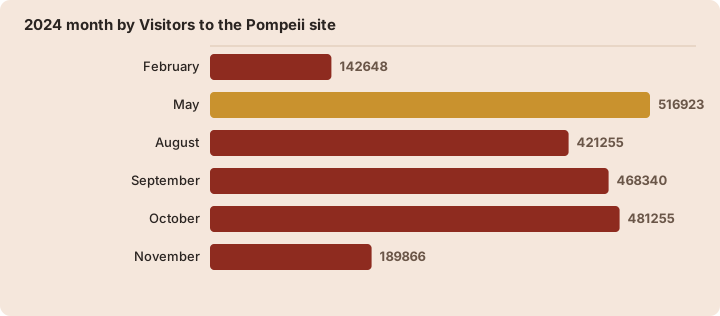
Crowd pressure follows the calendar as much as the clock. The park's own monthly figures for 2024 show May the busiest month at 516,923 visitors and November the quietest full month at 189,866, with February lower still at 142,648.
| 2024 month | Visitors to the Pompeii site |
|---|---|
| February | 142,648 |
| May | 516,923 |
| August | 421,255 |
| September | 468,340 |
| October | 481,255 |
| November | 189,866 |
Should You Pair A Pompeii Entrance With Herculaneum Or Vesuvius?
Travellers with a full day should consider pairing the Porta Marina entrance with a second site: Herculaneum lies on the same Circumvesuviana line toward Naples, and Vesuvius is reachable from the Pompei area by road. The 2026 Herculaneum ticket costs EUR 16 with EUR 2 reduced for EU citizens aged 18 to under 25, and the site is open daily 8:30-19:30 in summer with last entry at 18:00.
The comparison between the two buried cities is genuine and worth making before you commit a second half-day; the Pompeii vs Herculaneum guide sets out the differences in preservation, scale and effort, and the question of doing both in one day has its own page. Herculaneum's own entry details, including its first-Sunday free entry and the additional free days on 25 April, 2 June and 4 November, are in the Herculaneum tickets guide.
Vesuvius pairs naturally with an exit from Pompeii rather than an entrance, since the mountain's access points sit inland of both gates. The Gran Cono trail is sold online only, at EUR 11.68 full and EUR 9.55 reduced as sold, with 50 tickets released per 10-minute slot bookable 30 days ahead and 10 nominative last-minute tickets per slot from 30 minutes before, nominative since 11 April 2026; the trail closes automatically on an orange weather alert or above. The full detail is in the Mount Vesuvius tickets guide and the how to visit Mount Vesuvius guide.
Combining sites independently is entirely feasible using the same railway that brings you to Porta Marina, but the connecting timings reward planning. Small-group products that bundle Pompeii with Herculaneum under one archaeologist guide solve the connection problem, and the two-site format suits travellers who want both cities without buying separate entries or studying timetables.
For a single-focus visit, an entry ticket plus guided tour product removes the last friction at the gate: the ticket is in hand, the meeting point is a named entrance, and the archaeologist leading the walk turns the first hour of orientation into the best hour of the day. The trade-off against fully independent entry is simply cost and a fixed start time.
Common Questions About Pompeii Entrances
How many entrances does Pompeii have?
Three entrances have ticket offices: Porta Marina, Piazza Esedra and Piazza Anfiteatro. A fourth gate, Porta Ercolano / Street of the Tombs, serves the suburban villas route, where Pompeii Express holders can add that route for EUR 8, card payment only, in 2026.
Which Pompeii entrance is closest to the train station?
The Pompei Scavi-Villa dei Misteri station on the Circumvesuviana Napoli-Sorrento line serves the Porta Marina side of the park. Scheduled times from EAV's own timetable data give 29 to 35 minutes from Napoli Garibaldi to Pompei Scavi.
Can you enter Pompeii at one entrance and exit at another?
Yes. The three ticketed entrances are connected inside the park, and a common plan is to enter at Porta Marina and finish near Piazza Anfiteatro or Piazza Esedra. The accessible route enters at Piazza Anfiteatro and can exit at Piazza Anfiteatro or Piazza Esedra via the Antiquarium lift.
Is the Porta Marina entrance steep?
Yes. The gate is a double-arched Roman passage that climbs from the ticket area into the city, and travellers with pushchairs or limited mobility find it the hardest of the gates. The Pompeii for All route starts at Piazza Anfiteatro instead.
What time do Pompeii entrances close?
From 16 March to 14 October the park opens at 9:00, takes its last entrance at 17:30 and closes at 19:00. From 15 October to 15 March last entrance is 15:30 and closing is 17:00. The site closes on 25 December and 1 January.
Do Pompeii tickets depend on which entrance you use?
No. The same 2026 tickets, EUR 20 Express for the city and EUR 25 Pompeii+ including the villas route, apply at all three ticket offices. Only the suburban villas add-on is tied to a specific gate, Porta Ercolano / Street of the Tombs.
Arriving at the right gate, with the right ticket and inside the right time window, is half of a successful day at Pompeii; the other half is what you do once the ancient city opens up in front of you. Walk through Pompeii Travel Guide for the fuller planning picture, from the ruins themselves to the food and the mountain above them.