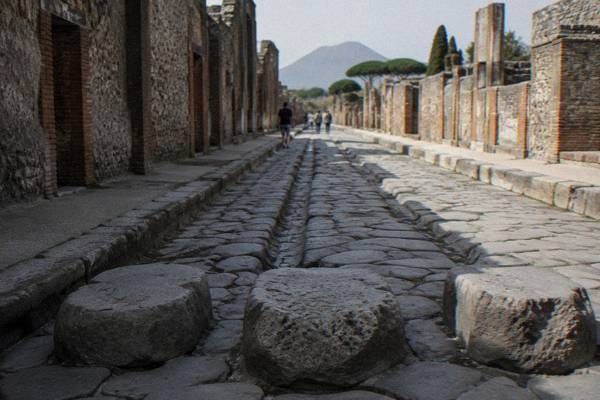
Temple Of Apollo Pompeii
The Temple of Apollo is one of the oldest and most photographed religious buildings inside the archaeological park of Pompeii, the Roman city buried by Vesuvius in AD 79 and now a UNESCO World Heritage site in Campania, southern Italy, beside the modern town of Pompei about 24 km from Naples.
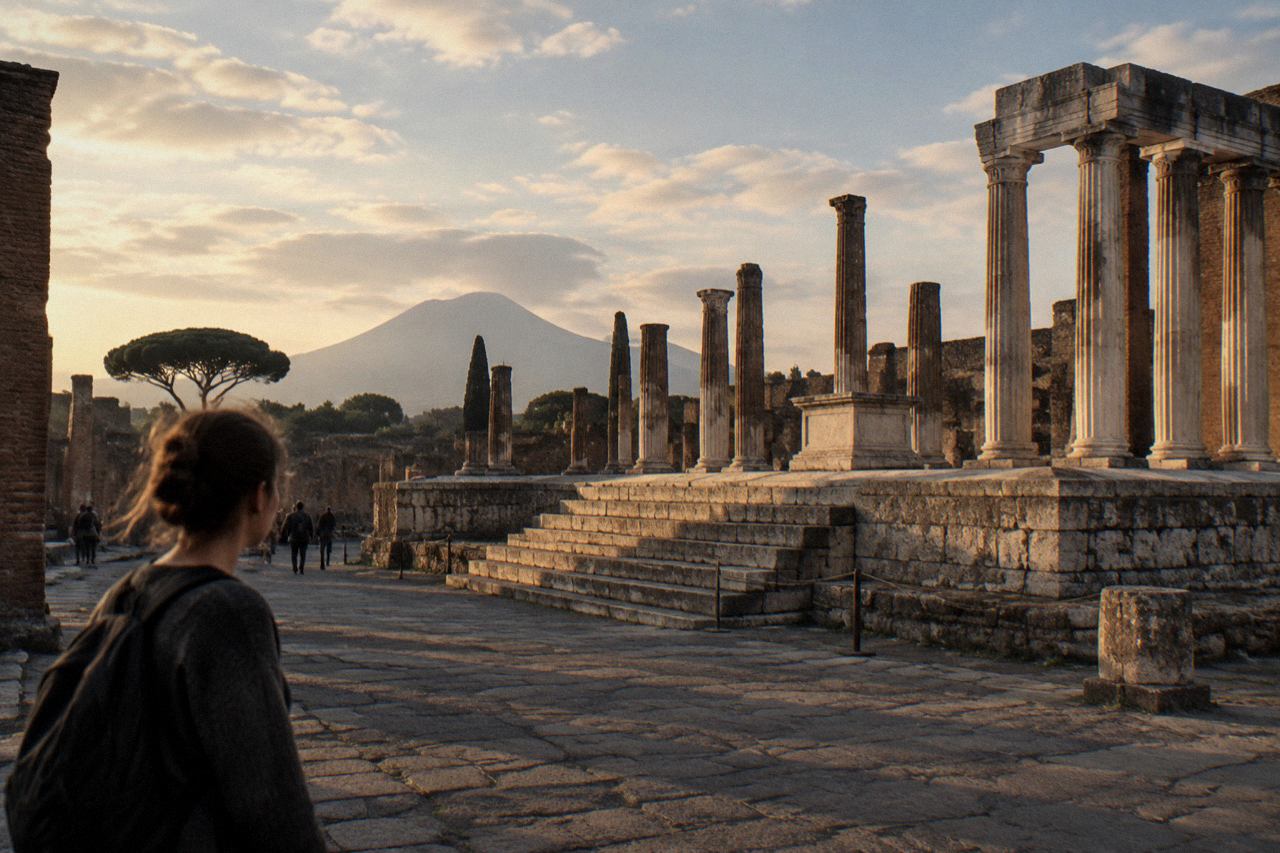
Short answer
The Temple of Apollo stands in the religious heart of ancient Pompeii, beside the Forum in the archaeological park in Campania, Italy. It is covered by the standard park ticket: EUR 20 Pompeii Express in 2026, rising to a single EUR 25 ticket on 1 January 2027. Expect a circuit of columns, an altar and traces of frescoes rather than a roofed building.
The Temple of Apollo is one of the religious landmarks of ancient Pompeii, the Roman city buried by the eruption of Mount Vesuvius in AD 79 and today the Parco Archeologico di Pompei, an archaeological park in Campania, southern Italy. The park sits beside the modern town of Pompei on the Bay of Naples, about 24 km by road south-east of Naples, and is visited through three named ticket entrances: Porta Marina, Piazza Esedra and Piazza Anfiteatro. The temple itself belongs to the cluster of sanctuaries around the Forum, the civic and religious centre of the ancient city, and it is on the standard route every visitor walks between the entrance and the Forum itself.
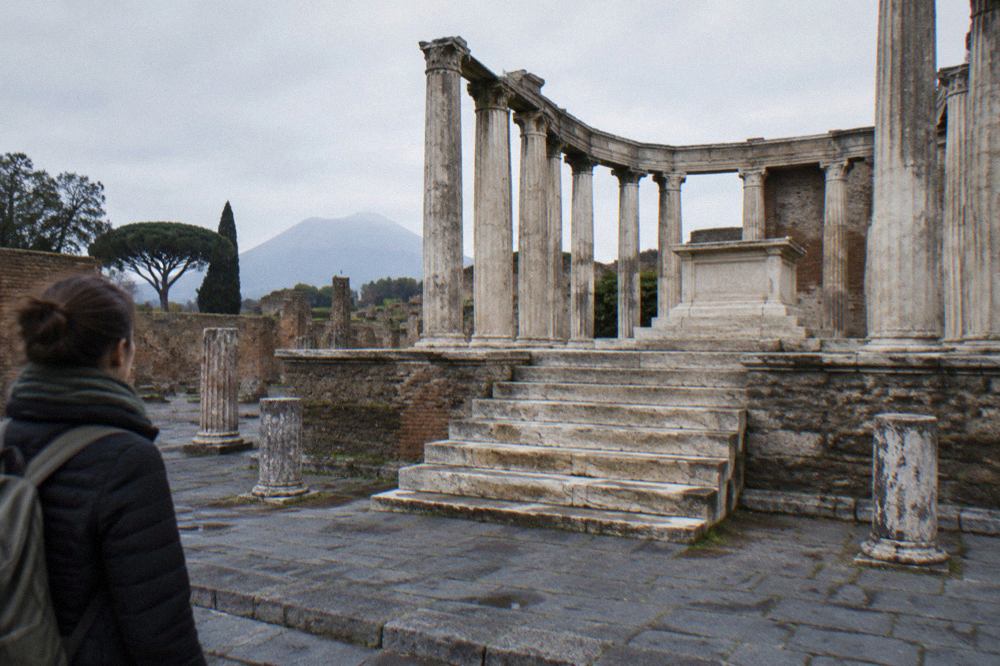
What Is The Temple Of Apollo In Pompeii?
The Temple of Apollo is a Roman temple in the ancient city of Pompeii, dedicated to the god Apollo, and it forms part of the sanctuary area beside the Forum inside the archaeological park in Campania, Italy. It was buried by the eruption of Vesuvius in AD 79, traditionally dated to 24 August, and excavated as part of the 44 hectare excavated area of the park. Today it is an open-air ruin of columns, platform and altar.
Apollo was a Greek god adopted into Roman religious life, and a temple to him in a forum setting was a familiar arrangement in cities across the Roman world. At Pompeii the sanctuary belongs to the group of buildings that gave the city its public religious identity, alongside the other temples and civic structures of the Forum area described in the Forum of Pompeii guide. The eruption of AD 79 sealed the building under volcanic debris, and the excavations that began after the city's rediscovery exposed it again as a roofless shell.
The date of the eruption deserves a note, because it is genuinely disputed. The oldest manuscripts of Pliny the Younger give 24 August AD 79, which is the traditional date. The park's own e-journal states that the alternative 24 October date has no evidentiary basis, while also noting that 24 August is not necessarily correct either. Honest reporting keeps the traditional date and the debate together, which is how this site treats it everywhere.
The temple is one of the stops covered by a small group tour with an archaeologist, the featured way to see it with context; you can also Check availability on the operator's live listing. The temple sits on the standard walking route, so no special access or separate arrangement is needed to reach it.
Where Is The Temple Of Apollo Within The Site?
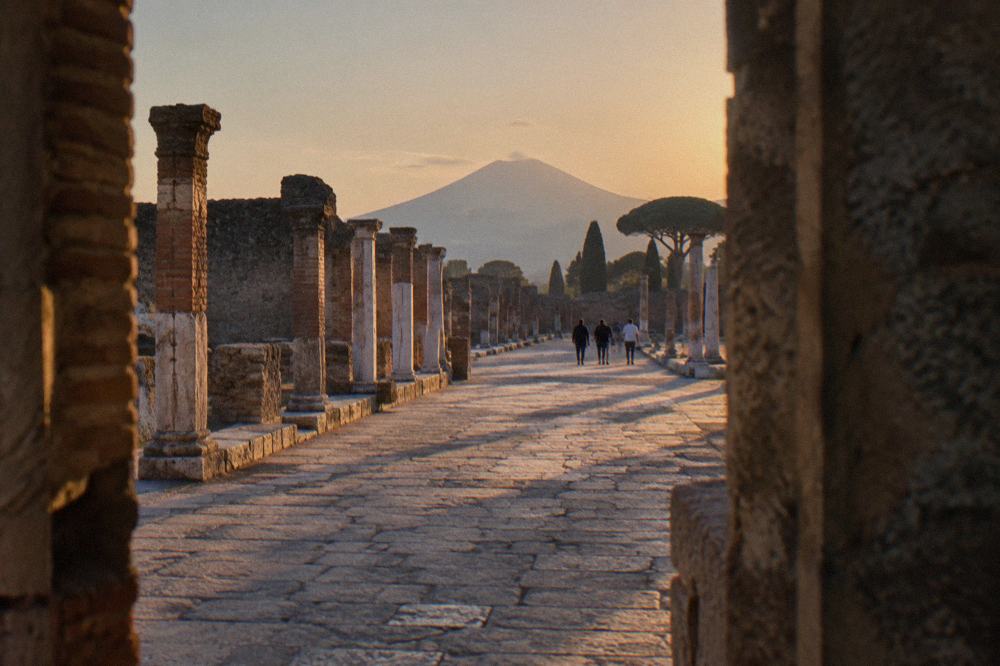
The temple stands in the sanctuary area at the edge of the Forum, the civic centre of ancient Pompeii, a short walk from the Porta Marina entrance inside the archaeological park. From Porta Marina the route runs uphill through the ancient streets to the open Forum terrace, where the temple's columned platform is visible. It is one of the easiest major buildings to reach on any first visit.
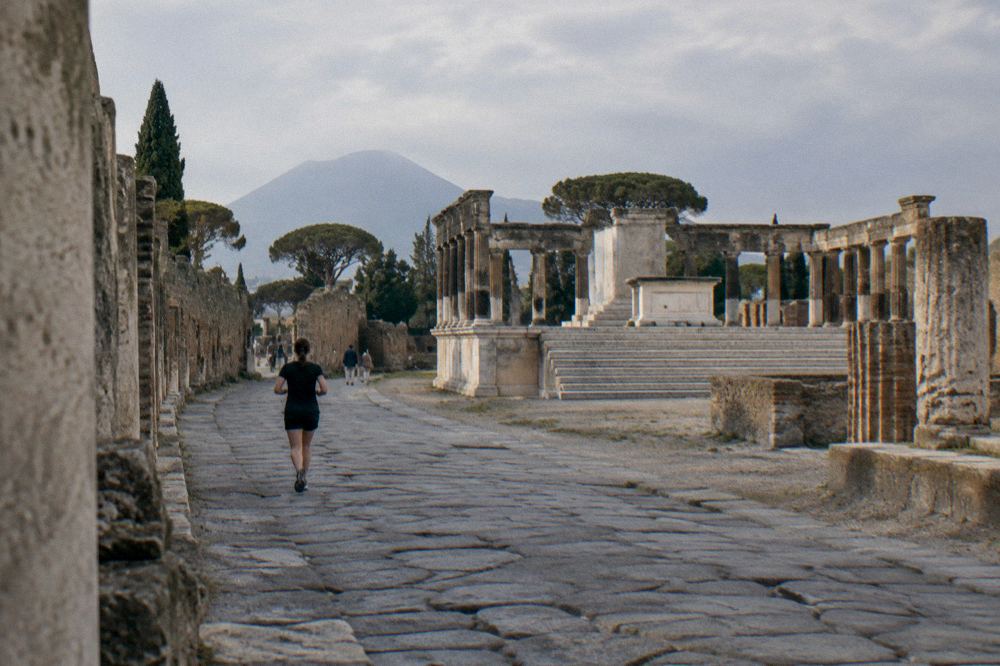
The Forum was the political, commercial and religious heart of the city, and the temples around it were its skyline. The Temple of Apollo shares that stage with the larger temple at the Forum's northern end and the public buildings ranged along its flanks, including the Basilica of Pompeii, the law court that stood nearby. Walking the sequence, entrance, streets, Forum, basilica, gives the temple its context: it is not an isolated monument but part of a designed civic ensemble.
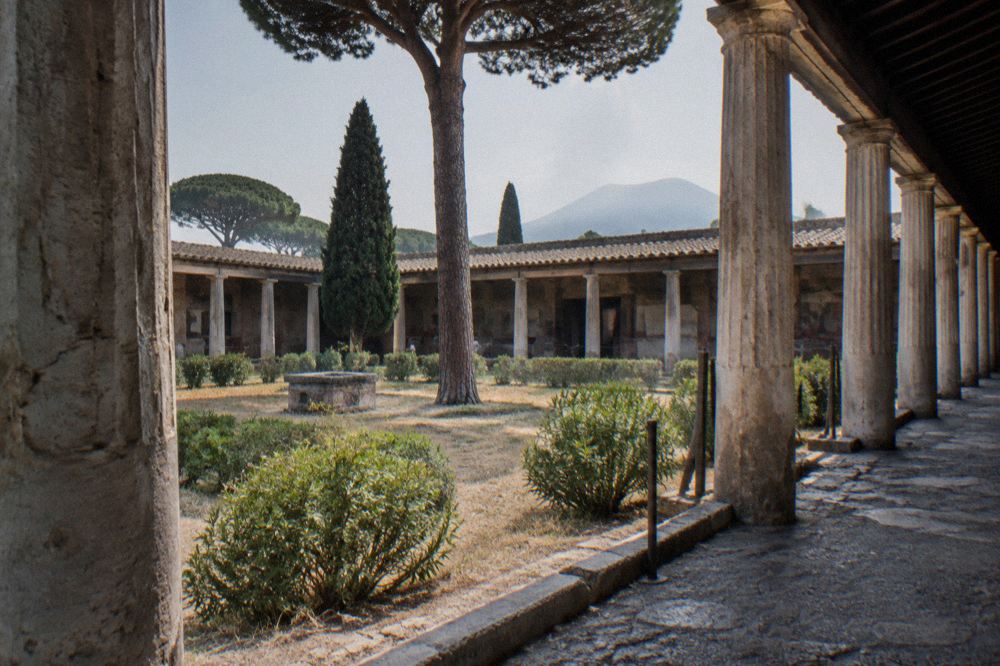
For orientation, the Pompeii map page shows the layout of the whole excavated city, and the park's own signage marks the Forum area clearly from every entrance. The excavated area covers 44 hectares within a 98 hectare inscribed UNESCO property, so distances inside are real: comfortable shoes and water matter more than any specific itinerary trick.
What Can You See At The Temple Of Apollo Today?
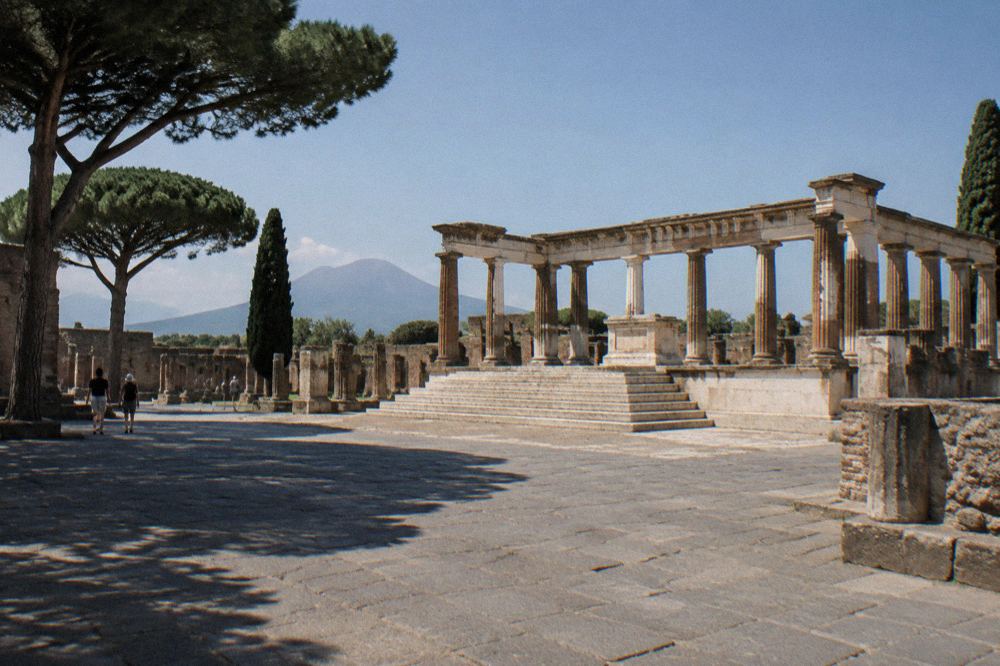
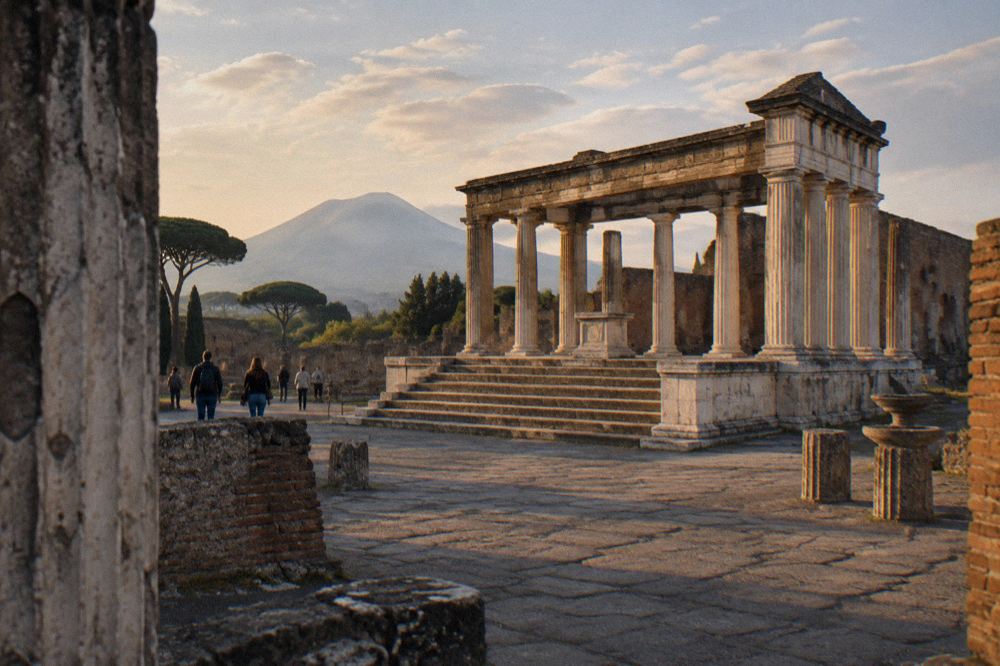
Visitors see a rectangular raised platform, a circuit of standing and reconstructed columns, the altar that stood in front of the steps, and the outline of the surrounding portico, all in the open air. The temple is a ruin, not a restored building, so there is no roof or interior furnishing; its interest is architectural form, the altar placement and the sculptural echoes of the sanctuary. Photography is unrestricted in normal visitor conditions.
The sanctuary reads best as a composition. You approach across the paved open space, register the platform and the column shafts against the sky, then register the altar, which in Roman ritual practice stood in front of the temple facing the street, so sacrifices happened outdoors in public view. That single arrangement tells you more about Roman religion than any placard: the god's house and the community's ritual space were deliberately separate.
Sculpture connected to the sanctuary was removed during the long history of excavation, and pieces associated with the site's gods are held in museums, above all the Naples National Archaeological Museum, which holds the major collections from the whole Vesuvian area. What remains in situ is architecture, and it rewards slow looking: the column rhythm, the masonry of the platform, the way the building addresses the square. The nearby [Temple of Apollo neighbours] cannot be covered in isolation forever, and the other Forum religious buildings reward the same attention.
A guided visit turns the stones into a story.
Beyond the Forum cluster, the same ticket covers houses and trades across the city, from the House of the Faun to the Bakery of Modestus, and the depth of those holdings is why the park rewards a full morning rather than a dash.
Which Ticket Covers The Temple Of Apollo In 2026?
The temple needs no separate ticket: every 2026 Pompeii park ticket includes it, and the cheapest is Pompeii Express at EUR 20 for the ancient city alone. Pompeii+ costs EUR 25 and adds the suburban villas route, while the 3-day ticket at EUR 30 adds Oplontis, the Stabiae sites and Boscoreale. From 1 January 2027 these merge into a single EUR 25 ticket for all park sites.
| 2026 ticket | Price | Covers |
|---|---|---|
| Pompeii Express | EUR 20 | Ancient city, including the Temple of Apollo and Forum |
| Pompeii+ | EUR 25 | City plus suburban villas route, Villa Regina and Boscoreale Antiquarium, shuttle |
| 3-day ticket | EUR 30 | Pompeii+ plus Oplontis, Stabiae villas and museum, Boscoreale |
| Other sites individually | EUR 8 | Oplontis, Boscoreale, Stabiae museum, each separately |
| My Pompeii Card | EUR 45 | Annual pass, EUR 10 reduced |
Reductions matter here. Entry is free for everyone under 18, and for everyone on the first Sunday of the month under the Domenica al Museo scheme, which runs year-round. EU citizens aged 18 to under 25 pay a reduced EUR 2, a rate that also applies to non-EU holders of an Italian residence permit. On free first Sundays the park has recorded more than 36,000 visitors in a single day, so the temple forecourt can feel like a station concourse; a paid day is calmer.
The 2027 change is confirmed on the park's own site and is worth planning around. From 1 January 2027 one EUR 25 ticket covers all park sites, valid 30 days with one entry per site; Oplontis, the Stabiae museum and Boscoreale stay EUR 8 individually, and the My Pompeii Card stays EUR 45. Nominative tickets and the 20,000 daily cap are retained. In practical terms, a late-2026 visit under the old structure is cheaper for the city alone, and a 2027 visit is simpler.
Buying in advance is sensible in season because of the daily cap and the time-slot system. The full mechanics, vivaticket links and the details of each tier are covered in the Pompeii tickets guide, which also explains the EUR 8 add-on that lets Express holders add the suburban villas route at the Porta Ercolano entrance, card payment only.
When Is The Temple Open And When Should You Visit?
The park, and with it the temple, opens at 9:00 every day, with last entrance at 17:30 and closing at 19:00 from 16 March to 14 October, and last entrance at 15:30 with a 17:00 close from 15 October to 15 March. The temple has no separate hours or closing day; the site closes only on 25 December and 1 January unless otherwise communicated.
| Season | Opens | Last entry | Closes |
|---|---|---|---|
| 16 March to 14 October | 9:00 | 17:30 | 19:00 |
| 15 October to 15 March | 9:00 | 15:30 | 17:00 |
The time-slot system splits the day at 13:00 in the 16 March to 14 October season: the 9:00 to 13:00 band carries up to 15,000 visitors and the 13:00 to 17:30 band up to 5,000. The practical reading is simple, the afternoon is the quieter half of the day, and the temple's columns photograph well in the later light. Arriving for the first slot of the morning is the other calm option, before the tour groups thicken.
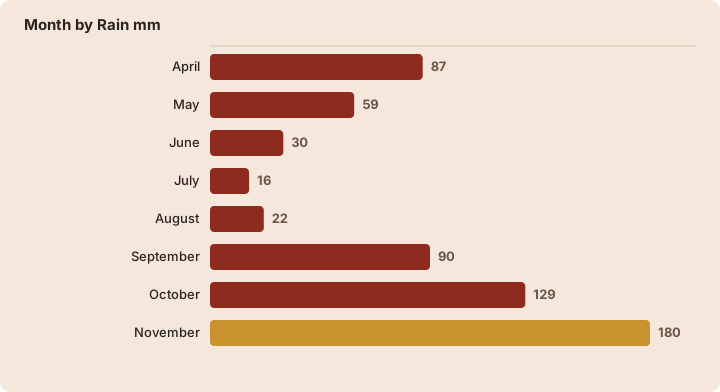
Climate should shape the choice of month as much as the clock. These are averages computed from the Open-Meteo historical archive for the Pompei grid point, a reanalysis rather than a weather station, so they are approximate.
| Month | Mean daily max C | Mean daily min C | Rain mm |
|---|---|---|---|
| April | about 17.7 | about 10.4 | about 87 |
| May | about 21.6 | about 14.1 | about 59 |
| June | about 25.8 | about 18.2 | about 30 |
| July | about 28.7 | about 21.1 | about 16 |
| August | about 29.4 | about 21.8 | about 22 |
| September | about 25.3 | about 18.6 | about 90 |
| October | about 21.3 | about 15.1 | about 129 |
| November | about 16.9 | about 11.5 | about 180 |
August has the highest mean daily maximum at about 29.4 C, and November is the wettest month at about 180 mm of rain, while July is the driest at about 16 mm. The Forum is exposed stone with little shade, so summer midday visits are a matter of hats, water and short exposures; the heat question is covered in depth in the site's summer planning material. Spring and autumn give the best balance of light, temperature and crowd levels for a monument you will want to stand still in front of.
Which Tours Take You Past The Temple?
Any guided tour of Pompeii's ancient city passes the temple, because it sits beside the Forum on the standard route; what varies is the format. Small-group archaeologist tours run about two hours in the city, private tours set their own pace, and full-day combinations from Naples or Sorrento add Vesuvius or Herculaneum. Prices and ratings for each live on the operator's listing rather than in this article.
| Tour format | Where it starts | Best suited to |
|---|---|---|
| Small-group archaeologist walk | In the park | First-time visitors wanting interpretation |
| Private official-guide tour | In the park | Families and anyone with specific interests |
| Ticket-plus-guide combo | In the park | Visitors who want entry handled for them |
| Two-site day trips from Naples | Naples | Travellers pairing Pompeii with Herculaneum or Vesuvius |
The featured option on this site is the small-group tour with an archaeologist, which covers the Forum temples among its highlights and keeps group numbers low. Two neighbouring formats do the same ground differently: the entry-ticket-plus-guided-tour product bundles admission with the walk, and the private official-guide option buys exclusivity for a group of up to fourteen. Both are listed with full details on the tour pages.
For visitors basing themselves in Naples, the three-site day trip that strings Pompeii, Herculaneum and Vesuvius into one long day is the efficient choice, while the elite Pompeii and Vesuvius tour adds a lunch stop and a slower rhythm. Both appear in the selection band above with live figures. Cruise passengers have their own constraint, the ship's clock, and the shore excursion options are compared in the site's cruise-day coverage.
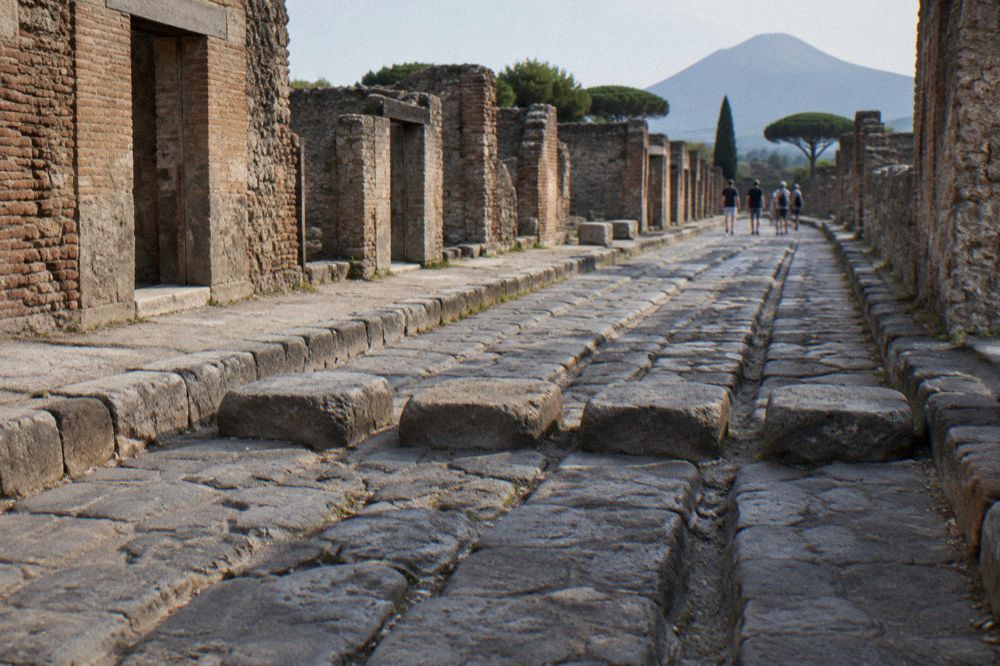
The per-group private tour with an official guide is priced for the whole group rather than per person, which changes the arithmetic for larger families.
How Does The Temple Compare With Pompeii's Other Sights?
The Temple of Apollo is a compact, five-minute stop best valued as part of the Forum ensemble, unlike the big houses such as the House of the Faun or the Villa of the Mysteries, which each justify half an hour or more. Nothing else in the park offers the same temple-and-altar arrangement in the civic centre, though the suburban villas outclass it for interior decoration. Choose depth in the houses, context at the temple.
| Sight | Type | What rewards the visit |
|---|---|---|
| Temple of Apollo | Forum sanctuary | Architecture, altar, civic setting |
| Forum of Pompeii | Civic space | The whole public ensemble in one view |
| House of the Faun | Grand residence | Mosaics and scale of a wealthy domus |
| Villa of the Mysteries | Suburban villa | Fresco cycle, on the villas route |
| Pompeii Amphitheatre | Entertainment building | Arena architecture, capacity |
| Garden of the Fugitives | Memorial site | Casts of victims, quiet reflection |
The comparison matters because time inside the park is finite and the site is large. A two-hour visit can reasonably take in the Forum temples and one or two houses; a full day can add the amphitheatre quarter and the suburban villas. The site's planning pages, including the two-hour and one-day itineraries, break these routes down stop by stop, and each of the monuments above has its own attraction page on this site.
One practical note for villa planners: the suburban villas route runs from the Porta Ercolano end of the site along the Street of the Tombs, and the Villa of the Mysteries can be added to an Express ticket for EUR 8 at that entrance, card payment only. Closer to the temple, the Praedia of Julia Felix has been closed to the public since 7 September 2026 for maintenance, so it should not feature in any current plan. These are exactly the moving parts that make a printed itinerary age badly.
What Should You Know Before Visiting The Temple?
Bring ID with your nominative ticket, a bag no larger than 30x30x15 cm, water and sun protection, because the Forum is unshaded stone; the same park regulations govern the temple as the rest of the site. Visitors with mobility difficulties use the Pompeii for All route, entering at Piazza Anfiteatro, though the ancient paving is uneven everywhere. Drones need authorisation and bare chests are not permitted.
The bag rule is enforced in practice: anything above 30x30x15 cm goes to left luggage, so travel light. Tickets are nominative, non-transferable and non-refundable except in cases of extraordinary closure, and identification may be checked at every entry. On the transport side, the Circumvesuviana railway serves the Pompei Scavi-Villa dei Misteri station opposite the Porta Marina side of the site, with scheduled journey times of 29 to 35 minutes from Napoli Garibaldi in the current EAV timetable data; the Campania Express service has been suspended since 1 October 2026, so check the operator EAV's own timetable before relying on any rail plan.
Accessibility inside the Forum area is limited by the archaeology itself. The park's Pompeii for All itinerary starts at Piazza Anfiteatro and offers an exit at Piazza Anfiteatro or Piazza Esedra via the Antiquarium lift, which helps visitors with mobility difficulties cover a defined circuit, but the temple's position on the Forum terrace means the standard approach involves ancient paving and steps. The full details, including the Artebus shuttle with its luggage storage and its lack of disabled access, are laid out in the accessibility material on this site.
Common Questions About The Temple Of Apollo In Pompeii
Is the Temple of Apollo included in the Pompeii ticket?
Yes. Every park ticket covers it, from the EUR 20 Pompeii Express in 2026 to the EUR 25 Pompeii+ and EUR 30 3-day ticket. From 1 January 2027 the single EUR 25 ticket covers all park sites. No separate or supplementary ticket exists for the temple.
How long should I spend at the Temple of Apollo?
Allow roughly five to ten minutes to look at the platform, columns and altar, longer with a guide who explains Roman ritual. It is one stop within the Forum ensemble rather than a destination in itself, so plan it as part of a Forum circuit of thirty minutes or more.
Where is the Temple of Apollo in Pompeii?
It stands beside the Forum, the civic centre of the ancient city, within the Parco Archeologico di Pompei in Campania, southern Italy. From Porta Marina it is a short uphill walk through the ancient streets; from Piazza Esedra or Piazza Anfiteatro it lies at the far end of the standard route.
Is the original statue of Apollo still at the temple?
No. Sculpture associated with the sanctuary was removed across the long history of excavation, and the major holdings from the Vesuvian sites are in the Naples National Archaeological Museum. What stands at Pompeii is the architecture: platform, columns and altar.
When was the Temple of Apollo destroyed?
It was buried, not destroyed, by the eruption of Mount Vesuvius in AD 79, traditionally dated to 24 August, a date the park's own journal notes is debated while rejecting 24 October as baseless. The building survived as a roofless ruin and was re-exposed by excavation.
Is the Temple of Apollo accessible for wheelchair users?
The Forum area involves ancient paving, slopes and steps, and the temple sits on a raised platform. The park's Pompeii for All route enters at Piazza Anfiteatro and allows an exit via the Antiquarium lift, but it does not make the temple platform itself step-free.
Finally, plan the day around the park's scale rather than around any single monument. Four million visitors walked this site in 2025, and the daily cap of 20,000 keeps the peaks bounded but does not make them small. Morning or late afternoon, a booked slot, a guide for the Forum's stories and comfortable shoes remain the honest formula, and this Pompeii Travel Guide exists to fill in everything else, from the Sanctuary of Pompei in the modern town to the trails up Vesuvius.