Basilica Pompeii
The Basilica stands at the south-west corner of the Forum of Pompeii and was the city's law court and commercial heart, the largest public building surviving in the ancient city, in Campania, southern Italy.
Short answer
The Basilica at Pompeii is a large ruined public hall beside the Forum, reached on foot from the Porta Marina or Piazza Esedra entrances. Entry is covered by the Pompeii Express ticket at EUR 20 in 2026, and the site is open 9:00 to 19:00 in summer with last entry at 17:30.
Pompeii, the ancient Roman city buried by the eruption of Mount Vesuvius in AD 79 and now an archaeological park in Campania, southern Italy, beside the modern town of Pompei and about 24 km by road from Naples, keeps its most imposing civic ruin at the south-west corner of the Forum: the Basilica. This was not a church, the Christian meaning of the word came centuries later, but a vast roofed hall where magistrates heard lawsuits and merchants did business. Its fluted brick columns, stripped of their stucco by the eruption and the centuries, still march the length of the nave, and the building remains the largest standing public structure in the excavated city. This guide covers what the Basilica was, exactly what you see today, how to reach it inside the park, and the ticket and timing facts that shape a visit.
What Was The Basilica Of Pompeii Used For?
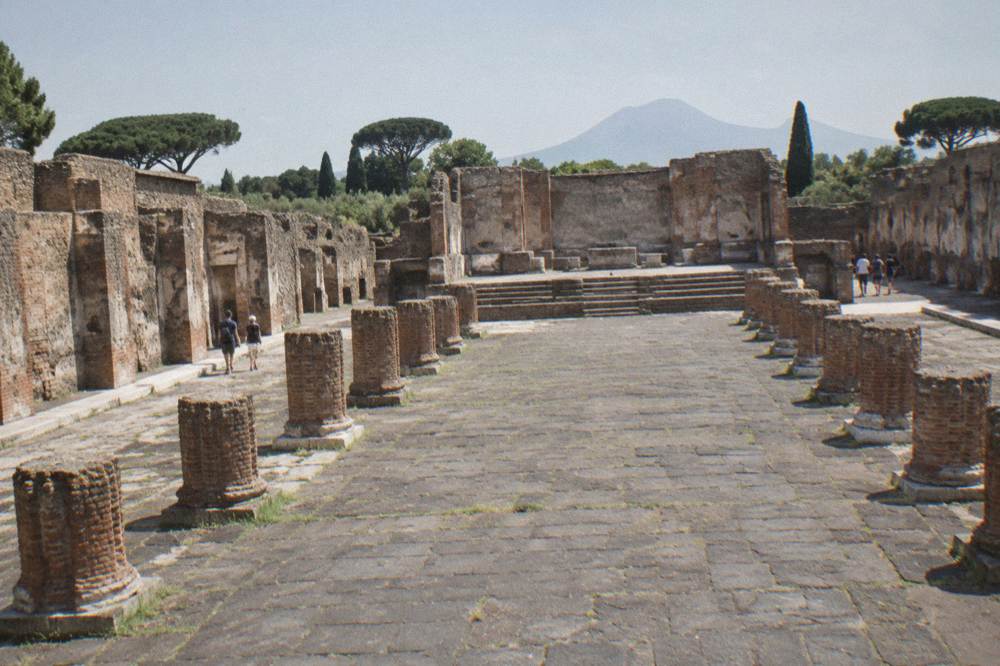
The Basilica was Pompeii's law court and business hall, a vast rectangular roofed building in which the city's magistrates sat in judgment, lawyers argued, and merchants contracted deals in the shade of a roof that no longer survives. It sits on the Forum's south-west side, entered from the Forum itself, and its plan of a central nave flanked by two aisles became the architectural ancestor of the later Christian basilica church. That lineage is why the word survives at all: Roman basilicas were multi-purpose civic halls, and the form, a tall nave with side aisles and an apse or tribunal at the end, was borrowed by the first large churches. In Pompeii the building combined the functions a modern city splits between a courthouse, a trading floor and a registry office. Legal notices and commercial graffiti found on its walls show the practical life of the hall. Visitors today see the lower courses of the great brick columns, the tribunal platform at the far end, and the remains of the entrance staircase from the Forum; the timber roof and the upper gallery are gone, as they were timber and burned or collapsed in the eruption.
The interior makes sense if you picture it in use. The nave ran the length of the hall, with the tribunal where the duoviri, the city's senior magistrates, sat in judgment raised at the western end. Around them, in the aisles and the gallery above, came the public: litigants, witnesses, moneylenders, auctioneers and brokers. Excavation of Pompeii recovered inscriptions and notices that show the Basilica hosting auctions and debt proceedings as well as trials.
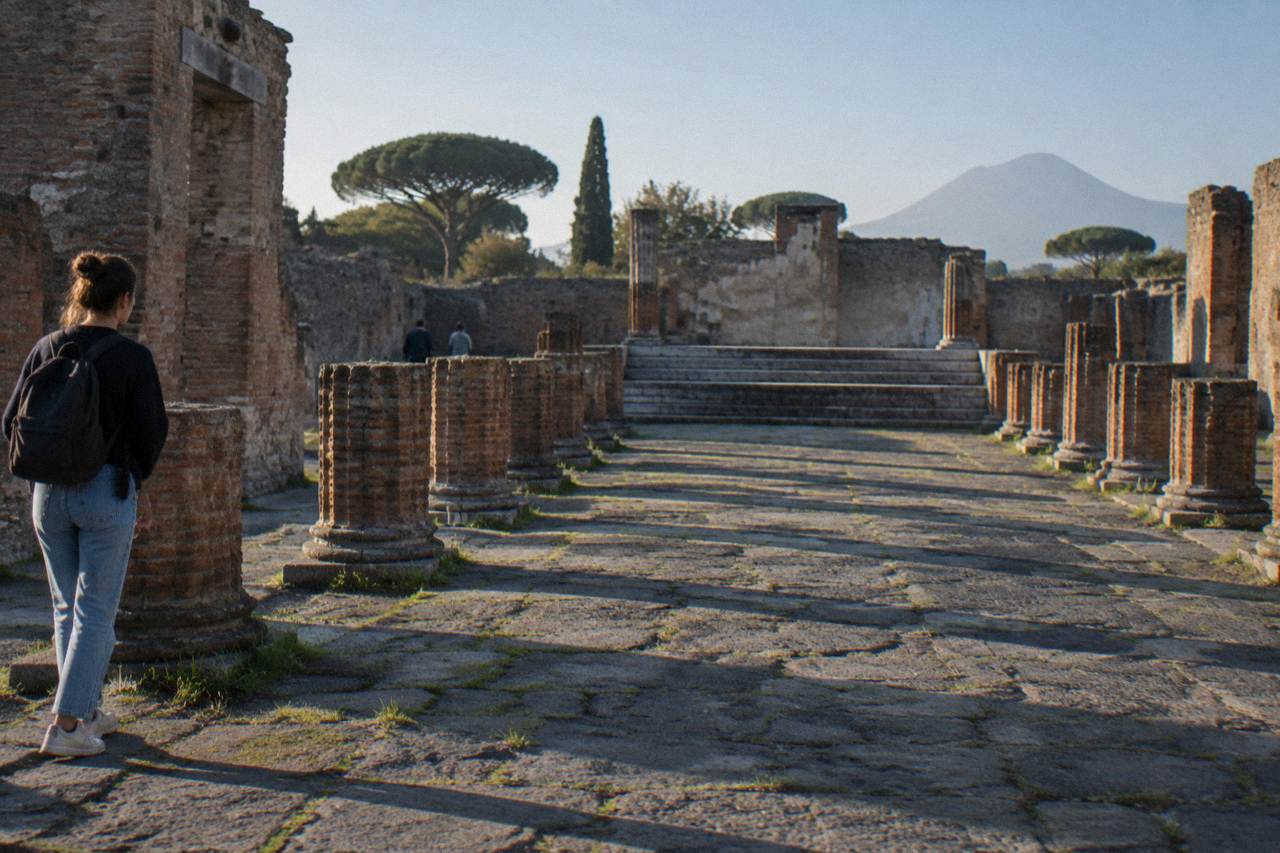
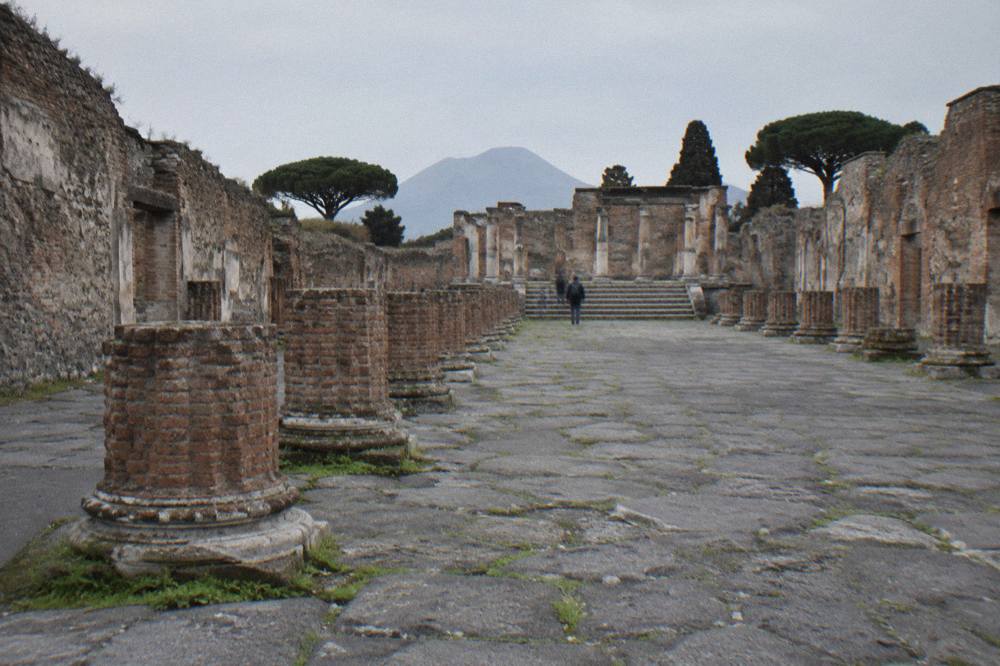
What survives is the skeleton. The columns are brick, roughly 11 metres tall, originally rendered in stucco to imitate marble, and the eruption and subsequent centuries stripped them back to brick cores. Walking the aisle today you pass column bases and stumps in ranks, with light falling from the open sky where the roof once was. The scale is the point: this was the largest roofed space in the city, and even unroofed it remains the largest standing public building in the excavated area, which UNESCO records as 44 hectares within a 98-hectare inscribed property shared with Herculaneum and Torre Annunziata.
How Do You Get To The Basilica Inside Pompeii?
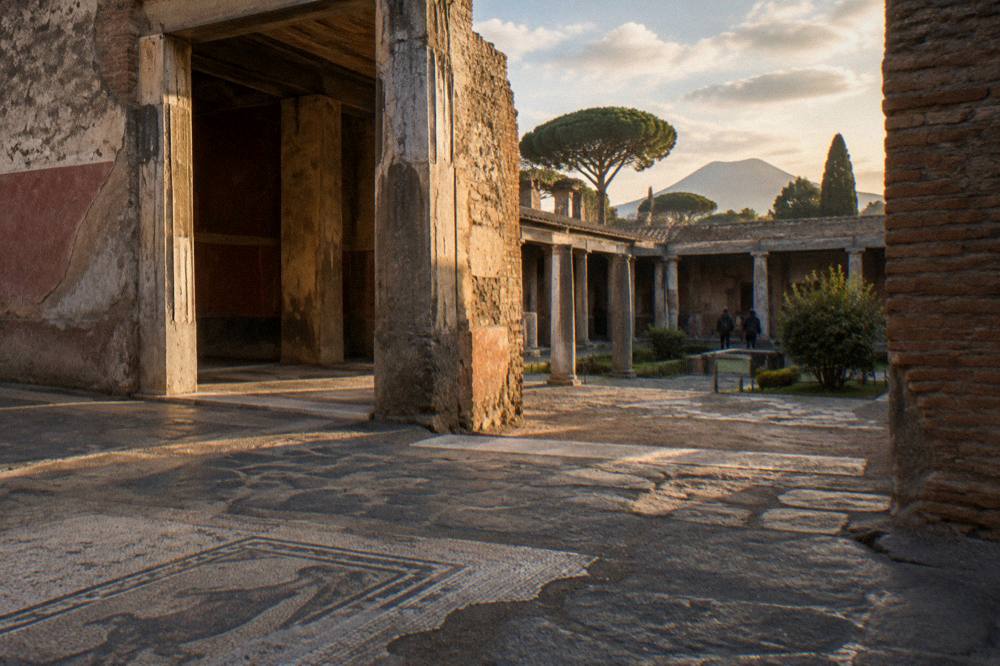
Porta Marina is the closest ticket office for visitors arriving by train at Pompei Scavi-Villa dei Misteri.** The three ticket offices are Porta Marina, Piazza Esedra and Piazza Anfiteatro, and the suburban villas route uses the separate Porta Ercolano / Street of the Tombs entrance. Once inside, the Forum is the natural orientation landmark of the whole park, and the Basilica is the great ruined hall on its south-west edge, next to the Temple of Apollo.
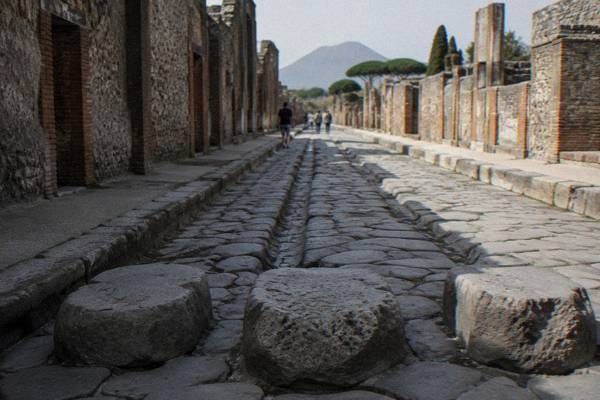
The walking surfaces matter more than visitors expect. The ancient paving is irregular stone, worn and rutted, and the route from Porta Marina to the Forum climbs steadily. Footwear with firm soles makes a real difference, and the walking difficulty of Pompeii rewards a little planning rather than improvisation. There is little shade on the Forum itself, and the Basilica's nave, unroofed, is fully exposed in summer.
For orientation, the site's own Pompeii map marks the Forum and its surrounding buildings, and a first visit that starts at Porta Marina, climbs to the Forum, takes in the Basilica and the Temple of Apollo, then follows the main eastward street, covers the civic heart of the city in a couple of hours.
For readers who prefer a structured visit, three products fit this page: an entry ticket with an audio guide for the park, a Herculaneum guided tour with tickets included from Naples, and a Pompeii and Vesuvius day tour with pizza lunch from Naples.
Which Ticket Covers The Basilica At Pompeii?
Every Pompeii park ticket covers the Basilica, because it stands inside the main excavated city: the Pompeii Express ticket at EUR 20 (2026) covers the ancient city alone, Pompeii+ at EUR 25 adds the suburban villas and Boscoreale, and the 3-day ticket at EUR 30 adds Oplontis, the Stabiae villas and museum, and Boscoreale. From 1 January 2027 these are replaced by a single EUR 25 ticket valid 30 days across all park sites, one entry per site, while the three smaller sites stay EUR 8 each and the MyPompeii Card stays EUR 45. Entry is free for under-18s and for everyone on the first Sunday of the month, and EU citizens aged 18 to under 25 pay a reduced EUR 2. Full ticket mechanics, including the advance-booking question, are covered on the park tickets guide.
| Ticket (2026, ends 31 Dec 2026) | Price | What it covers |
|---|---|---|
| Pompeii Express | EUR 20 | Ancient city only, including the Forum and Basilica |
| Pompeii+ | EUR 25 | Ancient city, suburban villas route, Boscoreale, shuttle |
| 3-day ticket | EUR 30 | Pompeii+ plus Oplontis, Stabiae villas and museum, Boscoreale |
| Oplontis / Stabiae museum / Boscoreale individually | EUR 8 each | Single smaller site |
| MyPompeii Card (annual) | EUR 45 | Annual pass, EUR 10 reduced |
From 1 January 2027 the structure simplifies: one EUR 25 ticket for all park sites, valid 30 days, one entry per site, with nominative tickets and the 20,000 visitors-per-day cap retained. Nobody buying a ticket in 2027 needs to choose between Express and Plus; that choice is a 2026 question only.
The audio-guide ticket option is the natural companion for a Basilica visit, since the building rewards explanation: the column stumps and tribunal platform read as little without the courtroom context. The entry ticket with audio guide has its own live listing with current pricing.
When Is The Basilica Open And How Long Should You Spend?
The park, and with it the Basilica, is open daily: from 16 March to 14 October it opens 9:00 with last entry 17:30 and closes 19:00, and from 15 October to 15 March last entry falls to 15:30 with a 17:00 close; Pompeii has no weekly closing day, and the only fixed closures are 25 December and 1 January unless otherwise communicated. Time-slot capacity between 16 March and 14 Oct splits at 13:00: up to 15,000 entries between 9:00 and 13:00 and up to 5,000 between 13:00 and 17:30, under the 20,000 daily cap in force since 15 November 2024.
| Season | Opens | Last entry | Closes |
|---|---|---|---|
| 16 Mar to 14 Oct | 9:00 | 17:30 | 19:00 |
| 15 Oct to 15 Mar | 9:00 | 15:30 | 17:00 |
For the Basilica itself, twenty to thirty minutes on site is realistic: time to walk the nave, read the tribunal platform, and view the Forum colonnade from the entrance step. A Forum circuit including the Forum of Pompeii, the Temple of Apollo and the civic buildings runs an hour or more, and the wider question of pacing the whole park is covered in the guide to how long to spend in Pompeii.
Mornings before about 11:00 and the period after 14:00 carry thinner crowds, and afternoon entry in summer still leaves four hours before last entry. First Sundays are free and correspondingly the busiest: the park has recorded more than 36,000 visitors on a single free Sunday.
What Do You Actually See At The Basilica Today?
You see an unroofed rectangle of ranked brick columns, roughly 11 metres tall, a raised tribunal platform at the western end where the magistrates sat, the remains of the wide entrance portico facing the Forum, and the lower courses of the interior wall treatment visible only as stumps and courses, since the timber roof, the gallery and the stucco finishes are lost. The eruption of AD 79, traditionally dated to 24 August, destroyed the upper structure; the date itself is an open scholarly question, and the park's own e-journal states that the alternative 24 October date has no evidentiary basis. The building's power today is scale and completeness of plan: nowhere else in the city does a single interior read so clearly as a room.
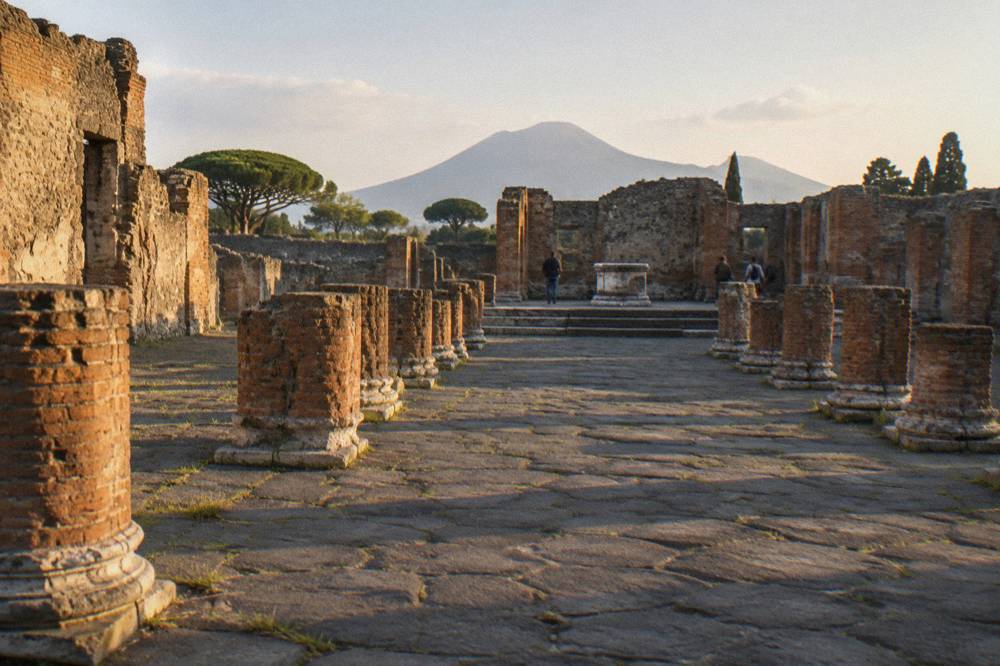
Walk it in order. From the Forum you mount the entrance steps, which are wide and shallow, designed for a flow of toga-clad litigants. Inside, the nave opens ahead; the brick columns on either side once carried a gallery, and the light that now floods from above was once filtered through clerestory windows. At the far end the tribunal stands raised, the seat of judgment, positioned so the magistrate faced the whole hall. Look for the wear on the paving, two millennia of feet plus the excavation centuries.
Two nearby buildings complete the civic picture. The Temple of Apollo, immediately north of the Basilica across the Forum edge, was one of the city's oldest sanctuaries, and the Temple of Apollo guide covers its surviving bronze and column elements. Further along the Forum's south side, the municipal offices handled the administration that the Basilica's courts fed.
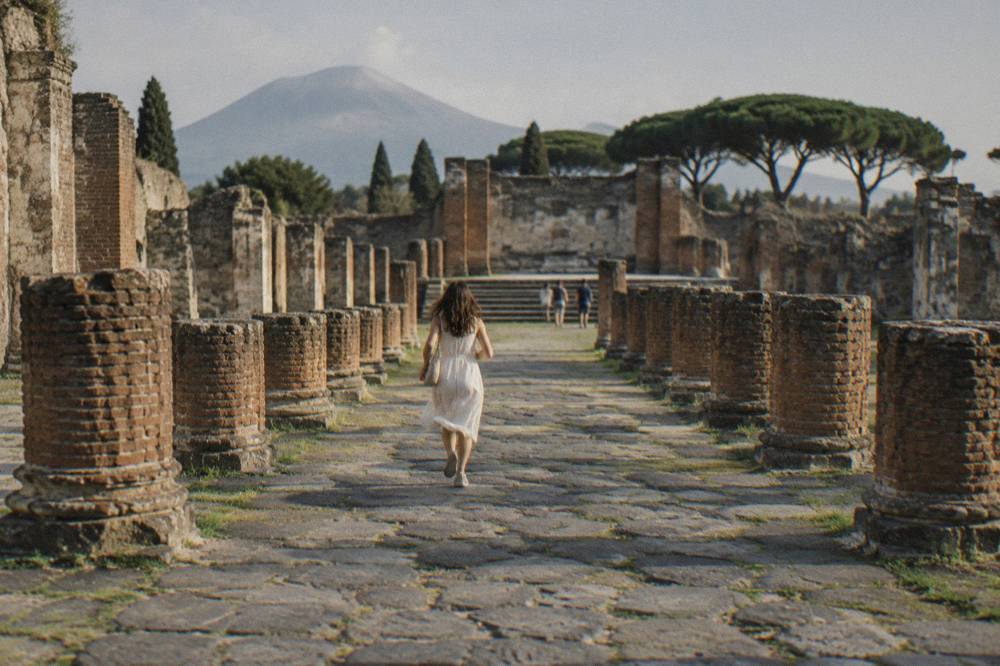
The Forum also frames the best photography of the Basilica, seen whole from the colonnade opposite, with Vesuvius beyond the northern edge of the city. Late afternoon light, after the day-trip cohorts have thinned, gives the brick its warmest colour.
How Does The Basilica Compare With Pompeii's Other Highlights?
The Basilica is the park's largest public building, but it is one stop among many: the Forum complex, the suburban Villa of the Mysteries with its famous fresco cycle, the amphitheatre at the eastern edge, and the patrician houses such as the House of the Faun and the House of the Vettii each carry a different kind of reward, and a full day mixes them rather than ranking them. The practical comparison is what each requires of the visitor, in walking, shade and explanation.
| Site within Pompeii | Type | What stands out | Demand on the visitor |
|---|---|---|---|
| Basilica | Civic hall on the Forum | Largest public building, court and tribunal | Short walk from Forum, exposed to sun |
| House of the Faun | Patrician residence | Alexander mosaic, grand atrium plan | Detailed interiors, crowding at peak |
| Villa of the Mysteries | Suburban villa | Dionysiac fresco cycle | Requires villas route, added EUR 8 on an Express ticket in 2026 |
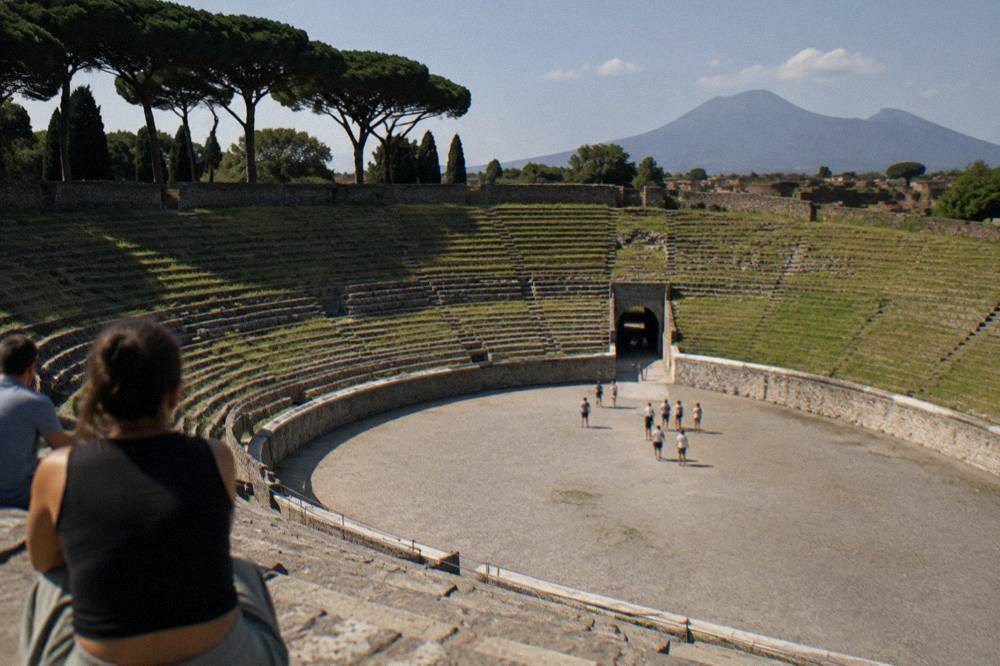
| Amphitheatre | Entertainment structure | Oldest surviving Roman stone amphitheatre | At the far east edge, longer walk |
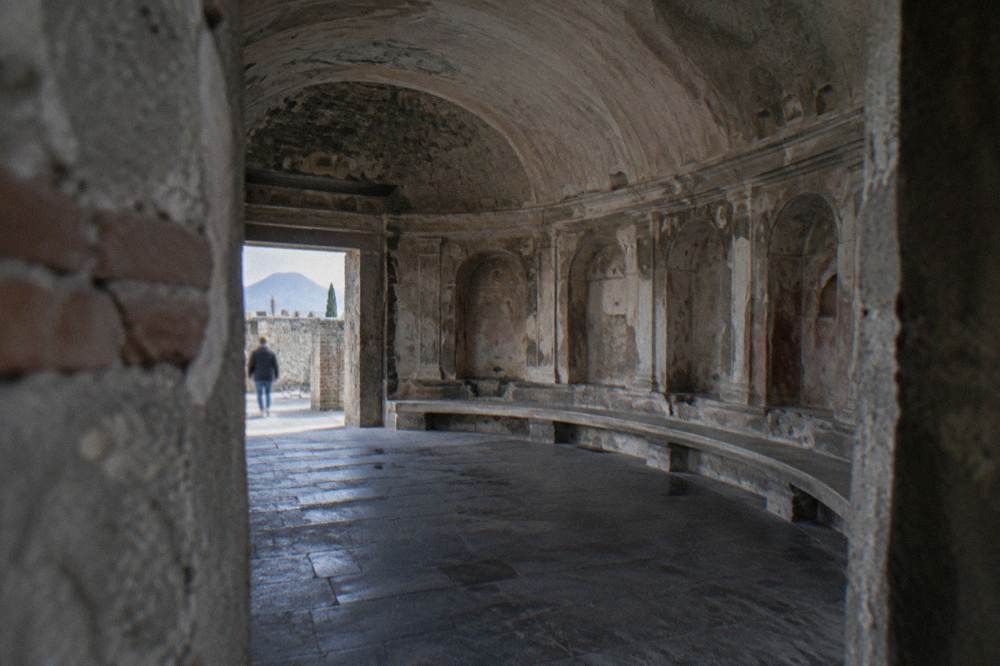
| Stabian Baths | Bath complex | Vaulted rooms, changing benches | Compact, close to the Forum |
The villas route deserves its own note. Express ticket holders can add the suburban villas route, card payment only, for EUR 8 at the Porta Ercolano / Street of the Tombs entrance, which is the way to reach the Villa of the Mysteries on a city-only ticket. The Villa of the Mysteries guide explains the fresco cycle in detail, and the House of the Faun and House of the Vettii pages cover the two houses visitors ask about. For the wider region, Herculaneum makes the strongest pairing: smaller, darker-preserved, with carbonised wood the Pompeii sites lack.
For travellers combining the region in one day, a guided option with an archaeologist gives the Forum and Basilica a narrative spine, and the skip-the-line archaeologist-led small-group format has a strong review base on its live listing.
What Are The Practical Rules For Visiting The Basilica?
Tickets are nominative and non-transferable, identity may be checked at entry, bags larger than 30x30x15 cm go to left luggage, and the park forbids drones without authorisation and bare chests; the Basilica itself is walkable ancient paving, so firm shoes, water and sun protection are the practical kit. These rules come from the park's visitor regulations, and they apply park-wide rather than building by building.
| Rule | Detail |
|---|---|
| Ticket identity | Nominative, ID may be checked, non-transferable |
| Bag size | Maximum 30x30x15 cm, larger to left luggage |
| Drones | Not permitted without authorisation |
| Dress | Bare chests not permitted |
| Daily cap | 20,000 visitors per day, since 15 Nov 2024 |
Accessibility has its own route: the "Pompeii for All" itinerary enters at Piazza Anfiteatro and allows exit at Piazza Anfiteatro or Piazza Esedra via the Antiquarium lift, designed for visitors with mobility difficulties. The ancient paving across the rest of the city, the Forum included, is not smooth. Facilities, toilets and food inside the park are covered in the practical pages of this Pompeii Travel Guide, including where to eat and what to wear.
Closures elsewhere in the park are worth knowing when planning a Forum-centred day: the Praedia of Julia Felix has been closed to the public since 7 September 2026 for maintenance, and at Herculaneum the Villa dei Papiri and the Ancient Theatre are closed for works. Neither affects the Basilica or the Forum, but both appear in itineraries sold on other pages, so check the park's own communications before promising yourself a specific domus.
When Is The Best Time Of Year To See The Basilica?
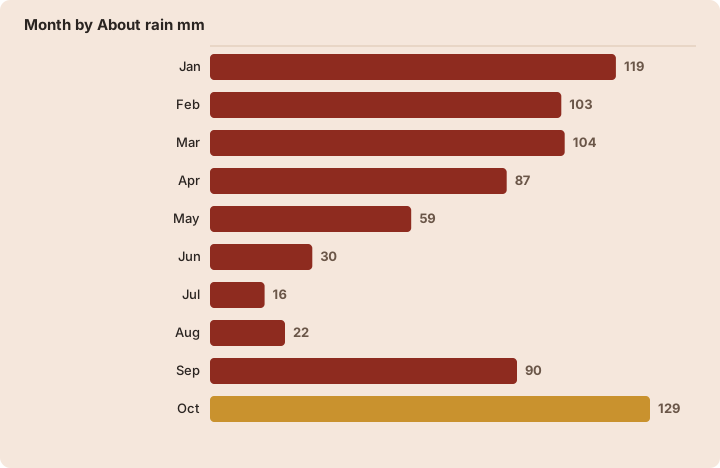
The best time to see the basilica is during the quieter shoulder-season months and on weekday mornings, when visitor numbers drop and you can explore at your own pace; arrive early, before tour groups descend, and you'll enjoy shorter lines, fewer crowds, and a calmer setting for taking in the architecture.
| Month | About Tmax C | About Tmin C | About rain mm |
|---|---|---|---|
| Jan | 12.2 | 6.6 | 119 |
| Feb | 12.6 | 6.5 | 103 |
| Mar | 14.9 | 8.1 | 104 |
| Apr | 17.7 | 10.4 | 87 |
| May | 21.6 | 14.1 | 59 |
| Jun | 25.8 | 18.2 | 30 |
| Jul | 28.7 | 21.1 | 16 |
| Aug | 29.4 | 21.8 | 22 |
| Sep | 25.3 | 18.6 | 90 |
| Oct | 21.3 | 15.1 | 129 |
| Nov | 16.9 | 11.5 | 180 |
| Dec | 13.2 | 8.0 | 147 |
Visitor numbers follow the weather. The park's own published figures show Pompeii received 4,069,377 visitors in 2024 and 4,000,090 in 2025, after 3,985,424 in 2023 and 2,972,159 in 2022, with the all-park totals reaching 4,177,753 in 2024 and 4,118,926 in 2025. The practical reading: shoulder months give comfortable temperatures but October is not quiet, and winter weekdays are the closest the park comes to solitude.
Can You Reach The Basilica By Train And Combine It With Vesuvius?
Yes: the Circumvesuviana Napoli-Pompei Scavi-Sorrento line stops at Pompei Scavi-Villa dei Misteri, from which the Porta Marina entrance is a short walk, and scheduled running times computed from the operator's own data give 29 to 35 minutes from Napoli Garibaldi to Pompei Scavi; the Campania Express service has been suspended since 1 October 2026 until further notice, so the local line is the rail option. Road distances to Pompei Scavi, measured on OpenStreetMap routing, are about 24 km from Naples, 26 km from Sorrento and 31 km from Salerno.
| Route to Pompei Scavi | Distance | Time (OSRM driving estimate) |
|---|---|---|
| From Naples | 24 km | about 22 min |
| From Sorrento | 26 km | about 37 min |
| From Salerno | 31 km | about 30 min |
| From Rome | 234 km | about 159 min |
Combining Pompeii with Vesuvius in one day is a standard pattern, and the volcano's own access rules shape it: Gran Cono tickets are sold online only, 50 tickets per 10 minutes bookable 30 days ahead, with 10 nominative last-minute tickets per slot from 30 minutes before, and the ticket office and path close automatically on an orange weather alert or above, with automatic refund. Access hours vary by month, from 9-15 in January, February, November and December to 9-18 in July and August, and the crater trail is a 2 to 3 hour round walk. The full picture is in the Mount Vesuvius and Vesuvius crater trail guides.
A combined ticket-and-guide product, the entry ticket plus archaeologist-led tour format, suits visitors who want the Forum explained at the source and lets the rest of the day run independently; its live listing carries current dates and pricing.
Why Does The Basilica Matter Beyond Pompeii?
The Basilica's plan, a tall nave with side aisles and a raised tribunal, is the direct architectural ancestor of the Christian basilica church, so this ruin in Campania is a prototype of a building type that shaped two millennia of Western architecture; when the first large churches were built, the civic hall of Pompeii is the kind of building their designers borrowed from. Standing in the nave, a visitor is inside the source of church architecture, repurposed from law to liturgy.
That afterlife explains why art historians and archaeologists keep returning to the building. The proportions, the column rhythm, the hierarchy of the tribunal platform, all of these were standard civic vocabulary in Roman Italy, and Pompeii preserves them at a scale and completeness that few sites match. The loss of the roof is an accident of the eruption; the survival of the plan is why the site matters.
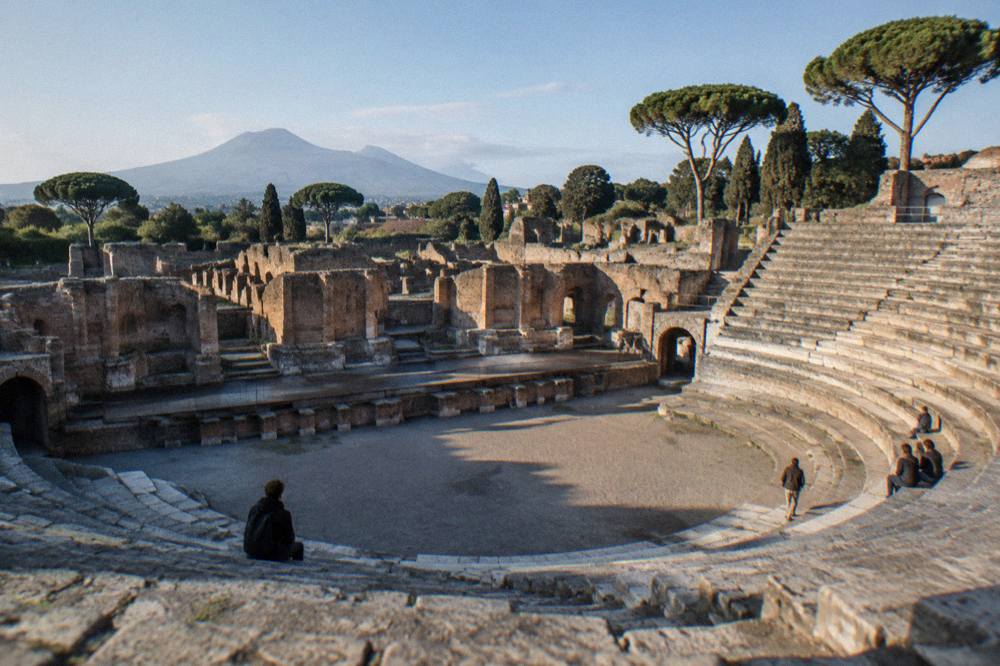
For the traveller, this is the difference between the Basilica and the houses: a domus shows how a family lived, the amphitheatre shows how a crowd was entertained, the amphitheatre guide covers that story, but the Basilica shows how a city governed itself. Court, commerce and administration met under one roof, and the roof's absence lets you read the whole civic machine at a glance.
If a single practical sequence helps: book the Express ticket or its 2027 successor, enter at Porta Marina in the morning, climb to the Forum, spend half an hour in the Basilica while your legs are fresh, then let the rest of the city unfold eastward. Three products below fit that plan, whichever direction you start from.
Common Questions About The Basilica At Pompeii
Was the Basilica at Pompeii a church?
No. The Basilica was a Roman civic hall used as a law court and commercial space. The Christian use of the word came later, and church builders borrowed the architectural form, the nave and aisles, from buildings like this one.
Is the Basilica included in the Pompeii ticket?
Yes. Every ticket that covers the ancient city covers the Basilica, including the Pompeii Express ticket at EUR 20 in 2026 and the single EUR 25 ticket that replaces the range from 1 January 2027.
How long should I spend at the Basilica?
About twenty to thirty minutes on site is realistic, enough to walk the nave, view the tribunal platform and take in the Forum from the entrance steps. A full Forum circuit takes an hour or more.
Where is the Basilica inside Pompeii?
On the south-west corner of the Forum.
Is the Basilica accessible for visitors with mobility difficulties?
The park's "Pompeii for All" route enters at Piazza Anfiteatro and allows exit at Piazza Anfiteatro or Piazza Esedra via the Antiquarium lift. The Forum's ancient paving is uneven everywhere, so plan for it.
When is the best time of day to visit the Basilica?
Before about 11:00 or after 14:00, when entry volumes thin. The nave is unroofed and fully exposed, so in July and August the morning slot is also the cooler one.
The Basilica rewards exactly the attention a ruined building quietly asks for: a slow walk down the nave, an eye on the tribunal where judgment sat, and an awareness that the form above your head, had the roof survived, would be recognisable in churches across Europe today. Pair it with the Forum, take water in summer, and let the largest public building in Pompeii explain how a Roman city ran itself.