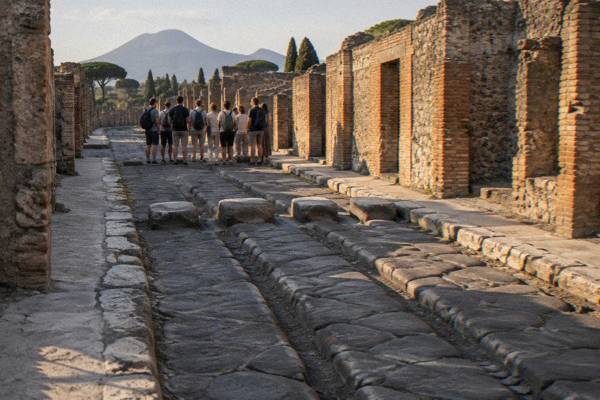
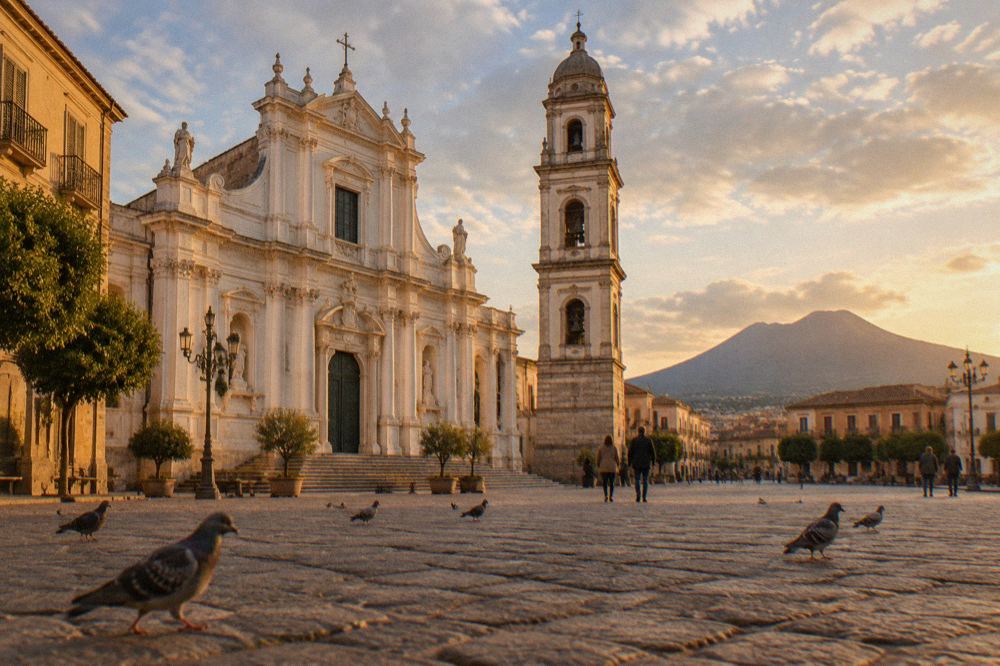
Pompei Santuario
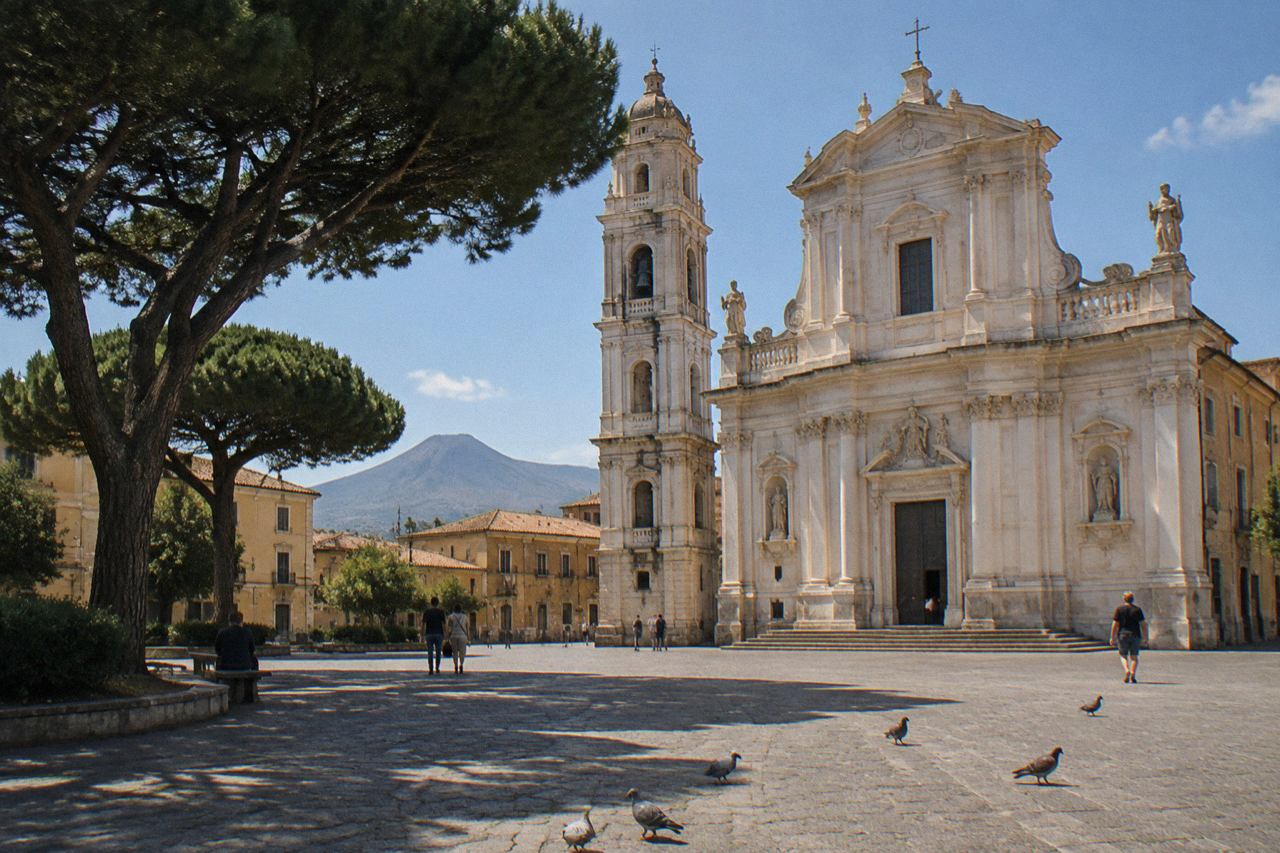
The Sanctuary of Pompei is the great pilgrimage basilica of the Madonna del Rosario in the modern town of Pompei, Campania, southern Italy, a short walk from the Circumvesuviana station that also serves the ancient city of Pompeii.
Short answer
The Sanctuary of Pompei is a Marian basilica in the modern town of Pompei, in Campania, Italy, about 24 km by road from Naples and beside the ancient archaeological park of Pompeii. The town grew around the shrine, and the Pompei Scavi-Villa dei Misteri Circumvesuviana station serves both. Park entry in 2026 costs EUR 20 Express or EUR 25 Pompeii+, changing to a single EUR 25 ticket on 1 January 2027.
The Sanctuary of Pompei, the great pilgrimage basilica dedicated to the Madonna del Rosario, stands in the heart of the modern town of Pompei in Campania, southern Italy, roughly 24 km by road south-east of Naples. The spelling matters on this site: "Pompeii" with two i's is the ancient Roman city buried by Vesuvius in AD 79, while "Pompei" with one i is the living town that grew around the shrine, and the two sit side by side, connected by the same little railway. Travellers arrive intending one and very often end up visiting both, because the sanctuary square and the archaeological park's Porta Marina entrance are close enough in practical terms to fill a single day.
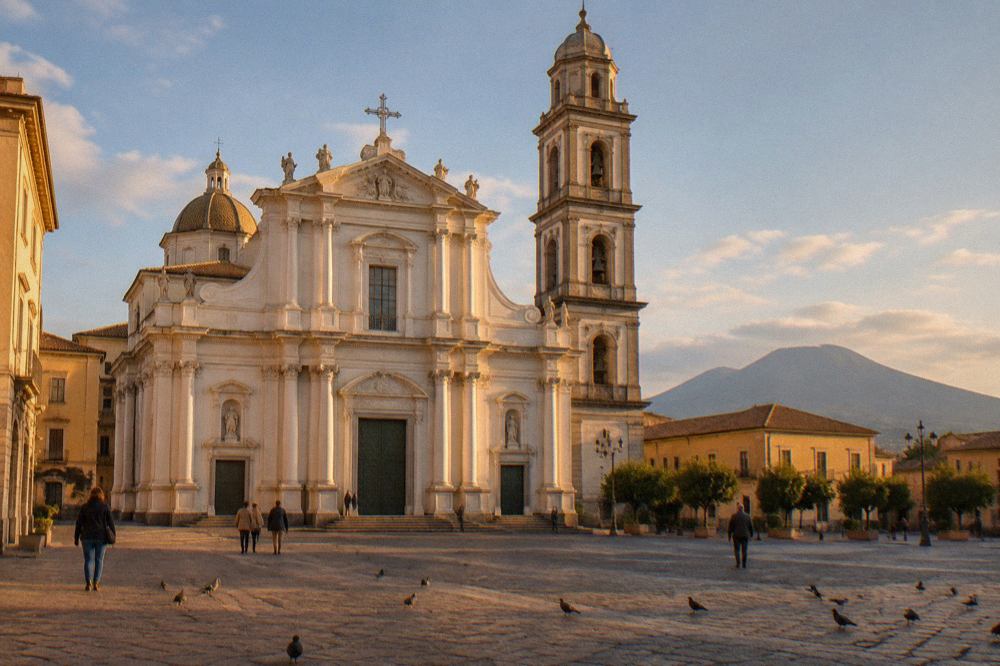
The shrine is the reason the modern town exists at all. Pilgrims came to the image of the Madonna del Rosario, and a settlement, then a railway halt, then a town followed the pilgrims. Today the basilica remains an active place of worship rather than a museum piece: Masses are held, confessions are heard, and the town's calendar still turns on its feast day. That gives a visit here a different rhythm from the ruins next door, quieter, free to enter, and open in the evening when the archaeological park has long since closed its gates.
This page covers the practical side of a sanctuary visit: how to get there by train, how the park's ticket system works if you combine the two, what the surrounding Vesuvian sites add, and when the weather argues for or against the walk. For the full picture of the ancient city itself, the Pompeii Travel Guide homepage is the place to start, and the Pompeii ticket options explained page carries the detail on every pass.
What Is The Pompei Santuario?
The Pompei Santuario is the Pontifical Shrine of the Blessed Virgin of the Rosary, the basilica that gave the modern town of Pompei its reason to exist, in Campania, southern Italy, about 24 km from Naples by road. It is a pilgrimage church dedicated to a venerated image of the Madonna del Rosario, not part of the ancient archaeological park, and unlike the ruins it needs no ticket and no time slot. The town of Pompei grew around it, and pilgrims rather than archaeologists built its calendar.
The contrast with the neighbouring site is the whole point of understanding the place. The ancient city of Pompeii is a fenced archaeological park with nominative tickets, a 20,000 visitors per day cap in force since 15 November 2024, timed entry slots and closing gates. The sanctuary is a working basilica: you walk in, you sit, you look, you leave when you are ready. Many visitors structure the day around the park's timetable and slot the sanctuary in at the start or the end, when the ruins are closed but the church is still open.
The relationship between the two also shapes the practical geography. The Circumvesuviana station named Pompei Scavi-Villa dei Misteri, stop 6049 on the Napoli to Sorrento line, exists primarily for the excavations, but the modern town and its basilica cluster around the same railway corridor. There is also a separate Pompei station in the town itself, so it is worth checking which one your train serves before you board. The question of walking from the station to the ruins is covered in detail in the sibling page on the Pompei Scavi train station.
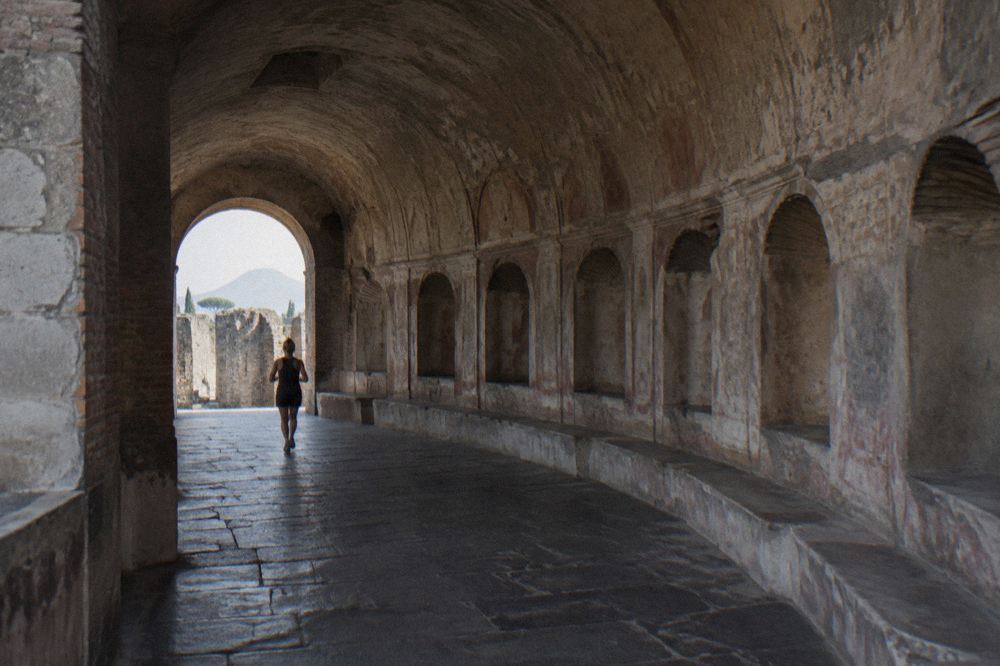
What the sanctuary offers, in plain terms, is the second half of the Pompei story. The ancient city tells you how people here lived and died in AD 79; the basilica tells you what grew on top of the ash afterwards. Between them they explain why the modern town carries one i and the dead city two.
How Do You Get To The Pompei Santuario?
The usual way to reach the Sanctuary of Pompei is the EAV Circumvesuviana railway from Naples, with scheduled runs taking 29 to 35 minutes from Napoli Garibaldi to Pompei Scavi-Villa dei Misteri, the station beside both the ruins and the town. By road the town sits about 24 km from Naples, 26 km from Sorrento and 31 km from Salerno, on driving times computed from OpenStreetMap routing. The Campania Express service is suspended since 1 October 2026, so the local line is the rail option.
The suspension of the Campania Express matters for anyone planning from older guides. EAV, the operator, states the service has been suspended from 1 October 2026 until further notice, with refunds available through the operator's complaints form or the original seller.
| Route (EAV scheduled times, feed dated 2026-09-30) | Scheduled journey time |
|---|---|
| Napoli Garibaldi to Pompei Scavi-Villa dei Misteri | 29 to 35 min |
| Napoli Garibaldi to Sorrento | 64 to 75 min |
| Pompei Scavi-Villa dei Misteri to Sorrento | 34 to 40 min |
Road distances tell a similar story. These figures come from OpenStreetMap routing and are driving estimates rather than official road signs, so treat them as planning numbers:
| From | Road distance to Pompei Scavi | Driving time (estimate) |
|---|---|---|
| Naples | 24 km | 22 min |
| Sorrento | 26 km | 37 min |
| Salerno | 31 km | 30 min |
| Rome | 234 km | 159 min |
From Rome the calculus changes. The dedicated pages on the Rome to Pompeii day trip and Rome to Pompeii by train cover that journey properly.
If you are deciding where to sleep, the sanctuary tilts the argument slightly towards the modern town: an overnight stay lets you see the basilica in the evening and be at the Porta Marina entrance when the park opens at 9:00. The Naples or Sorrento base comparison and the where to stay in Pompei guide work through the options.
For the rail journey itself, the question of which train station is best for Pompeii is answered in full on its own page.
For travellers who prefer a plan that handles the transport, the guide and transport desk at the site has vetted these options:
Can You Combine The Sanctuary With The Archaeological Park?
Yes, and this is the natural way to do it: the sanctuary is free to enter, open outside park hours, and sits beside the same station, so a standard day pairs a timed morning slot at the ruins of Pompeii with an early or late visit to the basilica. In 2026 the park's Pompeii Express ticket costs EUR 20 and the Pompeii+ ticket EUR 25, but from 1 January 2027 a single EUR 25 ticket covers all park sites, valid 30 days with one entry per site.
The ticket system is the one piece of planning that genuinely changes. The prices in force since 12 January 2026 are tiered: EUR 20 for the Express ticket covering the ancient city alone, EUR 25 for Pompeii+ adding the suburban villas, the Villa Regina and the Boscoreale Antiquarium with shuttle, and EUR 30 for the three-day ticket adding Oplontis, the Stabiae sites and Boscoreale. The smaller sites individually cost EUR 8. Entry is free for everyone on the first Sunday of the month, and reduced to EUR 2 for EU citizens aged 18 to under 25.
| Park ticket (2026, in force to 31 December 2026) | Price | Covers |
|---|---|---|
| Pompeii Express | EUR 20 | Ancient city only |
| Pompeii+ | EUR 25 | City, suburban villas, Villa Regina, Antiquarium, shuttle |
| 3-day ticket | EUR 30 | Pompeii+ plus Oplontis, Stabiae villas and museum, Boscoreale |
| Other sites individually (Oplontis, Stabiae museum, Boscoreale) | EUR 8 | Single site each |
| My Pompeii Card (annual) | EUR 45 | Annual pass, EUR 10 reduced |
The change coming matters if your visit straddles New Year. From 1 January 2027 the tiered structure ends: one EUR 25 ticket covers all park sites, valid 30 days, one entry per site, with Oplontis, the Stabiae museum and Boscoreale staying at EUR 8 individually and the MyPompeii Card at EUR 45. Nominative tickets and the 20,000 daily cap are retained. Anyone quoting the old Express price as an evergreen figure after that date is quoting a dead price.
| Period | Park opening | Last entrance | Closing |
|---|---|---|---|
| 16 March to 14 October | 9:00 | 17:30 | 19:00 |
| 15 October to 15 March | 9:00 | 15:30 | 17:00 |
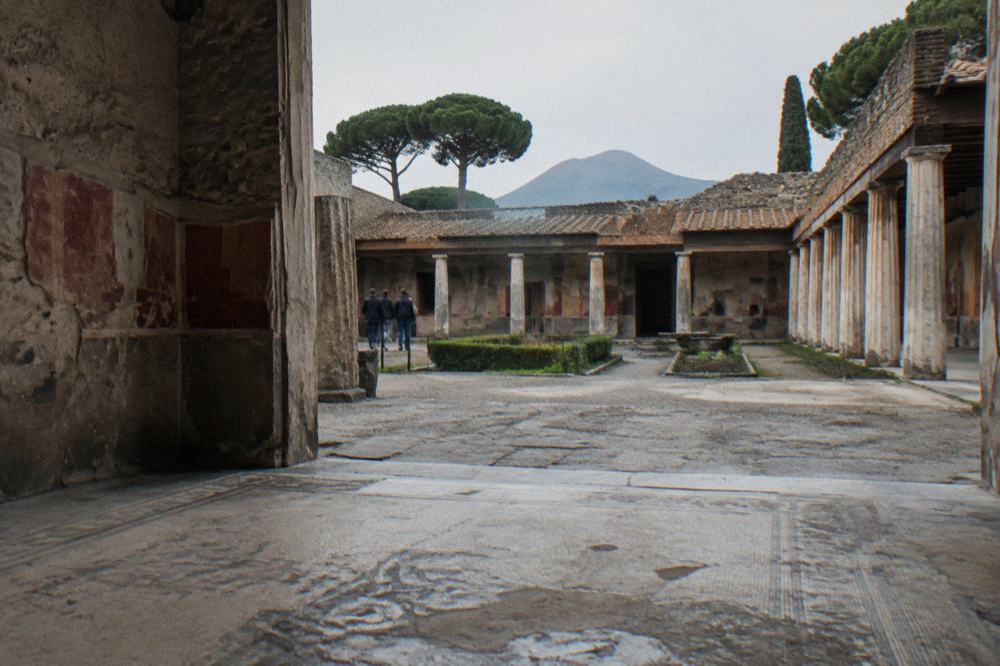
The park's ticket offices are at Porta Marina, Piazza Esedra and Piazza Anfiteatro, and the suburban villas route uses the Porta Ercolano / Street of the Tombs entrance, where Express holders can add the villas for EUR 8, card payment only. Time-slot capacity between 16 March and 14 October splits at 13:00, with a maximum of 15,000 entries in the morning window and 5,000 in the afternoon, which is why morning slots sell out first in high season. The full mechanics, including the 30x30x15 cm bag limit and the ID checks at entry, are on the park tickets guide.
The daily rhythm that works: a morning slot at the ruins when the heat is manageable, then the basilica in the late afternoon once the park gates have shut. In winter the calculus reverses, because the park closes at 17:00 with last entry at 15:30, leaving a long evening for the town and the sanctuary.
Is A Guided Tour Worth Adding To A Sanctuary Visit?
For the sanctuary itself, no guide is needed: it is a church, free to enter, and its story is told by the building. For the ancient city beside it, a guide changes the visit completely, because Pompeii's streets look alike without context and its ticket system rewards those who understand it. A private tour with an official guide, bookable per group of up to 14, exists on this site's roster for exactly that combination, and skips nothing while explaining everything.
The private option is the natural pairing with a sanctuary day, since you set the pace and the meeting point. The Pompeii private tour with an Official Guide is described on its own page, and Check availability on the operator's live listing if a fixed group time appeals.
For solo travellers and smaller budgets, the shared small-group format does a similar job. The decision between the formats is argued in full on the guided versus self-guided comparison.
The self-guided alternative is entirely legitimate, and many people do it well with an audio guide. The trade-offs, and the honest answer to whether you can tour Pompeii on your own, sit on their own pages.
What Else Sits Near The Pompei Santuario?
The sanctuary is the centre of a surprisingly dense archaeological constellation: Herculaneum lies a short Circumvesuviana hop away, Vesuvius itself commands the skyline above the town, and the smaller villas at Oplontis, Stabiae and Boscoreale ring the bay. Herculaneum's entry costs EUR 16 in 2026, Vesuvius's Gran Cono trail sells timed tickets online only at EUR 11.68 full, and the crater path closes automatically on an orange weather alert. Together they justify more than one day in the area.
Herculaneum is the strongest second site. It is smaller than Pompeii, better preserved in its organic material, and in 2026 it costs EUR 16 full, EUR 2 reduced for EU citizens aged 18 to under 25, free on the first Sunday of the month plus 25 April, 2 June and 4 November. Its hours run 8:30 to 19:30 with last entry at 18:00 between 16 March and 14 October, and 8:30 to 17:00 with last entry 15:30 in the winter period. Two closures are in force: the Villa dei Papiri and the Ancient Theatre are shut for works until further notice, so plan around them. The detail lives on the Herculaneum attraction page.
| Site near Pompei (2026 figures) | Entry cost | Status note |
|---|---|---|
| Herculaneum | EUR 16 (EUR 2 reduced 18-25) | Villa dei Papiri and Ancient Theatre closed for works |
| Vesuvius Gran Cono trail | EUR 11.68 full, EUR 9.55 reduced as sold | Online timed tickets only, 30 days ahead |
| Oplontis | EUR 8 | Closed on Tuesdays |
| Stabiae museum and villas | EUR 8 | Closed on Tuesdays |
| Boscoreale Villa Regina | EUR 8 | Reachable on the Pompeii+ shuttle |
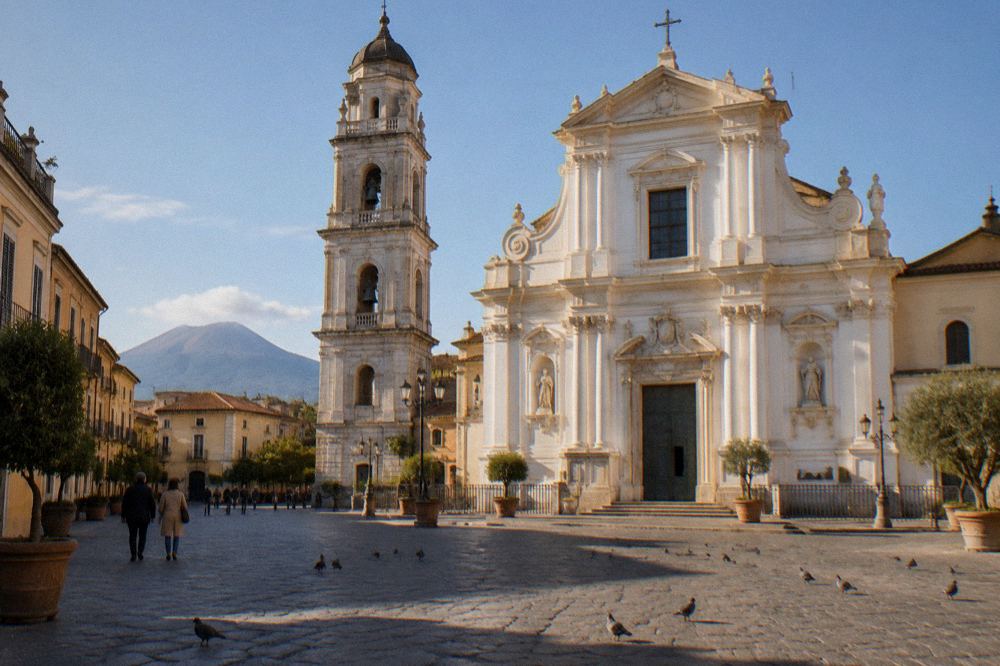
Vesuvius deserves its own half-day. The Gran Cono trail is sold online only through the park's ticketing system, in blocks of 50 tickets per 10 minutes bookable 30 days ahead, with 10 last-minute tickets per slot released from 30 minutes before, nominative since 11 April 2026. The excursion is 2 hours return on the shortest route, 3 hours on the longest, and access hours shift by month: 9 to 15 in January, February, November and December, 9 to 16 in March and October, 9 to 17 in April, May, June and September, and 9 to 18 in July and August. The Mount Vesuvius attraction page carries the full guidance.
For a single booking that bundles the region, a combined day from Naples takes in Pompeii and the volcano with lunch included:
And for Herculaneum specifically, a small-group tour with an archaeologist, ticket included, pairs well with a sanctuary-and-Pompeii morning:
When Is The Best Time To Visit The Pompei Santuario?
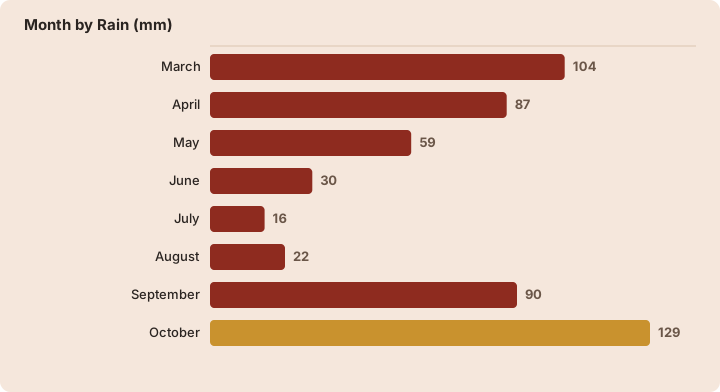
The sanctuary itself can be visited comfortably year round, but the combined sanctuary-and-ruins day works best in spring and autumn: the Pompei climate normals for 1991 to 2020 show about 29.4 C mean daily maxima in August against about 14.9 C in March, with November the wettest month at about 180 mm of rain and July the driest at about 16 mm. The park's own monthly figures show May and October 2024 as its two busiest months, at 516,923 and 481,255 visitors respectively.
The climate numbers below are computed from the Open-Meteo historical archive for the Pompei grid point, a reanalysis rather than a weather station, so read them as about right rather than exact. They still tell the story clearly: a Mediterranean pattern with a hot, dry core of summer and a wet, mild winter, where the archaeological park's unshaded streets punish the middle of the day in July and August.
| Month | Mean daily max (C) | Mean daily min (C) | Rain (mm) |
|---|---|---|---|
| March | 14.9 | 8.1 | 104 |
| April | 17.7 | 10.4 | 87 |
| May | 21.6 | 14.1 | 59 |
| June | 25.8 | 18.2 | 30 |
| July | 28.7 | 21.1 | 16 |
| August | 29.4 | 21.8 | 22 |
| September | 25.3 | 18.6 | 90 |
| October | 21.3 | 15.1 | 129 |
The park's own visitor counts sharpen the timing question. The official table records 4,069,377 visitors to the Pompeii site in 2024 and 4,000,090 in 2025, with the 2024 monthly peak in May at 516,923 and October close behind at 481,255. February, by contrast, saw 142,648. The same table records a single free first Sunday drawing more than 36,000 people, which is the day to avoid the ruins, though the sanctuary square absorbs crowds more gracefully than the park's gates do.
For season-by-season planning, the weather and best time to visit guide and the summer heat plan take the argument further.
What Practical Rules Apply Around The Pompei Santuario?
The sanctuary follows church norms, modest dress and quiet, while the archaeological park beside it runs on firm rules: bags are limited to 30x30x15 cm, tickets are nominative with ID checks at entry, drones need authorisation, and bare chests are not permitted. The park has no weekly closing day, shutting only 25 December and 1 January unless otherwise communicated, and the first Sunday of each month is free for everyone.
The bag rule catches people out. Anything larger than 30x30x15 cm goes to left luggage, which adds queue time at the entrances, so travel light. Tickets are non-transferable and non-refundable except in cases of extraordinary closure, and identification may be checked at every entry, a consequence of the nominative system introduced with the daily cap on 15 November 2024.
| Rule at the archaeological park (2026) | Detail |
|---|---|
| Bag size limit | 30x30x15 cm, larger bags to left luggage |
| Tickets | Nominative, ID may be checked, non-transferable |
| Daily cap | 20,000 visitors per day, in force since 15 November 2024 |
| Free entry | Under 18 always, everyone on the first Sunday of the month |
| Reduced entry | EUR 2 for EU citizens aged 18 to under 25 |
| Closures | 25 December and 1 January, no weekly closing day |
Accessibility differs between the two sides of town. Inside the park, the "Pompeii for All" route lets visitors with mobility difficulties enter at Piazza Anfiteatro and exit at Piazza Anfiteatro or Piazza Esedra via the Antiquarium lift, and the accessibility guide covers it fully. The sanctuary square and the modern town are flat and paved by comparison, which makes the basilica the easier of the two visits for wheelchair users and anyone pacing themselves.
Two further practical notes. First, the eruption that destroyed the ancient city is traditionally dated to 24 August AD 79 from the oldest manuscripts of Pliny the Younger, though the park's own e-journal states that the alternative 24 October date has no evidentiary basis and that the debate remains open; treat any confident tour-brochure date with caution. Second, for finding your way between the sanctuary square, the station and the park gates, the Pompeii map page is the tool this site provides.
If a single booking would tie the whole day together, these are the three options this site's desk would weigh first:
Common Questions About The Pompei Santuario
Is the Pompei Santuario the Same as the Ancient City of Pompeii?
No. The sanctuary is a pilgrimage basilica in the modern town of Pompei, spelled with one i, while Pompeii with two i's is the ancient Roman city buried by Vesuvius in AD 79 and now an archaeological park.
Do You Need a Ticket for the Pompei Santuario?
No. The sanctuary is a working basilica and entry is free, with no time slots and no daily cap, unlike the adjacent archaeological park. The park beside it does require a nominative ticket, EUR 20 for the Express option in 2026, moving to a single EUR 25 all-sites ticket from 1 January 2027.
How Far Is the Pompei Santuario From Naples?
About 24 km by road, roughly a 22-minute drive in normal conditions, with Circumvesuviana trains covering Napoli Garibaldi to Pompei Scavi-Villa dei Misteri in a scheduled 29 to 35 minutes. The Campania Express, formerly the faster rail alternative, has been suspended since 1 October 2026 until further notice.
Can You Visit the Sanctuary and Pompeii in One Day?
Yes, and it is the standard pattern. Book a morning time slot at the archaeological park, which opens at 9:00 year round with last entry at 17:30 in summer and 15:30 in winter, then visit the basilica in the late afternoon or early evening, when the church is open and the park gates have already closed.
What Should You Wear to the Pompei Santuario?
Dress as you would for any working church: shoulders covered, no beachwear. The park next door has its own posted rules, including no bare chests and a 30x30x15 cm bag limit, so a modest, light outfit with a small bag satisfies both sides of the town in one stroke.
Is the Pompei Santuario Open When the Archaeological Park Is Closed?
The park closes on 25 December and 1 January and shuts each evening, at 19:00 in summer and 17:00 in winter, while the basilica functions as a parish and pilgrimage church with evening hours. As a place of worship rather than a ticketed attraction, its calendar follows liturgical time, so check locally for feast-day schedules before planning a visit around a specific service.
The sanctuary rewards the traveller who treats Pompei as a town with two histories rather than a set of ruins with a station attached. Walk the basilica in the quiet hour after the day-trippers have gone, then start the next morning at the Porta Marina gates when the ancient city opens, and you will have seen both halves of the story this stretch of Campania has to tell.