Pompeii Weather
Pompeii, the ancient Roman city buried by Vesuvius in AD 79, sits in Campania in southern Italy beside the modern town of Pompei, and its weather shapes every visit: here are the climate numbers and the best months to go.
Short answer
Pompeii has a Mediterranean climate: about 29.4 C average daily maximum in August, about 12.2 C in January, and about 1086 mm of rain a year, with November the wettest month at 180 mm and July the driest at 16 mm. April, May, late September and October combine mild temperatures with lower crowds, making them the best months to visit the archaeological park.
Pompeii, the ancient Roman city buried by the eruption of Mount Vesuvius in AD 79 and today an archaeological park in Campania, southern Italy, stands beside the modern town of Pompei about 24 km by road from Naples, and almost nothing about a visit there is unaffected by the sky. The site is open air: roughly 44 hectares of excavated streets, forums, baths and villas, walked on original Roman paving stones with very little shade. The park counted 4,000,090 visitors in 2025, and the months those visitors choose line up closely with the temperature curve. This guide lays out the climate record for the Pompei grid point, month by month, and turns it into practical advice on when to go, what to wear, and how weather changes the experience of the ruins, Vesuvius and the surrounding sites.
What Is The Weather Like In Pompeii?
Pompeii has a Mediterranean climate with about 1086 mm of rain per year, about 29.4 C average daily maximum in August and about 12.2 C in January, figures computed from the Open-Meteo historical archive for the 1991-2020 period at the Pompei grid point. These are reanalysis grid values, not weather-station readings, so treat them as about right rather than exact. November is the wettest month at about 180 mm of rain; July is the driest at about 16 mm.
The numbers behind that summary come from the ERA5 reanalysis dataset covering 1991 to 2020, which averages thirty years of conditions for the coordinates of modern Pompei. They describe the climate the ruins sit in, not a forecast for any single day. Two features matter to a visitor. First, the rain is heavily seasonal: the six months from November through April carry the large majority of the annual total, while the summer half of the year is almost dry, with June at about 30 mm, July at about 16 mm and August at about 22 mm. Second, the heat arrives fast in spring: the average daily maximum climbs from about 14.9 C in March to about 21.6 C in May and about 25.8 C in June.
For travellers comparing the ancient city with its neighbour across the bay, the climate is essentially the same story, and the choice between the two sites is about preservation and layout rather than weather; the comparison is covered in the Pompeii versus Herculaneum guide.
| Month | Mean Daily Max (C) | Mean Daily Min (C) | Rain (mm) |
|---|---|---|---|
| Jan | 12.2 | 6.6 | 119 |
| Feb | 12.6 | 6.5 | 103 |
| Mar | 14.9 | 8.1 | 104 |
| Apr | 17.7 | 10.4 | 87 |
| May | 21.6 | 14.1 | 59 |
| Jun | 25.8 | 18.2 | 30 |
| Jul | 28.7 | 21.1 | 16 |
| Aug | 29.4 | 21.8 | 22 |
| Sep | 25.3 | 18.6 | 90 |
| Oct | 21.3 | 15.1 | 129 |
| Nov | 16.9 | 11.5 | 180 |
| Dec | 13.2 | 8.0 | 147 |
Which Is The Best Month To Visit Pompeii?
April, May, late September and October are the best months to visit Pompeii, combining average daily maxima of about 17.7 to 25.3 C with markedly less rain than winter and smaller crowds than July and August. October deserves special mention: the 2024 figures show October was actually busier than July at the park, with 481,255 visitors against 449,162, yet the climate is far kinder.
The official visitor table for 2024 shows how demand tracks the sun. May was the busiest month of that year at 516,923 visitors, followed by September at 468,340 and October at 481,255. The deep winter trough is equally clear: January 2024 counted 112,121 visitors and February 142,648. What the table reveals, and what the crowd-avoidance advice on other sites misses, is that the shoulder season is no longer quiet. September and October 2024 both out-drew July. If you want thin crowds, the trade is weather: November 2024 saw 189,866 visitors and December 138,028, months with about 180 mm and about 147 mm of rain respectively.
A spring visit has one more advantage worth planning around. The park's summer timetable runs from 16 March to 14 October, with last entrance at 17:30 and closing at 19:00, while the winter timetable from 15 October to 15 March cuts the last entrance to 15:30 and closing to 17:00. A May or late-September day gives you the long hours without the July heat. Full opening-hour details, including the two annual closure dates, are covered in the dedicated pages on Pompeii opening hours and ticketing.
| Month (2024 data) | Pompeii Visitors | Rain (mm, normal) | Verdict |
|---|---|---|---|
| Jan | 112,121 | 119 | Quietest, cool, wet |
| Feb | 142,648 | 103 | Quietest, cool, wet |
| Mar | 272,723 | 104 | Crowds building, mild |
| Apr | 466,344 | 87 | Excellent balance |
| May | 516,923 | 59 | Busiest month, superb weather |
| Jun | 410,712 | 30 | Hot, dry, manageable crowds |
| Jul | 449,162 | 16 | Very hot, dry, peak season |
| Aug | 421,255 | 22 | Hottest month, peak season |
| Sep | 468,340 | 90 | Warm, busier than July |
| Oct | 481,255 | 129 | Busier than July, mild |
| Nov | 189,866 | 180 | Wettest month, quiet |
| Dec | 138,028 | 147 | Quiet, wet, short days |
How Hot Does Pompeii Get In Summer?
July and August bring average daily maxima of about 28.7 C and about 29.4 C to Pompeii, with nights staying near 21 C, and because the ruins offer almost no shade and the stones hold heat, the felt temperature on the basalt paving in early afternoon runs well above the air temperature. Rain is scarce, about 16 mm in July and about 22 mm in August, so heat, not wet, is the summer problem.
Visitors consistently underestimate this. The Streets of Abundance and the forum are wide, unshaded corridors of ancient stone; the park's regulations allow only bags up to 30x30x15 cm inside, which is too small for litres of water, though water points exist inside the site. The standard advice stands: start at 9:00 when the gates open, do the most exposed areas first, and save the roofed spaces, the Antiquarium among them, for midday. The full summer-vs-shoulder strategy, including where to rest inside the park, is set out in the site's summer planning advice, and the Pompeii guided tour versus self-guided comparison matters here too: a fixed-group tour keeps you moving on a schedule, while independent visitors can retreat to shade on their own clock.
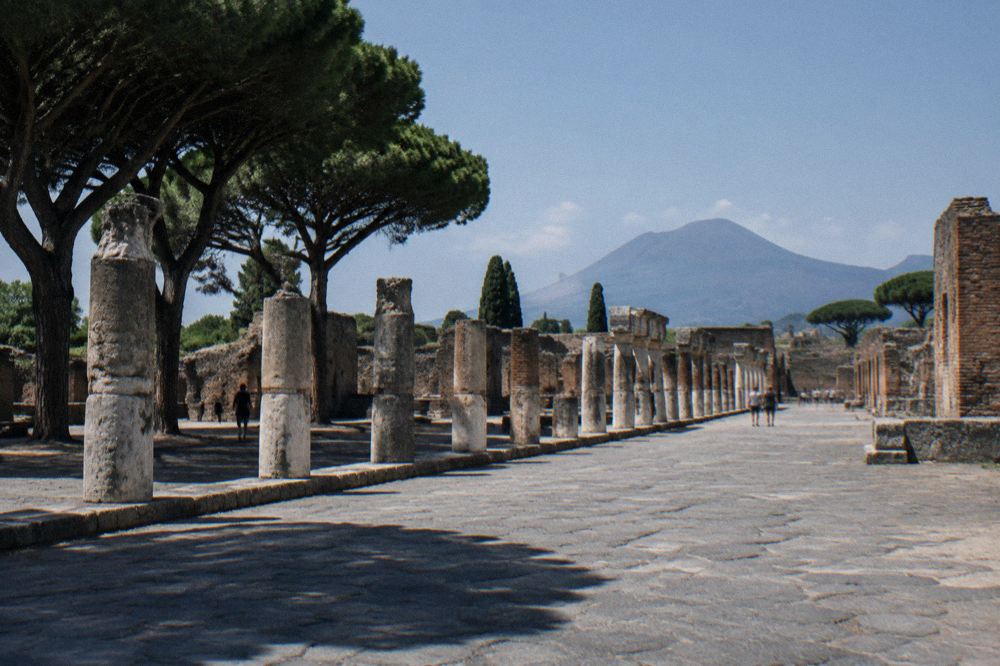
Summer also compresses the visiting day in one specific way. From 16 March to 14 October the park caps entry by time slot: a maximum of 15,000 visitors in the 9:00 to 13:00 band and 5,000 in the 13:00 to 17:30 band. On a blazing August afternoon, the afternoon band is the cooler, emptier option, and last-minute independent entry is easier after 13:00 than before it. The daily ceiling of 20,000 visitors, in force since 15 November 2024, also means that a hot-weather walk-up in August can meet a sold-out gate. Booking ahead in summer is not perfectionism; it is the difference between entering and not.
When the heat finally wins, the surrounding region offers shade with lunch attached. The slopes of Vesuvius produce wine inside the national park, and a tasting with an organic lunch is a classic way to spend the hottest hours before re-entering the ruins late in the day. The Vesuvius wine experiences, including one that pairs the ruins with lunch and tasting in a single outing, are covered in detail in the Pompeii wine and Vesuvius wine tasting guide, and one standout option from the same family of experiences is shown below.
Is Winter A Good Time To Visit Pompeii?
Winter is a genuine option at Pompeii: average daily maxima of about 12.2 C in January and about 13.2 C in December are mild for walking, the visitor count drops to roughly a quarter of the May peak, but rain is at its annual maximum, about 180 mm in November and about 147 mm in December, and the winter timetable cuts the day short with last entrance at 15:30.
The quiet is real. February 2024 counted 142,648 visitors against May's 516,923. Streets that feel like a procession in August feel like a private city in January. The trade-offs are three: short opening hours from 15 October to 15 March, wet ground on worn Roman paving, and earlier darkness that removes the long golden-hour walk photographers want. Rain itself rarely closes the park, but it makes the stepped streets slippery, so footwear with grip matters more in November than in July.
Winter visitors also get the free-entry benefit at its most useful. Entry is free for everyone on the first Sunday of each month year-round, and a winter first Sunday is far less crushed than a summer one: the park has recorded more than 36,000 visitors on a single free first Sunday, a figure far easier to survive in February than in August. The free-entry rules and the reduced EUR 2 ticket for EU citizens aged 18 to under 25 are laid out in full in the Pompeii tickets guide.
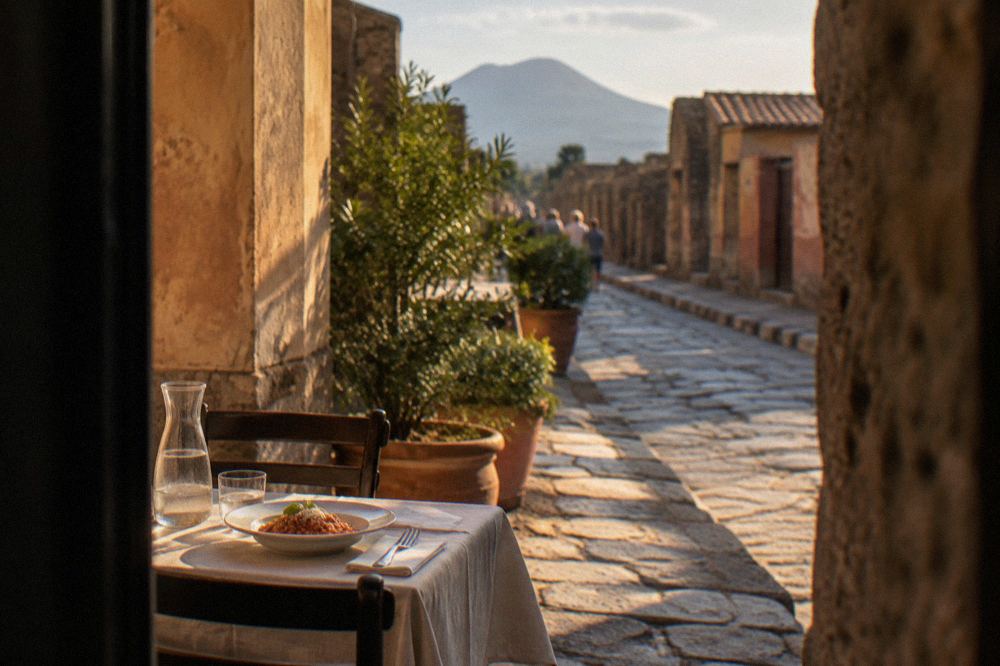
A wet-weather winter plan writes itself around Naples, twenty-some kilometres away by road. The city's archaeology museum holds the frescoes and mosaics lifted from Pompeii, the perfect rainy-day complement to the ruins themselves, and a hot street-food walk through the old town turns bad weather into an advantage. One reliably popular way to spend a rain-shortened day, with an expert local guide leading a food and wine walk through Naples, is listed below.
| Season (normals) | Days Feel Like | Rain Pattern | Main Planning Issue |
|---|---|---|---|
| Spring (Mar-May) | Mild to warm, 14.9 to 21.6 C max | Falling from 104 to 59 mm | Crowds build fast in May |
| Summer (Jun-Aug) | Hot, 25.8 to 29.4 C max | Near-dry, 30 to 16 to 22 mm | Heat and the daily cap |
| Autumn (Sep-Nov) | Warm to cool, 25.3 to 16.9 C max | Rising from 90 to 180 mm | October is busier than July |
| Winter (Dec-Feb) | Cool, 13.2 to 12.6 C max | Heavy, 147 to 119 to 103 mm | Short hours, wet paving |
How Much Does It Rain In Pompeii And When?
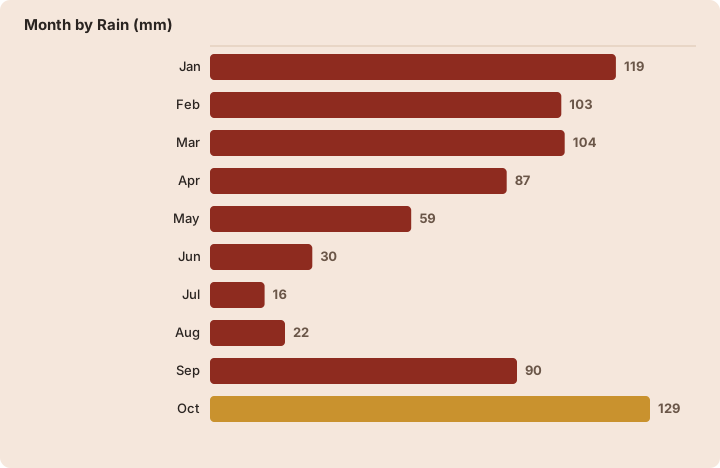
Pompeii averages about 1086 mm of rain per year, and it arrives almost entirely between September and April: November alone averages about 180 mm and December about 147 mm, while the three summer months of June, July and August each average only about 30 mm, 16 mm and 22 mm respectively. Rain at the ruins means slippery stones and brief shelter stops, not closure, since the park has no weekly closing day.
The distribution is the point. A month like March, with about 104 mm spread over unsettled Mediterranean fronts, can deliver a sodden week and then a string of flawless days, so spring travellers should plan flexible days rather than avoid the month. September's about 90 mm usually falls in short late-month downpours after a dry first half. The one number worth internalising is the summer one: from June through August, rain is close to irrelevant to your plans, and every other planning variable, heat, crowds, the entry cap, dominates it. Everything else covered here is indexed on Pompeii Travel Guide.
| Rank | Month | Rain (mm, 1991-2020 normal) |
|---|---|---|
| 1 | Nov | 180 |
| 2 | Dec | 147 |
| 3 | Oct | 129 |
| 4 | Jan | 119 |
| 5 | Mar | 104 |
| 6 | Feb | 103 |
| 7 | Sep | 90 |
| 8 | Apr | 87 |
| 9 | May | 59 |
| 10 | Jun | 30 |
| 11 | Aug | 22 |
| 12 | Jul | 16 |
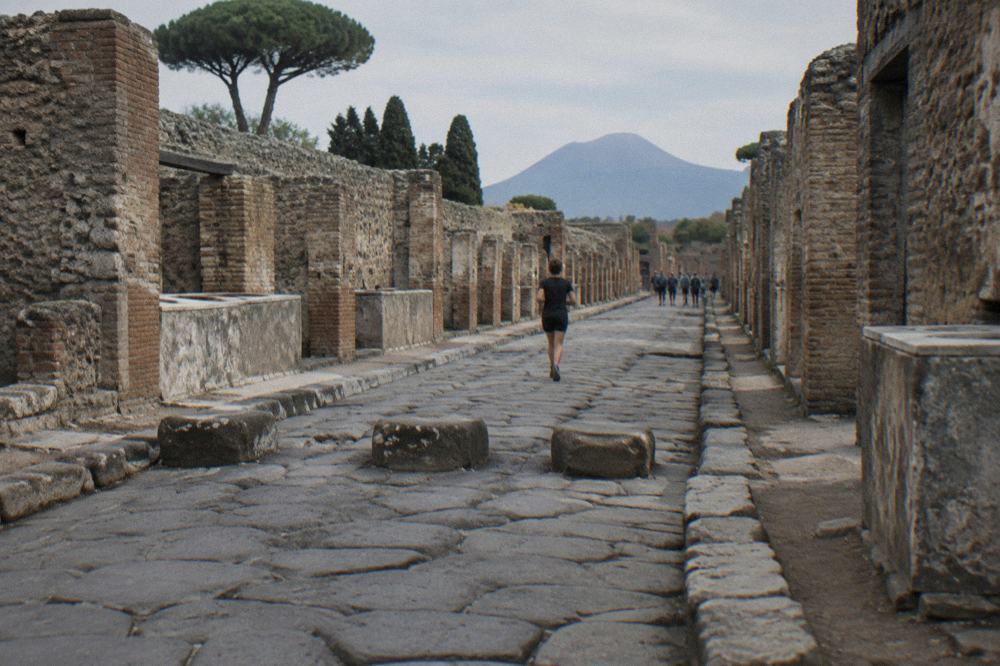
Note that October, at about 129 mm, ranks among the wetter months despite being one of the busiest. That combination, heavy rain potential and 481,255 October visitors, means an autumn day at the park can be both crowded and squally.
What Should You Wear In Pompeii In Each Season?
Wear broken-in shoes with real grip in every season, because Pompeii's original Roman paving is uneven, stepped and polished smooth in places, and add sun protection from May to September when maxima run about 21.6 to 29.4 C and shade is scarce, and a waterproof layer from October to March when monthly rain runs about 129 to 180 mm at its peak.
The park's own visitor regulations set the only hard clothing rules: no bare chests inside the site, and bags larger than 30x30x15 cm must go to left luggage. Beyond that, the climate record does the advising. Summer asks for a hat, a refillable bottle and light colours; the stones radiate stored heat well past the point when the air feels manageable. Winter asks for layered warmth against about 6.5 C average minimums in February, plus that waterproof. Spring and autumn are the changeable seasons: a morning that starts at about 10 C can finish near 20 C by early afternoon, so layers you can carry beat one heavy coat.
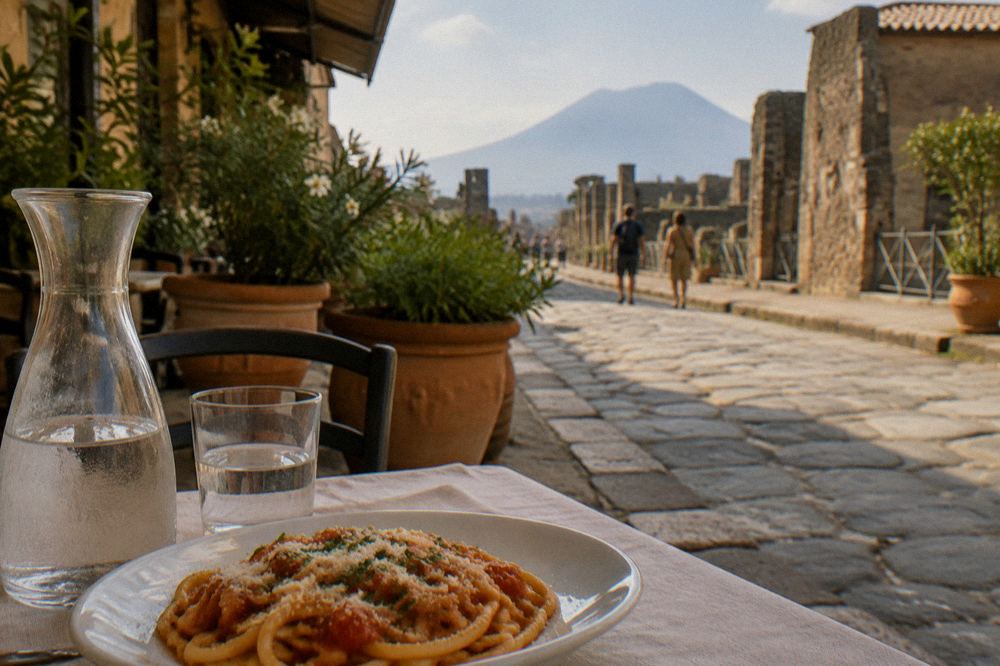
Footwear deserves its own sentence in every season: the stepped crossings where ancient streets meet are genuinely demanding, wet basalt in November is as slick as ice, and the whole question of how hard the site is to walk, including the accessibility route that enters at Piazza Anfiteatro, is treated in depth in the site's Pompeii weather packing and clothing advice.
| Season | Typical Range (C) | Wear | Carry |
|---|---|---|---|
| Spring | About 8 to 22 | Layers, light jacket | Umbrella early season |
| Summer | About 18 to 29 | Hat, light shirt, sunglasses | Water bottle, sunscreen |
| Autumn | About 11 to 25 | Layers, waterproof | Compact umbrella |
| Winter | About 6 to 13 | Warm layers, waterproof | Grip footwear spare socks |
Does Weather Affect Vesuvius And The Other Park Sites?
Yes, and at Vesuvius weather is an automatic closure trigger: the Gran Cono trail's ticket office and path close automatically whenever an orange weather alert or higher is in force, with automatic refunds issued, and access hours shift by month from 9 to 15 in January, February, November and December to 9 to 18 in July and August. Pompeii itself has no weather closure rule beyond the calendar ones, closing only 25 December and 1 January unless otherwise communicated.
The Vesuvius system is worth understanding before you combine it with the ruins, which many visitors do. Tickets for the Gran Cono are sold online only, in timed slots of 50 tickets per ten minutes bookable thirty days ahead, with ten last-minute nominative tickets per slot released thirty minutes before, a rule in force since 11 April 2026. The excursion itself runs two hours return on the shortest route to three hours on the longest, all of it exposed to sun, wind and, in the cold months, genuine mountain chill at altitude. A clear morning is the safest bet, since afternoon cloud often caps the crater and turns the view of the Bay of Naples into grey nothing. Full ticket and access detail is in the Mount Vesuvius tickets guide.

The smaller park sites have their own calendar quirks that intersect with the seasons. One closure to know about if your heart is set on a specific house: the Praedia of Julia Felix has been closed to the public for maintenance since 7 September 2026, and no reopening date has been announced.
How Should You Plan Around Pompeii Weather On A Day Trip?
Plan Pompeii around the weather by booking the earliest entry slot in summer (9:00, when the 15,000-visitor morning band opens), the afternoon band after 13:00 in shoulder season, and by keeping Naples' covered attractions as a same-day fallback, with the park's train station Pompei Scavi-Villa dei Misteri about 29 to 35 minutes by rail from Napoli Garibaldi on the Circumvesuviana line.
That rail figure comes from EAV's own schedule data, and it makes a weather-adaptive day easy: a damp morning in Naples at the archaeological museum, then the short ride out when the sky clears. Travellers arriving from further afield will find the full routes in the Naples to Pompeii guide and the Rome to Pompeii day trip guide, and anyone weighing an overnight against a day trip should note that the same-day-in, same-day-out pattern is what makes summer heat at the ruins so punishing. Staying in modern Pompei itself, covered in the where to stay in Pompeii guide, puts you five minutes from the gate for a 9:00 start.
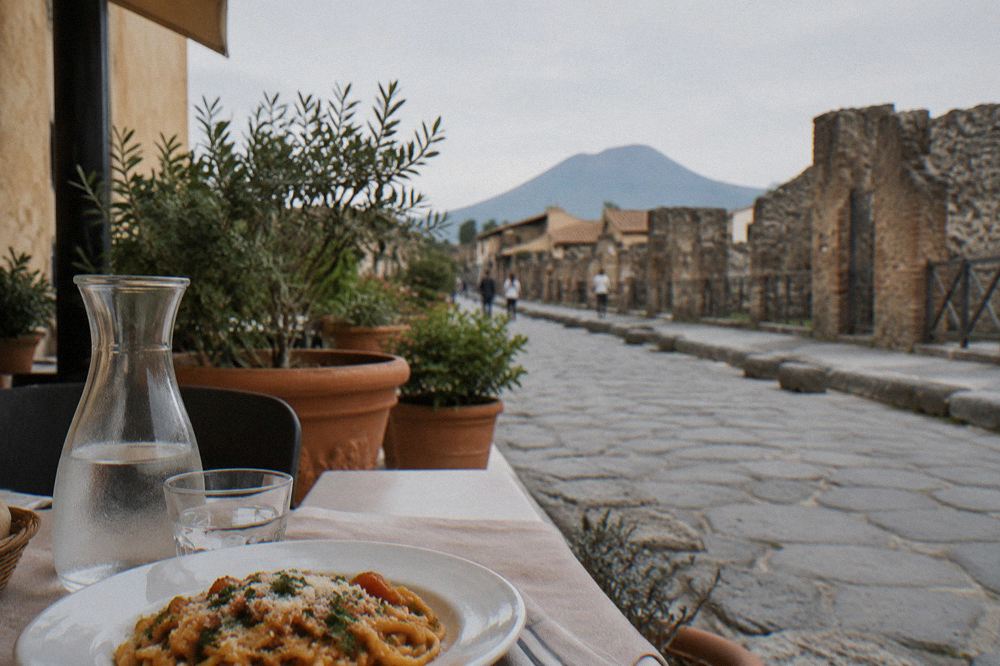
One transport note belongs on any weather page for this destination: the Campania Express train service has been suspended since 1 October 2026 until further notice, with refunds handled through the operator's complaints form or the original seller, so plans built on that premium line need rebuilding around the ordinary Circumvesuviana services. The line-by-line detail, including what the suspension means for coastal itineraries, is in the Circumvesuviana train guide.
For a structured day that removes the timing decisions entirely, a skip-the-line guided day trip from Naples handles the entry logistics while you focus on the sky. The listing below is the site's featured pick for that format, with its price, rating and review figures shown live.
What About Wind, Sea Breezes And Microclimates Around The Bay?
Pompeii sits on the inner Bay of Naples and shares one Mediterranean climate with its neighbours; the only real microclimate effect a visitor will notice is altitude, since the Gran Cono trail climbs high enough for conditions at the crater rim to differ sharply from the ruins below.
The practical implication is simple. Do not treat a July booking as a guarantee of 28.7 C; treat it as a strong probability of heat and an overwhelming probability of dryness. Equally, a November booking is a coin-flip on rain but a near-certainty of a quiet site and comfortable walking temperatures near about 16.9 C.
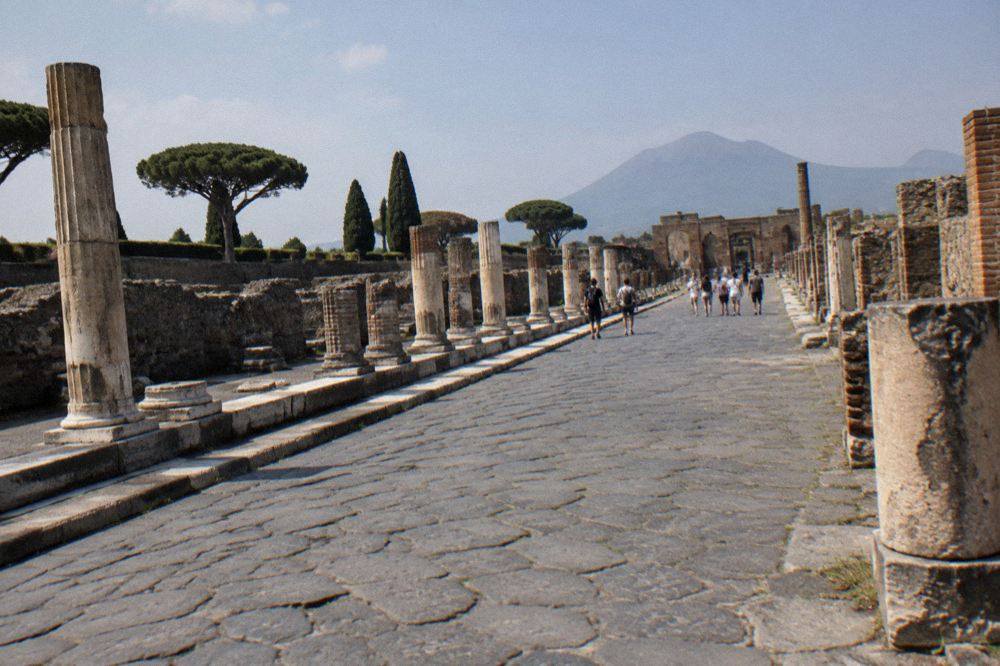
The bay's geography does one more favour for photographers and late walkers: the site's summer closing time of 19:00 means the last hour inside the walls, from about 18:00, comes with low light across the forum and the Vesuvius cone, the single best photographic window of the day in the dry month of August with its average of about 22 mm of rain. Visitors planning shots around that light will find framing and access detail in the site's photography advice alongside this page.
Common Questions About Pompeii Weather
What is the best month to visit Pompeii?
April, May, late September and October, when average daily maxima run about 17.7 to 25.3 C, rain is moderate, and the long summer timetable (last entrance 17:30, closing 19:00) is still in force. Note that May 2024 was the park's busiest month at 516,923 visitors, and October 2024 was busier than July.
How hot is Pompeii in summer?
Average daily maxima reach about 28.7 C in July and about 29.4 C in August, with minimums near 21 C. Because the ruins are almost unshaded and the stone holds heat, conditions on the paving feel considerably hotter in early afternoon.
Does it rain a lot in Pompeii?
About 1086 mm per year, heavily concentrated from September to April. November is the wettest month at about 180 mm; July is the driest at about 16 mm, and June, July and August average only about 30 mm, 16 mm and 22 mm respectively.
Is Pompeii worth visiting in winter?
Yes, if you accept the trade-offs. Visitor numbers fall to roughly a quarter of the May peak, maxima of about 12 to 13 C are fine for walking, but the winter timetable (last entrance 15:30, closing 17:00 from 15 October to 15 March) shortens the day and rain peaks in November and December.
Can bad weather close Pompeii or Vesuvius?
Pompeii closes only on 25 December and 1 January unless otherwise communicated, and has no weekly closing day. Vesuvius is different: the Gran Cono path and ticket office close automatically on an orange weather alert or higher, with automatic refunds.
What should I wear to Pompeii?
Grippy closed shoes in every season, because the Roman paving is uneven and slippery when wet; a hat, sunscreen and water from May to September; and a waterproof layer from October to March. The only park rules are no bare chests and bags no larger than 30x30x15 cm.
Whatever month you choose, the climate record says the same thing in the end: this is a site built for mornings, in every season. The gates open at 9:00 year-round, the stones are kindest before noon in summer and after a shower in winter, and the park's own numbers show that the visitors who arrive early see the same city, in better light and thinner crowds, than those who come at midday. Build your day around that, and Pompeii's weather becomes an ally rather than an obstacle.