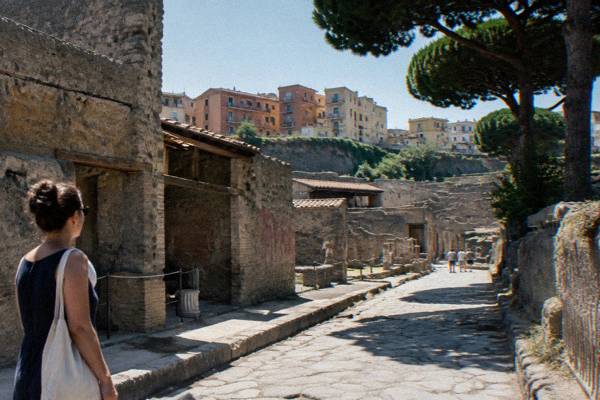
Are The Skeletons In Herculaneum Real Or Fake?
The skeletons in Herculaneum are real ancient Roman bones, not casts or reproductions. This page explains why they differ from Pompeii's plaster body casts and where to see them.
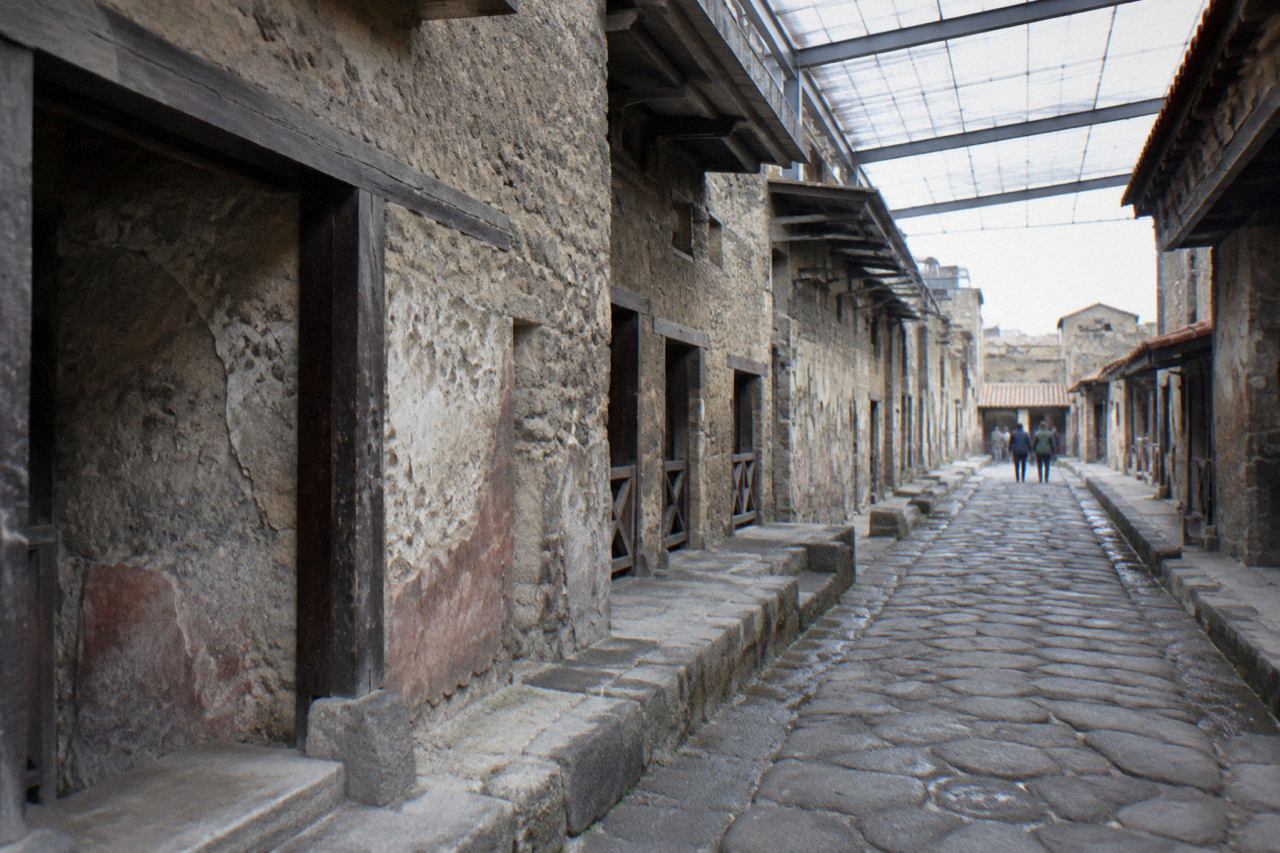
The skeletons in Herculaneum are real. They are the actual ancient bones of Roman residents who died when Mount Vesuvius erupted in AD 79, and they lie in the archaeological park of Herculaneum at Ercolano in Campania, southern Italy, the neighbouring site to Pompeii on the Bay of Naples. Nothing in the park's display of human remains is plaster, resin or a modern reproduction.
Are The Skeletons In Herculaneum Real Or Fake?
The skeletons in Herculaneum are real. They are the genuine ancient bones of people who died in the eruption of Mount Vesuvius in AD 79, found in the stone boat sheds along the town's ancient waterfront. Unlike the famous body casts of Pompeii, which are plaster poured into hollows left by decomposed bodies, Herculaneum's skeletons are original human bone, preserved because the town was sealed rapidly under deep, hot volcanic material.
The question arises because the two great Vesuvian sites display their dead in ways that look similar at first glance but are fundamentally different in nature. Pompeii shows visitors plaster casts: white and grey forms in the posture of people caught by the eruption, recreated by excavators who poured liquid plaster into the hollows left in hardened ash after the bodies inside them decomposed. The casts are extraordinary documents of the final moments of individual people, but they are reproductions of a shape, not the remains themselves.
Herculaneum shows bone. The people who sheltered in the stone boat sheds along the waterfront were killed by pyroclastic surges, waves of superheated gas and volcanic debris that swept down from Vesuvius and covered the town within moments. The surges, followed by further volcanic deposits, buried Herculaneum deep enough to seal it, and in those conditions bone survived while soft tissue did not. When archaeologists reached the ancient shoreline, they found the skeletons lying where the victims had fallen, some still wearing the jewellery they had carried with them.
The distinction matters to anyone planning a visit to the Vesuvian sites. At Herculaneum you are looking at the people of the town: skulls and ribcages and the small bones of children, arranged in the chambers where families waited together. At Pompeii you are looking at the shape their neighbours left behind in the ash. Both are affecting in different ways. Only one of them is the person.
For background on the eruption itself and the debate over its date, the tradition holds to 24 August AD 79 from the oldest manuscripts of Pliny the Younger, while the park's own e-journal states that the alternative 24 October date has no evidentiary basis. Neither date changes the answer to this question: the dead of Herculaneum are real whatever day the mountain erupted.
Why Herculaneum Has Real Bones And Pompeii Has Plaster Casts
The difference comes from how each town was buried. Pompeii was blanketed in pumice and ash in which bodies slowly decomposed, leaving hollow moulds that excavators later filled with plaster to create the casts displayed today. Herculaneum was struck by pyroclastic surges that sealed the town under deep, hot deposits almost at once, conditions that preserved bone rather than dissolving it, so the skeletons excavated there are the remains themselves.
Pompeii stood downwind of the first phase of the eruption, which dropped pumice and ash on the city for hours. People died in the streets and in their houses, and as the volcanic material hardened around them, their bodies decayed inside the casing, leaving human-shaped voids. The technique of filling those voids with plaster produced the casts that visitors photograph today. The method works because the ash preserved the outline of the person with remarkable fidelity, down to the folds of clothing and the position of hands.
Herculaneum lay to the west and closer to the mountain, and its burial took a different form. The town was struck by pyroclastic surges that arrived at enormous speed and at temperatures high enough to kill instantly. Those surges, together with the volcanic deposits that followed, sealed the town to a great depth in a short time. Organic material such as wood, food and papyrus carbonised rather than burning away, and bone, though altered by the heat, survived as solid material. The same conditions that destroyed soft tissue preserved the skeleton.
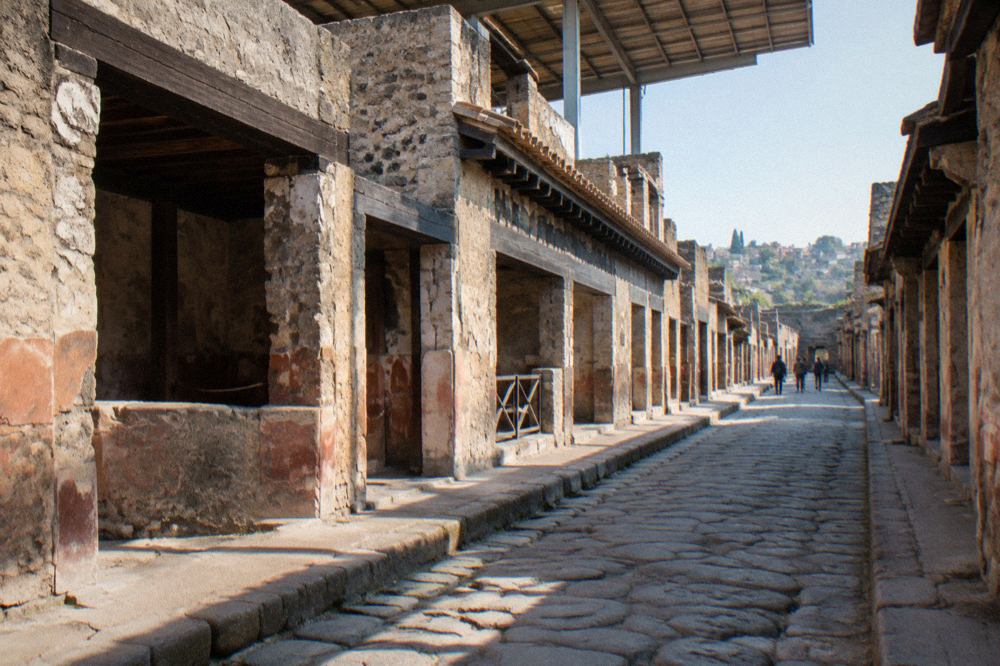
This is also why the two sites feel so different to walk through. Herculaneum's houses still stand to their upper storeys in places, their doors and beams carbonised but in position, because the deep seal protected the structures from collapse and from the air. Pompeii's buildings were exposed to a slower burial and then to centuries of earlier excavation techniques. The treatment of the dead mirrors the treatment of the towns.
| Feature | Herculaneum skeletons | Pompeii body casts |
|---|---|---|
| Material | Ancient human bone | Plaster poured into hollows in the ash |
| How formed | Victims died in pyroclastic surges and were sealed under deep volcanic deposits | Soft tissue decomposed in the hardened ash, leaving voids later filled with plaster |
| Where found | Stone boat sheds along the ancient waterfront | Buildings and streets across the ancient city |
| What they show | The actual remains of individuals, including children | The posture and shape of the dead at the moment of burial |
| On display | In situ in the boat sheds at the Herculaneum park | At points across the Pompeii park, which recorded 4,000,090 visitors in 2025 |
Where The Skeletons Were Found And What They Tell Us
The skeletons were discovered in the stone boat sheds, the arched chambers that line Herculaneum's ancient waterfront, when excavations finally reached the shoreline below the modern town of Ercolano. They show families sheltering together, some still wearing jewellery, and they changed the understanding of the eruption by revealing that residents waited by the sea for rescue that never came rather than fleeing inland.
Before those excavations, Herculaneum was known chiefly for its buildings: the carbonised doors, the mosaics, and the villa that yielded its library of carbonised papyri. The human toll of the eruption was almost invisible. Earlier digging had concentrated on the town's structures and had stopped at the ancient shoreline, leaving the ground beyond it untouched. You can read more about the boat sheds themselves and the Villa of the Papyri, which is currently closed for works, on their own pages.
When work reached the waterfront, the picture changed completely. The stone chambers that had served as boat shelters, open toward the sea, contained the remains of people who had gathered there in the final hours of the town. They had chosen the shoreline because rescue by sea was the obvious escape from a town hemmed in by the eruption on its landward side. The sea offered no way out. The surges reached the waterfront and killed everyone in the chambers.
The skeletons tell a detailed and human story. They include men, women and children. Some carry jewellery, including rings and bracelets, which marked them as people who had gathered their valuables before sheltering. The arrangement of the remains across the chambers shows small groups clustering together: families and neighbours waiting in the dark, rather than a single panicked crowd. Archaeologists have used the bones to study diet, disease and injury in a Roman town population, one of the very few such populations preserved by a single dated event.
That research value is exactly why the question of authenticity matters. A cast tells you posture; a skeleton tells you age, sex, health, workload and, in some cases, cause of death. No reproduction, however careful, could substitute for the material itself.
How To See The Skeletons On A Visit To Herculaneum
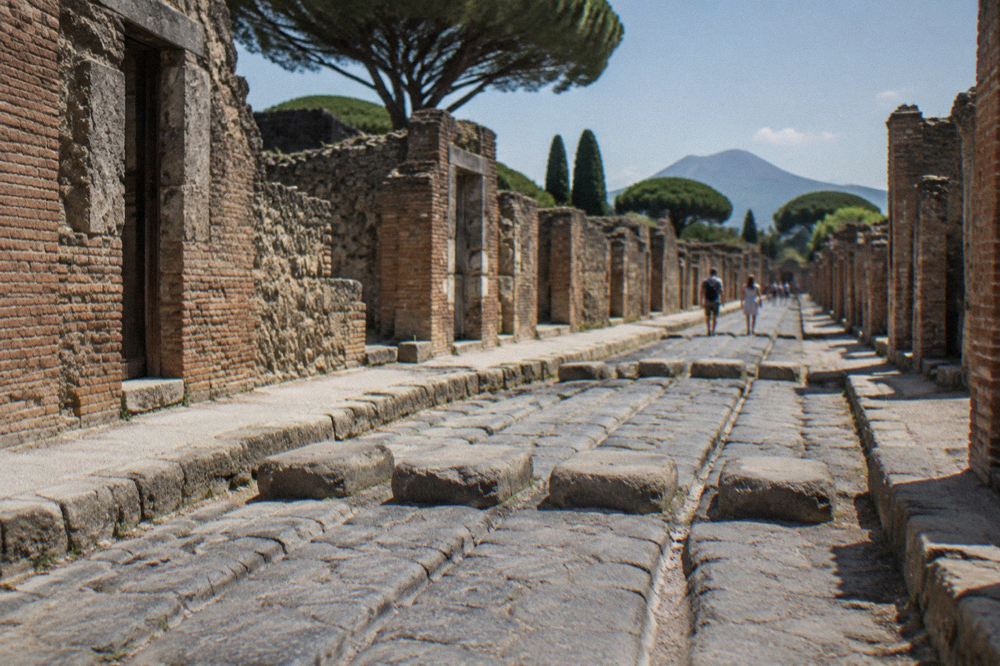
To see the skeletons, visit the Herculaneum archaeological park at Ercolano and walk to the ancient waterfront below the town, where the arched boat sheds open onto what was once the shore. The park charges EUR 16 for a full ticket, EUR 2 reduced for visitors aged 18 to 25, and entry is free on the first Sunday of each month plus 25 April, 2 June and 4 November.
The park is open daily, and closed only on 1 January and 25 December. Hours follow the same seasonal split as the wider Vesuvian network: from 16 March to 14 October the site is open 8:30 to 19:30 with last entry at 18:00, and from 15 October to 15 March it is open 8:30 to 17:00 with last entry at 15:30. Plan to arrive early: the waterfront area sits at the lowest level of the site, so it makes sense to work downward through the town and finish at the boat sheds, when your legs are tired and the crowds have thinned.
Two parts of the park are currently closed and should not shape your plans: the Villa dei Papiri is closed for works and the Ancient Theatre is closed until further notice, per the park's own ticketing page. The boat sheds and the skeletons are a separate area of the site and remain part of the visit.
A guided visit adds a great deal here, because the remains are easy to misread without context. The Herculaneum Small Group Tour and Ticket With an Archaeologist covers the site with an archaeologist in a small group, with the entry ticket included, and it addresses the boat sheds and their finds directly. You can Check availability on the operator's live listing.
Ticketing for the site has its own detail, including the free days and the reduced rate, and the Herculaneum tickets guide walks through the options. If you are combining sites, the question of doing Herculaneum and Pompeii in one day is realistic with an early start, and there is a full one-day itinerary for both sites on this site.
Why The Confusion With Pompeii's Casts Persists
The confusion persists because Pompeii and Herculaneum are usually visited and described together, and because Pompeii's plaster casts are photographed far more widely than Herculaneum's bones. Many visitors assume one style of remains applies to both sites, so the casts of Pompeii get mentally transferred to Herculaneum, or the skeletons of Herculaneum get mistaken for another set of casts.
Travel articles and social media rarely label the two correctly. A viral photograph of a contorted form in ash is almost always a Pompeii cast; a photograph of rows of skulls in a stone vault is almost always Herculaneum. Without the label, the two merge into a single image of "the bodies of Vesuvius", and the question of what is real and what is reproduction gets lost.
The honest framing is that both are authentic in different ways. The Pompeii casts are genuine artefacts of the eruption, made from moulds the eruption itself created, even though the plaster is modern. The Herculaneum skeletons are the dead themselves. Neither is a museum fabrication. If a guide or a page tells you the Herculaneum skeletons are "just casts", that is simply wrong, and if a page implies Pompeii's casts are ancient sculptures, that is wrong too.
The related question of why no bodies were found in Herculaneum is a separate puzzle from the skeletons in the boat sheds, and it has its own answer page. The short version is that the conditions that preserved bone in the waterfront chambers applied differently elsewhere in the town.
Visitors who want both experiences, the casts and the bones, can do it in a single long day from Naples or Sorrento, or more comfortably across two. The comparison also explains why Herculaneum holds its own reputation among archaeologists while Pompeii draws the larger crowds, a gap explored in why Herculaneum is not as famous as Pompeii. For planning the wider trip, the Pompeii Travel Guide homepage gathers the site's core guidance in one place.
Common Questions About The Herculaneum Skeletons
Are the skeletons in Herculaneum real or fake?
They are real. The skeletons in Herculaneum are the actual ancient bones of people who died in the eruption of Mount Vesuvius in AD 79, preserved in the stone boat sheds along the ancient waterfront. They are not plaster casts or modern reproductions.
Why does Pompeii have body casts but Herculaneum has skeletons?
Pompeii was buried in pumice and ash in which bodies slowly decomposed, leaving hollow moulds that excavators later filled with plaster to create casts. Herculaneum was sealed almost instantly under deep, hot volcanic deposits from pyroclastic surges, conditions that preserved bone rather than dissolving it.
Where exactly are the skeletons displayed at Herculaneum?
The skeletons lie in the arched stone boat sheds at the lowest level of the site, along what was the ancient waterfront. Visitors reach them by walking down through the excavated town toward the former shoreline.
How much does it cost to enter Herculaneum?
A full ticket costs EUR 16, with a reduced rate of EUR 2 for visitors aged 18 to 25. Entry is free on the first Sunday of each month and on 25 April, 2 June and 4 November. Free-day tickets are collected at the ticket office on the day, with no reservation.
Were any of the Herculaneum victims wearing jewellery?
Yes. Some of the skeletons were found still wearing rings and bracelets, showing that people had gathered their valuables before sheltering in the boat sheds along the shoreline.
Is anything at Herculaneum currently closed?
Yes. The Villa dei Papiri is closed for works and the Ancient Theatre is closed until further notice, according to the park's ticketing page. The boat sheds and the skeletons are a separate area of the site and remain part of the visit.
The skeletons of Herculaneum are among the most direct encounters with the Roman past anywhere in Italy, and the question this page answers has a simple form: they are real bones, preserved by a burial that sealed the town almost at once, and they lie where their owners waited. Plan the visit with the seasonal hours in mind, take the free and reduced entry rules into account, and walk down to the waterfront with the story of the boat sheds in hand.