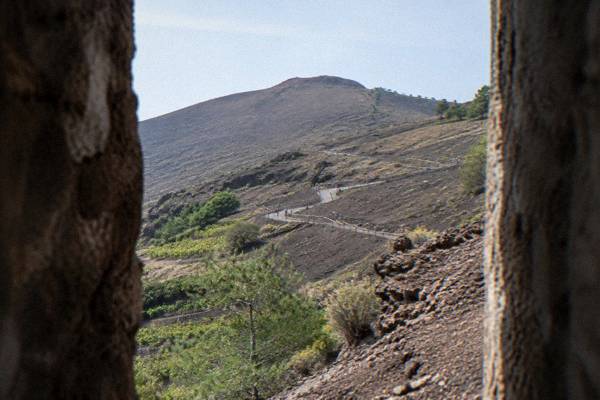
Is It Worth Going Up Mount Vesuvius?
An honest assessment of the Mount Vesuvius crater climb from Pompeii and Naples: what you see, how hard it is, ticket rules, and when to skip it.
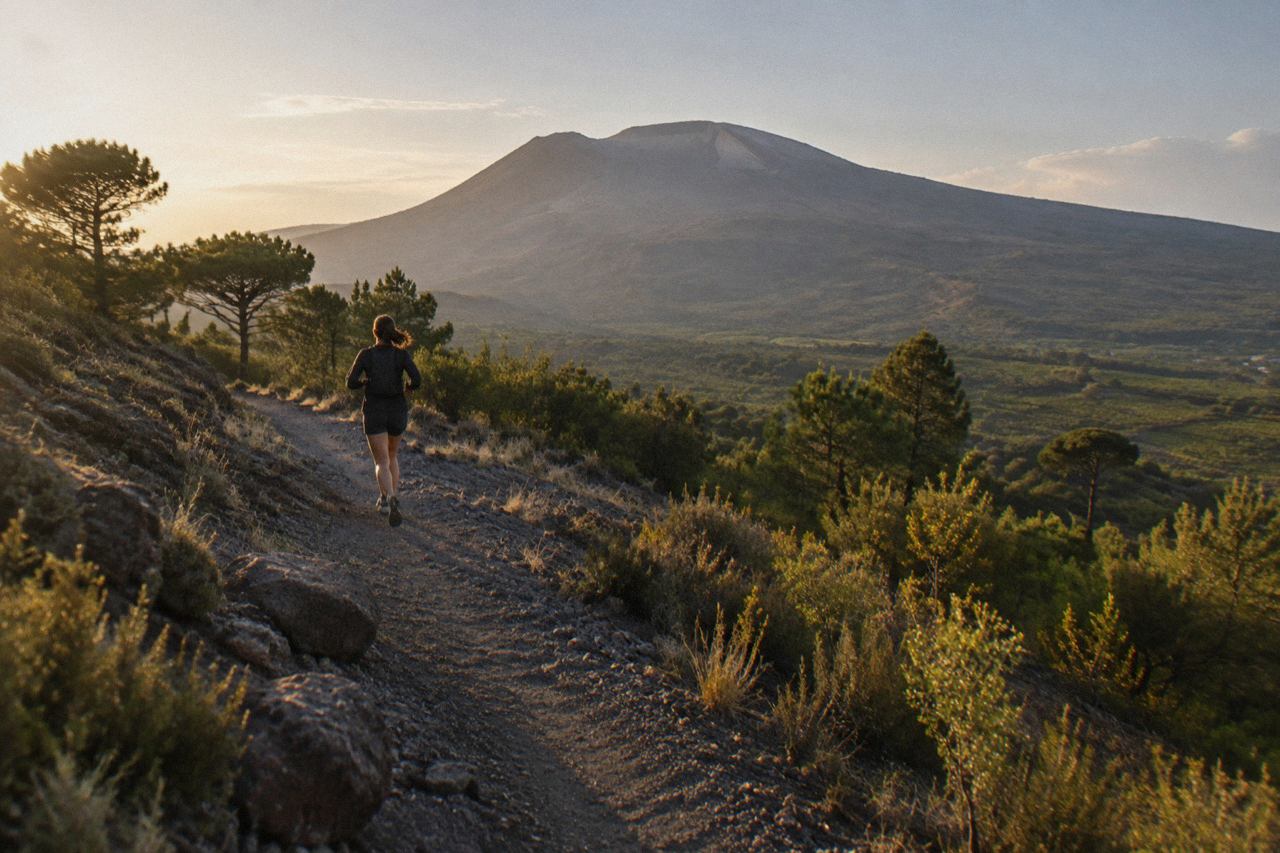
Mount Vesuvius is the volcano that buried the ancient Roman city of Pompeii in AD 79, and it stands about 24 km by road south-east of Naples in Campania, southern Italy, directly above the modern town of Pompei and the excavated park beside it. The question every visitor to the Bay of Naples faces is whether to add the crater itself to the itinerary, or whether the ruins alone fill the day. The answer depends on the season, your legs and how you feel about timed tickets, and this page works through all three using the park authority's own published rules.
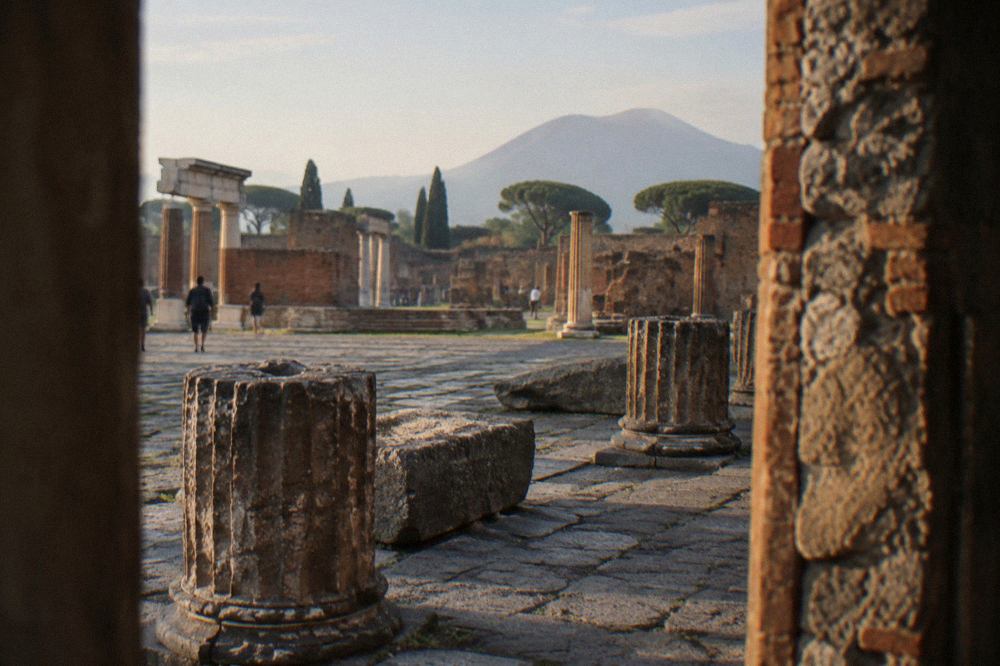
Is It Worth Going Up Mount Vesuvius?
Yes, for the clear majority of visitors who arrive prepared: the Gran Cono trail is the only walk that puts you on the rim of the volcano that destroyed Pompeii in AD 79, the climb takes about two hours return by the shortest route, and the crater itself, fumaroles and all, is unlike anything else in Campania. It is not worth it in poor visibility, in the July or August midday heat, or for anyone who cannot manage a steep gravel path.
The honest framing is that Vesuvius is not a scenic mountain in the postcard sense. It is a working volcanic park, the trail is a groomed gravel switchback, and the reward is geological rather than picturesque: a 300-metre-deep crater bowl, steaming vents on its inner walls, and, on a clear day, the whole sweep of the Bay of Naples with Pompeii, Herculaneum and the islands laid out below. Visitors who expect a polished attraction sometimes come down disappointed. Visitors who understand they are standing on the thing that did all of this rarely do.
The national park caps the numbers, which changes the experience for the better. Daily entry is limited to between 2,160 and 3,240 visitors depending on the season, sold in timed slots of 50 tickets every ten minutes, bookable up to 30 days ahead. That cap means the rim is busy but never crushed, and it also means the "just turn up" approach fails in high season. The practical rules are covered in detail on this site's Mount Vesuvius ticket guide, and the costs are broken out on the page how much does it cost to go up Mount Vesuvius.
What You Actually See From The Crater Rim
The view from the Gran Cono rim runs across the entire Bay of Naples on a clear day: the excavated city of Pompeii below, Naples itself about 24 km to the north-west, the Sorrento peninsula and Capri to the south, and the flat grey-green expanse of the crater immediately underfoot, with fumarole vents still releasing steam from the inner walls. The spectacle is the volcano's scale and its proximity to the cities it threatens, not waterfalls or forests, and haze can erase the panorama entirely.
The crater is the headline. Looking down into it from the rim path, you see a steep ash bowl threaded with darker streaks where gas escapes, and the geology tells the story more forcefully than any museum panel: this cavity is the wound left by the eruption traditionally dated to 24 August AD 79. The park's own e-journal notes that the alternative October date has no evidentiary basis, and the debate is covered on this site's page about when Vesuvius erupted, but standing on the edge, the date matters less than the drop.
What the rim view adds, and what no ruin can, is perspective on the whole region. From up there the geometry of the AD 79 disaster becomes visible: Pompeii on the plain, Herculaneum on the coast to the west, the modern towns of Ercolano and Torre del Greco climbing the flanks. Travellers who climb after visiting the ruins consistently describe the pairing as the moment the history clicks. Travellers who climb first sometimes find the ruins anticlimactic afterwards, which is one argument in the Pompeii or Vesuvius first debate.
Visibility is the single variable that decides the experience. Morning slots are the safer bet in the warmer months, because haze builds through the afternoon over the bay, and a rim wrapped in cloud delivers a gravel path and nothing else. The path also closes automatically when the weather alert reaches orange or above, with an automatic refund, so a stormy forecast is not a gamble but a settled no.
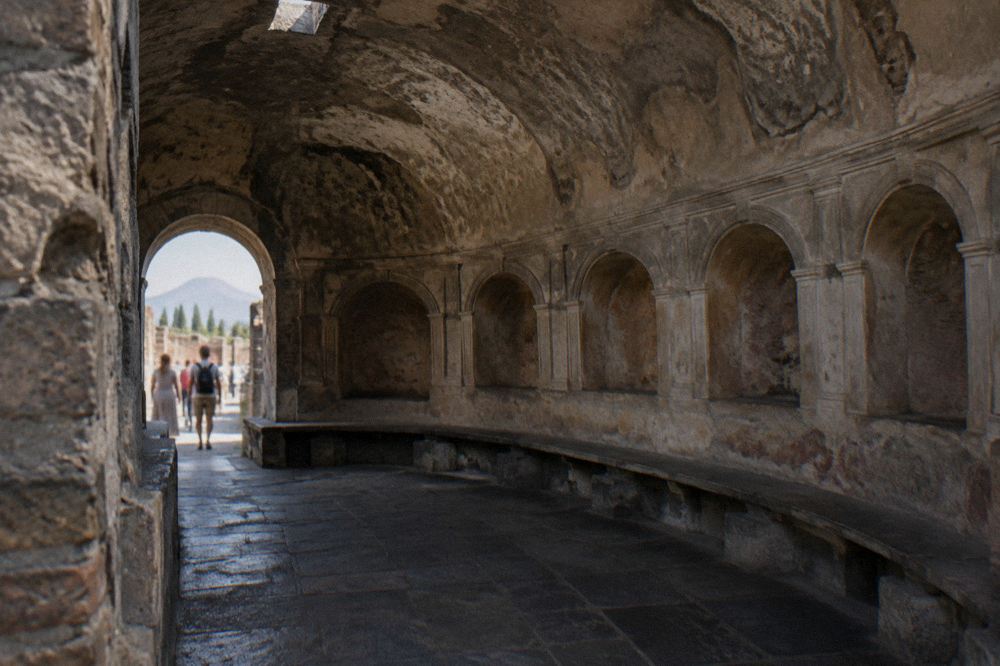
How Much Climbing Is Involved At Mount Vesuvius
The Gran Cono excursion takes about two hours return by the shortest route and up to three hours by the longest, on a steep gravel and ash path with switchbacks from the parking area at roughly 1,000 metres up to the rim. It is a steady uphill slog rather than a scramble, no climbing skills are needed, but firm shoes are, and the altitude gain plus summer heat make it a real effort for anyone with knee, heart or breathing difficulties.
The park publishes the excursion time as a range precisely because the route options differ. The shortest path up and down sits at the two-hour mark; the longest variant, which covers a wider arc of the rim, stretches to three. The surface is compacted volcanic gravel throughout, loose in places on the descent, which is where the poles-and-proper-shoes advice earns its keep. The full logistics, including the road up, are laid out in the site's Mount Vesuvius hike guide and the specific walk up Vesuvius page.
| Month group | Access hours | Daily cap |
|---|---|---|
| January, February, November, December | 09:00-15:00 | 2,160 |
| March and October | 09:00-16:00 | within the 2,160-3,240 range |
| April, May, June, September | 09:00-17:00 | within the 2,160-3,240 range |
| July and August | 09:00-18:00 | 3,240 |
Fitness honesty matters here. The climb is well within the ability of an average healthy adult, and children manage it, but it is not a stroll: the gradient is unrelenting, shade is nonexistent, and there are no shortcuts back down. In July and August, when access runs to 18:00, the sensible slots are the opening ones, before the flank turns into an oven. The site's page on how cold it gets at the top of Vesuvius covers the opposite problem in winter, when wind on the rim can bite even on a mild day in Pompei below.
Tickets are digital and nominative, checked against the holder's name, and sold only through the national park's official ticketing page: EUR 11.68 full and EUR 9.55 reduced as sold, with the underlying regulation text showing EUR 10 and EUR 8 as the base. Children under 6 go free, and under-25s plus residents of the 13 park municipalities pay reduced. Whether same-day purchase is realistic is its own question, answered on buying Vesuvius tickets on the day, and the driving question on can you drive up Mount Vesuvius.
How To Combine Vesuvius With Pompeii In One Day
Yes, the two fit in one day, and it is the standard pairing: a morning in the ancient city entering at Porta Marina or Piazza Esedra, then the drive up to the Vesuvius parking area for an afternoon crater slot, with roughly six hours total on site at the ruins and two to three on the mountain. The trap is sequencing and transport, since the Circumvesuviana serves Pompei Scavi-Villa dei Misteri but not the volcano, so the climb needs a bus, a tour or a car.
The geography forces the choice. The Pompei Scavi station sits beside the ruins; Vesuvius's trailhead sits roughly 1,000 metres up the mountain, reachable only by road. Independent travellers either drive, which raises the parking and road questions covered on the site's overview of Mount Vesuvius, or they book a day tour that runs the transfer. A booked day also removes the slot-timing risk, because the operator holds the crater reservation and sequences it around the ruins.
| Day plan | Morning | Afternoon | Best for |
|---|---|---|---|
| Ruins first | Pompeii from opening, 3-4 hours | Vesuvius 15:00-16:00 slot (season permitting) | Visitors who want the history fresh and the view hazy-but-acceptable |
| Volcano first | Vesuvius 09:00 slot, clear air | Pompeii after 13:00, thinner morning queues gone | Photographers and summer heat-avoiders |
| Two-day version | Full day Pompeii | Second day Vesuvius plus Herculaneum | Travellers with time; see the two-day itinerary |
For the one-day version, this site's Pompeii and Vesuvius in one day itinerary carries the full sequence. Note the interaction with the ruins' own timetable: from 16 March to 14 October the ancient city takes its last entrance at 17:30 and closes at 19:00, while winter hours from 15 October cut last entry to 15:30, which makes a same-day double visit tight from November to March unless the volcano comes first.
The tour option deserves a fair hearing. The featured product on this page is a day tour from Naples covering the Pompeii ruins and Mount Vesuvius without a meal, which suits travellers who would rather eat in modern Pompei on their own clock, and it can be checked via Check availability alongside the site's Naples day tour write-up. Readers weighing whether advance booking matters at all can also see whether you can just show up at Pompeii.
When The Climb Is Not Worth It
Skip the crater when the forecast brings cloud, rain or an orange weather alert, because the path closes automatically and the view is the entire point; skip it in the July and August midday hours on heat grounds; skip it with limited mobility, since the trail is steep gravel with no alternative access; and skip it if your day already includes Herculaneum plus Pompeii, which is a full itinerary without a mountain. The ruins deliver in any weather, and the crater does not.
The weather rule is absolute, not advisory. The park closes the ticket office and the trail automatically on an orange alert or higher and refunds automatically, but a merely grey day is not covered: you climb, you see gravel, you come down. Check the forecast for the mountain, not for Naples, since the summit sits in its own cloud much of the time. The mobility question has a partial answer elsewhere on the site, in the Pompeii accessibility coverage of the park's flat "Pompeii for All" route, but no equivalent exists on Vesuvius: the rim path is walk-in or nothing.
There is also an honest overcrowding point. The slot system keeps the path flowing, but July and August fill the caps at 3,240 a day, and the switchbacks carry a procession. Travellers who dislike walked-in lines should target the shoulder months, when April, May, June and September hours run to 17:00 and the daily numbers sit lower. November, the wettest month in the area at about 180 mm of rain on the 1991-2020 normals, and December are quiet but grey, as the site's Pompeii weather page sets out.
One alternative deserves a mention for anyone deterred by the climb itself rather than the idea of the mountain: a guided tour pairing Pompeii with horse riding on Vesuvius and lunch, which reaches the volcano's flank on horseback rather than on foot and includes a meal. It is a different experience of the same mountain, suited to travellers for whom the gravel path is the obstacle.
For background reading that sharpens the decision, this site also covers why Vesuvius is so famous, whether Vesuvius will erupt again, and the sobering 1944 eruption death toll, each of which explains a piece of why the crater draws the crowds it does. And the broader framing lives on the homepage, where the Pompeii Travel Guide lays out the full region from the ruins to the coast.
Common Questions About Mount Vesuvius
Is it worth going up Mount Vesuvius?
For a visitor with reasonable fitness, a clear forecast and a booked slot, yes: the Gran Cono trail puts you on the rim of the volcano that destroyed Pompeii in AD 79, the walk takes about two hours return by the shortest route, and the crater and bay panorama are unique in Campania. In cloud, midday summer heat or with mobility limits, the ruins are the better use of the day.
Can You Climb Mount Vesuvius Without a Guide?
Yes. The Gran Cono trail is walked independently with a timed online ticket; a guide is optional and not required by the park. The trailhead is staffed, the path is a single groomed route, and the excursion takes about two hours return by the shortest path, up to three by the longest.
How Do You Get From Pompeii to Mount Vesuvius?
By road only. The Circumvesuviana railway stops at Pompei Scavi-Villa dei Misteri beside the ruins but serves no point on the mountain, so the transfer from the station to the trailhead parking is by car, bus or a booked tour. Consult the operator's timetable by name for rail times, and the park's official page for the trail itself.
What Should You Wear to Climb Vesuvius?
Firm closed shoes with grip, since the path is steep volcanic gravel that runs loose underfoot on the descent. Bring more water than feels reasonable in summer, a layer for the wind at the rim in the cooler months, and sun protection throughout: there is no shade anywhere on the trail.
Is Mount Vesuvius Safe to Visit?
The national park operates the Gran Cono under an active monitoring regime, with a daily cap of 2,160 to 3,240 visitors, timed entry and automatic closure of the ticket office and path whenever the weather alert reaches orange or higher.
The verdict, in the end, is a sequencing question more than a worth question. Pompeii alone justifies the trip to Campania; the crater above it turns a history visit into a geography lesson you can feel in your calves, and on a clear morning it is the single best viewpoint in the region for understanding what happened here in AD 79. Book the slot, take the early hour, wear real shoes, and the mountain earns its place on the itinerary.