Pompeii Accessibility
Pompeii, the ancient Roman city buried by Vesuvius in AD 79 and now an archaeological park beside the modern town of Pompei in southern Italy, has one official step-free itinerary, the Pompeii for All route, plus named entrances, timed tickets and a daily visitor cap that shape any accessible visit.

Short answer
Pompeii's official accessibility provision is the Pompeii for All route: visitors with mobility difficulties enter at Piazza Anfiteatro and can exit at Piazza Anfiteatro or Piazza Esedra via the Antiquarium lift. A 2026 Pompeii Express ticket costs EUR 20 and a Pompeii+ ticket EUR 25, prices that end on 31 December 2026. Ancient paving is uneven throughout, so plan the route, the entrance and the season before arriving.
The ancient city of Pompeii, in Campania, southern Italy, about 24 km by road south-east of Naples and beside the modern town of Pompei, is a 44-hectare excavated Roman site of stone streets, stepped crossings and exposed walkways. For a visitor with reduced mobility, that terrain is the single biggest question, and the park's answer is a dedicated step-free itinerary. This guide sets out what the official pages actually state: the Pompeii for All route and its named entrances, the 2026 ticket prices and the January 2027 change, timed entry and the daily cap, transport access from Naples and Sorrento, and the practical details, from bag-size limits to toilets and seasonal heat, that decide whether a day at Pompeii is manageable or miserable.
Is Pompeii Wheelchair Accessible?
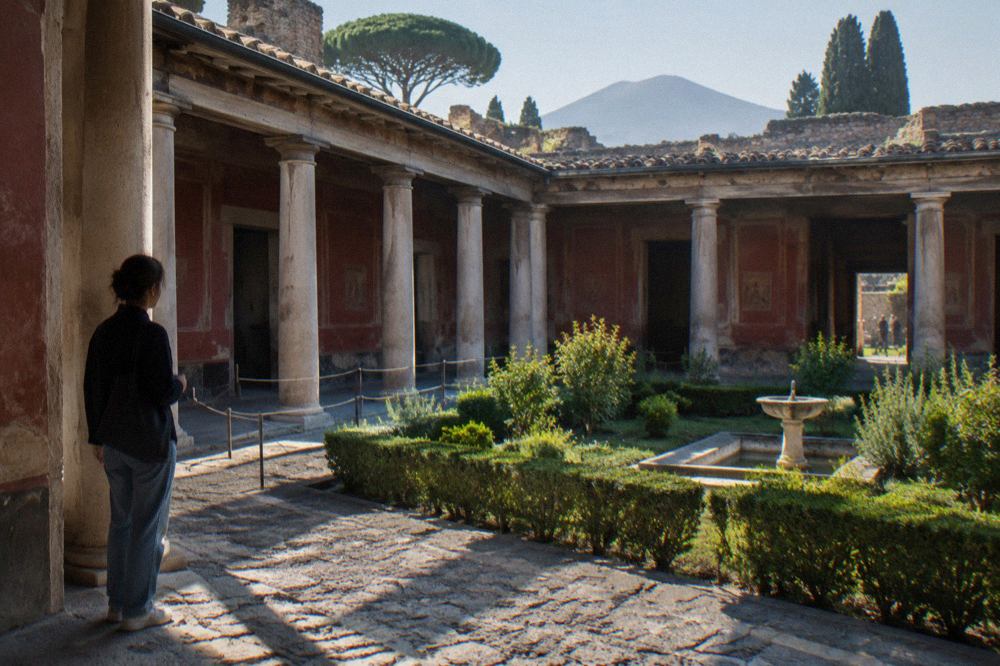
Pompeii is partially accessible, not fully wheelchair accessible, and the park itself frames its provision around one official itinerary. The Pompeii for All route lets visitors with mobility difficulties enter at Piazza Anfiteatro and leave either at Piazza Anfiteatro or at Piazza Esedra, using the Antiquarium lift between the two. That route is the park's stated commitment to step-free visiting. Beyond it, the ancient streets keep their original raised paving stones and stepping-stone crossings, so independent movement across the whole excavated area is genuinely difficult.
The distinction matters because many visitors arrive expecting either full barrier-free access or none at all, and neither is true. The Pompeii for All route is a designed itinerary: it starts at the Piazza Anfiteatro entrance in the east of the site, runs through a planned sequence of accessible areas, and ends at Piazza Esedra in the south, where the Antiquarium, the site's museum, has a lift connecting the levels. A visitor who enters and exits at Piazza Anfiteatro keeps transport simple; one who exits at Piazza Esedra needs to plan the return leg, since the two entrances are not adjacent.
What the official regulations page does not state is also worth knowing before you promise anyone a specific experience. The park's pages do not publish the gradient profile of the route, the count of accessible houses, or a wheelchair rental service, and no such detail should be assumed from third-party blogs. What is stated plainly is the route itself, the two exit options and the lift. Everything else about surface conditions varies street by street, and the honest planning position is that the official route is the reliable core and anything beyond it is a bonus to be negotiated on the day.
The terrain deserves a plain description. Pompeii's roads are surfaced with large irregular basalt flags, worn by two millennia of traffic, and the Romans built raised stepping stones across them so pedestrians could cross without stepping in the roadway. For a wheelchair user those stones are obstacles; for someone with a walker, a cane or simply tired joints they are a slow, jarring surface. Shoes with solid soles matter as much as any mobility aid, a point worth pairing with our wider advice in what to wear at Pompeii.
Which Entrance Should An Accessible Visitor Use?
Piazza Anfiteatro is the entrance to use, because the official Pompeii for All route starts there. Pompeii has three ticket offices, Porta Marina, Piazza Esedra and Piazza Anfiteatro, plus the Porta Ercolano and Street of the Tombs entrance for the suburban villas route, and of these only Piazza Anfiteatro is named in the park's accessibility provision. Arriving at the wrong entrance means re-routing around the outside of the site to reach the accessible itinerary, so the choice of entrance is the first planning decision, not an afterthought.
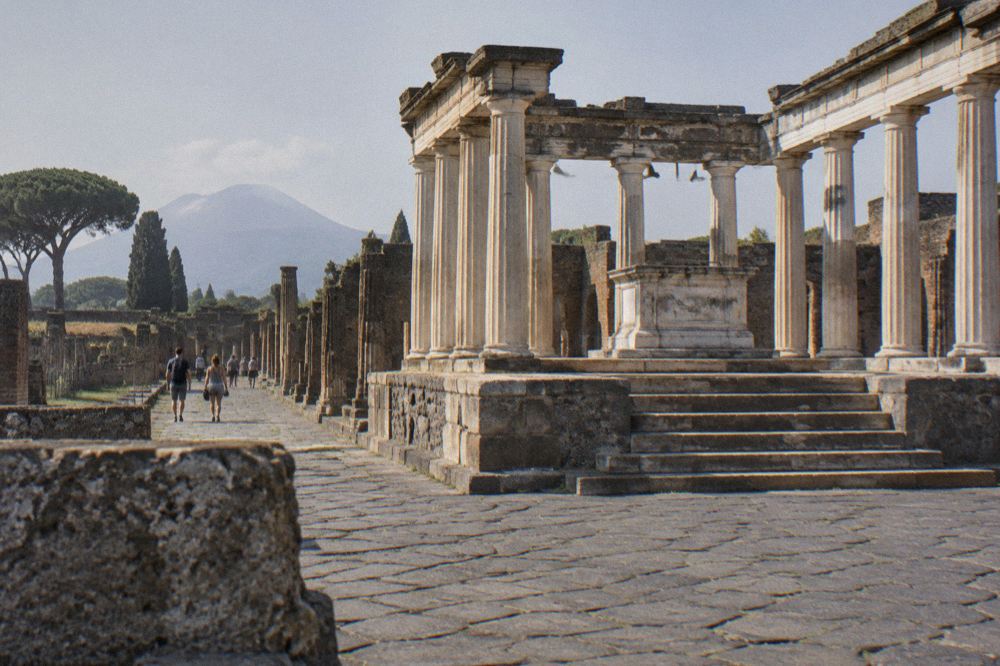
Porta Marina, the historic sea gate, is the entrance the Circumvesuviana station serves, and it sits at the top of a steep approach that was never designed for wheels. Piazza Esedra lies at the southern edge near the Amphitheatre car parks and the Antiquarium. Piazza Anfiteatro, as its name suggests, serves the Amphitheatre end of the city, the large Palaestra and the eastern quarters, and it is the level-ish end of the site where the park built its accessible itinerary. For anyone arriving by car or accessible taxi, that eastern side is also where the coach and car parks cluster.
The fourth entrance exists for a different purpose: the Porta Ercolano and Street of the Tombs gate serves the suburban villas route to the Villa of the Mysteries and Villa of Diomedes. Holders of a 2026 Pompeii Express ticket can add that route for EUR 8, card payment only, at that entrance. It is not part of the accessibility provision, and the street out to the villas is a long exposed stretch of ancient paving, so a visitor with mobility limits should treat the villas as a separate, carefully judged expedition rather than an extension of the step-free route. The villas are covered in detail in our guide to the Villa of the Mysteries comparisons elsewhere on this site.
A practical note on logistics: because the route runs Piazza Anfiteatro to Piazza Esedra, a party of two where one pushes a wheelchair will walk the full length regardless. Plan the pick-up point at whichever exit suits your transport, and allow time for the return journey past the perimeter of the site. The full list of entrances, their ticket offices and their transport links is laid out in the site's Pompeii entrances overview, which pairs well with the park map page when you are fixing meeting points.
| Entrance | Ticket office | Role for accessible visits |
|---|---|---|
| Piazza Anfiteatro | Yes | Start of the official Pompeii for All route; recommended arrival point |
| Piazza Esedra | Yes | Exit option via the Antiquarium lift |
| Porta Marina | Yes | Closest to the Pompei Scavi-Villa dei Misteri station; steep approach |
| Porta Ercolano / Street of the Tombs | Add-on sales point | Suburban villas route only; EUR 8 add-on for Express holders |
How Much Do Accessible Visits To Pompeii Cost In 2026?
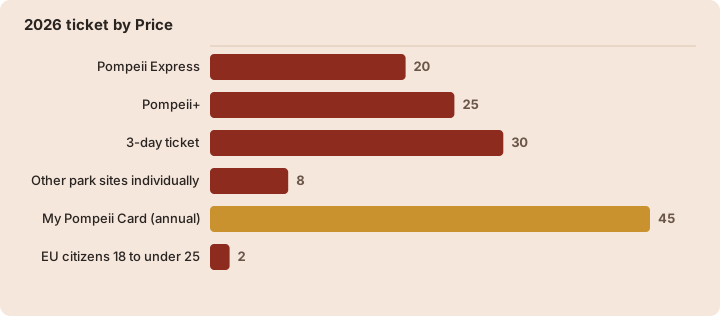
A 2026 Pompeii Express ticket, covering the ancient city only, costs EUR 20, and the Pompeii+ ticket covering the suburban villas, Villa Regina and the Boscoreale Antiquarium with the shuttle costs EUR 25, while the 3-day ticket covering all park sites costs EUR 30. These are 2026 prices that end on 31 December 2026. Entry is free for everyone under 18 and for all visitors on the first Sunday of the month, and EU citizens aged 18 to under 25 pay a reduced EUR 2.

The price structure matters for accessibility planning because it decides how much you try to see. A visitor moving slowly on the Pompeii for All route is well served by the Express ticket, since the suburban villas add-on is a separate outing on difficult terrain. Families calculating costs for a mixed group, some paying full price, a teenager free, a young EU adult at EUR 2, should read the fuller breakdown on the Pompeii tickets guide, which also covers the free first-Sunday rule and the annual My Pompeii Card at EUR 45.
| 2026 ticket | Price | What it covers |
|---|---|---|
| Pompeii Express | EUR 20 | The ancient city only |
| Pompeii+ | EUR 25 | City, suburban villas route, Villa Regina, Boscoreale Antiquarium, shuttle |
| 3-day ticket | EUR 30 | Pompeii+ plus Oplontis, the Stabiae villas and museum, Boscoreale |
| Other park sites individually | EUR 8 | Oplontis, Stabiae museum or Boscoreale |
| My Pompeii Card (annual) | EUR 45 | Annual pass, EUR 10 reduced |
| Under 18 or first Sunday | Free | All visitors on the first Sunday of each month |
| EU citizens 18 to under 25 | EUR 2 | Reduced rate with ID |
A change is coming and every visitor in late 2026 should know it. From 1 January 2027 the Express, Pompeii+ and 3-day structure is replaced by a single EUR 25 ticket covering all park sites, valid 30 days, with one entry per site; the three smaller sites stay at EUR 8 individually and the My Pompeii Card stays at EUR 45. Nominative tickets and the 20,000-visitors-per-day cap, in force since 15 November 2024, are retained. Nothing about the new structure changes the accessibility route itself, but a 2027 visitor buying one ticket for everything may feel pushed to attempt more of the difficult terrain than their mobility allows, so this guide's advice on pacing applies doubly from next year.
Does A Guided Tour Help Visitors With Reduced Mobility?
A guided tour helps mainly through pacing and route knowledge, not through special access, and the small-group archaeologist tours sold on this site are walking tours on the same ancient paving as everyone else. What a guide brings is the judgment to skip the awkward crossings, to spend longer at fewer houses and to time the visit against the crowds and the heat. For a slow walker that is a real gain. No tour product grants step-free privileges beyond the official route.
The site's featured tour for this page is the Villa of Mysteries tour with an archaeologist, a longer, deeper walk than the standard visits, ending at the great suburban villa. Read the tour page, weigh the distance honestly, and check the pace with the operator before booking. Check availability on the live listing if the format fits.
For parties where one member has severe mobility limits, a private guide is often the better shape of day, because the route can be negotiated in advance rather than adapted mid-walk. The private tour with an official guide is priced per group rather than per person, which suits a family that includes a wheelchair user who may rest while the others take a loop. The debate between guided and independent visiting is set out more fully in the guided tour versus self-guided comparison.
One honest caveat: the park's own audio-guide ticket product is a self-guided format, and it inherits every terrain problem of going alone. For visitors who find the pacing of a group stressful but still want interpretation, the audio guide at least lets you turn back whenever the surface defeats you. Neither format changes the stones.
How Do Time Slots And The Visitor Cap Affect An Accessible Visit?
Every visitor, including those using the accessible route, must fit the timed-entry system and the 20,000-per-day cap, both in force since 15 November 2024. In the 16 March to 14 October season the park allows up to 15,000 entries in the 9:00-13:00 band and up to 5,000 from 13:00 until the 17:30 last entry; the quieter afternoon band is the accessibility advantage, because fewer people on the narrow ancient streets means easier, safer movement for slow walkers and wheelchairs.
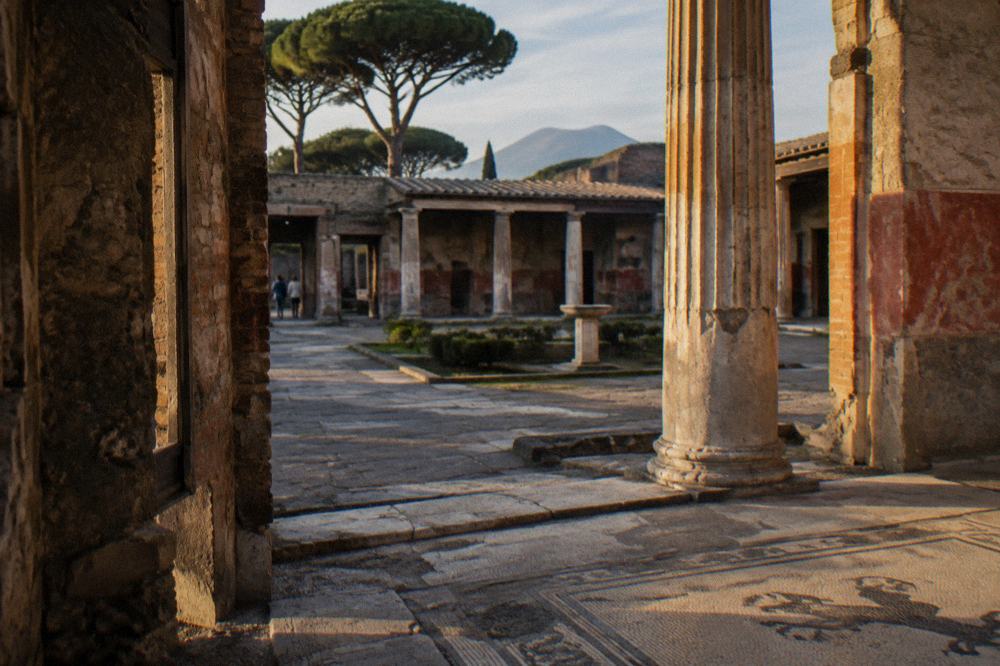
The mechanics are simple. Tickets are nominative, identity may be checked at entry, and tickets are non-transferable and non-refundable except in cases of extraordinary closure. For a visitor with a disability, the afternoon band's lower cap translates directly into calmer conditions: the Forum and the main decumanus are the pinch points, and they thin out noticeably after lunch. The trade-off is heat in summer and the closing clock, with last entry at 17:30 and gates shut at 19:00 in the summer season. The rest of the planning pages sit on Pompeii Travel Guide.
| Season | Opens | Last entry | Closes | Daily entry bands |
|---|---|---|---|---|
| 16 March to 14 October | 9:00 | 17:30 | 19:00 | 9:00-13:00 max 15,000; 13:00-17:30 max 5,000 |
| 15 October to 15 March | 9:00 | 15:30 | 17:00 | Winter timetable, shorter day |
Bags matter more than most accessibility write-ups admit, because a carer carrying medication, cushions or mobility aids will hit the size rule. The regulations permit bags up to 30x30x15 cm only, with larger items going to left luggage. A day-pack of the usual size does not fit that limit, so plan for a small bag and, if a larger one is unavoidable, time for the left-luggage stop. The same regulations page bans drones without authorisation and bare chests, and closes the park on 25 December and 1 January unless otherwise communicated; there is no weekly closing day for Pompeii itself.
How Accessible Is The Journey To Pompeii?
Getting to Pompeii is only partly accessible by rail: with the Campania Express suspended since 1 October 2026 until further notice, the practical option is the Circumvesuviana from Naples, which takes 29 to 35 minutes from Napoli Garibaldi to Pompei Scavi-Villa dei Misteri (stop 6049). That station serves the Porta Marina entrance, the steep end of the site rather than the accessible Piazza Anfiteatro side, and no fare figure is published, so check the operator's fare table.
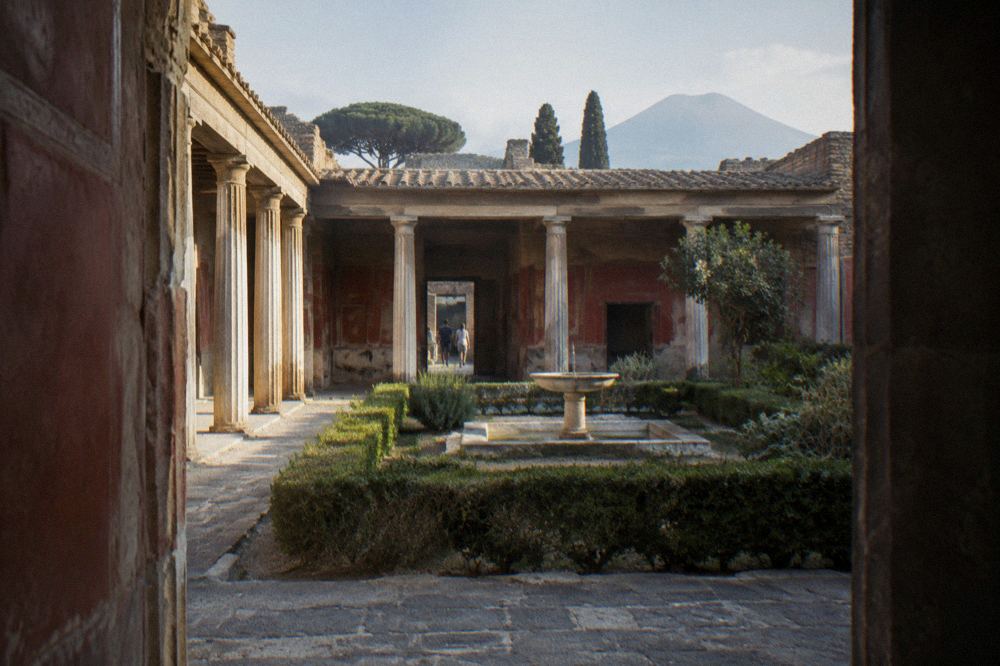
The geography is the catch. The accessible route starts at Piazza Anfiteatro, and the railway station sits beside Porta Marina on the opposite side of the excavations. A wheelchair user arriving by train therefore needs a transfer around the site's perimeter, by taxi or by the park's shuttle arrangements, to reach the right entrance. Arriving by car or accessible taxi avoids that transfer entirely, and the eastern car parks near Piazza Anfiteatro and Piazza Esedra are the ones to target. Road distances computed on OpenStreetMap routing, not official figures, put Pompei Scavi about 24 km and roughly 22 minutes from Naples, 26 km and about 37 minutes from Sorrento.
One shuttle detail from the regulations page is blunt: the Artebus shuttle has luggage storage but no disabled access. That single sentence settles a common plan, namely parking at one point and shuttling across, for exactly the visitors this guide is written for. Do not build a day around that shuttle.
| Transport option | Status | Access note |
|---|---|---|
| Campania Express | Suspended since 1 October 2026 | Until further notice; refunds via the operator's form |
| Artebus shuttle | Operating | Luggage storage but no disabled access, per park regulations |
| Car or taxi from Naples | About 24 km, roughly 22 min (map routing) | Can be directed to the Piazza Anfiteatro side |
Visitors coming from further afield should read the dedicated journey guides: the Naples to Pompeii route guide, the Sorrento to Pompeii guide and the Rome to Pompeii day trip guide each cover the leg in detail. The long Rome day trips deserve special caution for anyone with limited stamina: they are full-day commitments before any walking at the site begins. The Rome to Pompeii by train guide covers the independent alternative.
How Does Pompeii Compare With Herculaneum For Accessibility?
Herculaneum is far smaller than Pompeii, and that compact scale is decisive for many visitors with reduced mobility, since there is much less distance between highlights than at Pompeii's sprawl; two of its best-known structures, however, are currently off-limits, as the Villa dei Papiri is closed for works and the Ancient Theatre is closed until further notice, per the official Herculaneum ticketing page.
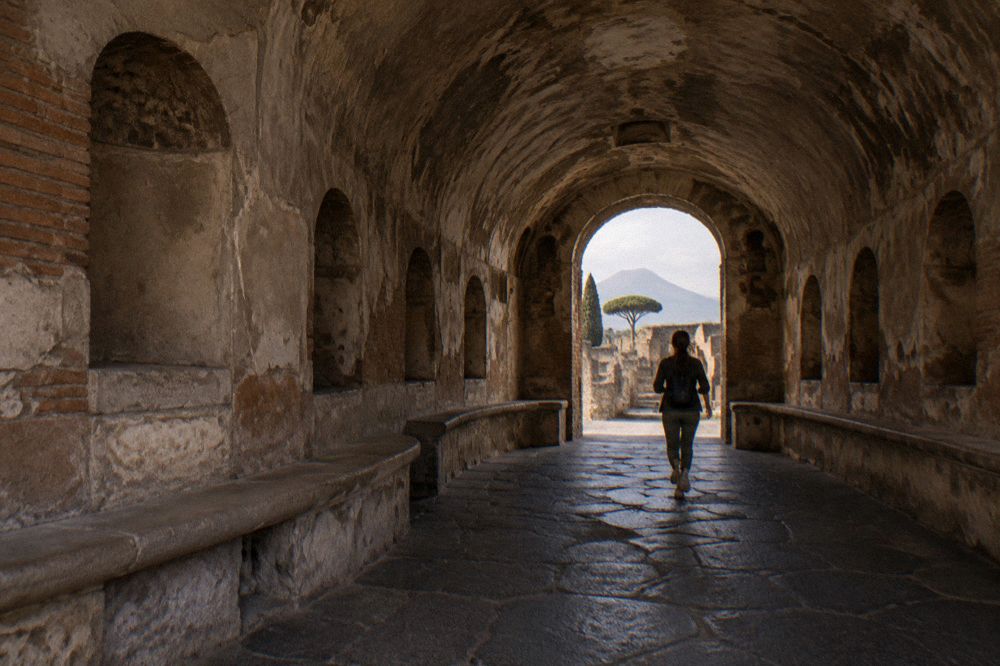
The honest comparison runs site against site. Neither site is flat, easy Roman sightseeing. The fuller side-by-side, including the villa sites at Oplontis and Stabiae, is in the Pompeii versus Herculaneum comparison, and Herculaneum's own tickets and hours are covered on the Herculaneum tickets guide.
| 2026 figure | Pompeii | Herculaneum |
|---|---|---|
| Full ticket | EUR 20 (Express) | EUR 16 |
| Reduced, EU 18 to under 25 | EUR 2 | EUR 2 |
| Summer hours | 9:00-19:00, last entry 17:30 | 8:30-19:30, last entry 18:00 |
| Free days | First Sunday of the month | First Sunday plus 25 Apr, 2 Jun, 4 Nov |
| Closures to know | Praedia of Julia Felix closed since 7 September 2026 | Villa dei Papiri and Ancient Theatre closed |
| Accessibility provision | Pompeii for All route, Antiquarium lift | None stated |
For a two-site day, the small-group products that combine both exist on the roster, including a Pompeii and Herculaneum small group tour with an archaeologist. Treat that as an able-bodied format: two archaeological sites in one day is a serious walking load, and the closures at Herculaneum mean the visit there is currently shorter than it would once have been. The question of whether one day is enough for both is argued in the site's one-day itinerary pages.
What About Vesuvius For Visitors With Limited Mobility?
Vesuvius offers little for visitors with limited mobility: the Gran Cono is a mountain path rather than an accessible attraction, the park states no step-free option anywhere, and the official page lists the route as a to three-hour return excursion along a crater trail. The path also closes automatically under an orange weather alert, so anyone needing step-free access should not count on this trail.
The pricing detail matters because there is no pay-more-for-easier option: you cannot drive to the crater, and the Mount Vesuvius tickets guide covers the booking mechanics. Access hours vary by month, 9:00 to 15:00 in January, February, November and December, extending to 9:00 to 18:00 in July and August, with daily caps between 2,160 and 3,240 visitors. Children under 6 go free, and reduced rates apply to under-25s and residents of the 13 park municipalities.
| Vesuvius Gran Cono detail | Figure |
|---|---|
| Full ticket as sold | EUR 11.68 |
| Reduced ticket as sold | EUR 9.55 |
| Excursion length | 2 hours return (shortest) to 3 hours (longest) |
| Booking window | 30 days ahead, online only |
| Last-minute tickets | 10 per slot, from 30 minutes before, nominative |
| Automatic closure | Orange weather alert or above, with automatic refund |
For a mixed-ability party, the realistic plan splits the day: the strongest walkers take the crater while the rest stay in Pompeii or rest in modern Pompei, and the group reunites for lunch. Some combined products bundle a Pompeii visit with a Vesuvius leg and food, and a wine-tasting lunch near the mountain, such as the Vesuvius wine tasting with lunch tour from Naples, keeps the day seated at the point where a seated break is most welcome.
When Is The Best Season For An Accessible Visit?
October to April is the best season for an accessible visit: the excavated city has almost no shade, so summer heat on exposed stone is punishing. Climate normals for the Pompei grid point, 1991 to 2020, show July and August mean daily maxima near 28.7 C and 29.4 C, while November brings about 180 mm of rain, and wet basalt paving turns slick.
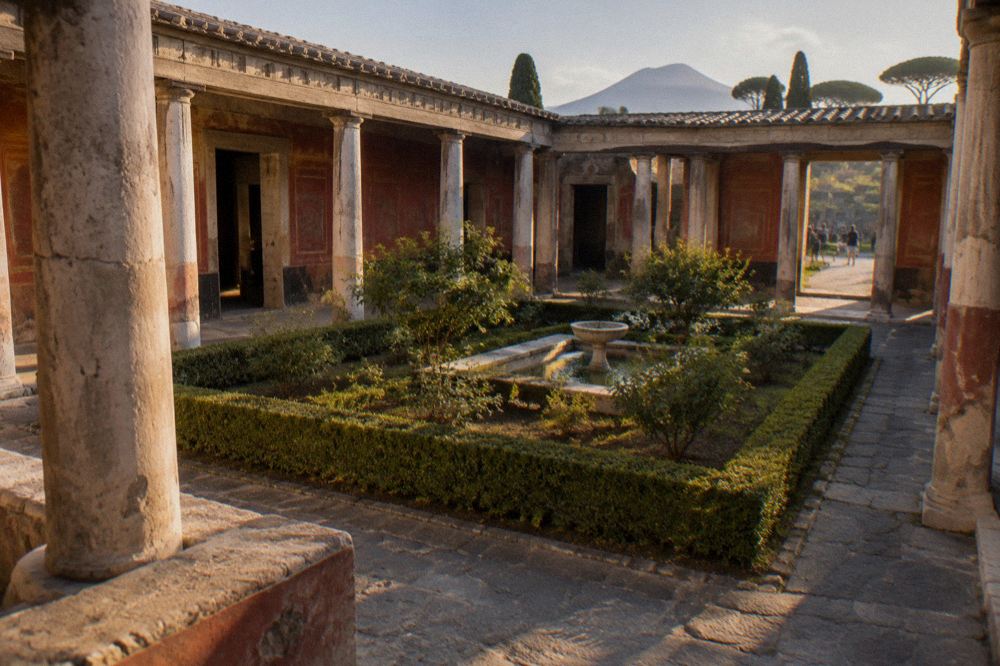
The trade-off is hours. The winter timetable from 15 October to 15 March runs 9:00 to 17:00 with last entry at 15:30, which compresses a slow visit. April, May, late September and October hit the balance of usable temperatures, longer hours and moderate crowds, and the monthly visitor table published by the park shows why: 2024 counts ran 466,344 in April and 481,255 in October against a July figure of 449,162, so the shoulder months are busy but not beyond the cap's discipline. The monthly breakdown and heat strategies are covered in the weather and best time to visit guide.
| Month | Mean daily max (C) | Mean daily min (C) | Rain (mm) |
|---|---|---|---|
| January | 12.2 | 6.6 | 119 |
| April | 17.7 | 10.4 | 87 |
| July | 28.7 | 21.1 | 16 |
| October | 21.3 | 15.1 | 129 |
| November | 16.9 | 11.5 | 180 |
Water, shade stops and timing are the working tools. The site publishes no map of shaded rest points, so build rest stops around the fixed furniture of the city: the Palaestra, the Antiquarium at Piazza Esedra, and the areas around the Amphitheatre where grass and benches exist. Build the day around the afternoon entry band if heat rather than closing time is the enemy, or the morning band if winter hours are. Either way, one entrance, one official route and one honest pace beats an ambitious plan that collapses at the first stepping stone.
Where Can Accessible Visitors Eat, Rest And Find Toilets?
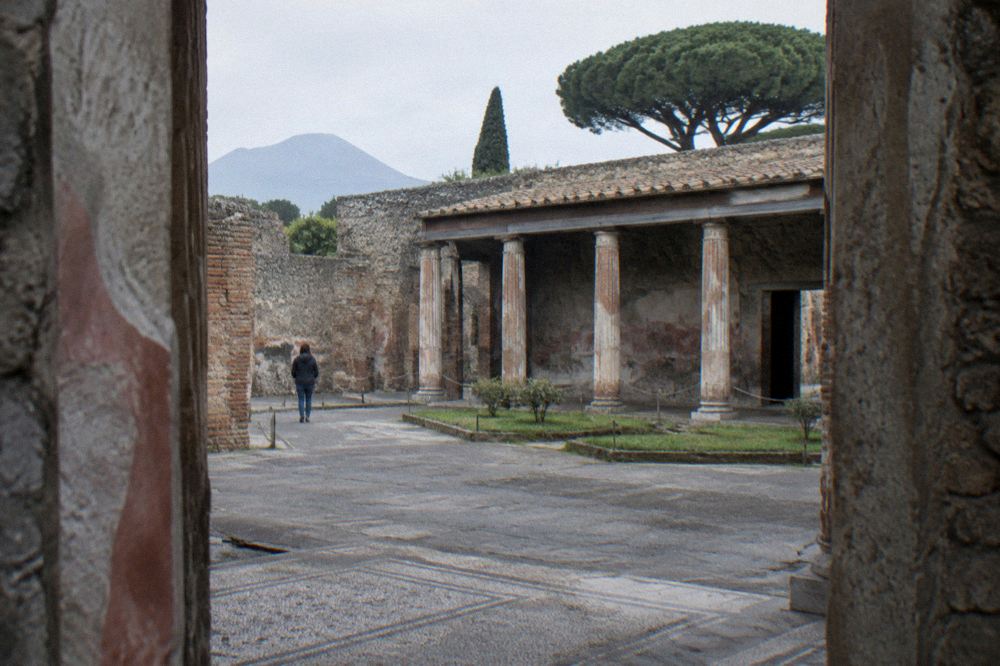
Splitting the day works well with the route's geometry. Starting at Piazza Anfiteatro in the morning, finishing at Piazza Esedra and the Antiquarium by early afternoon, then transferring back to modern Pompei for lunch, keeps the difficult terrain in one contained block. The where to eat in Pompei guide covers the restaurants within reach of both entrances, and the where to stay guide covers overnighting in the modern town, which for a slow-paced visit is a genuinely better base than a day trip from Naples or Sorrento, since it removes the rail transfer and the station-side approach entirely.
For families, the accessibility question folds into the broader question of visiting with children, where strollers face exactly the same paving problems as wheelchairs: the Pompeii with kids itinerary discussion of pace and rest applies almost verbatim. A baby carrier beats a stroller on these streets, and the same is true of any wheeled aid that is not built for broken flagstones.
Common Questions About Pompeii Accessibility
Is Pompeii wheelchair accessible?
Partially. The park's official provision is the Pompeii for All route, which starts at Piazza Anfiteatro and exits at Piazza Anfiteatro or Piazza Esedra via the Antiquarium lift. Beyond that route the original Roman paving and stepping stones make independent movement across the whole site difficult.
Which entrance should a visitor with reduced mobility use?
Piazza Anfiteatro, one of the three ticket offices, because the Pompeii for All route starts there. Porta Marina, nearest the railway station, sits at the top of a steep approach, and the Porta Ercolano entrance serves only the suburban villas route.
Can you rent a wheelchair at Pompeii?
The park's official pages do not state a wheelchair rental service, and no third-party claim should be relied on for it. Contact the park directly through its official channels before your visit to ask what assistance the ticket offices can arrange on the day.
Does the Artebus shuttle have disabled access?
No. The park's visitor regulations state plainly that the Artebus shuttle has luggage storage but no disabled access, so it cannot be part of an accessible plan.
Is Herculaneum easier than Pompeii for limited mobility?
Pompeii at least has the designed accessible route and the Antiquarium lift.
What is the best time of day for an accessible visit?
In the summer season, the afternoon entry band from 13:00, capped at 5,000 visitors, is calmer on the narrow streets, though hotter. In winter the short 15:30 last entry makes the morning the only realistic choice.
Planning an accessible day at Pompeii comes down to four fixed points: enter at Piazza Anfiteatro, follow the Pompeii for All route to the Antiquarium lift, book a timed ticket under the 20,000-a-day cap, and eat and rest in modern Pompei rather than inside the gates. Everything else, the season, the pace, whether to add a guide or attempt the villas, is a matter of honest judgment about the terrain, which two thousand years of exposure to Vesuvius and the weather have left exactly as the Romans built it.