What Famous Person Died At Pompeii?
The one famous, named person who died in the AD 79 eruption of Mount Vesuvius at Pompeii was Pliny the Elder, the Roman admiral and author, and his story explains the eruption itself.
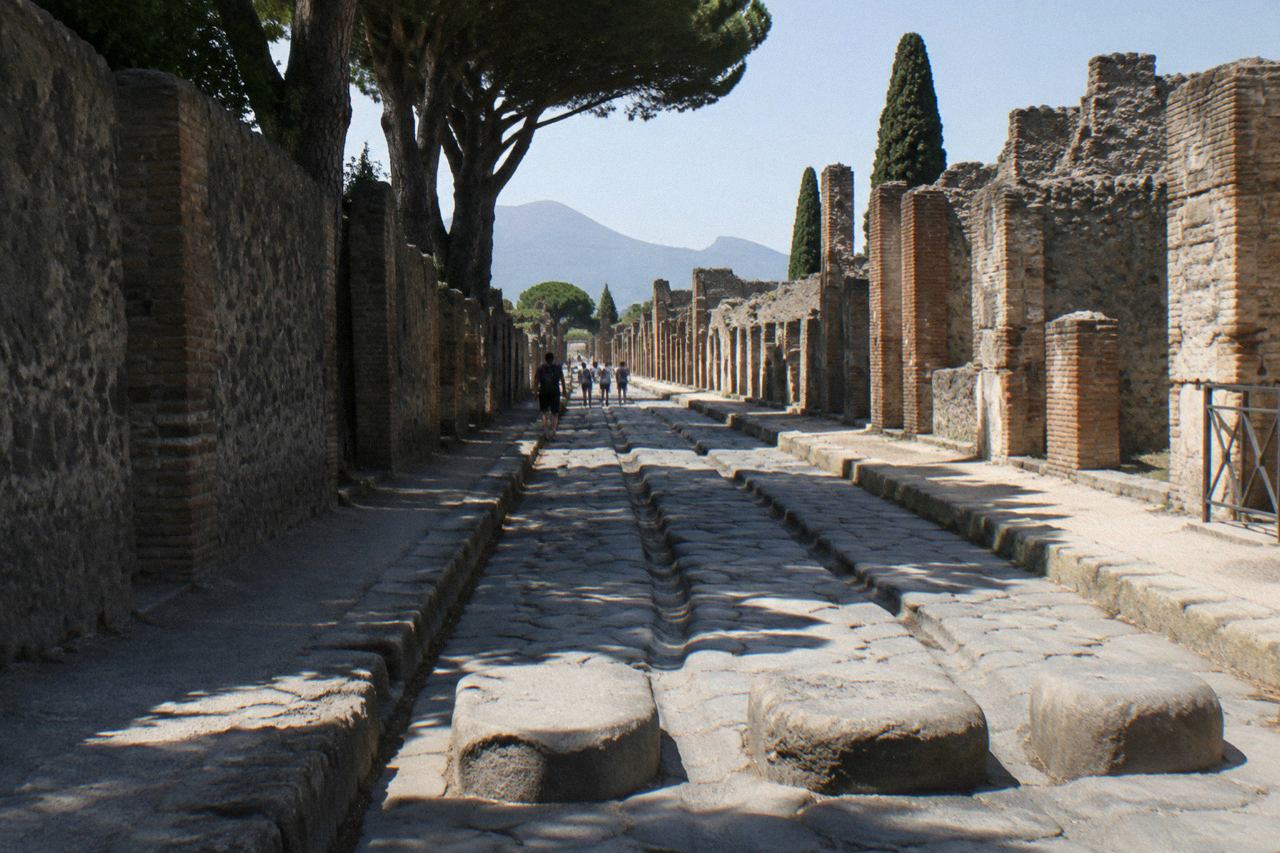
Pompeii, the ancient Roman city in Campania, southern Italy, buried by the eruption of Mount Vesuvius in AD 79, holds the remains of hundreds of anonymous victims, yet only one of them is known to history by name: Pliny the Elder. He was not a trapped resident of the city at all. He was a senior Roman official, the commander of the imperial fleet stationed at Misenum on the north side of the Bay of Naples, and one of the most widely read authors of his age. He sailed toward the eruption on a rescue mission and died on the shore, a death his teenage nephew recorded in two letters so precise that volcanologists still use the word Plinian for eruptions of that shape. His is the single famous death the eruption produced, and everything else the site is famous for, the streets, the frescoes, the body casts, belongs to people whose names are almost entirely lost.
What Famous Person Died At Pompeii?
Pliny the Elder set out across the Bay of Naples to rescue people from the eruption of AD 79, landed near the town of Stabiae, and died on the beach during the night, traditionally dated to 24 August, a date scholars still debate. He is the eruption's only victim known by name.**
Everything history knows about his final hours comes from one source: the letters of his nephew, Pliny the Younger, written years afterwards to the historian Tacitus, who had asked for an account. Those letters describe a commander who first treated the cloud rising over Vesuvius as a curiosity worth investigating, then turned his quadriremes toward the danger when a call for help arrived from a friend trapped at Stabiae. The younger Pliny stayed behind to read, and survived. The elder Pliny went, and did not.
It is worth pausing on how unusual that record is. Pompeii's other dead, the figures so often discussed alongside questions like how many people died in Pompeii, are known only through their skeletons and the haunting plaster casts made from the cavities their bodies left in the ash. Not one of them can be named with confidence. Pliny the Elder, by contrast, has a career, a bibliography, a family and a minute-by-minute death narrative. That asymmetry, one named man among anonymous thousands, is a large part of why his death still anchors the story of the eruption in books and documentaries.
| Question | Answer |
|---|---|
| Who died? | Pliny the Elder, born Gaius Plinius Secundus |
| Who was he? | Commander of the Roman fleet at Misenum; author of the Natural History |
| Where did he die? | On the shore at Stabiae, across the bay from Pompeii, during the rescue attempt |
| How is his death known? | Two letters from his nephew, Pliny the Younger, to the historian Tacitus |
| Is the date settled? | Traditionally 24 August AD 79; the park's own journal says the alternative has no evidentiary basis, and scholars still debate it |
Who Was Pliny The Elder?
Pliny the Elder, born Gaius Plinius Secundus, was a Roman aristocrat, career official and prolific author whose Natural History, a thirty-seven-book encyclopaedia of the natural world, survives intact and remained a standard reference for well over a thousand years. At the time of the eruption he held the post of fleet commander at Misenum, the naval base guarding the Bay of Naples, which put the most powerful ships in the region under his orders.
He was, by every ancient account, a man who could not stop working. His nephew records that he read constantly, had books read aloud to him at dinner and on journeys, and took notes the whole time, treating every hour as one that could be spent collecting facts. The Natural History gathers thousands of entries on everything from astronomy and botany to gemstones and medicine, and it is explicitly dedicated to a friend in an age when such compilations were status objects. It is not a modern encyclopaedia in spirit; it repeats marvels and gossip alongside genuine observation. But it preserves an enormous amount of otherwise lost ancient knowledge, and it made its author famous in his own lifetime and far beyond it.
His military and administrative career mattered as much as his writing. By AD 79 he had served in the cavalry, in provincial administration in Spain and Gaul, and in the imperial bureaucracy in Rome, before taking command at Misenum on the Bay of Naples. That post explains why he was the man on the spot when Vesuvius erupted: Misenum stood on the opposite side of the bay, close enough for the first signs of the eruption to be clearly visible, and the fleet's galleys were the fastest means of reaching anyone in trouble on the coast. Authority, ships and curiosity converged in one person, and that accident of biography is why the eruption has a famous death attached to it rather than none.
For visitors standing in the excavated city today, the connection runs deeper than biography. The eruption that killed Pliny also preserved the world he wrote about, the farms, fish sauces, vineyards and workshop economies he catalogued so eagerly. Walking Pompeii's streets is, in a real sense, walking through the pages of his encyclopaedia made three-dimensional, which is one reason guides trained in archaeology add so much to a visit. A good starting point is the Pompeii Travel Guide homepage, which pulls the whole site together, or a small group tour led by an archaeologist, where the artefacts are read rather than merely seen.
How Did Pliny The Elder Die During The Eruption?
Pliny the Elder died on the shore near Stabiae on the second day of the eruption, overcome by the volcanic gases and ash while trying to lead his friend's household to safety. His nephew's letters describe him resting on a sail spread on the ground, calling for water, then collapsing when a sulphurous smell and the falling pumice became overwhelming; his body was found two days later, unmarked, looking asleep.
The sequence his nephew records has become the canonical account of a volcanic disaster. First came the pine-tree-shaped cloud, visible from Misenum across the bay. Pliny ordered a liburnica, a fast light galley, prepared so he could look at the phenomenon more closely, a scientist's reflex. Then a note arrived from Rectina, the wife of a friend whose house lay under the volcano and who had no escape except by sea, and the observation trip turned into a rescue. As his helmsman advised turning back, with pumice and black ash falling on the decks, Pliny famously told him that fortune favours the brave, and steered toward Stabiae, where his friend Pomponianus was waiting with his household.
What followed is a portrait of the eruption's middle phase. The villa at Stabiae shook with continuous earth tremors. The sea ran shallow and rough, stranding the ships. Ash and pumice piled on the courtyard until the household tied pillows to their heads against the falling stones. Pliny bathed, dined, and tried to project calm so the others would not panic, then, when the courtyard and house began filling with pumice to the point of burying the ground floor, the party decided to move to the shore, hoping the sea had become navigable. It had not. There, on a spread sail, repeatedly asking for cold water, Pliny collapsed. When the ash cleared on the third day, his body was recovered, intact and uninjured, the letters say, like a man at rest rather than a man in agony.
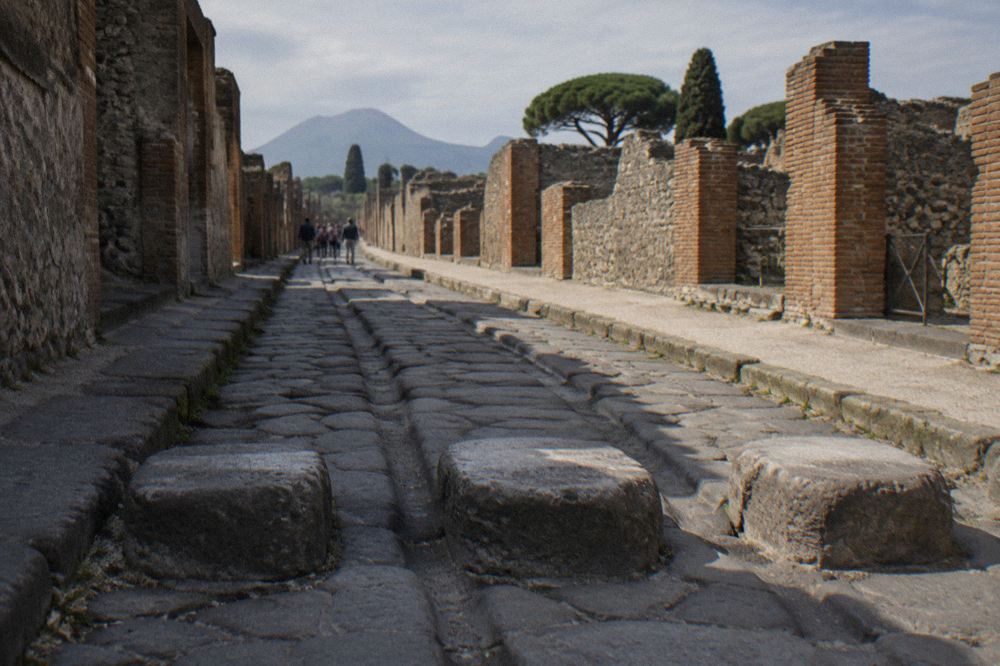
The scientific legacy of that account is hard to overstate. The tall eruption column his nephew described, rising like an umbrella pine and then collapsing, is the defining structure of what volcanologists now call a Plinian eruption. The letters even distinguish phases, the pumice fall at Stabiae, the surges and darkness his nephew experienced at Misenum the next morning, that modern reconstructions of the AD 79 event have matched against the deposits on the ground. Questions like why Vesuvius is so famous begin, in one way or another, with those two letters and the death they record.
Readers who want to pair the written record with the physical evidence of both buried cities can do it in a single day, and a two-site itinerary is the most direct route. One option that covers both in one booked day:
Did Anyone Else Famous Die In The Eruption?
No other named individual is recorded as dying in the eruption of AD 79. Ancient sources identify no famous Pompeii residents among the dead, and the city's victims, like those at Herculaneum, remain anonymous. Poppea Sabina, the empress who came from Pompeii and whose family owned property there, had died years earlier, and no surviving ancient text names any other celebrity victim, despite centuries of searching and speculation.
That absence is sometimes mistaken for a gap in the record, but it reflects a real historical fact about the city. Pompeii was a prosperous commercial town, not a capital, and its elite were regional families, wealthy enough to own the grand houses visitors queue to enter, but not famous beyond Campania in the way senators, poets and emperors were. Their names survive on election notices painted on walls, on shop signs and on tombstones along the roads outside the gates, and the site's graffiti gives an unmatched sense of everyday Roman voices. What the eruption took was a whole society, not a roster of celebrities, and the deaths that move visitors are precisely the anonymous ones, the crowd in the garden of the fugitives, the families sheltering together.
Speculation has occasionally filled the vacuum. Modern writers have suggested this or that nameless skeleton belonged to a person of rank, and the appeal is obvious: a famous death is easier to hold onto than thousands of nameless ones. But the honest answer to the question this page carries is stark and worth stating plainly: one famous man died, he was a rescuer rather than a victim, and he never actually entered the city of Pompeii at all. He died across the bay at Stabiae, having failed to get his ships out through the shaken, shallow water.
| 2026 ticket | Price | Covers |
|---|---|---|
| Pompeii Express | EUR 20 | The ancient city only |
| Pompeii+ | EUR 25 | City, suburban villas, Boscoreale and shuttle |
| 3-day ticket | EUR 30 | Pompeii+ plus Oplontis, Stabiae villas and museum, Boscoreale |
| Other sites individually | EUR 8 | Oplontis, Boscoreale or the Stabiae museum |
| My Pompeii Card | EUR 45 | Annual pass, EUR 10 reduced |
Why Does Pliny's Death Still Matter To Visitors?
Pliny the Elder's death matters to visitors because his nephew's account of it is the only eyewitness description of the AD 79 eruption, and it turned an archaeological site into a documented historical event with a timeline, a sequence and human decisions inside it. Every guided commentary in the park leans on those letters, and the word Plinian, coined in his honour, is the name scientists still use for this class of eruption worldwide.
Standing in the forum of Pompeii with Vesuvius behind it, a visitor is standing inside the field of view of the letters themselves. The cloud the elder Pliny saw from Misenum rose over exactly this horizon. The pumice that piled on the courtyard at Stabiae fell on these same streets, metres deep, and excavators walked it out of the way to reach the city again. Guides on an archaeologist-led small group tour, which you can check through the Check availability link, use the letters to give the silent ruins a clock: the morning cloud, the afternoon fall, the night of collapse that killed the admiral on his spread sail. It is the difference between looking at ruins and reading them.
The letters also close the circle of the family story in a way visitors often miss. Pliny the Younger, the teenager who stayed home to read Livy while his uncle sailed to his death, went on to become one of Rome's great letter-writers and administrators, and his account of the second day, when darkness and ash reached Misenum and the household fled inland with pillows tied to their heads, is the other half of the record. Between the two men, the rescue and the retreat, the eruption produced both its only famous death and its only famous survival narrative. For travellers weighing the question is it worth getting a guided tour of Pompeii, that double legacy is the answer: without a guide, the letters stay on the page.
Visitors planning a fuller day often add Vesuvius itself, the mountain that made the story, and a combined day with lunch is the convenient way to do it from Naples:
The broader context of the site's dead, and of the people whose names survive only on walls and tombs rather than in imperial archives, is covered elsewhere on this site, including the comparison of why Herculaneum is not as famous as Pompeii and the question of what the most famous statue in Pompeii is. Each of those pages carries the same rule of evidence: only what the sources name gets named, and the sources name just one victim.
Common Questions About Famous Deaths At Pompeii
What famous person died at Pompeii?
Pliny the Elder, the Roman fleet commander at Misenum and author of the Natural History, is the only famous, named person to die in the AD 79 eruption. He died on the shore at Stabiae during a rescue mission, as described in his nephew Pliny the Younger's letters to Tacitus.
Did Pliny the Elder die inside Pompeii itself?
No. He never entered the city. He commanded the fleet from Misenum across the bay, sailed toward the eruption to rescue a friend's household at Stabiae, was trapped there by the falling pumice and the retreating sea, and died on the beach.
Did Pliny the Younger die too?
No. He stayed at Misenum with his mother, described the ash and darkness that reached them the next day, and survived to become a celebrated Roman letter-writer. His two letters to Tacitus are the only eyewitness account of the eruption.
Are any of Pompeii's body casts famous individuals?
No cast has ever been matched to a named person. The victims of Pompeii and Herculaneum are anonymous; their names survive only incidentally, on graffiti, shop signs and tombs, never attached to remains.
Was the empress Poppea, who came from Pompeii, killed in the eruption?
No. Poppea Sabina, the wife of the emperor Nero, came from a Pompeii family and died in Rome years before AD 79, so she has no place among the eruption's victims.
Is the date of Pliny's death settled?
The eruption is traditionally dated to 24 August AD 79, from the oldest manuscripts of Pliny the Younger. The park's own e-journal states the alternative date of 24 October has no evidentiary basis, while noting 24 August is not certain either, so the date remains a scholarly debate.
One famous man, one rescue that failed, and one set of letters that gave the disaster its name and its timeline: that is the whole recorded roster of celebrity deaths at Pompeii, and it is richer than it first appears. The thousands who died nameless in the city itself are the subject of the wider story of the eruption's human toll, while Pliny the Elder remains the individual history can look in the eye.