Why Is Vesuvius So Famous?
Why Vesuvius, the volcano beside Pompeii in Campania, Italy, is the world's most recognisable volcano: the AD 79 eruption, the buried city, the living hazard above the Bay of Naples, and how to visit it.
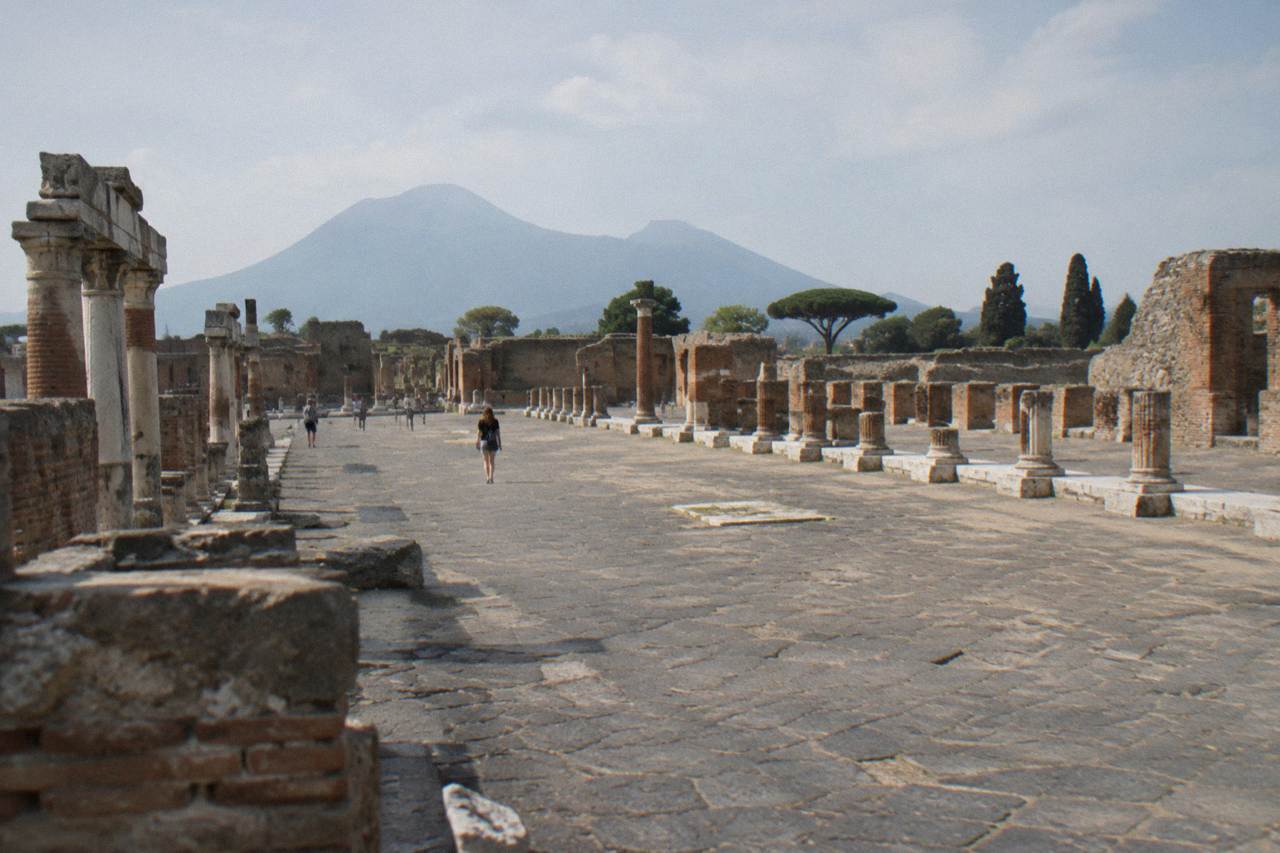
Vesuvius, the volcano that buried the Roman city of Pompeii in Campania, southern Italy, in AD 79, is famous for one reason no other mountain can claim: it wiped a living city off the map and then, eighteen centuries later, handed it back almost intact. Very few famous places are both a museum and a live threat.
Why Is Vesuvius So Famous?
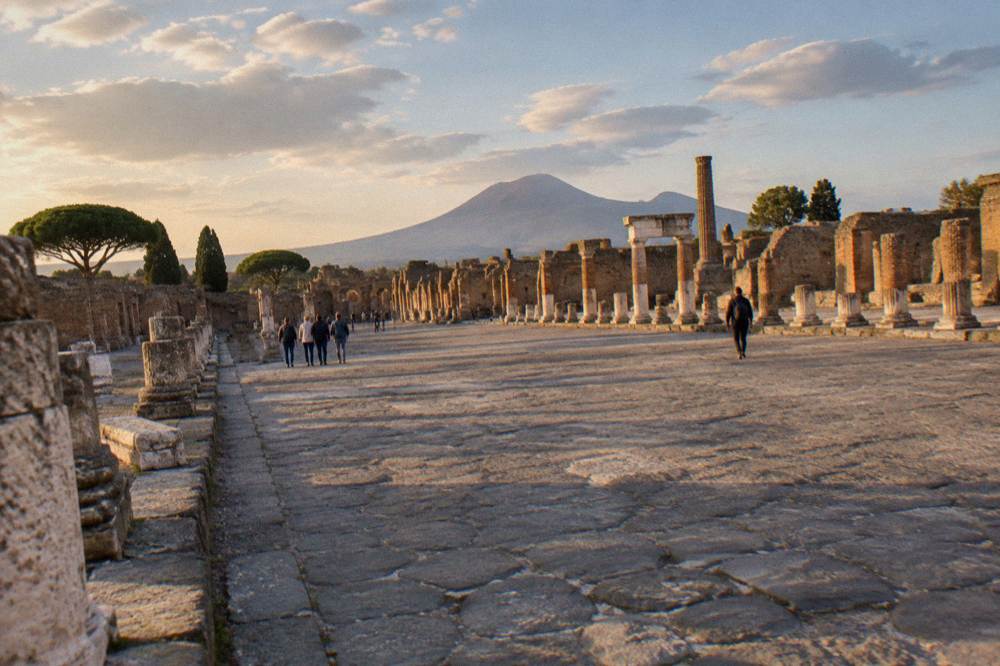
Vesuvius is famous because its eruption of AD 79 destroyed Pompeii, Herculaneum and the villas around the Bay of Naples while burying them under ash and pumice that preserved streets, frescoes, food and victims in extraordinary detail, and because the volcano is still active today, looming over the Naples area in Italy. The letters of Pliny the Younger give the event a named eyewitness, something no other ancient eruption has, and excavation on the site continues to keep the story in public view.
That combination is hard to repeat. Other volcanoes have killed more people, and others erupt more often, but no other eruption comes with an account written by someone who watched it from across the bay, addressed to a Roman historian who asked for the story. Pliny the Younger's description of the pine-tree-shaped cloud, the darkness and the shaking ground became the template for what volcanologists now call a Plinian eruption. The word itself is named after him, and the fame of the event and the fame of the science grew together.
The second pillar of the fame is preservation. Ash and pumice sealed the city rather than smashing it. Bakeries still hold carbonised loaves, graffiti still carries election slogans and insults, and the plaster-cast technique developed on the site turned hollows in the ash into precise forms of people and animals caught at the moment of death. For the eruption date itself, the park's tradition holds to 24 August AD 79 from the oldest manuscripts of Pliny, while the park's own e-journal states that a 24 October date has no evidentiary basis and stems from a 1929 misreading. The debate itself keeps the volcano in the news.
Third, the volcano never went away. Vesuvius last erupted in 1944, within living memory, and it is monitored continuously because of the population around it. A mountain that is both the maker of a famous ruin and a standing risk to one of Europe's largest metropolitan areas holds two claims on the imagination at once.
The Eruption Of AD 79 And The City It Kept
The eruption traditionally dated to 24 August AD 79 buried Pompeii under metres of pumice and ash and Herculaneum under pyroclastic material, killing a share of the population that archaeologists still count through excavated remains. The burial sealed the cities rather than demolishing them, which is why the names, the shops and the wall paintings survived to be dug out and displayed once excavation began.
The sequence, as reconstructed from Pliny's letters and the deposits, ran in two phases. First a column of pumice and gas rose high into the sky and rained down for hours, collapsing roofs in Pompeii and pushing residents who stayed indoors to upper floors. Later, the column collapsed repeatedly into pyroclastic density currents, surges of hot gas and debris that reached Herculaneum first and then Pompeii, killing those still present at temperatures and speeds that scholars continue to study. The question of how quickly death came is examined in detail on our page on how fast death came at Pompeii, and the human toll is counted on exactly how many people died.
What made the burial famous rather than merely tragic is what the ash did next. Organic material rotted away and left cavities, and archaeologists learned to fill those cavities with plaster, producing the body casts that visitors now line up to see. Household shrines, election notices, loaves of bread and a dog fixed in its chain are all part of the record. How much of that record has been recovered, and how much still lies under the ground, is covered in how much of Pompeii still lies buried today, and the excavated area of 44 ha within a 98 ha inscribed property gives a sense of the scale.
The fame also rests on named people. Pliny the Elder, commander of the Roman fleet at Misenum, sailed toward the eruption and died on the shore, a story told on our page about the famous figure who died in the eruption of AD 79. His nephew's letters turned the family name into the vocabulary of volcanology. Few ancient events carry this density of eyewitness detail, and none pairs it with a city you can still walk through.
For travellers basing themselves on the Sorrento peninsula, the pairing of the buried city and the volcano that buried it is the natural full-day plan, and our one-day Pompeii and Vesuvius itinerary lays out the sequencing question in detail. Whether to climb the crater first or walk the ruins first, in heat and energy terms, is settled on the page about whether to do Pompeii or Vesuvius first.
The Shape Of The Mountain And The Bay Below
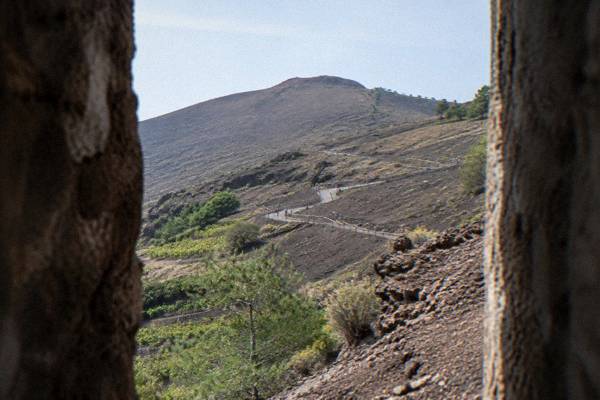
Vesuvius is a stratovolcano whose present cone carries a wide summit crater at its top, standing inside the older collapsed rim of Mount Somma, and the whole complex rises from the densely populated plain between Naples and the Sorrento peninsula. Pompei, Herculaneum's modern town of Ercolano and a chain of suburbs climb its flanks, so the volcano is both a natural monument and a neighbourhood backdrop.
The double profile is what people photograph from Naples and from the sea. The outer horseshoe of Somma is the remnant of a much larger prehistoric volcano destroyed in an eruption long before AD 79, and the inner cone of Vesuvius grew inside that scar. The two together form the Somma-Vesuvius complex, and the national park that protects it covers the crater zone and the wooded slopes below. Compared with other Italian volcanoes, its size is unremarkable, a contrast drawn on our page about whether Vesuvius or Etna is bigger; its fame is positional, not dimensional.
Position is the heart of it. The Bay of Naples wraps around the volcano's base, so the mountain is visible from the sea, from the islands and from the cliff towns of the Amalfi Coast, which keeps it in the frame of every photograph taken on the coast. The reason the region below survived the more recent eruptions better than antiquity's cities is examined on our page about why Naples was not destroyed by Vesuvius.
| Place | Road Distance To Pompei Scavi | Approximate Driving Time |
|---|---|---|
| Naples | 24 km | 22 min |
| Sorrento | 26 km | 37 min |
| Salerno | 31 km | 30 min |
| Rome | 234 km | 159 min |
Climate completes the picture. Open-Meteo 1991-2020 normals for the Pompei grid point show a Mediterranean pattern, with mean daily maxima of about 29.4 C in August against about 12.2 C in January, and monthly rain swinging from about 16 mm in July to about 180 mm in November. The dry, bright summers that draw the crowds are also the season when the exposed crater path is at its most punishing, which is why our page on conditions at the summit is worth reading before booking a slot.
Visiting Vesuvius From Pompeii Today
The Gran Cono trail to the crater rim is the standard visit, run by the Vesuvius National Park with online-only timed tickets at EUR 11.68 full and EUR 9.55 reduced as sold, 50 tickets per 10-minute slot bookable up to 30 days ahead, and daily caps of 2,160 to 3,240 visitors. The walk takes about 2 hours return by the shortest route and up to 3 hours by the longest, on a path that closes automatically on an orange weather alert or higher.
Tickets exist only online, sold through the park's official ticketing channel, with 10 last-minute tickets per slot released from 30 minutes before each departure, issued in the visitor's own name since 11 April 2026. There is no walk-up sales desk, which is why our page on buying Vesuvius tickets on the day matters to anyone planning a spontaneous visit. What the full price list contains, including the reduced rates for under-25s and residents of the 13 park municipalities, is set out in the Vesuvius tickets guide.
| Period | Gran Cono Access Hours | Notes |
|---|---|---|
| January, February, November, December | 09:00-15:00 | Shortest daylight window |
| March and October | 09:00-16:00 | Spring and autumn standard |
| April, May, June, September | 09:00-17:00 | Full season |
| July and August | 09:00-18:00 | Longest window, hardest heat |
The path itself is a steady climb on volcanic gravel and rock, and its difficulty is described plainly on our page about how long the walk up Vesuvius takes. Visitors who would rather not walk it at all can read whether you can drive up Vesuvius, and the broader case for going up at all is argued on whether the summit is worth it. The reward at the rim is the crater's rust-coloured walls, the fumaroles still venting gas, and the whole Bay of Naples laid out below with Pompeii's excavations visible on the plain.
For a guided version of the day, the Check availability link beside this paragraph leads to the operator's live listing for a full-day Pompeii and Vesuvius tour from Sorrento, one of the tours catalogued on this site. Guided options in this family cover the pair from Naples and Sorrento as well as longer combinations, and the choice between them usually comes down to where you are sleeping and whether lunch matters to you.
A Living Volcano In A Living Region
Vesuvius is famous also because it is dormant, not extinct: its last eruption ended in 1944, and it sits inside a monitored national park above one of Europe's most densely inhabited regions. Scientific institutions observe it continuously, and the 1944 eruption is within the lifetime of people still living in the area, which keeps the hazard present rather than historical.
The 1944 eruption, and its casualties, are documented on our page about the 1944 eruption's death toll. It destroyed the villages on the northern slope and the bomber aircraft parked at a nearby airfield, and it closed an eruptive cycle that had run almost continuously in earlier centuries. Since then the mountain has been quiet, which in volcanological terms is the interval during which pressure rebuilds.
| Year | Pompeii Site Visitors |
|---|---|
| 2022 | 2,972,159 |
| 2023 | 3,985,424 |
| 2024 | 4,069,377 |
| 2025 | 4,000,090 |
The visitor numbers show the other half of the fame: the modern volcano is an attraction of the first rank, and the buried city at its foot drew more than four million people in both 2024 and 2025. The park's 20,000-visitors-per-day cap, in force with nominative tickets since 15 November 2024, exists precisely because demand is relentless. Whether residents of antiquity had any warning is treated on our page about whether Pompeii knew Vesuvius would erupt, a question that links the science and the history in one story.
That dual identity, ruin and hazard, museum and mountain, is why Pompeii Travel Guide treats the two as a single destination rather than two separate sights. The region around the volcano adds its own weight to the fame: the wine grown on the volcanic soil is described on the same slopes that buried the vineyards of AD 79, and the modern story of what the area eats and drinks is told on our page about the food Pompeii is famous for.
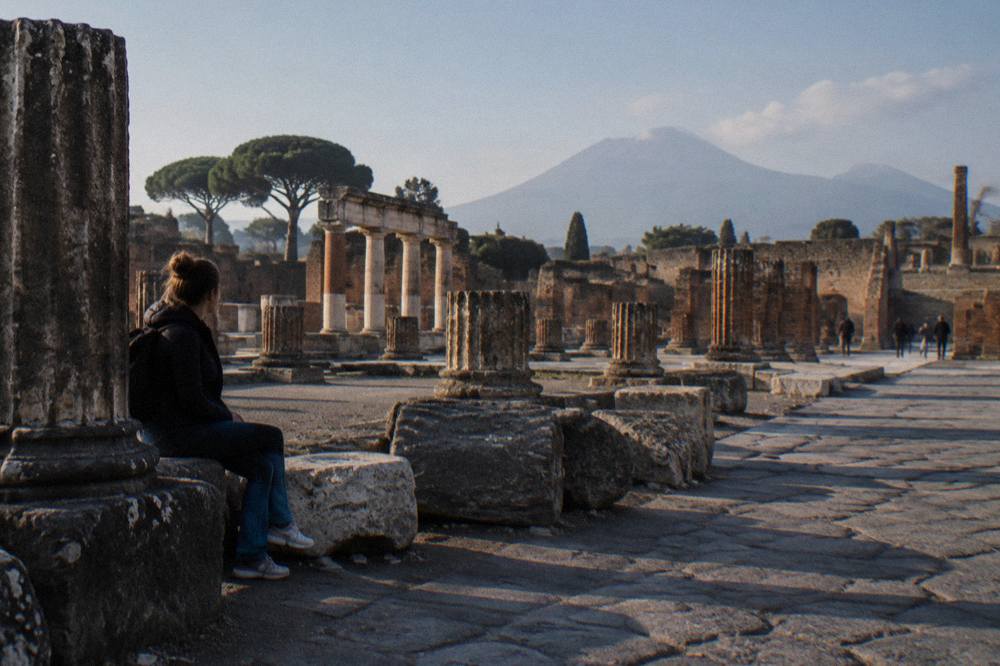
One final layer deserves mention. Vesuvius is famous in part because it was forgotten for so long and then found again, its cities sleeping under fields until well-dug wells struck walls and frescoes, a story traced on our page about why Pompeii stayed lost for so long. The rediscovery turned a local mountain into a global name, and every excavation season since has renewed it.
Common Questions About Vesuvius
Why is Vesuvius so famous?
Because its AD 79 eruption destroyed and simultaneously preserved Pompeii and Herculaneum, with an eyewitness account by Pliny the Younger, and because the volcano remains active above one of Europe's most densely populated regions. No other volcano pairs a walkable Roman city with a live crater in one view.
Can you walk to the top of Vesuvius?
Yes. The Gran Cono trail runs to the crater rim, takes about 2 hours return by the shortest route and up to 3 hours by the longest, and requires an online timed ticket. There is no walk-up ticket office, and the path closes automatically on an orange weather alert or higher.
When did Vesuvius last erupt?
The last eruption ended in 1944, destroying villages on the northern slope. The volcano has been quiet since, and it is continuously monitored.
Is Vesuvius dangerous to visit today?
The crater zone is managed as a national park with timed entry, daily visitor caps between 2,160 and 3,240, and automatic closure on orange weather alerts or above, with automatic refunds. Visits follow marked paths with park staff on site during opening hours.
Can you see Pompeii from Vesuvius?
Yes. From the crater rim the whole Bay of Naples is visible, including the plain where the excavations of Pompeii sit beside the modern town of Pompei, roughly between the volcano and the coast road toward Sorrento.
Vesuvius earns its fame twice over, once for what it did to Pompeii in AD 79 and once for what it still is: a monitored, visitable, wine-growing volcano above three million people. Walking the crater path in the morning and the excavations below in the afternoon is the fullest way to understand both halves of that sentence in a single day.