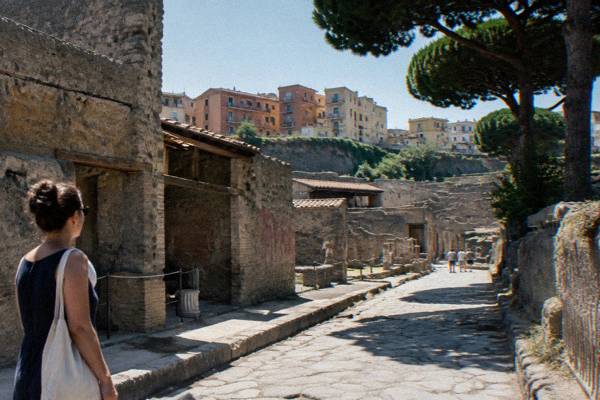
Why Is Herculaneum Not As Famous As Pompeii?
Herculaneum is smaller, harder to reach and was dug up later, yet it is often better preserved than Pompeii. Here is why fame went the other way.
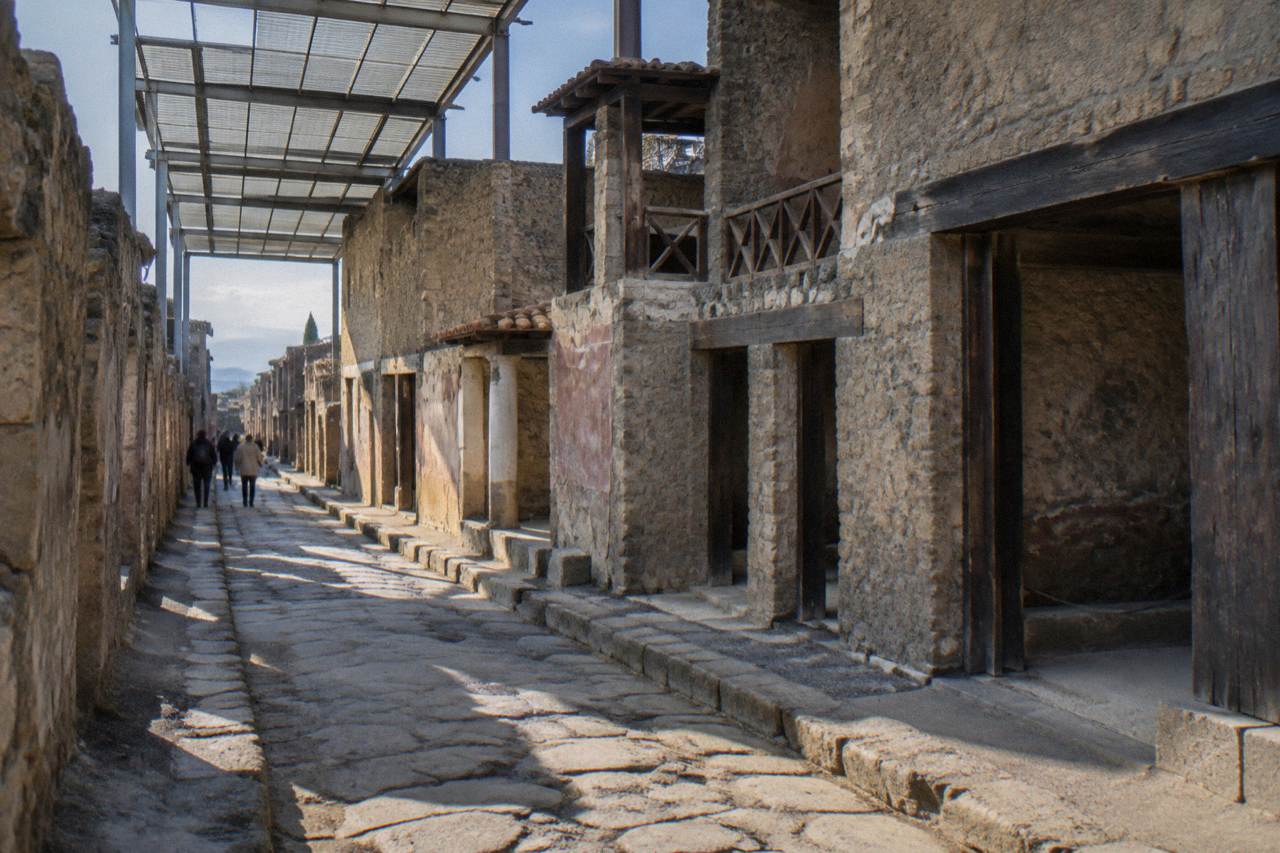
Pompeii, the ancient Roman city buried by the eruption of Mount Vesuvius in AD 79, lies in Campania, southern Italy, beside the modern town of Pompei and about 24 km by road from Naples. Its neighbour in disaster, Herculaneum, sits closer to the city at modern Ercolano, buried by the same eruption, and yet it lives in Pompeii's shadow. The question of why is not really a mystery of history. It is a story of size, of when the spades went in, and of how each site fits into a traveller's day.
Why Is Herculaneum Not As Famous As Pompeii?
Herculaneum lost the fame contest on three counts. Pompeii counted 4,000,090 visitors in 2025 against Herculaneum's unstated, plainly lower total, and fame compounds: more visitors, more postcards, more films, more fame.
Pompeii was an entire city. The UNESCO listing for the property records an excavated area of 44 ha within an inscribed property of 98 ha, a scale no other Vesuvian site approaches. Herculaneum was a seaside town, compact enough that a visitor can cross the excavated part in a matter of minutes, and much of the ancient town still lies under modern Ercolano, which grew directly on top of it. That single fact shaped everything else. An archaeologist can open a new street in Pompeii without disturbing anyone's living room; in Herculaneum, digging further means moving a modern neighbourhood.
Then there is the timing of discovery. Herculaneum was actually found first, during well-digging, but early excavation there was tunnelling, aimed at recovering statues and marble for a royal collection rather than uncovering a city. Pompeii's open-air excavation, begun later, proceeded on a far larger canvas and produced the evocative public image that travelled: forums, amphitheatres, an entire street plan. The romantic painters and novelists of the Grand Tour age, and later the film-makers, followed that image. Fame, once it starts rolling, gathers its own momentum, and no comparable engine ever ran for Herculaneum.
Transport sealed it. The Circumvesuviana railway from Naples reaches Pompei Scavi-Villa dei Misteri in a scheduled 29 to 35 minutes on the Sorrento line, a route carrying day-trippers to Sorrento, to the Amalfi Coast and to Capri as well as to the ruins. Herculaneum is reached on the same network's Ercolano station, a stop that serves far fewer itineraries. Package tours, cruise excursions and coach routes all built themselves around the bigger name and the easier grouping. If you are weighing the two sites against each other, the fuller comparison is in the guide to Pompeii versus Herculaneum, and many visitors find the answer is both, as discussed in can I do Herculaneum and Pompeii in one day.
The practical contrast between the two parks, using each site's own published 2026 figures, looks like this:
| 2026 figure | Pompeii | Herculaneum |
|---|---|---|
| Full ticket | EUR 20 (Express) to EUR 30 (3-day) | EUR 16 |
| Reduced ticket (18 to under 25) | EUR 2 | EUR 2 |
| Free entry days | First Sunday of the month | First Sunday, 25 April, 2 June, 4 November |
| Summer last entry (16 Mar to 14 Oct) | 17:30 | 18:00 |
| Winter last entry (15 Oct to 15 Mar) | 15:30 | 15:30 |
| Daily visitor cap | 20,000 since 15 Nov 2024 | none published |
One warning on that cap row: Herculaneum's management does not publish a comparable limit on its ticketing page, so treat the 20,000 figure as Pompeii's alone.
How The Burial Itself Set The Two Cities Apart?
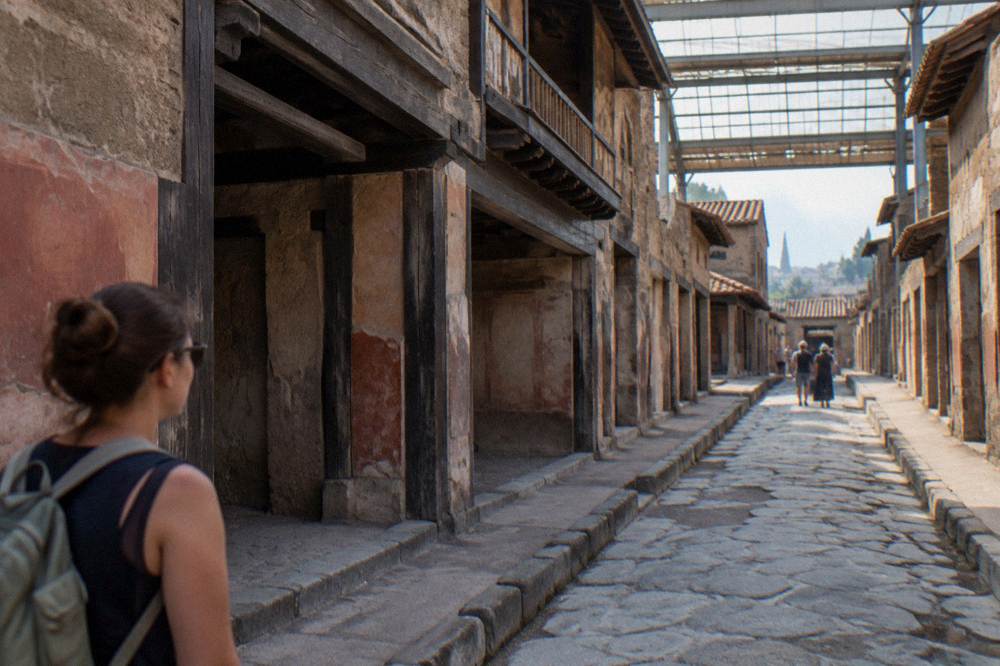
The eruption treated the two cities differently, and that difference still shapes what visitors see. Pompeii was buried largely in pumice and later surge material to a moderate depth, which preserved streets and walls at reading height. Herculaneum, closer to the volcano on the coast, was sealed far deeper in hot pyroclastic material, which carbonised wood and organic matter and preserved structures at the ground floor and basement level that Pompeii lost.
The consequences run both ways. At Pompeii the destruction left upper storeys collapsed, and the famous voids in the hardened ash, later filled with plaster, produced the body casts that became the site's signature image. The story of the casts and where they came from is covered in the pages on Pompeii's body casts and on what famous person died at Pompeii. At Herculaneum the deep, hot burial did something else entirely: it turned wooden doors, beams, furniture and even food remains into carbonised survivals that no other Roman site offers in such density. The skeletons found in the boat sheds there, huddled where people waited for a rescue that never came, are discussed in why were no bodies found in Herculaneum.
Fame follows imagery. A plaster cast of a frozen fugitive is instantly legible to anyone; a carbonised wooden door, however extraordinary to an archaeologist, does not reproduce on a postcard with the same emotional charge. Pompeii's larger catastrophe surface, a whole city grid with graffiti, brothels, bakeries and an amphitheatre, gave story-tellers more material, and they used it. The eruption's own date is itself still debated: the traditional manuscript reading through Pliny the Younger gives 24 August AD 79, while the park's own e-journal states that the alternative 24 October date has no evidentiary basis and rests on a later misreading, adding that 24 August is not necessarily correct either.
For planning purposes, the buried-and-dug-up history matters less than the practical one: Pompeii takes hours, Herculaneum takes a fraction of that, and the question of is 2 hours enough for Herculaneum has a defensible answer for anyone combining both sites.
What Can You Actually See At Herculaneum Today?
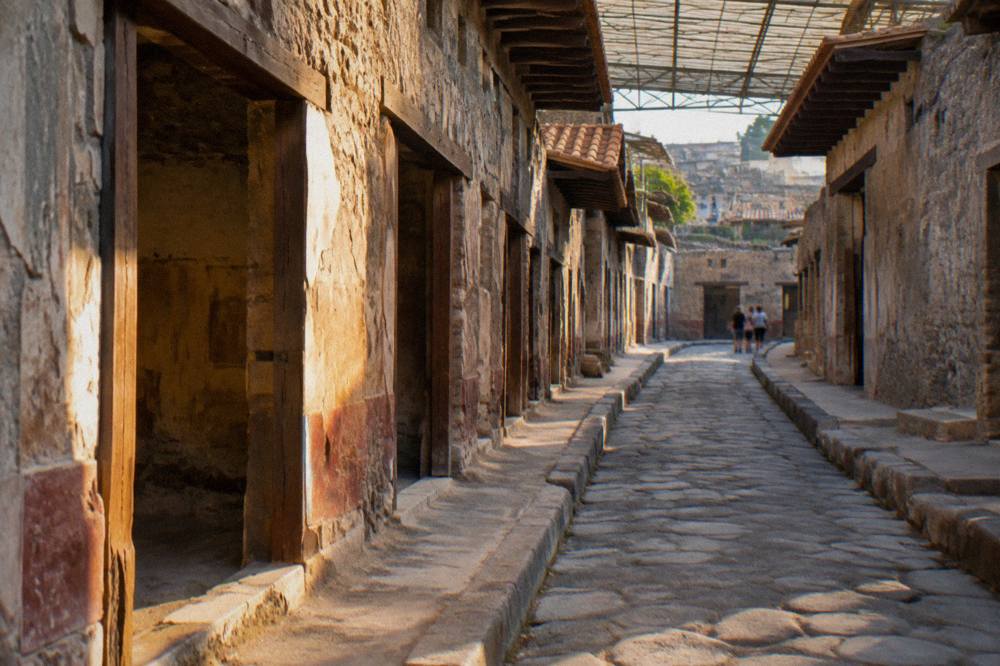
Herculaneum today is a compact, astonishingly well-preserved town of carbonised wood, mosaics and two-storey facades, but two of its headline monuments are closed: the Villa dei Papiri is closed for works and the Ancient Theatre is closed until further notice. The rest of the town, its boat sheds and its houses, remains open under 2026 hours of 8:30 to 19:30 in summer with last entry at 18:00.
The closures deserve emphasis because older guidebooks still send readers to both monuments without a caveat. The villa, famous for the carbonised papyrus scrolls that gave it its name, can only be discussed, not visited, and the story of the scrolls and the villa itself is covered on the site's own pages for the Villa of the Papyri. The Ancient Theatre, buried deep beneath the modern town, is likewise shut until further notice. What remains open more than justifies the trip: the boat sheds, the houses with their wooden screens and staircases, the mosaics and the shopfronts, all within a walkable bowl below the modern streets of Ercolano.
Pompeii, by contrast, keeps churning out new openings rather than closures, though its own record is mixed: the Praedia of Julia Felix has been closed to the public since 7 September 2026 for maintenance. The park's size means a closure at Pompeii is a detour; a closure at Herculaneum is a larger share of the visit. That asymmetry, a big site that can absorb losses against a small site that cannot, is one more quiet reason the smaller site never built the same word of mouth.
Visitors who want the two-site story told properly often book the small-group archaeologist tour that covers both Pompeii and Herculaneum in one day, with entry tickets included, and the operator's live listing carries the current dates and prices. You can read the fuller description on its Pompeii and Herculaneum tour page or go straight to the operator: Check availability. Travellers who prefer their own pace can also see whether you can tour Pompeii on your own before committing to a guide.
Does Herculaneum Deserve More Fame Than It Gets?
By almost any measure of preservation quality, yes. Herculaneum keeps organic material, timber and upper-floor structure that Pompeii lacks, its houses read as homes rather than ruins, and its 2026 entry at EUR 16 undercuts every multi-site Pompeii ticket except the EUR 20 Express. Its problem was never quality; it was scale, access and a long head start that Pompeii's fame machinery exploited first.
Consider what the numbers say about the pull of each name. Pompeii's official visitor table records 2,972,159 in 2022, 3,985,424 in 2023, 4,069,377 in 2024 and 4,000,090 in 2025, and the wider park total reached 4,118,926 in 2025. A record free-entry Sunday at Pompeii drew more than 36,000 people, a number that would simply not fit at Herculaneum.
| Year | Pompeii site visitors | All Pompeii park sites |
|---|---|---|
| 2022 | 2,972,159 | n/a |
| 2023 | 3,985,424 | 4,079,235 |
| 2024 | 4,069,377 | 4,177,753 |
| 2025 | 4,000,090 | 4,118,926 |
For the traveller, the imbalance is an opportunity rather than a disappointment. Herculaneum's fame deficit means fewer queues, a calmer site and a visit that pairs neatly with Pompeii, and the practical mechanics of that pairing are laid out in the one-day Pompeii and Herculaneum itinerary and the guide to Herculaneum tickets. Anyone choosing between fame and freshness can also weigh the broader question of is Pompeii worth the day trip from Rome, since the capital's visitors overwhelmingly funnel toward the bigger name.
There is a counter-argument worth stating fairly. Fame is not only marketing noise; it is also money, and Pompeii's gate funds conservation, new excavations and publicised discoveries that keep the site in the news, feeding the fame again. Herculaneum, with a smaller income and a harder conservation problem caused by the water table under modern Ercolano, has less to spend on spectacle. Whether the smaller site is still yielding new finds is a separate question, handled in is Herculaneum still being excavated.
For those who decide the answer is both sites, or who want to add the volcano itself, there are practical shortcuts: a private guide booked by the group, or a simple Vesuvius entry with a digital guide for the crater side of the story.
Whatever the choice, the honest summary is that Herculaneum's obscurity is an accident of history and logistics rather than a judgement on what lies inside. The town Vesuvius sealed deepest is the one that still looks most like itself, and it rewards anyone willing to look past the bigger name next door. More background on the wider destination, from tickets to itineraries, sits on the Pompeii Travel Guide homepage.
Common Questions About Herculaneum And Pompeii
Why is Herculaneum not as famous as Pompeii?
Because it is far smaller, was excavated later and less completely, much of it lies under the modern town of Ercolano, and it sits off the main Sorrento-bound tourist corridor. Pompeii's scale and its early open-air excavation produced the imagery that books and films spread worldwide.
Is Herculaneum better preserved than Pompeii?
Yes, in the sense that its deeper, hotter burial carbonised wood, doors, furniture and food remains, and preserved two-storey structures Pompeii lost. Pompeii, however, preserves far more of the ancient city's overall extent, with an excavated area of 44 ha.
Can you visit Herculaneum and Pompeii on the same day?
Yes. The two sites are on the same Vesuvian railway network, and many visitors do both in one day, usually Pompeii in the morning and Herculaneum in the afternoon. Small-group tours covering both with an archaeologist exist, with tickets included.
What is closed at Herculaneum right now?
The Villa dei Papiri is closed for works and the Ancient Theatre is closed until further notice, per the site's ticketing page. At Pompeii, the Praedia of Julia Felix has been closed to the public since 7 September 2026 for maintenance.
What did the people of Herculaneum call their town?
The ancient name survives in the modern town's Italian name, Ercolano, and the connection between the Roman town and today's municipality is traced in the site's page on what Herculaneum is called today.
Are the skeletons in Herculaneum real?
The human remains in the boat sheds are original skeletal material from the eruption of AD 79, not casts like Pompeii's plaster voids, and the differences between the two sites' dead are covered in the dedicated page on the skeletons.
Herculaneum will likely never match its neighbour's name recognition, and it does not need to. The site keeps what fame cannot give it: rooms with their wood intact, a shoreline frozen mid-catastrophe, and the quiet of a place the coaches largely pass by. Go for the contrast, and let the smaller city explain itself in person.