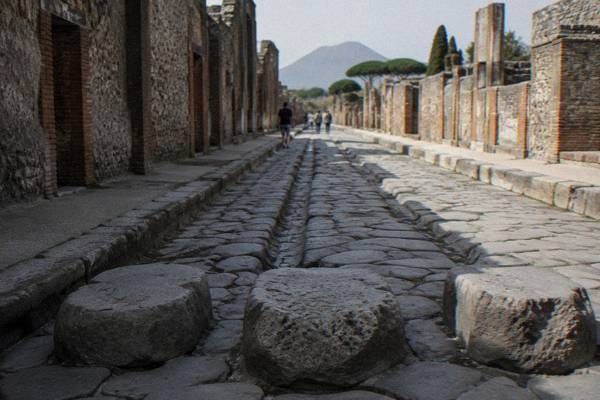
Stabiae
Villa San Marco and Villa Arianna stand on the Varano ridge above Castellammare di Stabiae in Campania, Italy, seaside Roman villas buried by the same AD 79 eruption of Vesuvius that destroyed Pompeii.
Short answer
The Stabiae villas are two large Roman seaside villas, Villa San Marco and Villa Arianna, on the Varano ridge at Castellammare di Stabiae in Italy, part of the Pompeii Archaeological Park. Entry in 2026 costs EUR 8, or they are included in the park's EUR 30 3-day ticket; from 1 January 2027 they fall under the single EUR 25 park ticket, still EUR 8 individually.
On the Varano ridge above the modern town of Castellammare di Stabiae, on the southern shore of the Bay of Naples in Campania, Italy, stand two of the largest Roman seaside villas ever excavated: Villa San Marco and Villa Arianna. Where Pompeii was a city, Stabiae was a resort coastline, and its villas show what Roman elite leisure looked like when it had a sea view and no neighbours except other villas.
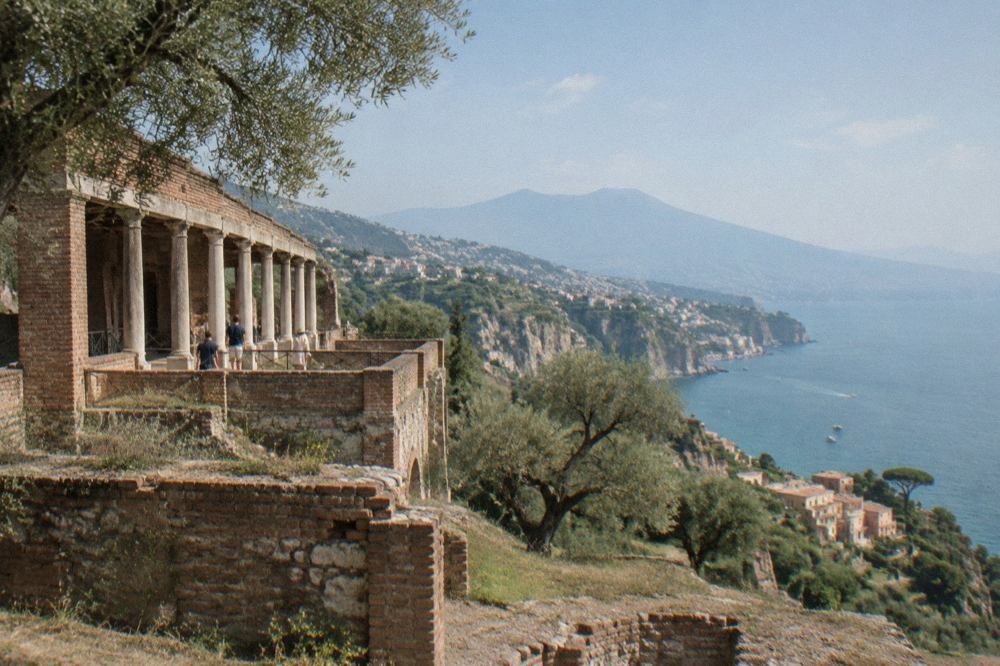
Stabiae is quiet by comparison with Pompeii, and that is the point of going. The park's own visitor figures show the Pompeii site passing four million visitors a year, while the satellite sites, Stabiae included, absorb a small fraction of that flow. If the Pompeii Travel Guide homepage is your main plan, this page is the detour worth taking on a second day, ideally paired with Oplontis or Boscoreale.
What Are The Stabiae Villas And Why Were They Built There?
The Stabiae villas are Roman coastal luxury residences, Villa San Marco and Villa Arianna, built on the Varano ridge at Castellammare di Stabiae in Italy for the sea breeze, the panorama and the thermal springs below, then buried by the AD 79 eruption of Vesuvius that also destroyed Pompeii. Stabiae was famous as a resort before the eruption; its villas were the ancient equivalent of a cliffside holiday estate, with bath suites, gardens and painted rooms facing the water.
The ancient town of Stabiae had already been destroyed once, by Sulla's forces during the Roman civil wars, and the area was rebuilt primarily as villa country. The Varano ridge, a plateau standing above the shore, held a chain of mansions. When Vesuvius erupted in AD 79, on the date the oldest manuscripts of Pliny the Younger give as 24 August, pyroclastic surges reached across the Bay and buried the ridge under metres of ash, just as they buried Pompeii and Herculaneum. The park's own e-journal records that the alternative 24 October date has no evidentiary basis, so the traditional August date stands as tradition rather than settled fact.
Excavation began under the Bourbon kings, before attention shifted to Pompeii itself and Stabiae was largely reburied to protect the frescoes. Only parts of two villas, San Marco and Arianna, plus a smaller complex now called the Villa del Pastore, remain open today. For the broader history of the destruction, see the Pompeii history guide, and for what a full park ticket buys, the Pompeii tickets guide covers every option in force through 2026.
How Much Do Tickets To The Stabiae Villas Cost In 2026?
A Stabiae ticket costs EUR 8 in 2026, covering the Villa Arianna, Villa San Marco and the Stabiae antiquarium at Castellammare di Stabiae. The villas are also included in the park's EUR 30 3-day ticket together with Pompeii, Oplontis and Boscoreale. From 1 January 2027 the 3-day structure ends and one EUR 25 ticket covers all park sites, with Stabiae still EUR 8 sold individually. Entry is free on the first Sunday of each month.
The 2026 price list, in force since 12 January 2026, splits the park into the ancient city and its satellites. Pompeii Express, the ancient city alone, costs EUR 20; Pompeii+, adding the suburban villas and Boscoreale with a shuttle, costs EUR 25; the 3-day ticket at EUR 30 adds Oplontis, the two Stabiae villas and the Stabiae museum. Reduced entry of EUR 2 applies to EU citizens aged 18 to under 25, and under-18s enter free at every park site.
| 2026 park ticket | Price | Stabiae included? |
|---|---|---|
| Pompeii Express (ancient city only) | EUR 20 | No |
| Pompeii+ (city, suburban villas, Boscoreale, shuttle) | EUR 25 | No |
| 3-day ticket (all park sites) | EUR 30 | Yes |
| Stabiae villas and museum, individual | EUR 8 | Yes |
| Oplontis or Boscoreale, individual | EUR 8 each | N/A |
| My Pompeii Card (annual) | EUR 45 (EUR 10 reduced) | Yes |
The change coming on 1 January 2027 simplifies all of this. A single EUR 25 ticket, valid 30 days with one entry per site, replaces the Express, Plus and 3-day structure for every park site including Stabiae; the smaller sites, Oplontis, the Stabiae museum and Boscoreale, stay EUR 8 individually, and the My Pompeii Card stays EUR 45. Nominative tickets and the 20,000-visitors-per-day cap at Pompeii itself are retained.
| Ticket type | Until 31 Dec 2026 | From 1 Jan 2027 |
|---|---|---|
| All-park ticket | EUR 30, 3 days | EUR 25, 30 days, one entry per site |
| Stabiae individually | EUR 8 | EUR 8 |
| Free first Sunday | Yes | Yes |
| Nominative tickets | Yes | Yes |
A practical pairing: the Oplontis villa at Torre Annunziata, another satellite site, is on many Stabiae itineraries, and the Oplontis entrance ticket with a digital guide is bookable in advance. Check availability on the operator's live listing, and read the Villa Poppaea at Oplontis page for what that villa holds.
What Do You See At Villa San Marco?
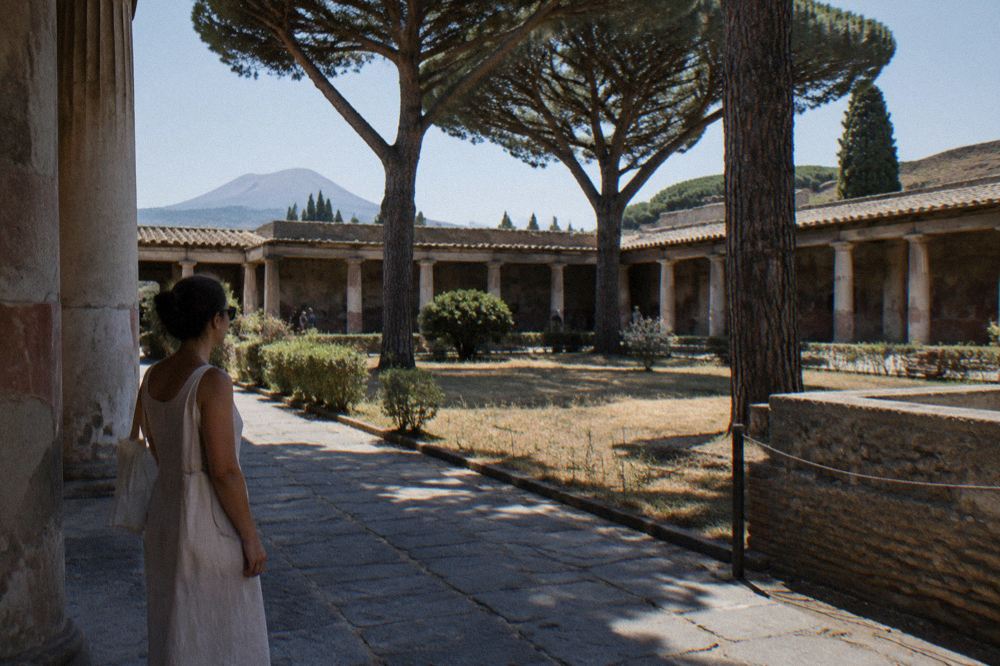
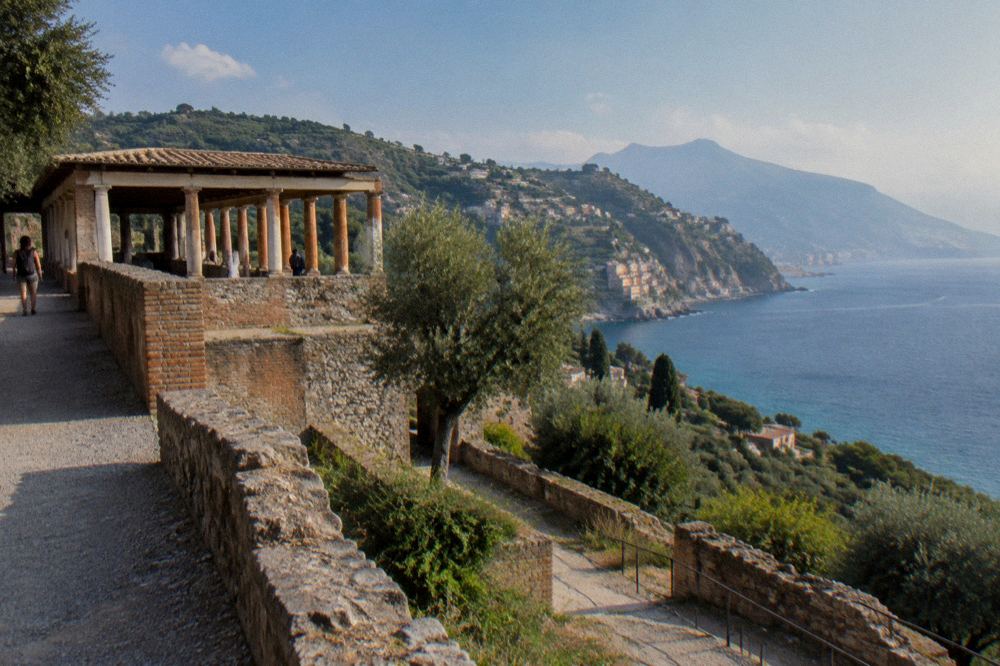
Villa San Marco is the larger of the two open Stabiae villas, a grand Roman residence with a colonnaded courtyard, a large garden, a swimming pool, a complete private bath suite and well-preserved frescoes, all on one level on the Varano ridge at Castellammare di Stabiae. It is the closest thing at Stabiae to walking a great Roman mansion at full scale, a villa experience on the scale of the great suburban houses outside Pompeii's walls rather than a townhouse squeezed between neighbours.
The villa takes its modern name from a chapel of San Marco that once stood nearby. Its painted decoration survives in place across several rooms, including architectural scenes that open the walls into imaginary cities, and the bath complex, with its caldarium still showing the suspended floor supports that once carried hot air underneath, gives a clear reading of how a private spa worked in a Roman mansion. The pool, set against the garden, was long enough for real exercise, which was the Roman point of one.
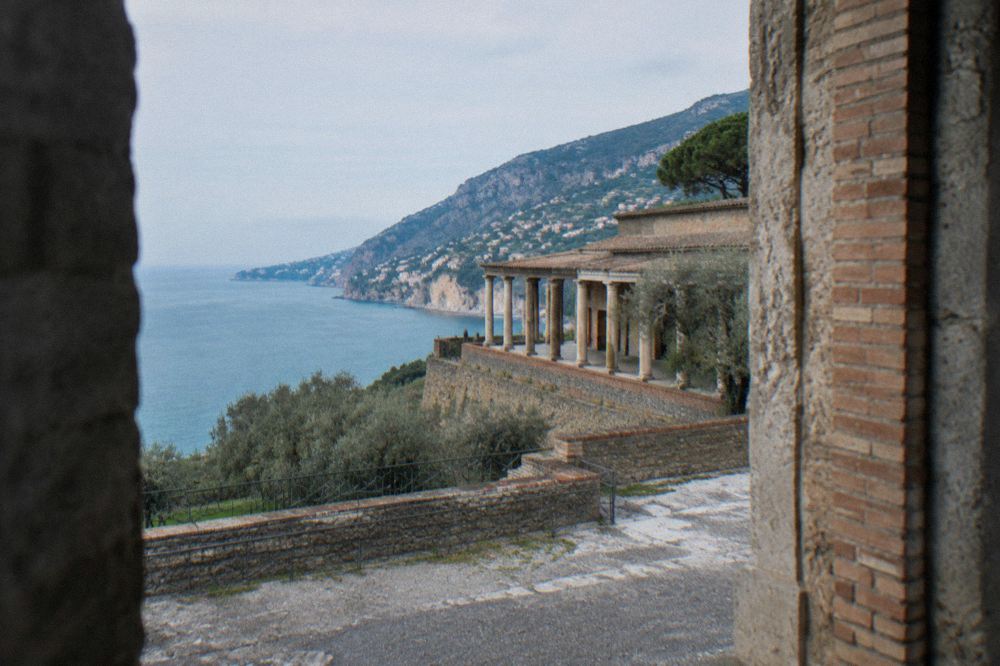
Because the villa stands on a ridge, the terrace line frames the Bay of Naples the way its owners intended. Unlike the tightly built city blocks of Pompeii, where houses such as the House of the Faun sit hemmed in by neighbours, San Marco was designed around open space, light and the view south towards Sorrento. It makes a natural pairing with the Villa of the Mysteries outside Pompeii's walls, the site's other great suburban villa walk. Take the map if you are planning a combined day, because the two Stabiae villas are several hundred metres apart on the ridge and connected by a walk along the excavation area.
What Do You See At Villa Arianna?
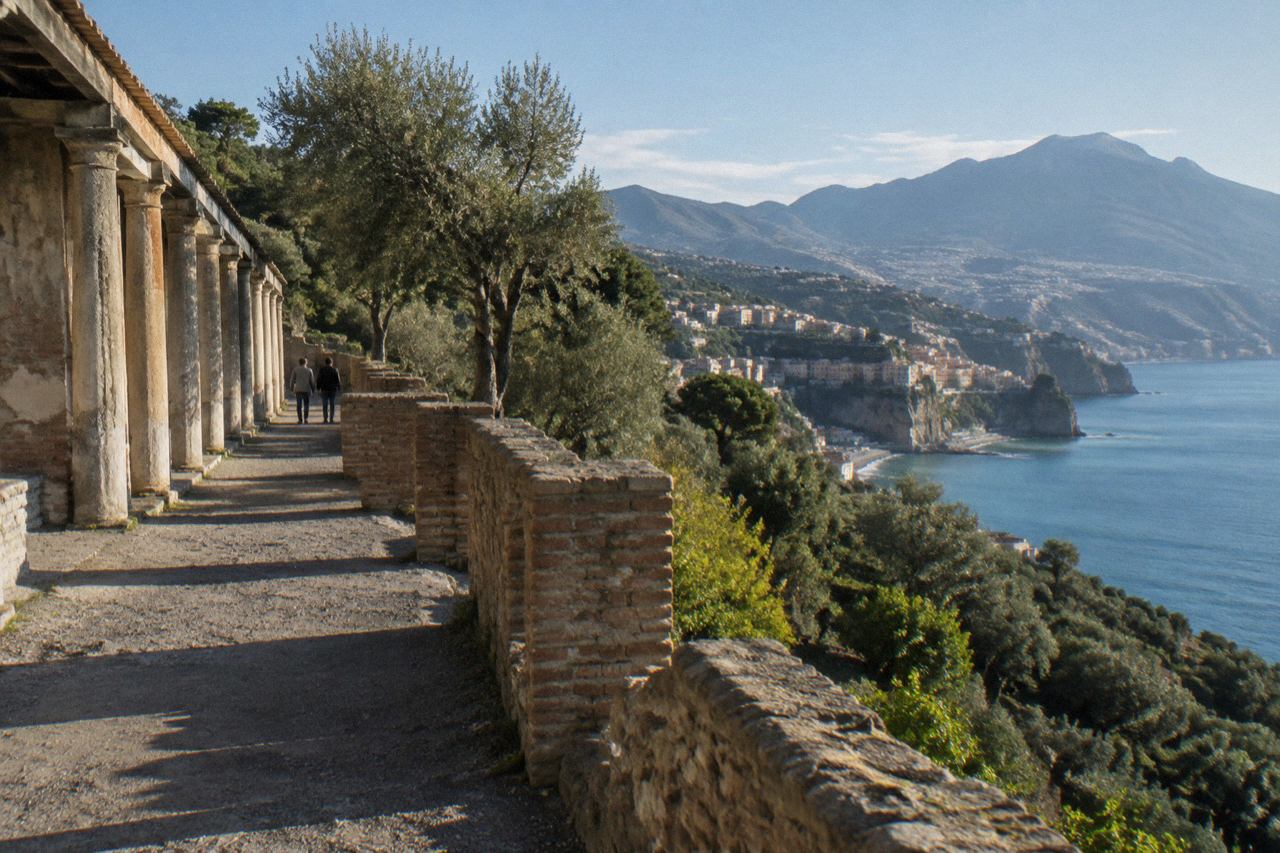
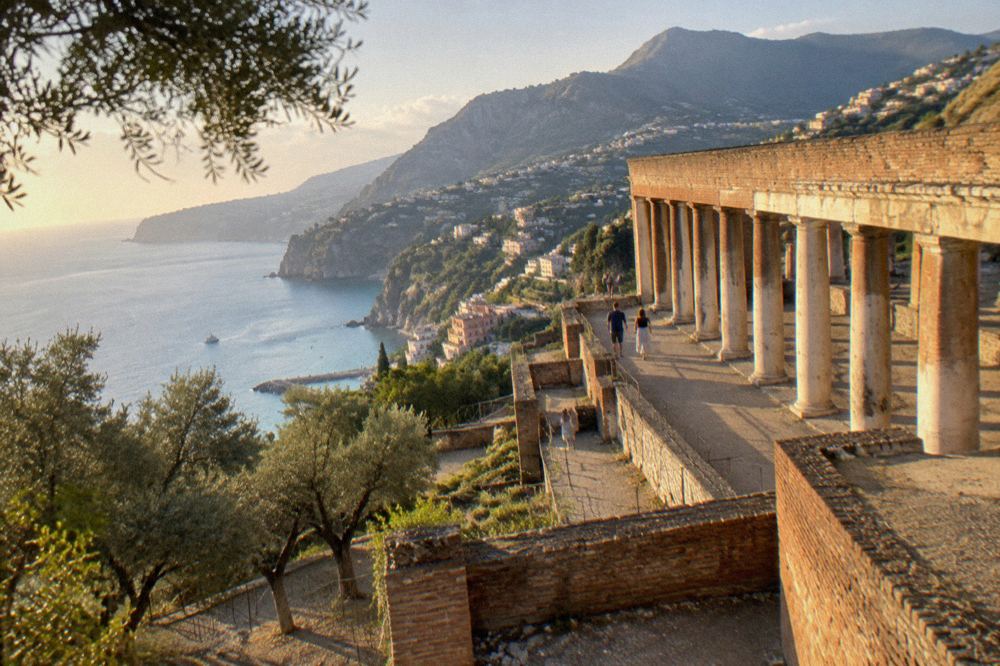
Villa Arianna is the older and in parts the better painted of the two Stabiae villas, named after a fresco of Ariadne that survives there, and it is best known for the long porticoed terrace that runs along the Varano ridge and for the strolling garden beyond it. Its rooms hold some of the finest surviving domestic frescoes in the Vesuvian area, in a quieter setting than the crowded houses of Pompeii.
The villa was excavated first, before San Marco, under the Bourbon kings, and the famous frescoes lifted from it at that time are now in Naples, in the collections covered by the Naples National Archaeological Museum guide. What remains in situ is still substantial: painted rooms, service corridors and the great terrace, which gives the widest view of the three open complexes. A short distance away, the rustic Villa del Pastore, the shepherd's villa, is a smaller complex whose excavation history is tied to Arianna's.
| Stabiae complex | Scale | Best known for | Setting |
|---|---|---|---|
| Villa San Marco | Large, one open level | Bath suite, pool, garden courtyard | Ridge terrace, sea view |
| Villa Arianna | Large, partly excavated | Frescoes, long porticoed terrace | Highest open point of the ridge |
| Villa del Pastore | Small | Rustic wing, service areas | Behind Villa Arianna |
| Antiquarium of Stabiae | Museum | Finds from the Stabiae excavations | Near Villa Arianna, Castellammare di Stabiae |
The contrast with Pompeii's houses is the reason to make the trip. At the House of the Vettii or the Lupanar you read a city; at Arianna you read a holiday. The fresco styles here, thin architectural fantasies on pale grounds, belong to the same decorative world as Pompeii's finest interiors, and seeing them in rooms that still open onto the sea they were painted to face changes how you read every painted wall in the park.
When Are The Stabiae Villas Open?
The Stabiae villas are closed on Tuesdays, the only satellite sites of the Pompeii park with a weekly closing day, and they keep the park's seasonal hours, 9:00 to 19:00 with last entry at 17:30 from 16 March to 14 October, and 9:00 to 17:00 with last entry at 15:30 from 15 October to 15 March. Entry is free for everyone on the first Sunday of the month.
The Tuesday closure matters more than it sounds, because Oplontis and the Stabiae villas share it, while Pompeii itself has no weekly closing day. A two-day itinerary that puts the satellite villas on a Tuesday collapses, so check the day of the week first. The park's timetable page lists the closures plainly, and the Pompeii opening hours guide carries the same hours for the whole park.
| Period | Hours | Last entry | Notes |
|---|---|---|---|
| 16 Mar to 14 Oct | 9:00-19:00 | 17:30 | Peak season |
| 15 Oct to 15 Mar | 9:00-17:00 | 15:30 | Winter hours from 15 Oct |
| Tuesdays | Closed | Closed | Stabiae villas and museum; Oplontis too |
| 25 Dec, 1 Jan | Closed | Closed | Unless otherwise communicated |
| First Sunday of month | Open | As season | Free entry, no booking stated |
Free first Sundays draw crowds at Pompeii itself, where the park has recorded more than 36,000 visitors on a single free Sunday, but the satellite sites stay comparatively calm on those days. If your date falls on a free Sunday and you want quiet above all, Stabiae is one of the better places to spend it, with the caveat that the free entry applies to the standard site ticket, not to any guided product.
How Do You Get To Stabiae From Naples Or Sorrento?
The Circumvesuviana railway serves Castellammare di Stabiae on the Naples to Sorrento line, and the villas sit on the Varano ridge above the town. The Campania Express airport link has been suspended since 1 October 2026, so it is not an option.**
Road distances come from route calculations on OpenStreetMap: Naples to the Pompei Scavi area is about 24 km and 22 minutes of driving, Sorrento 26 km and 37 minutes, Salerno 31 km and 30 minutes. The Circumvesuviana train guide covers the network, and the Naples to Pompeii and Sorrento to Pompeii guides cover the two main approaches.
If you would rather not assemble trains and hillside walks yourself, guided days from Naples bundle the Vesuvian sites. A two-site day tour from Naples covering the Pompeii ruins and Vesuvius is one such option.
How Does Stabiae Compare With Oplontis And Boscoreale?
Stabiae, Oplontis and Boscoreale are the three satellite sites of the Pompeii park in 2026, each EUR 8 individually and each on the EUR 30 3-day ticket. Oplontis is a single vast luxury villa believed to be Nero's, Boscoreale is a working farm villa with an antiquarium, and Stabiae is a ridge of two grand seaside villas. All three are inside the same ticketing system, and Stabiae's villas and Oplontis both close on Tuesdays.
The honest comparison is about what kind of Roman life you want to see. Oplontis, covered fully in the Villa Poppaea at Oplontis guide, is imperial-scale luxury, probably a royal residence. Stabiae is aristocratic leisure spread across a landscape. Boscoreale, in the Boscoreale Villa Regina guide, is the counterweight: a wine-producing farm that shows the agricultural economy that paid for the other two.
| Satellite site | Location | What it is | 2026 ticket | Closed |
|---|---|---|---|---|
| Stabiae villas and museum | Castellammare di Stabiae | Two elite seaside villas, Villa San Marco and Villa Arianna | EUR 8 | Tuesdays |
| Oplontis | Torre Annunziata | Villa Poppaea, vast imperial-scale villa with frescoes | EUR 8 | Tuesdays |
| Boscoreale, Villa Regina and Antiquarium | Boscoreale | Rustic farm villa, wine production, museum | EUR 8 | See park page |
All three are inside the park's ticketing system, and all three fall under the EUR 25 all-park ticket from 1 January 2027 while staying EUR 8 each when bought alone. A sensible rhythm for a full week in the area is Pompeii on one day, Herculaneum, covered in the Herculaneum guide, on another, then a villas day pairing Stabiae with Oplontis by train along the Sorrento peninsula, and finally Vesuvius itself.
Is A Guided Tour Worth It At Stabiae?
A guided tour is harder to find at Stabiae than at Pompeii, because the site draws a small fraction of the park's four million annual visitors and the roster of bookable guided products concentrates on Pompeii, Herculaneum and Vesuvius. Travellers who want expertise with them on a Stabiae day usually book a private guide, who can be directed to the villa sites, or take a structured multi-site day trip from Naples that includes the Vesuvian sites in one itinerary.
The trade-off is simple. Stabiae's frescoes and bath suites reward explanation, and there is little interpretation on site, but the fixed-departure group tours overwhelmingly serve Pompeii. A private guide booked for the party solves this: the private Pompeii tour with an official guide is priced per group, and a guide engaged privately is the workable route if you want the villas interpreted rather than just walked.
For most visitors the satellite villas work well self-guided with preparation, then a guided day elsewhere. The Pompeii guided tour versus self-guided guide weighs this for the main site, and the reasoning transfers. Read the fresco styles before you go, since the Pompeii frescoes and mosaics guide covers exactly the decorative phases you will stand in front of at Villa Arianna.
When Is The Best Time Of Year To Visit The Stabiae Villas?
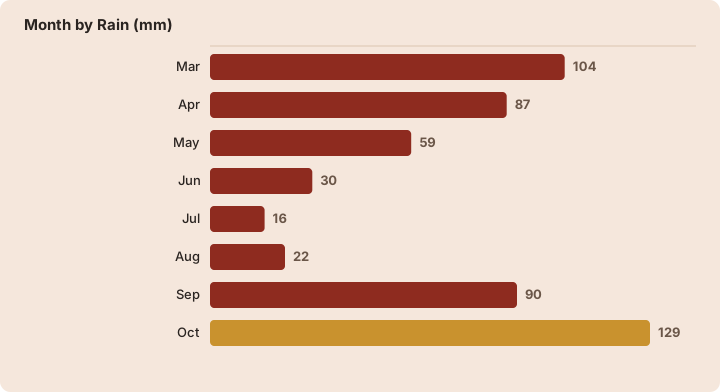
The best months for the Stabiae villas are April, May, June, September and October, when the Pompei area's 1991-2020 climate normals show daily highs of about 17.7 to 25.8 C and monthly rain of about 30 to 104 mm, with the summer peak heat of July and August, about 28.7 and 29.4 C, avoided. November is the wettest month at about 180 mm of rain, and February has the lowest nights at about 6.5 C.
The climate figures are computed from the Open-Meteo historical archive for the Pompei grid point, the nearest long-run dataset to Castellammare di Stabiae, and they describe a Mediterranean pattern: dry, warm summers and mild, wetter winters. The villas are partly open-air sites, with terraces and garden walks exposed to sun, so summer midday visits are the hardest hours, and the same planning logic as the Pompeii in summer heat guide applies here with even more shade scarcity on the ridge.
| Month | Mean daily high (C) | Mean daily low (C) | Rain (mm) |
|---|---|---|---|
| Mar | about 14.9 | about 8.1 | about 104 |
| Apr | about 17.7 | about 10.4 | about 87 |
| May | about 21.6 | about 14.1 | about 59 |
| Jun | about 25.8 | about 18.2 | about 30 |
| Jul | about 28.7 | about 21.1 | about 16 |
| Aug | about 29.4 | about 21.8 | about 22 |
| Sep | about 25.3 | about 18.6 | about 90 |
| Oct | about 21.3 | about 15.1 | about 129 |
The park's own monthly visitor counts for Pompeii show May and October among the strongest months for arrivals, which means the satellite sites, not the main city, are where you find breathing room in shoulder season. Combine that with the shorter winter hours, last entry 15:30 from 15 October, and the case for a spring or early-autumn visit makes itself.
Common Questions About The Stabiae Villas
How much do tickets to the Stabiae villas cost?
A Stabiae ticket costs EUR 8 in 2026, covering Villa San Marco, Villa Arianna and the Stabiae antiquarium. The villas are also included in the park's EUR 30 3-day ticket. From 1 January 2027 they fall under the single EUR 25 all-park ticket and remain EUR 8 when bought individually.
Are the Stabiae villas closed on any day of the week?
Yes. The park's timetable page lists the Stabiae villas and the Stabiae museum as closed on Tuesdays, together with Oplontis. Pompeii itself has no weekly closing day.
Is Stabiae part of the Pompeii archaeological park?
Yes. The Stabiae villas at Castellammare di Stabiae are one of the satellite sites administered by the Parco Archeologico di Pompei, alongside Oplontis at Torre Annunziata and Boscoreale, and they share the park's ticketing system.
Can you visit Stabiae and Pompeii on the same day?
It is possible but tight. The standard advice is to give Pompeii a full day and pair Stabiae with Oplontis on a second day. The park's 3-day ticket at EUR 30 through 2026 is built for exactly that split, and from 2027 the EUR 25 ticket, valid 30 days with one entry per site, makes multi-day spacing even easier.
Are the Stabiae villas free on the first Sunday of the month?
Yes. Free entry on the first Sunday of the month applies across the park's sites, alongside free entry for under-18s and EUR 2 reduced entry for EU citizens aged 18 to under 25 at every site.
Which Stabiae villa is better, Villa San Marco or Villa Arianna?
Villa San Marco is the larger and more complete walk, with a bath suite, pool and garden courtyard. Villa Arianna holds the finer surviving frescoes and the long terrace with the widest view. The two are a short walk apart on the Varano ridge, and one EUR 8 ticket covers both, so the honest answer is to see both.
Stabiae answers a question the crowded streets of Pompeii cannot: what the Roman holiday looked like when money was no object and the only neighbour was the sea. Give it the quiet half-day it deserves, pair it with Oplontis on the same train line, and check the day of the week before you set out, because Tuesday will leave you standing outside a locked gate above one of the finest views in Campania.