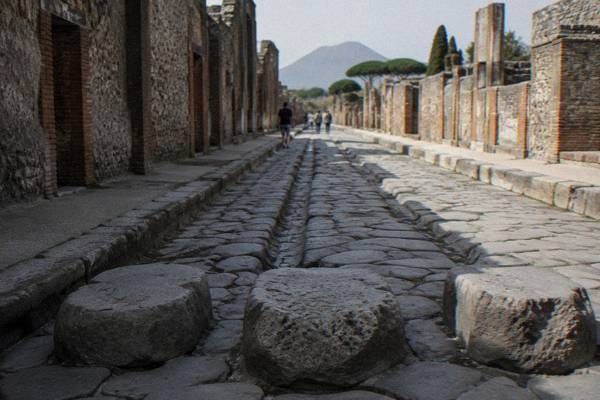
Pompeii Necropolis
The tombs outside the Porta Ercolano gate hold some of the most personal inscriptions in the whole archaeological park of Pompeii, in Campania, southern Italy.
Short answer
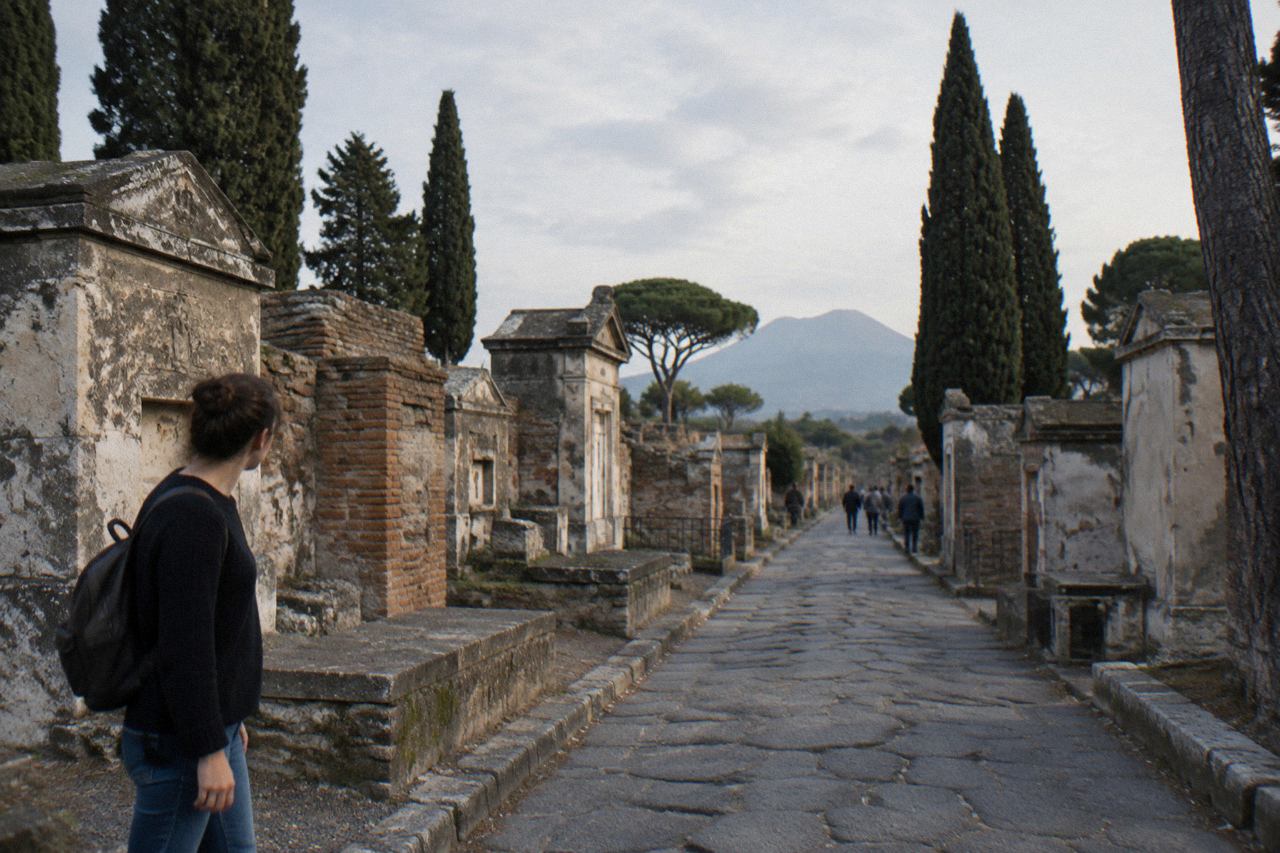
The Pompeii necropolis is the strip of Roman tombs lining the road outside the Porta Ercolano entrance, reached via the Street of the Tombs on the suburban villas route. In 2026 it is covered by the Pompeii+ ticket at EUR 25, or an Express holder can add the villas route for EUR 8 at that entrance. From 1 January 2027 a single EUR 25 ticket covers all park sites.
The necropolis of Pompeii is the burial ground that the ancient Roman city placed outside its walls, along the roads that led away from the Herculaneum gate, inside the archaeological park beside the modern town of Pompei in Campania, southern Italy, about 24 km by road from Naples. Romans buried their dead beyond the city boundary, and at Pompeii the practice produced a dense ribbon of mausoleums, house-tombs and bench tombs facing the street, many still carrying the names, offices and epitaphs of the people who built them. Unlike the frescoed houses inside the walls, the necropolis speaks in stone and inscription, and it is the part of the park where the suburban villas route begins.
Where Is The Pompeii Necropolis And What Is It?
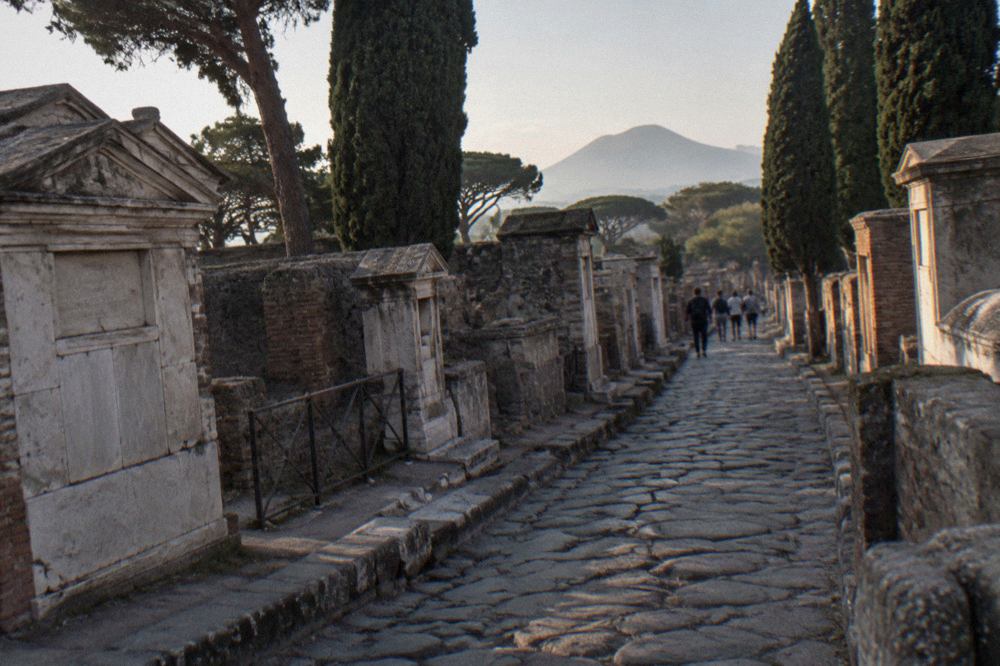
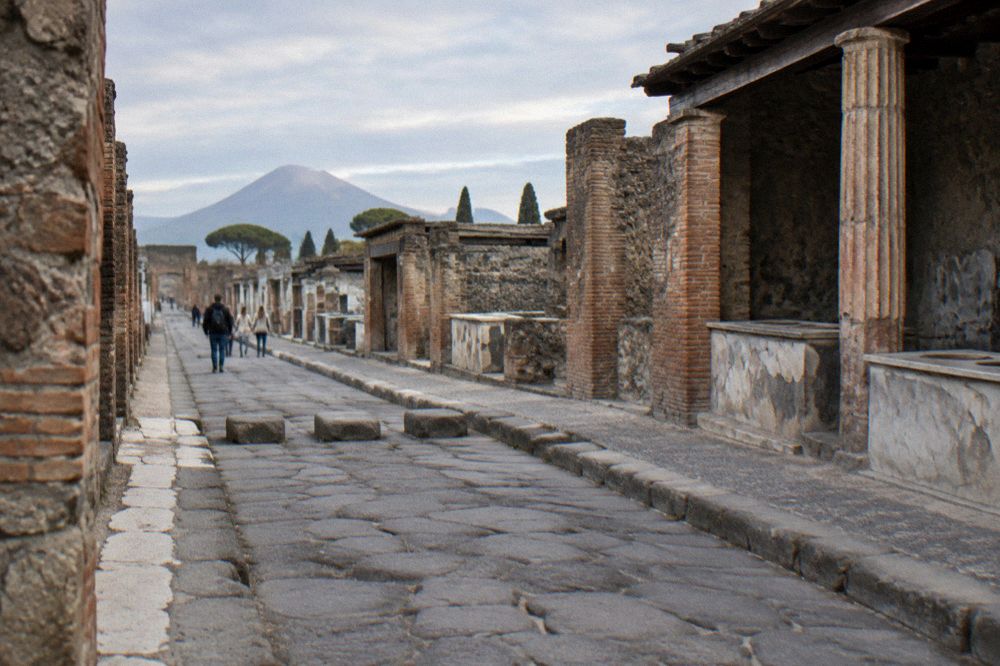
The Pompeii necropolis lies immediately outside the Porta Ercolano gate on the north-west side of the ancient city, reached today through the Porta Ercolano / Street of the Tombs entrance, the access point the park assigns to the suburban villas route. It is a line of Roman tombs fronting the road that ran from Pompeii toward Herculaneum, part of the same archaeological park, about 24 km by road from Naples in southern Italy. The street itself, the Street of the Tombs, runs between the gate and the Villa of the Mysteries, and the walk along it is the standard way visitors reach that villa from inside the city. The tombs stand where their owners wanted them: visible to every traveller arriving or leaving, a permanent advertisement of family status. The arrangement is ordinary Roman practice, preserved here with unusual completeness because the eruption of Mount Vesuvius in AD 79 buried the roads and the graves together with the city they served.
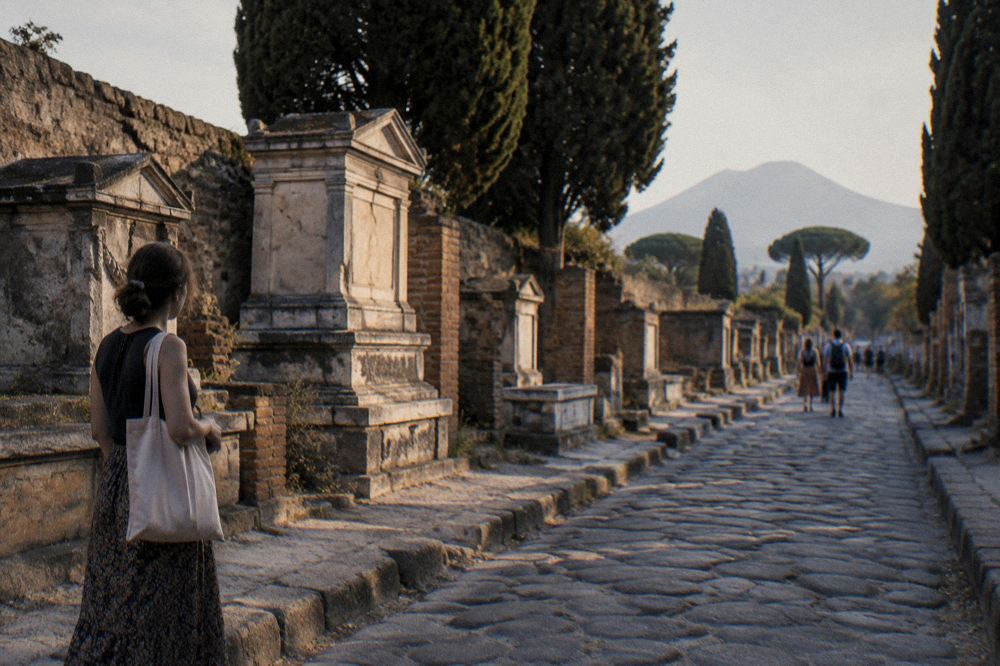
The necropolis is not a single enclosure but a roadside zone, and the park treats it as part of the suburban villas route rather than as a separate ticketed attraction. That has practical consequences for planning, covered in the tickets section below. What the visitor actually sees is a sequence of tomb facades, some shaped like altars, some like small houses, some as simple masonry benches with inscriptions, standing shoulder to shoulder along the paving.
For context on how the site as a whole is laid out, the Pompeii Travel Guide homepage gathers the main planning pages in one place, and the park map and layout page shows where Porta Ercolano sits relative to the three main ticket entrances.
Which Ticket Covers The Necropolis In 2026?
In 2026 the necropolis, being part of the suburban villas route, is covered by the Pompeii+ ticket at EUR 25, which adds the villas route and shuttle to the ancient city. A Pompeii Express holder at EUR 20 can add the suburban villas route for EUR 8, card payment only, bought at the Porta Ercolano / Street of the Tombs entrance. Both 2026 prices end on 31 December 2026. The cheapest entry into the ancient city itself is the Express at EUR 20, but that ticket alone does not include the Street of the Tombs and the villas beyond it, so anyone whose plan includes the necropolis needs either Pompeii+ or the EUR 8 add-on. Reduced admission is EUR 2 for EU citizens aged 18 to under 25, and entry is free for under-18s and for everyone on the first Sunday of the month. Tickets are nominative and identity may be checked at every entry.
| 2026 ticket | Price | Covers the necropolis? |
|---|---|---|
| Pompeii Express | EUR 20 | No, ancient city only; add villas route for EUR 8 at Porta Ercolano |
| Pompeii+ | EUR 25 | Yes, city plus suburban villas route and shuttle |
| 3-day ticket | EUR 30 | Yes, Pompeii+ sites plus Oplontis, Stabiae and Boscoreale |
| My Pompeii Card (annual) | EUR 45 | Yes, annual pass to the park |
| Reduced (EU 18 to under 25) | EUR 2 | Same coverage as the matching full ticket |
| Under 18 / first Sunday | Free | Same coverage as the matching full ticket |
The ticket structure changes on 1 January 2027. From that date a single EUR 25 ticket covers all park sites, valid 30 days with one entry per site, while Oplontis, the Stabiae museum and Boscoreale stay at EUR 8 each individually and the My Pompeii Card stays at EUR 45. The nominative ticket rule and the 20,000 visitors per day cap, both in force since 15 November 2024, are retained. Anyone comparing this page's prices against another article written for 2027 should expect that difference.
| Ticket item | 2026 | From 1 January 2027 |
|---|---|---|
| Ancient city | Express EUR 20 | Single ticket EUR 25, all park sites |
| Suburban villas route | Pompeii+ EUR 25, or EUR 8 add-on | Included in the single ticket |
| Smaller sites (Oplontis, Stabiae, Boscoreale) | EUR 8 each | EUR 8 each |
| Validity | Per ticket type | 30 days, one entry per site |
| Daily cap | 20,000 visitors | Retained |
Full ticket detail, including where to buy in advance, sits on the Pompeii tickets explained page, which owns that topic for this site.
Which Entrance Do You Use For The Street Of The Tombs?
The necropolis is reached through the Porta Ercolano / Street of the Tombs entrance, the access the park designates for the suburban villas route; it is not one of the three main ticket offices, which are Porta Marina, Piazza Esedra and Piazza Anfiteatro. Express holders buying the EUR 8 villas add-on must buy it at the Porta Ercolano entrance, card payment only. In practice this means the walk usually runs one way: enter at a main ticket office, cross the city to the Herculaneum gate, pass through Porta Ercolano onto the Street of the Tombs, and continue to the Villa of the Mysteries before returning. The Villa of the Mysteries page on this site, the Villa of the Mysteries guide, covers the villa at the end of the street in detail, and the tombs themselves are best read slowly on the way out rather than rushed.
| Park entrance | Ticket office | Role for the necropolis |
|---|---|---|
| Porta Marina | Yes | Main entrance; longest walk to Porta Ercolano, classic first view of the city |
| Piazza Esedra | Yes | Central entrance, convenient start for a one-way walk to the villas |
| Piazza Anfiteatro | Yes | Opposite corner; suits a villas-first route done in reverse |
| Porta Ercolano / Street of the Tombs | Add-on sales point | Direct access to the necropolis and suburban villas route |
The three office entrances and this fourth access point are the only entrance names the park publishes; no other gate sells tickets, and the accessibility route for visitors with mobility difficulties enters at Piazza Anfiteatro with an exit option at Piazza Esedra via the Antiquarium lift, per the park's visitor regulations.
A Villa of Mysteries tour with an archaeologist is the natural fit for this corner of the park, because the licensed guide explains both the tombs on the street and the villa at its end; Check availability on the live listing if that format appeals, and read the tour's own page on this site, the Villa of Mysteries archaeologist tour, for what the itinerary includes.
What Do The Tombs Along The Street Of The Tombs Show?
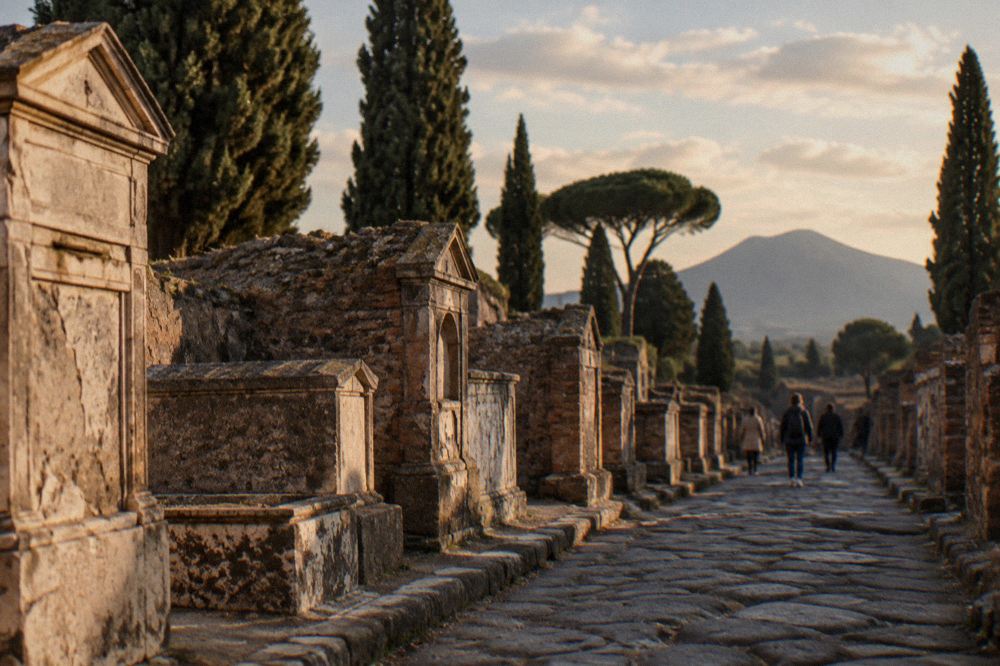
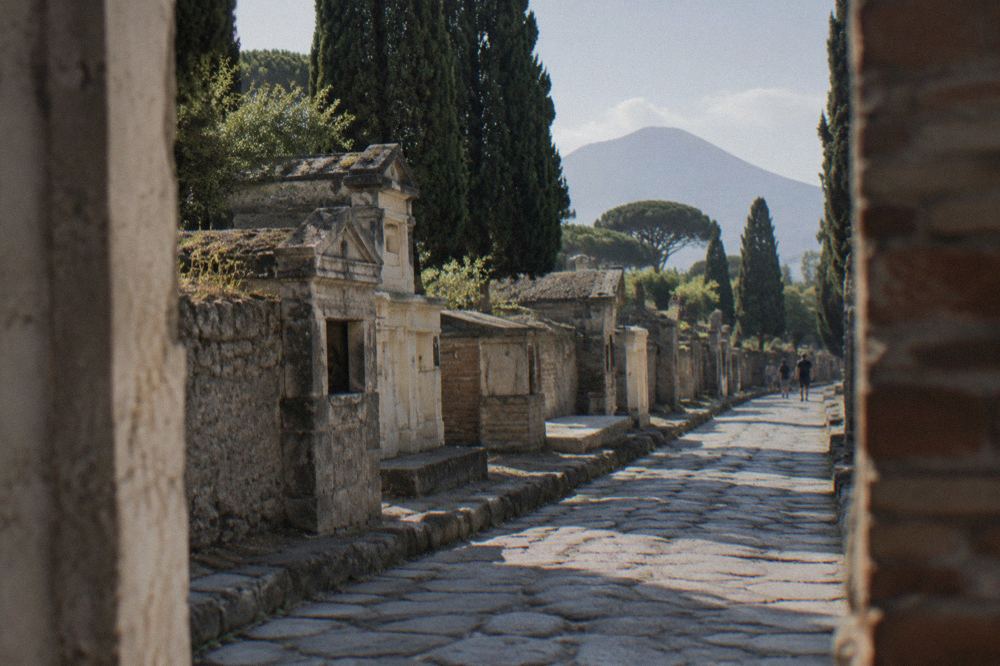
The tombs show Roman burial practice directly: family mausoleums, altar-shaped monuments and semicircular bench tombs standing in a roadside row, many with Latin inscriptions naming the dead, their offices and their heirs, placed deliberately where traffic into and out of the city would pass them. The bench form is the most striking, a curved stone seat, sometimes with a commemorative column behind it, built by people who wanted the tomb itself to be useful to the living, since travelers could rest and, by inscription, be asked to remember the dead. Inscriptions on the street record magistrates, priestesses and freed slaves who had made money, and that social range is the point of the display: burial at the gate was affordable statement-making. The epitaphs sometimes ask the passer-by to pause, a small recurring act of hospitality between the living and the dead that survives in the stone.
Visitors who want the inscribed-writing theme carried further inside the walls can read the Pompeii graffiti and writing page sibling discussion of scratched names and slogans, though the necropolis inscriptions are formal and carved rather than casual.
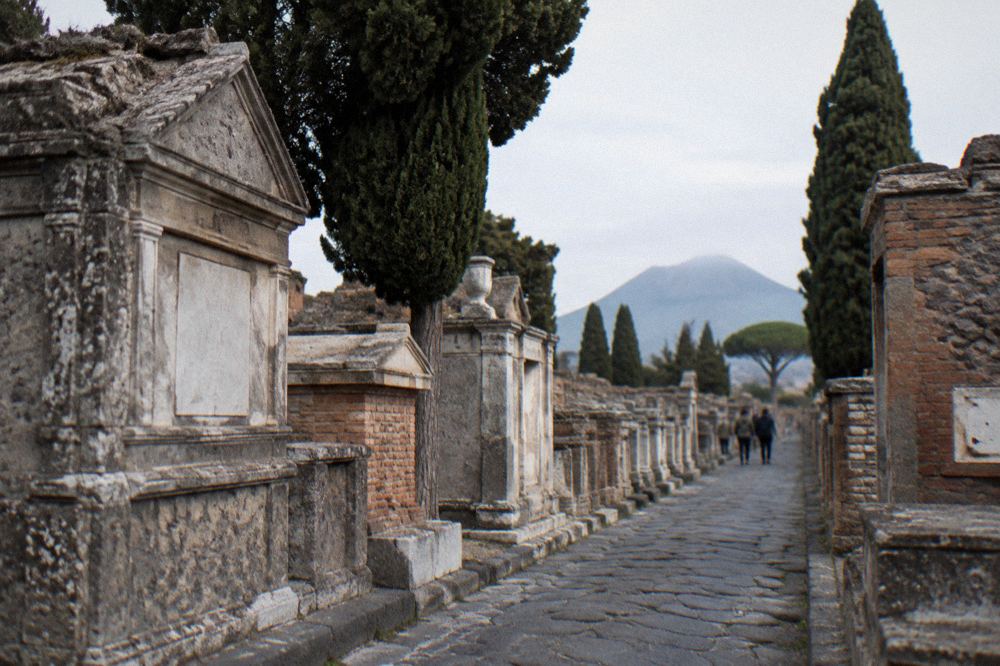
The walk from the gate to the Villa of the Mysteries is short, and the temptation is to hurry it. The tombs reward the opposite treatment. Their inscriptions and architecture are read from the street, without barriers in many places, and the route naturally funnels walkers past each facade in turn, so a slow pace costs little time and returns the best of the zone.
How Long Should You Spend At The Necropolis?
For the Street of the Tombs itself, count on 20 to 30 minutes of unhurried walking, set within the wider suburban villas visit of roughly one to two hours that also takes in the Villa of the Mysteries and, on the Pompeii+ ticket, the Villa of Diomedes; the full park day that includes the necropolis comfortably fills the opening hours from 9:00 to the last entrance. Timing depends on the season, because hours change: from 16 March to 14 October the park opens at 9:00 with last entrance at 17:30 and closes at 19:00, while from 15 October to 15 March last entrance is 15:30 and closing is 17:00. A winter afternoon visit that arrives after 15:00 will not get in.
| Period | Opens | Last entrance | Closes |
|---|---|---|---|
| 16 March to 14 October | 9:00 | 17:30 | 19:00 |
| 15 October to 15 March | 9:00 | 15:30 | 17:00 |
Daily entry is also rationed in time bands in the high season window of 16 March to 14 October: 9:00 to 13:00 admits up to 15,000 visitors and 13:00 to 17:30 up to 5,000, with the split between Express and Plus tickets inside those totals. The annual figures behind the crowding are public: the Pompeii site counted 4,000,090 visitors in 2025, against 4,069,377 in 2024 and 3,985,424 in 2023. Those numbers are the reason the daily cap exists, and why an early or late-afternoon slot is the calmer choice.
An archaeologist-led small group tour of the city itself pairs well with a self-guided stroll along the tombs afterwards, since the guide's commentary ends inside the walls and the villas route can then be walked at whatever pace the stones deserve.
When Is The Best Time Of Day To Walk The Street Of The Tombs?
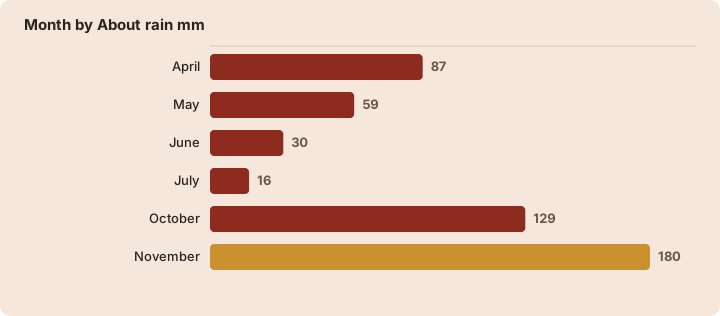
The best time is the last two hours before final entry, or the first hour after the 9:00 opening: the 13:00 slot split caps the afternoon at 5,000 visitors against 15,000 in the morning, and the necropolis stretch, being at the far end of a one-way walk, naturally thins out whenever the city inside is crowded. Light also matters. The street runs roughly north-west out of the gate, and morning sun rakes across the tomb facades, making inscriptions and relief carving easier to read and photograph, while the midday hours flatten both. In summer the same midday hours are simply hot: the Open-Meteo 1991-2020 normals for the Pompei grid point show about 29.4 C average daily maximum in August and about 28.7 C in July, with the driest months being July at about 16 mm of rain and August at about 22 mm, so shade on the street is scarce and water matters.
| Month | About daily max C | About daily min C | About rain mm |
|---|---|---|---|
| April | 17.7 | 10.4 | 87 |
| May | 21.6 | 14.1 | 59 |
| June | 25.8 | 18.2 | 30 |
| July | 28.7 | 21.1 | 16 |
| October | 21.3 | 15.1 | 129 |
| November | 16.9 | 11.5 | 180 |
November is the wettest month at about 180 mm of rain in the 30-year average, and the old paving stones hold water, so footwear with grip serves the street better than smooth soles at any time of year. The seasonal planning detail, including the summer heat strategy, is covered in full on the Pompeii weather and best time to visit page sibling article.
Can You Visit The Necropolis On A Guided Tour?
Yes: any tour that covers the suburban villas route or the Villa of the Mysteries walks the Street of the Tombs, and the park's own guided offer plus licensed external guides both serve it; a dedicated necropolis-only tour is not a standard product, because the zone is short and always visited together with the villas beyond it. Tour formats that include this walk range from small group archaeologist tours of the city to the three-hour Villa of Mysteries itinerary, and the choice is really between depth inside the walls and depth at the far end. Reading inscriptions without Latin is perfectly possible, since the recurring formulae are few, but a guide converts the names into offices, families and dated events, which is where the necropolis becomes a story rather than a row of stones.
Visitors coming from Naples can also build the day around transport, and a shuttle product is one option there; the decision between a shuttle and the Circumvesuviana line to the Pompei Scavi-Villa dei Misteri station is laid out in this site's Naples to Pompeii transport guide, which owns that comparison. The station name is the operator's own and is the rail stop for the Porta Marina side of the park.
An entry-ticket-plus-archaeologist product suits travellers who want one transaction covering admission and a guide, then a free afternoon for the villas walk; its live listing carries the price and the current departure slots.
How Does The Necropolis Fit Into A Full Day At Pompeii?
The cleanest full-day shape is a one-way diagonal: enter at Porta Marina or Piazza Esedra, cross the city past the Forum and one or two major houses, exit through Porta Ercolano onto the Street of the Tombs, reach the Villa of the Mysteries, then return inside and exit; this puts the necropolis at the two-thirds mark of the day, when legs are tired but the pace naturally slows to reading speed. Reversing it, entering at Piazza Anfiteatro and doing the villas first, buys cooler morning stones and an empty street, at the cost of walking the city in the busier afternoon. Both work; the wrong plan is scattering the villas route into the middle of the day and doubling back.
| Route shape | Entry | Necropolis position | Suits |
|---|---|---|---|
| Diagonal one-way | Porta Marina or Piazza Esedra | Late in the day | First visits, photography in afternoon light |
| Villas first | Piazza Anfiteatro reversed | Early morning | Hot months, inscription readers |
| City only, skip villas | Any | Not visited | Tight schedules on the Express ticket |
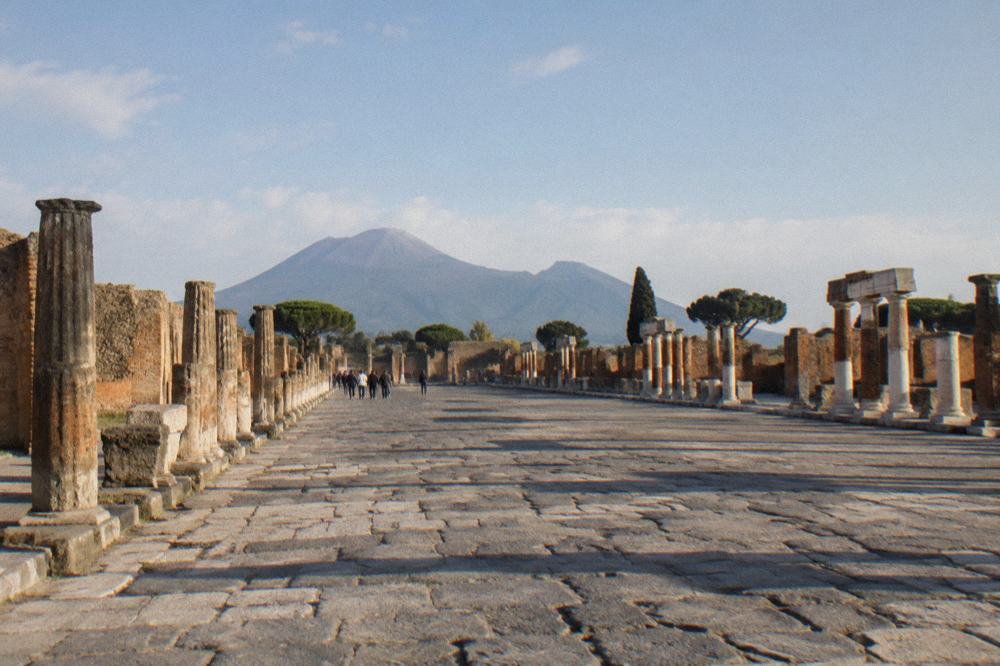
Inside the walls, the pairing that earns its place on any day that includes the necropolis is the Forum of Pompeii, the civic heart whose magistrates are the same class of people named on the tombs outside. The garden of the fugitives, covered on the Garden of the Fugitives page, offers the other side of the park's evidence of the eruption, the casts of the dead inside the city, against which the necropolis's planned, commemorative deaths are a sobering contrast.
What Should You Know Before Visiting The Tombs?
Bring water, shade and shoes with grip, expect no facilities beyond the main park amenities, keep bags within the park's 30x30x15 cm limit or use left luggage, and carry the ID that matches your nominative ticket, since regulations allow a check at every entry. The park's visitor regulations also prohibit drones without authorisation and bare chests, and tickets are non-transferable and non-refundable except in cases of extraordinary closure. These rules apply across the whole site, so the necropolis inherits them; there is no separate regime for the villas route. Payment for the EUR 8 villas add-on at Porta Ercolano is card only, which catches cash-carrying travellers out every week.
Two closures nearby are worth knowing while planning a late-2026 trip. The Praedia of Julia Felix inside the city has been closed to the public since 7 September 2026 for maintenance until further notice, and at Herculaneum the Villa dei Papiri and the Ancient Theatre are closed for works, both stated on the official ticketing pages of their respective parks. Neither affects the Street of the Tombs, but both narrow the roster of open houses on a multi-site day. The Herculaneum site guide tracks that park's tickets and hours in full.
Is The Necropolis Worth It Compared With The City Inside The Walls?
Yes, for any visitor on a Pompeii+ ticket or with two spare hours, because the Street of the Tombs is the only place in the park where Roman Pompeii's dead present themselves by name and office, and it costs almost no extra time since the Villa of the Mysteries, a highlight in its own right, sits at the end of the same short street. The trade-off is real, though: a visitor with only the Express ticket and a strict half-day usually spends those hours on the Forum, the baths and one great house, and buys nothing by backtracking for an EUR 8 add-on. The honest rule is that the necropolis rewards the second hour of a visit more than the first, and it rewards readers more than walkers.
For contrast within the wider park system, the buried villas at Oplontis and Stabiae, covered on the Oplontis villa guide, show domestic luxury rather than burial, and pairing one of them with the necropolis on the 3-day ticket gives the fullest picture of how the region's Romans lived, died and were remembered. Mount Vesuvius itself, the agent of all of it, is covered on this site's Mount Vesuvius page.
For Naples-based visitors weighing the simplest transport, the round-trip shuttle is the low-friction option; the live listing shows departures and the current fare, and the Circumvesuviana alternative is documented in the transport guide linked above.
Common Questions About The Pompeii Necropolis
Is the Pompeii necropolis included in the standard ticket?
The 2026 Pompeii Express ticket at EUR 20 covers the ancient city only. The necropolis is on the suburban villas route, included in the Pompeii+ ticket at EUR 25, or available to Express holders as an EUR 8 card-only add-on at the Porta Ercolano / Street of the Tombs entrance. From 1 January 2027 the single EUR 25 ticket covers all park sites.
Which entrance is the Street of the Tombs?
The Porta Ercolano / Street of the Tombs entrance serves the suburban villas route. The three main ticket offices are Porta Marina, Piazza Esedra and Piazza Anfiteatro; Porta Ercolano is the access point for the villas walk and the EUR 8 add-on.
How long does the Street of the Tombs take?
Allow 20 to 30 minutes to walk it while reading the tombs, inside a suburban villas visit of roughly one to two hours that also includes the Villa of the Mysteries.
Can you visit the necropolis with a guide?
Yes. Tours covering the suburban villas route or the Villa of the Mysteries walk the Street of the Tombs, including small group tours led by archaeologists. A necropolis-only tour is not a standard product because the zone is always visited with the villas beyond it.
Is the necropolis open in winter?
The park is open year-round apart from 25 December and 1 January, with winter hours from 15 October to 15 March: 9:00 opening, last entrance 15:30, closing 17:00. There is no weekly closing day at Pompeii itself.
Do children pay to enter the necropolis?
Under-18s enter free, EU citizens aged 18 to under 25 pay a EUR 2 reduced rate, and everyone enters free on the first Sunday of the month. The same rules apply across the whole park.
The necropolis will never have the queues of the Forum or the fame of the Villa of the Mysteries at the end of its street, and that is exactly its value: a quiet, readable stretch of Roman Pompeii where the city introduces its own dead, one carved name at a time, to anyone who walks out through the Herculaneum gate.