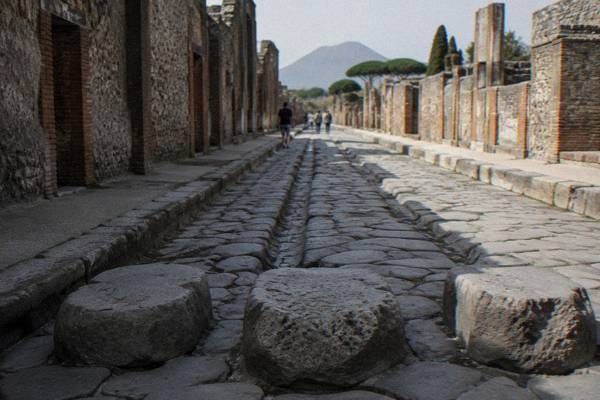
Pompeii Amphitheatre
The amphitheatre of ancient Pompeii sits at the eastern edge of the excavated city in Campania, southern Italy, beside the modern town of Pompei and about 24 km from Naples. Here is how to reach it, which entrance to use, what a ticket costs in 2026 and what to combine it with.
Short answer
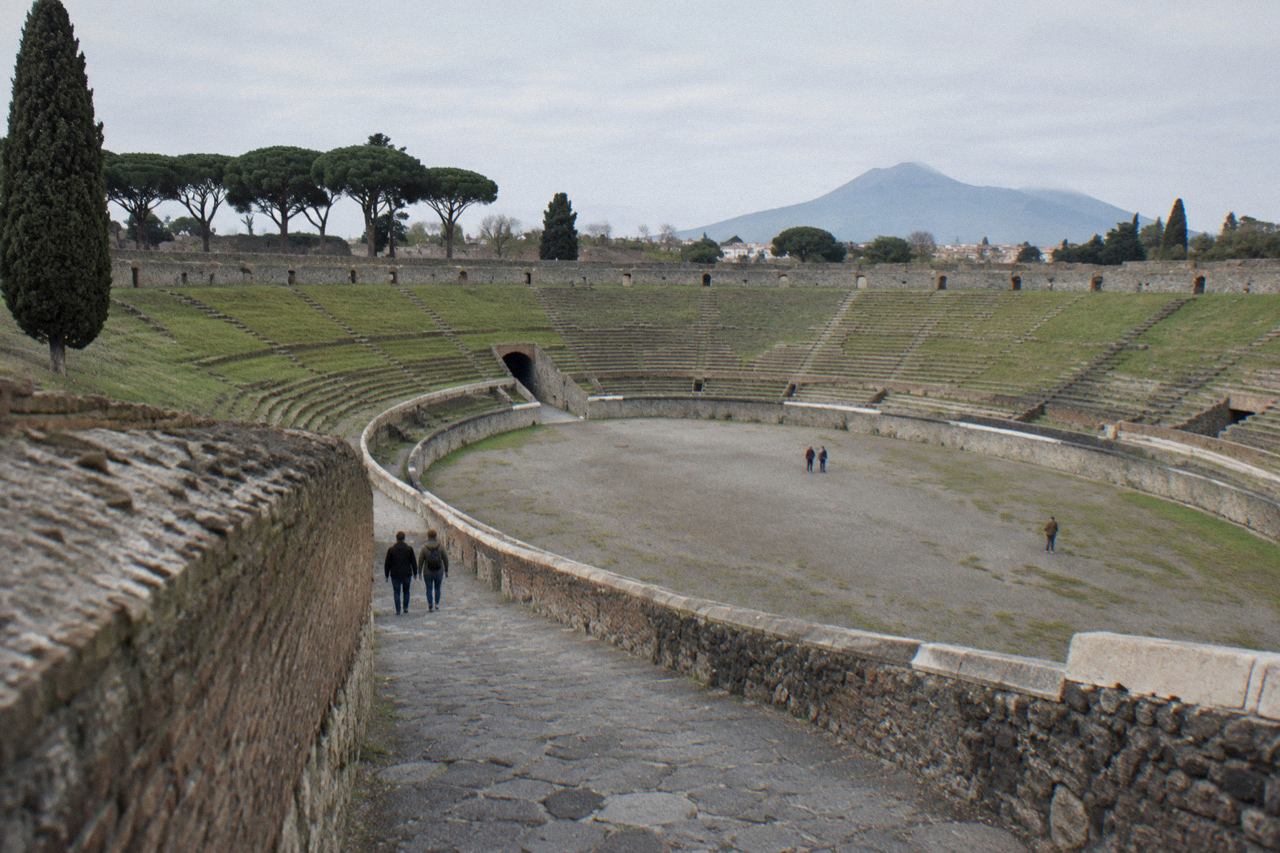
The Pompeii amphitheatre stands inside the archaeological park of Pompei in Campania, Italy, near the Piazza Anfiteatro entrance. In 2026 the Pompeii Express ticket costs EUR 20 and covers the whole ancient city including the amphitheatre. From 1 January 2027 a single EUR 25 ticket covers all park sites. Enter at Piazza Anfiteatro for the shortest walk to the arena.
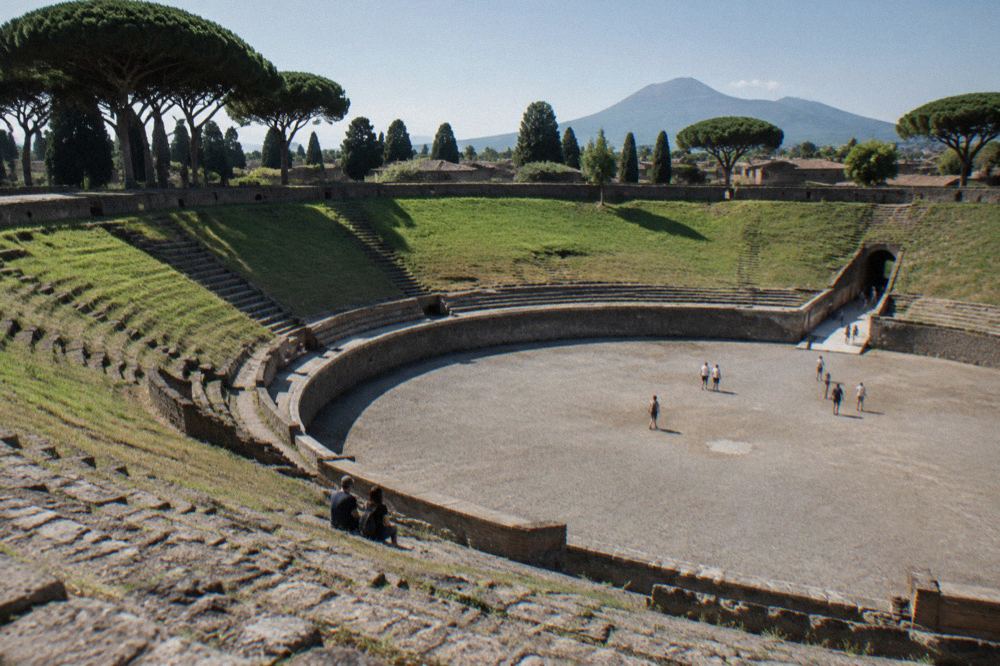
The amphitheatre of ancient Pompeii is a stone arena inside the Parco Archeologico di Pompei, the archaeological park that preserves the Roman city buried by the eruption of Mount Vesuvius in AD 79, traditionally dated to 24 August. The park lies in Campania, southern Italy, beside the modern town of Pompei, about 24 km by road south-east of Naples on the Bay of Naples. The amphitheatre occupies the eastern side of the excavated area, closest of the three ticket entrances to Piazza Anfiteatro, which is also the entrance designated for visitors with reduced mobility under the park's "Pompeii for All" route. This guide covers how to get there, which entrance suits an amphitheatre-first visit, what tickets cost in 2026 and what changes on 1 January 2027, plus what to pair with the arena in a single day.
What Is The Pompeii Amphitheatre And Where Is It?
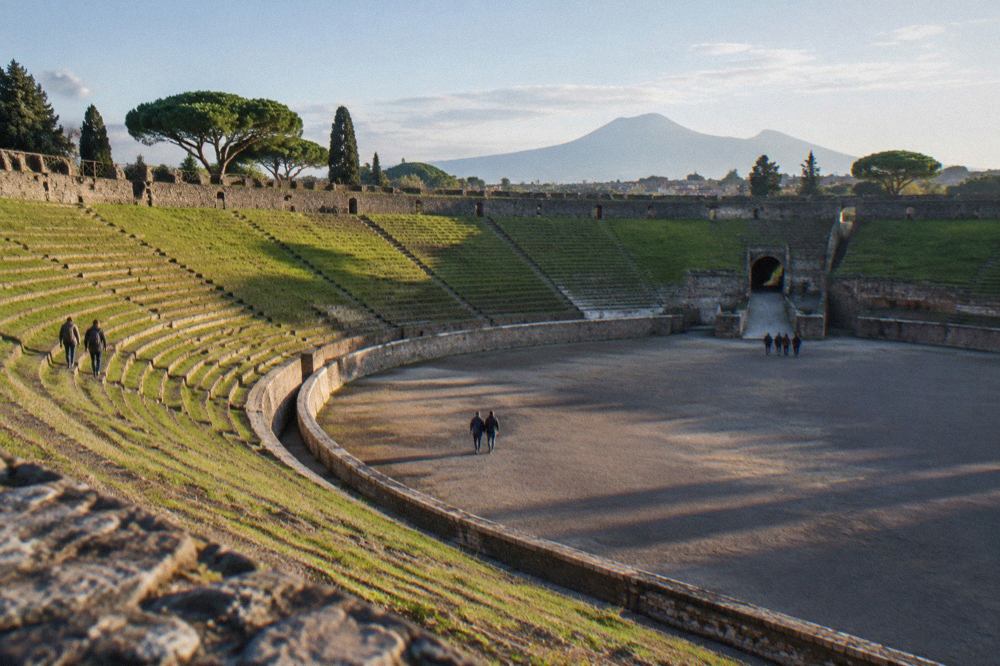
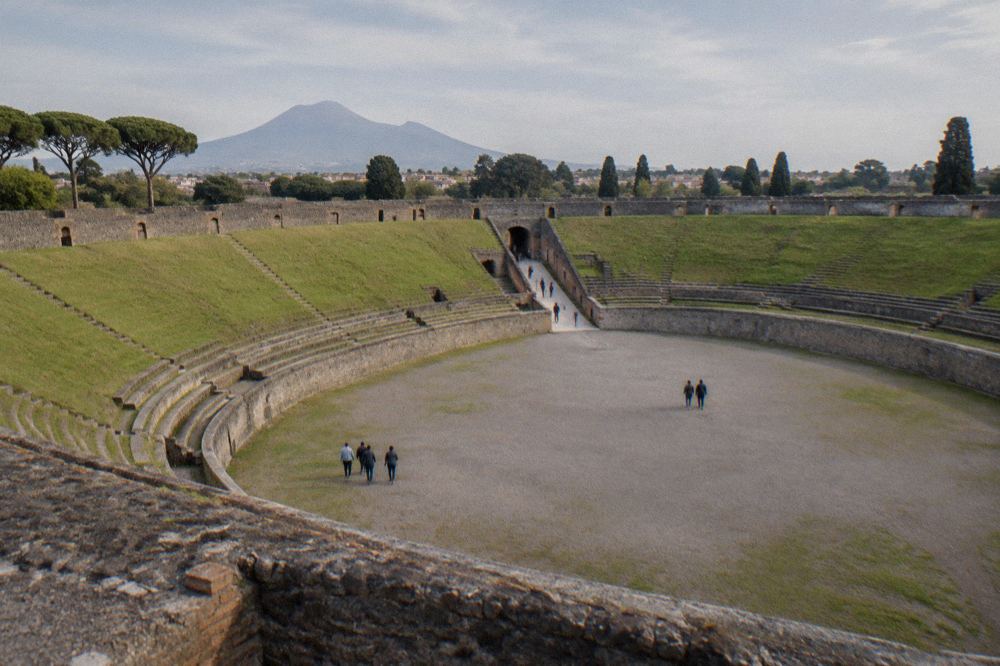
The Pompeii Amphitheatre is the large stone arena of the ancient Roman city of Pompeii, standing in the eastern part of the excavated city within an archaeological park in Campania, southern Italy, about 24 km by road from Naples and beside the modern town of Pompei. You reach it a short walk inside the Piazza Anfiteatro entrance, and a visit is included in the standard park ticket.
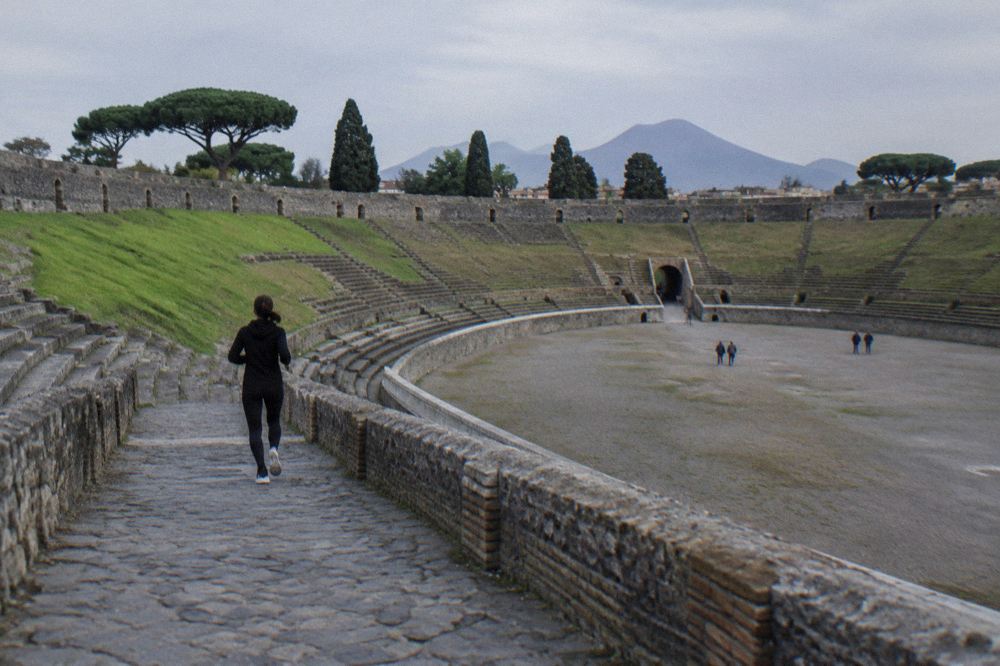
The arena is one of the recognisable landmarks of the eastern excavations, set among open ground that gives it more breathing space than the tightly packed streets around the Forum. Unlike the buildings that line Via dell'Abbondanza, it was built to hold crowds, and its oval bowl and tiered seating still read clearly today. The forum of Pompeii makes the sharpest contrast: a civic square of temples and administration versus a purpose-built venue for public spectacle. Between them, the large theatre and odeon show the smaller performance venues of the same city, useful context for how entertainment was layered in Roman Pompeii.
Planning a first visit around the arena is sensible because of where it sits. The Piazza Anfiteatro side of the park is quieter than the Porta Marina entrance near the Circumvesuviana station, so an amphitheatre-first route lets you see the big open landmarks before the crowds thicken around the western highlights such as the Villa of the Mysteries and the House of the Faun. The park's own visitor data shows why early planning matters: 4,069,377 people visited the Pompeii site in 2024, and 4,000,090 in 2025. May and October are the heavy months, with 516,923 visitors in May 2024 and 481,255 that October.
How Do You Get To The Pompeii Amphitheatre?
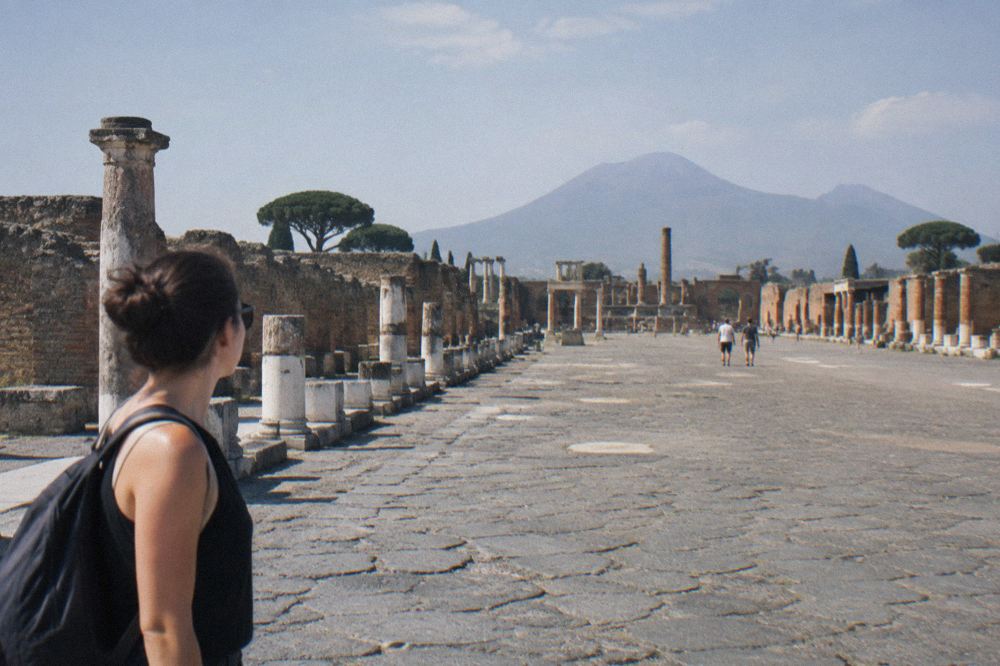
The nearest rail stop is Pompei Scavi-Villa dei Misteri on the Circumvesuviana Napoli to Sorrento line, with scheduled runs from Napoli Garibaldi taking 29 to 35 minutes, and the park's three ticket entrances are Porta Marina, Piazza Esedra and Piazza Anfiteatro. For the amphitheatre itself, the Piazza Anfiteatro entrance is the closest and avoids crossing the whole site. By road, Naples is 24 km away, Sorrento 26 km and Salerno 31 km, and the Campania Express train has been suspended since 1 October 2026.
The Circumvesuviana is the everyday rail link, run by EAV. The station named Pompei Scavi-Villa dei Misteri (stop 6049) sits beside the Porta Marina entrance, which is the far side of the excavations from the arena. EAV's own timetable data gives the scheduled times: Napoli Garibaldi to Pompei Scavi in 29 to 35 minutes, and Pompei Scavi on to Sorrento in 34 to 40 minutes.
| Route (driving, OSRM on OpenStreetMap, indicative) | Distance | Approximate driving time |
|---|---|---|
| Naples to Pompei Scavi | 24 km | 22 min |
| Sorrento to Pompei Scavi | 26 km | 37 min |
| Salerno to Pompei Scavi | 31 km | 30 min |
| Rome to Pompei Scavi | 234 km | 159 min |
One transport caution matters for anyone booking around the arena. The Campania Express, the premium alternative on the coastal line, has been suspended since 1 October 2026 until further notice, with refunds available through EAV's complaints form or the original seller. Any itinerary advice elsewhere that treats it as running is out of date.
If you would rather have someone else handle the trains and the entry, a small-group guided option removes the guesswork, and the small group archaeologist tour is the flagship of that kind: a guide trained in archaeology walking the site with a small group, starting inside the park itself.
Which Entrance Should You Use For The Amphitheatre?
Piazza Anfiteatro is the entrance to use for an amphitheatre-first visit: it is one of the park's three ticket offices and the closest gate to the arena, and it is also the designated entry point for the "Pompeii for All" accessibility route. Porta Marina, by the Circumvesuviana station, is the farthest from the arena. A third ticket office at Piazza Esedra sits between the two and works well for a route that ends at the arena.
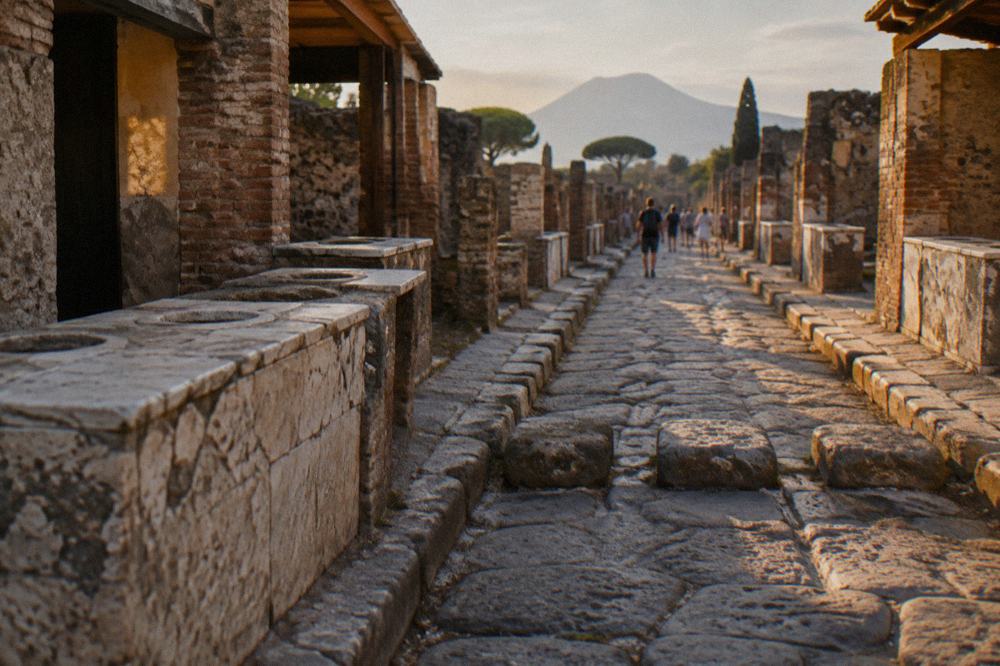
The park names exactly three ticket offices: Porta Marina, Piazza Esedra and Piazza Anfiteatro. A separate named entrance at Porta Ercolano / Street of the Tombs serves the suburban villas route, where holders of the Express ticket can add the villas for EUR 8, card payment only. That entrance is relevant only if you are extending to the villas after the city, not for the amphitheatre.
Choosing Piazza Anfiteatro changes the shape of your day. You see the arena, the eastern necropolis edge and the wide open ground first, then work westward toward the Garden of the Fugitives and the forum while legs are still fresh. Arriving at Porta Marina instead means the amphitheatre is the long walk at the end, which suits visitors who want the Stabian Baths and the western houses first. The park's interactive map page is the tool for settling that decision before you arrive.
The "Pompeii for All" route deserves a plain statement: visitors with mobility difficulties enter at Piazza Anfiteatro and may exit at Piazza Anfiteatro or Piazza Esedra via the Antiquarium lift, per the park's visitor regulations. That makes the amphitheatre side not just convenient but the correct planning default for wheelchair users and anyone who cannot manage long stretches of ancient paving. The regulations page also fixes the practical limits: bags larger than 30x30x15 cm must go to left luggage, identity may be checked at entry because tickets are nominative, and tickets are non-transferable and non-refundable except in extraordinary closure.
A guided walk anchored on the eastern side works well with that entrance logic. The guided entry option at Pompeii entry ticket and guided tour with an archaeologist bundles the ticket with a led visit, which spares you the ticket-office queue at whichever gate you choose.
What Tickets Do You Need For The Amphitheatre In 2026?
In 2026 the amphitheatre is covered by every Pompeii park ticket: the Pompeii Express at EUR 20 for the ancient city alone, Pompeii+ at EUR 25 adding the suburban villas and shuttle, and the 3-day ticket at EUR 30 adding Oplontis, the Stabiae villas and museum, and Boscoreale. There is no separate arena ticket. From 1 January 2027 a single EUR 25 ticket covers all park sites, valid 30 days with one entry per site.
The 2026 structure, in force since 12 January 2026, is straightforward for an amphitheatre visit: the cheapest ticket already includes it. The differences between tickets are about the villas and the outlying sites, not about any part of the ancient city. Entry is free for everyone under 18 and for all visitors on the first Sunday of the month, and EU citizens aged 18 to under 25 pay a reduced EUR 2, a concession that also extends to non-EU holders of an Italian residence permit.
| Ticket (2026, ends 31 December 2026) | Price | What it covers |
|---|---|---|
| Pompeii Express | EUR 20 | The ancient city, including the amphitheatre |
| Pompeii+ | EUR 25 | City plus suburban villas, Villa Regina, Antiquarium Boscoreale and shuttle |
| 3-day ticket | EUR 30 | Pompeii+ plus Oplontis, Villa Arianna, Villa San Marco, Stabiae museum, Boscoreale |
| Oplontis / Boscoreale / Stabiae museum (each) | EUR 8 | The individual outlying site |
| My Pompeii Card (annual) | EUR 45 | Annual pass (EUR 10 reduced) |
The change coming on 1 January 2027 collapses that structure: one EUR 25 ticket for all park sites, valid 30 days, one entry per site, with Oplontis, Stabiae and Boscoreale still sold individually at EUR 8 and the MyPompeii Card unchanged at EUR 45. Nominative tickets and the 20,000 visitors-per-day cap, both in place since 15 November 2024, are retained.
Tickets bought online are issued through the vivaticket platform linked from the park's own page, and buying ahead matters more than it used to because of the daily cap and the time-slot system described below. The full detail on ticket types, reductions and free days is on the site's Pompeii tickets guide.
What Are The Opening Hours And Time Slots?
From 16 March to 14 October the park opens at 9:00 with last entrance at 17:30 and closes at 19:00; from 15 October to 15 March last entrance is 15:30 and closing is 17:00. During the longer season, time slots split at 13:00: 9:00 to 13:00 admits up to 15,000 visitors and 13:00 to 17:30 up to 5,000. Pompeii has no weekly closing day and closes only 25 December and 1 January.
The time-slot mechanism is the part many visitors miss. In the high-season window the morning block carries a ceiling of 15,000 entries (12,000 Express and 3,000 Plus) and the afternoon block 5,000 (3,000 and 2,000). The afternoon is therefore the calmer half of the day on entry numbers, though it leaves less time inside, and the same 20,000 daily cap applies overall. On the free first Sundays the park has recorded more than 36,000 visitors in a single day, which is the strongest argument for avoiding that Sunday if a peaceful amphitheatre visit is the goal.
| Period | Opens | Last entrance | Closes |
|---|---|---|---|
| 16 March to 14 October | 9:00 | 17:30 | 19:00 |
| 15 October to 15 March | 9:00 | 15:30 | 17:00 |
| Time slot (16 March to 14 October) | Entry ceiling | Split by ticket |
|---|---|---|
| 9:00 to 13:00 | 15,000 | 12,000 Express / 3,000 Plus |
| 13:00 to 17:30 | 5,000 | 3,000 Express / 2,000 Plus |
Outlying sites follow their own clocks: Oplontis, the Stabiae villas and the Stabiae museum are closed on Tuesdays, unlike Pompeii itself. The one closure inside the city to note is the Praedia of Julia Felix, closed to the public since 7 September 2026 for maintenance until further notice, which slightly reshapes the eastern routes some guidebooks describe.
What Should You Pair With The Amphitheatre In One Day?
The strongest pairings with the amphitheatre are Herculaneum, Mount Vesuvius, or the villas circuit, all reachable on the same Circumvesuviana line from Pompei Scavi. Herculaneum costs EUR 16 full in 2026, is open 8:30 to 19:30 in the summer season with last entry 18:00, and is free on the first Sunday plus 25 April, 2 June and 4 November. Vesuvius Gran Cono tickets are online-only at EUR 11.68 full and grant access in timed 10-minute windows.
Herculaneum is the classic companion. It is a smaller, better-sheltered site, and the pairing is common enough that the site carries a dedicated comparison in Herculaneum versus Pompeii and a combined itinerary in Pompeii and Herculaneum in one day. Two closures to plan around at Herculaneum: the Villa dei Papiri is closed for works and the Ancient Theatre is closed until further notice. Full entry is EUR 16, reduced EUR 2 for ages 18 to 25.
Vesuvius works as a second half of an amphitheatre day, and the crater trail has its own timed system: 50 tickets per 10 minutes, bookable 30 days ahead, with 10 nominative "last minute" tickets per slot from 30 minutes before, a rule in force since 11 April 2026. The park closes the ticket office and path automatically on an orange weather alert or above, with automatic refund. Full detail is in the how to visit Mount Vesuvius guide and the Vesuvius crater trail page.
| Vesuvius Gran Cono access hours | Hours |
|---|---|
| January, February, November, December | 9:00 to 15:00 |
| March and October | 9:00 to 16:00 |
| April, May, June, September | 9:00 to 17:00 |
| July and August | 9:00 to 18:00 |
The alternative, for a fuller day from Naples, is described in the site's Pompeii tours from Naples roundup.
What Is The Weather Like Around The Amphitheatre?
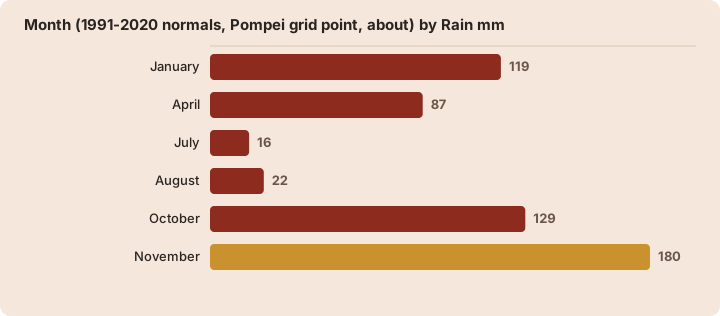
The Pompei area has a Mediterranean climate with about 29.4 C mean daily maxima in August, the warmest month, and about 6.5 C mean nightly minima in February; November is the wettest month at about 180 mm of rain and July the driest at about 16 mm. These are 1991-2020 grid-point normals from the Open-Meteo archive, not station readings, so treat them as approximations for planning shade, water and rain gear.
The practical reading for an amphitheatre visit is that the eastern side of Pompeii is exposed open ground with little shade, and the numbers say when that matters. July and August combine the highest maxima (about 28.7 C and 29.4 C) with the lowest rainfall (about 16 mm and 22 mm), so water and a hat are not optional. October and November flip the problem: about 129 mm and 180 mm of rain respectively, and ancient paving becomes slippery when wet. The site's summer-specific advice is gathered in the Pompeii in summer heat plan, and month-by-month guidance is in Pompeii weather and the best time to visit.
| Month (1991-2020 normals, Pompei grid point, about) | Mean daily max C | Mean daily min C | Rain mm |
|---|---|---|---|
| January | 12.2 | 6.6 | 119 |
| April | 17.7 | 10.4 | 87 |
| July | 28.7 | 21.1 | 16 |
| August | 29.4 | 21.8 | 22 |
| October | 21.3 | 15.1 | 129 |
| November | 16.9 | 11.5 | 180 |
Where Should You Eat Near The Amphitheatre?
Eating inside the park is limited, and the practical options are the park's own refreshment points, the modern town of Pompei beyond the gates, and returning to Naples for the strongest food scene within reach, where a guided street food walk is the efficient way to eat well without researching venues. There is no restaurant inside the excavated area itself. Visitors with the Pompeii+ ticket also pass the Antiquarium at Boscoreale, and the villas circuit pairs naturally with agriturismo lunches on the Vesuvius slopes.
Food is the part of a Pompeii day visitors under-plan. The site's own rundown of eating options is in what to eat in Pompeii, and for cooking rather than eating, Pompeii cooking and pizza classes lists the hands-on alternatives. The strongest single move for food-led travellers is to finish at the ruins and end the day in Naples on a guided walk: the Naples street food walking tour with a local guide is this site's featured pairing for the amphitheatre page, a street-food walk through the old town led by a local guide.
The logic of that pairing is time and geography rather than novelty. The Circumvesuviana puts Naples roughly half an hour from Pompei Scavi by scheduled run, so a morning in the arena and a late-afternoon walk through Naples pizza alleys is a same-day itinerary, with the modern Pompei town guide covering the closer, quieter alternative of eating beside the Sanctuary. For a longer account of the whole region's food and travel picture, the site's own Pompeii Travel Guide hub collects the planning pages.
Is The Amphitheatre Side Of Pompeii Accessible?
Yes, the amphitheatre side is the accessibility entrance: the park's "Pompeii for All" route starts at Piazza Anfiteatro, and visitors with mobility difficulties may exit at Piazza Anfiteatro or at Piazza Esedra via the Antiquarium lift, per the park's visitor regulations. The rest of the ancient city is uneven underfoot, with original Roman paving, high kerbs and no shade, so the designated route is the realistic framework for a wheelchair or limited-mobility visit.
The regulations page is the operative source for what aids and limits exist. Bags above 30x30x15 cm go to left luggage, drones need authorisation, and identity may be checked at every entry because tickets are nominative. The Artebus shuttle that links park sites has luggage storage but no disabled access, which matters for anyone planning the villas circuit on the same ticket. The site's dedicated Pompeii accessibility page works through the route in full, and the physical demands of the site generally are covered in how difficult is it to walk in Pompeii.
Common Questions About The Pompeii Amphitheatre
Is the Pompeii amphitheatre included in the standard ticket?
Yes. In 2026 every park ticket, starting with the Pompeii Express at EUR 20, includes the whole ancient city including the amphitheatre. From 1 January 2027 the single EUR 25 ticket covers all park sites. There has never been a separate arena-only ticket in the 2026 structure.
Which entrance is closest to the Pompeii amphitheatre?
Piazza Anfiteatro. It is one of the park's three ticket offices, alongside Porta Marina and Piazza Esedra, and it is also the designated entry for the "Pompeii for All" accessibility route. Porta Marina, by the Circumvesuviana station, is the farthest gate from the arena.
Is the Pompeii amphitheatre accessible for wheelchair users?
Yes, via the designated route. Visitors with mobility difficulties enter at Piazza Anfiteatro and may exit at Piazza Anfiteatro or Piazza Esedra via the Antiquarium lift. The wider ancient city remains uneven original paving, so the designated route is the planning framework.
Can you visit the amphitheatre and Vesuvius on the same day?
Yes. Guided combination days from Naples and Sorrento exist for visitors who prefer not to assemble the transfers themselves.
When is the best time of day to see the amphitheatre?
Early morning or the afternoon block. In the long season the 9:00 to 13:00 slot admits up to 15,000 visitors and the 13:00 to 17:30 slot up to 5,000, so the afternoon is calmer on entry numbers, while early morning gives more time inside before the 19:00 close. Avoid the free first Sunday, when the park has recorded more than 36,000 visitors in one day.
Are there places to eat near the amphitheatre?
Inside the excavated area options are limited to the park's refreshment points. The modern town of Pompei lies just beyond the gates, and Naples, with the strongest food scene in reach, is a scheduled 29 to 35 minute Circumvesuviana run from Napoli Garibaldi to Pompei Scavi in either direction.
The amphitheatre rewards the visitor who plans the east side of Pompeii deliberately: enter at Piazza Anfiteatro, arrive inside the time slot that matches your tolerance for crowds, carry water in the about-29-degree August afternoons, and finish the day either on the Vesuvius slopes or over pizza in Naples. The arena has been drawing crowds for two thousand years, and with the 2027 ticket change coming, a little planning goes a long way toward seeing it well.