Amalfi Coast To Pompeii
Getting from the Amalfi Coast to the ancient Roman city of Pompeii in Campania, southern Italy, is a short hop on paper and a slow one in practice: here are the routes that work, the times and prices, and how to build the day.
Short answer
The fastest reliable route from the Amalfi Coast to Pompeii runs via Sorrento, about 26 km and 37 minutes by road from the excavations, then the Circumvesuviana train to Pompei Scavi-Villa dei Misteri in 34 to 40 minutes. In 2026 a Pompeii Express ticket costs EUR 20, rising to a single EUR 25 ticket for all sites from 1 January 2027.
Pompeii, the ancient Roman city buried by the eruption of Mount Vesuvius in AD 79 and now an archaeological park in Campania, southern Italy, sits about 24 km south-east of Naples, and the Amalfi Coast curls around the Sorrento peninsula to its south. On the map the two look like neighbours, and in a straight line they are. In practice the coast road between them is narrow, winding and slow in season, which is why the question of how to get from one to the other deserves a proper answer rather than a shrug.
This guide covers the routes that actually work from any town on the Amalfi Coast to the Pompeii excavations: the train combination via Sorrento, the boat-and-train combination, the drive, and the booked day tours that fold the coast and the ruins into a single ticketed day. Every price and time below comes from the park's official ticketing pages and the operator timetables. The Campania Express train, once the comfortable middle option, has been suspended since 1 October 2026, and that changes the arithmetic for every route on this page.
How Do You Get From The Amalfi Coast To Pompeii?
The realistic options are four: the coastal bus or a private transfer to Sorrento followed by the Circumvesuviana train to Pompei Scavi-Villa dei Misteri; a ferry to Sorrento and the same train; a direct drive anchored at 26 km and 37 minutes from Sorrento; or a booked combined tour that does the routing for you. No rail line runs along the coast itself, so every route changes mode at least once, usually at Sorrento.
The reason is geography. The Amalfi Coast has no railway; its towns are threaded onto a cliffside road between Sorrento in the west and Salerno in the east. Pompeii's station, Pompei Scavi-Villa dei Misteri on the Circumvesuviana line, sits inland at the Porta Marina entrance. So the journey always has two legs: coast to Sorrento (or Salerno) by road or sea, then Sorrento (or the Naples line) to the ruins by rail.
The Circumvesuviana leg is the verified, predictable part. From Sorrento to Pompei Scavi-Villa dei Misteri the scheduled run takes 34 to 40 minutes, computed from the operator EAV's own timetable data. From Napoli Garibaldi the same station is 29 to 35 minutes away, with a median of 29. Trains use route 1, the Napoli-Sorrento line, and the station you want is Pompei Scavi-Villa dei Misteri, not Pompei town's other stations: Scavi is the stop beside the Porta Marina entrance. The Circumvesuviana train explained covers the line, the stations and the ticketing in detail.
The coastal leg is the unpredictable part.
Is One Day Enough For The Amalfi Coast And Pompeii Together?
Yes, one day is enough to see a slice of Pompeii and glimpse the coast, but not enough to do either properly: the excavated area alone covers 44 hectares, and a focused circuit of the highlights is the realistic budget when the coast is also on the itinerary. Travellers who try to add Positano, Amalfi town and a full Pompeii walk in one day usually end up rushing all three. The honest choice is one anchor and one appetiser.
The arithmetic of the day is unforgiving. Assume a Sorrento base: the train leg to Pompei Scavi is 34 to 40 minutes each way, and the park's summer hours run from 9:00 with last entrance at 17:30 and closing at 19:00 between 16 March and 14 October. In winter, from 15 October to 15 March, the last entrance pulls back to 15:30 and the site closes at 17:00. A morning in the ruins, lunch, and a coastal afternoon is the shape that works; the reverse, coast in the morning and Pompeii after lunch, collides with the last-entrance clock and the heat of midday on unshaded basalt streets.
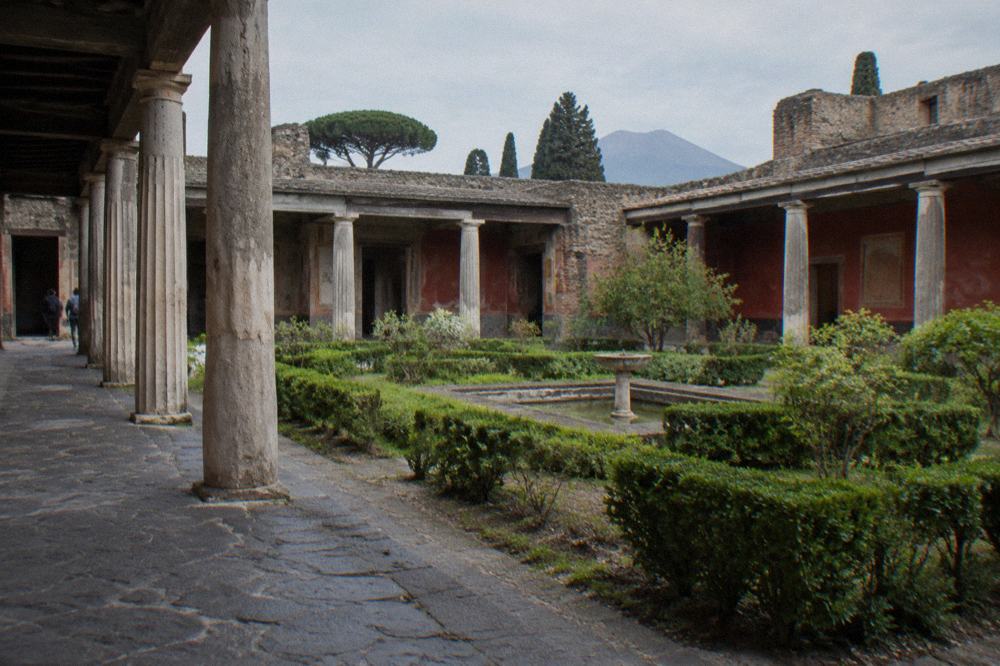
What you cut inside the park matters. A short visit should target the Forum, the Basilica, a bath complex such as the Stabian Baths, a house or two with intact decoration, and one of the main thoroughfares. The suburban villas route, entered at Porta Ercolano and the Street of the Tombs, adds the Villa of the Mysteries and is worth it only with an extra hour; Express ticket holders can add it on the day for EUR 8, card payment only, at that entrance. The Pompeii in 2 hours itinerary and the half-day highlights route give step-by-step circuits sized to exactly this kind of compressed day.
One caution that catches coast-based travellers out: the Praedia of Julia Felix, one of the houses often listed in older itineraries, has been closed to the public since 7 September 2026 for maintenance, with reopening unspecified. Build your shortlist from what the park's current pages confirm is open. The dedicated one-day answers page works through the same question for readers deciding between bases.
What Do Pompeii Tickets Cost And Which One Should A Coastal Day-Tripper Buy?
In 2026 the Pompeii Express ticket, covering the ancient city alone, costs EUR 20; Pompeii+ costs EUR 25 and adds the suburban villas, Boscoreale and the shuttle; the 3-day ticket costs EUR 30. Entry is free for under-18s and for everyone on the first Sunday of the month, and reduced to EUR 2 for EU citizens aged 18 to under 25. From 1 January 2027 a single EUR 25 ticket replaces the whole ladder. For one day from the coast, the Express is the right buy.
The 2026 prices were set on 12 January 2026 and run only to 31 December 2026. From 1 January 2027 the park moves to one EUR 25 ticket for all its sites, valid 30 days from issue with one entry per site; Oplontis, the Stabiae museum and Boscoreale remain EUR 8 individually, and the annual My Pompeii Card stays EUR 45. Nominative tickets, meaning tickets printed with your name and checked against ID, and the 20,000-visitors-per-day cap both continue under the new system, having been in force since 15 November 2024.
| Pompeii ticket type (2026) | Price in 2026 | What it covers | Notes for coast day-trippers |
|---|---|---|---|
| Pompeii Express | EUR 20 | Ancient city only | The right choice for a single day |
| Pompeii+ | EUR 25 | City, suburban villas, Boscoreale, shuttle | Only if you have a spare hour for the villas |
| 3-day ticket | EUR 30 | Pompeii+ plus Oplontis, Stabiae villas and museum, Boscoreale | Overkill for a one-day coast trip |
| Other park sites individually | EUR 8 | Oplontis, Stabiae museum, or Boscoreale | Works if Pompeii is already done |
| My Pompeii Card (annual) | EUR 45 | Annual access | For repeat visitors based in Campania |
| New single ticket from 1 Jan 2027 | EUR 25 | All park sites, 30 days, one entry per site | Replaces the whole ladder above |
Two details matter for timing. First, the daily cap is allocated in time bands in the summer season: between 16 March and 14 October the 9:00 to 13:00 band admits up to 15,000 visitors and the 13:00 to 17:30 band up to 5,000. Arriving on a morning train from the coast puts you in the busier band, which is fine for entry but means buying ahead is wise. Second, bags larger than 30x30x15 cm must go to left luggage, a rule the regulations page enforces at every entrance. The full detail, including the free partner sites and the reduced rules, is on the Pompeii tickets guide.
A booked tour changes this picture in one way: tour products that bundle the entry ticket handle the nominative ticketing for you, and their inclusions come from the operator's listing rather than the park's public ladder. The trade-off is flexibility, since the tour's clock, not yours, sets the departure from the coast.
Should You Take A Tour Or Travel Independently From The Coast?
A combined tour is the better choice if you want the coast and Pompeii in one day without driving or decoding two transport systems, because it fixes the hardest variable, the coastal road, in a vehicle with a driver who knows it. Independent travel wins if your base is Sorrento, if you want to control your hours inside the park, or if the budget is tight, since the train and a EUR 20 Express ticket in 2026 cost less than any booked day.
The independent route from Sorrento is genuinely easy: one train, one station, one entrance. Pompei Scavi-Villa dei Misteri stands beside the Porta Marina entrance, one of the three ticket-office entrances along with Piazza Esedra and Piazza Anfiteatro, so the walk from platform to gate is a matter of a few hundred metres.
The tour route from Naples is the one many coast-based travellers overlook. For readers who prefer this shape of day, the Pompeii tours from Naples guide and the Pompeii tours from Sorrento guide compare the options base by base, and the guided versus self-guided comparison works through the deeper question of whether a guide adds value at Pompeii at all.
A specific option for travellers already committed to a Rome leg: the From Rome: Pompeii, Amalfi Coast, and Sorrento Day Trip folds all three stops into one long day out of the capital. Check availability on the operator's live listing if that shape fits; the Rome to Pompeii day trip guide covers the rail alternative for comparison, and the Rome to Pompeii by train page details the independent version.
Positano To Pompeii: The Route From The Coast's Icon
From Positano the practical route to Pompeii runs first to Sorrento, by coastal bus, ferry or private transfer, and then by Circumvesuviana train from Sorrento to Pompei Scavi-Villa dei Misteri, a 34 to 40 minute rail leg; the drive direct from Sorrento to the excavations is about 26 km and 37 minutes, which frames how much road Positano adds at the front. There is no train from Positano and no verified direct service to the ruins, so the change of mode is unavoidable.
Positano is the furthest of the main coast towns from the rail network, hanging off the western end of the coast road below Sorrento. Every routing decision from there reduces to one question: how do you reach Sorrento, and at what hour? A private transfer is the fourth option and the one every family and cruise passenger ends up pricing, and for good reason: it removes both the change at Sorrento and the parking question at Pompeii. Everything else covered here is indexed on Pompeii Travel Guide.
| Route from Positano to Pompeii | Legs | figures on this route | Best for |
|---|---|---|---|
| Bus or ferry to Sorrento, then Circumvesuviana | Two or three | Sorrento to Pompei Scavi 34-40 min by train | Budget travellers, morning starts |
| Private transfer direct to the excavations | One | Sorrento to excavations 26 km / about 37 min by road | Families, tight schedules |
| Booked combined tour | One booking | Tour details on the operator's listing | Anyone who wants the day handled |
| Drive yourself | One | Same 26 km / 37 min anchor from Sorrento | Confident drivers only |
Parking at the excavations is its own subject, covered on the Pompeii parking guide, and the honest summary is that a hire car on the Amalfi Coast in summer is a burden more often than a freedom. If Positano is your base, the Sorrento to Pompeii guide is the companion page to this one, since Sorrento is your gateway to everything north of the coast, including Herculaneum and Vesuvius as well as Pompeii.
Which Coast Town Is The Best Base For Visiting Pompeii?
Sorrento is the best base on or near the coast for visiting Pompeii, because it is the only coast town with a rail station: the Circumvesuviana reaches Pompei Scavi-Villa dei Misteri in 34 to 40 minutes, and the drive is 26 km and about 37 minutes. Salerno is the second-best anchor, at 31 km and about 30 minutes by road to the excavations, and sits on the main rail network. Amalfi town and Positano always require a transfer leg first.
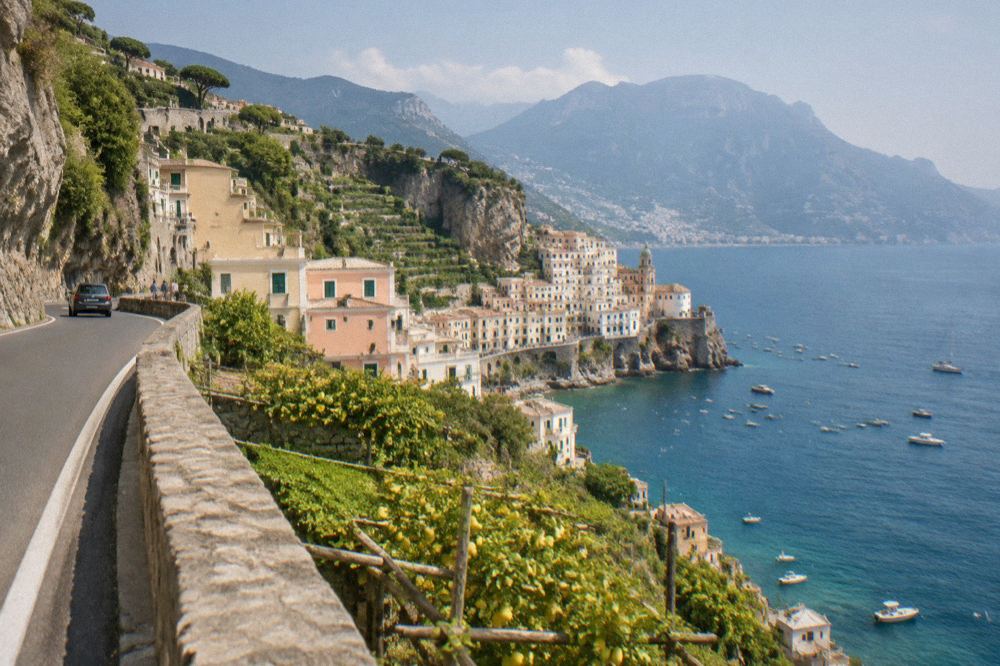
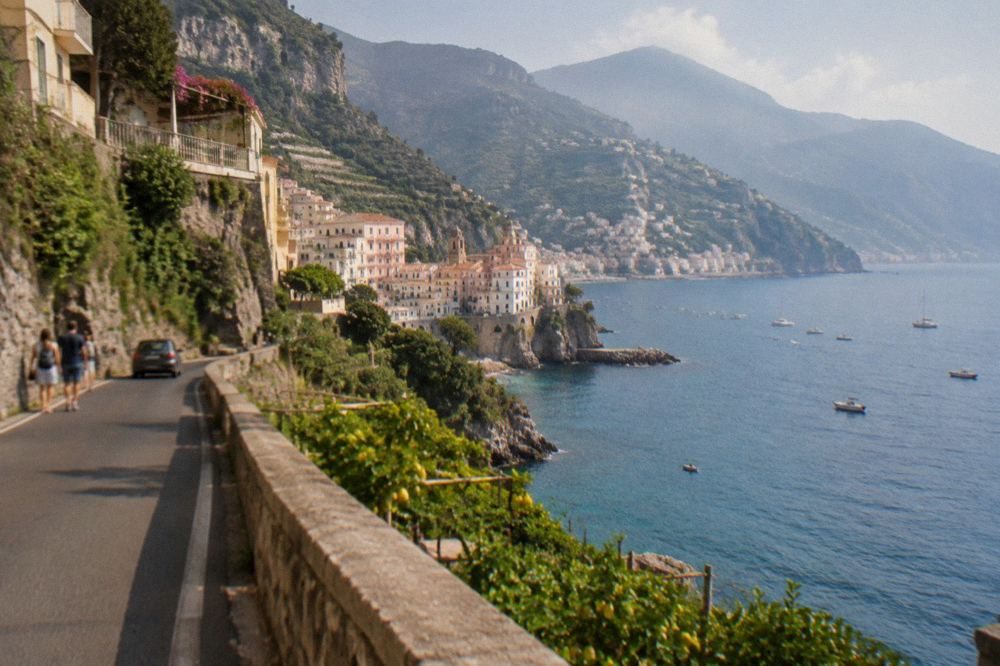
The choice is really between charm and connection. Positano and Amalfi town are the postcard, but neither has a train, and every Pompeii day from them starts with a bus, a boat or a car. Sorrento trades a little of the drama for the Circumvesuviana terminus, fast ferry links up the coast, and the shortest road distance to the ruins of any coast town. Salerno, at the eastern end, is often ignored by overseas travellers and valued by Italians precisely because it faces the other way, toward the motorway and the rail line, with the 31 km drive to the excavations the quickest verified road anchor on the coast.
| Base town (2026 anchors) | Rail to Pompei Scavi | Road to the excavations | Practical verdict |
|---|---|---|---|
| Sorrento | Yes, 34-40 min on route 1 | 26 km / about 37 min | Best overall base for Pompeii |
| Salerno | No direct Circumvesuviana | 31 km / about 30 min | Best eastern anchor |
| Positano | No | Transfer via Sorrento first | Prettiest, least connected |
| Amalfi town | No | Transfer to Sorrento or Salerno | Ferry and bus hub only |
| Naples (off-coast reference) | Yes, 29-35 min from Napoli Garibaldi | 24 km / about 22 min | Fastest of all, not the coast |
For travellers still weighing the whole question, the Amalfi Coast area guide profiles the towns, and the Naples versus Sorrento base comparison tackles the sister dilemma. One warning that belongs here rather than buried: the Campania Express, which once offered a semi-direct comfort option on the Naples-Sorrento corridor with space for luggage, has been suspended since 1 October 2026 with no restart date, so any older guide recommending it is out of date.
What Is The Best Time Of Year For This Trip?
Late April to early June and late September to October are the best windows: the sea is warm enough for the coast to feel like the coast, the park is fully open until 19:00, and the summer crush has either not arrived or has just left. July and August bring the highest temperatures of the year on the coast road and inside the ruins, while from 15 October the park's last entrance drops to 15:30, which wrecks a coast-plus-Pompeii day built around a lazy morning.
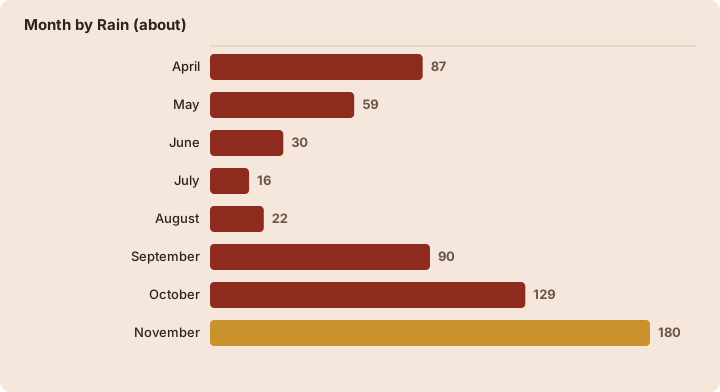
The climate record for Pompei, drawn from 1991-2020 reanalysis normals at the local grid point, shows why the shoulder seasons win. August has the highest mean daily maximum at about 29.4 C, July the least rain at about 16 mm, and November the most rain at about 180 mm, against an annual total of about 1086 mm. February is the coldest nights, about 6.5 C on average. Pompeii itself, with its stone streets and sparse shade, runs hotter than the coastal air, and the two-hour walk becomes a different experience at the August peak.
| Month | Mean daily max (about) | Mean daily min (about) | Rain (about) | Verdict for the combined day |
|---|---|---|---|---|
| April | 17.7 C | 10.4 C | 87 mm | Excellent, book early trains |
| May | 21.6 C | 14.1 C | 59 mm | The single best month |
| June | 25.8 C | 18.2 C | 30 mm | Very good, warming fast |
| July | 28.7 C | 21.1 C | 16 mm | Hot, busiest, start at 9:00 |
| August | 29.4 C | 21.8 C | 22 mm | Hottest, hardest month for it |
| September | 25.3 C | 18.6 C | 90 mm | Very good after mid-month |
| October | 21.3 C | 15.1 C | 129 mm | Good, but hours shorten 15 Oct |
| November | 16.9 C | 11.5 C | 180 mm | Wettest month, skip it |
The full monthly table and the crowd analysis sit on the weather and best time to visit guide. October's combination of good temperatures and short queues makes it the connoisseur's choice, provided your visit falls before the 15 October change to winter hours.
What Should You Know On The Day Itself?
Arrive at Pompei Scavi-Villa dei Misteri and enter at Porta Marina, carry water and shoes with grip, keep bags under 30x30x15 cm, and plan a two-hour circuit if the coast is still ahead of you: the site opens at 9:00, last entrance is 17:30 with a 19:00 close from 16 March to 14 October, and in winter those become 15:30 and 17:00. ID must match your nominative ticket, and tickets are non-transferable.
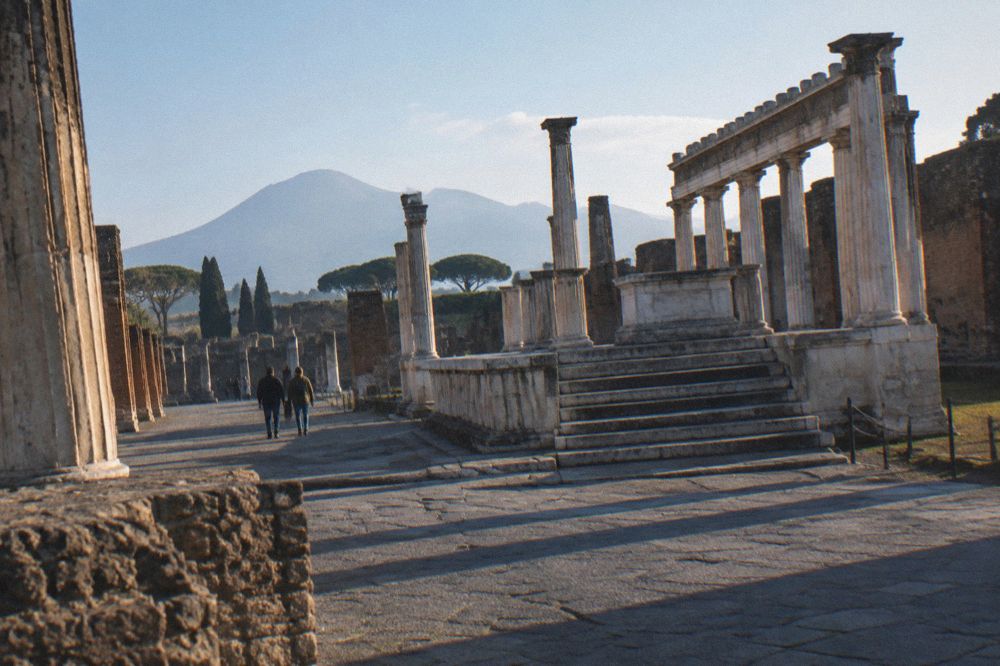
The practical rules come from the park's regulations page and they are enforced. Bags larger than 30x30x15 cm go to left luggage, and there is no dodging it at the gate. Drones need written authorisation, bare chests are refused, and tickets are checked against ID at entry because every ticket is nominative. First Sundays of the month are free for everyone, which sounds like a gift and is in fact a trap for the coast day-tripper: the record free-Sunday crowd exceeded 36,000 people, nearly double the daily cap, and the site becomes a slow shuffle. Pay the EUR 20 and go on a Tuesday.
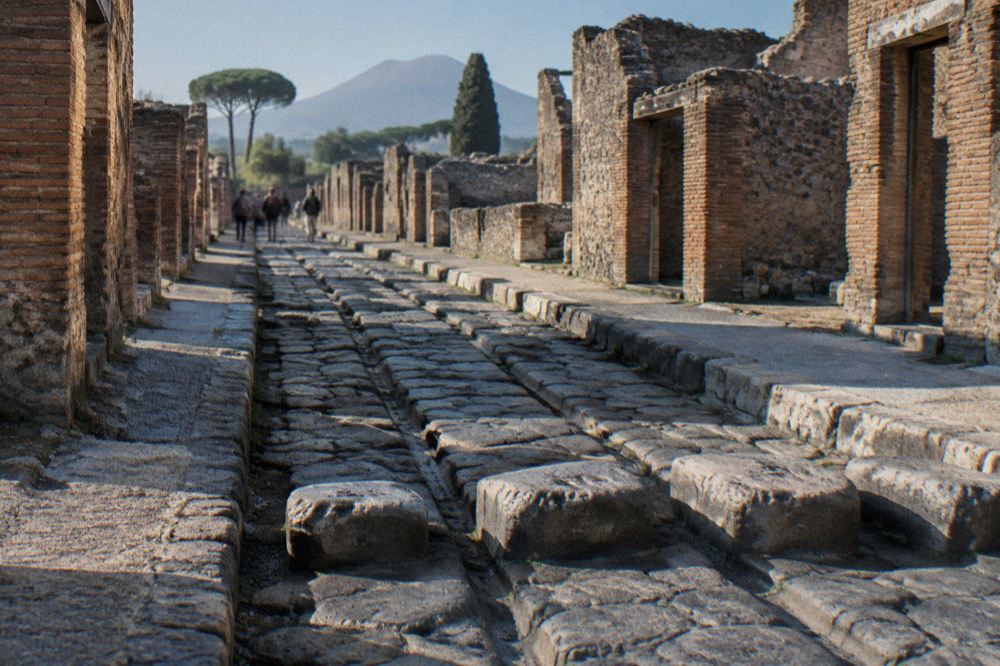
Inside, the surfaces are the surprise for first-time visitors. Pompeii's streets are original Roman basalt with cart ruts, uneven, dusty in summer, puddled after rain, and hard on thin soles. The how difficult is it to walk in Pompeii question is one of the most common ones this site receives, and the what to wear guide answers its sister. Toilets exist but are few; the facilities page maps them. Food options inside the park are limited, and the where to eat guide covers the realistic choices in modern Pompei around the entrances.
Visitors with mobility difficulties have a designed route, Pompeii for All, entered at Piazza Anfiteatro with exit options at Piazza Anfiteatro or Piazza Esedra via the Antiquarium lift; the details are on the park's regulations and timetable pages and on the site's accessibility guide. That route matters when planning from the coast, because it changes which entrance your transfer should target: Piazza Anfiteatro is at the opposite end of the site from Porta Marina and the train station.
Can You Combine Vesuvius Or Herculaneum With The Coast Day?
Trying for Pompeii, Vesuvius and the coast in one day leaves each with under two hours, which at Vesuvius, a 2 to 3 hour return excursion on the shortest to longest routes, does not work.**
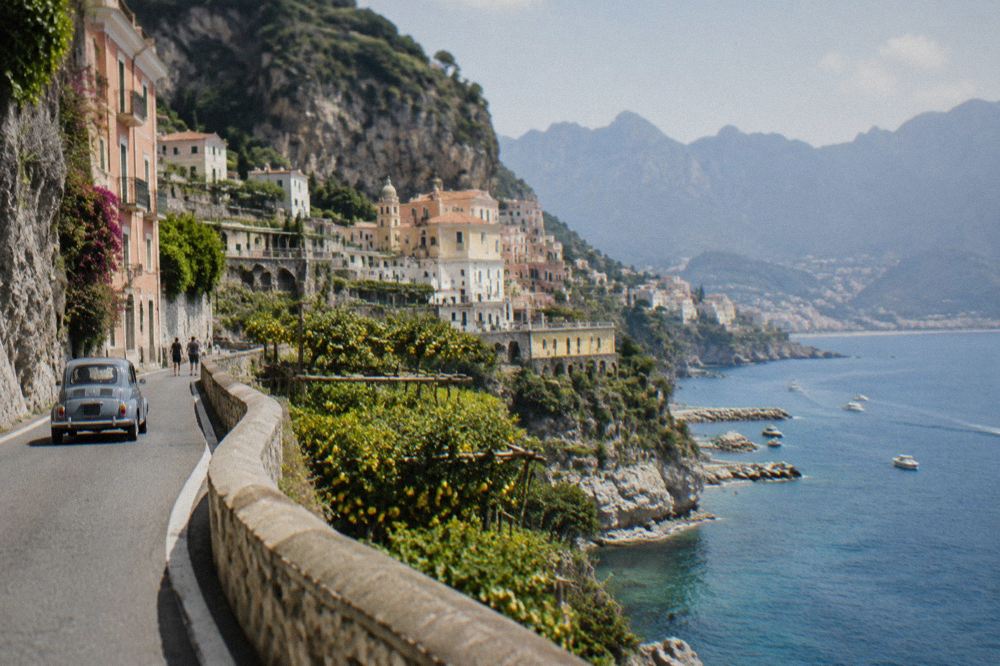
Vesuvius logistics are unusually rigid, and the park's own page sets them: the Gran Cono trail is online-booking only, sold at EUR 11.68 full and EUR 9.55 reduced as listed, with the regulation text showing base figures of EUR 10 and EUR 8. Fifty tickets per 10-minute slot are released 30 days ahead, plus ten last-minute nominative tickets per slot from 30 minutes before, nominative since 11 April 2026. Access hours shift monthly, from 9-15 in January, February, November and December to 9-18 in July and August, and the path closes automatically on an orange weather alert or above, with automatic refunds when it does. The Vesuvius tickets guide and the crater trail page carry the full detail.
Herculaneum rewards a slower eye: smaller than Pompeii, better preserved in its wood and fabrics, and quieter. Its 2026 ticket is EUR 16 full, EUR 2 reduced for 18 to 25s, free the first Sunday of each month plus 25 April, 2 June and 4 November, with hours 8:30 to 19:30, last entry 18:00, in the summer window and 8:30 to 17:00, last entry 15:30, in winter. The Villa dei Papiri and the Ancient Theatre are closed for works, so check what is open before promising yourself the villa. The Herculaneum guide and the Pompeii versus Herculaneum comparison settle which deserves your limited hours.
A booked product can stitch the two sites together when independent timing defeats you, and several verified Naples-based options do exactly that.
The two-day Pompeii, Herculaneum and Vesuvius itinerary is the calmer template: it gives the ruins a full day and the volcano the next morning, with the coast visited from whichever base you choose, rather than everything crushed into one. For cruise passengers with a single port day, the cruise ship day plan and the shore excursions guide make the same argument in the port's terms.
Where Should You Stay To Split The Trip Over Two Days?
Staying one night in Sorrento or modern Pompei splits the trip cleanly: Sorrento gives you the evening on the coast and a 34 to 40 minute morning train to the ruins, while modern Pompei, the town beside the excavations, puts you at the Porta Marina entrance minutes after breakfast and positions you for an evening return to the coast. Naples works as a base too, at 29 to 35 minutes by rail from Napoli Garibaldi, but it removes you from the coast's evening entirely.
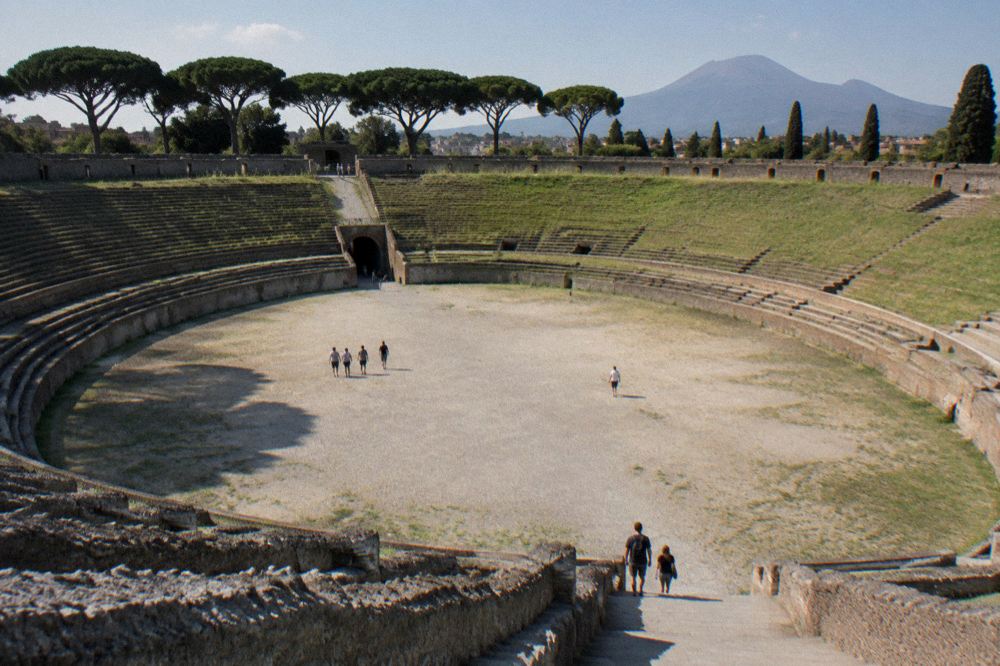
Modern Pompei is an ordinary, working town, and that is its virtue: cheap rooms, straightforward restaurants, and the excavations on the doorstep. It is not scenic, and nobody should sell it as such, but as a logistics base for two days of ruins, volcano and day trips back down the coast it is hard to beat. The trade-offs, the neighbourhoods and the named hotels are worked through on the where to stay in Pompeii guide, which links bookable options directly.
Sorrento is the opposite trade: you pay for the view and the evening passeggia, and every morning starts with a train. The is it worth staying overnight in Pompeii answer weighs exactly this, and the Naples or Sorrento base question frames the bigger decision. Whatever the base, the Naples to Pompeii guide covers the northern leg in full, and the Pompeii map is the tool for turning all of this routing into a walk you can actually follow on the ground.
Common Questions About Travelling From The Amalfi Coast To Pompeii
Can I cover Pompeii and the Amalfi Coast in one day?
Yes, with a strict shape: two focused hours in Pompeii in the morning, then the coast in the afternoon, or the reverse if you accept the last-entrance clock. Book the Pompeii Express ticket at EUR 20 in 2026 in advance, and let a combined tour handle the driving if the transfer legs worry you. The full one-day answer works through the timing.
Can you do a day trip to Pompeii from Amalfi?
Yes, via Sorrento by bus, ferry or transfer, then the Circumvesuviana train from Sorrento to Pompei Scavi-Villa dei Misteri in 34 to 40 minutes. Start early, because the coastal leg is the unpredictable one. The dedicated answer page has the detail.
How long is the train from Sorrento to Pompeii?
The Circumvesuviana from Sorrento to Pompei Scavi-Villa dei Misteri takes 34 to 40 minutes on scheduled times computed from the operator's own timetable data. The station sits beside the Porta Marina entrance.
How much does it cost to enter Pompeii in 2026?
EUR 20 for the Pompeii Express ticket covering the ancient city, EUR 25 for Pompeii+, EUR 30 for the 3-day ticket, free for under-18s and on first Sundays, EUR 2 reduced for EU citizens aged 18 to under 25. From 1 January 2027 a single EUR 25 ticket replaces this ladder.
Which coast town is closest to Pompeii?
Sorrento, at 26 km and about 37 minutes by road to the excavations, and it is also the only coast town with a rail station. Salerno follows at 31 km and about 30 minutes by road.
The honest summary of the whole route: pick Sorrento as your rail gateway, buy the Express ticket ahead, start at 9:00, and treat the coastal leg of the day as the part worth protecting with extra time rather than the train.