Pompeii Parking
Everything drivers need to know before arriving at the ancient city of Pompeii in southern Italy: which entrance to aim for, how far the drive is from Naples, Sorrento, Salerno and Rome, and why the train or a shuttle often beats the car.

Short answer
The archaeological park of Pompeii sits beside the modern town of Pompei, about 24 km by road from Naples, with three ticketed entrances: Porta Marina, Piazza Esedra and Piazza Anfiteatro. No car park price or address is published on official pages, so this guide sets out the entrances, the 2026 ticket rules, and the verified train and shuttle alternatives.
Driving to an archaeological park that welcomed just over four million visitors in 2025 means the car is only one part of the plan. The ancient city of Pompeii, buried by the eruption of Mount Vesuvius in AD 79 and now the Parco Archeologico di Pompei, stands beside the modern town of Pompei in Campania, southern Italy, roughly 24 km by road south-east of Naples on the Bay of Naples.
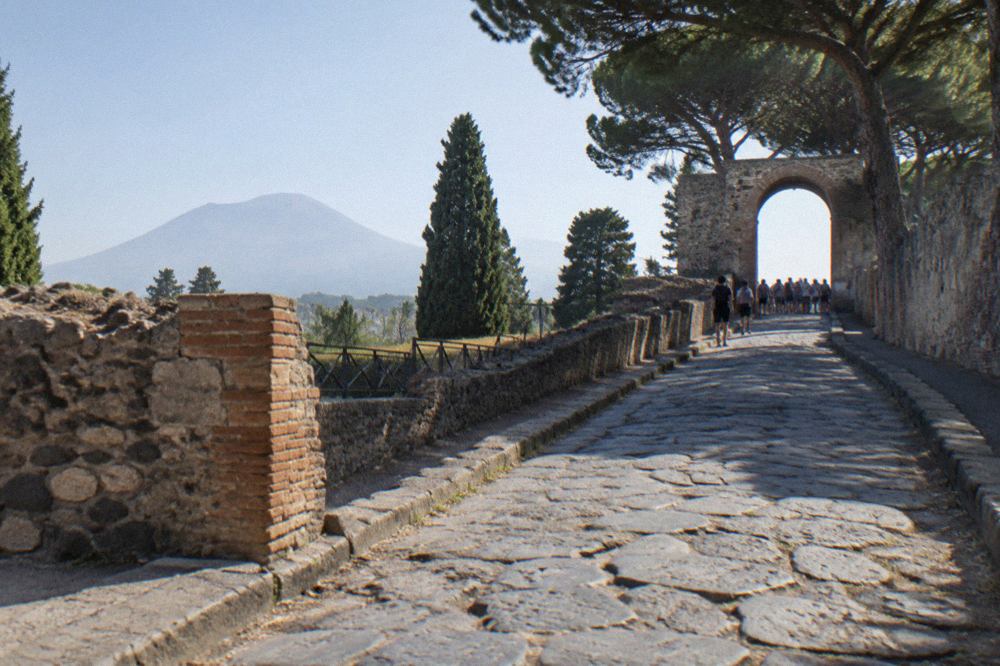
What the park does publish is the entrance list, the ticket structure in force through 2026, and the visitor regulations that determine what you can carry in from the car. Around those fixed points, the practical decision for a driver is simple: which entrance matches your route, and whether the Circumvesuviana train or a shuttle from Naples would cost you less friction than parking on a busy day.
Which Pompeii Entrance Should A Driver Aim For?
The park has three ticketed entrances to the ancient city: Porta Marina, Piazza Esedra and Piazza Anfiteatro, plus the Porta Ercolano / Street of the Tombs entrance used for the suburban villas route. Porta Marina sits closest to the Pompei Scavi-Villa dei Misteri Circumvesuviana station, which is the arrival point train travellers know. Piazza Anfiteatro, at the opposite end of the excavations, is the entrance the Pompeii for All accessibility route uses, and Piazza Esedra serves the middle of the site.
Those entrances matter to a driver because each one opens onto a different side of the modern town, and the flow of coaches and cars concentrates around them on peak days. The record is instructive: the park has counted more than 36,000 visitors on a single free first Sunday, against a daily cap of 20,000 on paid days, introduced with nominative tickets on 15 November 2024. On days anywhere near that volume, the streets around Porta Marina and the Scavi station are the first to jam.
If your itinerary prioritises the amphitheatre end or the accessibility route, aiming for the Piazza Anfiteatro side rather than driving across town to Porta Marina saves a slow crossing of a congested centre. Visitors with mobility difficulties enter at Piazza Anfiteatro and may exit at Piazza Anfiteatro or Piazza Esedra via the Antiquarium lift, per the park's regulations page. If instead you are combining the excavations with the suburban villas, note that holders of the Pompeii Express ticket can add the villas route for EUR 8, card only, at the Porta Ercolano / Street of the Tombs entrance.
| Entrance | What it serves | Practical note |
|---|---|---|
| Porta Marina | Western edge of the ancient city, closest to the Pompei Scavi-Villa dei Misteri station | The classic arrival point for train travellers |
| Piazza Esedra | Central-southern edge of the excavations | Middle option between the two ends |
| Piazza Anfiteatro | Amphitheatre end, eastern side of the site | Start of the Pompeii for All accessibility route |
| Porta Ercolano / Street of the Tombs | Suburban villas route: Villa of the Mysteries and Villa of Diomedes | Express holders add this route for EUR 8, card payment only |
For the fuller picture of what each gate leads to inside the walls, the Pompeii entrances explained guide maps the site end to end, and the dedicated guide to the park's entrances answers the arrival question from a driver's angle. Before committing to a self-drive day, it is worth seeing how the shuttle and guided options compare, because several of them absorb the transport problem completely.
How Far Is The Drive To Pompeii From Naples, Sorrento, Salerno And Rome?
Measured by road routing on OpenStreetMap, the drive to Pompei Scavi covers about 24 km and 22 minutes from Naples, about 26 km and 37 minutes from Sorrento, about 31 km and 30 minutes from Salerno, and about 234 km and roughly 2 hours 40 minutes from Rome. These are driving estimates, not official figures, and summer and weekend traffic on the Bay of Naples can stretch every one of them.
The Naples run is short on paper, which is why so many visitors rent a car in the city and regret it by the afternoon. The route out of Naples crosses one of the most congested urban road networks in southern Italy, and the last kilometres into Pompei funnel through a small town whose streets were not drawn for tour-bus volumes. The Sorrento drive is longer in time than in distance because the coast road between Sorrento and Pompei is slow, winding and scenic in equal measure.
Rome is a different proposition entirely. At 234 km each way, a same-day return means close to five and a half hours behind the wheel before a single step inside the excavations.
| Origin | Road distance to Pompei Scavi | Driving time (estimate) |
|---|---|---|
| Naples | 24 km | about 22 minutes |
| Sorrento | 26 km | about 37 minutes |
| Salerno | 31 km | about 30 minutes |
| Rome | 234 km | about 2 hours 40 minutes |
Distances alone do not settle the car-versus-train question. The scheduled Circumvesuviana times from EAV's own timetable data are the strongest argument against driving from Naples: Napoli Garibaldi to Pompei Scavi-Villa dei Misteri takes 29 to 35 minutes, with a median of 29, which is competitive with the drive even before parking enters the equation. The Circumvesuviana train guide covers the line in detail.
Is A Shuttle Or The Train Easier Than Parking At Pompeii?
For a day trip from Naples, the Circumvesuviana to Pompei Scavi-Villa dei Misteri, scheduled at 29 to 35 minutes from Napoli Garibaldi, is the simplest option, while a round-trip shuttle bus from central Naples removes both the driving and the parking question entirely. From Sorrento, the Circumvesuviana covers Pompei Scavi in 34 to 40 minutes. The Campania Express train is suspended since 1 October 2026 and must not be booked.
The suspension matters because plenty of older articles still recommend the Campania Express as the comfortable alternative to the crowded Circumvesuviana. EAV, the operator, suspended the service from 1 October 2026 until further notice, with refunds available through the EAV complaints form or the original seller. Until it returns, the Circumvesuviana and the road options are what exist; the Campania Express guide tracks the suspension status.
For travellers who would rather not drive or navigate the train, the round-trip shuttle from Naples is the middle path. The shuttle is this site's featured option for this page because it answers the exact problem a parking guide exists to solve: no car, no car park, no entrance-side circulation. The live listing carries the current fare and departure details.
The train deserves one honest caveat. The Circumvesuviana is a commuter line, crowded at peak hours, and the Pompei Scavi-Villa dei Misteri station sits a short walk from the Porta Marina entrance. Scheduled times that are verified, from EAV's own timetable data with a feed dated 30 September 2026, are set out below.
| Journey | Scheduled time (EAV timetable data) |
|---|---|
| Napoli Garibaldi to Pompei Scavi-Villa dei Misteri | 29 to 35 minutes |
| Napoli Garibaldi to Sorrento | 64 to 75 minutes |
| Pompei Scavi-Villa dei Misteri to Sorrento | 34 to 40 minutes |
A guided day that bundles transport changes the arithmetic again. The express guided tour by train from Sorrento pairs the Circumvesuviana ride with a guide on arrival, which suits visitors based on the Sorrento peninsula who want the train handled for them; the Sorrento to Pompeii guide compares every option from that side of the bay.
What Ticket Do You Need Once The Car Is Parked?
In force through 31 December 2026, the Pompeii Express ticket costs EUR 20 for the ancient city alone, Pompeii+ costs EUR 25 and adds the suburban villas and Boscoreale, and the 3-day ticket costs EUR 30 and adds Oplontis, the Stabiae sites and Boscoreale. From 1 January 2027 the structure changes: one EUR 25 ticket covers all park sites, valid 30 days, one entry per site.
The change was announced by the park on 14 September 2026 and is confirmed on the park's own pages: the smaller sites, Oplontis, the Stabiae museum and Boscoreale, stay EUR 8 individually, and the MyPompeii annual card stays EUR 45, with EUR 10 reduced. Nominative tickets and the 20,000 visitors-per-day cap are both retained. A driver who reads an older article quoting Express at EUR 20 as an evergreen price is reading a figure with an expiry date.
Concessions are stable across the change. Entry is free for everyone under 18, and for everyone on the first Sunday of the month. EU citizens aged 18 to under 25 pay a reduced EUR 2, as do non-EU holders of an Italian residence permit. ID may be checked at every entry, and tickets are non-transferable and non-refundable except in extraordinary closure, per the park's regulations for visitors.
| Ticket | 2026 price | Covers | Notes |
|---|---|---|---|
| Pompeii Express | EUR 20 | Ancient city only | Villas route can be added for EUR 8 at Porta Ercolano, card only |
| Pompeii+ | EUR 25 | City, suburban villas, Villa Regina, Antiquarium Boscoreale, shuttle | |
| 3-day ticket | EUR 30 | Pompeii+ plus Oplontis, Stabiae villas and museum, Boscoreale | |
| Other sites individually | EUR 8 | Boscoreale, Oplontis, Stabiae museum | Stays EUR 8 in 2027 |
| MyPompeii Card | EUR 45 | Annual | EUR 10 reduced |
From 1 January 2027 the first three rows collapse into a single EUR 25 ticket. The full ticket landscape, including the free partner sites whose tickets are valid 30 days from issue, is covered in the Pompeii tickets guide, and the free-entry rules are laid out in the first Sunday and free entry days guide. Drivers should also note the daily time-slot split on the current page: from 9:00 to 13:00 the cap is 15,000 visitors, and from 13:00 to 17:30 it is 5,000, which is one reason a late arrival by car can meet a sold-out window.
What Should Drivers Know About Bags, Left Luggage And Access Rules?
The park permits bags no larger than 30 x 30 x 15 cm and sends anything bigger to left luggage, per the official regulations for visitors, which is the rule that most often surprises drivers carrying a full day's gear in the boot. Drones need authorisation, bare chests are not allowed, and the Pompeii for All route gives visitors with mobility difficulties entry at Piazza Anfiteatro with exit options at Piazza Anfiteatro or Piazza Esedra via the Antiquarium lift.
The bag rule deserves emphasis for car travellers precisely because a car makes it easy to overpack. A day pack sized for the boot is often over the 30 x 30 x 15 cm limit at the gate, and the queue at left luggage is the last thing a tight itinerary needs. The Artebus shuttle has luggage storage, which matters for travellers using it with suitcases in tow.
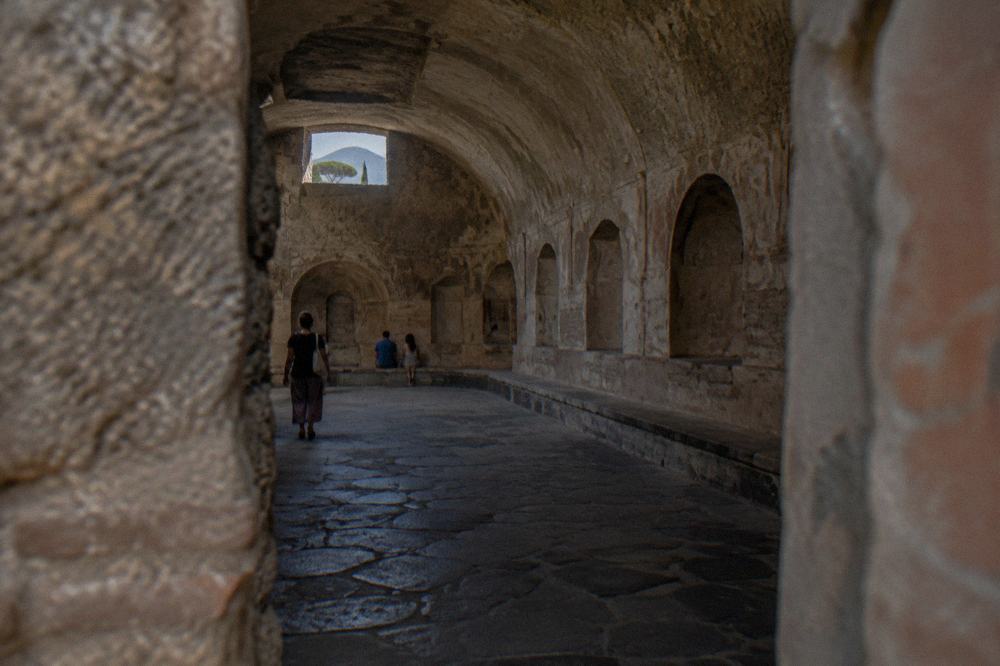
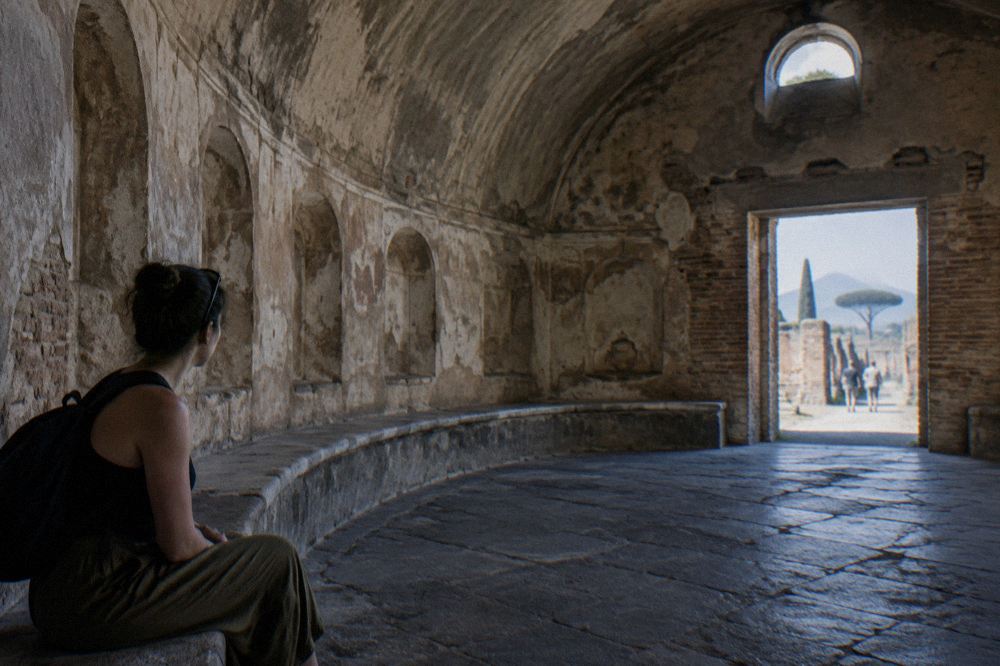
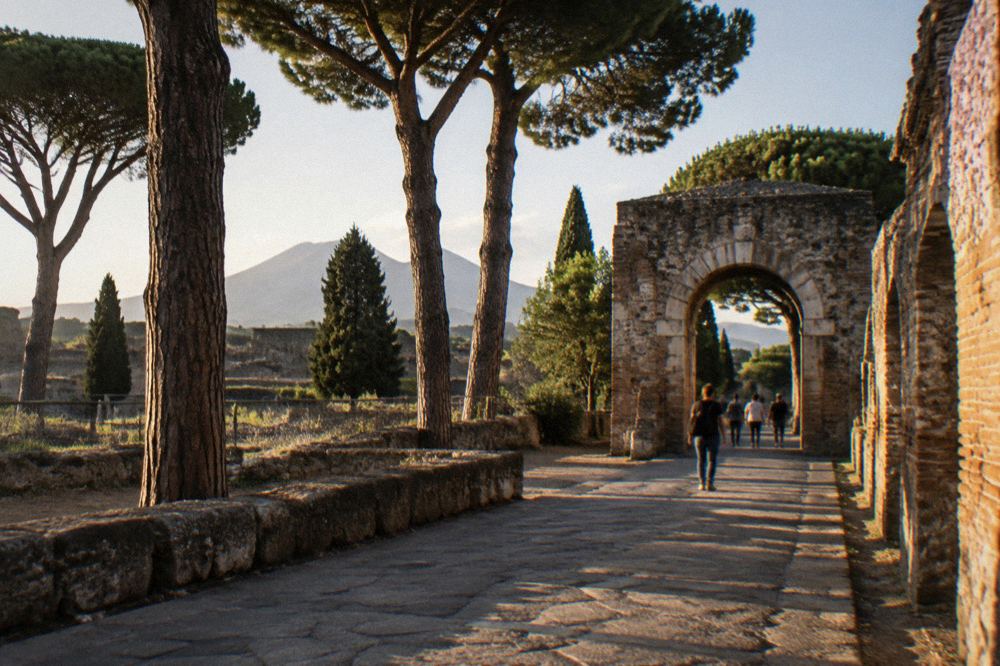
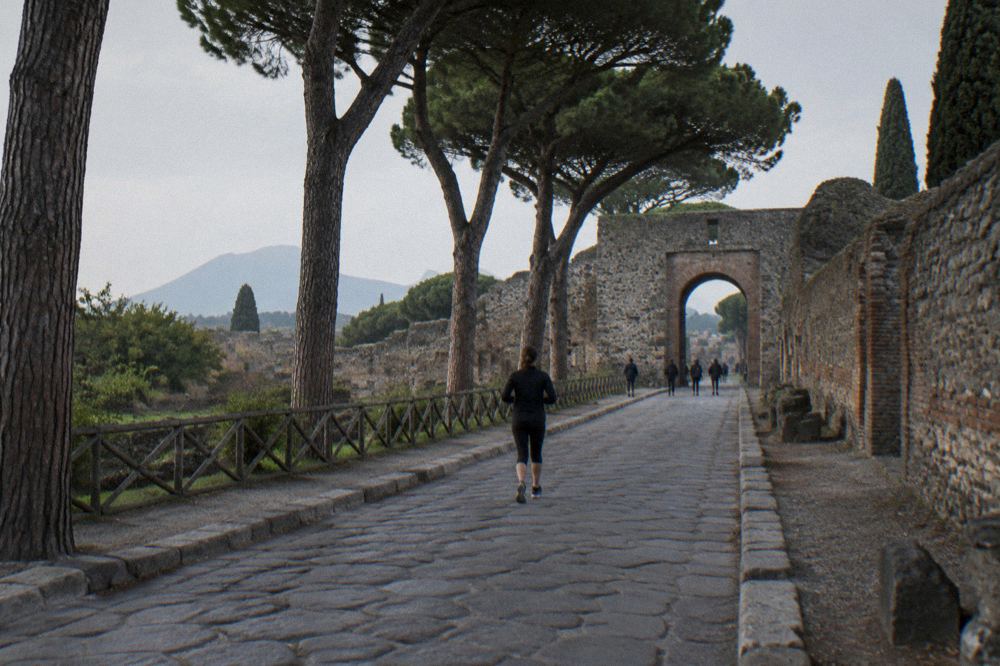
Inside the walls, the surface itself is part of the planning. The streets are ancient stone, uneven underfoot, with deep cart ruts crossing the paving, and there is little shade on the main decumanus. Footwear advice and the practicalities of moving around the site are covered in the how difficult is it to walk in Pompeii guide; the short version is that wheels, from wheelie bags to strollers with small wheels, fare badly on Roman paving.
Two dated closures affect route planning inside the park. The Praedia of Julia Felix has been closed to the public since 7 September 2026 for maintenance, until further notice. At Herculaneum, which some drivers pair with Pompeii on the same day, the Villa dei Papiri and the Ancient Theatre are closed for works. Neither closure is likely to ruin a visit, but both are worth knowing before you plan a route around them.
When Is The Car Park Pressure Worst At Pompeii?
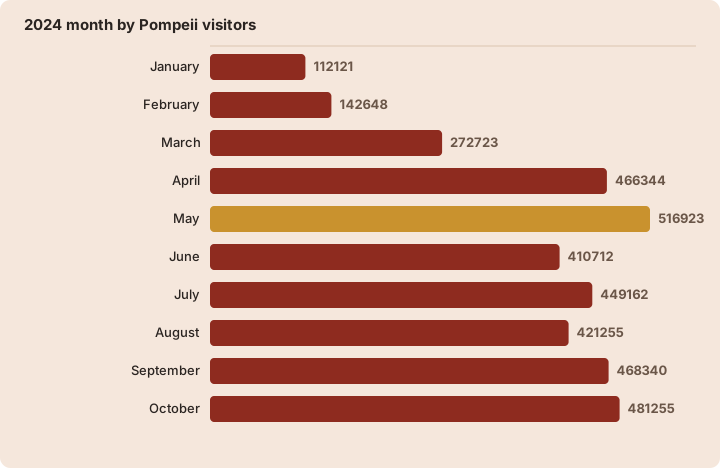
The park's own monthly figures show the pressure peaks in October and May: October 2024 counted 481,255 visitors and May 2024 counted 516,923, against 112,121 in January of the same year. On top of the seasonal curve, every first Sunday of the month is free for everyone, and the park has recorded more than 36,000 visitors on one such day, against the 20,000 daily cap on paid days.
The seasonal shape matters for a driver more than for a train traveller, because parking supply is the least elastic part of the arrival chain. A January weekday is a different world from an October weekend, and the free first Sundays concentrate demand in a way no paid day can, since the 20,000 cap applies to the paid regime. Arriving early, or arriving after 13:00 when the time-slot cap drops to 5,000, are the two levers a driver can still pull.
| 2024 month | Pompeii visitors |
|---|---|
| January | 112,121 |
| February | 142,648 |
| March | 272,723 |
| April | 466,344 |
| May | 516,923 |
| June | 410,712 |
| July | 449,162 |
| August | 421,255 |
| September | 468,340 |
| October | 481,255 |
| November | 189,866 |
| December | 138,028 |
Weather shapes the experience as much as crowds. Open-Meteo's 1991-2020 normals for the Pompei grid point show August with the highest mean daily maximum at about 29.4 C and July the driest month at about 16 mm of rain, while November is the wettest at about 180 mm. The weather and best time to visit guide unpacks the seasons, and the summer heat plan is worth reading before any July or August drive.
Can You Pair Pompeii With Vesuvius Or Herculaneum On One Driving Day?
Yes, and the geography favours the driver here: Vesuvius and Herculaneum both sit within a short arc of Pompei, and multi-site days are a common pattern, but each site has its own ticket regime and its own rules. Vesuvius Gran Cono tickets are sold online only, at EUR 11.68 full and EUR 9.55 reduced as sold, in timed slots of 50 tickets every 10 minutes, bookable 30 days ahead. Herculaneum is a separate EUR 16 ticket, free on first Sundays.
The Vesuvius ticket deserves a driver's attention because it cannot be bought at a ticket office in the ordinary way: the park sells the Gran Cono online only, and the last-minute tickets released 30 minutes before each slot have been nominative since 11 April 2026. The trail closes automatically on an orange weather alert or above, with automatic refund if weather shuts the path. Access hours shift by month, from 9 to 15 in January, February, November and December to 9 to 18 in July and August, and the excursion runs 2 hours return on the shortest route. Full detail is in the Mount Vesuvius tickets guide.
| Site | Ticket | Key rule |
|---|---|---|
| Pompeii Express (2026) | EUR 20 | Ancient city only; villas add-on EUR 8 at Porta Ercolano |
| Herculaneum | EUR 16, reduced EUR 2 for 18-25 | Free on first Sundays and on 25 Apr, 2 Jun, 4 Nov, collected on the day |
| Vesuvius Gran Cono | EUR 11.68 full / EUR 9.55 reduced as sold | Online only, timed slots, nominative last-minute tickets since 11 April 2026 |
| Oplontis, Stabiae museum, Boscoreale | EUR 8 each | Oplontis, Stabiae villas and museum closed on Tuesdays |
Herculaneum's own hours run 8:30 to 19:30 from 16 March to 14 October, with last entry at 18:00, and 8:30 to 17:00 in winter with last entry at 15:30. It is closed on 1 January and 25 December, and free on the first Sunday of the month alongside 25 April, 2 June and 4 November, with no reservation: tickets are collected at the office on the day. Whether to attempt both major sites in one day is a genuine question, and the Pompeii versus Herculaneum guide and the one-day two-site itinerary answer it from both sides.
Guided combinations absorb the logistics of the two-site or three-site day. A deluxe group tour pairing the Amalfi Coast with Pompeii from Naples suits a traveller who wants the coast road driven for them; a full three-site day trip covering Pompeii, Herculaneum and Vesuvius from Naples exists for the ambitious. Both render their own prices and ratings below.
A second option for the same ambition, with all three headline sites in one organised day, follows.
What About Coaches, Campers And Cruise-Day Arrivals?
Coach and cruise-day arrivals concentrate on the same entrance streets as private cars, and the shore excursion pattern from Naples is built around exactly this congestion; campers and oversize vehicles face the additional constraint that no official page publishes dedicated camper parking for the site. Cruise passengers docking at Naples typically face a 24 km road transfer, about 22 minutes in free-flowing traffic, and organised shore excursions bundle the transfer with entry and a guide.
The cruise-day arithmetic is unforgiving: a ship arriving at Naples puts thousands of passengers onto the same road within the same morning window. The Pompeii cruise ship day guide plans that scenario hour by hour, and the Naples to Pompeii guide covers every onward option from the port and the station. For those driving in from the Amalfi Coast side instead, the Amalfi Coast to Pompeii guide treats the 31 km Salerno-side approach and the coast road's own rhythms.
Camper drivers should plan on the same basis as car drivers, with one extra caution: the 30 x 30 x 15 cm bag rule applies at the gate regardless of how much storage the vehicle has, and left luggage is the park's only answer for oversize bags. No camper-specific facility near Pompei has been verified on an official page, so this guide names none. The practical pattern that works is to treat the vehicle as a base outside the site, carry the small day bag, and build the visit around one of the three named entrances.
For anyone weighing whether the site justifies the effort at all, the is Pompeii worth visiting guide makes the case with the numbers, and the guided tour versus self-guided guide answers the question that usually follows. This page, Pompeii Travel Guide, exists to keep every one of those answers tied to figures the official pages actually publish.
What Opening Hours Shape A Driving Day At Pompeii?
From 16 March to 14 October the park opens at 9:00, takes its last entrance at 17:30 and closes at 19:00; from 15 October to 15 March it opens at 9:00, takes its last entrance at 15:30 and closes at 17:00. Pompeii itself has no weekly closing day, and the site closes only on 25 December and 1 January unless otherwise communicated.
The winter switch on 15 October is the detail that catches out autumn drivers. A mid-October arrival can still count on a 17:30 last entrance; a week later, the same visit must be through the gate by 15:30. Since the driving times from Naples, Sorrento and Salerno are short, the constraint is rarely the drive itself, but a late start compounded by entrance-side circulation can turn a planned afternoon visit into a missed one.
The sites around the main city have their own calendars. Oplontis, the Stabiae villas and the Stabiae museum are closed on Tuesdays, a detail that matters for 3-day ticket holders building a multi-site driving loop. Herculaneum, by contrast, is open daily. Ticket offices sit at Porta Marina, Piazza Esedra and Piazza Anfiteatro, with online sales through the vivaticket platform linked from the park's page.
| Site | Open | Last entrance | Closed |
|---|---|---|---|
| Pompeii, 16 Mar to 14 Oct | 9:00 | 17:30 | 25 Dec, 1 Jan |
| Pompeii, 15 Oct to 15 Mar | 9:00 | 15:30 | 25 Dec, 1 Jan |
| Herculaneum, 16 Mar to 14 Oct | 8:30 | 18:00 | 1 Jan, 25 Dec |
| Herculaneum, 15 Oct to 15 Mar | 8:30 | 15:30 | 1 Jan, 25 Dec |
| Oplontis, Stabiae villas and museum | varies by season | varies | Tuesdays |
Before the final decision, the three options that best replace the driving day entirely are worth one last side-by-side: the round-trip shuttle from Naples, the express train-and-guide day from Sorrento, and the Amalfi-and-Pompeii deluxe group day from Naples.
Common Questions About Pompeii Parking
Is there parking at Pompeii?
No official park page publishes a named car park, address or price for parking at the archaeological park of Pompeii in Italy, so this site lists none. Private car parks operate around the modern town of Pompei near the three entrances, Porta Marina, Piazza Esedra and Piazza Anfiteatro, but check prices on arrival rather than trusting figures quoted elsewhere.
Which entrance is best when arriving by car at Pompeii?
Porta Marina is the classic entrance, closest to the Pompei Scavi-Villa dei Misteri station. Piazza Anfiteatro serves the amphitheatre end and the Pompeii for All accessibility route, and Piazza Esedra sits between them. Choose the entrance that matches the end of the site you most want to see, to avoid crossing the congested town centre.
Is it better to drive or take the train to Pompeii from Naples?
The drive is about 24 km, roughly 22 minutes in free-flowing traffic, while the Circumvesuviana covers Napoli Garibaldi to Pompei Scavi-Villa dei Misteri in a scheduled 29 to 35 minutes. The train removes the parking question entirely. The Campania Express has been suspended since 1 October 2026, so the Circumvesuviana is the rail option.
Can you park at Pompeii with a camper or a coach?
Coaches use the entrance areas alongside private cars, and no dedicated camper facility at Pompei is verified on an official page. The park's 30 x 30 x 15 cm bag limit applies at every entrance, with larger bags sent to left luggage, so plan to carry only a small day bag from any vehicle.
When is parking at Pompeii most difficult?
Peak months are May and October, with 516,923 visitors in May 2024 and 481,255 in October 2024, against 112,121 in January that year. Every first Sunday of the month is free for everyone, and the park has recorded more than 36,000 visitors on one such day. Arrive early or after 13:00, when the daily time-slot cap drops to 5,000.
Do I still need a ticket if I arrive by car?
Yes. In force through 31 December 2026, the Pompeii Express ticket costs EUR 20, Pompeii+ EUR 25 and the 3-day ticket EUR 30; from 1 January 2027 a single EUR 25 ticket covers all park sites. Entry is free for under 18s and for everyone on the first Sunday of the month, and EU citizens aged 18 to under 25 pay EUR 2.
The car gets you to Pompei; the plan gets you inside the walls with time to spare. Anchor the day to one of the three named entrances, keep the bag under 30 x 30 x 15 cm, book around the 13:00 time-slot split, and treat the shuttle and train times above as the benchmark any parking queue has to beat.