Tips For Visiting Pompeii
Pompeii, the ancient Roman city buried by the eruption of Mount Vesuvius in AD 79, sits in Campania, southern Italy, beside the modern town of Pompei and about 24 km by road from Naples. These are the planning details that decide whether the day goes well.

Short answer
Buy a timed ticket in advance, arrive at opening or after 13:00 to miss the peak, and budget at least two hours on the ground. In 2026 the Pompeii Express ticket costs EUR 20 and Pompeii+ EUR 25, with a single EUR 25 ticket replacing both from 1 January 2027. Wear closed shoes: the streets are original Roman stone.
Pompeii is the ancient Roman city buried by the eruption of Mount Vesuvius in AD 79, now the Parco Archeologico di Pompei in Campania, southern Italy, beside the modern town of Pompei and about 24 km by road south-east of Naples. It drew 4,069,377 visitors in 2024 and 4,000,090 in 2025, which is the single fact behind nearly every tip on this page: the site is enormous, the crowds are real, and the difference between a good day and a frustrating one usually comes down to a handful of decisions made before arrival. The excavated area covers 44 ha within a 98 ha inscribed UNESCO property, so no visitor sees everything, and nobody should try.
What Are The Best Tips For Visiting Pompeii?
The tips that matter in order: buy a timed entry ticket before you travel, arrive for the 09:00 opening or come after 13:00, carry water and sun protection, wear closed shoes with real soles, keep your bag under 30x30x15 cm, and decide in advance whether a guide is worth it to you. Everything else on this page is detail that follows from those six decisions. The park caps entries at 20,000 visitors per day, a limit in force since 15 November 2024, and tickets are nominative, meaning they carry a name and identity may be checked at the gate. That cap is the reason advance booking has stopped being optional advice and become basic planning.
Start with the shape of the day. The park opens at 09:00 year-round, but the last entrance swings between 15:30 in winter and 17:30 in summer, and the two visiting bands are managed differently: from 16 March to 14 October the 09:00-13:00 band is capped at 15,000 entries and the 13:00-17:30 band at 5,000. The afternoon band is smaller on paper and calmer in practice, at the cost of less time inside. If your priority is photography or simply room to walk, the trade is worth considering.
Next comes what you carry. The visitor regulations set a maximum bag size of 30x30x15 cm; anything larger goes to left luggage. Drones need written authorisation, and bare chests are not permitted. None of these rules is exotic, but they are enforced at entrances where a queue already exists, so packing to the rule saves a return trip to a locker. For the broader question of whether the park justifies the effort at all, the site's own assessment is on the is Pompeii worth visiting page.
How Much Time Do You Need And When Should You Arrive?
Two hours covers a highlights route at a fast pace, four hours allows the forum, the baths, a grand domus and the amphitheatre without hurrying, and a full day is only worthwhile if you add the suburban villas or a second site. Arrival timing matters more than duration: the 09:00-13:00 band absorbs up to 15,000 entries, while the 13:00-17:30 band takes 5,000, so early and late are the two calm windows. The monthly figures for 2024 show the pattern across the year: May peaked at 516,923 visitors, October drew 481,255 and February just 142,648, so shoulder months buy you the same streets with far fewer people on them.
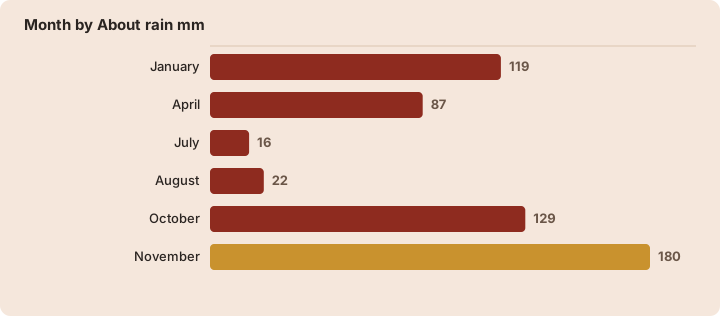
Season shapes the day twice over, once through crowds and once through weather. Open-Meteo's 1991-2020 normals for the Pompei grid point put August's average daily maximum at about 29.4 C and July's rainfall at about 16 mm, so a summer visit is a heat-management exercise: shade inside the park is scarce, and the water question is real. November, by contrast, averages about 180 mm of rain, the wettest month in the table. The full breakdown is on the Pompeii weather and best time to visit guide.
| Period | Opens | Last entrance | Closes |
|---|---|---|---|
| 16 March to 14 October | 09:00 | 17:30 | 19:00 |
| 15 October to 15 March | 09:00 | 15:30 | 17:00 |
Pompeii itself has no weekly closing day; the Tuesday closures on the official timetables page apply only to Oplontis, the Stabiae villas and the Stabiae museum. The park closes on 25 December and 1 January unless the park announces otherwise. Time your arrival against the last-entrance clock, not the closing time, because the last entrance is when your ticket stops working.
Three of the practical options for filling a first visit well:
Each of those solves a different planning problem, and the trio above shows the live price and rating for every one of them. If you would rather build the day yourself, read on: the sections below cover tickets, entrances and transport in the order you will actually face them.
Which Pompeii Ticket Should You Buy In 2026?
In 2026 the Pompeii Express ticket for the ancient city alone costs EUR 20, Pompeii+ costs EUR 25 and adds the suburban villas and shuttle, and the 3-day ticket costs EUR 30 and adds Oplontis, the Stabiae villas and Boscoreale. From 1 January 2027 all of that is replaced by a single EUR 25 ticket, valid 30 days, one entry per site, with the three smaller sites staying EUR 8 each. The MyPompeii annual card stays at EUR 45. Anyone weighing a 2027 trip against a 2026 one should know the cheaper Express tier disappears at the end of the year.
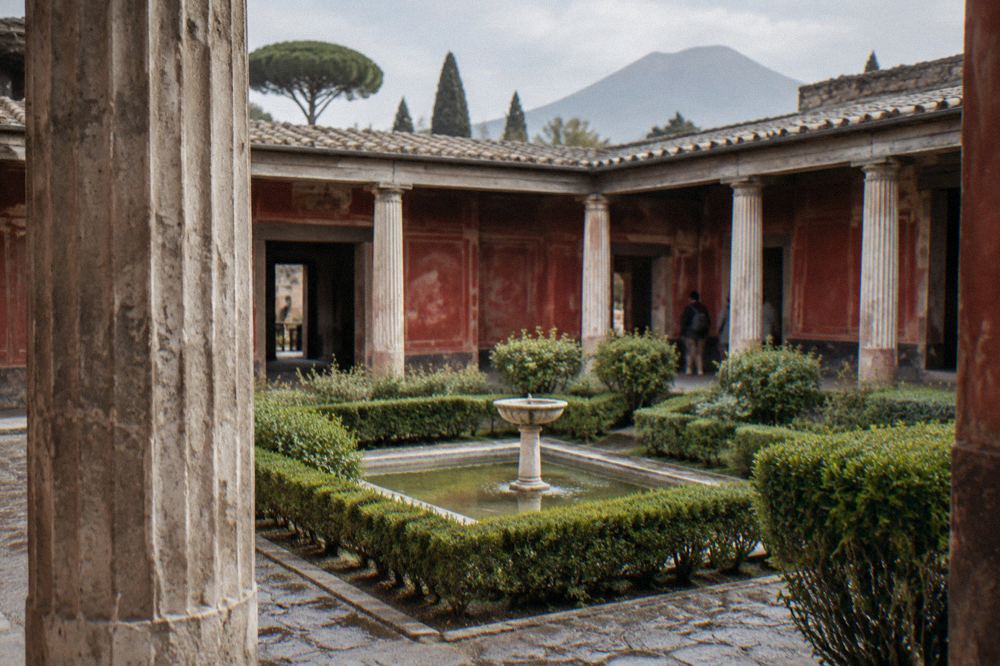
Discounts are fixed and simple. Entry is free for everyone under 18 and for all visitors on the first Sunday of the month, a scheme that produced a record of more than 36,000 visitors on a single free Sunday in the 2024 reporting. EU citizens aged 18 to under 25 pay a reduced EUR 2. Express holders who later decide they want the suburban villas can add that route for EUR 8, card payment only, at the Porta Ercolano / Street of the Tombs entrance. The fine print on nominative tickets, refunds and transfers is covered on the Pompeii tickets page.
| Ticket (2026 prices) | Price | Covers |
|---|---|---|
| Pompeii Express | EUR 20 | Ancient city only |
| Pompeii+ | EUR 25 | City, suburban villas, Villa Regina, Boscoreale Antiquarium, shuttle |
| 3-day ticket | EUR 30 | Pompeii+ plus Oplontis, Stabiae villas and museum, Boscoreale |
| Oplontis / Stabiae museum / Boscoreale individually | EUR 8 each | Single site |
| MyPompeii Card (annual) | EUR 45 | Annual pass, EUR 10 reduced |
| From 1 January 2027 | EUR 25 | Single ticket, all park sites, 30 days, one entry per site |
Tickets are valid 30 days from issue for the free partner sites at Buccino, Lettere, Poggiomarino and Terzigno, a detail worth knowing if your trip stretches across a month boundary. Tickets are non-transferable and non-refundable except in cases of extraordinary closure, and identity may be checked at every entry point, so the name on the ticket needs to be the name on your passport.
Which Entrance Should You Use At Pompeii?
Pompeii has three ticket offices, Porta Marina, Piazza Esedra and Piazza Anfiteatro, plus the Porta Ercolano / Street of the Tombs entrance used for the suburban villas route. Porta Marina is the entrance beside the Pompei Scavi-Villa dei Misteri Circumvesuviana station and therefore the one arriving trains feed; Piazza Anfiteatro sits at the opposite end of the site, near the amphitheatre and the "Pompeii for All" accessible route. Choosing between them is really a choice about which end of the city you want to walk first.
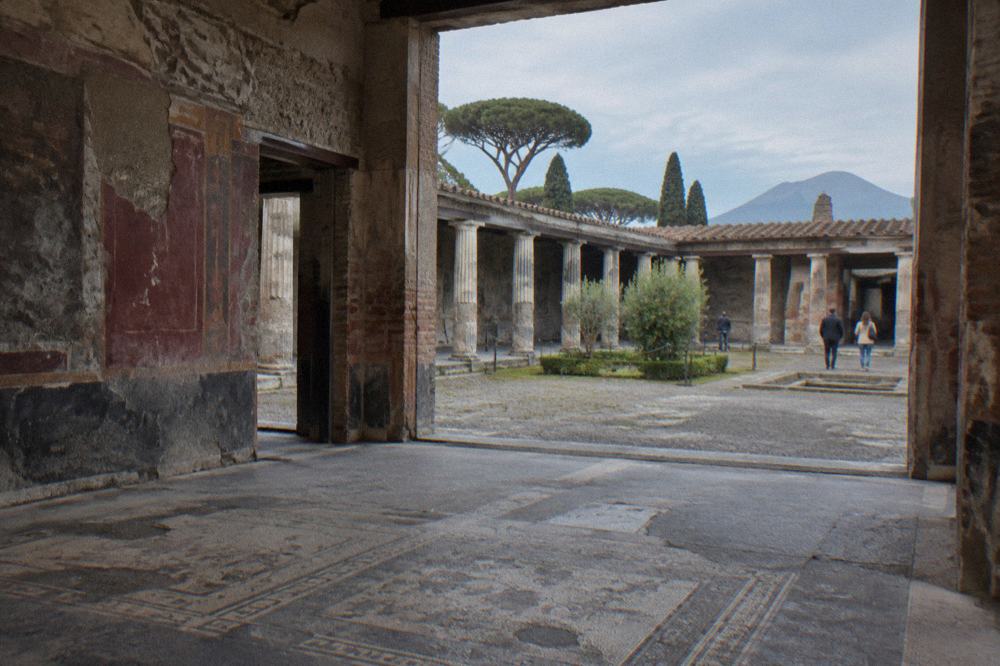
Porta Marina is closest to the Vesuvius-facing suburban villas and the Villa of the Mysteries, so travellers combining the city with the villas route should start there or use Porta Ercolano for the EUR 8 villas add-on. Piazza Esedra connects to the Antiquarium lift, part of the accessible route that lets visitors with mobility difficulties enter at Piazza Anfiteatro and exit at either Piazza Anfiteatro or Piazza Esedra. The route exists on paper at the regulations page and is worth confirming at the gate on the day.
| Entrance | Where it is | Best for |
|---|---|---|
| Porta Marina | Beside Pompei Scavi-Villa dei Misteri station | Rail arrivals, suburban villas side |
| Piazza Esedra | Central-south edge, Antiquarium lift | Accessible route exits, quiet start |
| Piazza Anfiteatro | East end, by the amphitheatre | Accessible route entry, coach groups |
| Porta Ercolano / Street of the Tombs | North-west edge | Suburban villas add-on (EUR 8, card only) |
The entrance decision also decides your exit walk back to the station, a point that catches out visitors who enter at Piazza Anfiteatro, walk the full length of the city, and then find themselves at the far end from their train at closing time. Plan a loop, not a line.
A skip-the-line small-group tour with an archaeologist removes both the ticket-office queue and the route-planning problem in one move, which is why this site features it for first visits. Whether that trade suits you is covered further down.
How Hard Is The Walking And What Should You Wear?
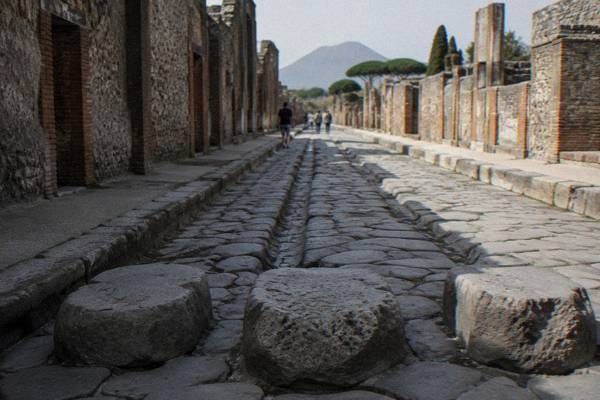
Expect hard, uneven surfaces for the whole visit: Pompeii's streets are the original Roman paving, with deep cart ruts, raised stepping stones and long stretches with no shade, so closed shoes with thick soles are the single most useful thing you can pack. There is no dress code beyond the no-bare-chests rule, but the ground, not fashion, decides your footwear. Nothing about the terrain requires fitness beyond ordinary walking, but distance does: a highlights route alone covers several kilometres of stone.
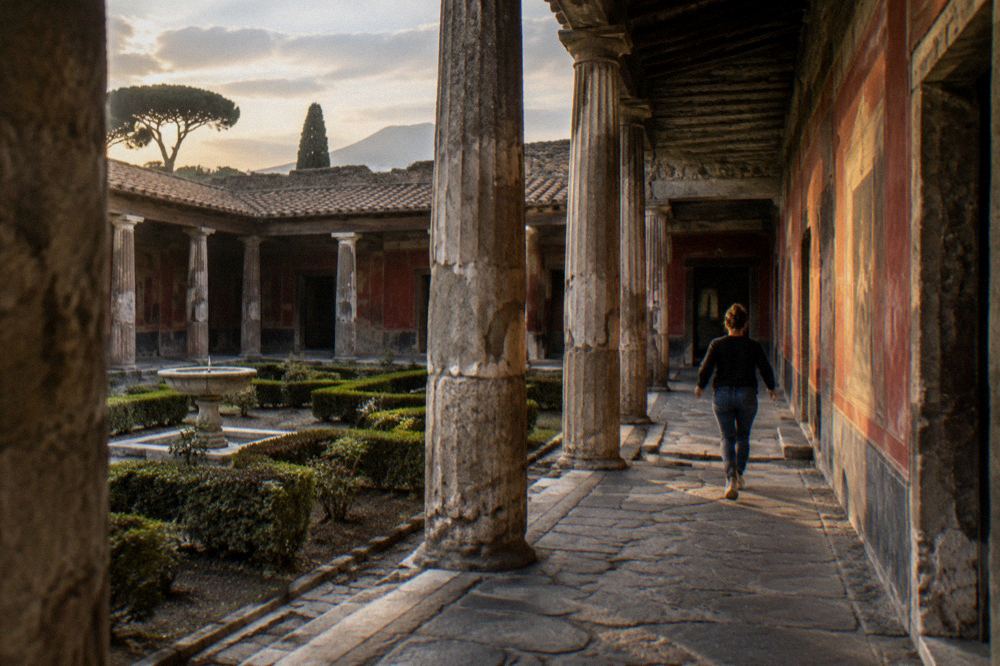
The summer numbers explain the rest of the packing list. With average daily maxima around 28.7 C in July and 29.4 C in August at the Pompei grid point, and very little rain in those months, water, a hat and sunscreen are not optional extras. In November and December, when monthly rainfall averages about 180 mm and 147 mm respectively, the priorities flip to waterproofs and grip. Toilets exist at the site but are spread out, and there is more on practicalities like where to eat in the where to eat in Pompeii guide.
| Month | About Tmax C | About Tmin C | About rain mm |
|---|---|---|---|
| January | 12.2 | 6.6 | 119 |
| April | 17.7 | 10.4 | 87 |
| July | 28.7 | 21.1 | 16 |
| August | 29.4 | 21.8 | 22 |
| October | 21.3 | 15.1 | 129 |
| November | 16.9 | 11.5 | 180 |
Bag rules repeat here because they intersect with walking: the 30x30x15 cm limit means a daypack sized for a city stroll may be refused, and carrying less is easier on stone anyway. The figures above are 1991-2020 climate normals computed from a reanalysis grid, not a weather station, so treat them as planning averages rather than forecasts.
How Do You Get To Pompeii?
By train the direct option is the Circumvesuviana line from Napoli Garibaldi to Pompei Scavi-Villa dei Misteri, with scheduled times of 29 to 35 minutes each way, and the same station is 34 to 40 minutes from Sorrento; the Campania Express, the premium alternative, has been suspended since 1 October 2026 until further notice. By road, driving distances are about 24 km from Naples, 26 km from Sorrento and 31 km from Salerno. Rail is the mode the whole region is built around for this trip.
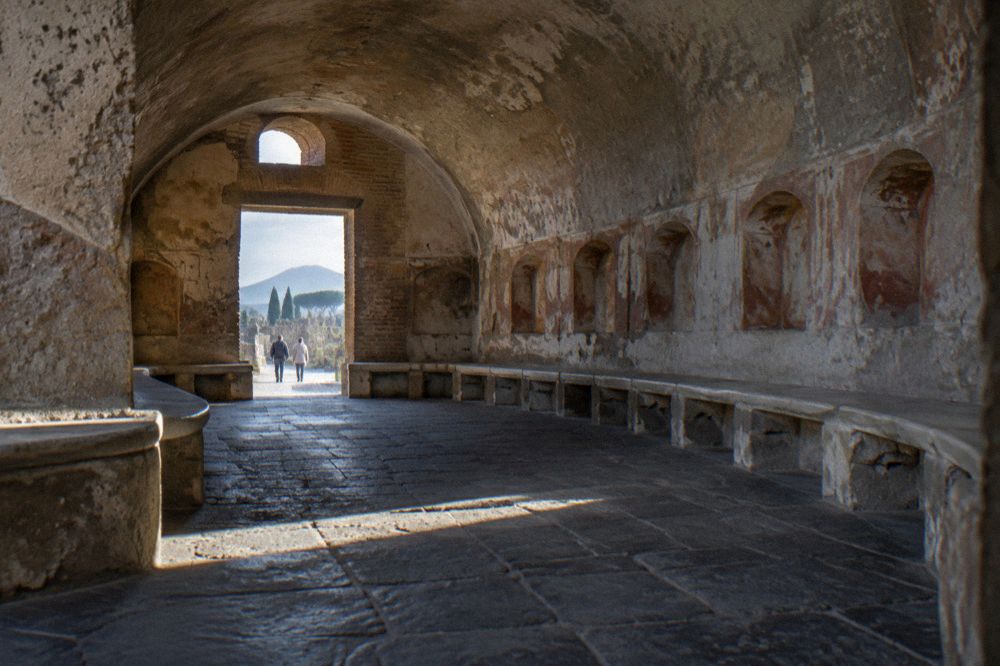
The station named Pompei Scavi-Villa dei Misteri is the one beside the Porta Marina entrance, and it is stop 6049 on the line. Fares and exact frequencies are published on the operator's timetable, so check those before travel rather than relying on secondhand figures. The practical detail that matters for the day is simpler: the station deposits you at the Porta Marina side, which closes the loop back to the entrance question above.
| Route (scheduled) | Time |
|---|---|
| Napoli Garibaldi to Pompei Scavi-Villa dei Misteri (train) | 29 to 35 minutes |
| Pompei Scavi to Sorrento (train) | 34 to 40 minutes |
| Napoli Garibaldi to Sorrento (train) | 64 to 75 minutes |
| Naples to Pompei Scavi (road, driving) | about 24 km |
| Sorrento to Pompei Scavi (road, driving) | about 26 km |
| Salerno to Pompei Scavi (road, driving) | about 31 km |
Arriving from further afield changes the shape of the day. From Rome the standard pattern is a high-speed train to Naples and then the local line out, and the planning for that is laid out in the Rome to Pompeii day trip guide and the Rome to Pompeii by train guide. Closer bases are covered in the Naples to Pompeii and Sorrento to Pompeii pages, and the Amalfi Coast version in Amalfi Coast to Pompeii.
Should You Take A Guided Tour Or Explore Alone?
A guided tour earns its cost on a first visit because Pompeii is unlabelled: the stones do not explain themselves, and a two-hour archaeologist-led small group delivers the forum, the baths and a major domus with context you cannot improvise from a map. Exploring alone works well on a second visit, on a slow day, or for travellers who prioritise photography over narrative. The site's comparison of the two styles, with the trade-offs set out, is in the guided tour versus self-guided guide.
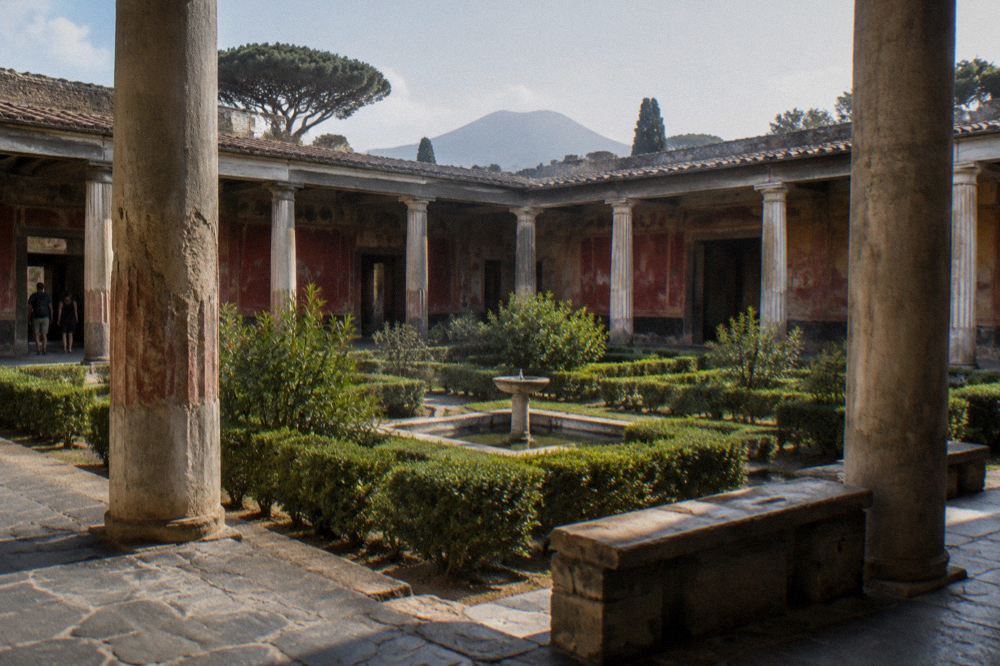
The featured option on this page is a skip-the-line small-group tour led by an archaeologist, an appropriate choice for a first visit because it bundles the queue problem and the interpretation problem into a single booking: Check availability. Its price, rating and review count render on its own page, and the tour page also states what is and is not included.
For travellers who want a tour without a guide at all, an entry ticket with an audio guide is the budget-format alternative, and the tile above shows its live figures. The choice between a human archaeologist and a recorded commentary usually comes down to how many questions you like to ask.
What Is Open And What Is Closed At The Park?
Three closures matter for 2026 planning: the Praedia of Julia Felix has been closed since 7 September 2026 for maintenance with no reopening date, Herculaneum's Villa dei Papiri and Ancient Theatre are closed for works, and the Campania Express train has been suspended since 1 October 2026. Everything else on the standard route, the forum, the amphitheatre, the baths and the major houses, remains in the ordinary visiting rotation. Check the park's announcements page in the week before you travel, because closures are posted there first.
| Item | Status |
|---|---|
| Praedia of Julia Felix | Closed since 7 September 2026, no reopening date |
| Herculaneum Villa dei Papiri | Closed for works |
| Herculaneum Ancient Theatre | Closed until further notice |
| Campania Express train | Suspended since 1 October 2026 until further notice |
| Polverificio access from via P. Vitiello, Scafati | Temporarily closed 1 to 10 October 2026 |
| Pompeii main entrances | Open per seasonal hours |
One further note on dates: the eruption that destroyed the city is traditionally dated to 24 August AD 79 from the oldest manuscripts of Pliny the Younger, but the park's own e-journal states that the competing 24 October date has no evidentiary basis, while adding that 24 August is not guaranteed either. Treat the question as open, as the park does; the background is in the when did Vesuvius erupt guide.
What Should You Combine With Pompeii On The Same Trip?
The strongest pairings are Herculaneum, a smaller and better-preserved site whose contrast with Pompeii rewards the second half of a day, and Mount Vesuvius, whose crater trail ticket is sold online only in timed slots. Ambitious itineraries add the Vesuvius wine country or the Amalfi Coast, though coast-plus-Pompeii in one day is tight and only works with an organised tour. The site-by-site comparison is in the Pompeii versus Herculaneum guide.
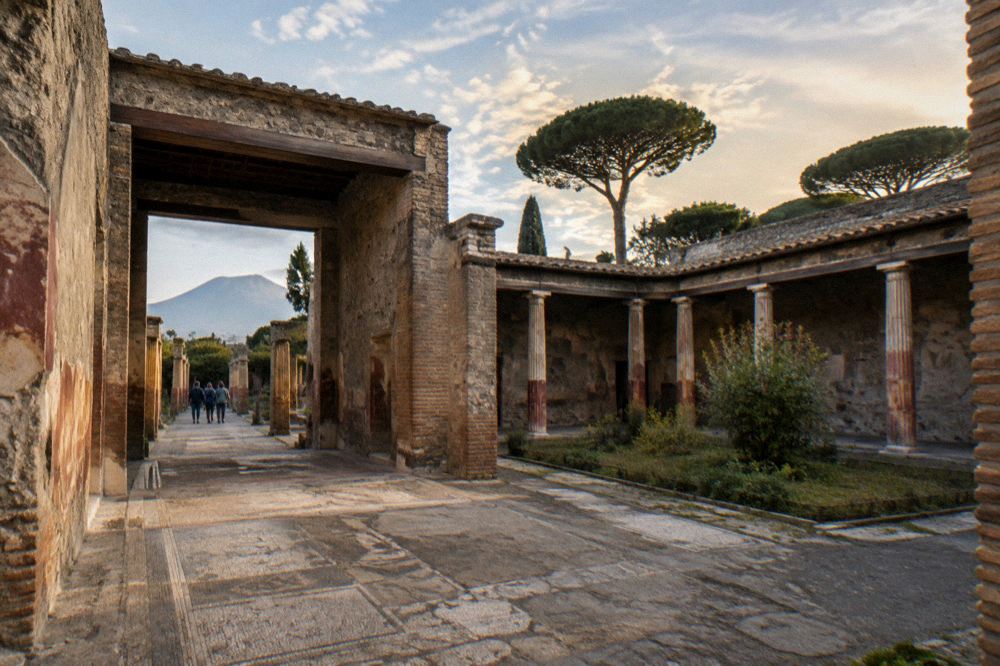
Herculaneum's own ticket is EUR 16 full and EUR 2 reduced for EU citizens aged 18 to under 25, free on the first Sunday of the month and on 25 April, 2 June and 4 November, with the free ticket collected at the office on the day. Its hours mirror Pompeii's seasons: 08:30 to 19:30 with last entry at 18:00 from 16 March to 14 October, and 08:30 to 17:00 with last entry at 15:30 in winter. A guided option for the pairing:
Vesuvius needs separate planning because the Gran Cono is a national park trail, not a museum: tickets are sold only online in timed slots, access hours shift by month, and the path closes automatically on an orange weather alert or above, with an automatic refund when weather closes it. The full detail is on the Mount Vesuvius tickets page. For a slower pace, the wineries inside the national park pour the lava-soil wines of the volcano's slopes:
Deciding where to sleep shapes all of this. The trade-offs between staying in Naples, Sorrento or the modern town of Pompei itself are set out in where to stay in Pompeii, and a base chosen well can turn two rushed day trips into one relaxed pair of mornings.
Returning to the three formats that solve the three commonest Pompeii itineraries, in one place for comparison:
Common Questions About Visiting Pompeii
What Are The Best Tips For Visiting Pompeii?
Buy a timed, nominative ticket in advance, arrive for the 09:00 opening or after 13:00, wear closed shoes for original Roman paving, keep your bag under 30x30x15 cm, and carry water in summer when average daily maxima reach about 29.4 C. Decide before arrival whether you want a guide, because the unlabelled site rewards interpretation.
Can You Just Show Up At Pompeii Without A Ticket?
You can, but the 20,000 visitors-per-day cap and the timed entry bands mean a same-day ticket is a gamble in peak months. Buy through the official channel in advance; tickets are nominative and identity may be checked at entry.
What Time Does Pompeii Open And Close?
From 16 March to 14 October the park opens at 09:00, takes its last entrance at 17:30 and closes at 19:00. From 15 October to 15 March it opens at 09:00, last entrance is 15:30 and closing is 17:00. The park is closed on 25 December and 1 January unless the park announces otherwise.
Is Entry To Pompeii Ever Free?
Yes. Entry is free for everyone under 18 and for all visitors on the first Sunday of the month. EU citizens aged 18 to under 25 pay a reduced EUR 2. On free Sundays the park has recorded more than 36,000 visitors in a single day, so arrive early.
Which Entrance Should I Use At Pompeii?
Porta Marina if you arrive by train at Pompei Scavi-Villa dei Misteri, Piazza Anfiteatro if you want the accessible "Pompeii for All" route, Piazza Esedra for a quieter central start, and Porta Ercolano / Street of the Tombs for the suburban villas route.
Is Pompeii Suitable For Visitors With Mobility Difficulties?
Partly. The "Pompeii for All" route lets visitors with mobility difficulties enter at Piazza Anfiteatro and exit at either Piazza Anfiteatro or Piazza Esedra via the Antiquarium lift. The rest of the site is uneven original stone paving, so plan around the accessible route rather than the full city.
The through-line of every tip on this page is that Pompeii rewards a decision made early: the ticket, the entrance, the hour and the shoes are all chosen before the day starts, and the park then delivers one of the extraordinary archaeological experiences of southern Italy. This Pompeii Travel Guide carries the deeper planning pages, from the Pompeii tickets guide to the Pompeii map page, for the questions that open up once the basics are settled.