Is Pompeii Worth Visiting
The buried Roman city of Pompeii drew more than four million visitors in each of the last three years. Here is a frank look at what justifies that crowds, and what does not.
Short answer
Yes, for almost everyone. Pompeii is a whole Roman city frozen under volcanic ash in AD 79, with an excavated area of 44 hectares beside modern Pompei, about 24 km from Naples in Italy. Entry costs EUR 20 in 2026 under the Express ticket, and the painted houses, baths and bars are unmatched anywhere. The caveats are summer heat, crowds capped at 20,000 a day, and worn stone underfoot.
The ancient city of Pompeii, buried by the eruption of Mount Vesuvius in AD 79 and now an archaeological park in Campania, southern Italy, sits beside the modern town of Pompei about 24 km by road from Naples. It received 4,000,090 visitors in 2025 alone, on top of 4,069,377 in 2024 and 3,985,424 in 2023. Numbers like that invite a fair question before anyone books anything: is the site genuinely worth a day of a holiday in Italy, or is it famous simply for being famous?
Is Pompeii Worth Visiting? The Honest Short Answer
Yes, Pompeii is worth visiting for most travellers, because nowhere else can you walk an entire Roman city at street level, past bakeries with carbonised loaves, brothel graffiti and painted election slogans, across 44 excavated hectares of a 98-hectare UNESCO site. It is tiring, dusty and sun-exposed, so preparation beats improvisation, but the payoff of walking ancient streets rather than viewing relics behind glass is real and unmatched.
That verdict deserves unpacking, because "worth it" depends on what you trade for it. The city was sealed by volcanic ash on the traditional manuscript date of 24 August AD 79, a date the park's own e-journal treats as traditional rather than settled, since 24 October has, in the journal's words, no evidentiary basis. What is not debated is the result: roofs, furniture, food, wall paintings and, in the garden of one villa, the casts of victims caught by the surge. The history of the excavation and the question of when Vesuvius actually erupted each have their own guide on this site.
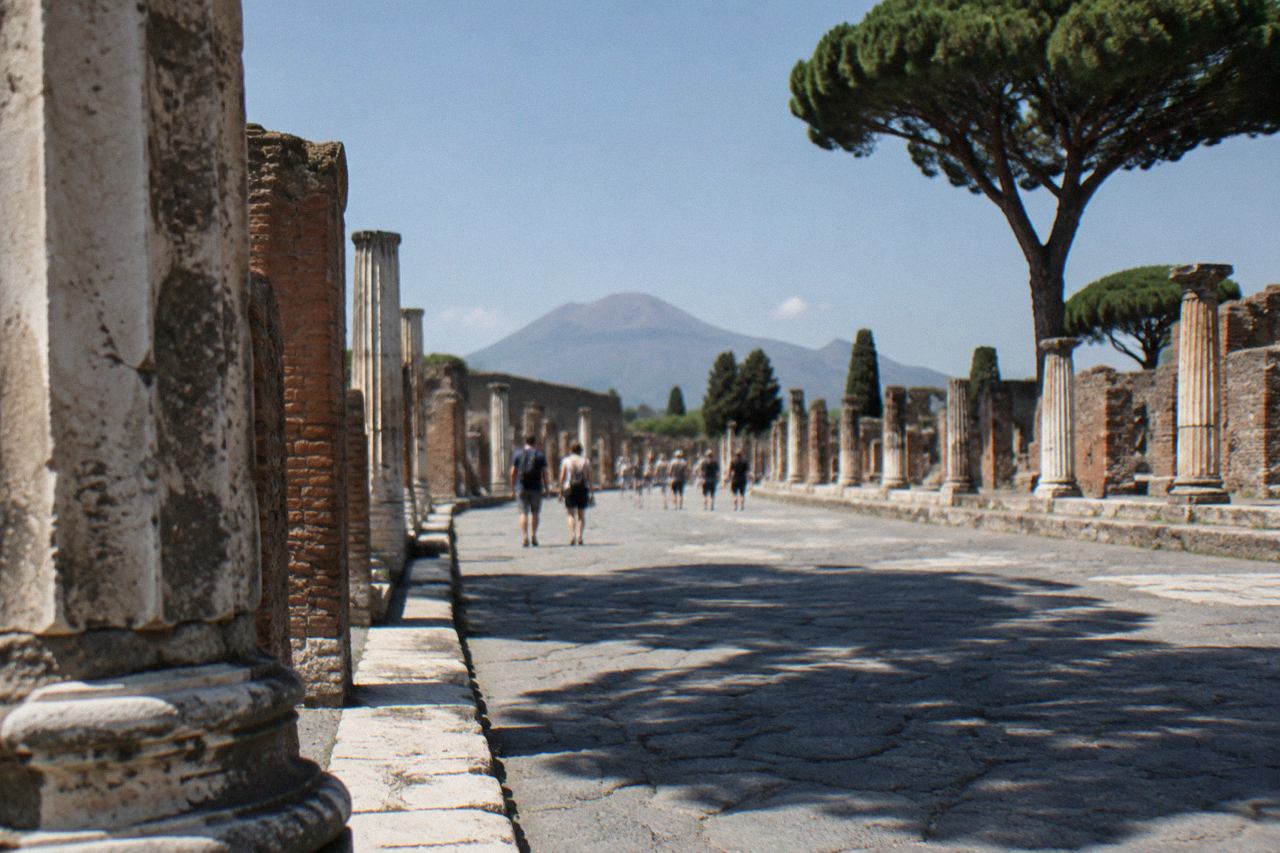
The honest counterweight is physical. The streets are ancient basalt, uneven and hard on thin-soled shoes. Shade is scarce along the long east-west axis. In July and August the mean daily maximum at the Pompei grid point runs to about 28.7 and 29.4 degrees respectively, on stone that holds heat. None of this makes the site not worth it; it makes the site worth doing properly, early, with water and with a route. For everything practical, this Pompeii Travel Guide maintains a full set of planning pages, and the official park ticketing pages are covered in depth here too.
What Makes The Ancient City Worth Seeing In Person
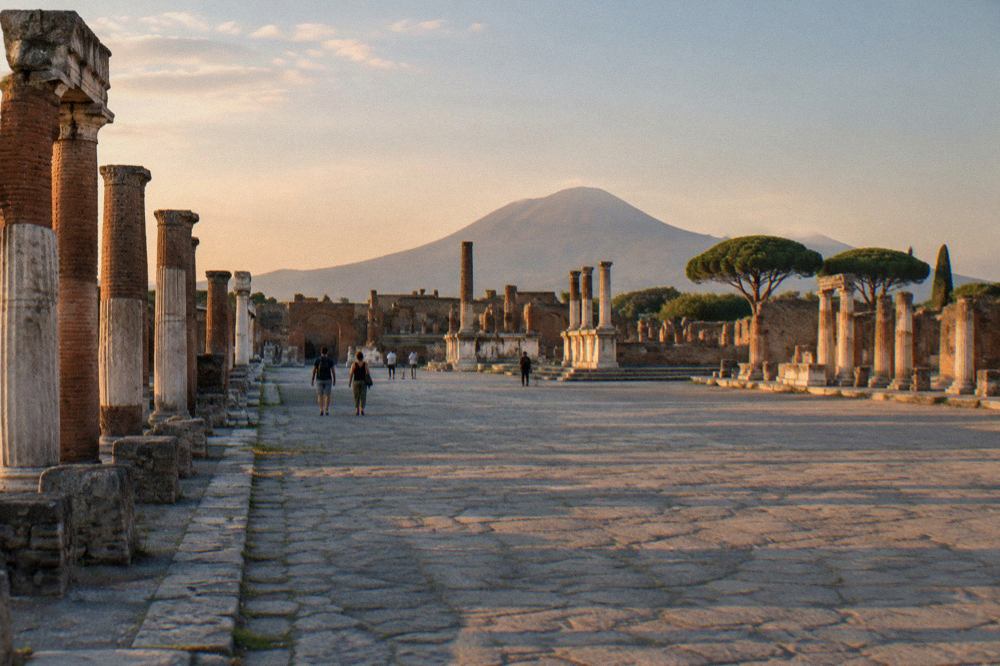
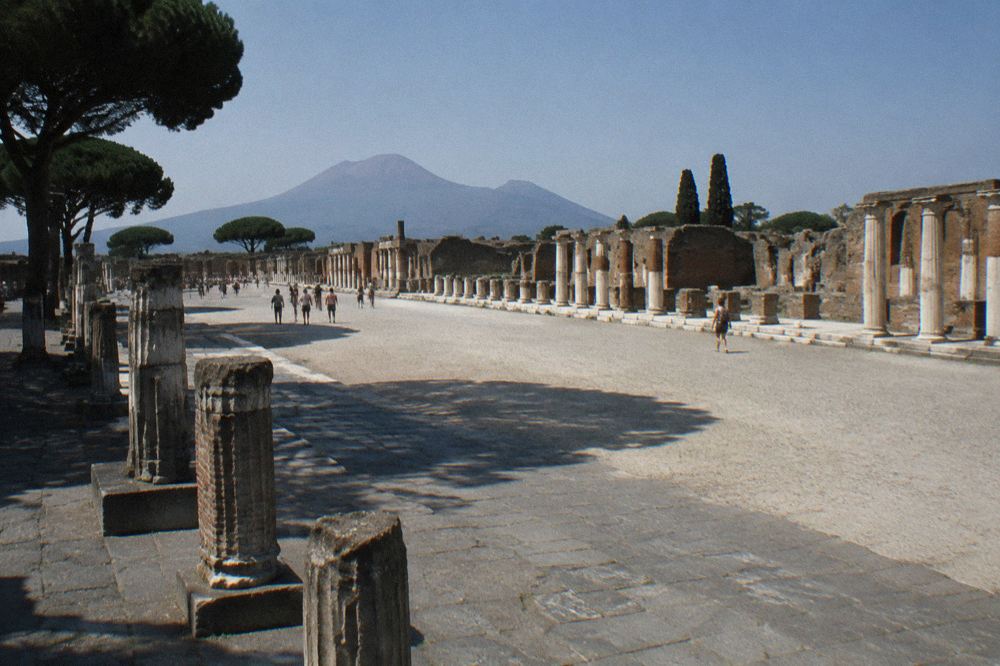
The case for Pompeii rests on ordinariness preserved: not a palace or a single monument, but an entire functioning city, with fast-food counters, laundry signs, campaign notices and traffic stepping-stones exactly where Romans left them. The UNESCO listing, shared with Herculaneum and Torre Annunziata under criteria three, four and five, recognises the property as unique evidence of Roman life frozen mid-course. Visitors who like archaeology love it; visitors who only like viewpoints often do not, and that distinction decides the answer.
Three experiences carry the site's reputation. The first is the wall art: the frescoes and mosaics of the House of the Vettii, the House of the Faun and the Villa of the Mysteries rank among the finest Roman painting to survive anywhere, a topic covered in detail in Pompeii's frescoes and mosaics explained. The second is the everyday fabric, the thermopolia with their marble counters, the bakery ovens, the baths with their double floors. The third is the human evidence: the body casts of Pompeii's victims, plaster poured into voids left in the ash, remain among the most affecting objects in any open-air site in Europe.
Worth also depends on company and format. A family with small children has a different calculation from a couple with one morning in Campania, and a cruise passenger a different one again. The site can absorb all of them, but not with the same plan. For those weighing the alternatives of a guide against a self-directed walk, the comparison in guided tour versus self-guided Pompeii lays out the trade-offs, and three formats below cover the widest range of budgets and appetites.
How Much Do Pompeii Tickets Cost In 2026?
Entry to the ancient city costs EUR 20 in 2026 under the Pompeii Express ticket, EUR 25 for Pompeii+ which adds the suburban villas and Boscoreale, and EUR 30 for a three-day ticket covering Oplontis and the Stabiae villas as well. Under-18s enter free, EU citizens aged 18 to under 25 pay EUR 2, and everyone enters free on the first Sunday of the month. All of these prices end on 31 December 2026.
The structure is straightforward once laid out. Tickets are nominative, matched to an identity document at entry, and the park caps daily entry at 20,000 visitors, a limit in force since 15 November 2024. During the current season's time-slot system, the 9:00-13:00 band carries up to 15,000 entries and the 13:00-17:30 band up to 5,000, which is why afternoon entry is the quieter choice on busy days.
| 2026 ticket | Price | What it covers |
|---|---|---|
| Pompeii Express | EUR 20 | The ancient city only |
| Pompeii+ | EUR 25 | City, suburban villas, Villa Regina, Antiquarium at Boscoreale, shuttle |
| 3-day ticket | EUR 30 | Everything in Pompeii+ plus Oplontis, the Stabiae villas and museum, Boscoreale |
| Oplontis / Stabiae museum / Boscoreale individually | EUR 8 each | Single site each |
| My Pompeii Card (annual) | EUR 45 (EUR 10 reduced) | Annual pass |
| Express add-on: suburban villas route | EUR 8, card only | Bought at the Porta Ercolano / Street of the Tombs entrance |
One change matters more than any of the individual figures. From 1 January 2027, per the park's release of 14 September 2026, the three-tier structure ends and one EUR 25 ticket covers all park sites, valid 30 days with one entry per site. The three smaller sites stay at EUR 8 each individually, the My Pompeii Card stays at EUR 45, and nominative tickets and the 20,000 daily cap are retained. Anyone comparing a 2026 trip against a 2027 one should plan on that difference; the page on the park's ticket options keeps the full detail.
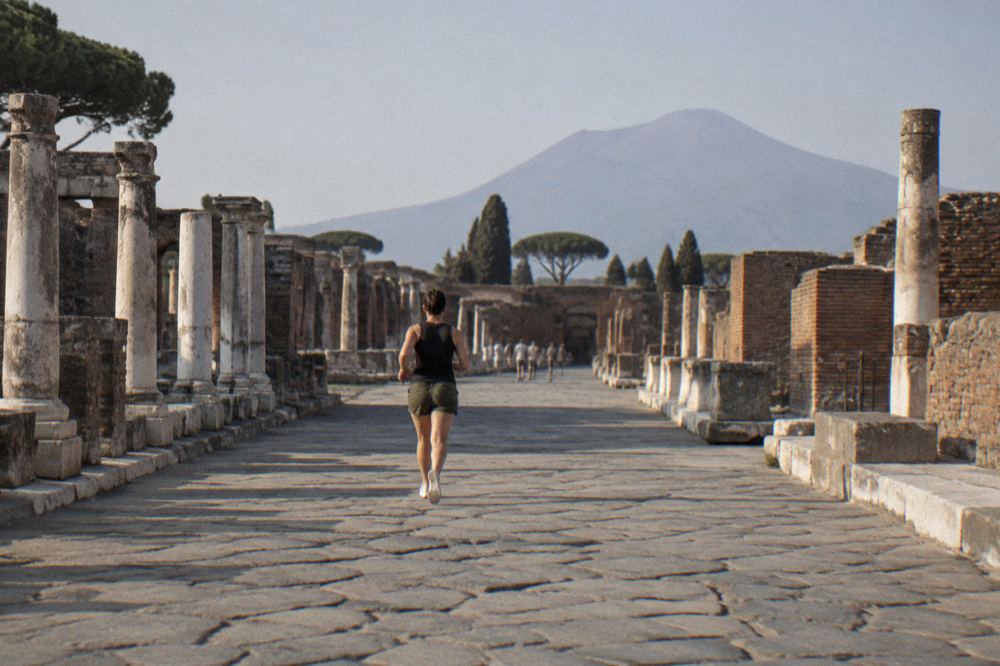
For travellers drawn to the city's greatest painted interior, there is a shortcut worth naming here. The Villa of the Mysteries lies at the city's western edge, a long walk from the Forum, and its fresco cycle rewards explanation; an archaeologist-led tour dedicated to it is the related pick for this page, and the box below shows its live terms.
How Long Should You Spend Inside The Excavations?
Pompi's excavations deserve a minimum of two hours, a comfortable half day, and repay a full day if the suburban villas are included. The excavated area of 44 hectares holds dozens of visitable buildings, and the distance from the Forum to the Villa of the Mysteries alone is a substantial walk on uneven stone. Visitors with a single free morning can see the core; visitors with a full day see the city properly.
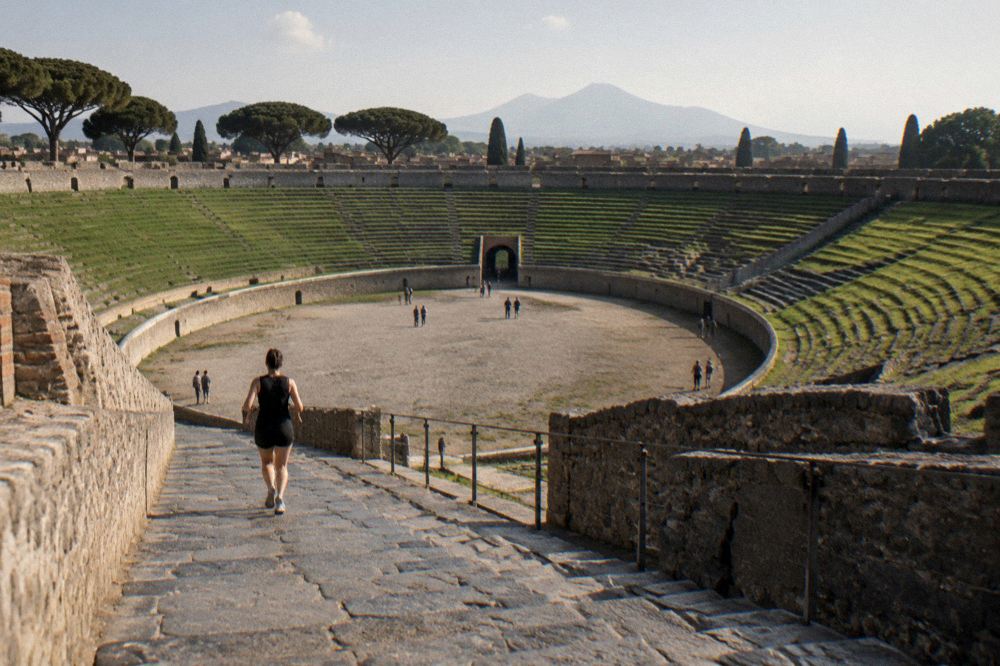
The realistic planning bands look like this. Two hours covers the Forum, the basilica, a bath complex and two or three houses, entering at Porta Marina and exiting before fatigue dulls everything. A half day adds the amphitheatre end of the city or the western villas, not both comfortably. A full day, with a lunch break outside or at the site's own catering, lets the pacing slow enough that individual houses get more than a glance. The entrances are named and fixed: ticket offices sit at Porta Marina, Piazza Esedra and Piazza Anfiteatro, and the suburban villas route is served from the Porta Ercolano / Street of the Tombs entrance.
Practical limits shape the answer too. Between 16 March and 14 October the site opens at 9:00 with last entry at 17:30 and closes at 19:00; from 15 October to 15 March last entry pulls back to 15:30 and closing to 17:00. Bags are limited to 30x30x15 cm, with larger items left at luggage facilities, per the park's visitor regulations. Combined with the heat profile, those hours argue for the earliest possible slot in the warmer half of the year, an argument developed further in the guide to the site's opening hours and seasons.
Pompeii Or Herculaneum: Which Site Suits You Better?
Pompeii offers scale and variety, a full city including theatres, an amphitheatre and dozens of houses; Herculaneum offers preservation, with carbonised wooden doors, staircases and upper storeys that ash preserved better than Pompeii's pumice did. Pompeii's entry is EUR 20 in 2026, Herculaneum's EUR 16, and both grant free entry on the first Sunday of the month. Travellers with one day and real interest should see Pompeii; travellers with two days should see both.
The two sites are 20 minutes apart by the same railway line and are complements rather than rivals. Herculaneum is compact, shadier and easier underfoot; its Villa dei Papiri and Ancient Theatre are both closed for works, so its marble-fronted houses and boat sheds carry the visit. Pompeii is vast, exposed and impossible to "finish". The full comparison, including which ticket to buy for each, lives in Pompeii versus Herculaneum; the summary table below holds the figures that matter to the choice.
| 2026 figure | Pompeii | Herculaneum |
|---|---|---|
| Full entry price | EUR 20 (Express) | EUR 16 |
| Reduced price, 18 to under 25 | EUR 2 (EU citizens) | EUR 2 |
| Under 18 | Free | Free |
| Free first Sunday | Yes | Yes, no reservation, collect on the day |
| Scale | 44 ha excavated | Compact residential town |
| Current closures | Praedia di Giulia Felice since 7 September 2026 | Villa dei Papiri and Ancient Theatre, until further notice |
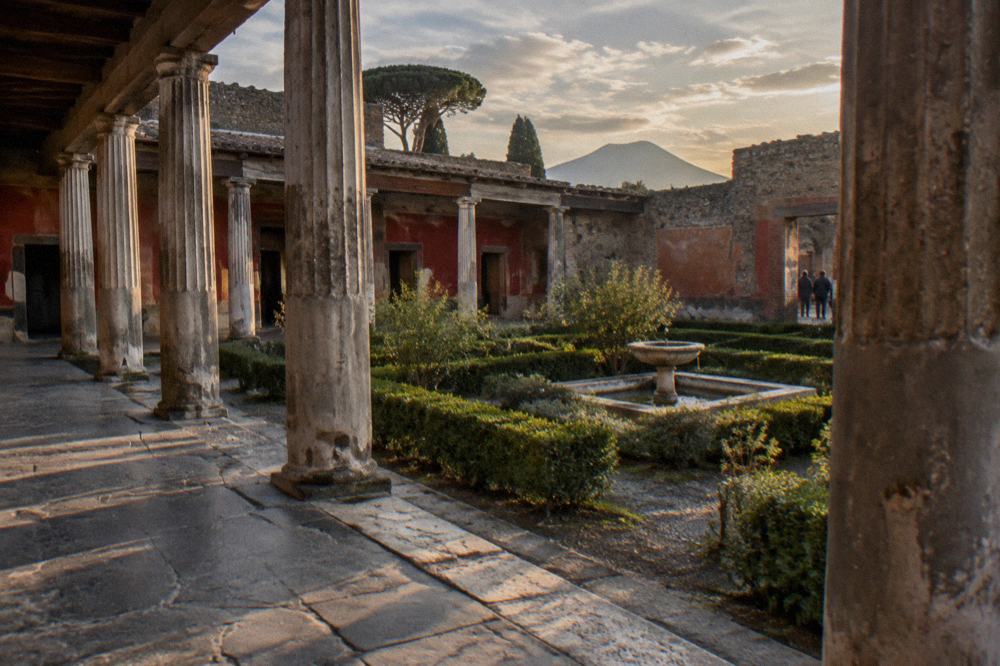
A guided option exists for the smaller site as well: a small-group Herculaneum walk led by an archaeologist, with the entry ticket included in the booking, is a frequent choice for travellers who want the wooden preservation explained rather than merely seen.
Is A Guided Tour Of Pompeii Worth The Money?
For a first visit, yes, a guided tour earns its cost for the majority of travellers, because Pompeii explains almost nothing on its own: the signage is thin, the layout is a genuine Roman street grid with no wayfinding logic, and the difference between a good and mediocre visit is largely narrative. Independent travellers with a strong audio guide can do very well. The deciding factors are interest in Roman history and tolerance for wandering.
The case against going bare is concrete. A visitor standing in the Stabian Baths or the lupanar without context sees worn rooms; with a guide, the same rooms carry engineering, commerce and daily routine. The site's comparisons of tours from Naples and tours from Sorrento list the practical formats by starting point.
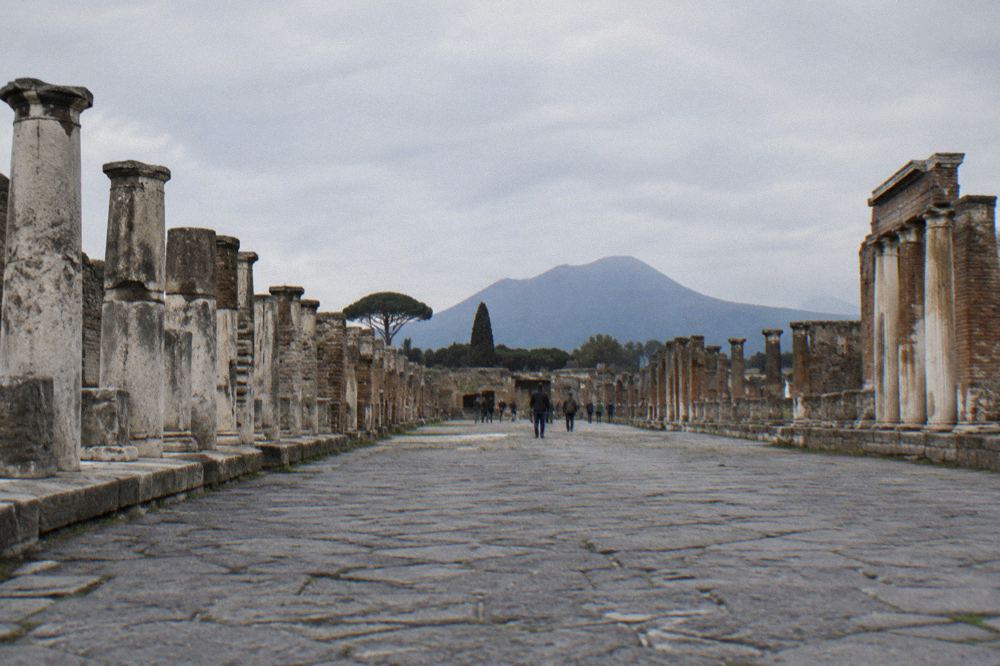
For this page's related pick, the format is specific rather than general: an archaeologist-led walk built around the Villa of the Mysteries, the best-preserved painted villa on the site, aimed at visitors who want depth over coverage. Its price, rating and current availability render on the live listing rather than being quoted here, and the inline link below goes straight to it.
The biggest single factor in enjoying any Pompeii tour is timing. Morning departures avoid both the midday stone heat and the peak of the 9:00-13:00 entry band. Travellers combining the city with the volcano, the classic Campanian pairing, should note that Vesuvius's Gran Cono trail uses online-only timed tickets sold up to 30 days ahead, with details in how to book Vesuvius tickets.
The Suburban Villas: Is The Villa Of The Mysteries Worth Adding?
Yes, the suburban villas are worth adding for anyone with more than a bare two hours, and the Villa of the Mysteries is the single finest painted interior on the site. Express ticket holders can add the suburban villas route for EUR 8, card payment only, at the Porta Ercolano / Street of the Tombs entrance, or buy Pompeii+ at EUR 25 upfront. The walk out through the necropolis is itself part of the experience.
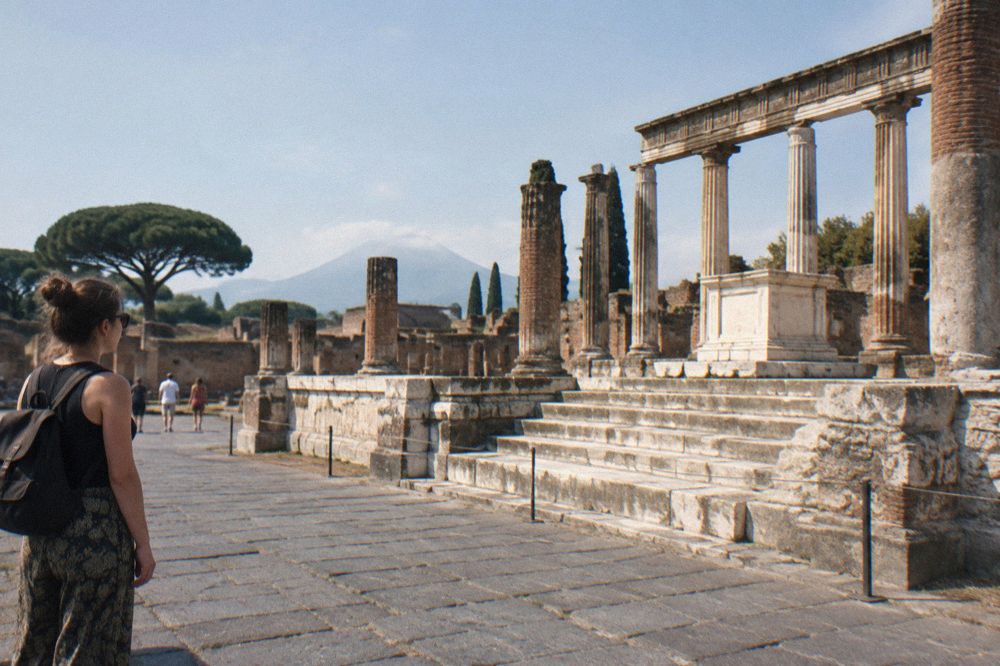
The route leaves the city walls by the Street of the Tombs, past Roman tombs that lined the road as they lined every Roman road, and reaches the Villa of the Mysteries with its Dionysiac fresco cycle, then the Villa of Diomedes. Because the villas sit outside the main gate, they see far less foot traffic than the Forum quarter, which for many visitors is the argument alone: the same ticket money buys the quietest standing Roman paintings in the region. The dedicated Villa of the Mysteries page covers the frescoes in depth.
The same suburban logic extends beyond Pompeii's walls entirely. Oplontis, the villa at Torre Annunziata generally associated with Nero's wife Poppaea, is a separate park site with its own EUR 8 ticket in 2026 and a painted colonnade and pool complex of a scale the city itself does not match; an entrance ticket with digital guide is the straightforward way to book it.
How Do You Get To Pompeii From Naples, Sorrento Or Rome?
The fastest common route is the Circumvesuviana railway from Napoli Garibaldi to Pompei Scavi-Villa dei Misteri, with scheduled times of 29 to 35 minutes computed from the operator's own timetable data. By road, Pompei Scavi is about 24 km from Naples, 26 km from Sorrento and 234 km from Rome. The Campania Express train has been suspended since 1 October 2026, so the local line and road transport carry the traffic.
The station named "Pompei Scavi-Villa dei Misteri" sits beside the Porta Marina entrance, and the same line continues to Sorrento with scheduled run times of 34 to 40 minutes from the Scavi stop. Fares and frequencies are best checked on the operator's own timetable, since the site's Circumvesuviana guide and the Campania Express page keep current operational detail. From Rome, the pattern is high-speed rail to Naples and then the local line, a sequence covered step by step in Rome to Pompeii by train and the Rome day-trip plan; similar pages cover Naples to Pompeii, Sorrento to Pompeii and the Amalfi Coast to Pompeii.
| Road journey to Pompei Scavi | Distance | Approximate driving time |
|---|---|---|
| Naples | 24 km | 22 min |
| Sorrento | 26 km | 37 min |
| Salerno | 31 km | 30 min |
| Rome | 234 km | 159 min |
The driving times above are route-engineering estimates on OpenStreetMap data, not official figures, and summer traffic on the coastal roads runs worse than them. Cruise passengers face a tighter arithmetic, with the shore-excursion decisions broken out in the cruise-ship day guide. For anyone combining the city with the volcano in one day, horse riding on Vesuvius with lunch after a Pompeii walk is the format that turns the transfer between the two into part of the day rather than dead time.
When Is The Best Time Of Year To Visit Pompeii?
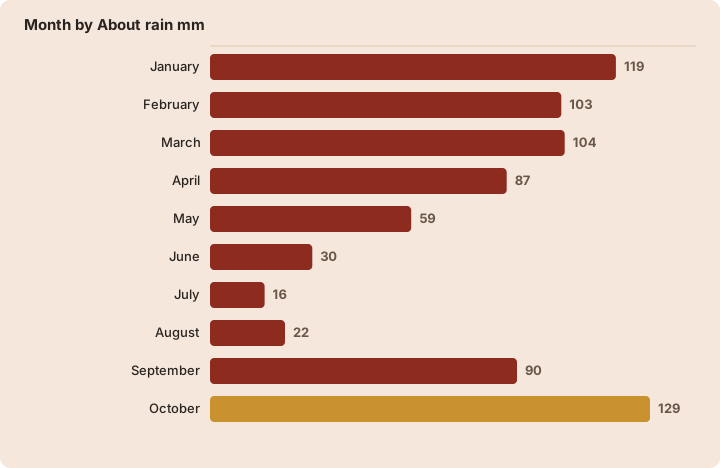
The best months for Pompeii are April, May, October and early November, when the park's own monthly figures show comfortable crowds and the Pompei grid point's 1991-2020 normals show daytime highs of about 17.7 to 21.6 degrees and 87 to 129 mm of rain per month. Winter is quiet, wet and short-daylight.
The park publishes its attendance by month, and the 2024 figures show the pattern plainly: May peaked at 516,923 visitors, with April at 466,344, September at 468,340 and October at 481,255, while November fell to 189,866 and February to 142,648. Shoulder season therefore wins twice, with fewer people per street and milder stone underfoot. November is the wettest month at about 180 mm of rain on the 30-year average; July the driest at about 16 mm.
| Month | About daily max C | About daily min C | About rain mm | Pompeii visitors 2024 |
|---|---|---|---|---|
| January | 12.2 | 6.6 | 119 | 112,121 |
| February | 12.6 | 6.5 | 103 | 142,648 |
| March | 14.9 | 8.1 | 104 | 272,723 |
| April | 17.7 | 10.4 | 87 | 466,344 |
| May | 21.6 | 14.1 | 59 | 516,923 |
| June | 25.8 | 18.2 | 30 | 410,712 |
| July | 28.7 | 21.1 | 16 | 449,162 |
| August | 29.4 | 21.8 | 22 | 421,255 |
| September | 25.3 | 18.6 | 90 | 468,340 |
| October | 21.3 | 15.1 | 129 | 481,255 |
| November | 16.9 | 11.5 | 180 | 189,866 |
| December | 13.2 | 8.0 | 147 | 138,028 |
The temperature and rain columns come from the Open-Meteo historical archive's 1991-2020 reanalysis for the Pompei grid point, not from a weather station, and are given as approximate. The annual total is about 1,086 mm, with autumn the wettest stretch. First Sundays are free year-round, which sounds like a bargain and is, with one caution: the record free-Sunday crowd of more than 36,000 people shows what "free" does to the 20,000 daily cap's off-duty days.
What Could Genuinely Disappoint You At Pompeii
Three things disappoint visitors at Pompeii more than anything else: heat and hard walking in summer, closures of named houses, and arriving without a plan. The Praedia di Giulia Felice has been closed since 7 September 2026, houses rotate through maintenance, and no newly reopened domus has been confirmed on an official page in 2026. None of these is a reason to skip the site; all are reasons to plan it.
Heat deserves the bluntest warning. In July and August the site offers roughly nine hours of daylight walking on heat-holding basalt with minimal shade, and the time-slot system concentrates morning entries. Shoes, water, a hat and an early start are not optional advice in those months; they are the difference between a memorable day and a retreat by noon. Food inside the park is limited, and the practical options in the modern town are set out in where to eat near Pompeii, with overnight options in where to stay.
Closures are the second honest caveat, and the park announces them on its own pages. Beyond the Praedia closure named above, Herculaneum's Villa dei Papiri and Ancient Theatre are shut for works until further notice, and side accesses can close temporarily, as with the Polverificio access from via P. Vitiello between 1 and 10 October 2026. The remedy is to check the park's communications before travelling and to build a route around the permanent anchors: the Forum, the baths, the amphitheatre and the villas do not close on rotation.
| Common disappointment | Cause | Practical remedy |
|---|---|---|
| Exhaustion before noon | Summer heat on stone, scarce shade | Start at 9:00, water, hat, two-hour core route |
| Missing a named house | Rotating maintenance closures | Check park communications before travel |
| Long morning queues | 9:00-13:00 band carries up to 15,000 entries | Book online, or enter after 13:00 |
| Feeling lost | Roman street grid, thin signage | Guide, audio guide, or a planned route |
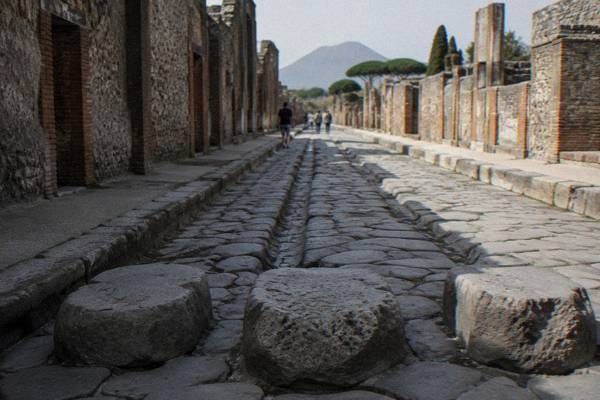
| Sore feet | Uneven basalt streets and stepping stones | Closed walking shoes, not sandals |
The final word on disappointment belongs to expectations. Pompeii is not a museum; it is a ruined city, and ruined cities have empty rooms, blank walls and long stretches of sameness between the highlights. Visitors expecting a curated gallery are sometimes let down. Visitors expecting streets, silence and scale tend to call it the best day of their Italian trip.
The Verdict: Who Should Skip Pompeii, And Who Should Not
Skip Pompeii only if a whole day of walking in exposed ruins is genuinely the wrong day for you: limited mobility without using the accessible route, severe summer heat intolerance, or a schedule that allows less than two hours on site. Everyone else, including families, cruise passengers with a half day, and travellers combining it with Vesuvius or Herculaneum, is trading money and effort for something no other place in the world provides.
The strength of that claim can be stated precisely. The property is a 98-hectare UNESCO-inscribed site containing a 44-hectare excavated Roman city that stood until AD 79, with wall painting, political graffiti, commercial signage and human casts in place. Herculaneum, Oplontis and the Vesuvius trail each add a different layer, and all sit within a short rail or road hop of the same station. Four million annual visitors are not a fashion; they are a reasonable response to a unique object.
For the format that fits each kind of traveller, the choice below spans the three most distinct ways to spend the day: a deep archaeologist-led walk, an independent ticket to Oplontis, and a full Pompeii-plus-Vesuvius experience with lunch. Every price and rating on the cards renders live from the operator's listings.
Common Questions About Whether Pompeii Is Worth Visiting
Is Pompeii worth visiting if you are not a history fan?
Generally yes, because the appeal is as much human as scholarly: a city stopped mid-day, with fast-food counters, campaign slogans and the casts of its last residents. Visitors who dislike ruins-as-scenery do struggle, but the site rewards even casual curiosity better than any comparable place in Italy.
Is Pompeii worth it for a short trip from Rome?
It can be, when the day is built around it rather than squeezed. The road distance from Rome is about 234 km, and rail-based plans pair a high-speed run to Naples with the local line onward. The step-by-step sequence is covered in the site's Rome to Pompeii by train guide.
Can you see Pompeii properly in two hours?
Two hours covers the core: the Forum, the basilica, a bath complex and two or three houses, entering at Porta Marina. It is a real visit, not a token one, but it leaves the amphitheatre quarter and the suburban villas unseen. A half day is the comfortable minimum for the highlights.
Is Pompeii worth visiting with children?
Yes, with adjustments. Children respond strongly to the casts, the bakery and the gladiarian barracks, but the distances and the stone are hard on small legs. Early starts, a stroller-free plan and a two-hour core route make the difference; the accessible route and facilities are detailed in the park's own regulations.
Is the free first Sunday a good way to visit Pompeii?
It is free and it is crowded. Entry is free for everyone on the first Sunday of the month year-round, and the record free Sunday drew more than 36,000 people. Anyone whose priority is the frescoes rather than the saving should book a paid slot on another day.
Is Pompeii worth visiting in winter?
Winter is quiet, cooler and shorter: from 15 October to 15 March last entry is 15:30 and the site closes at 17:00. Rain is at its heaviest in November, about 180 mm on the 30-year average. The trade is fewer people and softer light against fewer hours and damp stone, and for many travellers it is a good one.
Weighing all of it, tickets against crowds, heat against uniqueness, the verdict of this guide is unambiguous: Pompeii earns its place on nearly every Campanian itinerary, and the visitors it lets down are almost always the ones who arrived without a plan. Book the earliest slot of the day, choose a ticket that matches the time available, and let the city's own streets settle the question of whether it was worth it.