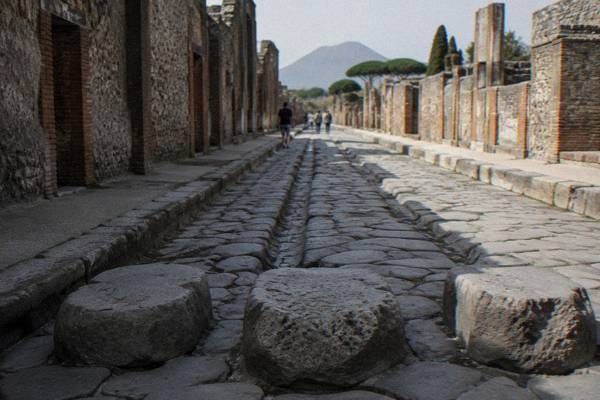
Was Jesus Alive When Pompeii Was Destroyed?
No: Jesus lived and died decades before Vesuvius buried Pompeii in AD 79. A clear timeline of the two stories, the eruption-date debate, and what it means for visitors to the site in Campania, Italy.
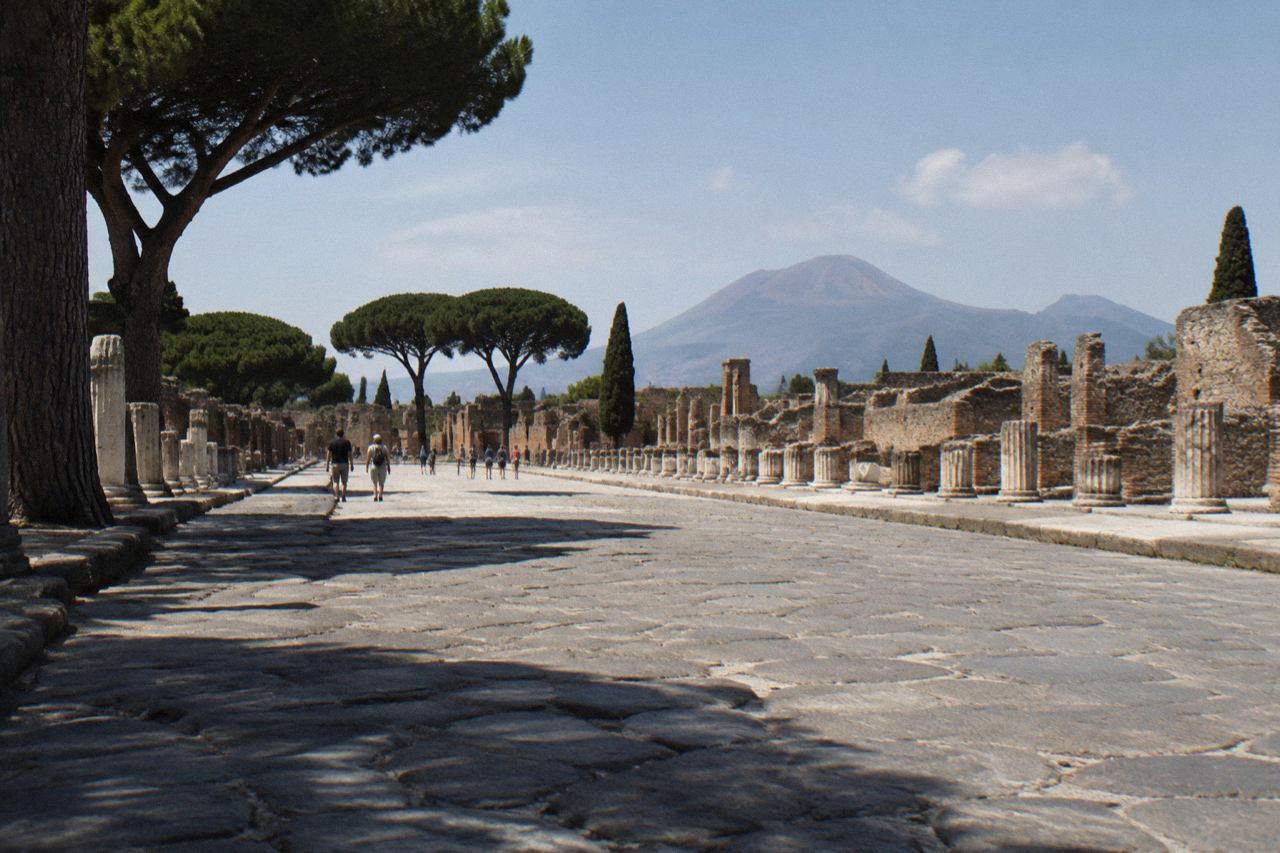
Pompeii, the ancient Roman city buried by the eruption of Mount Vesuvius in AD 79, lies in Campania, southern Italy, beside the modern town of Pompei and about 24 km by road from Naples. Its frozen streets, frescoes and body casts make it feel close enough to touch, and that intimacy feeds a question people ask in search bars every week: was Jesus alive when Pompeii was destroyed? The answer is a clean no, and the reasoning behind it opens one of the more interesting wrinkles in the site's history, because even the date of the destruction itself is a live scholarly argument.
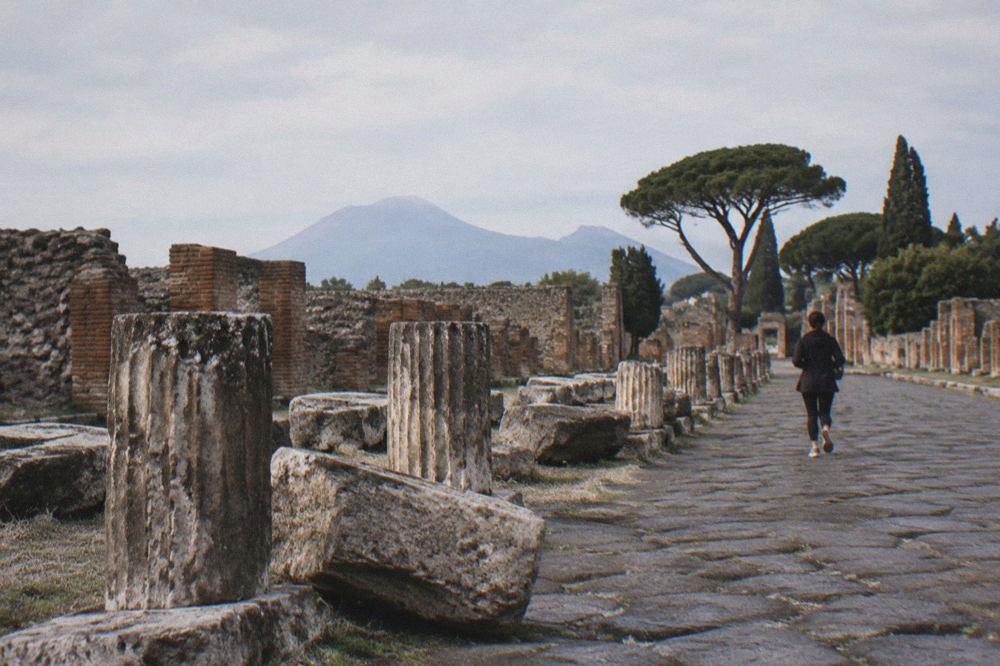
Was Jesus Alive When Pompeii Was Destroyed?
No. The city that tourists walk today is a Roman city of the years just before AD 79: its newest frescoes, its graffiti and its rebuilding after an earlier earthquake all belong to a world that had already heard of Christianity, but which Jesus himself never saw.
The two stories sit close together in popular imagination because both belong to antiquity and both are anchored in Roman-era history. But closeness in a schoolbook timeline is not closeness in fact. By the year of the eruption Pompeii was a prosperous mid-sized Roman town in the Bay of Naples holiday region, rebuilt and still rebuilding after a damaging earthquake some years earlier, with election notices painted on its walls and renovation work under way in several houses. It was a living, working city at the moment the eruption ended it.
That ordinary bustle is exactly what makes the site valuable to historians of religion. Pompeii preserves a full cross-section of Roman religious practice, from the temple of Apollo in the forum to household shrines, mystery cults and imported Egyptian gods, at a moment within living memory of Christianity's first generation. For more on how the city met its end, see How Fast Was Death at Pompeii; for the volcano's wider footprint, read Why Wasn't Naples Destroyed by Vesuvius.
How Long Before The Eruption Did Jesus Live?
On any scholarly reckoning, Jesus's life, ministry and death belong to the decades before AD 79, comfortably removed from the eruption. No ancient source and no modern historian places him in the years just before the volcano struck. The gap is not a marginal one of a year or two that a date dispute could close: it spans a generation, which is why the question has a settled answer even though the eruption's own calendar date does not.
It is worth being precise about what is and is not disputed. What is disputed, and only narrowly, is whether the destruction fell on the traditional day of 24 August in AD 79 or on some later day that autumn. The year AD 79 itself, and the fact that it came decades after Jesus's lifetime, are not in question. The traditional date comes from the oldest manuscripts of Pliny the Younger, which give nonum kal. Septembres, that is 24 August AD 79. The park's own e-journal, citing Foss 2022, says the frequently repeated alternative of 24 October has zero evidentiary basis and results from a 1929 misreading, while cautioning that 24 August is not necessarily correct either.
So the honest sentence is: the eruption is traditionally dated to 24 August AD 79, a date scholars still debate. Nothing in that debate moves the event into Jesus's lifetime. Readers who want the fuller backstory of the buried city's long sleep can start with When Was Pompeii Discovered and Why Was Pompeii Lost for So Long.
| Date or find | What it concerns | Status |
|---|---|---|
| AD 79 | Year Vesuvius destroyed Pompeii | Settled |
| 24 August AD 79 | Traditional day, from Pliny manuscripts | Traditional, debated |
| 1929 | Misreading that produced the 24 October claim | Identified by Foss 2022 |
| 2018 | Charcoal graffito many scholars date to mid-October | Reopened the debate |
| 2022 | Park e-journal article (Foss) rejecting 24 October | Published by the park |
Visitors sometimes assume a site this old must connect to every famous figure of antiquity. It does not. For what Romans in the Bay of Naples actually knew about the threat over their shoulder, see Did Pompeii Know Vesuvius Was Going to Erupt.
Were There Christians In Pompeii?
Possibly, but nothing found at Pompeii proves it. The city's inscriptions and art document the official gods, household shrines and mystery cults of Roman Campania in rich detail; a Christian community is not among them in any verifiable form. Crosses and alleged Christian symbols reported over the years are contested by archaeologists, so the honest position is that any Christians in Pompeii left no certain trace.
What the site does document, overwhelmingly, is religious variety. The Villa of the Mysteries just outside the walls carries a famous fresco cycle associated with the Dionysian mysteries, one of the best-preserved windows onto a cult of initiation in the Roman world. The temple of Apollo stood in the forum; household lararia sat in the homes; the sanctuary of the modern town of Pompei came much later and belongs to a different story entirely, one told on the page for the Sanctuary of Pompei rather than the ancient city.
The Villa of the Mysteries matters to this question precisely because it shows what confident evidence looks like: a coherent iconographic programme, in situ, readable by specialists. Claims for Christian presence at Pompeii have nothing comparable. This is a good moment to consider seeing the villa with a specialist: a Check availability link sits beside this paragraph for the Villa of the Mysteries walk led by an archaeologist, which covers the cult imagery in the context of the city's other beliefs.
What Does The Archaeology Of AD 79 Actually Preserve?
Pompeii preserves a city stopped mid-life in AD 79: roughly 44 hectares of excavated surface inside a 98-hectare inscribed UNESCO property, with houses, shops, baths, graffiti and plaster casts of victims. It is not a biblical site and makes no reference to the Gospels' world. Its value for religious history is as a control sample of ordinary Roman paganism at a fixed moment.
The fixed moment is the point. Because everything stopped on one day, scholars can date coins, pottery, wall paintings and renovation work to within months. That precision is why the eruption-date debate matters so much to researchers: shifting the day from August to autumn changes the seasonal reading of wine fermenting in vessels, of braziers in rooms, of the clothing worn by victims. For how that same precision shapes the story of the casts, see Was There a Kissing Couple Found in Pompeii and Are There Any Descendants of Pompeii Still Alive.
The site's scale keeps growing as a destination, and the park publishes its own numbers.
| Year | Visitors to the Pompeii site | All park sites combined |
|---|---|---|
| 2022 | 2,972,159 | n/a |
| 2023 | 3,985,424 | 4,079,235 |
| 2024 | 4,069,377 | 4,177,753 |
| 2025 | 4,000,090 | 4,118,926 |
Those four million annual visitors walk a city that was already ancient history to the first Christian communities of Campania. For planning a visit in that crowd, Should I Buy Tickets to Pompeii in Advance covers the park's nominative tickets and the 20,000 visitors-per-day cap in force since 15 November 2024.
Seeing The City Jesus Never Saw
Visitors who come to Pompeii because of its biblical-adjacent aura leave with something better: a fully furnished Roman city from the decades right after the Gospels, with its temples, bakeries, bars and brothels intact. The park's planning facts for 2026, from EUR 20 for the Express ticket to the free first Sundays, are straightforward, and guided options run from short walks to full-day combinations with Vesuvius.
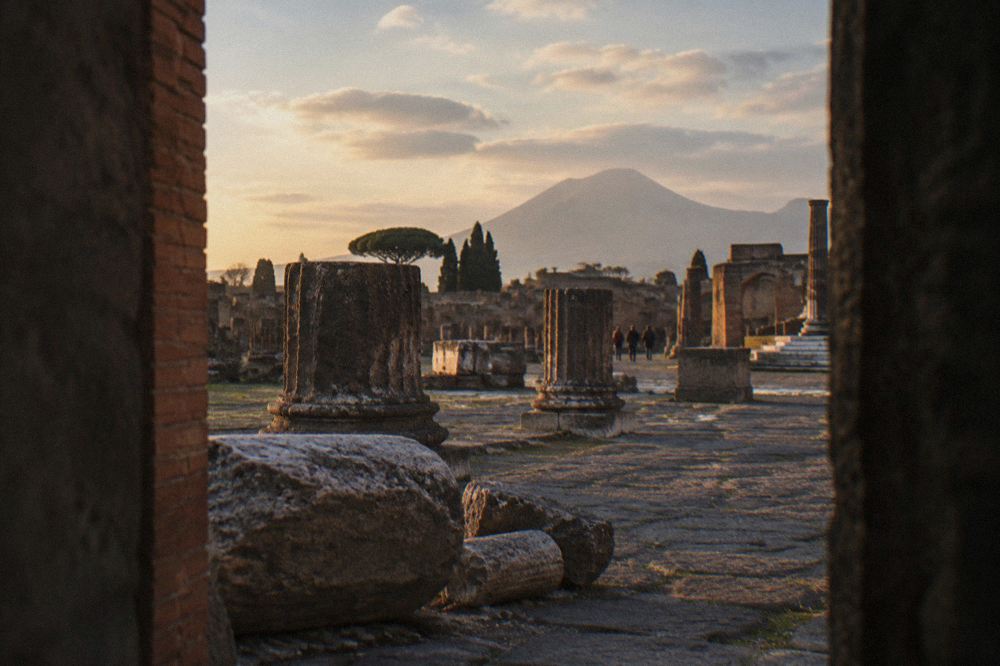
The 2026 ticket structure runs until 31 December 2026: Pompeii Express at EUR 20 for the ancient city alone, Pompeii+ at EUR 25 including the suburban villas route, a 3-day ticket at EUR 30, and the smaller sites of Oplontis, the Stabiae museum and Boscoreale at EUR 8 each, with the MyPompeii Card at EUR 45. From 1 January 2027 a single EUR 25 ticket covers all park sites, valid 30 days with one entry per site, while the three smaller sites stay EUR 8 individually and the card stays EUR 45. Entry is free for under-18s and for everyone on the first Sunday of the month, and reduced EUR 2 tickets go to EU citizens aged 18 to under 25.
| Ticket (2026) | Price | Covers |
|---|---|---|
| Pompeii Express | EUR 20 | Ancient city only |
| Pompeii+ | EUR 25 | City, suburban villas, Villa Regina and Antiquarium, shuttle |
| 3-day ticket | EUR 30 | Pompeii+ plus Oplontis, Stabiae villas and museum, Boscoreale |
| Smaller sites (each) | EUR 8 | Oplontis, Stabiae museum, Boscoreale |
| MyPompeii Card | EUR 45 | Annual pass |
One closure worth checking before a visit tied to a specific house: the Praedia of Julia Felix has been closed to the public since 7 September 2026 for maintenance, with no reopening date announced. For the practical layer of getting there and moving around, Can You Walk From Pompeii Train Station to the Ruins and How Difficult Is It to Walk in Pompeii answer the two questions the ruins raise most often, and the fuller planning picture lives on the Pompeii Travel Guide homepage.
For travellers combining the volcano with the city, a two-site day tour from Naples pairs the ruins with the crater trail, and a deluxe group tour adds the Amalfi Coast to the same day. Whichever shape the day takes, the chronological point stands: everything on display belongs to the world of the year AD 79 itself, a generation after Jesus and a lifetime before the Gospels finished circulating.
The choice between those shapes is a matter of pace rather than substance. A crater-and-ruins day answers the geological question this page began with, while the coastal combination turns the same morning into a full Bay of Naples circuit. Both stand on the same chronological fact.
Common Questions About Jesus And Pompeii
Was Jesus alive when Pompeii was destroyed?
No. No source places him anywhere near the event, and the year itself is not in dispute.
Is the date of the eruption of Vesuvius certain?
The year AD 79 is certain; the day is not. The traditional date is 24 August, from the oldest manuscripts of Pliny the Younger. The park's own e-journal says the 24 October alternative has zero evidentiary basis and stems from a 1929 misreading, while noting 24 August is not necessarily correct either.
Were there Christians living in Pompeii?
Possibly, but nothing found at Pompeii proves it. The site documents Roman gods, household shrines and mystery cults in detail, and every claimed Christian symbol from the city remains contested by archaeologists.
Could a future discovery change the answer?
It could refine the eruption's day, as the 2018 charcoal graffito did by reopening the autumn argument, but it cannot close a generational gap. No redating within AD 79 brings the eruption into Jesus's lifetime.
Why do people connect Jesus with Pompeii?
Pompeii's real religious significance is different: it is a complete snapshot of ordinary Roman pagan life, the world in which Christianity first spread.
The question of Jesus and Pompeii resolves quickly, but it points somewhere worth going: a city stopped in the decades just after the Gospels, where the beliefs, homes and streets of that world can still be read off the walls. Walk it with that timeline in mind and the stones say far more than any legend could.