Which Volcano Killed Pompeii?
The volcano that destroyed Pompeii in AD 79 was Mount Vesuvius, on the Bay of Naples in Campania, Italy. What it did, when it erupted, and how to see it today.
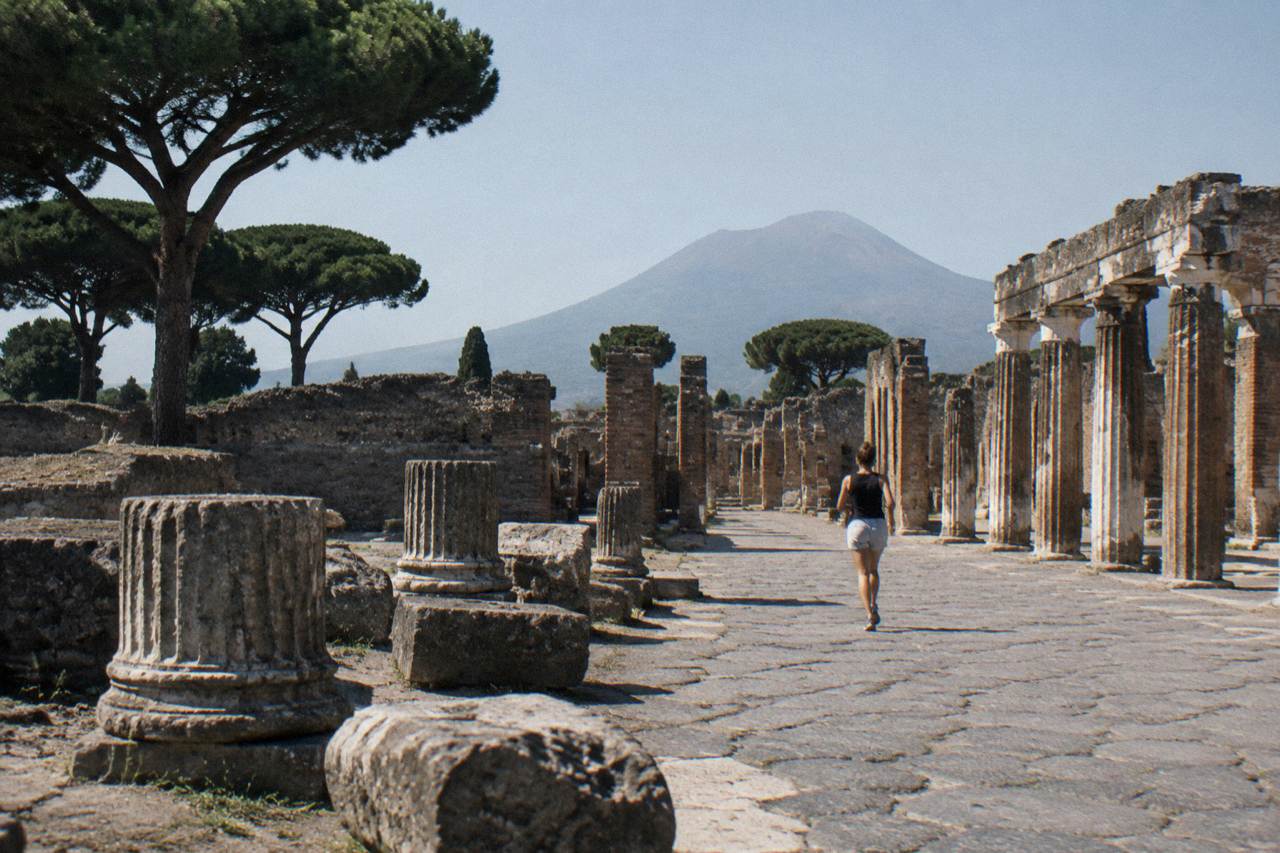
Mount Vesuvius killed Pompeii. The eruption, traditionally dated to 24 August AD 79, buried the ancient Roman city under pumice and ash in Campania, southern Italy, where the archaeological park now stands beside the modern town of Pompei, about 24 km by road south-east of Naples. Vesuvius is the only volcano on mainland Europe to have erupted within the last hundred years, and its crater still overlooks the site it destroyed. This page sets out what the volcano did, when it did it, what is still debated, and how travellers see both the ruins and the crater on one trip.
Which Volcano Killed Pompeii?
Mount Vesuvius killed Pompeii, the ancient Roman city on the Bay of Naples in Campania, Italy, and the identification is beyond doubt. Its eruption, traditionally dated to 24 August AD 79, ejected pumice, ash and surges of hot gas and rock that buried the city and killed a large share of its inhabitants, alongside Herculaneum, Oplontis and Stabiae on the same coastline.
The identification rests on more than proximity. Pliny the Younger, then a teenager staying at Misenum across the bay, watched the eruption and later described it in two letters to the historian Tacitus, including the death of his uncle, Pliny the Elder, who sailed toward the disaster to rescue people. His description of a pine-tree-shaped cloud is the origin of the term "Plinian eruption" that volcanologists still use for explosive events of this type. Vesuvius and Pompeii sit about 9 km apart, close enough that the volcano dominates photographs of the site from almost any angle.
The eruption was not a single blast. The volcano first sent a column of pumice and gas roughly the shape Pliny described high into the sky, and wind carried much of it toward the south-east, over Pompeii, for hours. Later in the eruption, parts of the column collapsed and sent pyroclastic density currents, fast-moving waves of hot gas, ash and rock, across the countryside and into the city itself. The excavated area now open to visitors covers 44 ha, inside a UNESCO inscribed property of 98 ha that also takes in Herculaneum and Torre Annunziata.
| Eruption fact | Detail |
|---|---|
| Volcano | Mount Vesuvius, Campania, Italy |
| Distance to Pompeii | About 9 km |
| Traditional date | 24 August AD 79 (debated by scholars) |
| Eyewitness | Pliny the Younger, in two letters to Tacitus |
| Cities buried | Pompeii, Herculaneum, Oplontis, Stabiae |
| Eruption type named after it | Plinian eruption |
Visitors who want both halves of the story, the city and the volcano, usually start planning with a look at Pompeii Travel Guide, which covers tickets, entrances and routes in one place.
Where Is Mount Vesuvius Relative To Pompeii?
Mount Vesuvius stands about 9 km north-west of the ancient ruins of Pompeii, inside the Parco Nazionale del Vesuvio on the Bay of Naples in southern Italy. The volcano is visible from the ruins, the modern town of Pompei and its Scavi station forecourt, and those access points sit roughly 24 km by road from Naples and 26 km from Sorrento.
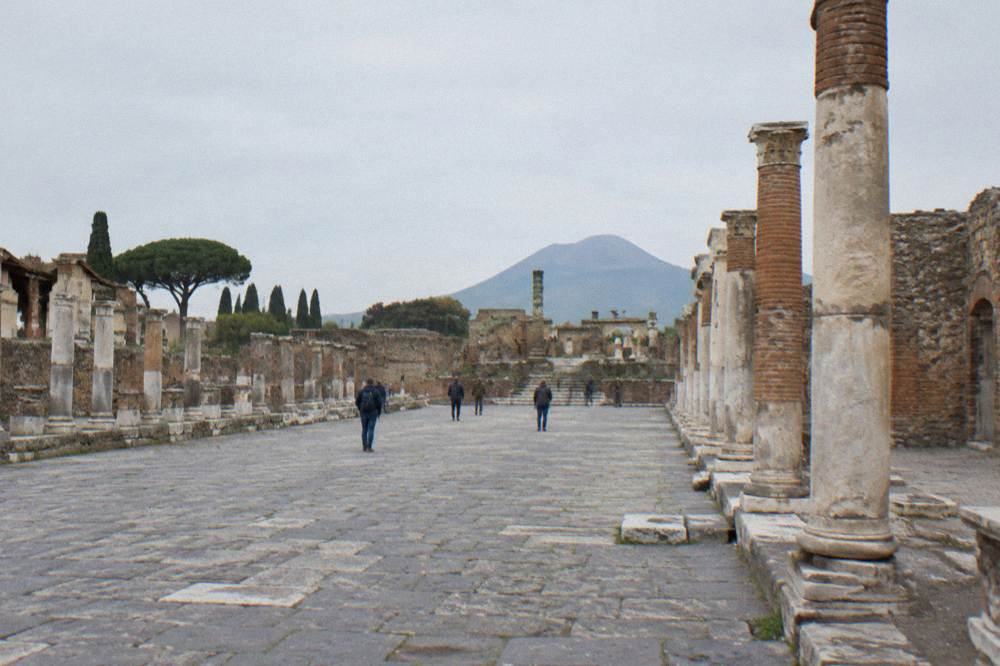
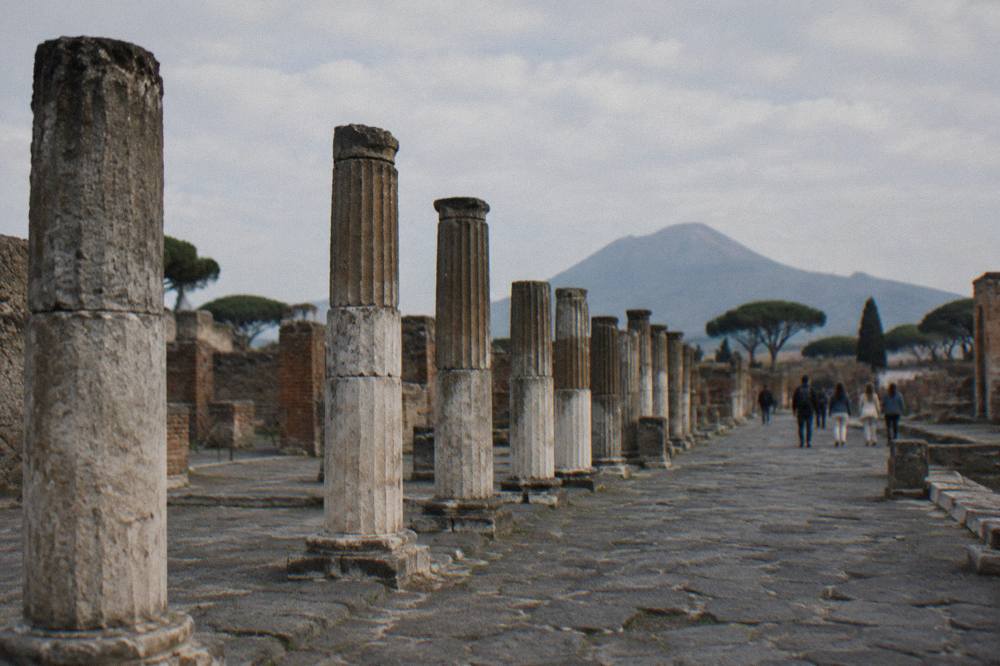
The cone is the obvious landmark of the whole bay. From inside the excavations, Vesuvius fills the northern horizon, a fact every photographer works with; the photography and viewpoints context on the site map shows where the classic crater-over-the-ruins frames come from.
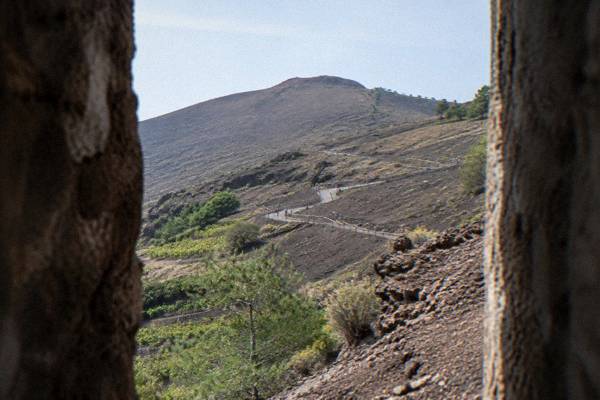
Vesuvius is a national park, and the crater trail is managed separately from the archaeological park. The Gran Cono path, the standard crater walk, is sold as timed slots through the park's official ticketing page: EUR 11.68 full and EUR 9.55 reduced as sold, with 50 tickets released per 10-minute slot up to 30 days ahead, plus 10 last-minute tickets per slot from 30 minutes before, issued in the visitor's name since 11 April 2026. The path closes automatically when an orange weather alert is issued, and refunds are automatic.
| Month | Gran Cono access hours | Daily cap |
|---|---|---|
| January, February, November, December | 09:00-15:00 | 2,160 to 3,240 visitors |
| March and October | 09:00-16:00 | 2,160 to 3,240 visitors |
| April, May, June, September | 09:00-17:00 | 2,160 to 3,240 visitors |
| July and August | 09:00-18:00 | 2,160 to 3,240 visitors |
The crater walk takes about 2 hours return by the shortest route and up to 3 hours by the longest, and the practicalities of climbing it, including cost, are covered in the dedicated pages on how much it costs to go up Mount Vesuvius and how long the walk up Vesuvius is.
How Did Vesuvius Destroy Pompeii In AD 79?
Vesuvius destroyed Pompeii in two stages across a single catastrophic day: hours of pumice fall that buried the city metre by metre, followed by pyroclastic surges of hot gas, ash and rock moving at lethal speed. The falling pumice loaded roofs until they collapsed on people sheltering inside, and the later surges killed those still in the open or hiding in the final hours, leaving Pompeii sealed under volcanic debris.
The sequence explains what archaeologists found. The upper layers of the deposit contain the victims caught by the surges, and the plaster casts made from hollows in the hardened ash preserve their final postures.
The same eruption buried three other Roman settlements on the bay. Herculaneum, closer to the volcano at Ercolano, was hit by the surges first and sealed in a pyroclastic matrix that preserved wood and organic material Pompeii lost; today the Herculaneum ticket is EUR 16 full and EUR 2 reduced for EU citizens aged 18 to under 25, though its Villa dei Papiri and Ancient Theatre are closed for works. Oplontis at Torre Annunziata and the Stabiae villas at Castellammare di Stabiae were buried in the same event and are visited on the park's wider ticket structure, explained in detail on the tickets page.
| Site buried in AD 79 | Modern location | Relationship to the volcano |
|---|---|---|
| Pompeii | Pompei, Campania | About 9 km south-east of the crater |
| Herculaneum | Ercolano, Campania | On the volcano's western flank, closest of the four |
| Oplontis | Torre Annunziata, Campania | Between Pompeii and Herculaneum on the coast |
| Stabiae | Castellammare di Stabiae, Campania | South-west of the crater across the plain |
Not everyone died, and the question of who escaped has its own answer in how many people died in Pompeii; the short version is that survivors' names appear in Roman records after the eruption, so the event emptied the city rather than ending every line in it.
When Did Vesuvius Erupt And Bury Pompeii?
Vesuvius erupted and buried Pompeii in AD 79, traditionally dated to 24 August from the oldest manuscripts of Pliny the Younger's letters, though the true date remains an open scholarly question: the park's own e-journal calls the rival 24 October reading a 1929 misreading with no evidentiary basis, while noting 24 August is not necessarily correct either, and a 2018 charcoal graffito some scholars read as mid-October has reopened the debate.
The debate matters less to a visitor than the season it implies. An eruption in late summer or autumn would have caught vineyards at or near harvest on the volcano's slopes, and carbonised loaves, walnuts and figs from the site fit either window. Scholars, not tour operators, will settle the question, and until they do the honest phrasing is the traditional one: 24 August AD 79, a date still debated.
What is certain is the monitoring: Vesuvius is among the most closely watched volcanoes on earth precisely because roughly three million people live in its surroundings, and the observatory on its flank exists for that reason.
Can You See The Volcano That Killed Pompeii Today?
Yes, and the pairing is the popular way travellers structure a day here: the excavations at Pompeii in the morning, then the Gran Cono crater trail on Vesuvius in the afternoon, with timed tickets bought online in advance for both. Many people hand the logistics to a single operator instead of stitching two timed entries together, and the full-day options from Sorrento are built around exactly this two-stop shape.
For travellers based in Sorrento, the full-day option that combines both halves on one itinerary is the Priority Access Pompeii and Mt Vesuvius Full-Day Tour, which starts from Sorrento and covers the ruins and the crater in a day: Check availability. Whether a guided day beats an independent one is a genuine question with arguments both ways, laid out in guided tour versus self-guided and touring Pompeii on your own.
Inside the city, the volcano is visible from almost the whole excavated area, and the walking itself is a different consideration, covered in how difficult it is to walk in Pompeii. If you would rather climb under your own steam, the practicalities of driving up Vesuvius and whether the climb is worth it have their own pages. What you see from the rim is the Somma caldera, the older arc of mountain that wraps the cone that formed inside it after AD 79, a shape that tells the eruption's afterlife in rock.
Common Questions About The Volcano That Destroyed Pompeii
Which volcano killed Pompeii?
Mount Vesuvius killed Pompeii. The eruption, traditionally dated to 24 August AD 79, buried the ancient Roman city, now an archaeological park in Campania, southern Italy, beside the modern town of Pompei about 24 km from Naples. The crater can be visited today on a timed online ticket.
Is Vesuvius still an active volcano?
Yes. Vesuvius is an active volcano and one of the most closely monitored in the world, standing inside a national park with an observatory on its flank.
When exactly did Vesuvius erupt and bury Pompeii?
The eruption is traditionally dated to 24 August AD 79, from the oldest manuscripts of Pliny the Younger's letters. The park's own e-journal says the alternative date, 24 October, has zero evidentiary basis and comes from a 1929 misreading, while adding that 24 August is not necessarily right either. Scholars still debate the question.
Can you visit both Pompeii and Vesuvius in one day?
Yes. The excavations and the crater are about 9 km apart, and many travellers do the ruins in the morning and the Gran Cono crater trail in the afternoon.
Did Herculaneum die in the same eruption?
Yes. The AD 79 eruption of Vesuvius buried Pompeii, Herculaneum at Ercolano, Oplontis at Torre Annunziata and the Stabiae villas at Castellammare di Stabiae. Herculaneum lies closest to the volcano and was sealed by pyroclastic material that preserved wood and organic remains. Its Villa dei Papiri and Ancient Theatre are currently closed for works.
Standing on the crater rim, the destroyed city is a grey-green band on the plain below, and the modern towns run right up to the older slope. That coexistence, three million people around a volcano that killed a Roman city, is the fact that makes the site more than a museum. The eruption that killed Pompeii was not the end of Vesuvius, and every visit to the bay walks through the middle of that story.