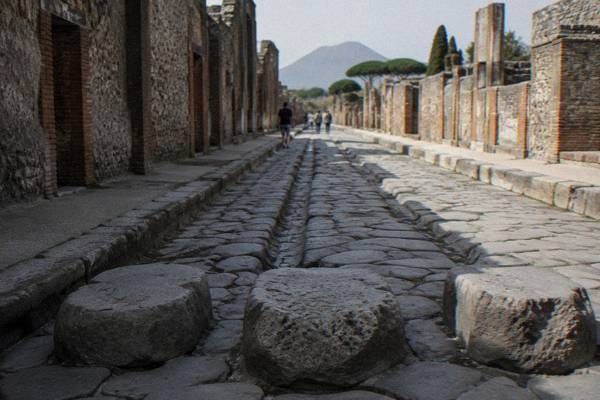
Pompeii Gladiator Barracks
The gladiator barracks of Pompeii, in Campania, southern Italy, sit beside the Large Theatre in the ancient city buried by Vesuvius in AD 79. This guide covers what the complex is, where to find it, and the ticket, timing and entry facts that decide how easily you see them.
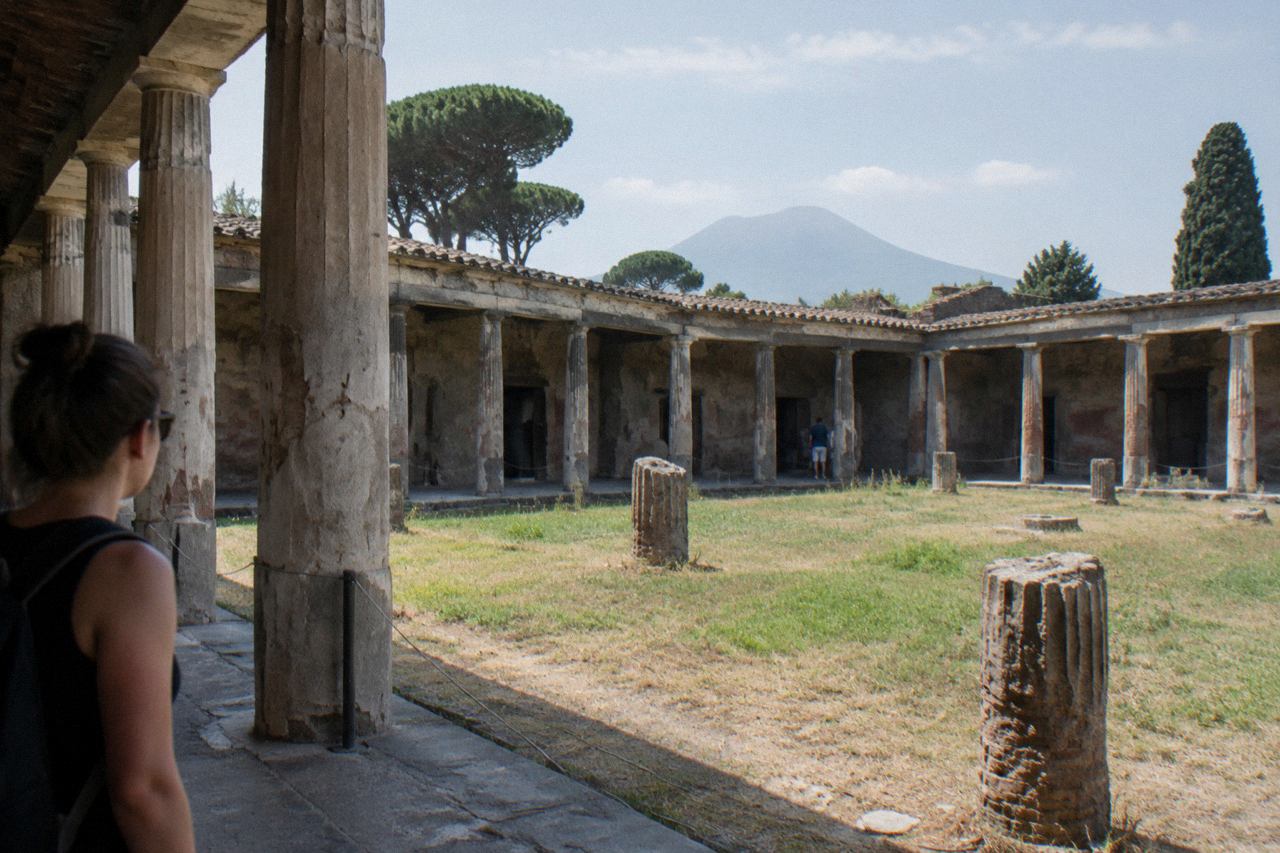
Short answer
The Pompeii gladiator barracks are a colonnaded courtyard complex beside the Large Theatre in the ancient city of Pompeii, about 24 km by road from Naples, Italy. Any 2026 Pompeii ticket covering the ancient city includes them: Pompeii Express costs EUR 20, Pompeii+ EUR 25 and the 3-day ticket EUR 30, with entry free for under 18s and on first Sundays.
Pompeii, the ancient Roman city buried by the eruption of Mount Vesuvius in AD 79 and now an archaeological park in Campania, southern Italy, holds one structure that draws travellers with a particular fascination: the gladiator barracks. The complex sits in the heart of the excavated city, beside the modern town of Pompei and about 24 km by road from Naples, within a park whose excavated area covers 44 hectares of a 98 hectare inscribed UNESCO property shared with Herculaneum and Torre Annunziata. The eruption that sealed the city is traditionally dated to 24 August AD 79, though the park's own e-journal notes the alternative 24 October date has no evidentiary basis and that even the traditional date is debated among scholars.
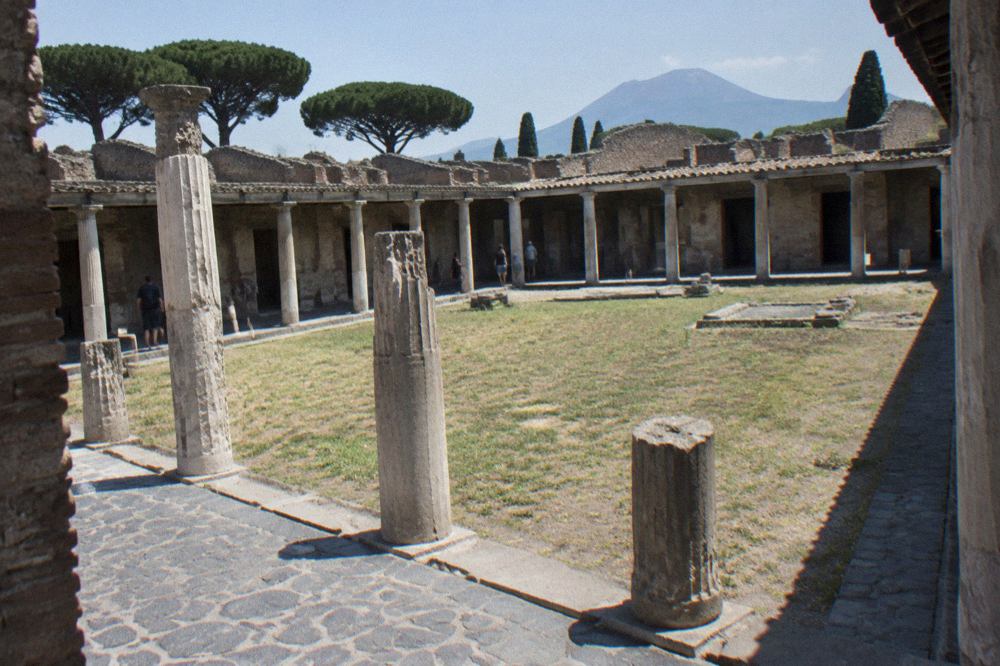
What Are The Pompeii Gladiator Barracks?
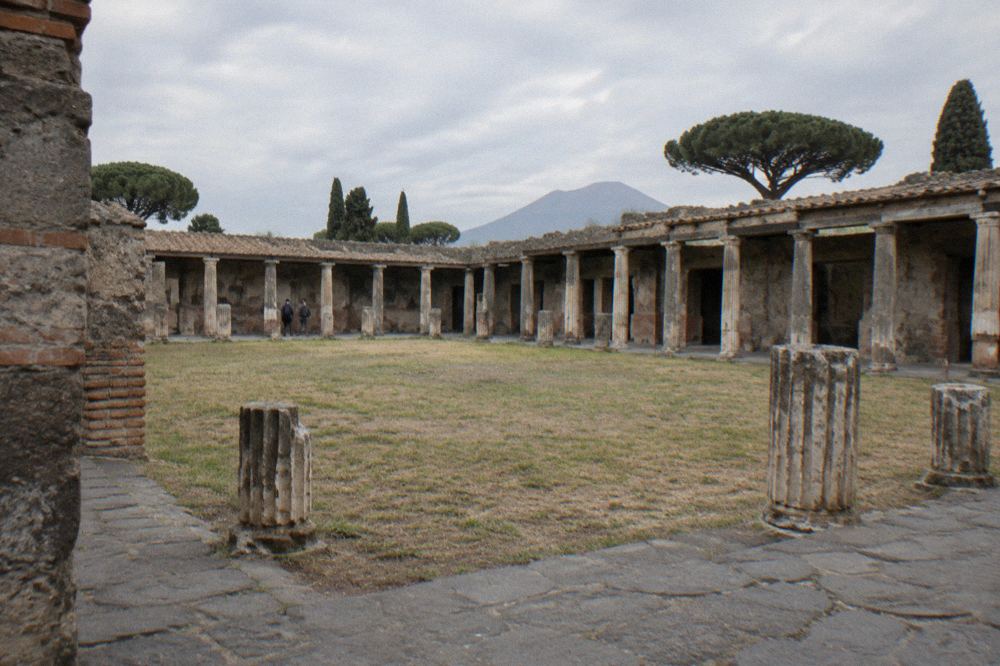
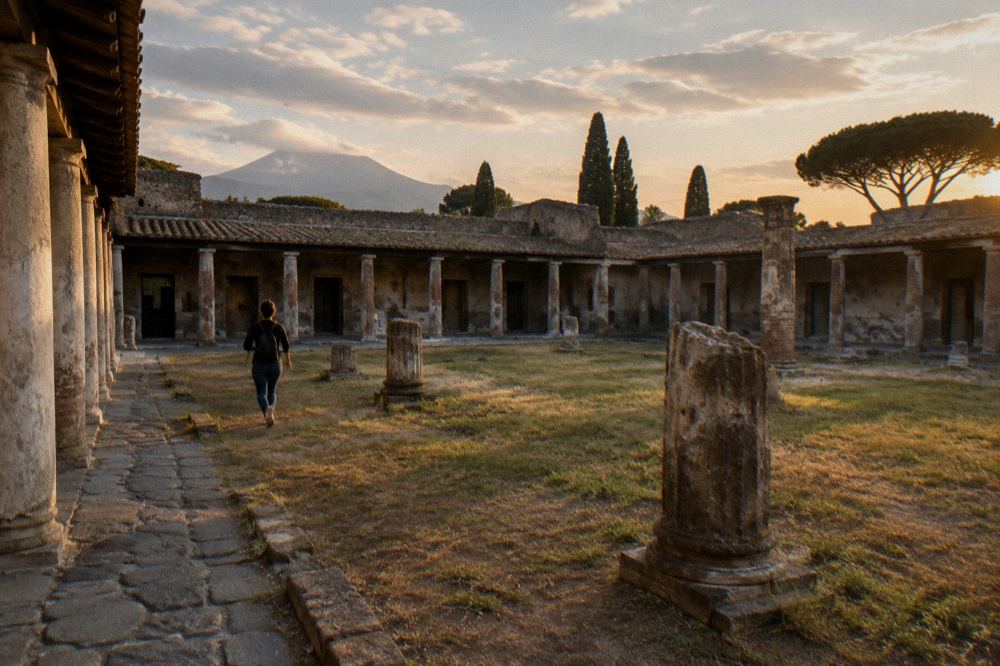
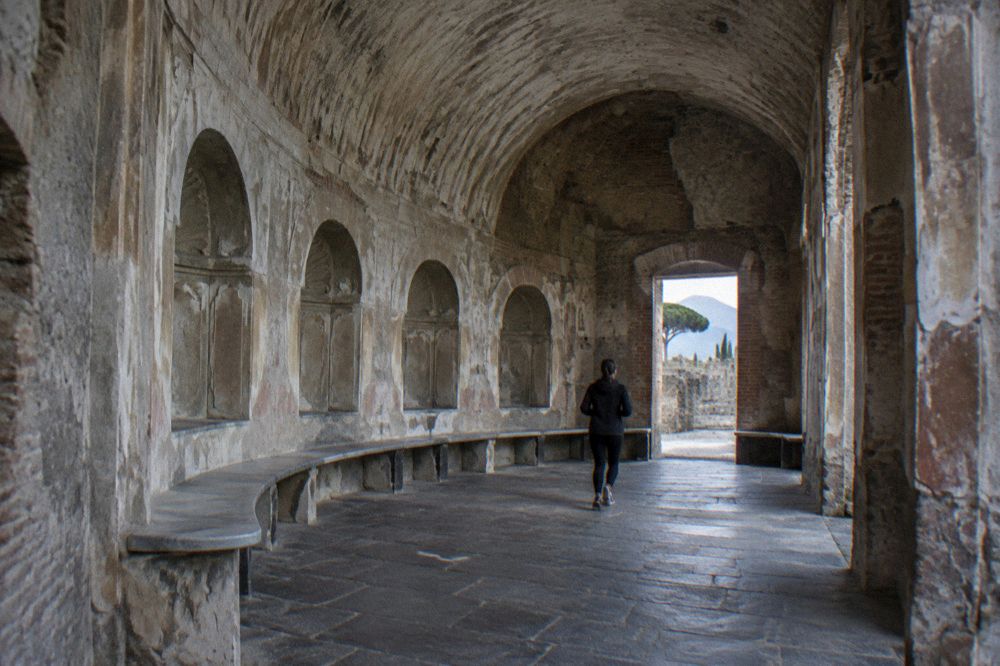
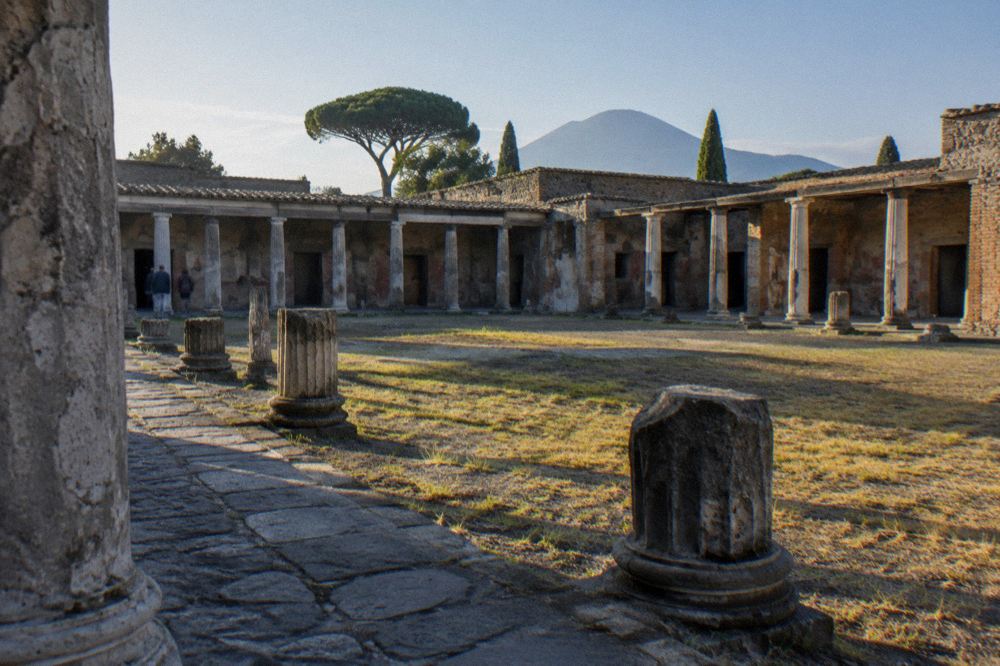
The Pompeii gladiator barracks are a large colonnaded courtyard attached to the theatre district of the ancient city, a structure whose open arcade and surrounding rooms were later used to house gladiators and their equipment, and today stand roofless but clearly legible beside the Large Theatre. Any ticket that admits you to the ancient city admits you here, with no separate charge and no separate queue, and the complex is one of several stops on a sensible walking route through the central insulae. The appeal is easy to explain. Gladiators are the figures visitors arrive already imagining, and this is the place in Pompeii where their daily life left physical traces in the ground rather than in a display case. The barracks sit close enough to the Large Theatre and the Odeon that you can stand in the portico, look across the courtyard, and understand how tightly packed public entertainment was in this quarter: two performance venues and a training compound within a couple of minutes' walk of each other. Unlike the villas on the city's edge, the barracks need no extra ticket tier, no shuttle and no separate entrance, which makes them one of the straightforward rewards inside the park.
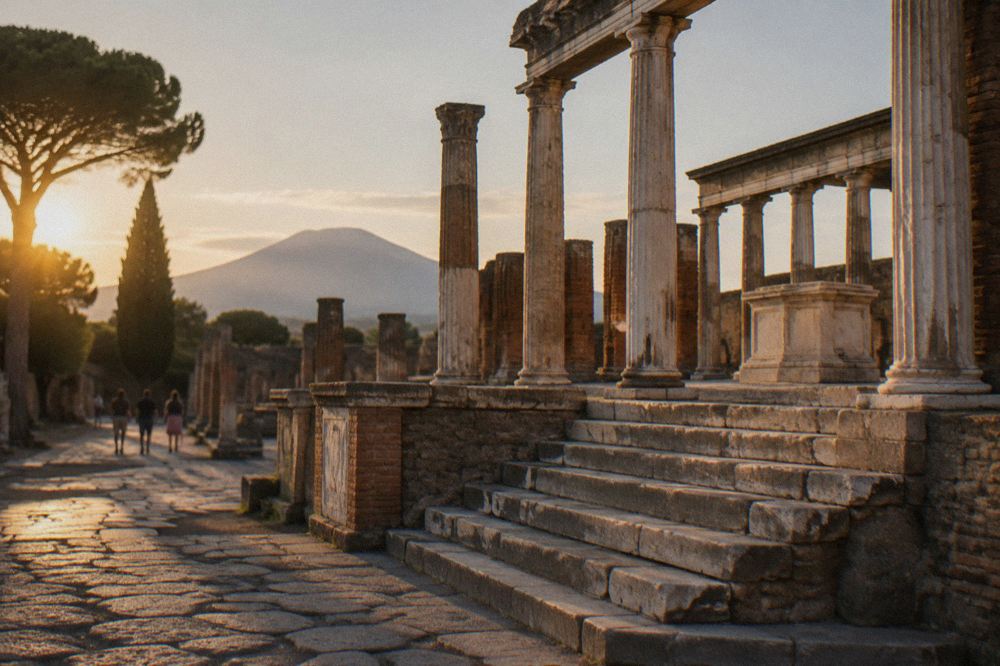
The park gives the complex no dramatised reconstruction: there is no staged arena show here and no costumed interpretation on the standard visit. What you get is the architecture itself, the arcaded outline of the courtyard, and the interpretive framing that a guide or a good audio guide supplies. That difference matters when planning. Visitors who arrive with only a paper map tend to walk through in a few minutes, register a pleasant colonnade, and move on. Visitors with a guide stop, because the stories attached to the finds from this quarter are the reason the place is famous, and a trained archaeologist can point at features a passer-by would never read as significant.
For context on the wider theatre quarter, the Large Theatre and Odeon guide covers the two performance buildings next door, and the Pompeii Amphitheatre guide covers the arena in the city's eastern quarter where combat spectacles themselves were staged. The amphitheatre is the venue; the barracks are the accommodation and preparation space. Keeping those two roles separate is the single most useful thing to understand before you arrive, because the palaestra-style courtyard here has nothing to do with the sand of the arena a fifteen-minute walk away.
Where Are The Gladiator Barracks On The Pompeii Map?
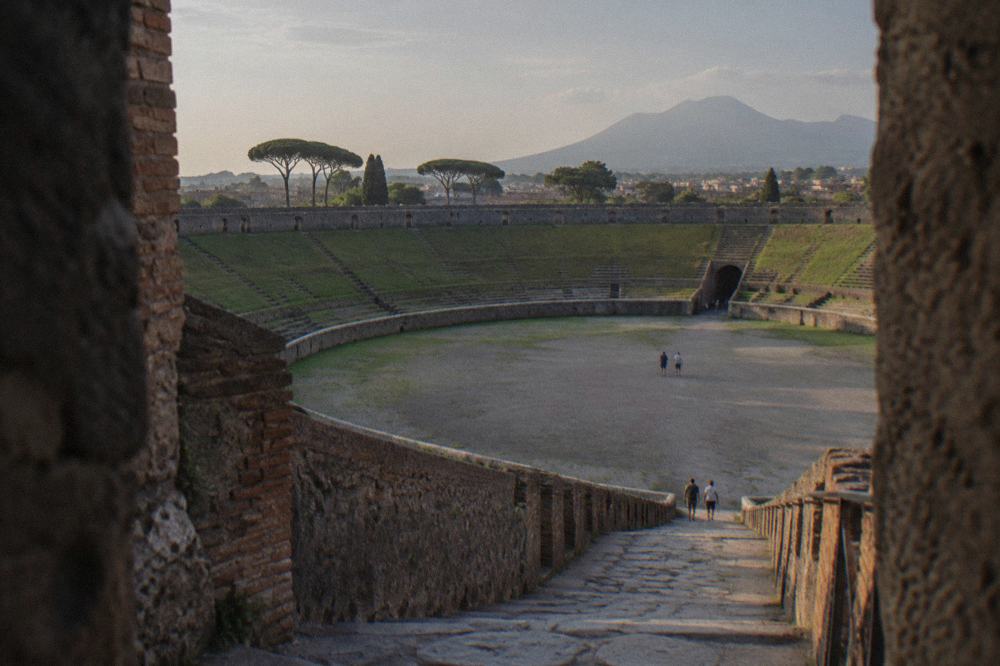
The gladiator barracks stand in the south-central part of the excavated city, directly beside the Large Theatre, reached in a short walk from the Porta Marina entrance and a somewhat longer walk from the Piazza Anfiteatro entrance on the eastern side of the park. The ticket offices at Porta Marina, Piazza Esedra and Piazza Anfiteatro all admit you, and the park's official map marks the theatre district clearly. For orientation, the Pompeii map page reproduces the layout with the named entrances and the main districts, which is worth a look before you set out, because the city's grid of stone-paved streets is disorienting on a first visit. From Porta Marina, the route runs east along the main decumanus toward the Forum, then south into the theatre quarter. From Piazza Anfiteatro you work westward, and the barracks arrive conveniently near the end of that walk, which suits visitors combining them with the amphitheatre first and finishing at the Forum.
Each of the three ticketed entrances suits a different plan. Porta Marina is the classical first-timer's entrance and the one served by the Circumvesuviana railway station Pompei Scavi-Villa dei Misteri, whose scheduled run from Napoli Garibaldi takes between 29 and 35 minutes on the route computed from the operator EAV's own timetable data. Piazza Anfiteatro is also the accessible entrance: the park's "Pompeii for All" route starts there, and visitors with mobility difficulties may exit at Piazza Anfiteatro or Piazza Esedra via the Antiquarium lift. One further named access, Porta Ercolano at the Street of the Tombs, serves the suburban villas route and is not the way in for the barracks.
| Entrance | Where It Serves Best | Notes |
|---|---|---|
| Porta Marina | Forum and theatre district, quickest route to the barracks | Nearest to Pompei Scavi-Villa dei Misteri station |
| Piazza Esedra | Amphitheatre quarter and accessible exit route | Antiquarium lift link on the accessible route |
| Piazza Anfiteatro | Amphitheatre, eastern insulae, accessible entry | Start of the "Pompeii for All" route |
| Porta Ercolano / Street of the Tombs | Suburban villas route only | Add-on for Express holders, EUR 8, card payment only |
A word on pacing. The excavated city covers 44 hectares, and the stone paving is uneven underfoot, so the distance from an entrance to the barracks is a walk to budget, not a stroll to assume. Comfortable shoes matter more than in nearly any other Italian sight; the What to Wear to Pompeii page on this site deals with that in detail. In the summer months the theatre quarter offers patches of shade in its arcades but the connecting streets are exposed, so water and a hat belong in the bag, subject to the park's size limit discussed below.
How Does A Guided Tour Change The Barracks Visit?
A guided tour turns the barracks from a pleasant colonnade into a legible story, because the features that make the complex significant are easy to walk past unexplained, and a guide who works the site regularly knows which nearby houses and finds connect to it. The featured option on this site is the small-group tour led by an archaeologist, which includes the entry ticket and devotes its two hours to the central districts where the barracks sit. The value of guidance at this particular monument is interpretive rather than logistical. There is no queue to skip at the barracks themselves and no hidden door a guide unlocks; what a guide adds is the reading of the space. The featured small-group archaeologist tour of Pompeii is booked through the operator's live listing, where the current price, departure point and cancellation terms are shown before payment. Check availability
Guides also solve the sequencing problem. The barracks sit in a district dense with stops, and the difference between a route that flows and one that doubles back is ten minutes here and there that add up across a hot afternoon. A guided itinerary moves from theatre district to Forum to a selected house or two in an order that makes geographic sense, and the guide adjusts to the crowd levels of the moment, which no printed route can do. For visitors weighing the choice honestly, the site's guided versus self-guided comparison lays out the trade-offs, and the best tour for Pompeii post answers the same question for readers who prefer the decision framed as a single recommendation.
Visitors combining Pompeii with its sister site across the bay should note that Herculaneum has its own archaeologist-led small-group option, and that the two sites reward different pacing; the Pompeii versus Herculaneum guide covers which to choose when time forces a choice.
For travellers who already know they want a guided day rather than only a guided two hours, the same featured Pompeii archaeologist tour pairs naturally with a morning or an afternoon slot, and the booking itself takes under ten minutes. The listing states the meeting point near an entrance, the inclusion of the entry ticket and the free-cancellation window, so there is little to resolve before you commit beyond choosing your date and time.
Which Pompeii Tickets Include The Gladiator Barracks In 2026?
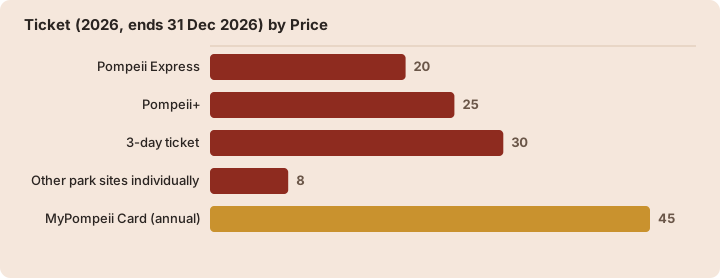
Every 2026 ticket that covers the ancient city includes the gladiator barracks: Pompeii Express at EUR 20 for the city alone, Pompeii+ at EUR 25 adding the suburban villas and the shuttle, and the 3-day ticket at EUR 30 extending to Oplontis, the Stabiae villas and museum, and Boscoreale. Reduced entry is EUR 2 for EU citizens aged 18 to under 25, and entry is free for under 18s and for everyone on the first Sunday of each month. These prices are the park's 2026 structure, in force since 12 January 2026, and they end on 31 December 2026. From 1 January 2027 a single EUR 25 ticket covers all park sites, valid 30 days with one entry per site, while the smaller sites of Oplontis, the Stabiae museum and Boscoreale stay at EUR 8 each and the annual MyPompeii Card stays at EUR 45. Anyone planning a visit across the New Year should check the live prices on the Pompeii tickets guide, which this site maintains for exactly this reason.
| Ticket (2026, ends 31 Dec 2026) | Price | What It Covers |
|---|---|---|
| Pompeii Express | EUR 20 | The ancient city, including the barracks and theatre district |
| Pompeii+ | EUR 25 | City plus suburban villas, Villa Regina, Antiquarium and shuttle |
| 3-day ticket | EUR 30 | Pompeii+ plus Oplontis, Stabiae villas and museum, Boscoreale |
| Other park sites individually | EUR 8 | Oplontis, the Stabiae museum, or Boscoreale |
| MyPompeii Card (annual) | EUR 45 | Annual pass, EUR 10 reduced |
Two rules matter at the gate regardless of ticket type. Tickets are nominative, introduced together with the park's cap of 20,000 visitors per day on 15 November 2024, and identification may be checked at every entry, with tickets non-transferable and non-refundable except in cases of extraordinary closure. Buying online through the ticketing service linked from the park's official page lets you choose a timed slot in advance, which in the high season is the difference between entering at your chosen hour and waiting.
When Is The Park Open And How Do The Entry Slots Work?
The park opens at 9:00 year round, with last entrance at 17:30 and closure at 19:00 from 16 March to 14 October, and last entrance at 15:30 with closure at 17:00 from 15 October to 15 March. Daily entry is split into two time bands: a maximum of 15,000 visitors in the 9:00 to 13:00 band and 5,000 in the 13:00 to 17:30 band, within the overall cap of 20,000 per day. The band split rewards afternoon arrivals in the busy season: the later band carries a third of the morning band's capacity, so queues thin, and the theatre district in particular is calmer after the midday tour groups have swept through toward the Forum and the exits. The park closes only on 25 December and 1 January unless otherwise communicated, and Pompeii itself has no weekly closing day, though the smaller satellite sites of Oplontis, the Stabiae villas and the Stabiae museum close on Tuesdays, a detail that catches out 3-day ticket holders planning their second day.
| Period | Opens | Last Entrance | Closes |
|---|---|---|---|
| 16 March to 14 October | 9:00 | 17:30 | 19:00 |
| 15 October to 15 March | 9:00 | 15:30 | 17:00 |
| Time Band (16 Mar to 14 Oct) | Maximum Visitors | Split Within the Band |
|---|---|---|
| 9:00 to 13:00 | 15,000 | 12,000 Express, 3,000 Pompeii+ |
| 13:00 to 17:30 | 5,000 | 3,000 Express, 2,000 Pompeii+ |
First Sundays deserve their own sentence: entry is free for everyone under the "Domenica al Museo" scheme, and the park's own release records a peak of more than 36,000 visitors on a single free first Sunday. On those days the theatre quarter is best attempted early or not at all, and the barracks courtyard, an open space that funnels people through a limited arcade, loses its calm entirely at peak flow. Other pages covering the same trip are gathered on Pompeii Travel Guide.
What Should You See Near The Gladiator Barracks?
Within a few minutes' walk of the barracks stand the Large Theatre, the Odeon, the Temple of Isis and the streets running down toward the Forum, so the sensible plan is to treat the barracks as the anchor of a theatre-district circuit rather than an isolated stop, then continue north to the Forum and west to the Forum Baths before exiting. The district rewards a slow hour more than any other part of the central city. The immediate neighbours give the barracks their meaning. The Large Theatre and Odeon were the district's performance venues, and gladiatorial spectacle belonged to the amphitheatre across the city rather than to these stages, which surprises many visitors.
| Nearby Stop | Direction From the Barracks | Why Stop |
|---|---|---|
| Large Theatre and Odeon | Immediately adjacent | The performance venues the barracks served alongside |
| Temple of Isis | A short walk south-east | One of the city's best-preserved temple precincts |
| Forum of Pompeii | North | Civic centre, colonnades and views toward Vesuvius |
| Stabian Baths | West of the Forum | The oldest of the city's bath complexes |
| Via dell'Abbondanza | North of the theatre quarter | The main commercial street, shops and crossings |
Visitors with a full day can extend eastward to the amphitheatre after the theatre district, or leave the city entirely for the suburban villas on the Pompeii+ ticket, where the Villa of the Mysteries is the celebrated draw. The choice between depth and breadth is genuinely personal; the How Long to Spend in Pompeii page frames it with real timings, and the one-day itinerary sequences the whole city for visitors who want a route written out for them.
How Difficult Is The Walk Around The Barracks District?
The walk to and around the gladiator barracks is moderate: the ground is ancient stone paving, worn, uneven and raised on stepping stones at the street crossings, with no shade across the open stretches and intermittent shade inside the arcades. Visitors with mobility difficulties have a designated "Pompeii for All" route that enters at Piazza Anfiteatro and exits at Piazza Anfiteatro or Piazza Esedra via the Antiquarium lift, and the theatre district sits beyond the smoothest part of that route. Honest expectation-setting matters here. This is not a museum with polished floors. The theatre quarter involves short ramps, kerb-like stone edges and surfaces that turn slick after rain, and the climate table below explains why summer afternoons need water and winter visits need layers. Monthly averages for the Pompei area, computed from the Open-Meteo historical archive for the 1991 to 2020 period, show the pattern plainly.
| Month (About, 1991-2020 Averages) | Mean Daily Max C | Mean Daily Min C | Rain mm |
|---|---|---|---|
| February | 12.6 | 6.5 | 103 |
| May | 21.6 | 14.1 | 59 |
| August | 29.4 | 21.8 | 22 |
| November | 16.9 | 11.5 | 180 |
November is the wettest of those months at about 180 mm of rain and July the driest at about 16 mm, while August carries the highest mean daily maximum at about 29.4 C. Those are thirty-year averages for the area rather than a forecast, but they set the frame: a summer visit to the theatre district is a heat-management exercise, and a late-autumn one needs a waterproof layer and an acceptance that stone underfoot is slippery when wet. The Pompeii weather and best time to visit guide works through the whole year month by month, and the summer heat plan addresses the July and August case specifically.
Why Does The 20,000 Visitor Cap Matter For Your Visit?
The 20,000 visitor cap limits how many people can enter, so it directly shapes your plans: expect crowds, competition for entry, and the possibility of missing out if you arrive unprepared. Booking ahead, arriving early, or timing your visit around quieter windows can make the difference between a smooth experience and a frustrating one.
| Year | Pompeii Site Visitors | All Park Sites |
|---|---|---|
| 2022 | 2,972,159 | Not Stated |
| 2023 | 3,985,424 | 4,079,235 |
| 2024 | 4,069,377 | 4,177,753 |
| 2025 | 4,000,090 | 4,118,926 |
Visitors pairing the barracks with a climb of the volcano should read the Mount Vesuvius guide before committing to a same-day plan, because the crater's timed-entry system is separate from Pompeii's and the two ticket pools do not interact. A Pompeii-plus-Vesuvius day is the classic combination from Naples and from Sorrento, and several organised options bundle both sites with lunch, sparing you the coordination.
What Rules Apply At The Entrances And Inside The Barracks?
The park's visitor regulations apply across the whole city: bags are limited to 30x30x15 cm with larger items left at left luggage, identification may be checked because tickets are nominative, drones are prohibited without authorisation, and bare chests are not permitted. The barracks themselves carry no additional rules beyond the park-wide ones. The bag limit catches out day-trippers carrying a full backpack for a Vesuvius climb afterward; plan to store luggage, and note that the Artebus shuttle offers luggage storage but no disabled access. The left-luggage arrangement and the storage options around the Pompei Scavi station are covered in detail on the Pompeii luggage storage page. Beyond the regulations, plain courtesy rules the theatre district: the arcades are narrow, tour groups move through in files, and standing aside to let one pass costs nothing.
For readers assembling the wider trip, this site's coverage runs from the practical, such as the Circumvesuviana train guide for the Naples and Sorrento rail links, to the thematic, including the Forum Baths and the House of the Faun. The barracks reward an hour; the city rewards a day; and the region rewards a week. Visitors with several days can follow the two-day Pompeii, Herculaneum and Vesuvius itinerary, which sequences all three sites without the rush.
Common Questions About The Pompeii Gladiator Barracks
Do I need a special ticket for the gladiator barracks in Pompeii?
No. Any ticket that admits you to the ancient city includes the barracks: in 2026 that is Pompeii Express at EUR 20, Pompeii+ at EUR 25 or the 3-day ticket at EUR 30, with free entry for under 18s and on the first Sunday of each month.
How far are the gladiator barracks from the Pompeii entrance?
The barracks sit in the south-central theatre district, a shorter walk from Porta Marina than from Piazza Anfiteatro at the eastern end. The city's excavated area covers 44 hectares, so allow a comfortable margin on stone paving rather than a museum-paced estimate.
Can you see the gladiator barracks with a mobility difficulty?
The park's "Pompeii for All" route enters at Piazza Anfiteatro and allows exit at Piazza Anfiteatro or Piazza Esedra via the Antiquarium lift. The theatre district lies beyond the smoothest stretch of that route, so ask at the entrance about current conditions before setting out.
Is a guided tour worth it for the barracks specifically?
A guide changes what you perceive rather than what you access. The featured small-group tour led by an archaeologist includes the entry ticket and covers the central districts; the operator's live listing shows the current price and cancellation terms before you pay.
When is the quietest time to visit the barracks?
The 13:00 to 17:30 entry band admits a maximum of 5,000 visitors against the morning band's 15,000, so the theatre district is generally calmer after midday, and free first Sundays, which have drawn more than 36,000 people in a day, are the busiest of all.
The gladiator barracks will never be the loudest stop in Pompeii, and that is precisely their charm: a courtyard where the city's fighters lived and trained, tucked beside two theatres, free of any extra charge, and best understood with someone who can read the stones. Book a timed slot, wear shoes that forgive Roman paving, and give the theatre district the unhurried hour it deserves.