Vesuvius Tour
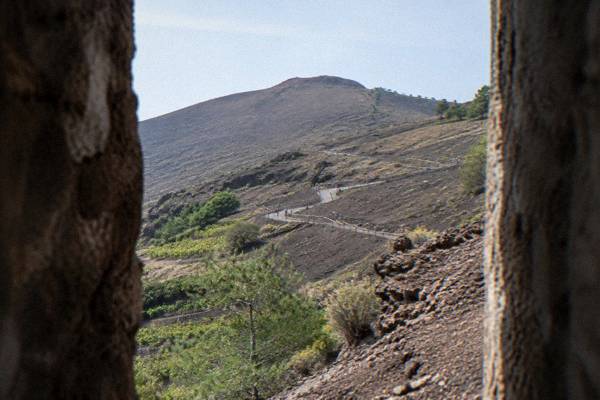
Mount Vesuvius stands about 24 km south-east of Naples in Campania, southern Italy, above the buried Roman city of Pompeii, and its crater trail is run by the Vesuvius National Park on timed, online-only tickets.
Short answer
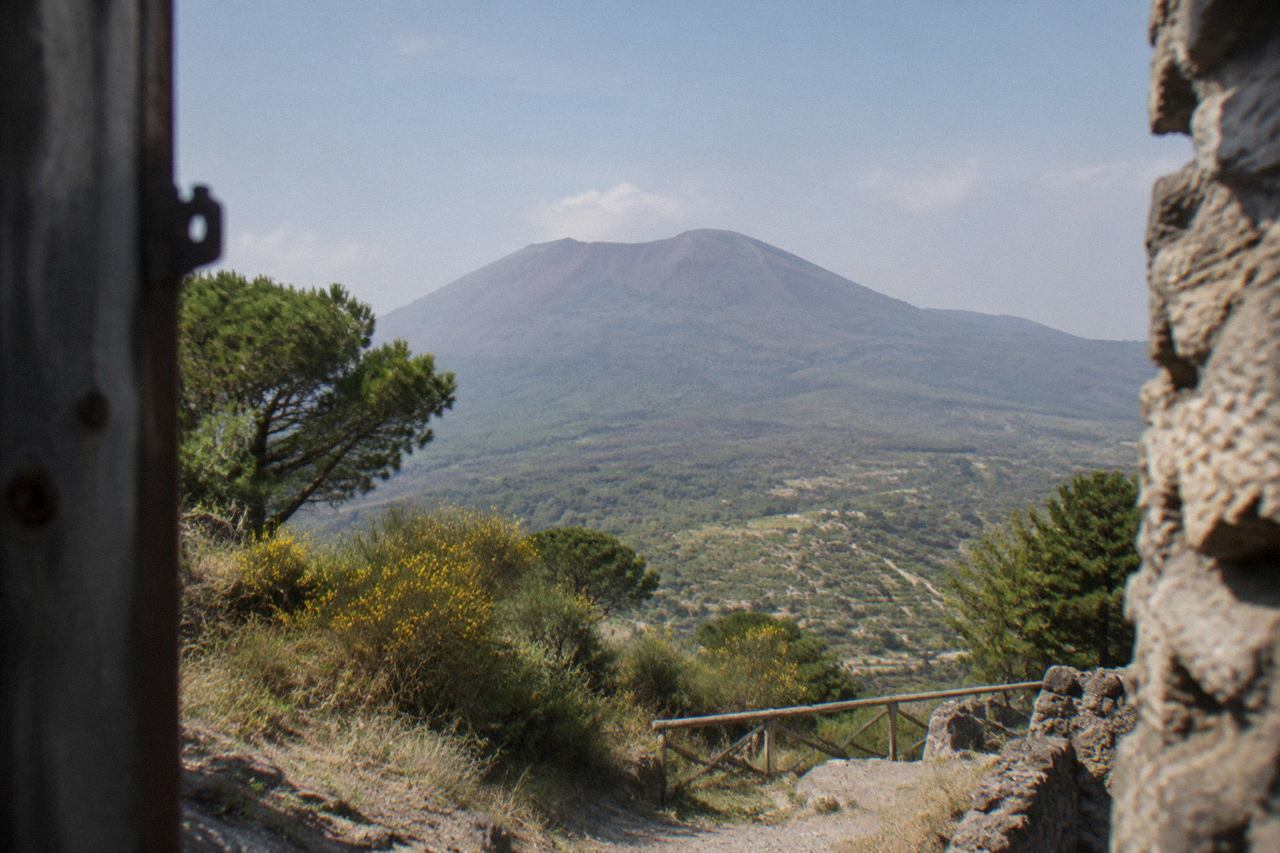
A Vesuvius tour from Pompeii means a timed entry to the Gran Cono crater trail, sold online only at EUR 11.68 full or EUR 9.55 reduced in 2026. Slots open 30 days ahead, the climb takes about 2 hours return by the shortest route, and the path closes automatically on an orange weather alert. Pair it with Pompeii on a combined day trip or visit it on its own from Naples, Pompei or Sorrento.
Mount Vesuvius rises above the Bay of Naples in Campania, southern Italy and a short hop from the excavations of ancient Pompeii, the Roman city it buried in AD 79. The volcano is not a ruin you wander freely: its Gran Cono crater trail sits inside Vesuvius National Park and is run on timed, online-only tickets with a daily visitor cap. That system shapes everything about how a modern Vesuvius tour works, from when you book to what happens if the weather turns.
This guide covers the ticket system, the guided-tour options that bundle the volcano with Pompeii, the bus and train connections from Pompei, the climb itself, and the months when the mountain is at its best. For the full picture on the ancient city below, start with the Pompeii Travel Guide homepage and the companion page on Vesuvius ticket options.
How To Visit Mount Vesuvius From Pompeii, Italy
From Pompeii, you can reach the Mount Vesuvius trailhead car park by shuttle bus, taxi, rental car, or organised tour, then allow roughly 2 to 3 hours for the return walk; note that the path closes automatically, with a refund, if an orange weather alert or higher is issued.
The practical starting point is the modern town of Pompei, whose Circumvesuviana station for the excavations is Pompei Scavi-Villa dei Misteri. From the Pompei area, the volcano is a drive of a few kilometres up to the park's parking area at a set elevation, from which the crater trail begins on foot. There is no rail line up the mountain: the final stretch is road, and the options are a seasonal shuttle service, a taxi or hire car, or a seat on a guided day tour that includes the transfer.
The trail itself is the Gran Cono, the rim path around the crater of the volcano that destroyed Pompeii and Herculaneum in AD 79. The park's own trail page sets out the mechanics: 50 tickets per 10-minute slot bookable up to 30 days ahead, groups admitted in batches of 60 per slot in three groups of 20, and 10 last-minute tickets per slot released from 30 minutes before each departure, issued in the visitor's own name since 11 April 2026. Children under 6 enter free, and reduced tickets apply to visitors under 25 and to residents of the 13 municipalities of the national park.
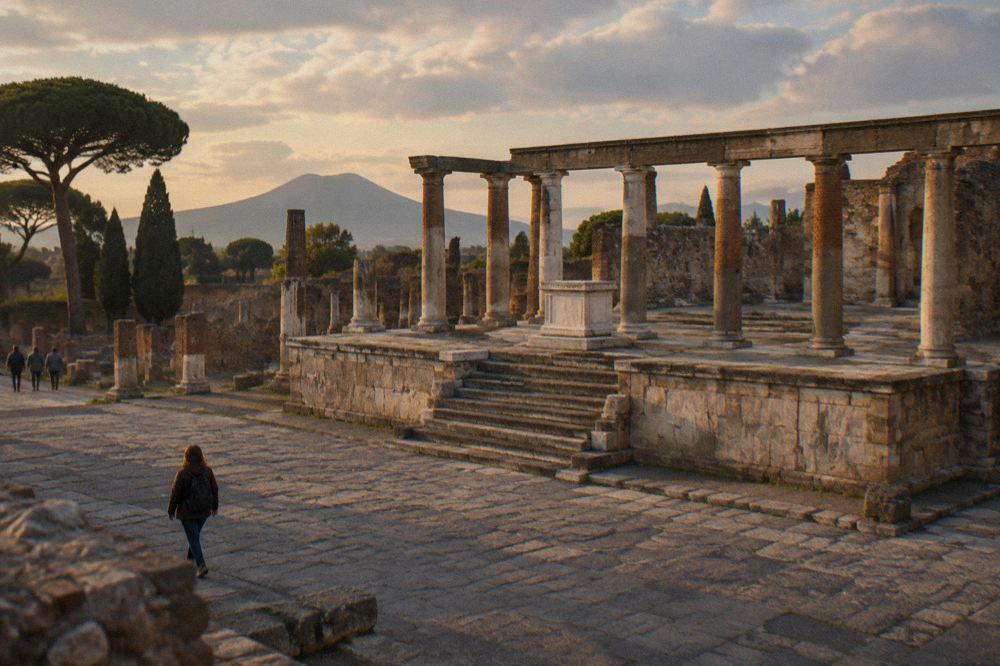
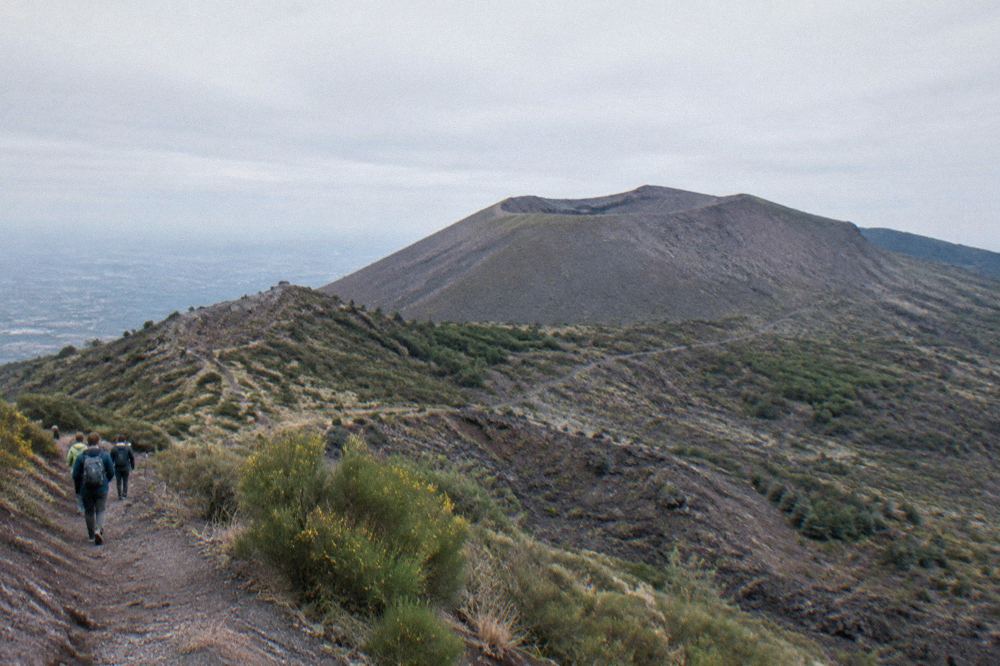
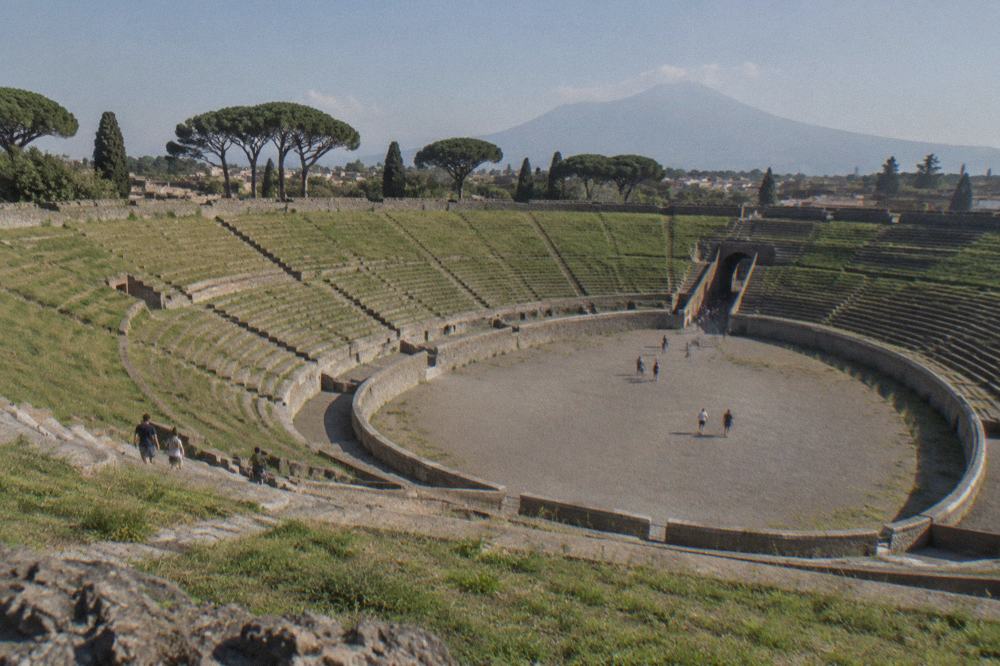
What you see from the top repays the planning. The rim looks down into the crater of the only volcano on mainland Europe to have erupted within the last century, and outward across the whole Bay of Naples: Naples itself, the islands, and the flat green sweep where Pompeii and its neighbouring sites lie. On a clear day the scale of the AD 79 destruction becomes readable in a single glance, which is why pairing the volcano with the city it buried has become the classic combination. The question of whether to do Pompeii or Vesuvius first matters most in summer, when the crater is hotter at midday and Pompeii's stones are worse still.
Vesuvius Tour Tickets: Prices, Slots And How Booking Works
A 2026 Gran Cono ticket costs EUR 11.68 full fare or EUR 9.55 reduced online, and it can only be bought as a timed slot through the national park's official ticketing channel, nominative since 11 April 2026. Slots open up to 30 days ahead at 50 tickets per 10-minute window, with 10 last-minute tickets per slot released from 30 minutes before; under-6s enter free, and under-25s and park residents pay the reduced rate.
| Ticket item | 2026 detail |
|---|---|
| Full fare (as sold online) | EUR 11.68 |
| Reduced fare (as sold online) | EUR 9.55 |
| Base fares in the regulation text | EUR 10 full / EUR 8 reduced |
| Booking window | Up to 30 days ahead |
| Slot mechanics | 50 tickets per 10-minute slot, 10 last-minute per slot from 30 min before |
| Group admission | 60 per slot, in three groups of 20 |
| Daily caps | 2,160 to 3,240 visitors |
| Free entry | Children under 6 |
| Reduced entry | Under-25s and residents of the 13 park municipalities |
Two practical consequences follow from the online-only rule. First, you cannot buy a crater ticket at a station or a visitor centre on the day in the ordinary way: the last-minute mechanism exists, but it is part of the same online system, released in the half hour before each slot, and it is nominative, meaning the name on the ticket must match the person at the gate. Second, if the park closes the path for weather, an orange alert or higher, the closure is automatic and so is the refund. The fuller mechanics, including what happens with same-day plans, are covered in buying Vesuvius tickets on the day.
The other timing rule is seasonal. Access hours change by month, and arriving outside them means a closed barrier. Note that the crater ticket is entirely separate from Pompeii's own tickets: the ancient city's 2026 prices run from EUR 20 for the Pompeii Express to EUR 30 for the 3-day ticket, with a single EUR 25 all-sites ticket replacing that structure on 1 January 2027, a change traced in detail on the Pompeii tickets page.
What A Guided Vesuvius Tour Includes And Which To Choose
A guided Vesuvius tour bundles what the bare crater ticket does not: transport to the trailhead, a guide on the rim, and often a visit to Pompeii in the same day, with lunch or wine tasting on some departures. Whether the crater entry itself is included varies by product, so check the operator's live listing for the exact inclusions. For travellers basing themselves in Naples, a combined Pompeii and Vesuvius tour with lunch is the least logistics-heavy way to see both in one day.
The choice comes down to three shapes. A Pompeii-and-Vesuvius day tour from Naples handles the two timed entries and the mountain transfer in one booking, usually with a lunch stop, and suits anyone who would rather not manage buses and slots alone. A Pompeii small-group tour with an archaeologist, paired with a separately bought crater ticket, suits travellers who want depth in the city and are happy to organise the volcano themselves. And a lunch and wine tasting inside the national park turns the volcano day into a food day, pairing the crater with the wineries that grow on Vesuvius's slopes, a story told at length in the Vesuvius wine tasting guide.
The featured option on this page is the Exclusive Pompeii & Vesuvius Tour with Lunch from Naples, which sits in the first shape: a small-group day from Naples that covers the city and the volcano with lunch included. Read the description of what the day includes on the operator's live listing, or browse the full roster on the tours hub.
For visitors who prefer to climb independently, a plain Vesuvius ticket with a digital guide is the budget shape: it covers timed entry and an audio commentary on your phone, and you arrange the transfer yourself. Booking transport and ticket separately gives you control over timing, but it also means you carry the risk of a missed slot if a connection runs late.
Getting From Pompeii To Vesuvius: Bus, Train And Driving
There is no train up Mount Vesuvius, so from Pompei you reach the crater trailhead by road: the easiest option is a shuttle bus from the Circumvesuviana stations, a taxi or hire car offers more flexibility with timing, and organised tours take care of the whole trip for you.
The bus option is the one this section exists to explain, because the "Pompeii to Vesuvius bus" question folds several services together. Shuttle buses connect the Circumvesuviana corridor to the Gran Cono parking area in the visiting season, running up the mountain road and back down on a schedule that matches the park's access hours.
The rail spine is the Circumvesuviana Napoli-Sorrento line. From EAV's own timetable data, scheduled running times are 29 to 35 minutes from Napoli Garibaldi to Pompei Scavi-Villa dei Misteri, with a median of 29, and 34 to 40 minutes from Pompei Scavi onward to Sorrento. EAV announced new trains and a new timetable for the Vesuvian lines on 16 September 2026.
| Route | Mode | Detail from the verified data |
|---|---|---|
| Pompei Scavi to trailhead | Shuttle bus or road | Seasonal shuttle matches park access hours |
| Napoli Garibaldi to Pompei Scavi | Circumvesuviana | 29 to 35 min scheduled, median 29 |
| Pompei Scavi to Sorrento | Circumvesuviana | 34 to 40 min scheduled |
| Naples to Pompei Scavi | Road | 24 km, about 22 min driving |
| Sorrento to Pompei Scavi | Road | 26 km, about 37 min driving |
| Rome to Pompei Scavi | Road | 234 km, about 2 h 40 min driving |
Driving yourself is straightforward in the plains and winding at the top, and the question of driving up Vesuvius has its own answer page, as does the practicalities of parking near Pompeii if you are combining the two sites. The road distances above come from OpenStreetMap routing and are driving times, not public transport times.
The Crater Trail: Distance, Time And What The Climb Is Like
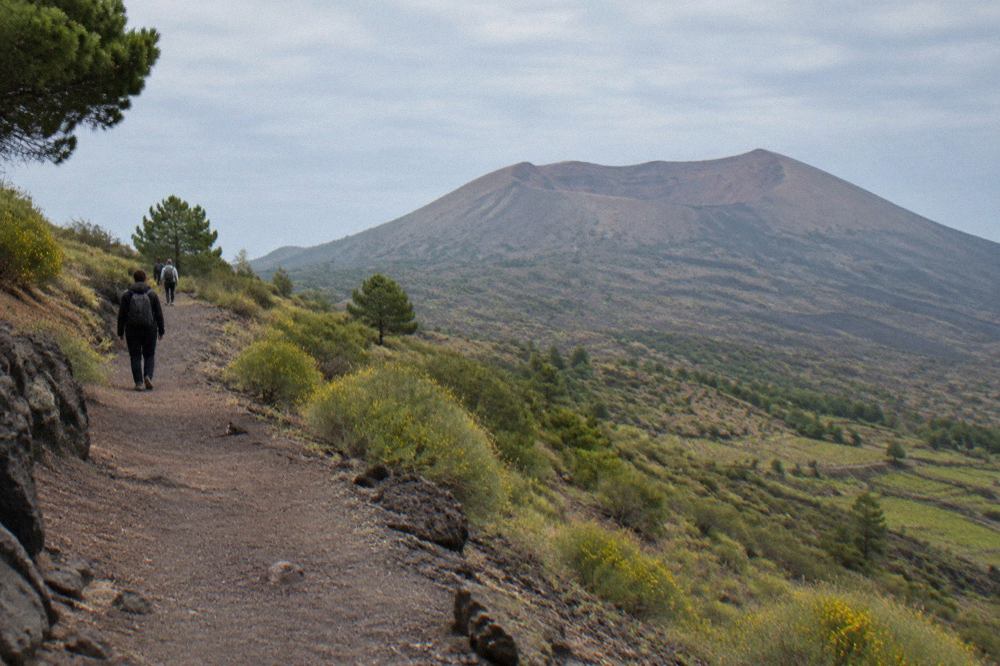
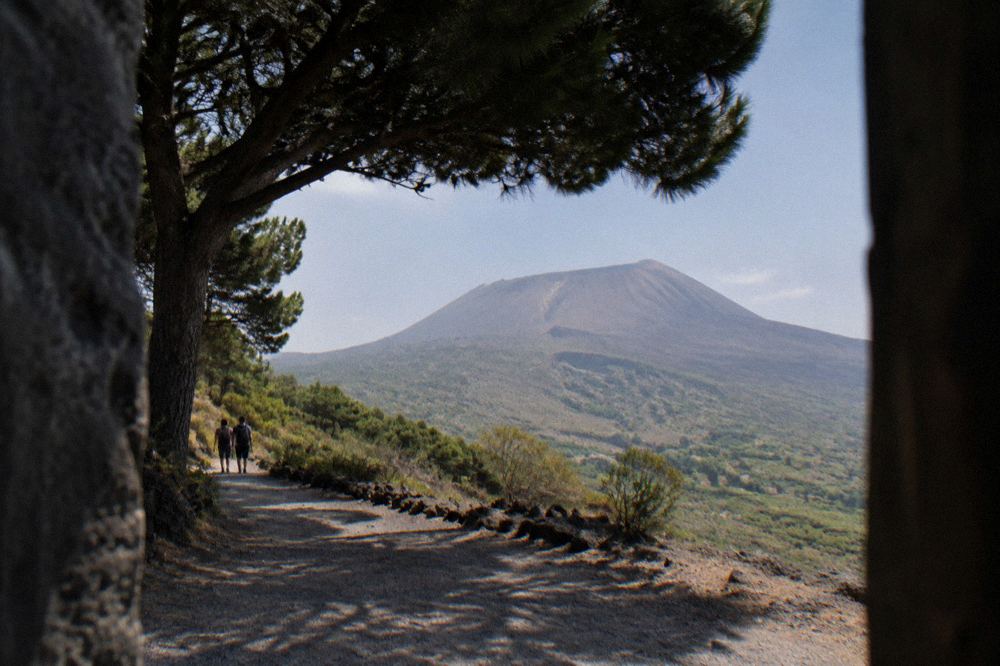
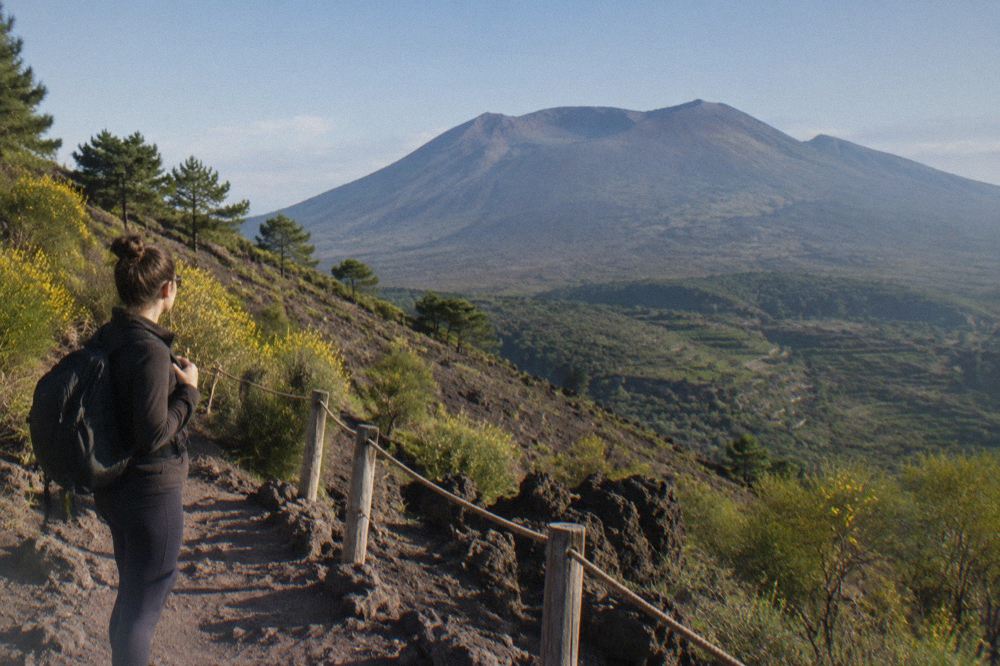
The Gran Cono excursion takes about 2 hours return by the shortest route and up to 3 hours by the longest, on a rocky footpath climbing from the parking area to the crater rim, with no shade on the upper slopes. The reward is the crater itself, a steep-walled depression you walk directly along, and the panorama over the Bay of Naples from the rim. Wear closed shoes with grip, carry water, and treat the path as a mountain walk, not a city stroll.
The trail is a there-and-back ascent on volcanic ground: uneven stone and ash underfoot, a steady gradient, and exposure to sun and wind once you clear the lower scrub. The park's page gives the 2 to 3 hour return range, which covers the shortest and longest route variants. The mechanics of the climb, its difficulty and what the gradient feels like are unpacked in the dedicated answer on how long the walk up Vesuvius is, and the route itself is described in the Vesuvius crater trail attraction page and the broader Mount Vesuvius hike guide.
| Trail fact | 2026 detail |
|---|---|
| Return time, shortest route | About 2 hours |
| Return time, longest route | Up to 3 hours |
| Start point | Parking area at the trailhead, reached by road |
| Terrain | Rocky volcanic path, no shade on upper slopes |
| Admission control | Timed slots, gate at the trailhead |
| Closure rule | Automatic on orange weather alert or higher, automatic refund |
Temperatures at the top deserve a sentence of their own. The summit is cooler and windier than the coast, and in the early months of the year it can be genuinely cold on the rim; the dedicated answer on whether it is cold at the top of Vesuvius covers what to pack by season. In July and August the opposite problem applies: the access window runs to 18:00, and the middle of the day is hot, exposed climbing. A morning slot, early in the access hours, is the comfortable compromise in high summer.
One rule to state plainly: taking volcanic rock from the trail is prohibited, as the answer on removing stones from Vesuvius sets out. The park protects its own geology the way the archaeological park protects its city.
Best Time Of Year For A Vesuvius Tour
April to June and September are the best months for a Vesuvius tour: the crater runs 09:00-17:00, giving you the longest comfortable access without peak-summer heat. July and August stretch hours to 09:00-18:00 but bring the peak daily cap of 3,240, while the winter months shrink the window to 09:00-15:00 and leave the rim at its coldest.
| Months | Access hours | Notes for planning |
|---|---|---|
| January, February, November, December | 09:00-15:00 | Shortest window, coldest rim, fewest crowds |
| March, October | 09:00-16:00 | Shoulder season, comfortable walking |
| April, May, June, September | 09:00-17:00 | Widest shoulder windows, good visibility |
| July, August | 09:00-18:00 | Longest window, hottest climb, book slots early |
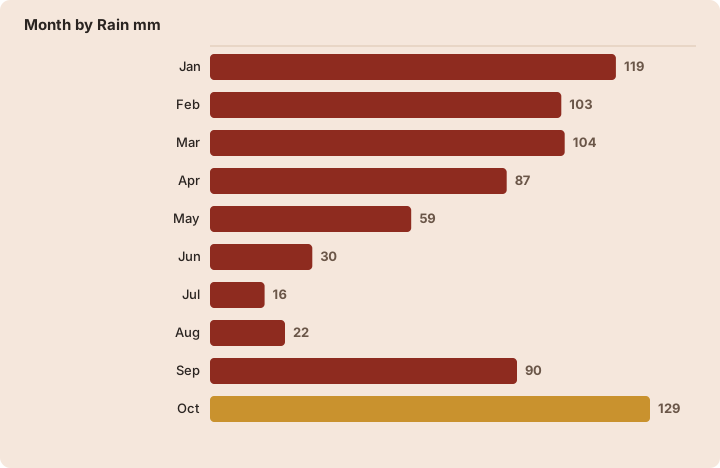
Rain is the second variable. The Pompei area's 1991-2020 climate normals, computed from the Open-Meteo historical archive at the local grid point, show November as the wettest month with about 180 mm of rain and July as the driest with about 16 mm. August has the highest mean daily maximum at about 29.4 C, and February the lowest mean minimum at about 6.5 C. These are 30-year averages from a reanalysis grid, not a weather station, so treat them as guidance on what a month typically feels like rather than a forecast.
| Month | Mean daily max C | Mean daily min C | Rain mm |
|---|---|---|---|
| Jan | about 12.2 | about 6.6 | about 119 |
| Feb | about 12.6 | about 6.5 | about 103 |
| Mar | about 14.9 | about 8.1 | about 104 |
| Apr | about 17.7 | about 10.4 | about 87 |
| May | about 21.6 | about 14.1 | about 59 |
| Jun | about 25.8 | about 18.2 | about 30 |
| Jul | about 28.7 | about 21.1 | about 16 |
| Aug | about 29.4 | about 21.8 | about 22 |
| Sep | about 25.3 | about 18.6 | about 90 |
| Oct | about 21.3 | about 15.1 | about 129 |
| Nov | about 16.9 | about 11.5 | about 180 |
| Dec | about 13.2 | about 8.0 | about 147 |
The months to weigh carefully are therefore November and December, when rain is at its highest and the access window closes at 15:00, and July and August, when the window is longest but the midday climb is punishing. The broader trade-offs, including what the same normals mean for the excavations below, are laid out in the site's weather and timing coverage, and the pairing question is answered in whether going up Vesuvius is worth it.
Weather Closures, Safety And The Volcano Today
**The Gran Cono ticket office and path close automatically whenever an orange weather alert or higher is issued, with an automatic refund for the affected slot, so check the forecast and the park's own pages on the morning of your climb.
The closure rule is the single most useful thing to know about a Vesuvius booking. It is not discretionary: the mechanism fires on the alert level, and the refund fires with it, so a weather-spoiled slot costs you your day but not your money. That also means a same-day backup plan is worth having, and the nearby excavations are the obvious one, with their own opening hours and a winter timetable from 15 October whose details sit on the tickets page.
On the volcano's present state, the honest position is restraint. The park's own trail page says nothing about an alert level, and the widely repeated green status comes from third-party sites rather than the monitoring body's bulletin, so it is not stated as fact here. The questions of whether Vesuvius could erupt again and why Naples was not destroyed in AD 79 are covered in their own answer pages, along with the 1944 eruption's death toll.
Pompeii And Vesuvius In One Day
Yes, Pompeii and Vesuvius fit in one day, and it is the most popular way to do both: a morning in the excavations, an afternoon on the crater, with the transfer between them by shuttle, taxi or tour coach. The constraint is the crater's timed slots and seasonal closing hours, so in winter months the volcano has to come first or the slot has to be an early afternoon one. A combined tour removes the slot-juggling entirely.
The sequencing logic is simple. In January or November, with the crater closing at 15:00, the volcano needs the morning slot. In July or August, with admissions to 18:00, either order works, though the heat argues for Pompeii early, shade breaks at midday, and the crater in the later afternoon.
| Your situation | Best-fit plan |
|---|---|
| Based in Naples, one free day | Combined Pompeii and Vesuvius tour with lunch |
| Independent, summer timetable | Pompeii at opening, crater slot in late afternoon |
| Independent, winter timetable | Early crater slot, Pompeii in the early afternoon |
| Family with children | City in the morning, crater by shuttle, plenty of water |
| Wine-minded travellers | Crater early, then lunch and tasting in the national park |
The full worked versions of this pairing, with routes through the ancient city sized to the time left over, are the Pompeii and Vesuvius in one day itinerary and, for a slower pace, the two-day Pompeii, Herculaneum and Vesuvius plan. The cost question, what the day adds up to in tickets alone, is answered in how much it costs to go up Vesuvius.
Planning Details That Decide How The Day Goes
Four details carry an outsized share of a Vesuvius day: booking the crater slot before anything else, matching your transport to the slot time, carrying water and closed shoes for the trail, and keeping a weather fallback because the path closes automatically on an orange alert. The volcano's daily caps, 2,160 to 3,240 depending on the season, mean popular summer slots can sell out well ahead, while the 30-day booking window is the ceiling on how early you can lock one in.
Footwear earns its emphasis. The trail is volcanic rock and loose ash, and sandals that survive Pompeii's cobbles can fail on the crater path; the site's advice on what to wear to Pompeii applies doubly on the mountain. Water matters more than food on the climb itself, since the exposure is real and the fountain infrastructure on the upper path is not something to rely on.
For orientation, the Pompeii map page shows how the excavation entrances, Porta Marina, Piazza Esedra and Piazza Anfiteatro, relate to the Circumvesuviana station and the road out toward the volcano, which is the mental geometry a combined day depends on. And for the deeper history of the mountain that makes the rim walk mean something, the site's account of when Vesuvius erupted covers the AD 79 eruption and the debate over its exact date, which the park's own journal says remains open.
Common Questions About A Vesuvius Tour
Can you buy Vesuvius tickets on the day?
Only through the online system's last-minute mechanism: 10 nominative tickets per slot are released from 30 minutes before each departure, a rule in force since 11 April 2026.
How long is the walk up Vesuvius?
About 2 hours return by the shortest route and up to 3 hours by the longest, on a rocky volcanic path from the trailhead parking area to the crater rim.
What happens if the weather is bad?
The ticket office and path close automatically on an orange weather alert or higher, and the refund is automatic for the affected slot.
Do I need a guide for the Gran Cono trail?
No, the trail is walked independently by ticket holders, and the park's digital-guide ticket option adds commentary on your phone. A guided tour adds value mainly through transport to the trailhead, the pairing with Pompeii, and interpretation on the combined day, rather than through any requirement of the trail itself.
Get those four right and the rim of the volcano that shaped this whole coast, and buried the city at its feet, is one of the most straightforward great views in southern Italy to stand on.