Campania Artecard
The Campania Artecard bundles several Campania attractions into one pass, and Pompeii sits at the centre of its coverage area. This guide sets out what the card does, how it compares with the Pompeii Archaeological Park's own 2026 tickets, and when a pass beats buying separately.
Short answer
The Campania Artecard is a regional sightseeing pass covering public museums and archaeological sites across Campania, southern Italy, including the Pompeii park. In 2026 Pompeii's own tickets run EUR 20 to EUR 30 and a single EUR 25 ticket for all park sites starts on 1 January 2027, so whether the card saves money depends on how many covered sites you visit. The pass prices are listed on the operator's own page.
The Campania Artecard is the regional sightseeing pass of Campania, the region of southern Italy that holds the ancient city of Pompeii, about 24 km by road south-east of Naples, beside the modern town of Pompei. The pass is run by the region's culture and tourism bodies and bundles entry to a long list of state and regional museums, archaeological areas and monuments across Naples, the Vesuvian sites and the wider province. Pompeii is the single biggest draw on that list, and the question this guide answers is a narrow one: for a traveller whose anchor sight is Pompeii, does the card pay for itself, or does the park's own ticketing system serve you better in 2026? Everything below rests on the park's published 2026 prices, the confirmed 2027 change, and the transport data taken from the regional operator's own timetable files.
What Is The Campania Artecard And What Does It Cover?
The Campania Artecard is a time-limited pass, sold in several tiers, that bundles entry to participating museums and archaeological sites across Campania, including the Pompeii Archaeological Park, Herculaneum and the other Vesuvian sites. Some tiers add free or discounted regional public transport. Prices and the exact tier structure are published on the Artecard operator's own page and change between seasons, so this guide never prints a card price, it compares what the card must beat.
The pass family historically works like this: a cheaper Naples-focused tier covering city museums, and broader tiers that stretch across the region, valid for a set number of days, with a list of sites that are free and a second list that are discounted rather than included. The important structural point for a Pompeii-centred trip is that the card covers entry, not tours. It does not include a guide, an audio guide, a skip-the-line escort or any transport beyond what a specific tier states, so a traveller comparing it against the products on this site's tours hub is comparing entry against entry-plus-guide, two different purchases.
The card is bought online or at participating outlets and activated at first use. Two practical cautions carry weight in 2026. First, Pompeii now runs nominative tickets and a 20,000 visitors-per-day cap, in force since 15 November 2024, so pass holders still meet the same entry control as everybody else. Second, the covered-site list is not fixed forever: sites close for works, and at Herculaneum the Villa dei Papiri and the Ancient Theatre are closed until further notice. A pass that includes a site you cannot enter is a worse deal the day you arrive, so check the live covered list before buying rather than relying on a printed summary.
For the park's own entry rules, opening hours and ticket offices in full, the companion page on Pompeii tickets and opening hours carries the detail, and it is updated against the park's own pages.
Is The Campania Artecard Worth It For Pompeii?
For a visitor whose only major paid site is Pompeii, the Artecard does not pay: the park's 2026 Express ticket is EUR 20, cheaper than any regional pass tier, and from 1 January 2027 a single EUR 25 ticket covers every park site for 30 days. The card becomes worth arithmetic only once you stack two or more paid covered sites, typically Pompeii plus one of the big Naples state museums, in the card's validity window.
The honest way to run the sum is to price your itinerary site by site first, using the park's published 2026 figures, then hold the total against the card price on the operator's page. A day built around Pompeii alone, entering the ancient city, costs EUR 20 in 2026. Add the suburban villas route and the Express becomes the Pompeii+ at EUR 25, or a 3-day ticket at EUR 30 spanning Oplontis, the Stabiae villas and Boscoreale as well. Reduced entry is EUR 2 for EU citizens aged 18 to under 25, entry is free for under 18s, and everyone enters free on the first Sunday of the month, which can wipe out the card's advantage entirely if your dates line up.
The 2027 change makes the arithmetic harsher for the card. From 1 January 2027, per the park's release of 14 September 2026, one EUR 25 ticket covers all park sites, valid 30 days, one entry per site, with Oplontis, the Stabiae site and Boscoreale at EUR 8 individually and the My Pompeii Card annual pass at EUR 45. That single ticket replaces today's three-tier structure and covers exactly the cluster of Vesuvian sites a regional visitor would otherwise have bought piecemeal. The regional card then has to justify itself on the Naples museums and the coast, not on the Vesuvian archaeology.
There is also a queue argument that travellers overweigh. The Artecard, like any pre-purchased entry, saves the ticket-office queue, not the security and entry control, and Pompeii's ticket offices at Porta Marina, Piazza Esedra and Piazza Anfiteatro sell to a daily cap that is rarely binding outside the free first Sundays, which have drawn more than 36 000 people in a single day. If crowd avoidance is the goal, a timed entry or a small-group guided tour manages it better than any pass.
For travellers who want the pass experience plus an explanation, the pattern that works is pass for entry, guide for meaning. The private option this site features, the Pompeii 2H Private Tour with an Archeologist Guide, is exactly that shape: you hold your entry, the archaeologist holds the narrative, and Check availability on the live listing before locking your date.
How Does The Artecard Compare With Pompeii's Own 2026 Tickets?
In 2026 the Pompeii park sells three tiers, EUR 20, EUR 25 and EUR 30, all ending on 31 December 2026, and the Artecard must beat the sum of whichever tiers your trip needs. The table below is the site-by-site baseline, straight from the park's ticketing pages, with the 2027 single-ticket structure shown beside it because any pass bought for next year competes with EUR 25 for everything.
| Ticket (2026, in force from 12 Jan 2026) | Price | Covers | After 1 Jan 2027 |
|---|---|---|---|
| Pompeii+ | EUR 25 | City, suburban villas, Villa Regina, Antiquarium, shuttle | Replaced by single EUR 25 ticket |
| 3-day ticket | EUR 30 | Pompeii+ plus Oplontis, Stabiae villas, Boscoreale | Replaced by single EUR 25 ticket |
| Oplontis | EUR 8 | Oplontis only | Stays EUR 8 individually |
| Stabiae museum | EUR 8 | Museum only | Stays EUR 8 individually |
| Boscoreale, Villa Regina | EUR 8 | Villa and Antiquarium | Stays EUR 8 individually |
| My Pompeii Card (annual) | EUR 45, EUR 10 reduced | All park sites for a year | Stays EUR 45 |
One rule inside that structure matters to card holders. Every ticket is nominative and non-transferable, with ID checkable at entry, which is why passes and vouchers must carry the right name at booking.
The 2027 single ticket is deliberately pass-like: 30 days of validity, one entry per site, every park site included. That is close to what a Vesuvian-focused Artecard buyer was paying for, and it is why this guide's working advice is to price the card against the EUR 25 structure for any trip from 2027 onward. The park's own release of 14 September 2026 confirms the nominative ticket and the 20,000 daily cap are both retained under the new system, so nothing about entry control gets easier.
A pass debate is a paperwork debate; a guide debate is a content debate. The page on guided versus self-guided visiting works through the second question in full, including where a guide adds the most inside a 44-hectare excavated area.
Which Naples And Campania Sites Pair Well With Pompeii?
The sites that realistically stack with Pompeii on one pass are Herculaneum at EUR 16 full price, the Oplontis, Stabiae and Boscoreale satellites at EUR 8 each, and the Naples state museums; a two-site day of Pompeii plus Herculaneum is the classic pairing, and the page comparing the two sites works out which order suits which traveller. The artefacts that explain the ruins, including the famous casts and frescoes, sit in Naples, which is the strongest card-stacking argument there is.
Herculaneum is the natural second site: smaller, better preserved in its organic material, and open 8:30 to 19:30 in the summer season with last entry at 18:00, free on the first Sunday alongside Pompeii and on 25 April, 2 June and 4 November, with the EUR 2 reduction for 18 to under-25 EU citizens mirroring Pompeii's. Note the two closures that bite in 2026: the Villa dei Papiri and the Ancient Theatre are shut for works, so a card covering "Herculaneum" buys slightly less of it than it did. The in-depth comparison lives on Pompeii versus Herculaneum.
The satellites reward the curious rather than the hurried. The Oplontis villa is the standout, and the detail sits on the Oplontis villa guide. Under the 2027 structure all of these fold into the single EUR 25 park ticket, which again undercuts a regional pass for a Vesuvian-only itinerary.
Naples holds the museums that give the ruins their meaning. The National Archaeological Museum in Naples carries the frescoes, mosaics and everyday objects lifted from both cities, and the question of seeing it before or after the excavations is argued on its own page. If you plan to stack the museum with two or three archaeological sites in a fixed number of days, that is the itinerary shape the Artecard was built for, and it is the only shape where the card's price, read live on the operator's page, has a chance of beating the à la carte total below.
| Site | 2026 full price | Reduced (18-25 EU) | Free days | Weekly closure |
|---|---|---|---|---|
| Pompeii ancient city | EUR 20 (Express) | EUR 2 | First Sunday of the month | None |
| Herculaneum | EUR 16 | EUR 2 | First Sunday, 25 Apr, 2 Jun, 4 Nov | None |
| Stabiae villas and museum | EUR 8 | EUR 2 | First Sunday of the month | Tuesday |
| Mount Vesuvius Gran Cono | EUR 11.68 as sold | EUR 9.55 as sold | Under-6s free | None |
The Vesuvius Gran Cono line in that table is the trap in regional passes: the crater trail is a national park, not a state museum, sold online only in timed slots of 50 tickets per 10 minutes, bookable 30 days ahead, with last-minute nominative tickets since 11 April 2026, and it closes automatically on an orange weather alert. Passes generally do not cover it, and the full mechanics are on the Vesuvius tickets page. Treat the volcano as a separate purchase in every version of your arithmetic.
For the stack that travellers actually book, a combined day covering the ruins and the volcano from Naples is served by the two-site day tour, which handles both logistics legs in one purchase; its figures render on the tile below.
How Do You Reach The Artecard Sites Around The Bay?
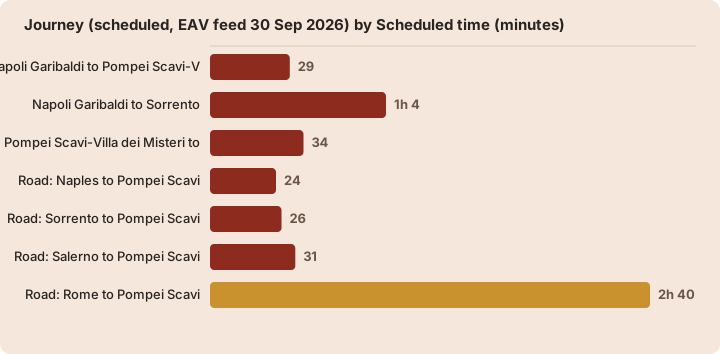
The Circumvesuviana railway is the working spine of any multi-site pass trip: from Napoli Garibaldi the scheduled run to Pompei Scavi-Villa dei Misteri takes 29 to 35 minutes, to Sorrento 64 to 75 minutes, and from Pompei Scavi to Sorrento 34 to 40 minutes, per the operator's own timetable data dated 30 September 2026. The Campania Express has been suspended since 1 October 2026, so no article should send you to it.
The station for the excavations is Pompei Scavi-Villa dei Misteri, a short walk from the Porta Marina entrance. The scheduled times, computed from the operator EAV's own timetable feed, are the only journey figures this site states, and they make a two-site day entirely reasonable: Naples to the excavations in about half an hour, the excavations onward to Sorrento in well under an hour. The mechanics of the line, including ticketing questions, are worked through on the Circumvesuviana guide.
It is suspended from 1 October 2026 until further notice, with refunds through the EAV complaints form or the original seller, and no restart date is promised. Whether some Artecard tiers include regional transport is stated on the operator's page for the tier you are buying, and nothing on this site asserts it either way.
| Journey (scheduled, EAV feed 30 Sep 2026) | Scheduled time | Median |
|---|---|---|
| Napoli Garibaldi to Pompei Scavi-Villa dei Misteri | 29-35 min | 29 min |
| Napoli Garibaldi to Sorrento | 64-75 min | 69 min |
| Pompei Scavi-Villa dei Misteri to Sorrento | 34-40 min | 34-40 min |
| Road: Naples to Pompei Scavi | 24 km, about 22 min | - |
| Road: Sorrento to Pompei Scavi | 26 km, about 37 min | - |
| Road: Salerno to Pompei Scavi | 31 km, about 30 min | - |
| Road: Rome to Pompei Scavi | 234 km, about 2 h 40 min | - |
Rome day trips are a separate discipline, argued on the Rome to Pompeii day trip guide. For the classic base-city question, getting from Naples to Pompeii and the Sorrento equivalent cover the two most common starting points.
For arrivals by sea, the cruise shore excursion guide covers the port-to-site question.
When Is The Best Time To Use A Pass Around Pompeii?
The best value window for any multi-site pass is April to June or late September to October, when the park's 2024 monthly figures show Pompeii carrying 410,712 visitors in June and 516,923 in May against comparable summer loads, and the 1991-2020 climate normals put daily maxima at about 21.6 C in May and 25.8 C in June against about 29.4 C in August. November is the wettest month at about 180 mm of rain; July the driest at about 16 mm.
The park publishes its own visitor counts, and they are the sharpest planning tool a card holder has. Peak single days are the free first Sundays, which have drawn more than 36 000 people; a pass does not exempt you from that crowd, it merely waives the fee you were not paying anyway, which is the worst possible combination. Paid days in shoulder season carry a fraction of the load, as the monthly table below shows.
| Month (2024, Pompeii site) | Visitors | Month | Visitors |
|---|---|---|---|
| January | 112,121 | July | 449,162 |
| February | 142,648 | August | 421,255 |
| March | 272,723 | September | 468,340 |
| April | 466,344 | October | 481,255 |
| May | 516,923 | November | 189,866 |
| June | 410,712 | December | 138,028 |
Climate comes from Open-Meteo's 1991-2020 reanalysis normals at the Pompei grid point, not a weather station, so every figure is "about". The pattern is Mediterranean: dry, warm summers, mild winters with the rain concentrated from October to January. A pass day in February is short; the same card in May buys you a full afternoon more.
The full seasonal argument, including heat management in summer, sits on the weather and best-time guide. One Artecard-specific note: the card's validity clock starts at first use, not purchase, so activating it on a heavy day (Pompeii morning, museum afternoon) and resting on travel days between sites is how experienced users extract the value.
What Are The Alternatives If The Artecard Does Not Fit?
If the arithmetic does not work for your itinerary, the alternatives are the park's own 2026 tickets, the EUR 45 My Pompeii Card for repeat visits within a year, free entry on first Sundays and for under-18s, and the free tip-based walking walks of Naples, which cover the modern city rather than the ruins. No free English-language walk of Pompeii itself exists, so never let a listing imply one.
The My Pompeii Card is the park's own annual pass at EUR 45, EUR 10 reduced, and it is the honest rival to a regional card for anyone returning to Campania more than once in a year. It outlasts the 2027 restructuring, staying at EUR 45 when the single ticket arrives on 1 January 2027. For a one-visit traveller the free days are the sharper tool: first Sunday of the month, year-round, everyone, plus permanent free entry for under-18s. The trade is crowd: those free Sundays are exactly the record-peak days.
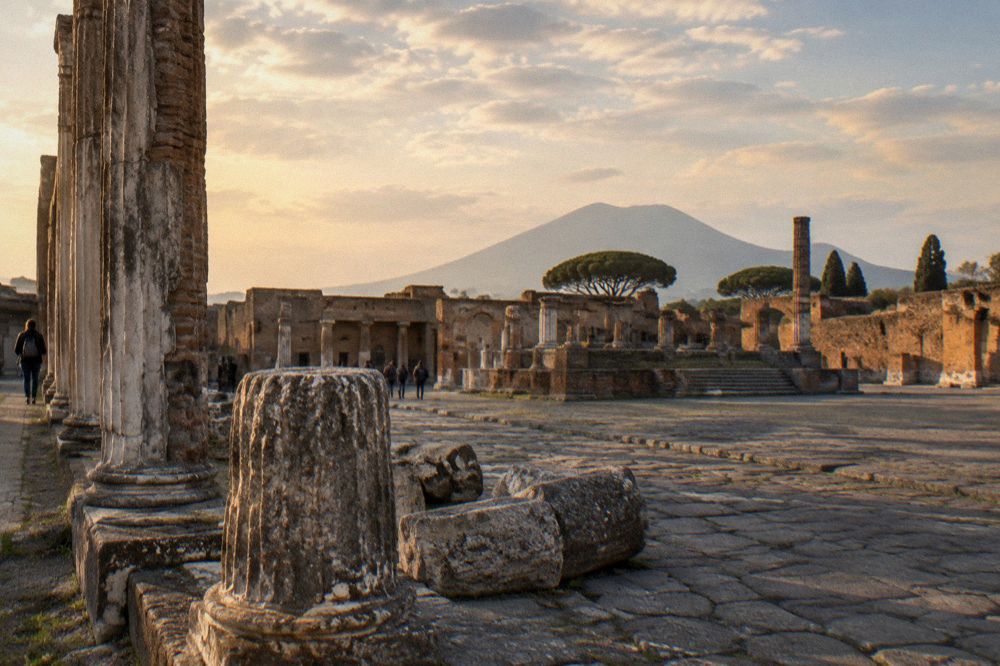
On the tour side, entry plus explanation is sold as one product, and the small-group archaeologist option is the most-booked shape on this site's roster; its price, rating and review count render on the tile below rather than in this sentence.
Budget travellers should not stretch a pass to cover Naples itself, because the best of Naples is free. GuruWalk's Original Free Tour of Naples, led by local guides, walks the old town on a tip basis, booking at no charge, and it is a genuine free-walk product, named here because it is GuruWalk's, not this site's. It covers the modern city's streets, not the Roman ones, and it is the pairing many two-day visitors settle on: paid entry at Pompeii, free walk in Naples. The tile below carries its details.
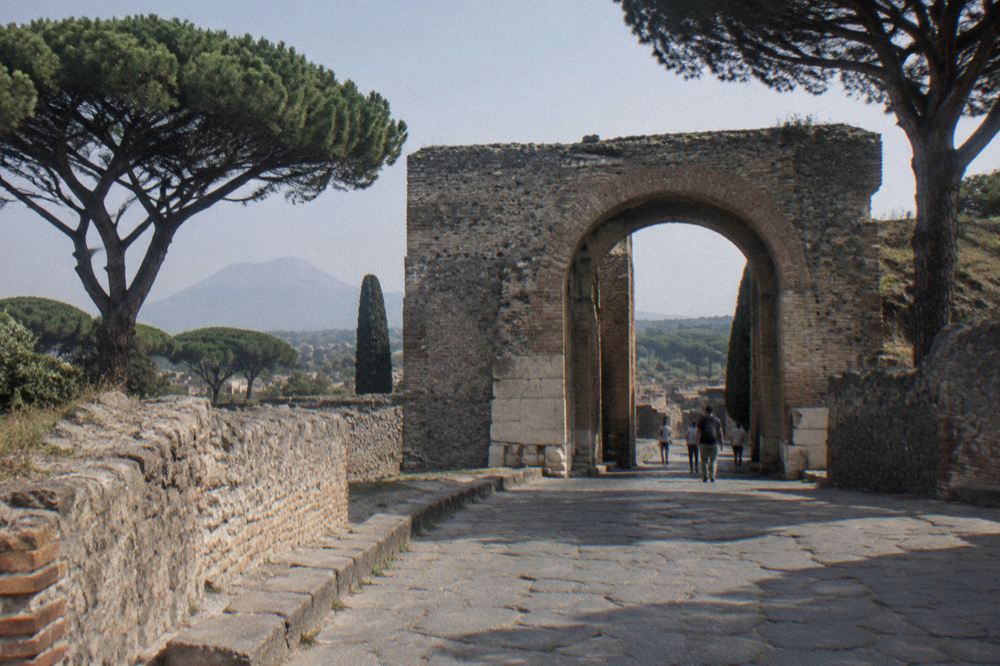
For travellers who prefer audio to groups, the entry-plus-audio-guide product is the lightest way to buy explanation with a ticket; again, every figure lives on the tile.
| Alternative | 2026 cost | Best for | Catch |
|---|---|---|---|
| Park ticket (Express) | EUR 20 | Pompeii only | Ends 31 Dec 2026 |
| My Pompeii Card annual | EUR 45, EUR 10 reduced | Repeat visits in a year | Only park sites |
| First Sunday entry | Free | Budget and locals | Record crowds, 36 000+ days |
| Under-18 entry | Free | Families | ID may be checked |
| GuruWalk free Naples walk | Free, tip based | The modern city | Covers Naples, never the ruins |
How Do You Decide Between The Artecard And Separate Tickets?
Decide in three steps: list your paid sites and days, price them one by one from the 2026 table above or the EUR 25 single ticket from 1 January 2027, then read the card's live price on the operator's page and compare. If the difference is small either way, buy whichever saves the queueing, because the convenience is worth more than the margin; if Pompeii is your only paid site, skip the card.
The disciplined version of the sum, using only the park's published figures. A three-site Vesuvian plan in 2026, Pompeii+ at EUR 25 plus Oplontis at EUR 8, totals EUR 33, and from 1 January 2027 the identical coverage is the single EUR 25 ticket. The card has to beat those totals, whatever its tier price is on the day you look, and it must do so inside its validity window with your travel days fixed.
Two failure modes account for nearly every bad card purchase. Buying a multi-day tier for an itinerary that is really one heavy day plus travel, and buying coverage for closed sites, of which 2026 has real examples: the Praedia of Julia Felix at Pompeii closed to the public from 7 September 2026 for maintenance, and Herculaneum's Villa dei Papiri and Ancient Theatre are shut for works. Neither is a reason to avoid the card; both are reasons to read the covered list on the day of purchase rather than the day of dreaming.
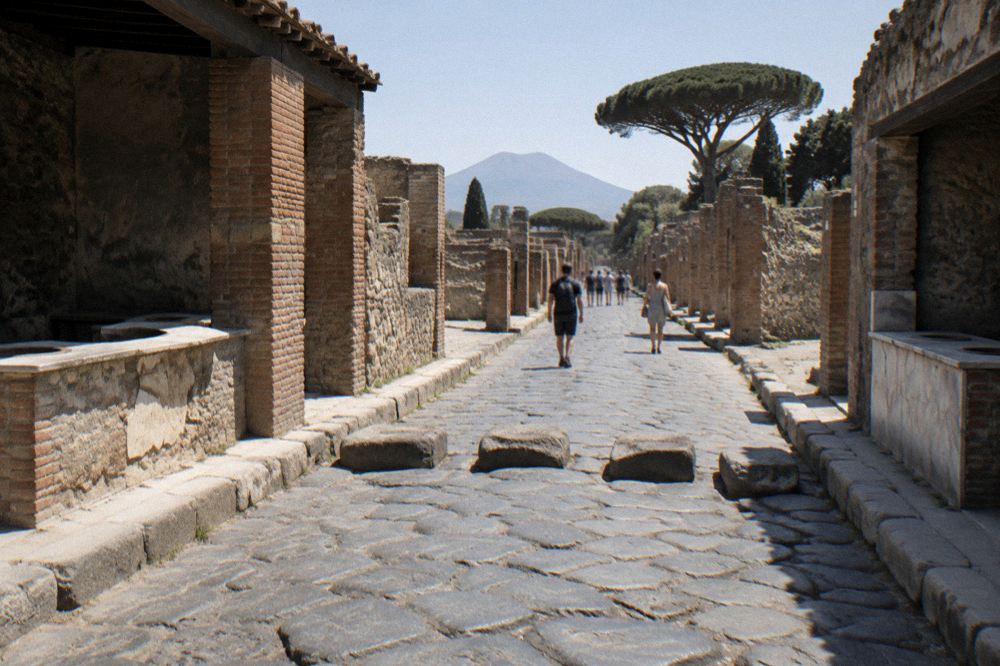
Finally, anchor the decision to what the trip is for. This site's homepage, the Pompeii Travel Guide, holds the full planning picture, and whether the ruins themselves justify the journey is argued on whether Pompeii is worth visiting. A pass is a container; what goes in it still has to earn its place.
Common Questions About The Campania Artecard
Does the Campania Artecard include Pompeii entry?
Yes, the Pompeii Archaeological Park has been a headline site on the Artecard's covered list, but coverage details and tiers change, and the card still operates under the park's nominative ticket and 20,000 visitor daily cap. Confirm the current covered list on the Artecard operator's own page before buying.
Is the Campania Artecard worth it if I only visit Pompeii?
No. In 2026 the Pompeii Express ticket is EUR 20, cheaper than any regional pass tier, and from 1 January 2027 a single EUR 25 ticket covers every park site for 30 days with one entry per site. The card only pays once you stack two or more paid covered sites such as Pompeii plus a Naples state museum.
Does the Artecard cover Mount Vesuvius?
Generally no. The Gran Cono crater trail is run by the Vesuvius National Park, sold online only in timed slots at EUR 11.68 full and EUR 9.55 reduced as sold, bookable 30 days ahead, and it closes automatically on an orange weather alert. Budget the volcano as a separate purchase.
Can I use the Artecard on the first Sunday of the month?
You can, but you should not. First Sundays are free for everyone at Pompeii and Herculaneum, so the card saves nothing, and those days carry the heaviest crowds, with one recorded free Sunday drawing more than 36 000 visitors to Pompeii.
What changes for the Artecard in 2027?
From 1 January 2027 the park's release of 14 September 2026 puts one EUR 25 ticket across all Pompeii park sites, valid 30 days, one entry per site, with Oplontis, the Stabiae site and Boscoreale at EUR 8 individually and the My Pompeii Card at EUR 45. That single ticket replaces the three-tier structure the card used to undercut on Vesuvian itineraries, so re-run the comparison for 2027 travel.
Does the Campania Artecard include transport to Pompeii?
Note separately that the Campania Express train has been suspended since 1 October 2026; the Circumvesuviana from Napoli Garibaldi to Pompei Scavi-Villa dei Misteri takes a scheduled 29 to 35 minutes.
The card is a means, not a destination. Price the ruins honestly against the park's published 2026 tickets and the EUR 25 single ticket arriving on 1 January 2027, stack the Naples museums only if your calendar genuinely holds them, and the pass decision makes itself in a few minutes of arithmetic.