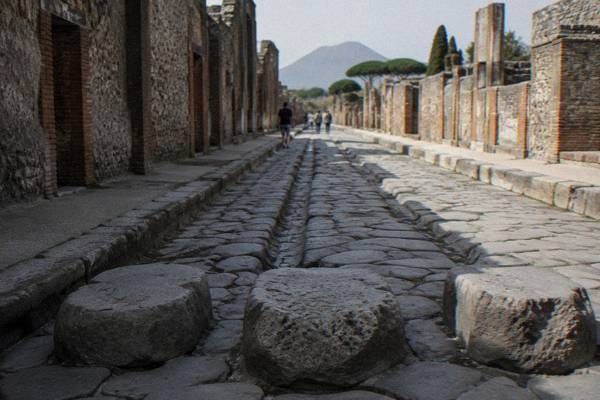
Pompeii At Night
Pompeii, the ancient Roman city buried by Vesuvius in AD 79, keeps daytime hours, and no evening opening is currently published by the park. Here is what the official timetable really says, and what you can genuinely do after the gates shut.
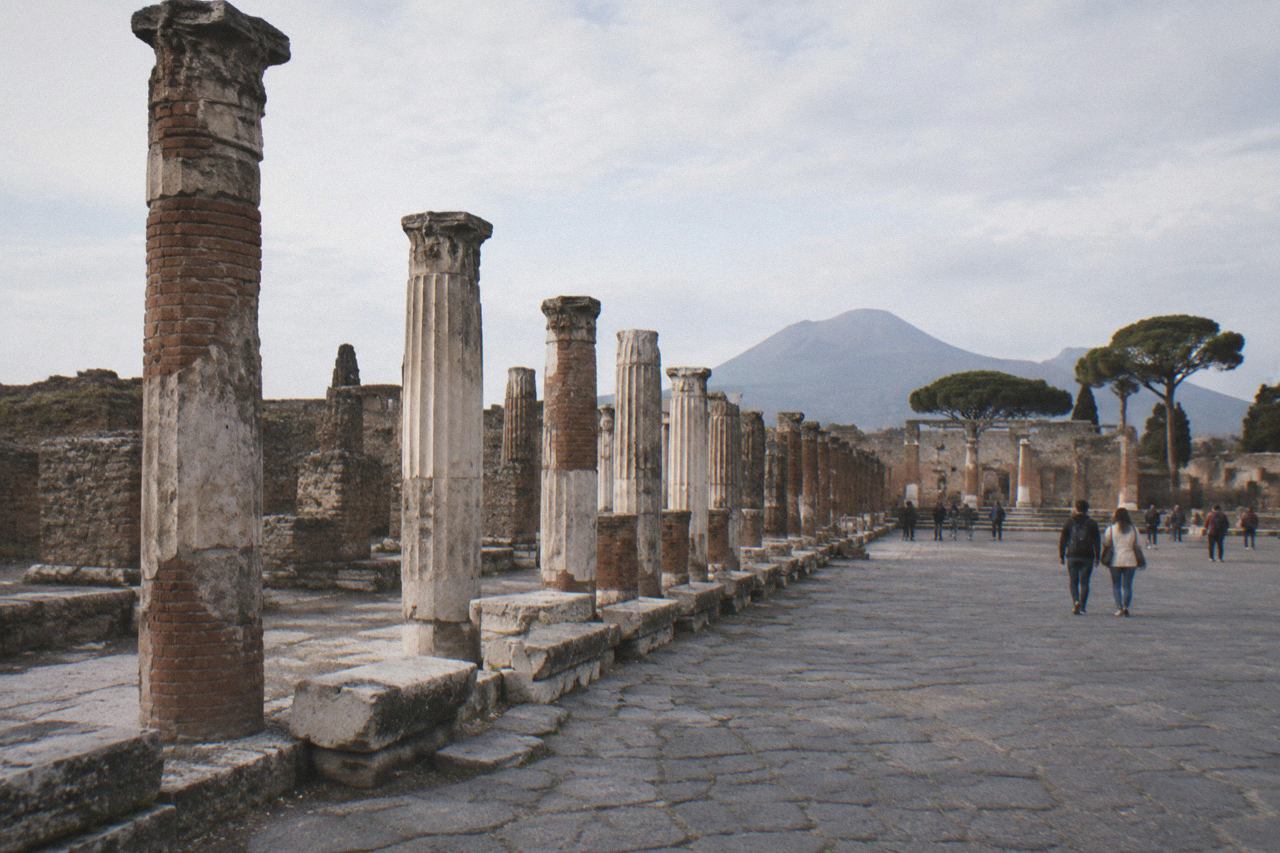
Short answer
Pompeii closes at 19:00 at the latest, with last entrance at 17:30 in the summer season and 15:30 in winter, and the park currently publishes no night openings on its official timetable. There is no regular evening tour inside the excavations. After dark, your real options are the modern town of Pompei, Vesuvius wine estates with dinner, and Naples, about 24 km away.
The search phrase "Pompeii at night" promises something the archaeological park of Pompeii, in Campania, southern Italy, cannot currently deliver: an excavation open after dark. The park's own timetable page, which governs the ancient city beside the modern town of Pompei about 24 km by road from Naples, lists no evening opening of any kind. Between mid-March and mid-October the site closes at 19:00 with the last entrance at 17:30, and in winter it shuts at 17:00 with the last entry at 15:30. What it does instead is honest work: it reports the real closing rules, the late-entry tactics that put you in the streets for the golden hours, and the after-dark experiences that genuinely run within reach of the ruins, from Vesuvius wine estates serving dinner to the street-food lanes of Naples. It also covers the practical questions that follow the sunset, including how the trains behave once the light goes.
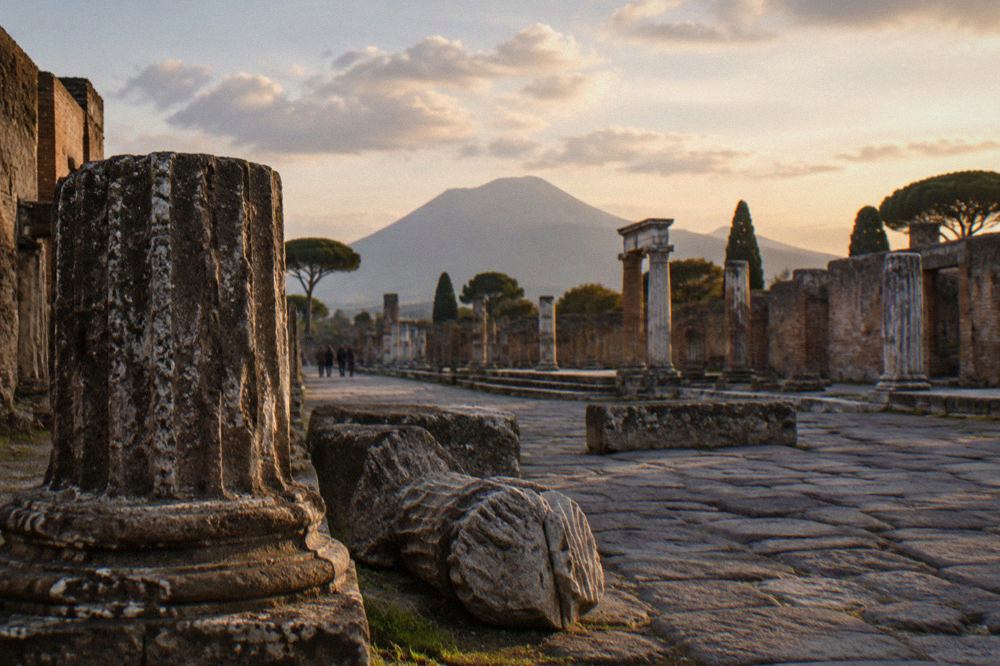
Is Pompeii Open At Night?
No, Pompeii is not open at night, and no evening opening appears on the park's official timetable. The site opens at 09:00 every day, closes at 19:00 between 16 March and 14 October with last entrance at 17:30, and closes at 17:00 between 15 October and 15 March with last entrance at 15:30. The park publishes no weekly closing day for Pompeii itself, and closes fully only on 25 December and 1 January unless it announces otherwise.
Those hours come straight from the park's timetables and tickets page, and they are the whole truth of the matter. There is no twilight session, no lantern tour of the Forum, and no licensed after-dark walk through the Street of Abundance. Any product that claims otherwise is selling something the park does not offer, and you should read its description on the operator's live listing with care before paying. The evening events the park has run in some past seasons, such as the "Serate della Grande Pompei" night visits, do not appear on any official page for the current season, so a responsible guide names none of them as fact. If a night programme is announced, it will appear on the park's own comunicati page first.
What confuses travellers is that the Bay of Naples in general does after-dark experiences well, and marketing copy often blurs the modern town with the ancient one. The modern town of Pompei, spelled with a single i, keeps its Sanctuary open to visitors in the evening hours and has restaurants and cafés that run late. The excavations do not.
For the entry mechanics, ticket prices and the named-ticket rules, read the companion page on Pompeii tickets and entry options, which covers the 2026 pricing and the single EUR 25 ticket that starts on 1 January 2027.
What Time Does Pompeii Actually Close, Month By Month?
Pompeii closes at 19:00 from 16 March to 14 October and at 17:00 from 15 October to 15 March, with last entrances at 17:30 and 15:30 respectively, opening at 09:00 in both seasons. Herculaneum, the sister site at Ercolano, closes at 19:30 in summer and 17:00 in winter. The Vesuvius Gran Cono trail has its own monthly access hours, running 9-18 in July and August and 9-15 in January, February, November and December.
The seasonal split matters because a large share of visitors plan around the wrong boundary. The summer schedule ends on 14 October, so a visit on 15 October, the day the clocks change across the park, suddenly loses two hours of possible entry time: last admission drops from 17:30 to 15:30 on that single date. Anyone arriving from a late-morning Naples departure in the second half of October can find the gates effectively finished for the day. The table below gives the exact figures for the three headline sites.
| Site | Season | Opens | Last Entrance | Closes |
|---|---|---|---|---|
| Pompeii | 16 Mar to 14 Oct | 09:00 | 17:30 | 19:00 |
| Pompeii | 15 Oct to 15 Mar | 09:00 | 15:30 | 17:00 |
| Herculaneum | 16 Mar to 14 Oct | 08:30 | 18:00 | 19:30 |
| Herculaneum | 15 Oct to 15 Mar | 08:30 | 15:30 | 17:00 |
| Vesuvius Gran Cono | Jul and Aug | 09:00 | n/a | 18:00 |
| Vesuvius Gran Cono | Jan, Feb, Nov, Dec | 09:00 | n/a | 15:00 |
Two caveats belong next to those numbers. The Vesuvius trail hours in the middle months sit between those extremes, with access 9-16 in March and October, 9-17 in April, May, June and September, and the path closes automatically when an orange weather alert is issued, with an automatic refund in that case. And Pompeii's daily visitor cap of 20,000, in force since 15 November 2024, is split across time bands in the summer season: the 09:00-13:00 band carries up to 15,000 visitors and the 13:00-17:30 band up to 5,000, which is one structural reason a late entry feels calmer than a morning one.
If you are weighing the two excavations rather than the hours alone, the comparison page on Pompeii versus Herculaneum breaks down what each site gives you for the same half-day.
For the summer-season visitor the honest "Pompeii at night" play is the afternoon slot: enter at 15:00 or 16:00, walk until the stewards start moving people toward the exits at closing, and come out into the modern town at dusk with the whole evening still ahead of you.
Can You Enter Late And Still See Pompeii In Golden Light?
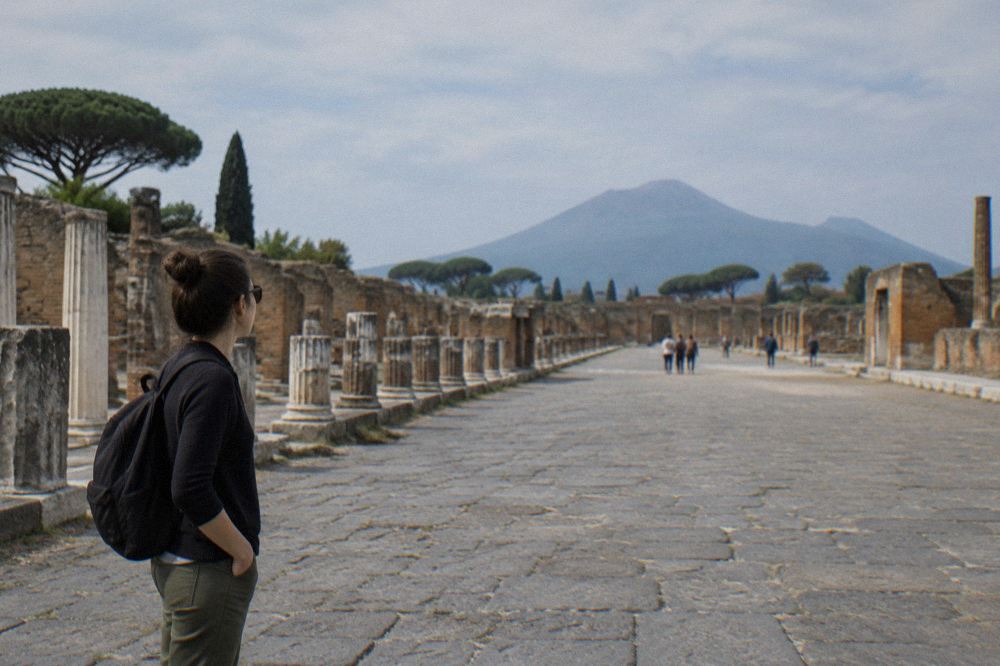
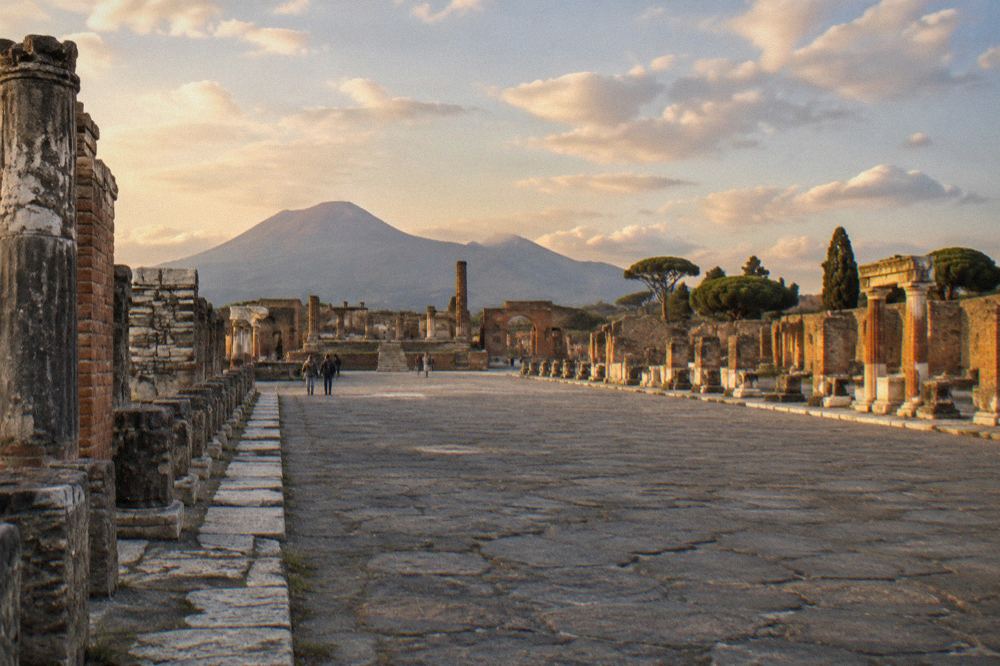
Yes, you can enter late and still catch Pompeii in golden light, and in summer this is genuinely the best version of the visit. Evening sun warms the basalt streets and plastered walls, and the effect needs no embellishment, verified by nothing more exotic than sunset itself.
The mechanics favour you. Under the time-slot rules in force for the 16 March to 14 October season, the morning band admits up to 15,000 people and the afternoon band up to 5,000, so the later hours are structurally quieter even on busy days. The stones hold the day's heat, but the sun drops off the vertical and the shadows across the Forum and the baths go long and warm. In August the mean daily maximum at Pompei sits at about 29.4 C against about 21.8 C overnight, so a late entry also dodges the worst of the heat; the planning detail is on the page about Pompeii weather and the best time to visit.
The practical limit is direction. From 16:00 you can comfortably cover the Forum, the Stabian Baths, one or two major houses and a stretch of the main streets, and you should decide the shape of the walk before you enter. The routes are laid out on the detailed walking routes and map of Pompeii page, and the honest advice for a two-hour window is depth over coverage: the Forum and its temples, one painted house, one bath complex, and the stretch of street between them beats a doomed circuit of the whole 44 ha excavated area.
The one ticket rule worth knowing here: 2026 pricing puts the Pompeii Express ticket at EUR 20 for the ancient city alone and Pompeii+ at EUR 25 including the suburban villas, and from 1 January 2027 the park moves to a single EUR 25 ticket covering all park sites, valid 30 days with one entry per site, while the smaller sites stay at EUR 8 each and the MyPompeii Card stays at EUR 45. The full price detail is on the tickets page linked above, and the 2027 change is stated in the park's release of 14 September 2026.
A guided late entry also removes the guesswork of routing. The site's featured express option, the Pompeii Express guided tour by train from Sorrento, is a two-hour guided walk for visitors based on the Sorrento peninsula, and it is described in full on its own page, with Check availability showing the operator's live listing for dates and times.
Are There Any Official Evening Events At Pompeii?
None is currently published. The Praedia of Julia Felix, a venue used for past special events, has been closed to the public since 7 September 2026 for maintenance.
That last detail matters more than it looks. When travellers ask about night events at Pompeii, they are usually remembering coverage of evening spectacles held in the Great Theatre and the Praedia of Julia Felix in earlier years. The theatre spaces remain daytime venues under the published timetable. An honest guide states the absence plainly: there is no confirmed night programme, and any ticket sold today promising an illuminated walk inside the excavations should be treated with suspicion unless the park itself announces it.
The clean way to track a future announcement is the park's own comunicati page, which is where the 2027 ticketing change and the closures above were published first. When a genuine evening programme returns, it will appear there, and the pages of this site will cover it with the actual dates and prices rather than the vague "seasonal night tours" phrasing that floats around second-hand travel articles.
In the meantime, the closest official after-dark experience on the park's fringes is not in the excavations at all but on the volcano above them. The Vesuvius National Park's Gran Cono trail runs to 18:00 in July and August, which in midsummer means a descent in early evening light, with tickets sold online only through the official vivaticket channel at EUR 11.68 full and EUR 9.55 reduced as sold, on a base of EUR 10 and EUR 8 in the regulation text. The full mechanics are on the Mount Vesuvius tickets page.
What Can You Actually Do After Dark Near Pompeii?
After the excavations close, your real evening options are dinner in the modern town of Pompei, a wine estate dinner on the slopes of Mount Vesuvius, and the restaurants and streets of Naples about 24 km away by road. Vesuvius-side estates run evening tastings with dinner in the summer months, and the horse-riding tour with wine tasting and dinner is a bookable version of exactly that. Naples keeps the liveliest late streets on the bay.
The modern town is the simplest. Pompei's own restaurants, a short walk from the excavations, serve long dinners in the warmer months, and the question of where to eat is covered properly on the where to eat in Pompeii page. The Sanctuary of Pompei, the pilgrimage church that gives the modern town its identity, stays visitable in the evening and its forecourt is genuinely atmospheric under floodlight. None of that is the ancient city, but it is a real evening, minutes from the Porta Marina entrance.
The Vesuvius option is the one that most closely answers the mood of a "Pompeii at night" search. The national park's lower slopes hold working vineyards inside the protected area, and several estates pour their wines with long dinners through the summer season. Among bookable products, the horse-riding experience on Vesuvius with wine tasting and dinner pairs a ride on the volcano's slopes with an evening meal, and the tour page for it on this site carries every figure on the operator's live listing. Read more about the wine tradition itself on the page covering Vesuvius wine tasting around Pompeii if you are basing yourself locally, or see the fuller region page.
Naples is the big-hammer answer. The guided street-food walks there run into the evening hours and are among the best-value night structures on the bay, with a local guide walking you through the classics. Details on basing yourself there are on the Naples to Pompeii page.
For a different shape of evening entirely, the pizza-and-tiramisu cooking classes in Naples run in evening slots and end with you eating your own dinner; they suit families and anyone who wants a table rather than a walk. The full index of guides sits on Pompeii Travel Guide.
How Does Evening Light Behave At Pompeii Through The Year?
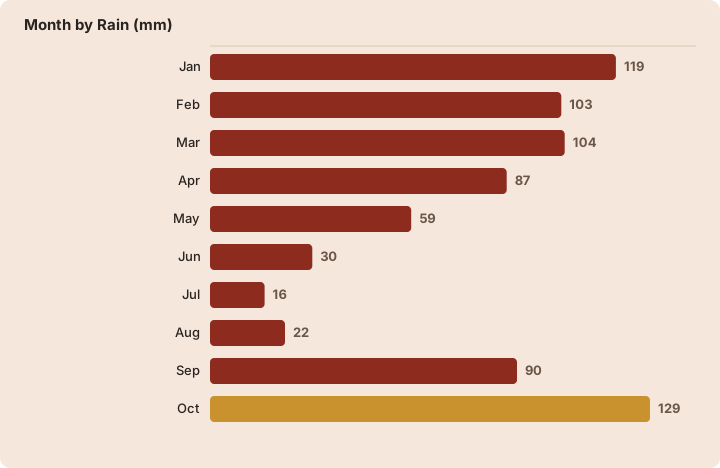
The climate at Pompei is Mediterranean, and the verified normals for 1991-2020 show why the late-entry tactic works mainly from April to October: mean daily maxima run from about 12.2 C in January to about 29.4 C in August, and November is the wettest month with about 180 mm of rain against about 16 mm in July, the driest. Evening conditions in summer stay near a mean minimum of about 21.8 C in August.
Those figures come from the Open-Meteo historical archive for the Pompei grid point at 40.75 N, 14.49 E, a reanalysis of the 1991-2020 period rather than a weather station, so every number is an "about". They still tell you the shape of the year. A golden-hour entry in February means mean maxima of about 12.6 C and a 17:00 close that lands before any warmth builds; the same entry in August means heat that finally breaks and a dusk stroll at pleasant temperatures. Rain is the winter story, with November, December and January all above 100 mm for the month.
| Month | Mean Daily Max (C) | Mean Daily Min (C) | Rain (mm) |
|---|---|---|---|
| Jan | about 12.2 | about 6.6 | 119 |
| Feb | about 12.6 | about 6.5 | 103 |
| Mar | about 14.9 | about 8.1 | 104 |
| Apr | about 17.7 | about 10.4 | 87 |
| May | about 21.6 | about 14.1 | 59 |
| Jun | about 25.8 | about 18.2 | 30 |
| Jul | about 28.7 | about 21.1 | 16 |
| Aug | about 29.4 | about 21.8 | 22 |
| Sep | about 25.3 | about 18.6 | 90 |
| Oct | about 21.3 | about 15.1 | 129 |
| Nov | about 16.9 | about 11.5 | 180 |
| Dec | about 13.2 | about 8.0 | 147 |
The practical read of the table for this page's purpose: the last-entry hour in May, June, September and early October gives you warm stone, low light and modest rain risk, which is the closest thing to a night-atmosphere visit the park's own rules permit.
How Do You Get Back To Naples Or Sorrento After Dark?
The Circumvesuviana railway is the workhorse: scheduled runs take 29 to 35 minutes from Napoli Garibaldi to Pompei Scavi-Villa dei Misteri and 34 to 40 minutes onward from Pompei Scavi to Sorrento, per the operator's own timetable data, but verify the last departures of the evening on the EAV timetable before you plan a post-dusk return.
That suspension is the single most important evening-transport fact on the bay right now. Refunds for suspended services run through EAV's own complaints form or the original seller.
The Circumvesuviana, route 1 of the Vesuvian lines, remains the everyday line, and its scheduled journey times are computed from the operator's own published timetable data: 29 to 35 minutes from Napoli Garibaldi to Pompei Scavi-Villa dei Misteri, and 34 to 40 minutes from Pompei Scavi to Sorrento. The line serves the station right by the Porta Marina entrance. What this guide will not do is quote a fare, a frequency or a final departure time for the evening, because no such figure is verified here; check the EAV timetable by name for the last trains of your date, since a missed connection in a small station after dark is a bad end to a good day.
| Route (Circumvesuviana, scheduled) | Typical Scheduled Time |
|---|---|
| Napoli Garibaldi to Pompei Scavi-Villa dei Misteri | 29 to 35 minutes |
| Pompei Scavi-Villa dei Misteri to Sorrento | 34 to 40 minutes |
| Napoli Garibaldi to Sorrento | 64 to 75 minutes |
The fuller rail picture, including the station choices that matter, is on the Circumvesuviana train page, and Sorrento-based travellers will find the timing detail on the Sorrento to Pompeii page. By road, the driving distances from the Scavi station area are about 24 km from Naples, about 26 km from Sorrento and about 31 km from Salerno, computed on the standard road network rather than any official table, so treat them as planning figures.
Is It Safe Around Pompeii After The Site Closes?
The area around the excavations and the modern town of Pompei is an ordinary small southern Italian town in the evening, and the main verified risks are logistical rather than criminal: a missed last train, an unlit stretch of road between the station and your hotel, and the closing windows of the park's own facilities. The park's regulations cap bag sizes at 30x30x15 cm and direct larger luggage to left storage, which shapes what you can do with bags on a late day.
Begin with what is actually documented. The park's visitor regulations set the permitted bag size at 30x30x15 cm and send anything larger to left luggage, and they require identification that can be checked at entry because tickets are nominative and non-transferable, with refunds only for extraordinary closures. Those rules are daylight rules, but they bind your evening plan: if you arrive with suitcases hoping to enter at 16:00 and then catch an evening train, the bag limit decides your afternoon for you. The practicalities, including storage, have their own coverage on the where to stay in Pompeii page for anyone overnighting in the modern town.
After the close, the walk between the Porta Marina entrance and the Pompei Scavi-Villa dei Misteri station is short and normally busy with departing visitors in season, but it empties quickly once the last people clear. The modern town's centre, around the Sanctuary, keeps foot traffic into the evening year-round because of pilgrimage traffic. As with any small station after dark, the sensible pattern is to know your departure time before you sit down to dinner, and to be on the platform rather than running for it.
One seasonal trap deserves its own sentence: on 15 October the park's last entrance drops from 17:30 to 15:30 in a single day, and travellers who planned a golden-hour entry around that date arrive to find the site finished at 15:30. Check the season boundaries against your travel dates before you build the day.
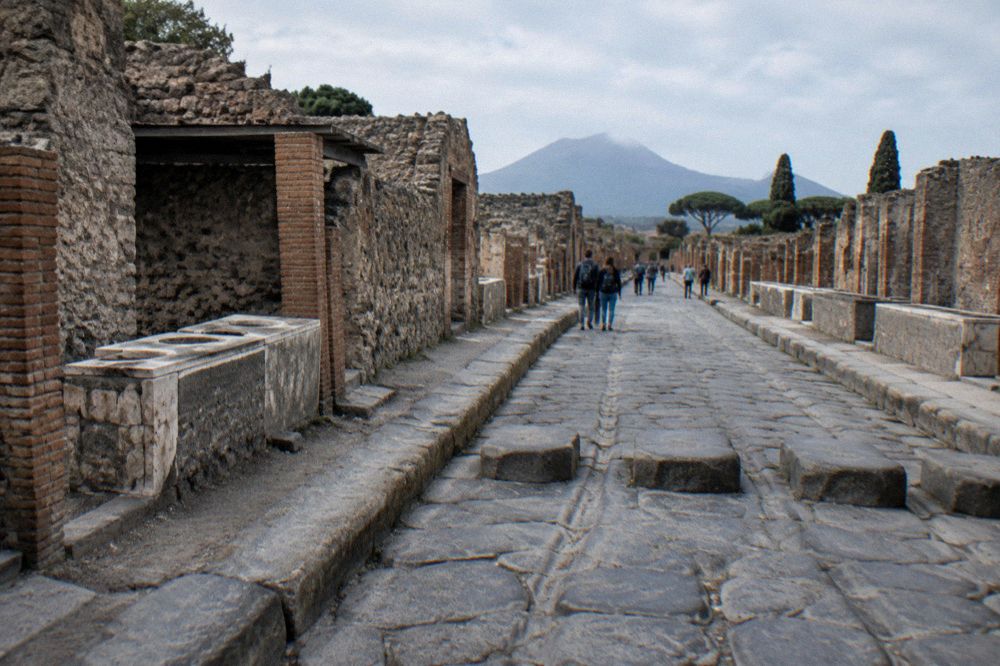
What Are The Best Evening Plans By Traveller Type?
Cruise passengers and day-trippers from Naples should plan dinner in Pompei or Naples after a late entry rather than chase a night tour that does not exist; Rome-based travellers should treat any Pompeii day as a full-day trip that ends back in Rome by night. Families do best with an afternoon entry followed by an early dinner, while couples celebrating something get the closest thing to a night at Pompeii at a Vesuvius estate dinner.
| Traveller | Best Evening Plan | Why It Works |
|---|---|---|
| Day-tripper from Naples | Late entry, Circumvesuviana back, dinner in Naples | Train runs Pompei Scavi to Napoli Garibaldi in 29 to 35 minutes scheduled |
| Sorrento-based visitor | Express afternoon tour by train, dinner in Sorrento | Direct line from Pompei Scavi, 34 to 40 minutes scheduled |
| Rome-based visitor | Full-day guided trip returning by night | No evening product exists inside the site; day structure is fixed |
| Family with children | Afternoon entry, early dinner in modern Pompei | Shorter walk suits children; Sanctuary forecourt after dinner |
| Couple or celebration | Vesuvius estate dinner with wine | Evening tastings run on the volcano's slopes in season |
| Cruise passenger | Shore excursion timed to the ship | Excursions are built around all-aboard times, not park hours |
Two of those rows deserve expansion. Rome-based travellers should read the Rome to Pompeii day trip planning page, because the distance is about 234 km by road and the day is long by construction; the question of the rail alternative has its own page on Rome to Pompeii by train. Cruise passengers have a dedicated page on Pompeii shore excursions that treats the timing problem properly, since a ship's all-aboard hour, not the sunset, is the binding constraint.
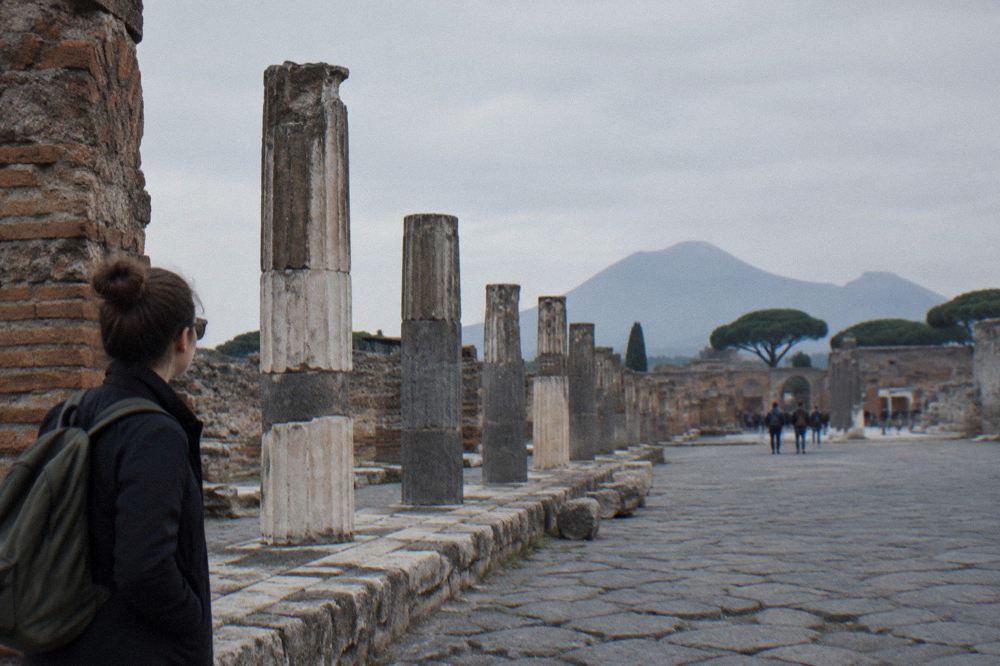
Should You Build Your Trip Around A Night At Pompeii?
No, and any plan that depends on evening access to the excavations will fail against the park's published hours. Build instead around a late-afternoon entry in the April-to-October window, when the 13:00-17:30 band's 5,000-visitor cap makes the site quieter and the low light rewards photography, and spend the true night in modern Pompei, at a Vesuvius wine dinner, or in Naples. The park's first-Sunday free entry applies year-round and can be combined with a full day.
The deepest version of the advice is about what "Pompeii at night" is really reaching for: atmosphere without crowds. The verified structures give you exactly that, just three hours earlier than the phrase implies. The 13:00-17:30 band admits at most 5,000 against the morning's 15,000, the stones glow in the last sun, and the site empties toward the 19:00 summer close. Photographers will find the dedicated thinking on the light and the angles in this site's photography coverage, and anyone unsure whether the site earns the effort at all can start from the honest case on whether Pompeii is worth visiting.
The evening that follows belongs to the living bay, not the dead city. A dinner inside the Vesuvius national park's vineyards, with the excavations' ridge below and the volcano above, delivers the drama the search phrase promises, and it is bookable, real and running in season. Naples an hour's rail ride away does the rest: the loudest, warmest streets on the bay and pizza in the city that invented it. Between them, and a twilight walk through the Sanctuary forecourt in modern Pompei, the night takes care of itself.
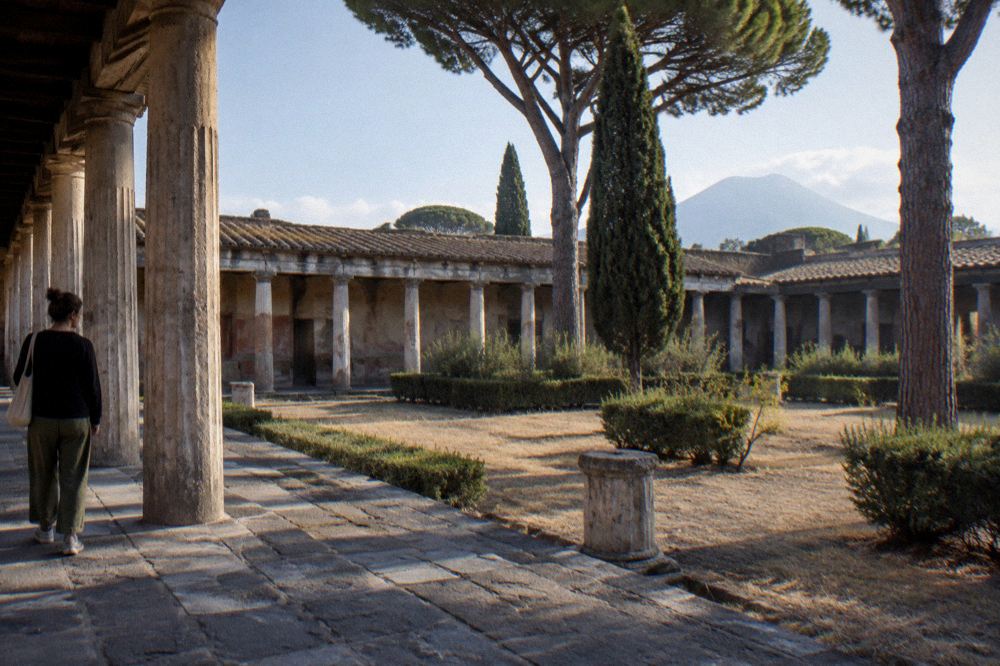
Common Questions About Pompeii At Night
Is Pompeii open at night?
No. The archaeological park closes at 19:00 between 16 March and 14 October, with last entrance at 17:30, and at 17:00 between 15 October and 15 March, with last entrance at 15:30.
Are there night tours of Pompeii?
No night tour of the excavations is currently published on the park's official pages.
Can you visit Mount Vesuvius in the evening?
Partly.
Is it safe to walk from Pompeii to the train station after dark?
The walk between the Porta Marina entrance and Pompei Scavi-Villa dei Misteri station is short and busy with departing visitors at closing time in season.
The short version of this whole page: the night at Pompeii is a beautiful idea that the park's own timetable does not sell, and the honest substitutes, a golden-hour entry, a Vesuvius dinner among the vines, and the late streets of Naples, are better than waiting for a gate that stays shut. Plan the afternoon inside the walls and give the evening to the living side of the bay, and you lose nothing that the phrase promised.