Pompeii Restaurants
Eating around the ancient city of Pompeii in Campania, southern Italy, splits into three acts: the limited options inside the archaeological park, the pizzerias and trattorie of the modern town of Pompei, and the food experiences that pair the ruins with Vesuvius wine or a Naples cooking class.
Short answer
Inside the archaeological park of Pompeii in Italy, eating is limited to a small number of refreshment points, so plan around them rather than relying on them. The real choice sits outside: the modern town of Pompei, beside the Porta Marina and Piazza Esedra entrances, has pizzerias, trattorie and cafés within a short walk of the excavations.
The archaeological park of Pompeii, the ancient Roman city buried by the eruption of Mount Vesuvius in AD 79, sits beside the modern town of Pompei in Campania, southern Italy, about 24 km by road from Naples. What surprises many first-time visitors is how the eating question structures the whole day: the park itself is vast, the excavated area covers 44 ha, and the refreshment options inside it are few.
Where Can You Eat Inside The Pompeii Archaeological Park?
Eating inside the archaeological park of Pompeii in Italy is possible but limited: the park has a small number of refreshment points rather than restaurants, and no private café, kiosk or restaurant inside the park has had its prices, hours or locations verified for publication. Visitors with a full-day plan should treat the on-site options as emergency stops, not as lunch. The practical pattern is to eat a proper meal outside the walls, before entry or after exit, near one of the three named entrances.
The park's regulations page governs what you can carry in: bags up to 30 x 30 x 15 cm are permitted, and anything larger goes to left luggage. That size comfortably holds a water bottle, fruit and a sandwich, which matters because a walking circuit of the site is a genuine half-day undertaking and the Campanian summer is hot. Open-Meteo's 1991-2020 normals for the Pompei grid point put the average daily maximum at about 29.4 C in August, the highest of the year, and even October averages about 21.3 C.
Two practical rules follow. First, carry water: the park permits it, and a 30 x 30 x 15 cm bag is enough. What can be stated is the structure of the day: in the summer season, 16 March to 14 October, the park opens at 9:00 with last entrance at 17:30 and closes at 19:00, which leaves a natural window for a late lunch in the modern town after exit.
| Item | Inside the park | Practical reading |
|---|---|---|
| Refreshment points | A small number, run under park concession | Treat as a drink stop, not a meal |
| Water | Carry your own; bag limit 30 x 30 x 15 cm | Allowed under the regulations page |
| Full meals | Not available in verified form | Plan lunch outside the walls |
| Meal timing | Park closes 19:00 in summer season | Exit and eat in modern Pompei after |
The summer-heat question deserves its own planning, and the site's heat-plan itinerary guide covers it in detail, including how to order your route so the exposed stretches fall in the cooler hours. The short version for eating: breakfast before entry, water and snacks inside, and a real meal afterwards.
Where Are The Best Places To Eat Near The Pompeii Excavations?
**The dependable eating near the excavations is in the modern town of Pompei, which wraps around the park's entrances on three sides: Porta Marina stands closest to the Pompei Scavi-Villa dei Misteri station, with Piazza Esedra and Piazza Anfiteatro as the other ticket offices. Pizzerias, trattorie, gelaterie and cafés cluster in the streets around these entrances and the station walk.
The geography matters more than any single name. The Pompei Scavi-Villa dei Misteri station is stop 6049 on the Circumvesuviana Napoli-Sorrento line, and the town blocks between the station and the Porta Marina entrance carry the visitor footfall that sustains casual eating: pizza al taglio by the slice, coffee, pastries and gelato, the things that work between a train arrival and a timed entry slot.
Deeper in the modern town, around the Sanctuary of Pompei, the dining shifts to serve residents and pilgrims rather than tourists, which usually means longer menus, sit-down service and slower rhythms. The modern Pompei town guide covers that side of the town. For a visitor with a 13:00 last-entrance deadline in mind, the useful split is simple: fast food near the entrances, slow food near the Sanctuary.
A note on timing: the park's current slot system, in force 16 March to 14 October, caps the 9:00-13:00 window at 15,000 visitors and the 13:00-17:30 window at 5,000. An afternoon entry therefore pairs naturally with a morning lunch in town before you go in, while a morning entry pushes lunch to after exit, when the pizzerias near Porta Marina are at their busiest.
For readers arranging the whole day from a base city, the Naples to Pompeii guide and the Sorrento to Pompeii guide cover the journeys, and both end at the same station-to-entrance walk where the eating sits.
What Food Is Pompeii Famous For?
The food of Pompeii and its region is the food of the Bay of Naples: pizza napoletana with its soft blistered rim, pasta al pomodoro made with tomatoes grown on the Vesuvian slopes, mozzarella and its smoked cousin provola, and the small fried street foods of Naples. The ancient city adds an archaeological layer, because the site preserves thermopolia, the Roman counter-service bars where hot food was sold. Modern Pompei's kitchens cook the Campanian canon, not a separate cuisine.
The thermopolium connection is the one genuinely Pompeii-specific food story. These were the fast-food counters of AD 79: L-shaped masonry counters with embedded dolia, deep jars that held hot dishes, serving the people who had no kitchen at home. The site's thermopolium guide covers the best-known example, and the bakery guide covers the carbonised loaves found in the ovens of Modestus's bakery, one of the most direct food records to survive from the ancient world.
| Dish or food | What it is | Where it fits a Pompeii day |
|---|---|---|
| Pizza napoletana | Soft-rimmed wood-fired pizza, the regional signature | Lunch in modern Pompei after exit |
| Pasta al pomodoro | Tomato pasta, often with Vesuvian-grown tomatoes | Trattoria lunch or dinner near the Sanctuary |
| Mozzarella and provola | Fresh and smoked cow-milk cheeses | Antipasto or street snack |
| Pizza al taglio | Pizza by the slice, cut to weight | Fast eat between station and entrance |
| Sfogliatella | Layered pastry with ricotta filling | Breakfast or after-exit coffee stop |
| Gelato | Artisan ice cream | Afternoon, above all in summer |
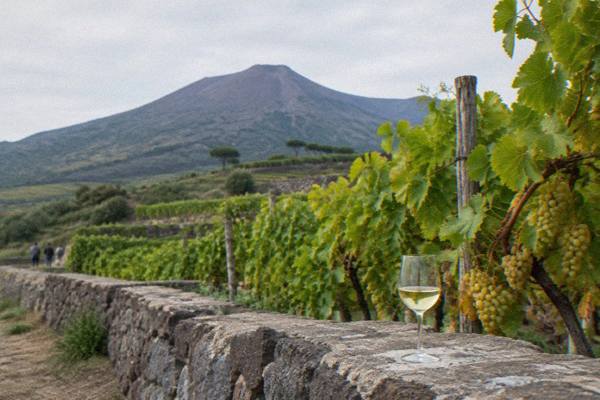
The wine story belongs to Vesuvius as much as to Pompeii. The slopes of the volcano carry vineyards inside the Vesuvius National Park, and the reds made there, under the Vesuvio denominations, are the local pour at any trattoria worth its salt. The site's wine and Vesuvius tasting guide covers the winery visits in detail.
For travellers who want to close the loop between eating and understanding, the Naples Official Pizza Making Class & Tiramisu Cooking class is the featured food experience on this page: a three-hour class in Naples in which you make both the pizza and the tiramisu. The price, rating and current availability render on the operator's live listing rather than here. Naples is the natural add-on, since the Circumvesuviana covers Napoli Garibaldi to Pompei Scavi-Villa dei Misteri in a scheduled 29 to 35 minutes, a figure computed from the operator EAV's own timetable data.
Can You Combine Pompeii With A Wine Tasting Or Lunch Experience?
Yes. Combining Pompeii with a wine tasting or lunch is one of the most efficient ways to eat well on a Pompeii day, since several bookable experiences bundle the ruins with a meal or a Vesuvian wine tasting: a Pompeii tour and Vesuvius wine tasting with lunch from Naples, a five-hour Pompeii tour and lunch with wine tasting at Pompeii itself, and an organic lunch and wine tasting inside the Vesuvius National Park, with each product's price and rating rendered from its own listing.
The from-Naples option suits travellers without a car: a day that moves from a guided walk among the ruins to a winery lunch on the volcano's slopes, with the operator handling the movement between them. It answers the common afternoon problem, what to do with the hours between exiting at Porta Marina and dinner, in a single booking.
The Pompeii-based five-hour version keeps everything at the site: a guided tour followed by lunch with wine tasting, a format that works when Naples is not on the itinerary at all. The Vesuvius National Park lunch is the pure food-and-wine play, an organic lunch and tasting inside the park, close to the crater trail described in the Mount Vesuvius tickets guide. The crater itself is worth the pairing: the Gran Cono trail is a 2 to 3 hour return walk depending on route, with online-only timed tickets sold 30 days ahead.
Where Should You Eat If You Are Staying Overnight In Pompei?
Staying overnight in the modern town of Pompei changes the eating calculus completely, because you can eat dinner where the day-trippers never reach: the streets around the Sanctuary of Pompei, the residential quarters away from the station, and the trattorie that serve locals. Dinner in southern Italy starts late, commonly after 20:00, by which point the excursion traffic around the entrances has gone. The overnight case is also the relaxed case, and it puts a full dinner within walking distance.
The accommodation geography is covered in the site's where to stay in Pompeii guide; no individual hotel or restaurant rate is published on this page. A visitor entering at 9:00 can walk the site until early afternoon, eat a late lunch in town while the pizzerias have emptied, rest, and then come back for the golden-hour stretch before the 19:00 summer close. The two-day pattern that pairs Pompeii with Herculaneum and Vesuvius has its own itinerary guide, and the eating advantage of the overnight version is precisely the unhurried dinner.
| Day pattern | Where lunch lands | Where dinner lands |
|---|---|---|
| Morning entry, day trip | After exit, near Porta Marina | Back at your base city |
| Afternoon entry, day trip | In town before 13:00 entry | Back at your base city |
| Overnight in Pompei | Late lunch after morning in the site | Near the Sanctuary, local pace |
Readers weighing Pompei against Naples or Sorrento as a base will find the trade-offs laid out in the site's overnight-stay answer page. The short food-related point: Naples has the deepest restaurant pool of the three, and Pompei has the shortest walk to the ruins. The rest of the planning pages sit on Pompeii Travel Guide.
How Do You Plan Meals On A Day Trip From Naples, Sorrento Or Rome?
Plan the meal around the transport, not the other way round. From Naples, the Circumvesuviana covers Napoli Garibaldi to Pompei Scavi-Villa dei Misteri in a scheduled 29 to 35 minutes, which makes a lunch-or-dinner in Naples entirely compatible with a Pompeii morning. From Sorrento, the scheduled time from Pompei Scavi to Sorrento is 34 to 40 minutes on the same line, so a Sorrento dinner also works. From Rome, the day is long enough that tour-based options are usually the saner choice.
The transport figures come from EAV's own timetable data for the Napoli-Pompei Scavi-Sorrento route, and they are scheduled times rather than guarantees; the Circumvesuviana train guide covers the line in full. One time-bound warning belongs here: the Campania Express, the premium service that once ran the coastal corridor, has been suspended since 1 October 2026, with refunds available through the operator EAV's own complaints form, so no itinerary should assume it.
| Journey | Scheduled time on the Circumvesuviana (EAV data) | Eating implication |
|---|---|---|
| Napoli Garibaldi to Pompei Scavi | 29 to 35 minutes | Naples dinner after a site day is easy |
| Pompei Scavi to Sorrento | 34 to 40 minutes | Sorrento dinner after a site day is easy |
| Napoli Garibaldi to Sorrento | 64 to 75 minutes | Do not plan a same-evening double visit |
Road distances, computed on OpenStreetMap routing rather than official sources, put Pompei Scavi 24 km and about 22 minutes by car from Naples, 26 km and about 37 minutes from Sorrento, and 234 km and about 159 minutes from Rome. The Rome figure is the one that decides the question: a self-organised Rome day leaves no slack for a leisurely restaurant search, which is why the from-Rome products that include a lunch stop, such as the options surveyed in the Rome to Pompeii day trip guide, dominate that market.
The Campania Artecard, the regional culture pass covered in the site's Artecard guide, interacts with the eating day only indirectly, but its ticketing effect on museum timing shapes when lunch happens, so check it before locking a reservation.
What Is The Eating Like In Naples Before Or After Pompeii?
Naples is the region's food capital and the natural place to attach a serious meal to a Pompeii day, whether that is a pizzeria lunch before an afternoon entry or a full dinner after an early exit. Beyond the restaurants, the city carries the street-food canon, pizza by the slice, fried seafood and the sweet counter, and the bookable food walks and cooking classes cover both. The scheduled Circumvesuviana time of 29 to 35 minutes from Napoli Garibaldi to Pompei Scavi is what makes the pairing practical.
The class route deserves the last word on this angle. Both are bookable through the operator's live listing, and both sit comfortably on a day that also touches the ruins, because the class is a three-hour format and the walk shorter still. The city itself is covered in the site's Naples area guide.
For a different structure again, the guided small group tour with an archaeologist is the non-food pairing that serious visitors choose for the ruins themselves, leaving the evening free for the table.
When Is The Best Season To Eat Outdoors Around Pompeii?
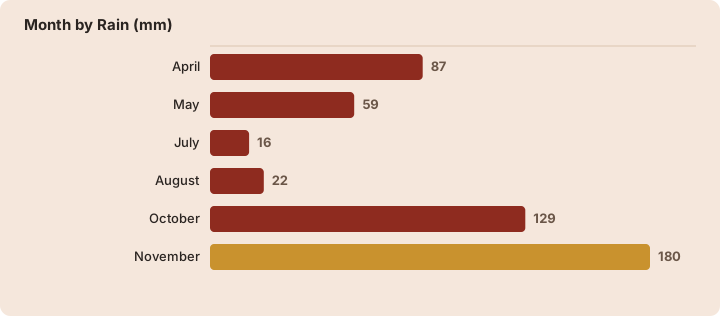
The outdoor-eating season around Pompeii runs roughly from April through October, and the climate data supports it: the 1991-2020 normals for the Pompei grid point show average daily maxima of about 21.6 C in May, 28.7 C in July and 21.3 C in October, against about 12.2 C in January. Rain is the winter variable, with about 180 mm in November, the wettest month, against about 16 mm in July, the driest. Terrace season opens in spring and closes gently in October.
| Month | Mean daily max (C) | Mean daily min (C) | Rain (mm) | Terrace verdict |
|---|---|---|---|---|
| April | 17.7 | 10.4 | 87 | Comfortable |
| May | 21.6 | 14.1 | 59 | Ideal |
| July | 28.7 | 21.1 | 16 | Hot, seek shade |
| August | 29.4 | 21.8 | 22 | Hot, evening eating |
| October | 21.3 | 15.1 | 129 | Pleasant, some rain |
| November | 16.9 | 11.5 | 180 | Cool and wet |
These figures are grid-point normals computed from the Open-Meteo historical archive, not station readings, so read them as about-right rather than exact forecasts. The weather and best time to visit guide carries the full twelve-month picture.
Crowd data matters to the restaurant experience too, because table scarcity tracks visitor numbers. The park's own published visitor table for 2024 shows the monthly rhythm of the site:
| 2024 month | Visitors to the Pompeii site |
|---|---|
| May | 516,923 |
| October | 481,255 |
| September | 468,340 |
| April | 466,344 |
| July | 449,162 |
| November | 189,866 |
The site's best time to visit coverage unpacks the trade further.
Should You Book A Food Experience Or Find Restaurants On The Day?
Book the food experience if your day has a fixed spine, a cruise arrival, a Rome return or a Vesuvius climb, because the bundled tours move you from ruins to table without a navigation problem at the exact hour you are hungriest. Eat freely without booking if you are based in Naples, Sorrento or overnight in Pompei, because the trattoria supply in all three comfortably absorbs walk-ins outside the weekend peak. The honest divider is time pressure, not food quality.
Cruise passengers face the sharpest version of the choice, and the shore excursions guide covers the timing maths. Day-trippers from Sorrento and Naples can afford spontaneity, and the tours from Sorrento and tours from Naples pages show the bundled alternatives for comparison.
One last comparison belongs here for completeness: some travellers split a Campania trip between Herculaneum and Pompeii, and the eating geography differs, since Herculaneum sits beside the modern town of Ercolano with its own small food scene. The Pompeii vs Herculaneum guide settles which site earns the meal stop.
Common Questions About Eating In Pompeii
Are there restaurants inside the Pompeii archaeological park?
Only a small number of refreshment points, not full restaurants, and no on-site outlet's hours or prices are published on this page. Plan a proper meal in the modern town of Pompei, before entry or after exit.
Can you bring food and water into Pompeii?
Yes, within the bag rules: bags up to 30 x 30 x 15 cm are permitted and larger items go to left luggage, per the park's regulations page. Water and snacks carried in that size of bag are the standard hot-weather strategy.
Where do you eat lunch on a Pompeii day trip?
Either in the modern town of Pompei around the Porta Marina, Piazza Esedra and Piazza Anfiteatro entrances, or through a bookable experience that bundles the ruins with lunch or a Vesuvian wine tasting, with the operator handling the transfer.
Is Naples worth adding to a Pompeii food trip?
Yes: the scheduled Circumvesuviana time from Napoli Garibaldi to Pompei Scavi-Villa dei Misteri is 29 to 35 minutes, so a Naples pizzeria lunch or dinner fits either side of a visit, and the city also hosts the pizza and tiramisu cooking classes on this site's roster.
What food is Pompeii itself known for?
The regional Campanian canon, pizza napoletana, tomato pasta, mozzarella and provola, plus an archaeological food record: the site preserves Roman thermopolia, the counter-service hot-food bars of AD 79, and the carbonised loaves of the Bakery of Modestus.
When is terrace season for eating around Pompeii?
Roughly April to October. The 1991-2020 normals for the Pompei grid point show average daily maxima of about 21.6 C in May and 21.3 C in October, against about 180 mm of rain in November, the wettest month.
Eating well around the ancient city is less about finding one perfect address than about matching the meal to the shape of the day: snacks and water inside the 44 ha of ruins, a fast slice or a slow trattoria in modern Pompei at the natural break, and either a Naples table or a bundled wine-and-lunch experience when the day is being run against a clock. The entrances, the train times and the seasonal tables above give the frame; the homepage of Pompeii Travel Guide holds the rest of the site for everything that surrounds the table.