Vesuvius Scrolls
The Vesuvius scrolls are the carbonised papyrus rolls buried with Herculaneum in the eruption of AD 79, the only library to survive from the ancient Roman world and one of the hardest reading problems in archaeology.
Short answer
The Vesuvius scrolls are papyrus rolls from the Villa of the Papiri at Herculaneum, carbonised by the eruption of AD 79. Herculaneum entry is EUR 16 in 2026, EUR 2 reduced for ages 18 to 25, free on the first Sunday of the month. The Villa of the Papiri itself is closed for works, and its Ancient Theatre is closed until further notice.
The rolls were carbonised, charred into blackened cylinders that crumble at a touch, and for a long time they defeated every attempt to open them. Today they are read with X-ray imaging that never unrolls a page. This guide explains what the scrolls are, where they were found, why the villa that held them is closed, and how to build a day around the sites connected to them, from the excavations at Herculaneum to the crater of the volcano that made the story possible.
What Are The Vesuvius Scrolls?
The Vesuvius scrolls are papyrus book rolls from a grand Roman villa at Herculaneum, carbonised by the heat of the AD 79 eruption and preserved as charred cylinders rather than burned to ash. The surge of hot gas and fine volcanic material that struck Herculaneum heated and then sealed the rolls, which is why a library of organic papyrus survived at all. No other book collection from the Roman world exists in anything like this condition.
Papyrus is a fragile material. In ordinary Roman conditions it rots within decades, which is why nearly everything written on it in antiquity is lost, and what survives usually does so only in much later copies on parchment or paper. Herculaneum is the exception, and the exception exists because the eruption destroyed and preserved in the same instant. The organic matter of the rolls was not consumed: it was slowly charred at a heat high enough to carbonise the papyrus but not high enough, in the sealed conditions of the villa, to burn it away entirely.
The result is paradoxical. Each scroll looks like a lump of charcoal, and it behaves like charcoal if handled, splitting into fragments that destroy the text forever. Early attempts to open them, over many decades, destroyed a share of the rolls and damaged many others before scholars developed mechanical devices that could unroll some of them gently. The shift to non-invasive reading, using X-rays and computational reconstruction, has changed the field: a scroll can now be read, at least partially, without being opened at all.
For visitors to the Bay of Naples, the scrolls matter because they turn a day at Herculaneum and Vesuvius into something more than scenery and ruins. The volcano in front of you wrote the scrolls, in the grimmest possible sense, and the excavated town below its western slope is the reason they exist. The rest of this guide stays anchored in what is verified about the sites, their tickets and their closures, so your plans rest on the park's own published figures rather than on legend.
Where Were The Scrolls Found At Herculaneum?
The scrolls come from the Villa of the Papiri at Herculaneum, the modern town of Ercolano on the north-western flank of Vesuvius, a separate archaeological site from Pompeii and about a short distance further up the Bay of Naples toward Naples itself. The villa, buried to a great depth by the eruption, also yielded bronzes and sculpture, and excavation tunnels reached its lower levels before the modern open-air excavation of the town began. The villa's name comes directly from the rolls.
Herculaneum should not be confused with Pompeii. The two are distinct parks with separate tickets, separate entrances and different characters: Pompeii is an entire ancient city, while Herculaneum is a smaller, deeper-buried town where organic material such as wood, food and papyrus survived in conditions Pompeii did not replicate. That survival is exactly why the scrolls were found here and nowhere else. The depth of the volcanic blanket over Ercolano also explains the villa's own situation: much of it still lies underground, beyond the reach of the current excavation.
The modern visit is straightforward. The site lies in Ercolano, and the entrance is a short walk from the town's Circumvesuviana station, Ercolano Scavi.
| Item | 2026 figure |
|---|---|
| Full ticket | EUR 16 |
| Reduced, ages 18 to 25 | EUR 2 |
| Hours, 16 Mar to 14 Oct | 8:30-19:30, last entry 18:00 |
| Hours, 15 Oct to 15 Mar | 8:30-17:00, last entry 15:30 |
| Free days | First Sunday of the month, 25 Apr, 2 Jun, 4 Nov |
| Closed | 1 Jan, 25 Dec |
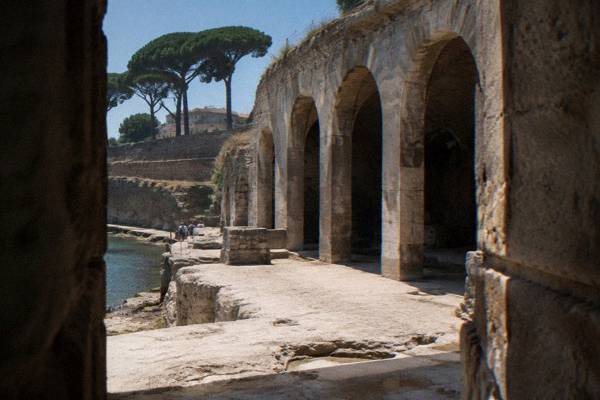
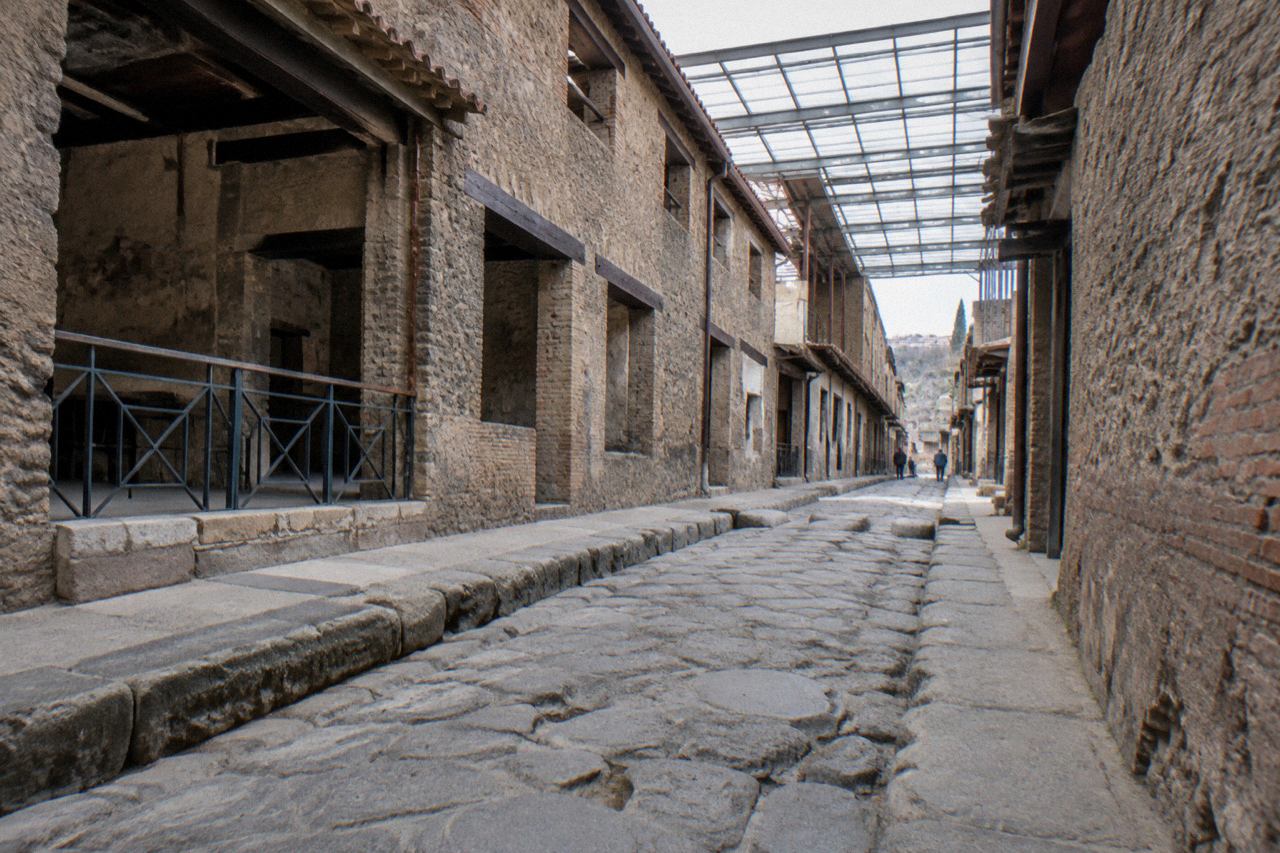
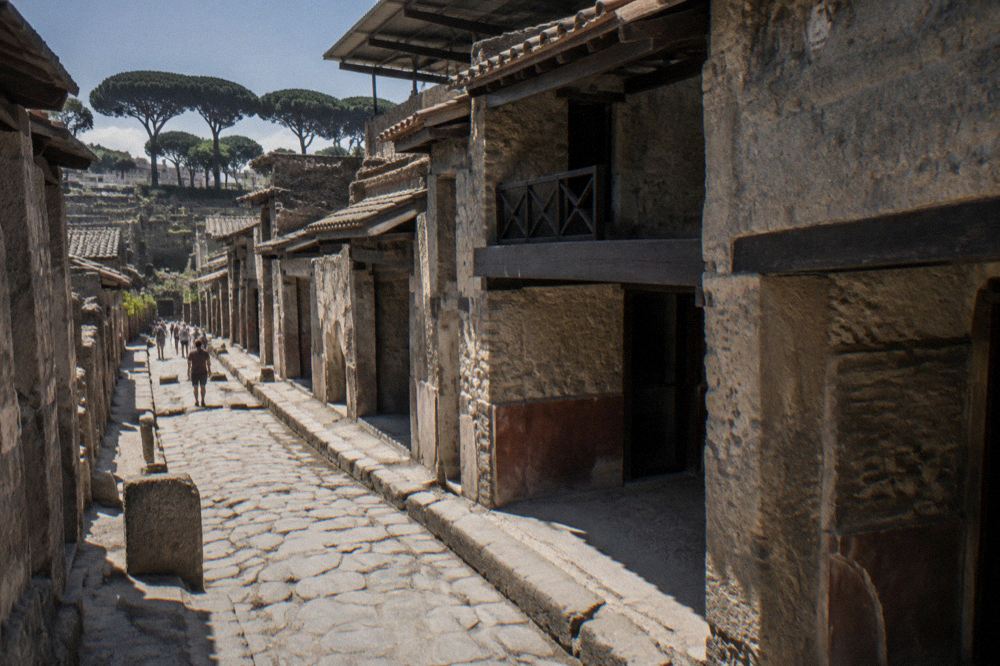
Two closures matter to anyone planning a scrolls pilgrimage. The Villa of the Papiri is closed for works, and the Ancient Theatre is closed until further notice, per the park's ticketing page. Neither should be described as visitable on a current itinerary, and any older guide that promises a walk through the theatre is out of date. What remains open at Herculaneum still rewards the trip: the boat sheds, the houses along the decumanus, and the site museum are all part of the standard circuit.
For background on the separate-but-linked question of the eruption that buried all of this, read the companion page on when Vesuvius erupted and the date debate, which covers the 24 August tradition and the park's own journal dismissing 24 October as without evidentiary basis.
Can You See The Vesuvius Scrolls On A Visit Today?
Not at Herculaneum, and not in the villa: the Villa of the Papiri is closed for works, the rolls themselves are conserved off-site by the Italian state, and no exhibition inside the excavations currently displays them. What a visitor can see is the town the villa belonged to, the depth of the burial that preserved organic matter, and, on a combined day, Pompeii and the crater of Vesuvius. The reading of the scrolls happens in laboratories, not in display cases at Ercolano.
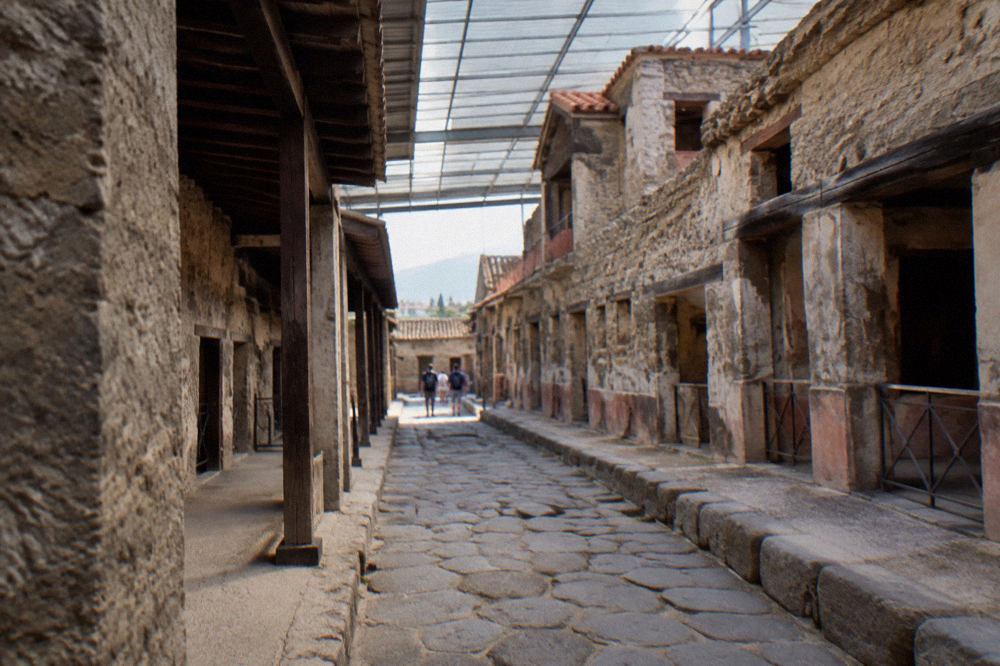
The scrolls have been the object of a sustained international effort to read them without unrolling, and news of virtual unwrapping and machine-learning transcription reaches the press in waves. That work draws on the surviving rolls held in Italian collections and on fragments imaged over the years. None of it happens where a visitor can watch. A realistic expectation for a day at Ercolano is the town itself: the carbonised wooden doors, the roof beams and the stacked boat sheds that make Herculaneum the place where organic Rome survived, which is the same chemistry that saved the papyri.
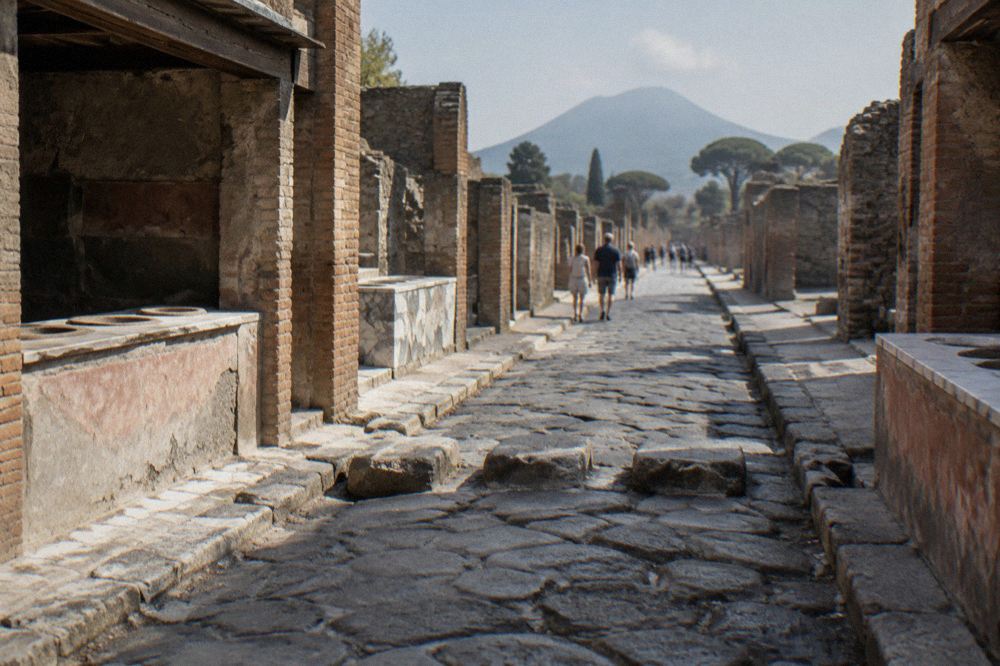
A scrolls-themed day therefore becomes a Vesuvius and Pompeii day, and that is where guided products earn their place. A trained guide costs little more than going alone once tickets and time are counted, and the elite Pompeii and Vesuvius tour with lunch from Naples bundles both stops with a meal; you can Check availability on the operator's live listing. The wider choice, in price order and format, is below.
If you would rather move at your own pace, build the day yourself: Herculaneum in the morning, the Circumvesuviana east, and Vesuvius in the afternoon when the crater crowds thin. The verified Vesuvius access rules are summarised later in this guide, and the full hike guide to Vesuvius covers the trail itself in detail. Note one transport fact before you plan trains: the Campania Express has been suspended since 1 October 2026 until further notice, so the ordinary Circumvesuviana line is the rail option.
How Did The Eruption Turn Papyrus Into Carbon?
The eruption of AD 79, traditionally dated to 24 August on the manuscript evidence of Pliny the Younger, sent surges of hot gas and fine ash over Herculaneum that heated the villa's papyri to charring point and then sealed them inside a hardened volcanic blanket. Deprived of oxygen, the rolls carbonised instead of burning, and the same layer kept water and air away for the following nineteen centuries. The scrolls are the accidental product of a precise thermal window.
The chemistry is the heart of the story. Burning requires oxygen; carbonisation drives off the volatile components of plant tissue while leaving a carbon skeleton. The volcanic material that engulfed Herculaneum was hot enough for the first process and dense enough to prevent the second, so the rolls came through as coherent charcoal rather than ash. Wood, food remains and fabrics elsewhere in the town survived the same way, which is why Herculaneum feels more intimate than Pompeii: doors, loaves and beams are still in place.
The eruption's own date is a live scholarly question, and one the park has addressed publicly. Pliny the Younger's oldest manuscripts give 24 August AD 79, while a widely repeated 24 October date has, in the words of the park's own e-journal, no evidentiary basis, stemming from a modern misreading. A charcoal graffito found in 2018 has reopened the argument without settling it. This guide keeps the traditional date with its caveat rather than pronouncing on an open debate.
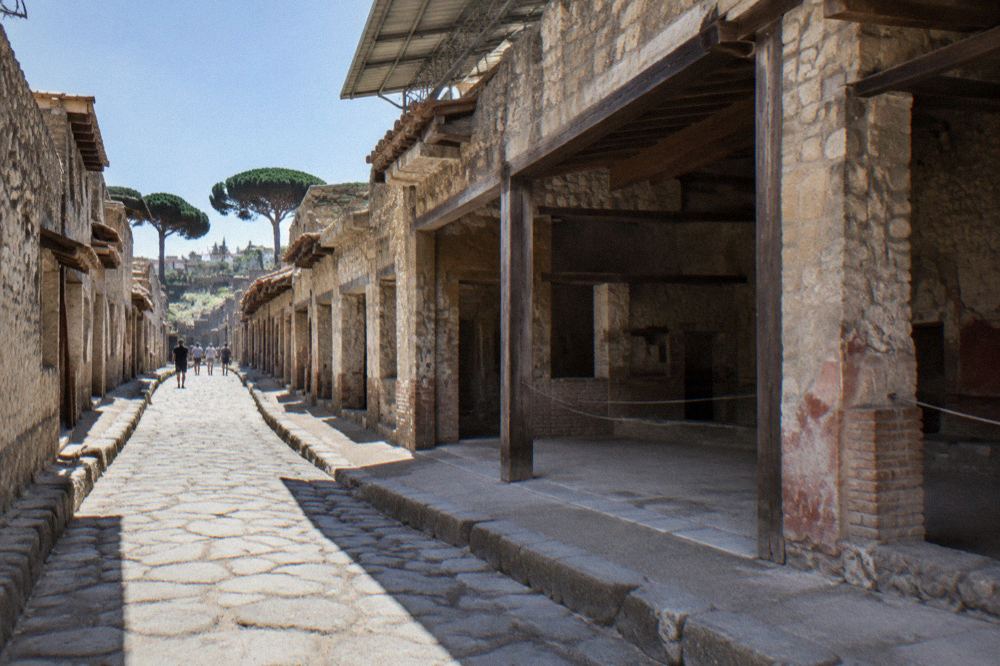
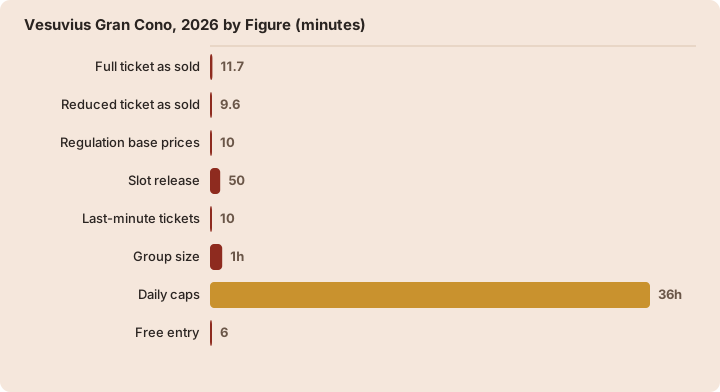
For the modern traveller the volcano is not just backstory but a destination, and its ticketing is strictly controlled. The Gran Cono trail is sold online only, in timed slots, through the national park's official ticketing page.
| Vesuvius Gran Cono, 2026 | Figure |
|---|---|
| Full ticket as sold | EUR 11.68 |
| Reduced ticket as sold | EUR 9.55 |
| Regulation base prices | EUR 10 full, EUR 8 reduced |
| Slot release | 50 tickets per 10-minute slot, up to 30 days ahead |
| Last-minute tickets | 10 per slot, from 30 minutes before, nominative since 11 Apr 2026 |
| Group size | 60 visitors per 10-minute slot |
| Daily caps | 2,160 to 3,240 visitors |
| Free entry | Children under 6 |
Weather governs everything on the mountain: on an orange alert or higher the ticket office and the path close automatically, and the ticket is refunded automatically. If you are weighing the crater against the excavations for a single day, the page on whether to do Pompeii or Vesuvius first sets out the sequencing argument, and how much it costs to go up Vesuvius totals the ticket maths.
Booking a guided day removes the slot-chasing: the operator secures crater access and the excavations entry, and lunch on the volcano's slopes is built into the itinerary. Cancellation terms and payment options are listed on the operator's live listing, which is where the current price renders as well.
How Do Scholars Read A Scroll Nobody Can Unroll?
Reading the Vesuvius scrolls no longer requires opening them: X-ray imaging captures the interior at fine resolution, software detects the carbon-based ink against the carbonised page, and algorithms virtually flatten each wrapped layer into readable text. Earlier mechanical unrolling, attempted over many decades, saved some rolls and destroyed others, which is why the non-invasive route is now the default. The hard problem is contrast, ink that is nearly the same material as the page it sits on.
The history of the rolls is a history of damage. When the first scrolls were handled in the early digging era they shed layers and crumbled, and machines were devised to unroll them by tiny increments, some successfully, many not. Each failed attempt erased text permanently, and conservation practice moved steadily toward minimal intervention. The modern answer is to leave the roll closed and let physics do the work: the papyrus sheet and the ink respond to X-rays in measurably different ways, and machine-learning classifiers, trained on visible fragments, pick out letter shapes inside the closed roll. The wider set of guides lives on Pompeii Travel Guide.
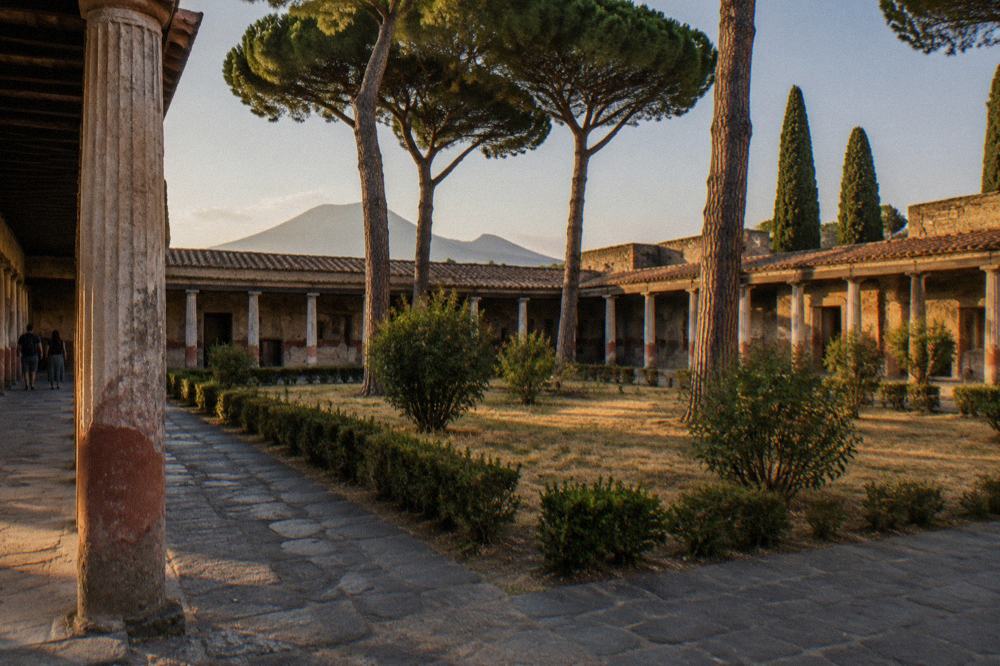
Progress has come in public, with competitions inviting researchers worldwide to improve detection algorithms on released scan data. Headlines appear whenever a new word or passage is recovered, and the pace has quickened since imaging campaigns began publishing openly. No complete scroll has been read end to end, and any claim that the library has been deciphered is ahead of the evidence. What is fair to say is that the technical barrier, which stood for generations, has been broken in principle, and the remaining work is refinement.
For the traveller, this changes nothing about the visit and everything about the context. Standing at Ercolano with the volcano above you, you are looking at the only place in the Roman world where this preservation happened, and the reading of the scrolls is the long unfinished chapter of that event. The crater trail guide describes what the walk to the rim is actually like, and the walk-length question covers timings: the excursion is about 2 hours return by the shortest route, up to 3 hours by the longest.
| Reading method | Phase | What it did to the rolls |
|---|---|---|
| Manual handling | Earliest handling | Crumbling and layer loss on many rolls |
| Mechanical unrolling devices | Machine-unrolling era | Opened some rolls, destroyed others |
| Careful conservation, minimal handling | Conservation era | Stabilised fragments, little new text |
| X-ray and virtual unwrapping | Imaging era | Interior text read without opening |
| Machine-learning letter detection | Current work | Recovers words from closed rolls |
What Do The Vesuvius Scrolls Actually Say?
The surviving texts are Greek prose works, largely philosophical, the kind of working library a wealthy, educated Roman household owned, not state archives or poetry anthologies. The rolls that have been read to date deal with ethical and scientific questions in the Greek philosophical tradition, and the collection's significance lies less in any single famous line than in being original books, not later copies, from the early Roman Empire. Much of the library remains unread.
The scholarly value is hard to overstate. Almost every classical text that survives reaches us through long stretches of copying, editing and loss; the Vesuvius scrolls are the books themselves, blackened at the moment of reading. Where a passage can be recovered, it can be compared with the later tradition and used to check how transmission changed texts. That is why each newly read word is reported in the international press even though the content is often dry: the medium is the discovery.
The share still unread is large, and the villa itself may hold more. The portion of the Villa of the Papiri that lies beyond the current excavation has never been fully explored, and the question of whether additional rolls survive underground is open. The park's closures, the Villa of the Papiri closed for works and the Ancient Theatre closed until further notice, mean the visible site tells its story without the villa for now.
A comfortable way to end a scrolls day is on the volcano itself, with the wine that grows in its soil. The slopes of Vesuvius produce distinctive wines from ancient lava terraces, and Vesuvius wine tasting explained covers the tradition. An organic lunch with tasting on the mountain rounds out the itinerary:
The pairing of archaeology and vineyard is not a tourist invention: the same volcanic soil that carbonised a library now feeds the vines, and the two stories belong on the same day.
Planning A Vesuvius Scrolls Day Trip From Naples
Verified rail time from Napoli Garibaldi to Pompei Scavi-Villa dei Misteri is 29 to 35 minutes on the scheduled service, and the crater's timed entry, sold only online, must be reserved before you leave Naples. Do not plan around the Campania Express, suspended since 1 October 2026.**
The geography favours a west-to-east, low-to-high day. Doing the excavations before the crater matters because the crater path closes on weather alerts automatically, and morning slots at Herculaneum beat the coach parties. The detailed sequencing lives in the Pompeii and Vesuvius in one day itinerary, with a slower alternative in two days across Pompeii, Herculaneum and Vesuvius.
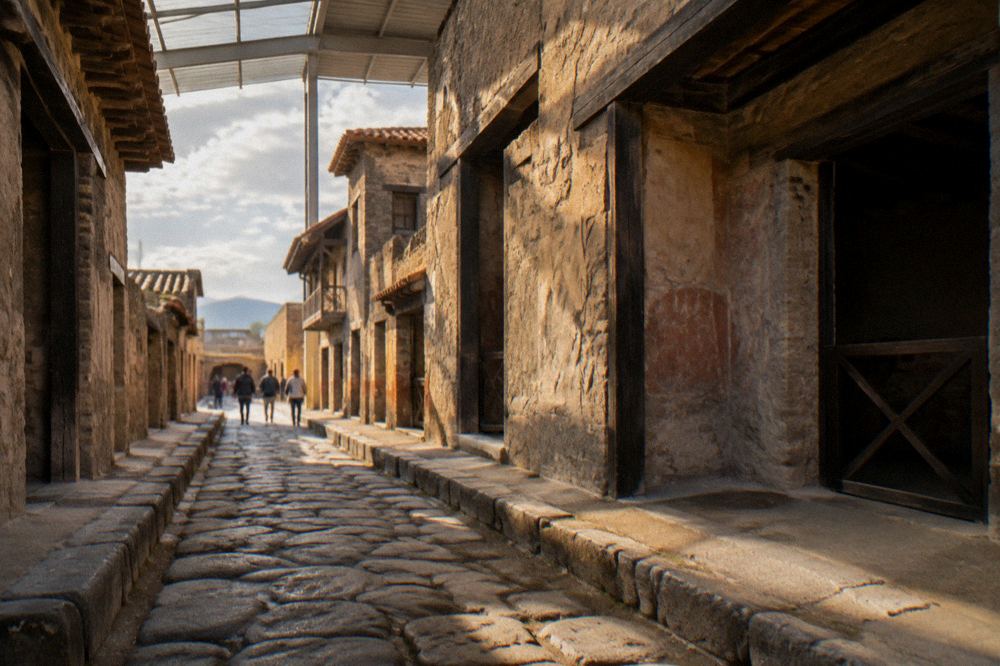
The Pompeii 2026 ticket line changes on 1 January 2027, when a single EUR 25 ticket for all park sites replaces the structure, valid 30 days with one entry per site, while the smaller sites stay EUR 8 individually and the MyPompeii Card stays EUR 45.
| Site | 2026 ticket | Notes |
|---|---|---|
| Herculaneum | EUR 16, EUR 2 reduced 18-25 | Free first Sunday, 25 Apr, 2 Jun, 4 Nov |
| Pompeii Express | EUR 20 | Ancient city only, ends 31 Dec 2026 |
| Pompeii+ | EUR 25 | Adds suburban villas and Boscoreale |
| Pompeii 3-day | EUR 30 | Adds Oplontis, Stabiae, Boscoreale |
| Vesuvius Gran Cono | EUR 11.68 as sold | Online only, timed slots |
For travellers who prefer a guide throughout, two formats suit this day especially well. A private archaeologist-led walk of Pompeii, booked by group rather than per person, suits families and anyone who wants the itinerary bent toward their interests:
And for a different angle on the volcano entirely, a horse ride on Vesuvius with wine tasting and dinner turns the standard crater visit into a full evening on the mountain:
Practical Notes For The Vesuvius Side Of The Day
Book the Gran Cono slot online before you leave Naples, carry identification because both Vesuvius last-minute tickets and Pompeii's nominative tickets are personal, and plan the crater for the afternoon when Herculaneum and Pompeii have been seen. Access hours vary by month, from 09:00-15:00 in January, February, November and December to 09:00-18:00 in July and August, and the daily caps run from 2,160 to 3,240 visitors. On an orange weather alert or higher the path closes automatically with an automatic refund.
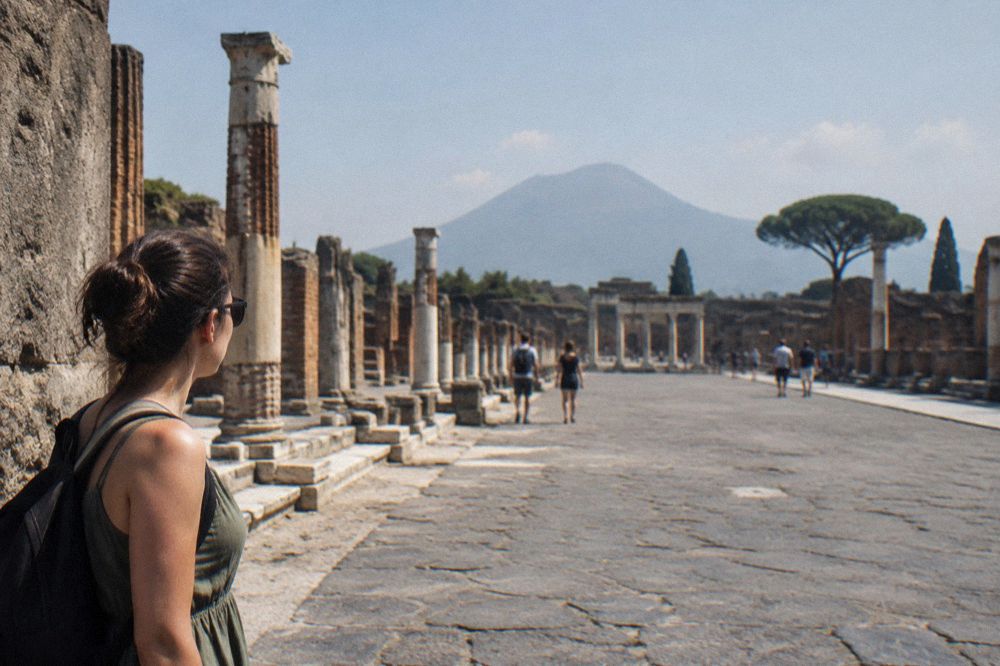
The month-by-month access table is the one to screenshot before travelling:
| Months | Gran Cono access hours |
|---|---|
| January, February, November, December | 09:00-15:00 |
| March, October | 09:00-16:00 |
| April, May, June, September | 09:00-17:00 |
| July, August | 09:00-18:00 |
A few further verified rules shape the day. Vesuvius tickets are nominative for last-minute purchases since 11 April 2026, and children under 6 enter free, with reductions for under-25s and residents of the 13 park municipalities. Pompeii operates a 20,000-visitors-per-day cap with nominative tickets and ID checks at entry, in force since 15 November 2024, and bags are limited to 30x30x15 cm. Whether you can buy a crater ticket on the day is answered, with the same caveats, on buying Vesuvius tickets on the day, and the driving question is covered in can you drive up Mount Vesuvius.
Clothing is worth a sentence: the crater path is volcanic grit and loose stone, and it is colder and windier at the rim than at the excavations, a contrast explained in is it cold at the top of Vesuvius. Take what you would take on any exposed hill walk, and more water in summer than feels reasonable at sea level. The complete Vesuvius visiting guide has the fuller checklist.
Common Questions About The Vesuvius Scrolls
What Are The Vesuvius Scrolls?
The Vesuvius scrolls are papyrus book rolls from the Villa of the Papiri at Herculaneum, carbonised but not destroyed by the eruption of Mount Vesuvius in AD 79. They are the only library to survive from the ancient Roman world, and they are read today with X-ray imaging that does not require unrolling them.
Can You See The Vesuvius Scrolls At Herculaneum?
No. The Villa of the Papiri, where the scrolls were found, is closed for works, and the Ancient Theatre is closed until further notice. The scrolls themselves are conserved off-site, and no display at the excavations currently shows them. What you can see is the buried town of Herculaneum, whose conditions preserved the papyri.
How Do Scholars Read The Carbonised Scrolls?
With X-ray imaging and software that virtually unwraps each layer of a closed roll, plus machine-learning detection that distinguishes ink from the carbonised page. Earlier mechanical unrolling, attempted over many years, damaged or destroyed a share of the rolls before non-invasive methods became standard.
Where Were The Scrolls Found At Herculaneum?
At the Villa of the Papiri, a grand Roman villa at Herculaneum, today the town of Ercolano on the north-western slope of Vesuvius, excavated through tunnels before the modern open-air excavation began. The villa's name comes from the papyrus rolls it yielded, and much of it still lies beyond the current excavation.
How Much Does It Cost To Visit Herculaneum And Vesuvius?
Herculaneum is EUR 16 full and EUR 2 reduced for ages 18 to 25 in 2026, free on the first Sunday of the month plus 25 April, 2 June and 4 November. The Vesuvius Gran Cono trail is EUR 11.68 full as sold, online only, in timed slots. Both figures come from the parks' official ticketing pages.
When Did The Eruption That Buried The Scrolls Happen?
Traditionally dated to 24 August AD 79 from Pliny the Younger's oldest manuscripts. A 24 October date repeated in many popular accounts has no evidentiary basis according to the park's own e-journal, and a 2018 charcoal graffito has reopened the debate without settling it, so the date remains a scholarly question.
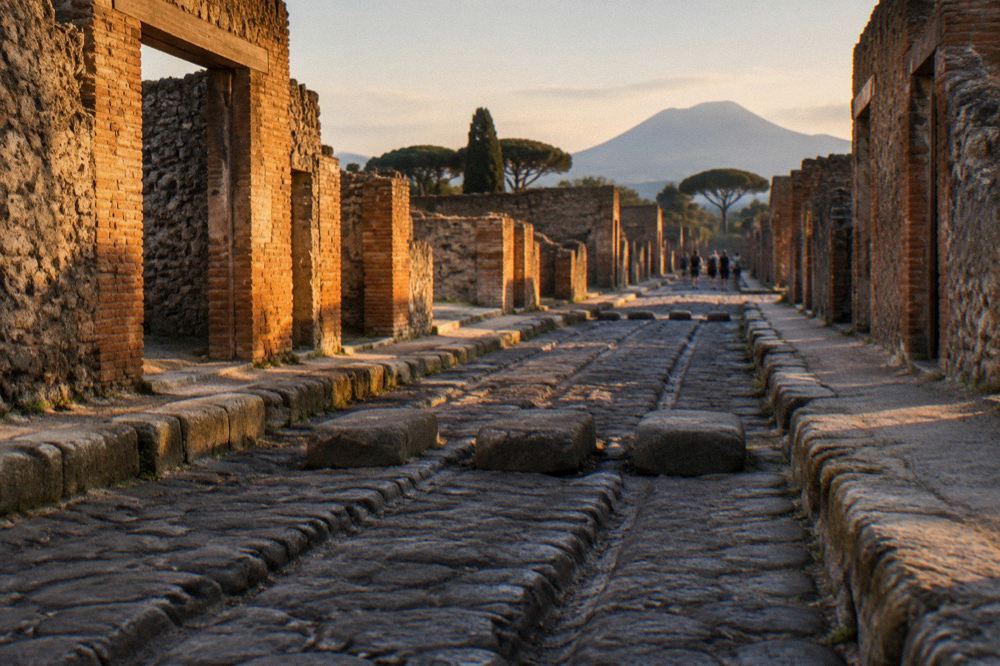
The Vesuvius scrolls are a story that begins with catastrophe and continues in laboratories, and the Bay of Naples is where both halves touch the ground. The villa that held the library is closed for now, Herculaneum itself is open and startlingly preserved, and the volcano that did the carbonising sells timed slots to its own rim.