Pompeii Frescoes
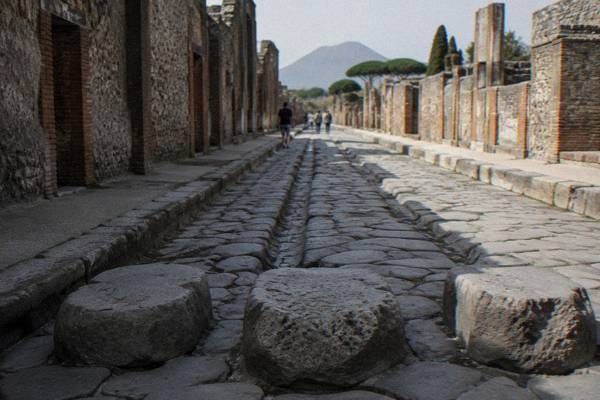
The wall paintings and floor mosaics of Pompeii, the Roman city buried by Vesuvius in AD 79 beside the modern town of Pompei in Campania, Italy, are the largest body of Roman painting to survive anywhere. This guide covers where the frescoes are, which mosaics to look for, and how to plan the visit.
Short answer
Pompeii's frescoes and mosaics are spread across the excavated ancient city, a 44 hectare site beside modern Pompei, about 24 km from Naples. Entry in 2026 is EUR 20 for the ancient city. The paintings survive because the eruption of AD 79 sealed them under volcanic debris, and many can be seen on a two-hour visit with a guide.
Pompeii, the ancient Roman city buried by the eruption of Mount Vesuvius in AD 79, holds the richest surviving collection of Roman frescoes and floor mosaics in the world. The site sits in Campania, southern Italy, beside the modern town of Pompei, about 24 km by road south-east of Naples on the Bay of Naples. Its excavated area covers 44 hectares of a property that UNESCO lists, together with Herculaneum and Torre Annunziata, at 98 hectares, recognised under criteria covering its evidence of Roman society, its urban design and its landscape. The ash and pumice that destroyed the city also sealed its painted walls, and that is why the colours still read clearly after nineteen centuries.
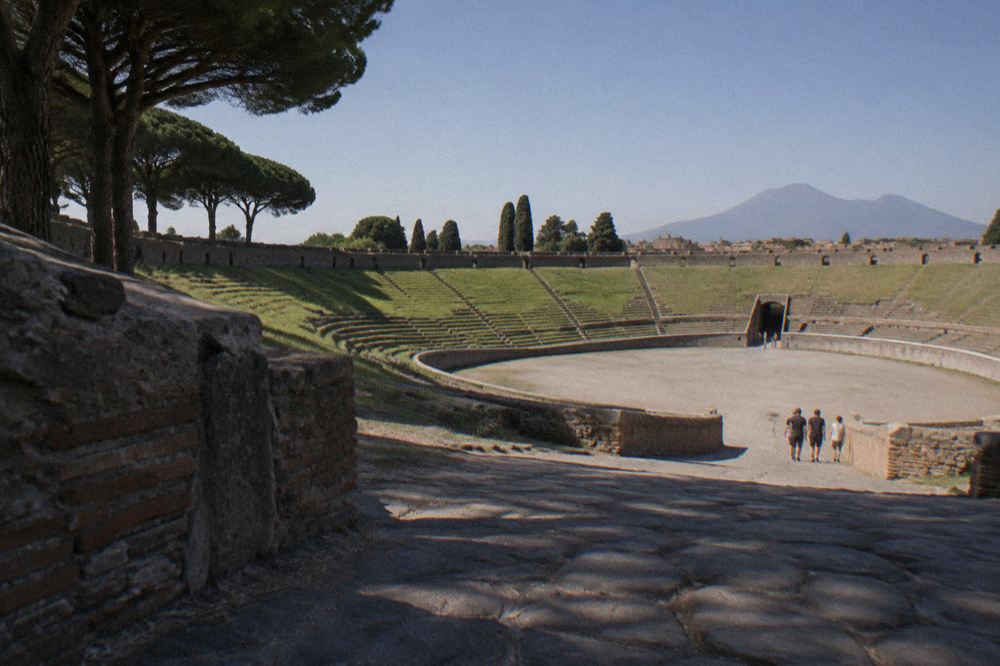
Visitors come for many reasons: the Forum, the amphitheatre, the body casts described in our guide to the Pompeii casts. But the frescoes are the thread that ties the city together. They decorated houses, shops, baths and tombs alike, and they turn a walk through stone ruins into a walk through a painted town. This guide explains where the paintings are, how the medium works, which mosaics reward the detour, and how to fit all of it into a realistic day, with the ticket and timing facts you need from official sources.
What Are Pompeii Frescoes And How Were They Made?
Fresco at Pompeii means pigment painted onto wet lime plaster, so the colour became part of the wall itself as the plaster dried, and that chemical bond is why so much of it survived the eruption of AD 79 and the excavation. Painters built the decoration in layers, from the rough render up to the fine polished surface, then worked in sections while each patch stayed damp. The result is painting that cannot flake off like modern wall paint.
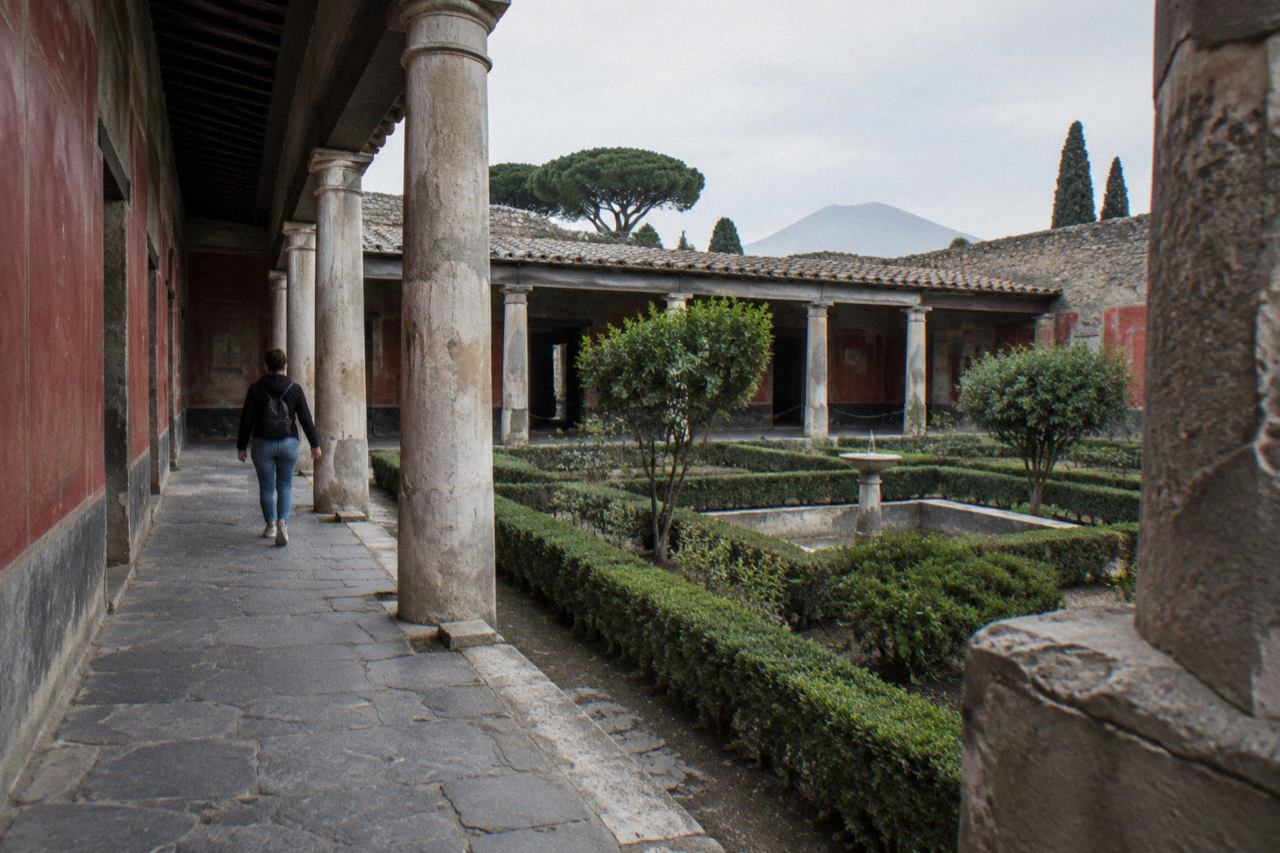
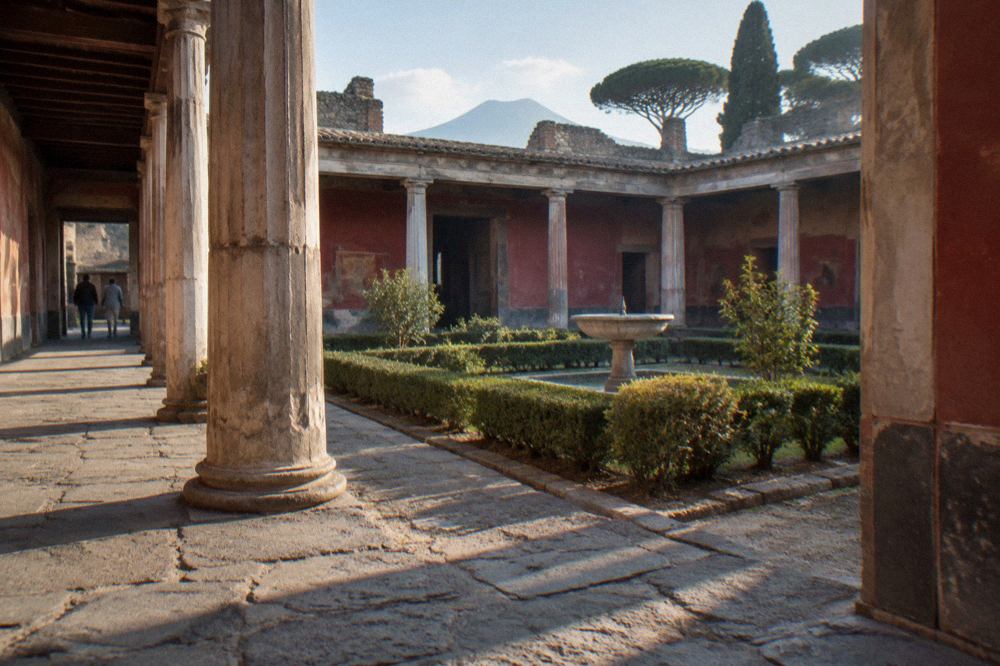
The technique rewarded speed and planning. A workshop painted the framing architecture first, then the panels, then the small figures and details. Large walls were divided into zones: a main middle band with pictures, an upper band imitating stucco or hanging garlands, and lower panels in strong colour. The famous Pompeian red, a deep iron-oxide tone, became the signature of the city's grandest reception rooms, though walls also appear in black, yellow and white grounds.
Subject matter ran from mythology to still life. Painted gods and goddesses, theatrical masks, birds, fruit, bread, fish, gardens, seascapes and architectural fantasies all survive on Pompeian walls. Some panels imitate framed pictures hung on a wall; others dissolve the wall entirely into illusionistic vistas of columns and courtyards. In shops and bars, painted signs advertised the business, and in houses, painted borders and small pictures marked the boundary between public and private space.
The mosaics are the second half of the story. Floors were set with thousands of tiny stone and glass tesserae, from simple black and white geometric patterns to full pictorial scenes of animals, sea life and battle. Wall mosaics, made of even finer glass paste, caught the light in fountains and garden features. Where fresco gave the walls colour, mosaic gave the floors durability and sparkle, and the two media were designed together as a single decorative scheme.
Where Are The Best Frescoes Inside The Ancient City Of Pompeii?
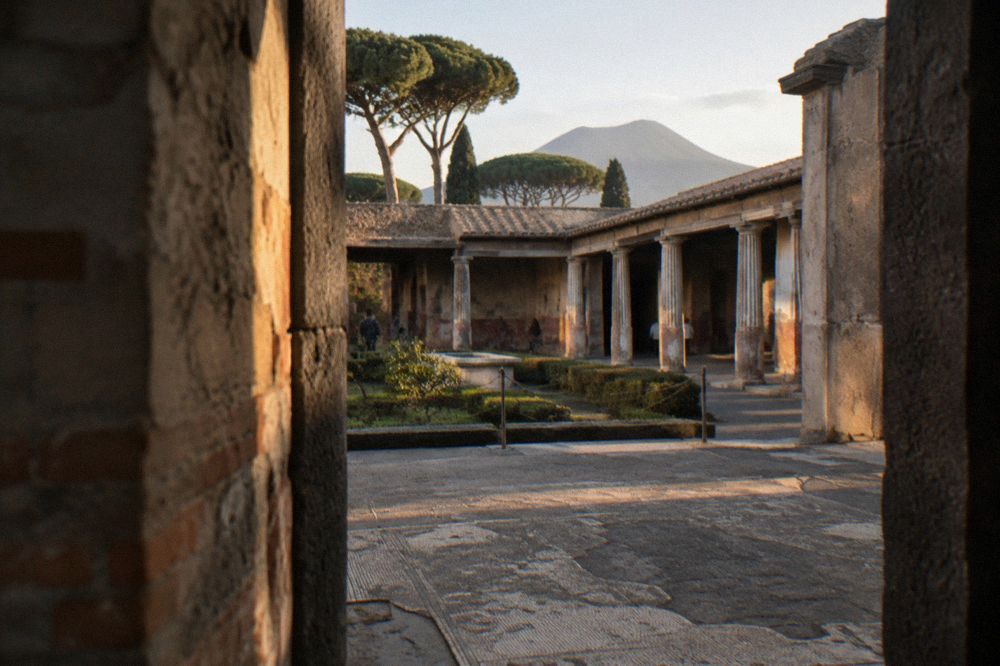
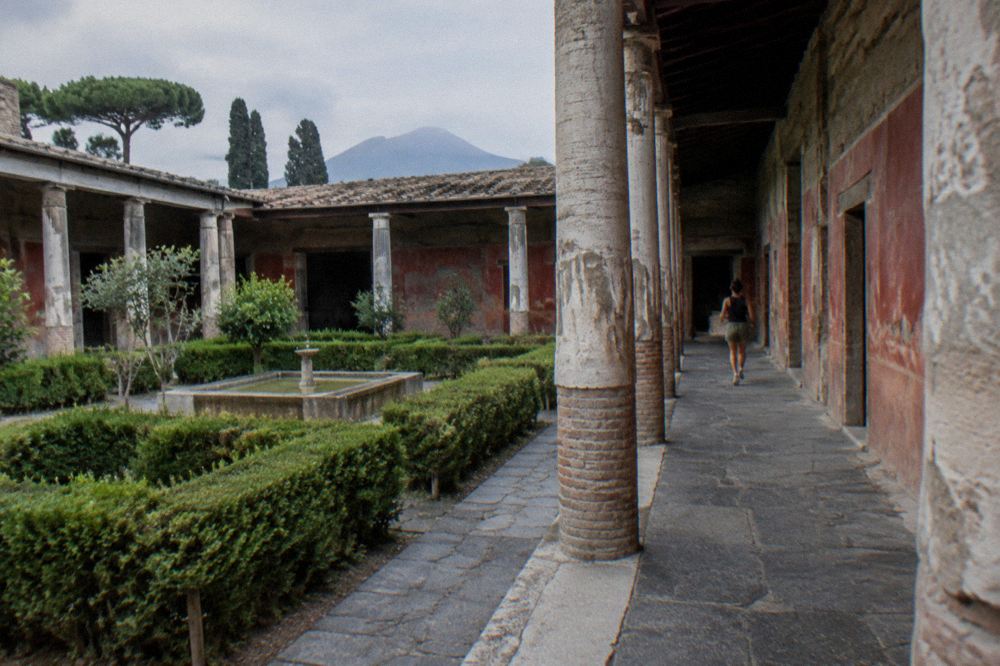
The painted houses cluster along the main streets of the excavated city, reached from the ticket offices at Porta Marina, Piazza Esedra or Piazza Anfiteatro, and painted interiors open and close house by house, so check the park's daily notice before planning a route around any single fresco. Some houses are roofed to protect their walls; others stand open to the sky. A two-hour circuit takes in a handful of painted houses; a full day is needed for a serious fresco itinerary.
No printed list of open houses is ever final, and the park closes individual buildings for conservation without much notice. One dated example: the Praedia of Julia Felix, a large complex with fine painting, has been closed to the public since 7 September 2026 for maintenance. That is the practical reality of fresco hunting at Pompeii: the resource is finite, the conservation pressure is constant, and flexibility beats a rigid checklist.
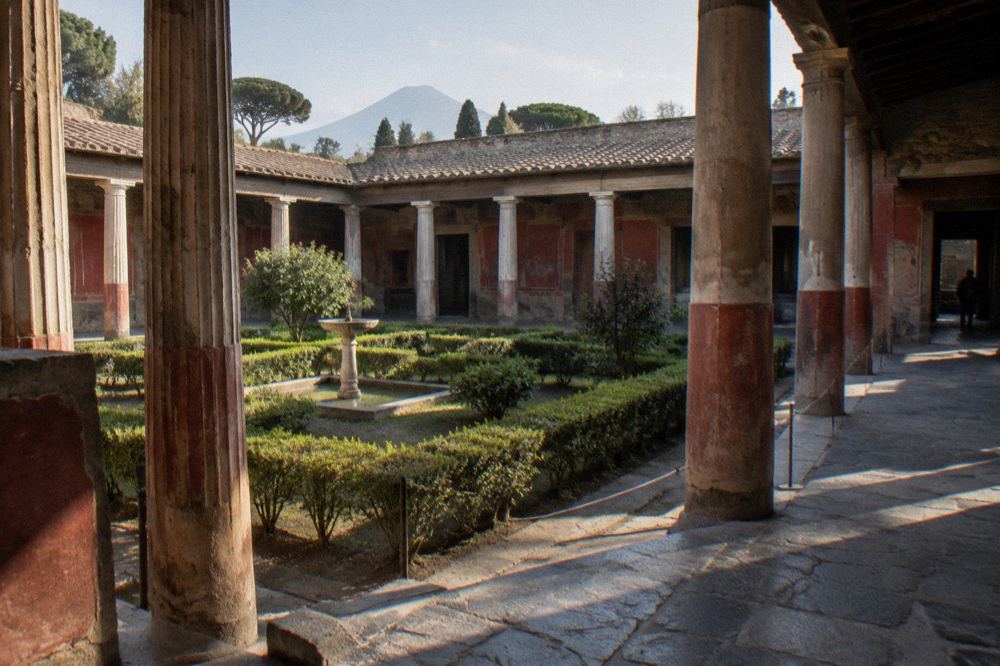
The classic fresco itinerary follows the decumanus and the streets off it. The Villa of the Mysteries, outside the walls near the Porta Ercolano end, carries the celebrated frieze of life-sized figures, and it is reached through the suburban villas route, which ticket holders add for EUR 8, card only, at the Porta Ercolano / Street of the Tombs entrance. Inside the walls, the great houses of the city, including the House of the Faun and the House of the Vettii, hold painted reception rooms and garden views, while the baths and the lupanar carry their own schemes. Rather than chasing a fixed list, walk the spine of the city and enter every painted house the daily notice shows as open.
The history of Pompeii explains why the paintings look the way they do: the city was a prosperous commercial town, and its homeowners decorated in competitive emulation of fashion, importing painters and motifs as readily as wine and fish sauce. Read the walls as advertisements of taste and status, and the repetition of columns, theatres and myth becomes a language rather than wallpaper.
Which Pompeii Mosaics Should You Not Miss?
The mosaic floors to seek out at Pompeii are the pictorial ones, panels of animals, sea creatures and figural scenes set into geometric floors, and the House of the Faun, the largest and grandest house yet excavated in the city, carries the floor mosaic every visitor has seen in photographs. Its threshold panels of sea life and its celebrated battle scene define what Roman mosaic could achieve. Smaller houses reward the patient eye with dogs at doorways and fountain mosaics of glass.
The House of the Faun alone justifies a slow pass. Its floors combine crisp black and white geometry with virtuoso pictorial inserts, and the layout, two atria and a peristyle garden, shows how floors, walls and water features worked as one ensemble. The celebrated battle scene's original is conserved in the Naples archaeological museum, with a copy set into the floor in situ. Elsewhere in the city, mosaic signage at doorways, the famous cave canem warning among them, gives the walk a rhythm of small discoveries between the painted houses.
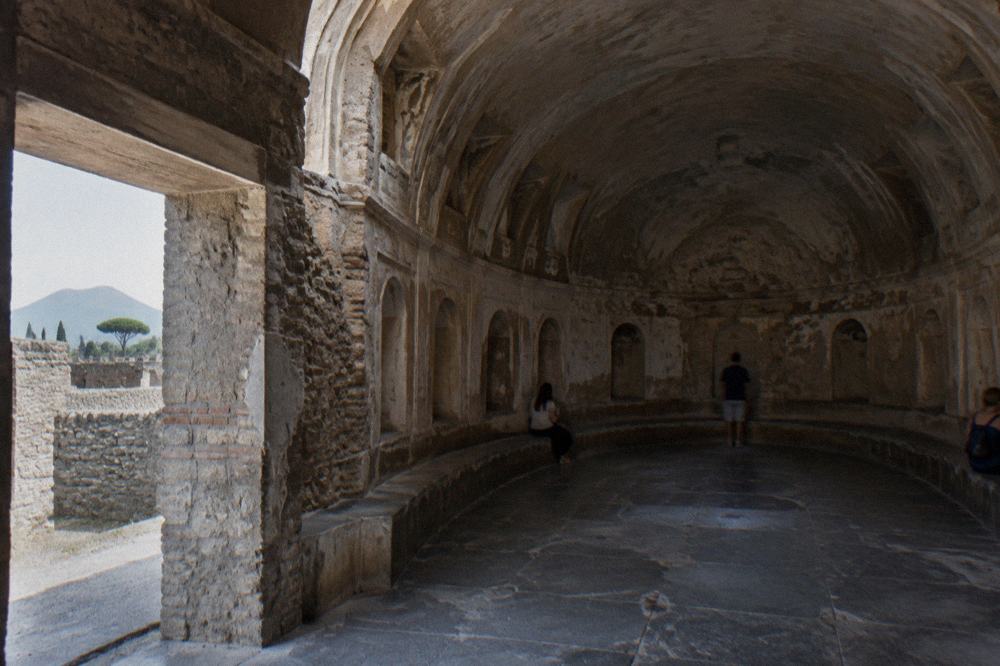
Mosaic also survives in the public buildings. The baths carry floor patterns, and the larger establishments mixed mosaic with painted stucco ceilings, of which fragments remain. A useful habit for any visitor: look down at every threshold, and look up in every roofed room. The decorative programme of a Pompeian building ran from floor to ceiling, and a floor panel often echoes the wall painting above it, a dolphin under a seascape, a mask under a theatrical scene.
How Much Do Pompeii Tickets Cost In 2026, And Which Ticket Covers The Painted Houses?
In 2026 the Pompeii Express ticket costs EUR 20 and covers the ancient city itself, where the painted houses and mosaic floors stand. The Pompeii+ ticket at EUR 25 adds the suburban villas route, including the Villa of the Mysteries with its frieze, plus Villa Regina, the Boscoreale Antiquarium and the shuttle. A 3-day ticket at EUR 30 adds Oplontis, the Stabiae villas and museum, and Boscoreale. From 1 January 2027 this structure ends: one EUR 25 ticket covers all park sites, valid 30 days, one entry per site.
The change was announced by the park on 14 September 2026, and it matters for fresco planning. Under the 2026 structure, a visitor who buys Express and then decides to want the Villa of the Mysteries can add the suburban villas route for EUR 8 by card at the Porta Ercolano / Street of the Tombs entrance. From 2027 the single ticket bundles everything, and the three smaller sites, Oplontis, the Stabiae museum and Boscoreale, remain EUR 8 each, with the MyPompeii annual card at EUR 45.
| 2026 ticket (valid to 31 Dec 2026) | Price | What it covers |
|---|---|---|
| Pompeii Express | EUR 20 | The ancient city only |
| Pompeii+ | EUR 25 | City, suburban villas route, Villa Regina, Boscoreale Antiquarium, shuttle |
| 3-day ticket | EUR 30 | Pompeii+ plus Oplontis, Stabiae villas and museum, Boscoreale |
| Suburban villas add-on for Express | EUR 8 | Bought by card at Porta Ercolano / Street of the Tombs |
| Other park sites individually | EUR 8 each | Boscoreale, Oplontis, Stabiae museum |
| MyPompeii Card (annual) | EUR 45 (EUR 10 reduced) | Annual access |
Reductions are generous and strict. Entry is free for everyone under 18, and for everyone on the first Sunday of the month. EU citizens aged 18 to under 25 pay a EUR 2 reduced rate. Tickets are nominative, tied to a name and checked against ID at entry, and the park caps entries at 20,000 visitors per day, a limit in force since 15 November 2024. The ticketing rules are set out in full in our page on planning your Pompeii entry, including the left luggage rule for bags over 30x30x15 cm.
| Time band (16 Mar to 14 Oct) | Max entries | Express share | Plus share |
|---|---|---|---|
| 9:00-13:00 | 15,000 | 12,000 | 3,000 |
| 13:00-17:30 | 5,000 | 3,000 | 2,000 |
Should You Take A Guided Tour For The Frescoes?
Yes, for the frescoes specifically: the paintings read as decoration to an untrained eye and as a programme with a guide, and an archaeologist-led walk turns anonymous panels into named myths, status signals and workshop habits. A private guide can also bend the route toward whatever is open that day, which matters because painted houses close without notice. The trade-off is cost and pace: self-guided visitors move freely but miss the reading.
The comparison between formats is set out in our guided versus self-guided walkthrough. The guide question is really a decoding question. A fresco of a figure with a spear is a picture; a guide names the myth, points to the copybook motif repeated across three houses, and explains what the homeowner was signalling to guests standing exactly where you stand. For mosaics the same applies: the tesserae count as craft, but the placement of a pictorial panel at a threshold, where every visitor trod and looked, is a deliberate gesture a guide unpicks in seconds.
Private touring suits the fresco visitor well, because the paintings are the one part of Pompeii where commentary compounds. A private walk with an archaeologist guide can concentrate on painted houses rather than the standard highlights circuit, and it is priced per group rather than per person. The full index of guides sits on Pompeii Travel Guide.
For a smaller budget, the small-group archaeologist format covers the same ground at a shared price.
Whatever format you choose, book the entry ticket or a ticket-inclusive tour ahead of time. The 20,000 daily cap and the named-ticket rule mean a busy Sunday can close out walk-up visitors entirely, a risk discussed in our broader look at whether Pompeii is worth visiting.
How Did The Eruption Preserve The Paintings?
The eruption of AD 79 sealed Pompeii under volcanic ash and pumice, and that blanket kept light, rain and air away from the painted walls for nearly two millennia, which is why pigment that would have faded in decades elsewhere still holds its depth at Pompeii. The traditional date from the oldest manuscripts of Pliny the Younger is 24 August, while the park's own e-journal states that the alternative 24 October date has no evidentiary basis. The debate remains open.
The park leans away from October without settling on August, and the evidence behind the question, along with the date debate itself, is covered in our page on when Vesuvius erupted.
The physics is simple. Fresco pigment locked into lime plaster is chemically stable, and the main enemies of wall painting are ultraviolet light, moisture cycling and biological growth. A metre of dry pumice suppresses all three. Excavation is the dangerous moment: exposure restarted the decay clock, which is why roofs now cover the paintings, why houses rotate through closures like the Praedia of Julia Felix, and why photography without flash is the standing courtesy at painted interiors.
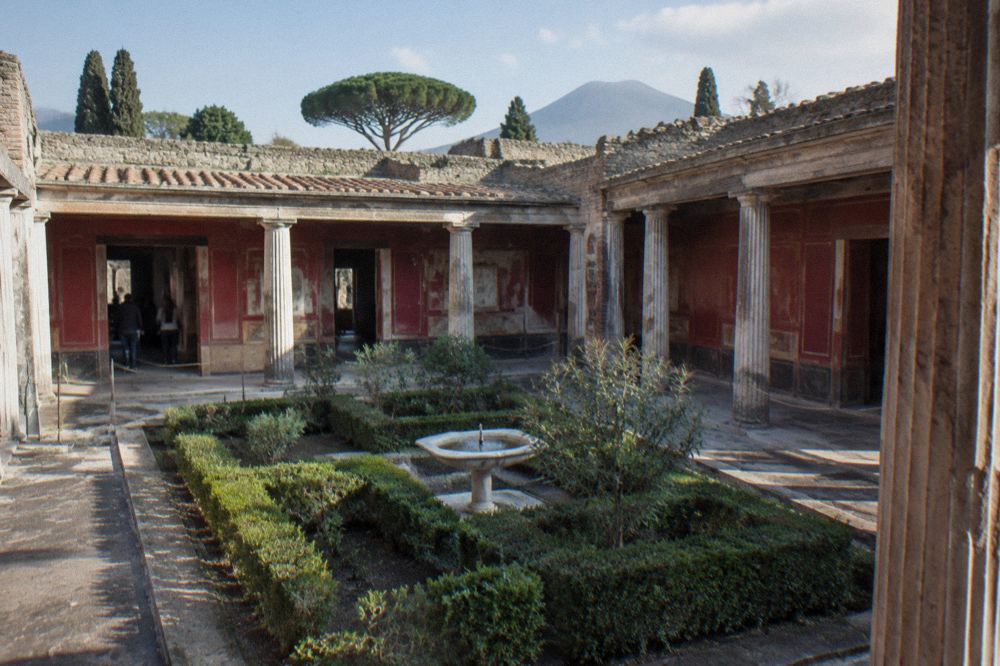
The same event that preserved the walls killed the city, and the site carries both stories side by side. Visitors moved by the plaster casts of victims can read their context in the Pompeii body casts guide; the casts are made from voids the bodies left in the ash, a preservation method as accidental as the survival of the paint.
When Is The Best Time Of Day And Year To See The Frescoes?
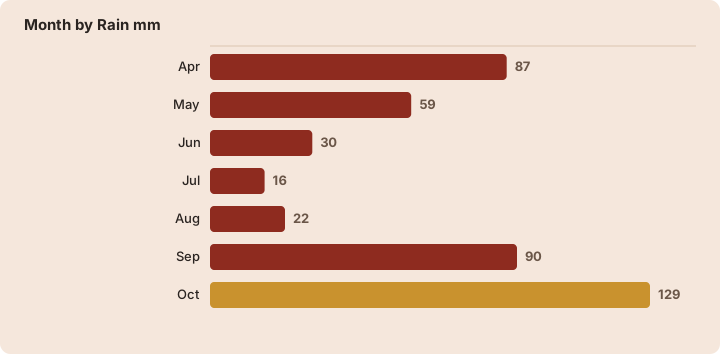
Visit Pompeii in the opening hour from 9:00 or during the last two entry hours before closing, when light is best and crowds thinnest. For comfort, aim for April, May, June, September, or October, with daytime highs of roughly 17.7 to 25.8 C, far cooler than July and August means of 28.7 and 29.4 C; November brings about 180 mm of rain, while July sees only about 16 mm.
Those temperature and rainfall figures are 1991-2020 climate normals for the Pompei grid point, computed from the Open-Meteo historical archive, a reanalysis grid rather than a weather station, so treat them as about right rather than exact. They still tell a clear story for fresco viewing: summer midday heat flattens both the visitor and the paintings, since strong overhead light washes out red panels, while morning and late afternoon light rakes across the walls and shows the depth of the illusionistic architecture.
| Month | Mean daily high C | Mean daily low C | Rain mm |
|---|---|---|---|
| Apr | 17.7 | 10.4 | 87 |
| May | 21.6 | 14.1 | 59 |
| Jun | 25.8 | 18.2 | 30 |
| Jul | 28.7 | 21.1 | 16 |
| Aug | 29.4 | 21.8 | 22 |
| Sep | 25.3 | 18.6 | 90 |
| Oct | 21.3 | 15.1 | 129 |
Crowd pressure follows the calendar. The park's own monthly figures for 2024 show the year's peak in May at 516,923 visitors, with April at 466,344, September at 468,340 and October at 481,255, against January's 112,121. In total the site counted 4,069,377 visitors in 2024 and 4,000,090 in 2025.
| 2024 month | Visitors to the Pompeii site |
|---|---|
| Jan | 112,121 |
| Apr | 466,344 |
| May | 516,923 |
| Aug | 421,255 |
| Oct | 481,255 |
| Dec | 138,028 |
Hours change with the seasons. From 16 March to 14 October the park opens at 9:00, last entry is 17:30 and closing is 19:00; from 15 October to 15 March last entry falls to 15:30 with closing at 17:00. The site has no weekly closing day, and it closes only 25 December and 1 January unless the park communicates otherwise. The first Sunday of each month is free for everyone, and a single free Sunday has drawn more than 36,000 visitors, a record the park itself reported in November 2024: a wonderful price, a punishing crowd. Full timing advice, including what to wear on hot stone streets, sits in our weather and best time to visit guide.
Can You Combine Pompeii's Frescoes With Herculaneum And Vesuvius?
Yes, and the pairing is natural: Herculaneum, the neighbouring buried town at Ercolano, holds frescoes and mosaics in a more compact, better-sheltered setting, while Vesuvius, the volcano behind both, makes a striking half-day add-on. A one-day Pompeii and Herculaneum plan is realistic on a tight schedule, and adding Vesuvius needs a full day.
For visitors who only have time for one of the two buried towns, our Pompeii versus Herculaneum comparison breaks down the choice in detail. Herculaneum's painted houses sit in a deep excavation trench that shelters them, and its visitor numbers are far smaller than Pompeii's, though the park publishes no annual figure for it. Practical caveats from its official ticketing page: entry is EUR 16 full and EUR 2 reduced for 18 to 25s, it is open daily, closed 1 January and 25 December, free on the first Sunday of the month plus 25 April, 2 June and 4 November with tickets collected on the day, and two of its monuments, the Villa dei Papiri and the Ancient Theatre, are closed for works.
| Herculaneum (2026) | Detail |
|---|---|
| Full ticket | EUR 16 |
| Reduced (18 to under 25) | EUR 2 |
| Summer hours (16 Mar to 14 Oct) | 8:30-19:30, last entry 18:00 |
| Winter hours (15 Oct to 15 Mar) | 8:30-17:00, last entry 15:30 |
| Free days | First Sunday monthly, 25 Apr, 2 Jun, 4 Nov |
| Current closures | Villa dei Papiri and Ancient Theatre closed for works |
For Vesuvius, the Gran Cono trail is ticketed online only, at EUR 11.68 full and EUR 9.55 reduced as sold, with 50 tickets per 10 minutes released 30 days ahead and ten nominative last-minute tickets per slot from 30 minutes before, nominative since 11 April 2026. The trail closes automatically on an orange weather alert or above, with automatic refund. Access hours run from 9-15 in January, February, November and December to 9-18 in July and August. Ticketing details for the volcano, including the Vesuvius ticket options, are covered separately.
Getting between the sites is easiest on the Circumvesuviana railway, whose Napoli-Sorrento line serves the Pompei Scavi-Villa dei Misteri station for Pompeii and Ercolano station for Herculaneum; the Campania Express premium service remains suspended since 1 October 2026. Timetables and station guidance are in our Circumvesuviana guide.
Common Questions About Pompeii Frescoes And Mosaics
Are the frescoes at Pompeii original or replicas?
The wall paintings you see on the walls at Pompeii are original Roman frescoes, painted onto the plaster in antiquity. Some famous mosaic originals, including the celebrated battle mosaic from the House of the Faun, are conserved in museums, with copies set into the original floors.
Why did the Pompeii frescoes survive the eruption?
The eruption of AD 79 buried the city in ash and pumice, which blocked out light, moisture and air for nearly two thousand years. Because fresco pigment is bonded into the lime plaster rather than sitting on top of it, the sealed walls kept their colour until excavation.
Do I need a special ticket for the Villa of the Mysteries frescoes?
In 2026, yes: the Villa of the Mysteries sits on the suburban villas route, covered by the EUR 25 Pompeii+ ticket, or added to a EUR 20 Express ticket for EUR 8 by card at the Porta Ercolano / Street of the Tombs entrance. From 1 January 2027 the single EUR 25 ticket covers all park sites.
Can photography damage the Pompeii frescoes?
Flash photography is restricted at painted interiors because repeated intense light accelerates pigment fading, and park regulations govern conduct inside the buildings. Photography without flash is the standing practice, and drones require authorisation.
Which houses at Pompeii have the best paintings?
The Villa of the Mysteries holds the celebrated frieze, and the House of the Faun and House of the Vettii are the classic painted houses inside the walls. Individual houses close for conservation without notice, as the Praedia of Julia Felix has been closed since 7 September 2026, so check the park's daily notice and stay flexible.
The frescoes and mosaics of Pompeii are the closest thing to walking through a painted Roman city, and they reward exactly the kind of slow, guided attention this guide describes. Pick the ticket that matches your route, arrive at opening hour or late afternoon, keep the itinerary loose around whatever is open that day, and let the walls do the talking.