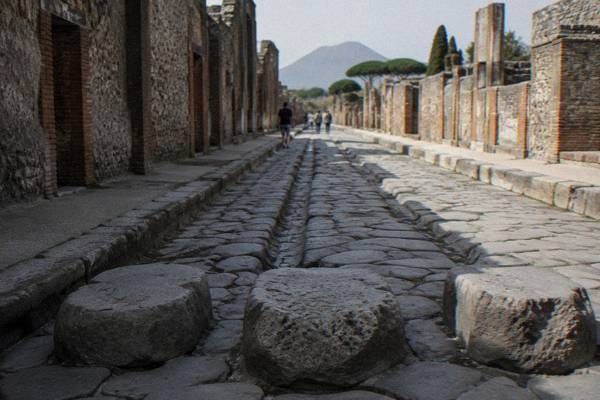
House Of The Chaste Lovers
The House of the Chaste Lovers is a combined domus and bakery in the ancient Roman city of Pompeii, the archaeological park in Campania, southern Italy, beside the modern town of Pompei and about 24 km by road from Naples. This guide covers the ticket, the entrance, the walking time and the houses worth pairing it with.
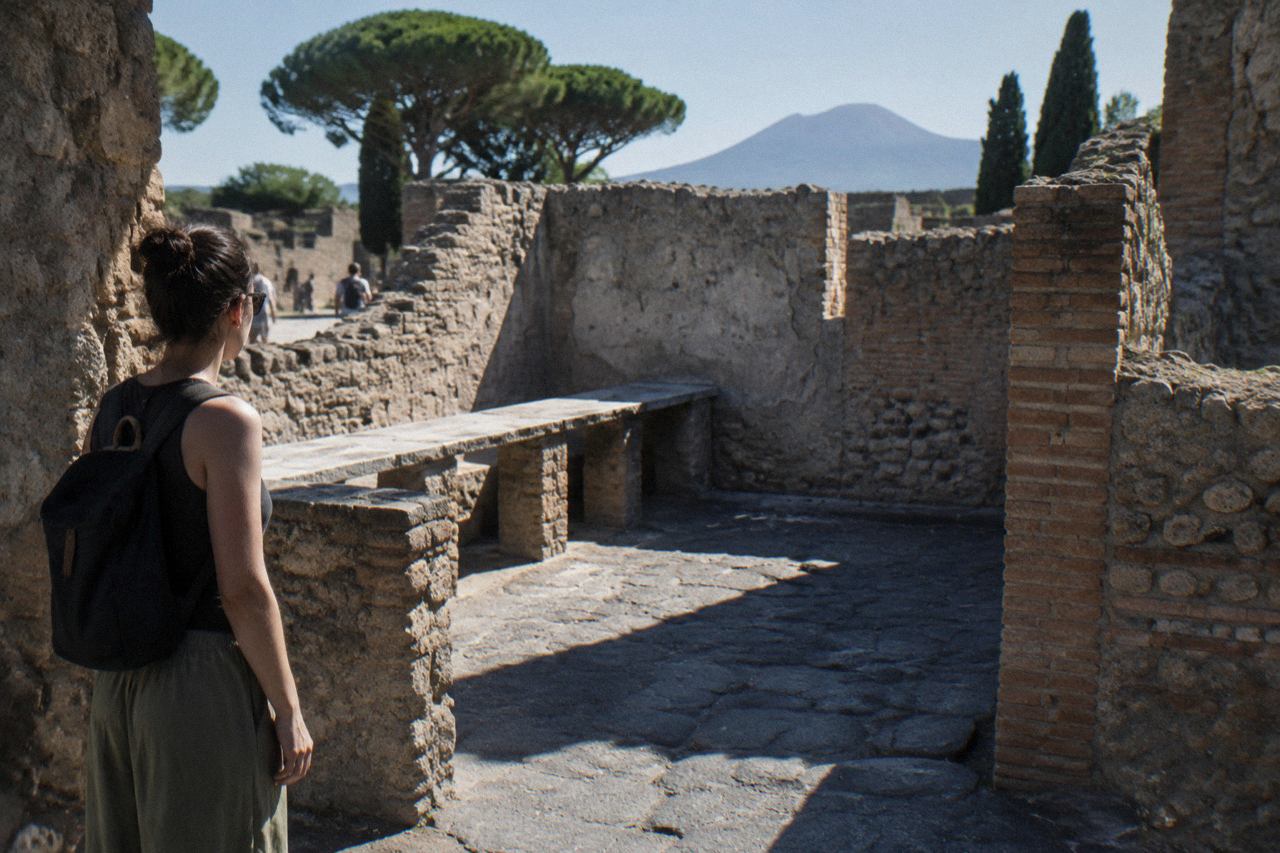
Short answer
The House of the Chaste Lovers sits inside the archaeological park of Pompeii, Italy, and is covered by the standard park ticket: Pompeii Express at EUR 20 in 2026, rising to a single EUR 25 ticket for all park sites from 1 January 2027. Allow roughly two to three hours to reach it from Porta Marina and see the highlights around it, and check the park's communications before travelling, as individual houses can close for conservation.
The House of the Chaste Lovers is a Roman house in the excavated ancient city of Pompeii, the archaeological park in Campania, southern Italy, beside the modern town of Pompei and about 24 km by road south-east of Naples on the Bay of Naples. The city was buried by the eruption of Mount Vesuvius in AD 79, traditionally dated to 24 August, and the house shares the ticket, the entrances and the daily rhythm of the whole park, so planning a visit means planning a Pompeii visit.
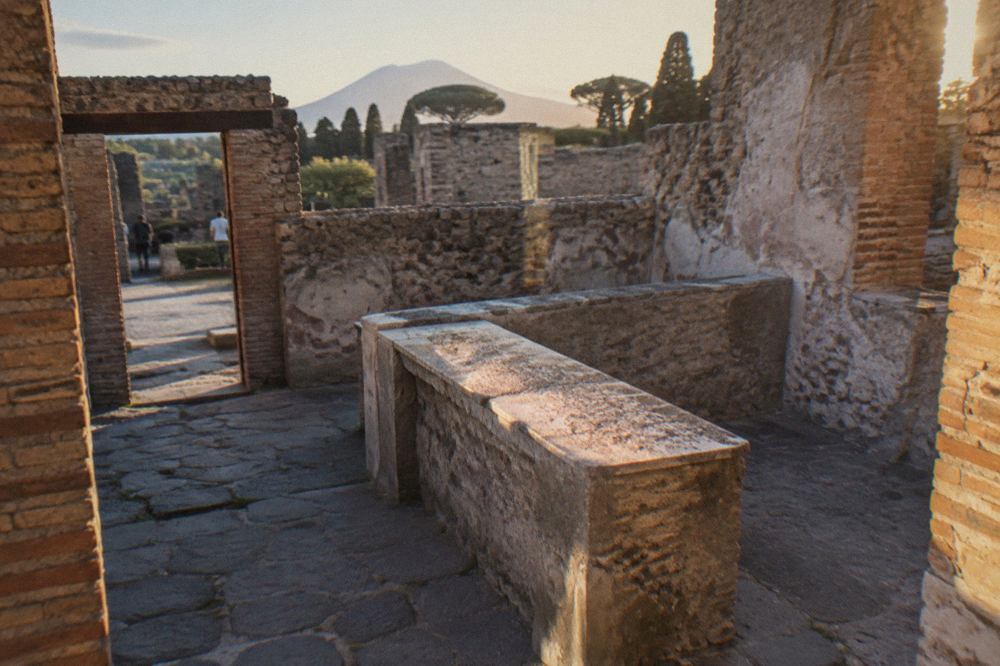
The park publishes everything a visitor needs on its own pages: the ticket structure in force since 12 January 2026, the opening hours by season, the bag rules and the entrances. This guide gathers those figures, explains how they shape a visit to this particular house, and compares it with the other celebrated houses of the city, from the House of the Vettii to the House of the Faun. For the wider question of what ticket to buy for the whole park, the Pompeii ticket guide carries the detail.
What Is The House Of The Chaste Lovers In Pompeii?
The House of the Chaste Lovers is a large domus in the ancient city of Pompeii, Italy, that doubles as a bakery, one of the clearest examples in the park of a residence and a food business sharing the same walls. Its mosaic of an embracing couple gave the house its romantic name, and its bread ovens and millstones show the industrial side of Roman domestic life. It sits inside the excavated area of 44 hectares that UNESCO lists as part of a single World Heritage property.
The house matters because it answers a question travellers often ask at Pompeii: was this a city of villas or of workshops? Here the answer is both at once. The residential rooms, arranged around their atrium, carry the decoration you expect of a prosperous household, while the bakery area contains the stone mill beds and the oven of a working bread business. Bread was a daily staple of the Roman town, and the park's bakery of Modestus tells the same story in a different quarter, with the carbonised loaves found in its oven now displayed in the Antiquarium.
The wider listing is worth knowing: UNESCO inscribes Pompeii together with Herculaneum and Torre Annunziata as one World Heritage property of 98 hectares, of which the 44 hectares of the excavated city form the core. The house sits inside that core, reachable on the same streets every other visitor walks.
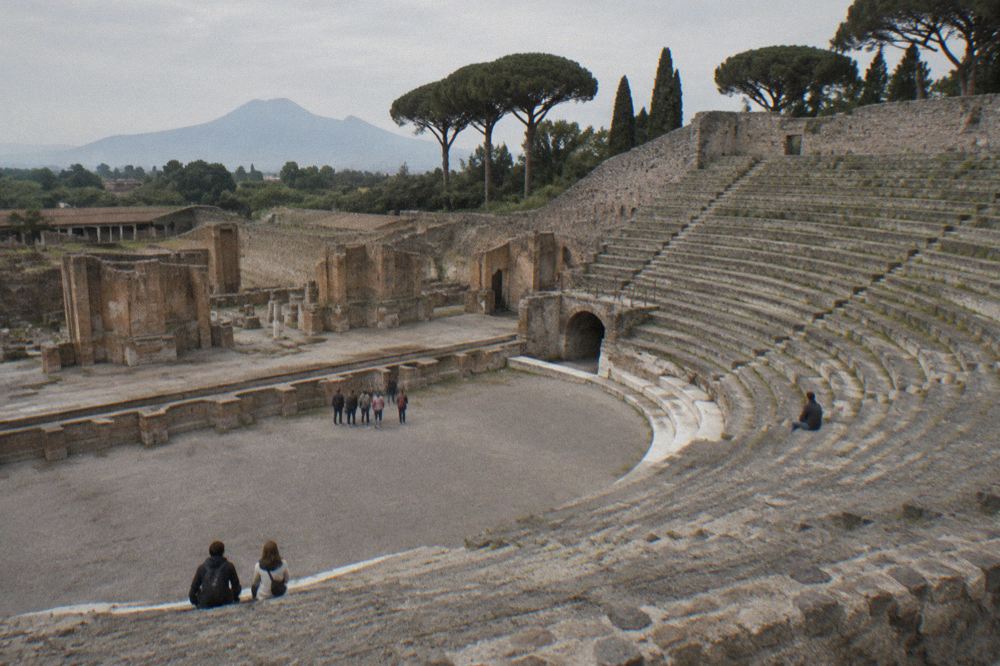
The eruption that sealed the house is itself an open question in scholarship. Pliny the Younger's oldest manuscripts give 24 August AD 79, while the park's own e-journal states that the competing 24 October date has no evidentiary basis and stems from a 1929 misreading, while adding that 24 August is not necessarily correct either. A guide who dates the eruption confidently to either day is simplifying a live debate, and the honest answer is that the traditional date is 24 August.
Which Ticket Covers The House Of The Chaste Lovers In 2026 And 2027?
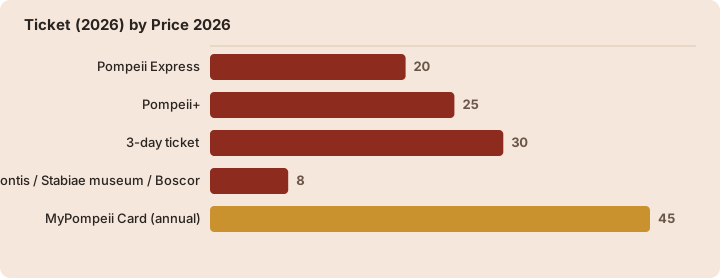
In 2026 the house is covered by every Pompeii ticket, starting with Pompeii Express at EUR 20 for the ancient city alone, and every 2026 price ends on 31 December 2026. From 1 January 2027 a single EUR 25 ticket covers all park sites, valid 30 days with one entry per site, while the three outlying sites stay at EUR 8 individually and the MyPompeii Card stays at EUR 45. There is no separate ticket for this or any individual house inside the ancient city.
The full 2026 structure, in force since 12 January 2026, is set out below. Reduced entry is EUR 2 for EU citizens aged 18 to under 25, entry is free for under-18s, and entry is free for everyone on the first Sunday of the month. Tickets are nominative, tied to the holder's identity, and identity documents may be checked at any entry point.
| Ticket (2026) | Price 2026 | What it covers |
|---|---|---|
| Pompeii Express | EUR 20 | The ancient city only |
| Pompeii+ | EUR 25 | City, suburban villas route, Villa Regina and Antiquarium Boscoreale, shuttle |
| 3-day ticket | EUR 30 | Pompeii+ plus Oplontis, Villa Arianna, Villa San Marco, Stabiae museum, Boscoreale |
| Oplontis / Stabiae museum / Boscoreale | EUR 8 each | The single outlying site |
| MyPompeii Card (annual) | EUR 45 | Annual pass, EUR 10 reduced |
The change on 1 January 2027, announced by the park on 14 September 2026, replaces that ladder with one EUR 25 ticket for every park site, valid 30 days and one entry per site. The nominative ticket and the 20,000 visitors per day cap, both in place since 15 November 2024, are retained. An Express holder in 2026 can also add the suburban villas route for EUR 8, card payment only, at the Porta Ercolano / Street of the Tombs entrance.
Tickets can be bought at the Porta Marina, Piazza Esedra and Piazza Anfiteatro offices or online through the ticketing service linked from the park's page. Independent entry is entirely possible, and readers weighing a guide against going alone will find the comparison laid out in guided tour versus self-guided at Pompeii. Visitors arriving from the Sorrento peninsula can also take the Sorrento skip-the-line express tour by train, which pairs the rail journey with a guided walk of the city; Check availability on the operator's live listing.
Which Entrance Serves The House Of The Chaste Lovers Best?
Pompeii has three ticketed entrances, Porta Marina, Piazza Esedra and Piazza Anfiteatro, and the house lies deep enough in the excavated city that the best choice depends on your route rather than on the house itself. Visitors with mobility difficulties should use the "Pompeii for All" route, entering at Piazza Anfiteatro and exiting at Piazza Anfiteatro or Piazza Esedra via the Antiquarium lift. The Porta Ercolano / Street of the Tombs entrance exists only for the suburban villas route.
Porta Marina is the classic arrival point, closest to the Circumvesuviana station Pompei Scavi-Villa dei Misteri, and the walk from there into the heart of the city gives you the Forum and the main thoroughfares before you reach the residential quarters. Piazza Anfiteatro serves the amphitheatre end of the site and pairs naturally with a visit that also takes in the large palaestra or the gladiatorial quarters. Whichever entrance you choose, the same ticket, the same bag rules and the same nominative identity check apply.
| Entrance | Tickets sold | Best for |
|---|---|---|
| Porta Marina | Yes | Arriving by Circumvesuviana, the Forum first |
| Piazza Esedra | Yes | Mid-city start, the "Pompeii for All" exit via Antiquarium lift |
| Piazza Anfiteatro | Yes | The amphitheatre quarter, accessible route entry |
| Porta Ercolano / Street of the Tombs | Suburban villas add-on only | The villas route, card payment, EUR 8 supplement for Express holders |
The park is large, and readers planning a route around several houses should use the Pompeii map rather than estimating distances from memory. The excavated area alone covers 44 hectares, so the order in which you visit houses matters more than the entrance choice itself.
What Can You See Inside The House Of The Chaste Lovers?
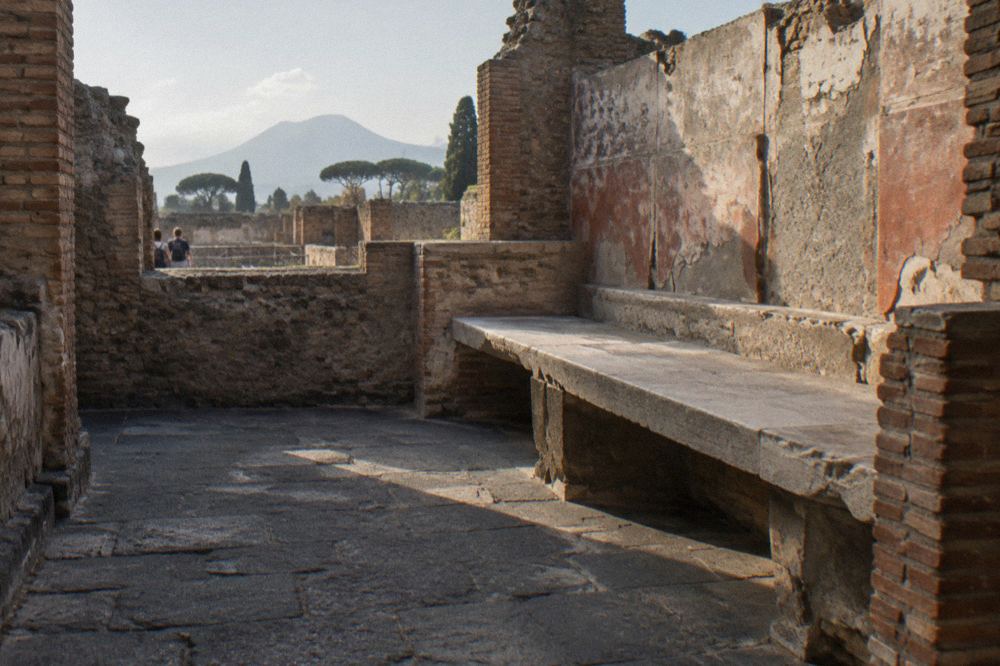
Inside the house you can see the decorated residential rooms around the atrium, the bakery's millstones and oven, the stables area associated with the delivery side of the business, and the mosaic of the embracing couple that gave the house its name. The combination of domestic fresco work and industrial bakery equipment in one building is what distinguishes it from the purely residential palaces elsewhere in Pompeii. Photography is permitted for personal use within the park's regulations.
The mosaic panel is the emotional heart of the visit. Two figures embrace in a quiet scene that early excavators read as chaste, restrained love, and that reading stuck in the house's name even as scholarly interpretation of Roman domestic art has moved on. Around it, the house shows the ordinary wealth of a family that made its money from bread: painted plaster, arranged rooms, and the working machinery of the trade.
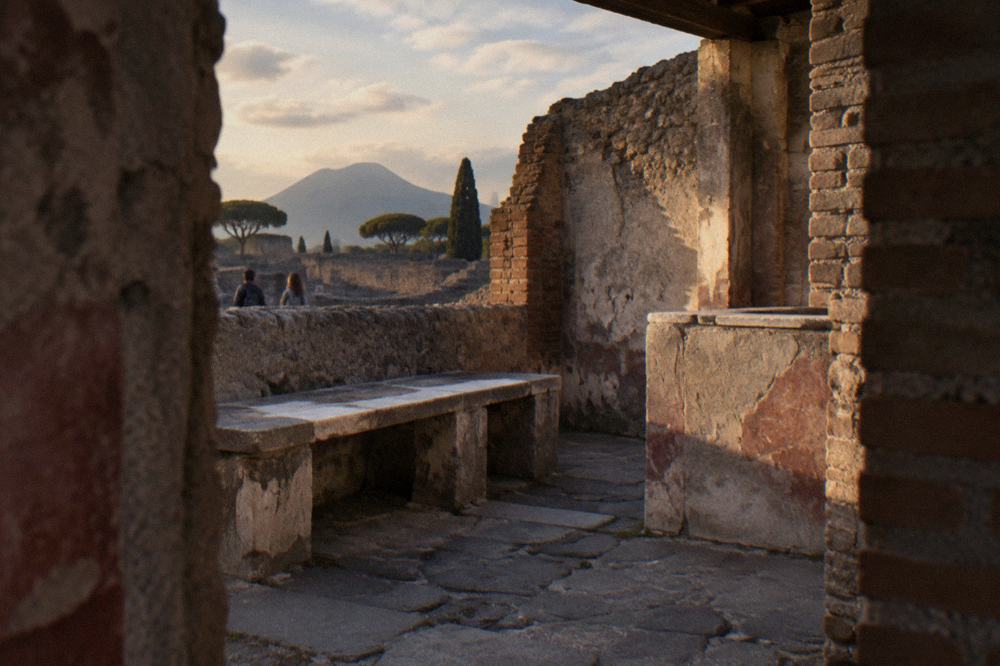
The bakery equipment rewards a slow look. The millstones of the type used across the Roman world sit where they stood when the eruption interrupted the working day in AD 79, and the oven is of the same basic design whose loaves were found carbonised elsewhere in the city. Visitors who want the fullest bakery story can pair this house with the bakery of Modestus and finish at the Antiquarium, where excavated finds from across the park are displayed.
One planning note applies to every individual house in Pompeii: houses periodically close for conservation without much notice. The Praedia of Julia Felix, for example, has been closed to the public since 7 September 2026 until further notice for maintenance. Check the park's communications page shortly before you travel so a closure does not derail a route built around one specific house.
How Long Should You Spend At The House Of The Chaste Lovers?
Allow two to three hours inside the park to reach the house from Porta Marina and see it alongside the Forum and one or two other houses, and a full day if you want the wider city. From 16 March to 14 October the site opens at 9:00 with last entrance at 17:30 and closes at 19:00; from 15 October to 15 March last entrance is 15:30 and closing is 17:00. Pompeii is closed only on 25 December and 1 January unless otherwise communicated.
The seasonal hours matter more than visitors expect. In winter the last entrance at 15:30 leaves a window of under six hours, which is comfortable for a highlights walk but tight for a route that reaches the quieter residential quarters where this house stands. In summer the longer window helps, but the heat changes the arithmetic in the other direction; the summer heat plan guide covers pacing, shade and water.
| Period (2026) | Opens | Last entrance | Closes |
|---|---|---|---|
| 16 March to 14 October | 9:00 | 17:30 | 19:00 |
| 15 October to 15 March | 9:00 | 15:30 | 17:00 |
Time slots also shape the day. Under the current slot page, from 16 March to 14 October the 9:00 to 13:00 band carries a maximum of 15,000 visitors and the 13:00 to 17:30 band a maximum of 5,000, so an afternoon entry means a quieter site and less queueing at the ticket offices. The 20,000 per day cap has applied since 15 November 2024. Pompeii has no weekly closing day, which is why only the two public holidays above appear in the calendar. For a deeper discussion of pacing, see how long to spend in Pompeii.
How Does The House Compare With The Other Great Houses Of Pompeii?
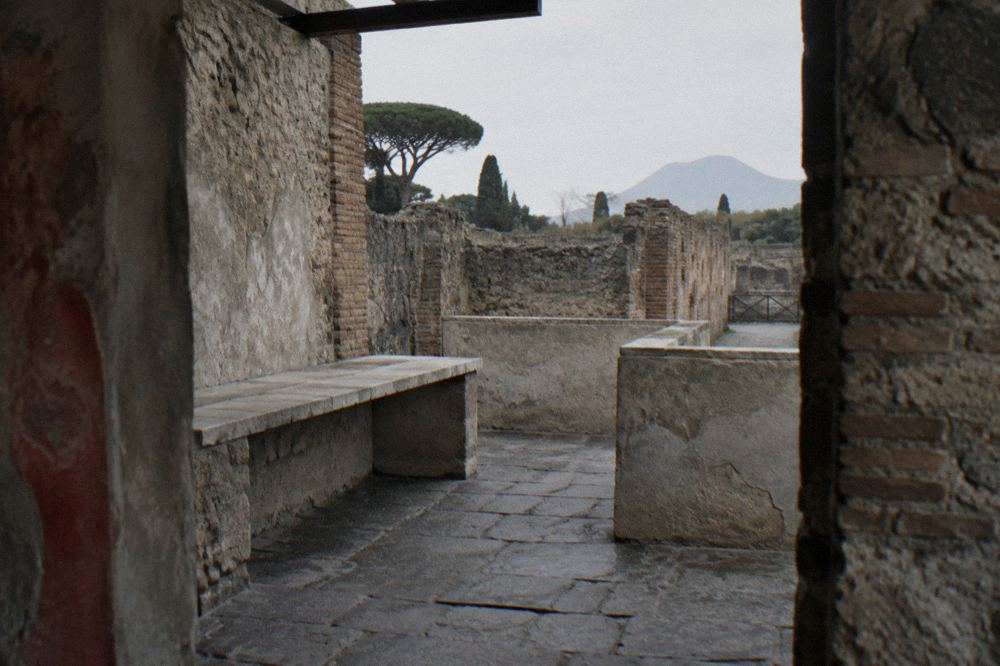
The House of the Chaste Lovers is the park's clearest house-plus-bakery combination, where the House of the Faun is its largest aristocratic residence, the House of the Vettii its richest in frescoes, and the Villa of the Mysteries its most famous suburban villa. Each rewards a different interest, and a full day can take in two or three of them without repeating the experience.
The comparison below is qualitative, because what distinguishes these houses is character rather than a measurable ranking. The House of the Tragic Poet and the House of Menander round out the list for visitors building a route around domestic art, and the House of the Faun and House of the Vettii are the natural pairings for contrast with the bakery house. For the suburban villa, see the Villa of the Mysteries.
| House | Character | Standout feature |
|---|---|---|
| House of the Chaste Lovers | Residence combined with a bakery | Millstones, oven and the embracing-couple mosaic |
| House of the Faun | Grand aristocratic residence | Vast scale and celebrated mosaics |
| House of the Vettii | Richly decorated merchant house | Dense fresco decoration |
| Villa of the Mysteries | Suburban villa | Famous Dionysian fresco cycle |
| House of the Tragic Poet | Compact townhouse | Mosaic panels at the entrance |
| House of Menander | Large residence with quarters | Silver find and varied decoration |
If the villas route tempts you, the Villa of the Mysteries and the villas at Oplontis and Stabiae are covered by the Pompeii+ and 3-day tickets in 2026, and by the single EUR 25 ticket from 1 January 2027. The question of whether the villas are worth the extra time is answered in detail in is it worth doing the villas at Pompeii.
When Is The Best Time Of Year To Visit Pompeii?
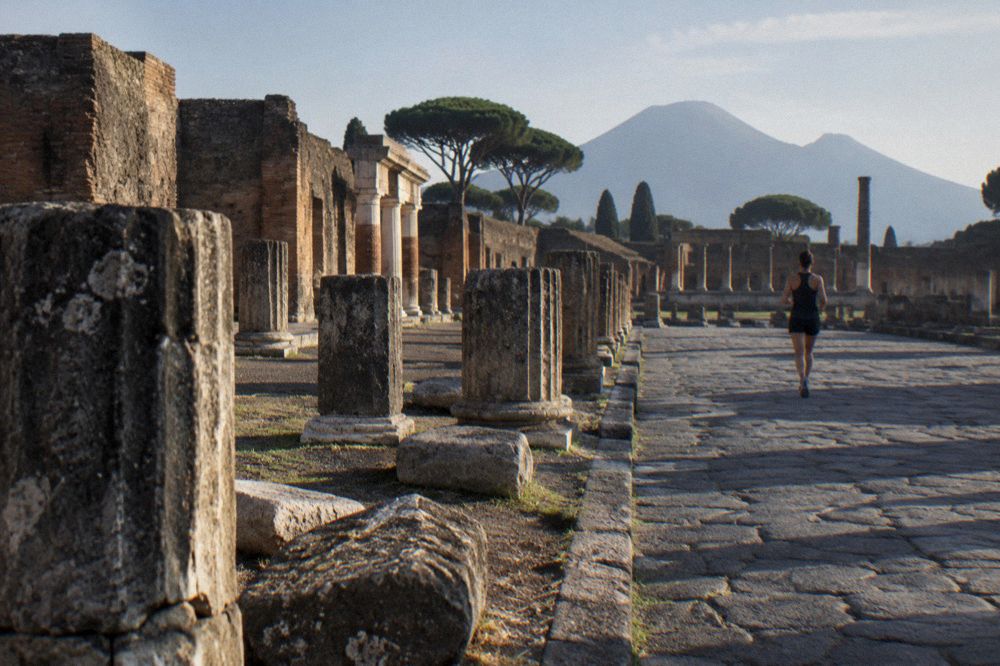
The most comfortable months for walking Pompeii are April, May and October, when the 1991-2020 climate normals for Pompei put daily maxima at about 17.7 to 21.6 C, while July and August, at about 28.7 and 29.4 C, are the hottest. November is the wettest month at about 180 mm of rain and July the driest at about 16 mm. The figures come from the Open-Meteo ERA5 reanalysis grid, so treat them as a guide to averages rather than a forecast.
| Month | About Tmax C | About Tmin C | Rain mm |
|---|---|---|---|
| January | 12.2 | 6.6 | 119 |
| April | 17.7 | 10.4 | 87 |
| July | 28.7 | 21.1 | 16 |
| October | 21.3 | 15.1 | 129 |
Crowds follow a pattern the park's own visitor table makes plain. In 2024 the site recorded 466,344 visitors in April, 516,923 in May and 468,340 in September, against 112,121 in January and 138,028 in December. The shoulder months give you the best balance of daylight, temperature and space on the streets, while winter visits trade warmth for near-empty walkways. Rainfall in the shoulder months stays moderate, which matters because the streets are original stone with little shelter.
Rain matters at Pompeii more than at a museum, because the streets are original stone and there is little shelter inside the excavated area. The free first Sunday of every month, which applies year-round, is a bargain but draws the heaviest crowds of the month, as the record figure above shows. The weather and best time guide carries the full monthly table.
Should You Visit The House With A Guide Or On Your Own?
A guided small-group tour is the better fit for the House of the Chaste Lovers specifically, because the house's interest lies in reading a bakery inside a home, which signage alone explains thinly, and the park's unlabelled intersections make self-guided routes slow. On your own you pay the standard park entry, move at your own pace and linger on the mosaic. Neither choice changes the ticket you need or the entrance you use.
Guides who are archaeologists lead several of the small-group options on this site's roster, and the difference shows in the details: why the millstones sit where they do, what the embracing couple meant in Roman visual culture, how the eruption interrupted the baking day. Travellers arriving from Sorrento by train can fold the journey and the guide into one booking with the Sorrento skip-the-line express tour, described on its own page; readers starting in Naples will find the options compared in Pompeii tours from Naples.
Self-guiding works well for a second visit or for visitors with a specific interest, and an audio guide covers the essentials. The practical comparison, including what a guide adds at the houses, is set out in is it worth getting a guided tour of Pompeii. Whichever you choose, book park entry ahead in the summer months, because the daily cap can bite on free Sundays and holiday weeks.
What Rules Apply Inside The Archaeological Park?
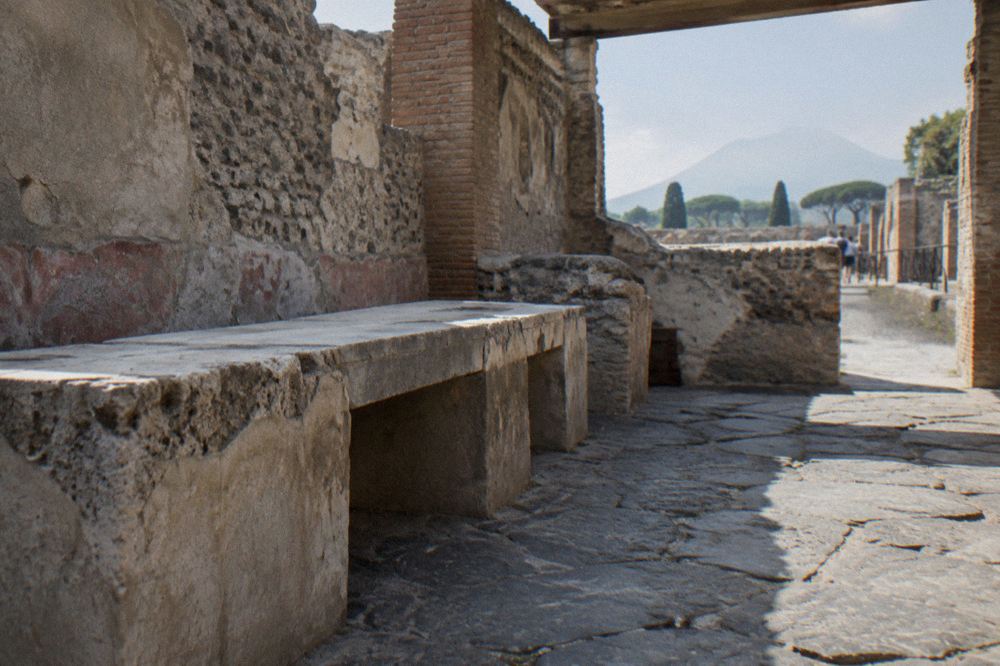
The park permits bags up to 30x30x15 cm, sends larger bags to left luggage, requires identity documents to match nominative tickets, forbids drones without authorisation and bans bare chests, all under the regulations published on the park's visiting page. Tickets are non-transferable and non-refundable except in cases of extraordinary closure. These rules apply at every entrance and to every house, including this one.
The bag limit is the rule that catches visitors out, because a day-pack routinely exceeds 30x30x15 cm and the left-luggage step costs time at the start of a visit. Travel light: water, sun protection in summer, and a document matching your ticket. The regulations page also covers the accessible route, and the dedicated accessibility guide explains the "Pompeii for All" path in full for travellers with mobility difficulties.
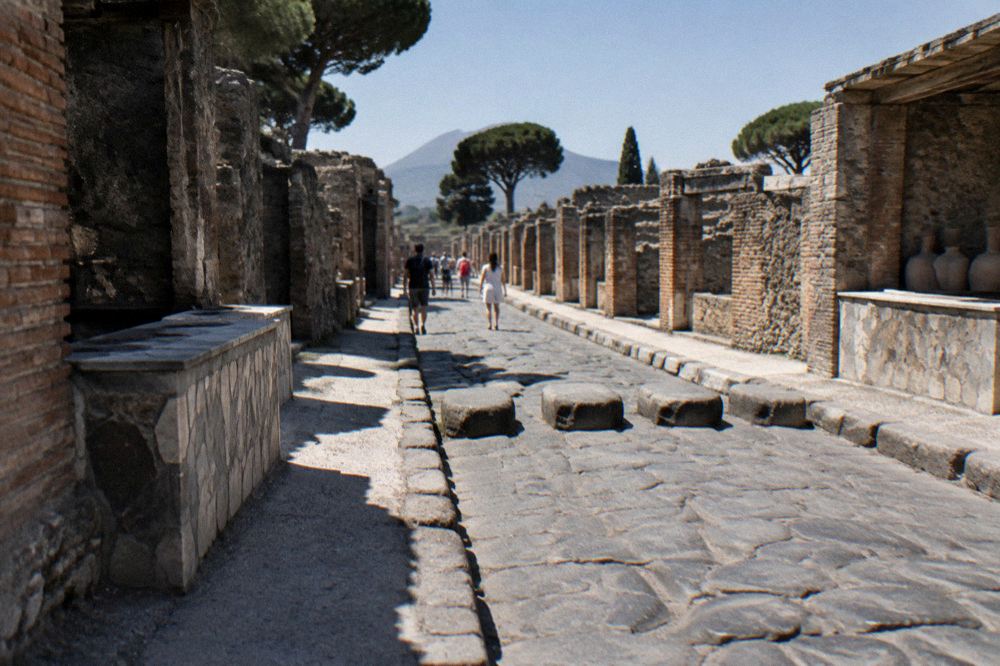
Practical comfort advice rounds out the rules. The streets are original Roman paving, worn and uneven, so solid shoes matter; the details are in what to wear to Pompeii. Toilets, food options and water points are covered in toilets and facilities at Pompeii and food in the park, so you can plan a full day without leaving and re-entering, which a single ticket does not allow for the ancient city itself.
Common Questions About The House Of The Chaste Lovers
Is the House of the Chaste Lovers included in the Pompeii ticket?
Yes. In 2026 every park ticket includes the ancient city and its houses, starting with Pompeii Express at EUR 20, and from 1 January 2027 the single EUR 25 ticket covers all park sites. There is no separate ticket for individual houses within the ancient city.
Why is it called the House of the Chaste Lovers?
The name comes from a mosaic panel showing an embracing couple, which early excavation and interpretation read as a scene of tender, restrained affection. The romantic reading stuck in the house's name even though scholarly views of Roman domestic art have evolved.
Can you see a bakery in the House of the Chaste Lovers?
Yes, the house combines a residential domus with a working bakery, including millstones and an oven of the type used across the Roman world. It is one of the clearest examples in Pompeii of a home and a food business sharing one building.
How long does a visit to the house take?
The house itself is a stop of some minutes on a walking route, but reaching it from Porta Marina and seeing it with the Forum and another house or two takes two to three hours inside the park. Last entrance is 17:30 in the summer season and 15:30 in the winter season.
Can the house close without warning?
Individual houses at Pompeii can and do close for conservation. The Praedia of Julia Felix, for instance, has been closed to the public since 7 September 2026 until further notice, so it is worth checking the park's communications shortly before you travel.
The House of the Chaste Lovers rewards exactly the kind of visitor who wants Pompeii to feel like a lived-in city rather than a museum of palaces: one roof over a family, its bread trade and its quiet mosaic of an embrace. Buy the standard ticket, choose your entrance with your route in mind, keep your bag within 30x30x15 cm, and give the house its place in a morning that also takes in the Forum and a grander residence for contrast, as Pompeii Travel Guide lays out across its house-by-house pages.