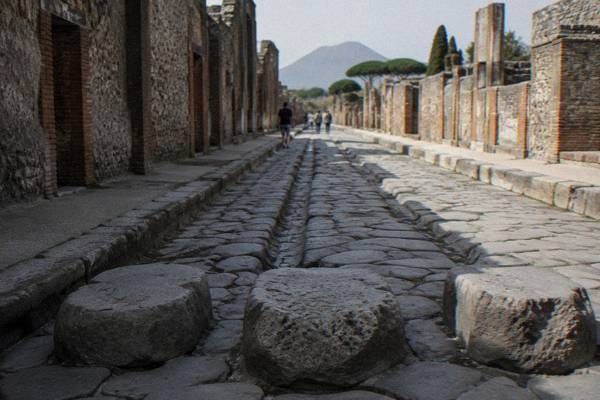
House Of The Tragic Poet
The House of the Tragic Poet is one of the best known Roman houses in the ancient city of Pompeii, in Campania, southern Italy, close to the Forum and the House of the Faun. This guide covers what to see, which ticket you need and how to reach it.
Short answer
The House of the Tragic Poet stands in Pompeii, the Roman city buried by Vesuvius in AD 79, now an archaeological park about 24 km from Naples. A 2026 Pompeii Express ticket costs EUR 20 and covers it, rising to a single EUR 25 ticket from 1 January 2027. Allow a short stop of around fifteen minutes on a walking route past the Forum.
The House of the Tragic Poet sits inside the archaeological park of Pompeii, the ancient Roman city buried by the eruption of Mount Vesuvius in AD 79, in Campania, southern Italy. The park lies beside the modern town of Pompei, about 24 km by road south-east of Naples on the Bay of Naples, and the house itself stands in the north-western part of the excavations, a short walk from the Forum and from the Porta Marina entrance. Visitors come for the mosaics and painted decoration that made this modest-sized domus one of the most discussed houses ever excavated at Pompeii, and for the story of its name, which comes from a mosaic panel found there showing a seated figure with scrolls, read as a poet. The eruption date itself remains a live scholarly question: the traditional manuscript date is 24 August AD 79, while the park's own e-journal states that the alternative 24 October date has no evidentiary basis, without settling on either.
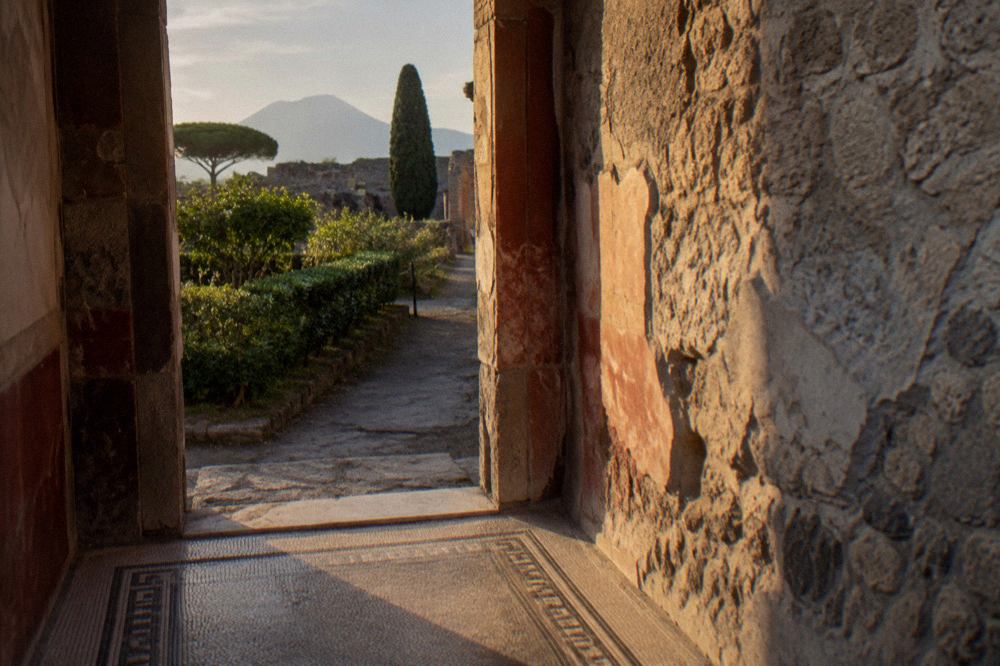
The excavated area of Pompeii covers 44 ha, inside an inscribed UNESCO property of 98 ha shared with Herculaneum and Torre Annunziata. Within that sprawl, the House of the Tragic Poet is a small, dense stop rather than a destination in itself, and this guide treats it that way: what the house is, what you actually look at, which ticket admits you in 2026 and from 2027, how the entrances and time-slot system shape your route, and which neighbouring houses and guided options make the visit worthwhile. Every price and schedule figure below comes from the park's own published pages.
Where Is The House Of The Tragic Poet In Pompeii?
The house stands in the ancient city of Pompeii, Italy, in the block of the excavations north-west of the Forum, between the Forum baths area and the Street of Tombs side of the city, close to the larger House of the Faun. It is roughly five to ten minutes on foot from the Porta Marina entrance, one of the park's three ticket offices, alongside Piazza Esedra and Piazza Anfiteatro. The location makes it an easy early stop.
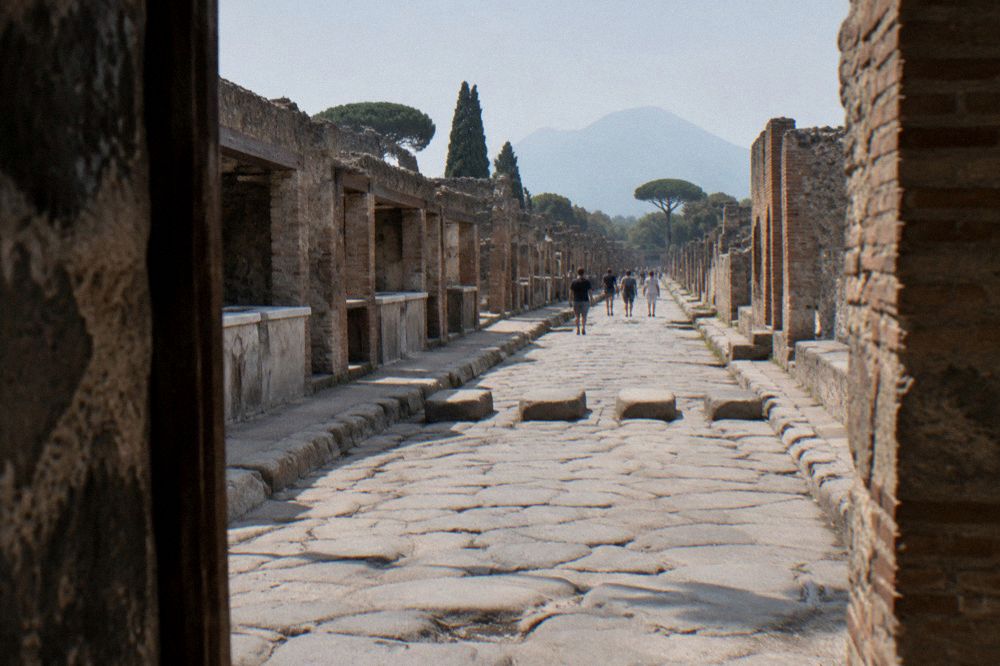
Pompeii's street grid survives, so orientation is straightforward once you are inside. The Forum, the civic heart of the city, lies a few minutes' walk to the south-west; the House of the Faun, the grandest private house excavated at Pompeii, is a near neighbour and a natural pairing. Visitors who want the full picture of the layout before arriving can study the Pompeii map page, which shows how the entrances, the Forum and the main thoroughfares relate to one another.
Approaching from Porta Marina, the standard walking line runs past the Temple of Apollo and the Basilica of Pompeii along the edge of the Forum, then turns north into the residential blocks. Coming instead from Piazza Esedra or Piazza Anfiteatro, the house falls mid-route, which is worth knowing when you plan how much ground you want to cover: the park is large, summer opening runs to a 19:00 close, and the last entrance in the winter season is 15:30.
What To See Inside The House Of The Tragic Poet?
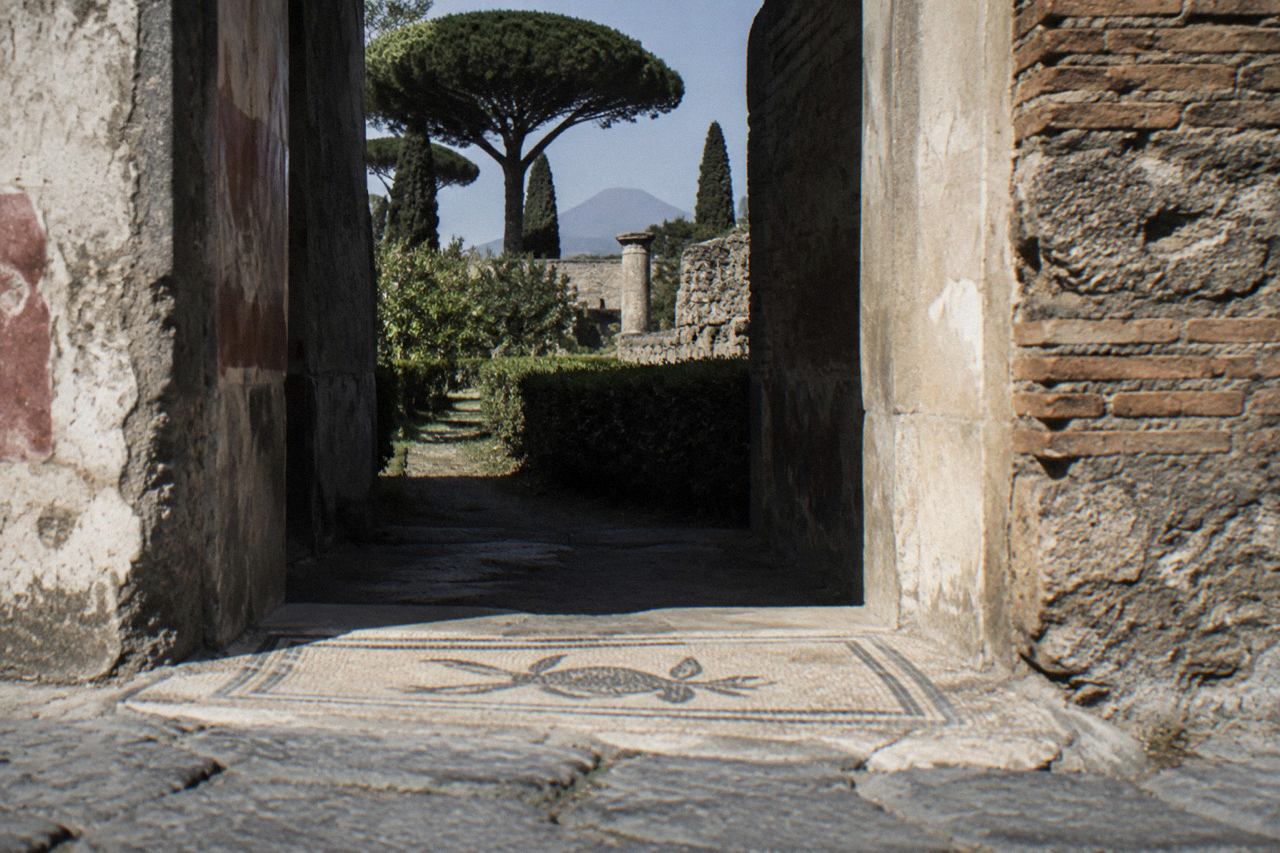
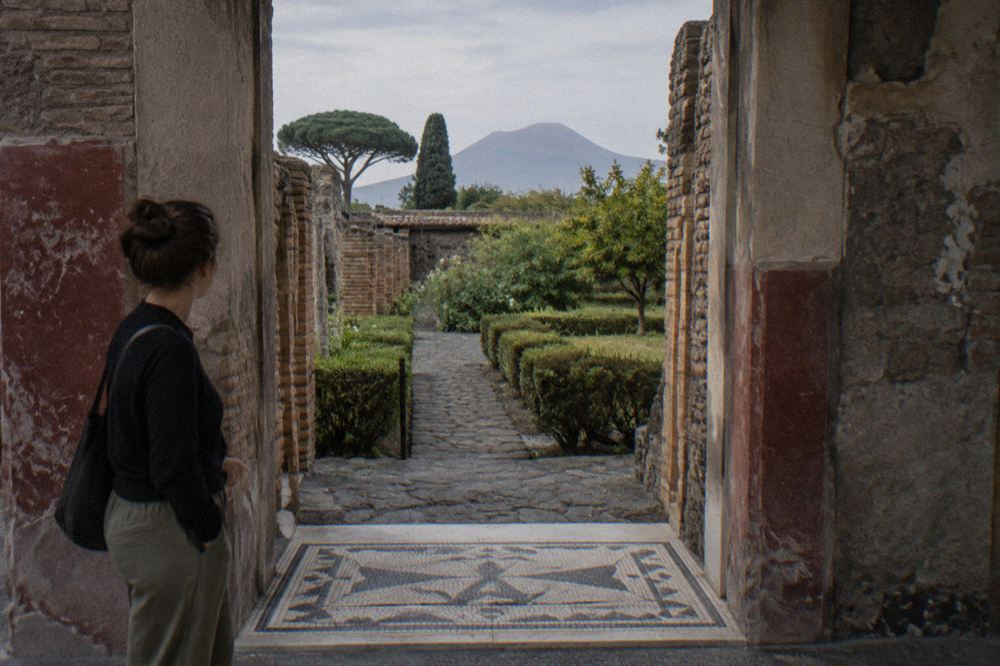
The house is known above all for its mosaics and Fourth Style frescoes: the panel mosaic that gave the house its name, showing a seated poet with scrolls, the famous dog mosaic with the words CAVE CANEM warning visitors to beware of the dog, and mythological scene paintings that are discussed in every serious book on Roman domestic art. Several of the original panels were moved to the Naples museum after excavation, so expect to see some in situ and some only in reproduction or elsewhere.
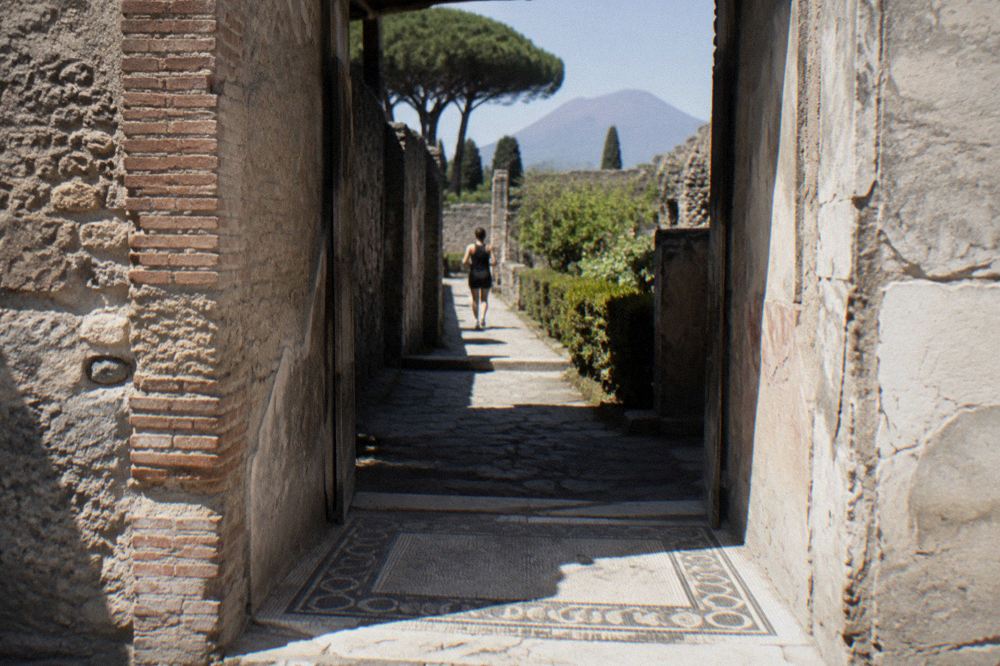
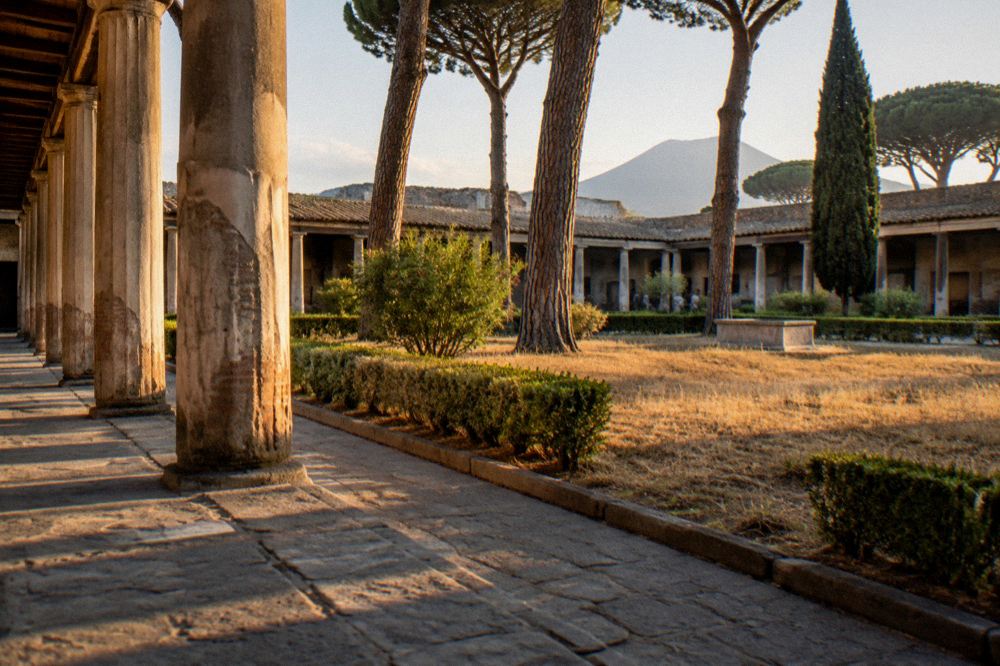
The house is compact: a standard Roman domus layout with an entrance corridor, atrium with its central rainwater pool, tablinum and a small garden area behind. What set it apart at excavation was the quality and density of its decoration relative to its size. The name-giving mosaic, found in the tablinum, shows a figure seated with scrolls while actors look on, a scene long read as a poet rehearsing a tragedy, hence "the tragic poet". The CAVE CANEM dog mosaic at the entrance is one of the most reproduced images from any Roman site; a version remains visible at Pompeii while the themes echo across the park.
The wall paintings drew attention for another reason: theatrical and mythological subjects, including scenes interpreted from classical drama, which helped fuel the lasting fascination with the house among early excavators and writers long after the digging stopped. That fascination cemented the house's reputation in literature and art. For visitors today the appeal is different: within a short walk you can stand in front of decoration that art historians still argue about, then compare it directly with the grander interiors of nearby houses, which is a rare thing to be able to do on foot.
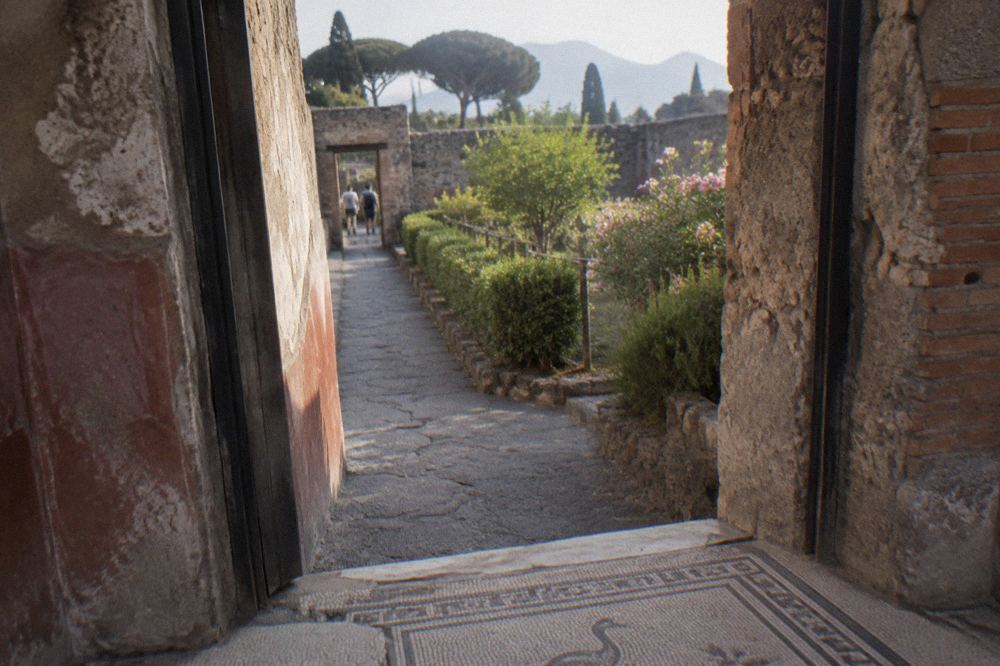
Because so much of the decoration was detached in the earliest excavation campaigns, the story of the house is partly a museum story. The Naples National Archaeological Museum holds a great share of Pompeii's finest detached frescoes and mosaics, and pairing a Pompeii visit with a museum morning in Naples is the standard way to see both halves of the record. Back on site, the Pompeii Antiquarium displays material from the excavations inside the park itself.
Which Pompeii Ticket Covers The House Of The Tragic Poet?
In 2026 the Pompeii Express ticket at EUR 20 covers the ancient city, including this house; Pompeii+ at EUR 25 adds the suburban villas and Boscoreale, and the 3-day ticket is EUR 30. From 1 January 2027 the park replaces this structure with a single EUR 25 ticket covering all park sites, valid 30 days with one entry per site, while the three smaller sites stay EUR 8 each and the MyPompeii Card stays EUR 45.
The 2026 prices are in force from 12 January 2026 and end on 31 December 2026. Under-18s enter free, and everyone enters free on the first Sunday of the month. EU citizens aged 18 to under 25 pay a reduced EUR 2. Tickets are nominative, with ID checked at entry, and a daily cap of 20,000 visitors applies, in place since 15 November 2024. Express holders who decide on site to add the suburban villas route can do so for EUR 8, card payment only, at the Porta Ercolano / Street of the Tombs entrance.
| Ticket (2026) | Price | What it covers |
|---|---|---|
| Pompeii Express | EUR 20 | The ancient city, including this house |
| Pompeii+ | EUR 25 | City, suburban villas, Villa Regina, Antiquarium Boscoreale, shuttle |
| 3-day ticket | EUR 30 | Pompeii+ plus Oplontis, Stabiae villas and museum, Boscoreale |
| Other sites individually | EUR 8 | Boscoreale, Oplontis or the Stabiae museum |
| MyPompeii Card (annual) | EUR 45 | Annual pass, EUR 10 reduced |
| Single ticket (from 1 Jan 2027) | EUR 25 | All park sites, 30 days, one entry per site |
The full detail, including where to buy online, sits on the Pompeii tickets page. Booking ahead matters in the high season: the park splits the day into time bands, with 9:00-13:00 admitting a maximum of 15,000 visitors and 13:00-17:30 a maximum of 5,000, so a morning slot can sell out on busy days.
If you would rather have a guide alongside the ticket, an archaeologist-led small-group walk of the city is the natural fit for this house, because the decoration rewards explanation.
How To Get To The House From The Pompeii Entrances?
From Porta Marina the house is the shortest walk of the three entrances, roughly five to ten minutes past the Forum's north edge; from Piazza Esedra allow a little longer through the central blocks, and from Piazza Anfiteatro the house sits towards the far end of a full crossing of the city. All three entrances are ticket offices, so your arrival point is usually decided by your transport, not by the house.
Rail travellers arrive at the Circumvesuviana station Pompei Scavi-Villa dei Misteri, which sits beside the Porta Marina entrance; computed scheduled times from the operator's own timetable data give 29 to 35 minutes from Napoli Garibaldi to Pompei Scavi. The Campania Express, the premium alternative on the same network, has been suspended since 1 October 2026 until further notice, so the regional line and the station named above are the rail answer for now; check the operator EAV's own timetable for current departures. Drivers will find the entrances marked from the modern town of Pompei, and the Pompeii parking page covers the options around each gate.
| Entrance | Ticket office | Best for | Relation to the house |
|---|---|---|---|
| Porta Marina | Yes | Rail arrivals, Forum first | Shortest walk, about five to ten minutes |
| Piazza Esedra | Yes | Central access, Amphitheatre side | Mid-length walk through the blocks |
| Piazza Anfiteatro | Yes | "Pompeii for All" accessible route | Longest walk, full crossing of the city |
| Porta Ercolano / Street of the Tombs | No (add-on only) | Suburban villas route, EUR 8 add-on | On the north-west edge of the city |
Visitors with mobility difficulties enter at Piazza Anfiteatro on the "Pompeii for All" route and may exit at Piazza Anfiteatro or Piazza Esedra via the Antiquarium lift; ancient paving makes the residential streets rough underfoot, a point covered in depth on the Pompeii accessibility planning page. Bags larger than 30x30x15 cm must go to left luggage, per the park's visitor regulations.
Opening Hours And The Best Time Of Day To Visit?
Pompeii is open 9:00 to 19:00 from 16 March to 14 October, with last entrance at 17:30, and 9:00 to 17:00 from 15 October to 15 March, with last entrance at 15:30. The park has no weekly closing day, and is closed only 25 December and 1 January unless otherwise communicated, so any day works in principle; the morning band admits the larger share of visitors and fills first.
The seasonal split matters more than the day of the week. In the summer season the long evening opening lets you visit the residential blocks late in the day, when the crowds around the Forum and the famous houses thin out after the coach groups leave. In winter the 15:30 last entrance compresses everything: a house of this size needs only minutes, but the walk from a distant entrance does not shrink.
| Season | Opens | Last entrance | Closes |
|---|---|---|---|
| 16 March to 14 October | 9:00 | 17:30 | 19:00 |
| 15 October to 15 March | 9:00 | 15:30 | 17:00 |
One scheduling note for the wider trip: the smaller park sites keep different rhythms, with Oplontis, the Stabiae villas and the Stabiae museum closed on Tuesdays, so a Tuesday visit is best kept to the ancient city itself. The first Sunday of each month is free for everyone and draws very large crowds; the park has recorded more than 36,000 visitors on a single free Sunday. For that reason a first Sunday is a poor choice for a house whose appeal depends on standing quietly in front of the mosaics.
Pompeii Weather By Month For Visiting The House?
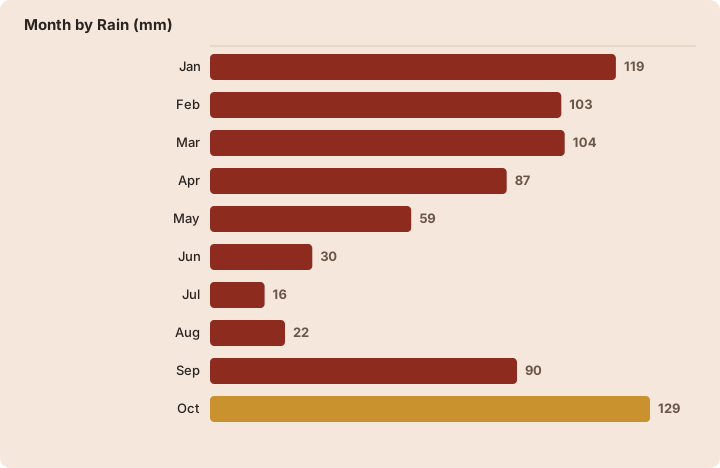
Pompeii has a Mediterranean climate: about 29.4 C mean daily maximum in August, the warmest month, about 6.5 C mean daily minimum in February, the coldest nights, and a wet season concentrated in autumn and winter, with November the wettest month at about 180 mm of rain and July the driest at about 16 mm. Late spring and early autumn combine warm days with a fraction of the summer heat.
These figures are 1991-2020 climate normals computed from a reanalysis grid at the Pompei coordinates, so they describe the average pattern rather than any given day. What they mean for this house is simple: the visit is outdoors, the streets hold heat, and the interior spaces are open to the sky through the atrium opening, so there is little escape from midday summer sun. Shade, water and a hat matter more than they do at a museum.
| Month | Mean daily max (C) | Mean daily min (C) | Rain (mm) |
|---|---|---|---|
| Jan | 12.2 | 6.6 | 119 |
| Feb | 12.6 | 6.5 | 103 |
| Mar | 14.9 | 8.1 | 104 |
| Apr | 17.7 | 10.4 | 87 |
| May | 21.6 | 14.1 | 59 |
| Jun | 25.8 | 18.2 | 30 |
| Jul | 28.7 | 21.1 | 16 |
| Aug | 29.4 | 21.8 | 22 |
| Sep | 25.3 | 18.6 | 90 |
| Oct | 21.3 | 15.1 | 129 |
| Nov | 16.9 | 11.5 | 180 |
| Dec | 13.2 | 8.0 | 147 |
For the same reason, comfortable shoes outrank almost everything else in the packing question; the site's own planners discuss this on pages like what to wear to Pompeii and the Pompeii in summer heat plan. November and December bring the heaviest rain, and wet basalt paving is slick, which argues for an early start on showery days.
Houses Near The Tragic Poet Worth Combining?
The strongest pairing is the House of the Faun, the largest and grandest house at Pompeii, a few minutes away; after that the House of the Vettii with its rich frescoes, the House of Menander, which runs down towards the city wall, and the smaller House of the Chaste Lovers and House of the Surgeon all sit within a walkable circuit. Together they give a complete picture of Pompeian domestic life in under two hours of strolling.
Comparing houses is the real pleasure of this quarter of the city. The Tragic Poet is admired for the density and wit of its decoration in a modest plan; the Faun for scale and for the famous Alexander mosaic; the Vettii for the completeness of its painted interiors; Menander for the size of its estate quarters. Each house answers a different question about who lived in Pompeii and how they displayed wealth.
| House | Character | Best pairing with the Tragic Poet |
|---|---|---|
| House of the Faun | Largest private house, grand mosaics | Direct contrast of scale versus quality |
| House of the Vettii | Richly frescoed merchant house | Compare Fourth Style wall painting |
| House of Menander | Big estate house near the wall | Adds the servant and storage side of a domus |
| House of the Chaste Lovers | Smaller house with a bakery behind | Shows daily life beside decoration |
| House of the Surgeon | Older, austere plan | Contrast with later decorative fashion |
Beyond houses, the same circuit passes the Forum itself, the Stabian Baths and, further afield, the Villa of the Mysteries beyond the north-west gate, which is covered by the Pompeii+ ticket or the EUR 8 add-on. A dedicated walk of the extra-mural villas is laid out in the villas of Vesuvius route.
Guided Tours That Include The House Of The Tragic Poet?
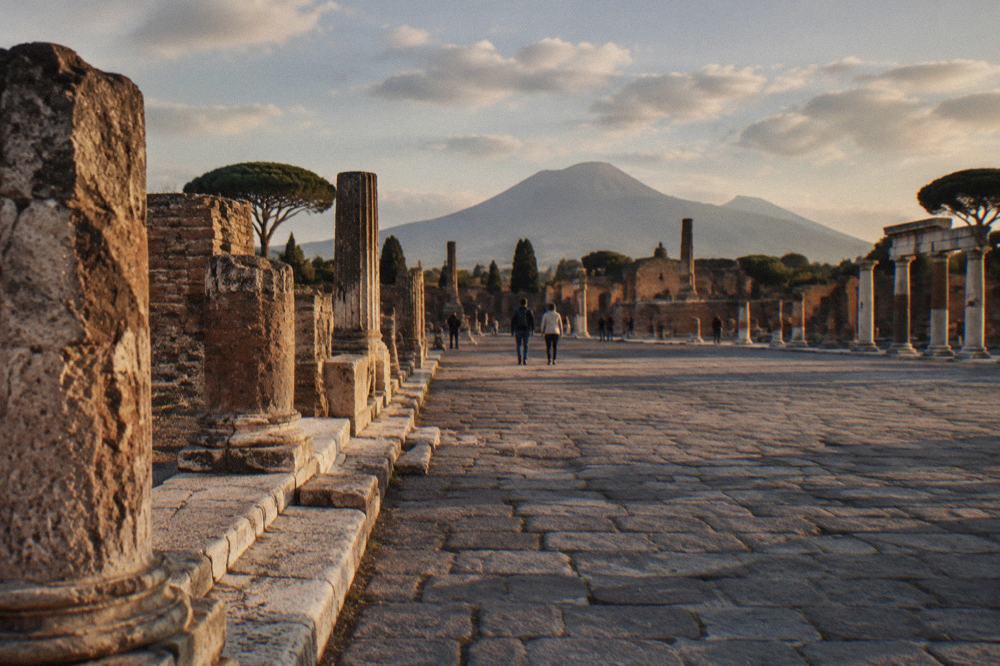
Small-group walks of the ancient city led by archaeologists follow routes across the residential blocks where this house stands, and the standard guided formats are a two-hour small-group tour with entry ticket, a skip-the-line archaeologist-led tour, and a private tour with an official guide booked per group. A guided walk is the way to hear the decoration explained rather than simply seen.
The house is small enough that a guide makes a genuine difference: what looks like a pleasant mosaic becomes a document of theatrical culture, patron self-display and excavation history when someone who studies the site unpacks it. The operator listings carry current prices and dates; what follows is a comparison of formats only.
| Tour format | Kind | Starting point | What it suits |
|---|---|---|---|
| Skip-the-line archaeologist small-group walk | Guided Pompeii tour | In the park | First-time visitors who want depth |
| Entry ticket plus guided tour with an archaeologist | Guided Pompeii tour | In the park | Ticket and guide in one purchase |
| Private tour with an official guide | Guided Pompeii tour | In the park | Families and groups, priced per group |
| Herculaneum small-group tour with an archaeologist | Herculaneum tour | Ercolano | A second site on another day |
The featured option on this site is the skip-the-line guided tour led by an archaeologist, which pairs naturally with a morning in the city: see the guided tour listing or read the comparison in is it worth getting a guided tour of Pompeii before deciding. You can also Check availability directly if the format already fits your plans.
How The House Fits A Short Pompeii Itinerary?
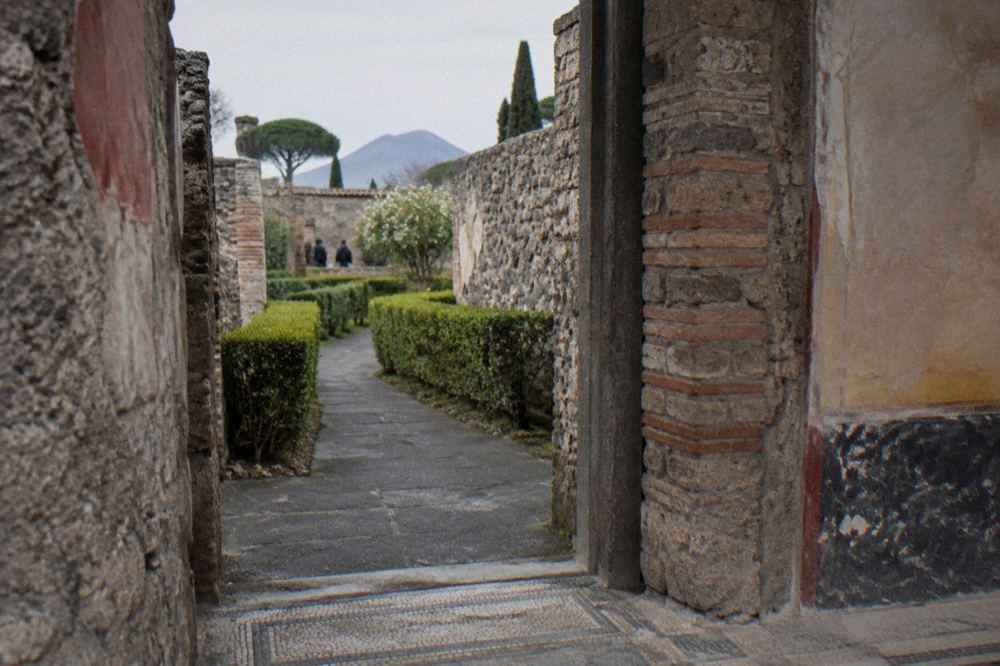
On a two-hour visit, pair the house with the Forum and the House of the Faun in one loop from Porta Marina; on a half day add the Stabian Baths, the Via dell'Abbondanza and the Amphitheatre end; on a full day add the Villa of the Mysteries and the suburban route. The house needs only a quarter of an hour, but it anchors the best short circuit in the city.
The logic is geometric. Porta Marina, the Forum, the Tragic Poet and the Faun form a tight cluster near the western entrance, so a short visit spends its minutes where the density of sights is highest, and never commits to the long crossing to the Amphitheatre and back. The ready-made versions of these routes are worked out in Pompeii in 2 hours, the Pompeii half-day highlights route and Pompeii in one day.
The practical trade-off across those plans is simple: every one of them starts at Porta Marina, because the house and its cluster sit closest to that gate. A two-hour loop keeps to the Forum and the Faun beside this house. The half-day version extends down the main street to the baths and the theatres. The full-day plan adds the suburban villas and, with the right ticket, the extra-mural route to the Villa of the Mysteries.
Visitors combining the ancient city with the buried villas at Herculaneum should note that Herculaneum's Villa dei Papiri and Ancient Theatre are closed for works, and that a two-site day is tight; the sequence question is argued out in is it better to do Pompeii or Vesuvius first and the paired itinerary guides. Cruise passengers face the tightest clock of all and will find the timing worked through in the Pompeii cruise ship day planner.
How Many People Visit Pompeii Each Year?
Pompeii recorded 4,000,090 visitors to the ancient city in 2025, against 4,069,377 in 2024 and 3,985,424 in 2023, a stable plateau of roughly four million a year after the sharp post-pandemic climb from 2,972,159 in 2022. Across all park sites together the 2025 total was 4,118,926. Those numbers are why the timed-entry bands and the 20,000 daily cap exist.
The monthly pattern matters more than the annual total for planning a quiet look at a small house. May and October are the peak months in the park's published 2024 table, at 516,923 and 481,255 visitors respectively, while February recorded 142,648 and December 138,028. September, at 468,340, is as busy as high summer without the heat.
| Year | Pompeii site visitors | All park sites |
|---|---|---|
| 2022 | 2,972,159 | n/a |
| 2023 | 3,985,424 | 4,079,235 |
| 2024 | 4,069,377 | 4,177,753 |
| 2025 | 4,000,090 | 4,118,926 |
The seasonal shape of the crowd, the free first Sundays and the 9:00-13:00 band admitting up to 15,000 visitors all point the same way for a house of this kind: arrive at opening, or come late in the summer afternoon, and let the coach traffic have the middle of the day. The Pompeii weather and best time to visit guide lines up the climate and crowd data month by month.
What Nearby Sights Complete The Same Walk?
The same walking circuit takes in the Forum, the Basilica, the Temple of Apollo, the Stabian Baths, the Large Theatre and Odeon, the thermopolium of Vetutius Placidus and the Bakery of Modestus, all inside the Express ticket's coverage of the ancient city, and all within a few minutes of the Tragic Poet. None needs a separate booking beyond the park ticket.
This is the practical argument for treating the house as a waypoint rather than a goal. The Forum complex alone, with its temples and civic buildings, gives the political and religious frame for the private houses around it; the food and commercial stops, a thermopolium and a bakery with carbonised loaves, give the everyday one. The thermopolium of Vetutius Placidus and the Bakery of Modestus are the two that visitors remember most.
The civic and entertainment stops fall in a neat sequence from the house. The Large Theatre and Odeon sit a short stroll to the east, and the Pompeii Amphitheatre anchors the far eastern end of the city for anyone with the legs for the full crossing. Each is a stop of ten to twenty minutes on a circuit that stays inside one ticket.
Together with the houses listed earlier, these stops turn a morning into a full course on a Roman city, and this site, Pompeii Travel Guide, carries a dedicated page for each of them if you want to read ahead before committing to a route.
Common Questions About The House Of The Tragic Poet
Is the House of the Tragic Poet included in the Pompeii ticket?
Yes. In 2026 the Pompeii Express ticket at EUR 20 covers the ancient city, including this house. From 1 January 2027 the single EUR 25 ticket covers all park sites, valid 30 days with one entry per site.
How long does it take to visit the House of the Tragic Poet?
The house itself is small and a look at the mosaics and frescoes takes around fifteen minutes. Allow more time for the walk from your entrance: about five to ten minutes from Porta Marina, longer from Piazza Esedra or Piazza Anfiteatro.
Where are the original mosaics from the house?
Some of the original decoration was detached during the earliest excavation campaigns and is held in museum collections, above all the National Archaeological Museum in Naples, while material from the excavations is also shown in the Pompeii Antiquarium inside the park.
Which house is next to the House of the Tragic Poet?
The House of the Faun, the largest private house excavated at Pompeii, is a near neighbour a few minutes' walk away, and the House of the Vettii, the House of Menander and the House of the Chaste Lovers all sit on the same walking circuit.
When is the best time of day to see the house?
Early at opening, or late in the summer afternoon after the coach groups leave. The park opens at 9:00 year-round, closes at 19:00 in the summer season and 17:00 in winter, with last entrances at 17:30 and 15:30 respectively.
Can I visit the house on a guided tour?
Yes. Small-group walks of the ancient city led by archaeologists pass through the residential blocks where the house stands; the standard formats are a two-hour small-group walk, a skip-the-line archaeologist-led tour and a private tour booked per group.
Whichever way you assemble the day, the House of the Tragic Poet earns its quarter of an hour: a small house whose mosaics carried its owner's wit into every subsequent account of Pompeii, sitting at the centre of the densest cluster of sights in the whole excavated city.