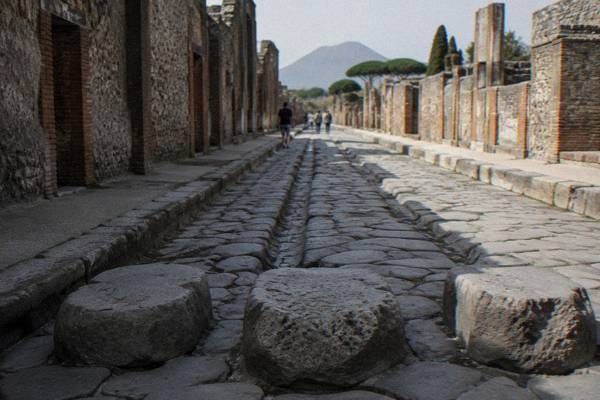
Where Is Pompeii In Italy
Pompeii is an ancient Roman city buried by Vesuvius in AD 79, today an archaeological park in Campania, southern Italy, beside the modern town of Pompei and about 24 km by road from Naples on the Bay of Naples.
Short answer
Pompeii is in Campania, southern Italy, on the Bay of Naples, about 24 km by road south-east of Naples and 26 km from Sorrento. The archaeological park sits beside the modern town of Pompei, with its train stop Pompei Scavi-Villa dei Misteri. Rome lies 234 km away by road. The 2026 entry price is EUR 20 for the ancient city.
Pompeii is an ancient Roman city buried by the eruption of Mount Vesuvius in AD 79, and today it is an archaeological park, the Parco Archeologico di Pompei, in Campania, southern Italy. It stands beside the modern town of Pompei, about 24 km by road south-east of Naples, on the Bay of Naples. The excavated area covers 44 ha of a 98 ha UNESCO-inscribed property shared with Herculaneum and Torre Annunziata. This guide from Pompeii Travel Guide pins the site on the map, distances from every direction, and the routes that reach it.
Where Exactly Is Pompeii In Italy?
Pompeii sits in the Campania region of southern Italy, on the inner shore of the Bay of Naples, at the foot of Mount Vesuvius. The archaeological park adjoins the modern town of Pompei in the Metropolitan City of Naples, about 24 km by road south-east of Naples and roughly 26 km from Sorrento. It faces the Tyrrhenian Sea, inland of the coast by a short stretch of plain.
The ancient city was a prosperous Roman town of shops, villas and baths until Vesuvius buried it in AD 79, traditionally dated to 24 August. Excavation over centuries has uncovered 44 ha of streets, houses and public buildings, a surface larger than the modern town that grew up beside it. UNESCO inscribes Pompeii, Herculaneum and Torre Annunziata together as one World Heritage property covering 98 ha, with a buffer zone of 1,788.79 ha.
The surroundings explain the location. Vesuvius dominates the skyline to the north; the Sarno river plain runs to the south toward Torre Annunziata and Castellammare di Stabiae; the Bay of Naples curves west toward Naples itself. For the full background on the destruction and the debate over its date, see when Vesuvius erupted and the date debate.
| Fact | Detail |
|---|---|
| Country and region | Italy, Campania |
| Type of place | Ancient city, now an archaeological park |
| Modern town beside it | Pompei (note the single i) |
| Distance from Naples | 24 km by road, about 22 minutes driving |
| Sea | Bay of Naples, Tyrrhenian Sea |
| Excavated area | 44 ha of a 98 ha UNESCO property |
Where Is Pompeii On The Map Of The Bay Of Naples?
On a map of the Bay of Naples, Pompeii sits roughly halfway along the southern shore arc that runs from Naples in the west to Sorrento in the south, just inland of the coast and directly south of Mount Vesuvius. The train stop Pompei Scavi-Villa dei Misteri marks the north-west corner of the site, beside the Porta Marina entrance. Naples curls around the bay to the north-west, Sorrento closes it to the south.
The bay's geography makes Pompeii a natural junction. From Naples the coast road and the Circumvesuviana railway both track east then south around the volcano's base, and Pompeii is the first landmark stop on that loop. From Sorrento the line runs back north along the same loop. Amalfi Coast towns such as Positano lie further south beyond Sorrento, connected by road rather than rail. The site's interactive map of the park shows the entrances and streets inside.
Before the routes, a quick word on visiting: the park rewards a route plan, and guided options sell the location advantage well. These three cover the common bases.
The depth option among those three is the Villa of Mysteries tour: a walk with an archaeologist that reaches the suburban villa beyond the walls, and it is the tour this site features for Pompeii itself, because the villa is the one part of the park that most first-time visitors miss.
How Far Is Pompeii From Naples, Sorrento, Salerno And Rome?
By road, Pompei Scavi is about 24 km from Naples (around 22 minutes driving), 26 km from Sorrento (around 37 minutes), 31 km from Salerno (around 30 minutes) and 234 km from Rome (around 159 minutes driving, so about two and a half hours without stops). These are driving distances on mapped roads, not rail times, and rail timings differ: see the train section below.
Naples is the practical hub. Its airport, its port and its main stations make it the arrival point for travellers from every direction, and the onward leg to Pompei Scavi is short. Rome is a different proposition: the 234 km road distance means a full day trip with an early start, which is workable, and the Rome to Pompeii day trip guide covers the realistic options, with the train route from Rome detailed separately.
| From | Road distance to Pompei Scavi | Approximate driving time |
|---|---|---|
| Naples | 24 km | 22 min |
| Sorrento | 26 km | 37 min |
| Salerno | 31 km | 30 min |
| Rome | 234 km | 159 min |
A small-group archaeologist tour is the alternative to self-driving. The Pompeii and Herculaneum Small Group Tour with an Archaeologist pairs the two great buried cities of the bay in one booked day, which matters when each site sits in a different modern town.
How Do You Get To Pompeii By Train?
The Circumvesuviana railway, EAV line 1 from Napoli Garibaldi to Sorrento, stops at Pompei Scavi-Villa dei Misteri, the station at the site's north-west corner beside the Porta Marina entrance. Scheduled running time from Napoli Garibaldi to Pompei Scavi is 29 to 35 minutes, with a median of 29. The Campania Express service on the same corridor has been suspended since 1 October 2026.
The station is stop 6049 on the line, and its full name matters when buying tickets: Pompei Scavi-Villa dei Misteri, not the separate Pompei town station that serves the Sanctuary.
EAV announced on 16 September 2026 a plan of ten new trains and a new timetable for the Vesuvian lines, so timetables on this corridor may shift; check the operator's own timetable before travelling.
| Journey | Scheduled time (EAV timetable data) |
|---|---|
| Napoli Garibaldi to Pompei Scavi-Villa dei Misteri | 29-35 min |
| Napoli Garibaldi to Sorrento | 64-75 min |
| Pompei Scavi to Sorrento | 34-40 min |
Is Pompeii The Same As The Modern Town Of Pompei?
No. The ancient city, with its double-i spelling in English, is the buried Roman town and today's archaeological park. The modern town, Pompei with a single i, is a living commuter town that grew up around the excavations, known chiefly for the Pontifical Shrine of the Blessed Virgin of the Rosary, the Sanctuary that draws pilgrims. They sit side by side, and the spelling tells you which one a train stop or address refers to.
The distinction has practical teeth. Trains serve two different stations: Pompei Scavi-Villa dei Misteri at the ruins, and the Pompei town station nearer the Sanctuary. Booking a hotel "in Pompei" can put you a taxi ride from the park rather than at its gates, so the where to stay guide maps the practical zones. The modern Pompei town guide covers the Sanctuary quarter for anyone adding it to a visit.
The spelling rule holds across the region. Ercolano is the modern town beside ancient Herculaneum; Torre Annunziata contains Oplontis; Castellammare di Stabiae contains the Stabiae sites. Using the English ancient name for the site and the Italian modern name for the town keeps every direction unambiguous.
Where Are Herculaneum, Oplontis And Stabiae?
**Herculaneum is a separate buried city at Ercolano, on the bay's western shore toward Naples. Oplontis is at Torre Annunziata, between Pompeii and the sea south of Vesuvius. The Stabiae villas and museum are at Castellammare di Stabiae, on the Sorrento peninsula's north shore.
Each site answers a different question. Herculaneum is smaller and better preserved in its wood and fabrics, a contrast set out fully in Pompeii versus Herculaneum. Oplontis is a single grand villa, thought to be the Villa Poppaea. Stabiae holds the Villa Arianna and Villa San Marco above the modern town. In the 2026 ticket year each outlying site costs EUR 8 individually, and from 1 January 2027 they remain EUR 8 while the EUR 25 single ticket covers the rest of the park. Two closures to note if Herculaneum is on the route: the Villa dei Papiri and the Ancient Theatre are closed for works.
| Ancient site | Modern location | Direction from Pompeii | 2026 entry |
|---|---|---|---|
| Herculaneum | Ercolano | North-west toward Naples | EUR 16 |
| Oplontis | Torre Annunziata | South-west toward the sea | EUR 8 |
| Stabiae villas and museum | Castellammare di Stabiae | South toward Sorrento | EUR 8 |
| Boscoreale Villa Regina | Boscoreale | North, on the Vesuvius slopes | EUR 8 |
Where Is Mount Vesuvius Relative To Pompeii?
Mount Vesuvius rises immediately north of Pompeii, and its crater is the reason the city lies where archaeology left it. The Vesuvius Gran Cono trailhead sits inside the Vesuvius National Park on the volcano's upper slopes, reachable by road from both the Naples and Pompei sides. Timed entry tickets are sold online only, at EUR 11.68 full or EUR 9.55 reduced as sold, bookable 30 days ahead.
The volcano and the city make a natural pairing, and the pairing has rules. The Gran Cono path operates in seasonal windows, from 9-15 in January, February, November and December up to 9-18 in July and August, with daily caps of 2,160 to 3,240 visitors and groups of 60 admitted every ten minutes. The trail closes automatically on an orange weather alert or above, with automatic refunds. The Vesuvius tickets guide carries the full detail, and the crater trail guide covers the walk itself.
A combined day is the usual plan, and a tour with lunch built in turns two ticket systems into one booking. The Pompeii Tour & Lunch with Wine Tasting Experience runs five hours from the park into the Vesuvius National Park's vineyards.
Which Entrances Serve Pompeii, And Where Are They?
A fourth named access, Porta Ercolano on the Street of the Tombs, serves the suburban villas route and is where Express ticket holders add that route for EUR 8, card payment only.**
Choosing an entrance is a routing decision, not a taste decision. Arriving by Circumvesuviana, Porta Marina is steps from the platform. Arriving from the direction of Boscoreale or with a car, Piazza Esedra and Piazza Anfiteatro are the practical gates. Visitors with mobility difficulties enter at Piazza Anfiteatro on the "Pompeii for All" route, exiting at Piazza Anfiteatro or Piazza Esedra via the Antiquarium lift. The entrances are mapped in the entrances guide and shown on the park map.
| Entrance | Position | Notes |
|---|---|---|
| Porta Marina | North-west | Main entrance, steps from the Circumvesuviana station |
| Piazza Esedra | East | Near the Amphitheatre, lift from the Antiquarium |
| Piazza Anfiteatro | South-east | "Pompeii for All" entry for visitors with mobility difficulties |
| Porta Ercolano / Street of the Tombs | North-west edge | Suburban villas route; EUR 8 add-on, card only |
Tickets themselves are nominative, with identity possibly checked at entry, and a daily cap of 20,000 visitors has applied since 15 November 2024. The ticket options guide explains the 2026 passes and the 2027 change in full, including free entry for under-18s and for everyone on the first Sunday of the month.
When Is The Best Time Of Year To Visit Pompeii?
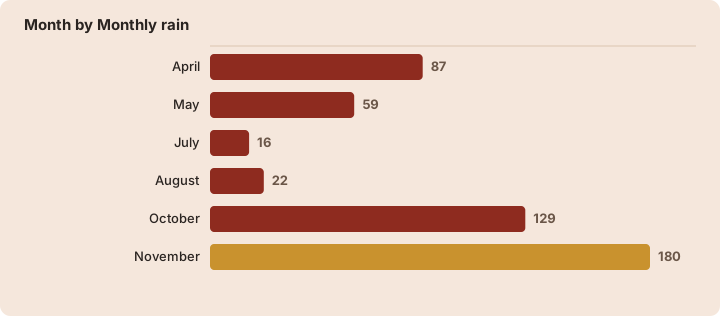
The park is open year-round, but the location's climate argues for spring and autumn. Open-Meteo 1991-2020 normals for the Pompei grid point show July and August with mean daily maxima of about 28.7 and 29.4 C, while April, May and October sit in a comfortable 17.7 to 21.6 C band. November is the wettest month at about 180 mm of rain; July the driest at about 16 mm.
The heat is not abstract at Pompeii: the streets are stone, shade is scarce, and opening hours shift with the seasons. From 16 March to 14 October the park opens at 9:00 with last entry at 17:30 and closes at 19:00; from 15 October to 15 March last entry is 15:30 and closing is 17:00. The weather and best-time guide works through the year month by month, and the summer heat plan addresses the July and August case directly.
| Month | Mean daily max | Mean daily min | Monthly rain |
|---|---|---|---|
| April | 17.7 C | 10.4 C | 87 mm |
| May | 21.6 C | 14.1 C | 59 mm |
| July | 28.7 C | 21.1 C | 16 mm |
| August | 29.4 C | 21.8 C | 22 mm |
| October | 21.3 C | 15.1 C | 129 mm |
| November | 16.9 C | 11.5 C | 180 mm |
Visitor numbers tell the same story. In 2024 the park's own monthly data shows May as the peak month at 516,923 visitors and January the quietest at 112,121, with October at 481,255 running close to summer levels but on cooler streets.
Where Do You Arrive From Each Direction?
From Naples, the Circumvesuviana from Napoli Garibaldi to Pompei Scavi-Villa dei Misteri takes 29 to 35 minutes scheduled, and the Naples to Pompeii guide details every option. From Sorrento, the same line runs 34 to 40 minutes from Pompei Scavi, covered in Sorrento to Pompeii. From the Amalfi Coast, connections run through Sorrento by rail or around the peninsula by road, as the Amalfi Coast to Pompeii guide sets out.
Cruise passengers have the tightest constraint: the port is Naples, and shore excursion timing is tight against the last-entry clock. The cruise ship day guide plans that case hour by hour, and the shore excursions guide lists the booked options from the cruise terminal. For anyone weighing guided versus independent, the guided tour versus self-guided comparison puts the trade-offs side by side.
Three directions, three practical conclusions. Naples gives the fastest and cheapest leg; Sorrento suits a two-base holiday on the bay; Rome works only as a committed full-day outing. Whichever base you choose, the featured Villa of Mysteries tour starts inside the park, so the routing question ends at the gate: Check availability.
Is Pompeii Worth The Journey To Its Location?
Yes, and the visitor numbers back the claim: 4,000,090 people entered in 2025 alone. The site is a 44 ha Roman city with streets, theatres, baths, bakeries and frescoed houses preserved by the eruption that ended it, sitting on a rail loop 29 to 35 minutes from Naples. Few places of comparable scale sit this close to a major arrival hub, and the is Pompeii worth visiting assessment weighs it honestly.
The location does half the persuading. A morning at the ruins and an afternoon on the Vesuvius slopes, or a second day at Herculaneum, all stay inside one small triangle of Campania. The two-day Pompeii, Herculaneum and Vesuvius itinerary and the Pompeii and Vesuvius in one day plan show how the geography compounds. If your appetite runs deeper, the body casts guide explains where the plaster forms of the victims are seen.
Whatever the plan, book a timed entry or a tour ahead: the 20,000 daily cap is real, first Sundays are free and correspondingly crowded, with a record of more than 36,000 visitors on one such day, and the last-entry clock stops every route.
Whichever way you arrive, these three options frame the visit well.
Common Questions About Where Pompeii Is
Where Is Pompeii In Italy?
Pompeii is in Campania, southern Italy, on the Bay of Naples beside the modern town of Pompei, about 24 km by road south-east of Naples and about 26 km from Sorrento. Rome is 234 km away by road.
Is Pompeii The Same Place As Pompei?
No. Pompeii with a double i is the ancient Roman city and the archaeological park. Pompei with a single i is the modern town beside it, known for its Sanctuary, and it has its own separate train station from the Pompei Scavi-Villa dei Misteri stop at the ruins.
Which City Is Closest To Pompeii?
Naples, at 24 km by road, roughly 22 minutes driving, and 29 to 35 minutes by Circumvesuviana train from Napoli Garibaldi to Pompei Scavi-Villa dei Misteri. Sorrento is comparably close at 26 km by road.
Is Pompeii Near Rome?
Not very. Rome is 234 km away by road, about 159 minutes of driving without stops, which makes Pompeii a full-day trip from Rome rather than a short hop. A planned day trip is entirely workable with an early start.
Where Is Mount Vesuvius Relative To Pompeii?
Vesuvius rises immediately north of Pompeii. The Gran Cono crater trail sits inside the Vesuvius National Park on the volcano's upper slopes, with online-only timed tickets at EUR 11.68 full and EUR 9.55 reduced as sold.
Which Country Is Pompeii In?
Italy, in the Campania region on the south-western coast, facing the Tyrrhenian Sea across the Bay of Naples. The archaeological park is administered as a national park site of the Italian state.
Pompeii's position on the Bay of Naples is the quiet reason it works as a destination: one buried city, three entrances, a rail loop that serves it from two directions, and the volcano that created it still standing over the whole scene.