Pompeii With Kids
Pompeii, the Roman city buried by Mount Vesuvius in AD 79, sits beside the modern town of Pompei about 24 km from Naples in southern Italy, and it is a genuinely workable day out with children when the plan matches their legs and attention spans.
Short answer
Pompeii works well with kids aged roughly six and up. In 2026 entry costs EUR 20 per adult on the Pompeii Express ticket, under-18s enter free, and the park caps visitors at 20,000 a day. Enter at Piazza Anfiteatro for the step-free route, carry water, and plan about two hours of walking with breaks.
Pompeii, the ancient Roman city buried by the eruption of Mount Vesuvius in AD 79, sits beside the modern town of Pompei in Campania, southern Italy, about 24 km by road from Naples on the Bay of Naples. Families often wonder whether an archaeological site of this scale suits children, and the honest answer is that it does, provided the plan respects small legs, hot stone and short attention spans. This page gathers what a family needs: the 2026 ticket rules and the free child entry, the entrances that suit pushchairs and wheelchairs, a realistic route length, where to eat inside and beside the park, and which guided options carry the tickets for you.
Is Pompeii Suitable For Children?
Yes, for children from roughly age six upwards, with realistic expectations. Pompeii is an entire buried Roman city, about 44 hectares of excavated streets, houses and shops, and it rewards curiosity rather than long museum-style attention. There are plaster body casts, a gladiator barracks, bakeries with stone ovens and ancient graffiti, all of which grip children quickly. What works against families is scale, heat and uneven basalt paving, so short routes with breaks beat ambitious full-circuit plans every time.
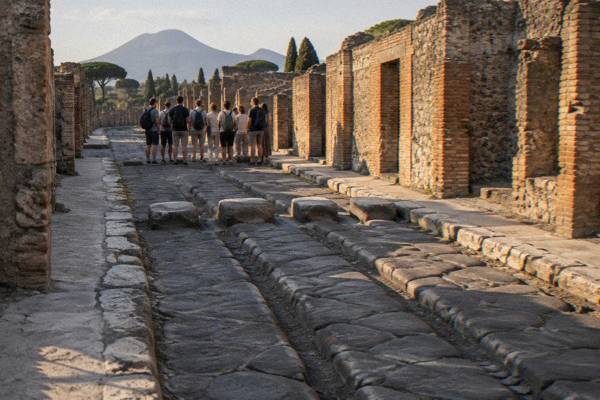
The site rewards preparation. The ancient streets are paved with worn stone that is hard on little feet and impossible for most pushchairs, and wheel ruts cut into the crossings catch distracted walkers. Shade is scarce on the main decumanus in the middle of the day. Very young children, under about five, tend to enjoy twenty minutes of ruins and then want something else entirely, and for that age a shorter alternative such as Herculaneum, which is compact and partly shaded, may fit better; the trade-offs are laid out in the Pompeii versus Herculaneum comparison.
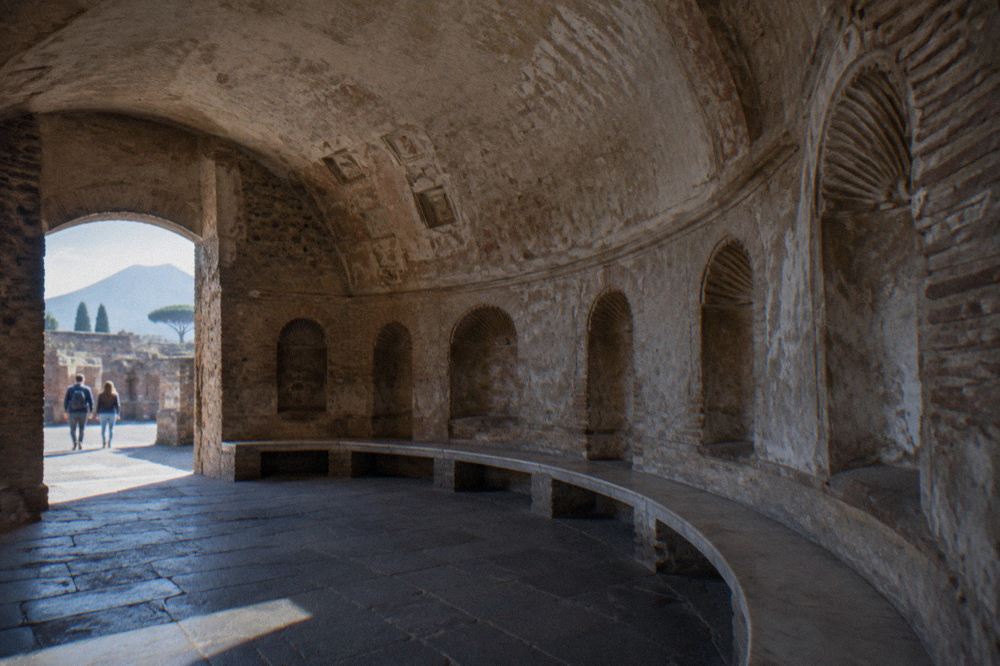
Older children and teenagers are a different story. The story of the eruption, the plaster casts made from the voids left in the ash, and the everyday details, a fast-food counter, a bakery with carbonised loaves, election slogans painted on walls, give the visit a narrative arc that holds. Families who want the full story of the eruption and the people who lived here can go deeper through the guide to Pompeii's history and the guide to the body casts, both of which answer the questions children reliably ask on the walk back to the station.
What Do Family Tickets To Pompeii Cost In 2026?
In 2026 a Pompeii Express ticket costs EUR 20 per adult, covering the ancient city alone, and children under 18 enter free. EU citizens aged 18 to under 25 pay a reduced EUR 2. Everyone enters free on the first Sunday of the month, though those days are crowded. From 1 January 2027 the structure changes to a single EUR 25 ticket covering all park sites, valid 30 days, with one entry per site, and free under-18 entry continues.
That is the core of the money question, and the detail sits in the full Pompeii tickets guide. The 2026 lineup is: Pompeii Express at EUR 20 for the ancient city, Pompeii+ at EUR 25 adding the suburban villas route and the Boscoreale villa and Antiquarium with the shuttle, and the 3-day ticket at EUR 30 adding Oplontis, the Stabiae sites and Boscoreale. The smaller sites, Oplontis, Boscoreale and the Stabiae museum, cost EUR 8 each if bought individually.
| 2026 ticket (valid to 31 Dec 2026) | Price | What it covers | Child entry |
|---|---|---|---|
| Pompeii Express | EUR 20 | Ancient city only | Free under 18 |
| Pompeii+ | EUR 25 | City, suburban villas, Boscoreale, shuttle | Free under 18 |
| 3-day ticket | EUR 30 | Pompeii+ plus Oplontis, Stabiae sites, Boscoreale | Free under 18 |
| Oplontis / Stabiae museum / Boscoreale | EUR 8 each | Single site each | Free under 18 |
| MyPompeii Card (annual) | EUR 45 | All park sites for a year | EUR 10 reduced |
| From 1 Jan 2027 | EUR 25 | Single ticket, all park sites, 30 days, one entry per site | Free under 18 |
Two rules matter for families at the gate. Tickets are nominative and identification may be checked at every entrance, so bring each child's documents or at least a photo of them. And the park caps entry at 20,000 visitors a day, a limit in force since 15 November 2024, so in the summer season booking online in advance is the safe play, especially for a family of five that cannot be split across queues. The ticket question is the same one every visitor asks, and it is covered in more depth in should you buy Pompeii tickets in advance.
Which Entrance And Route Work Best With Kids?
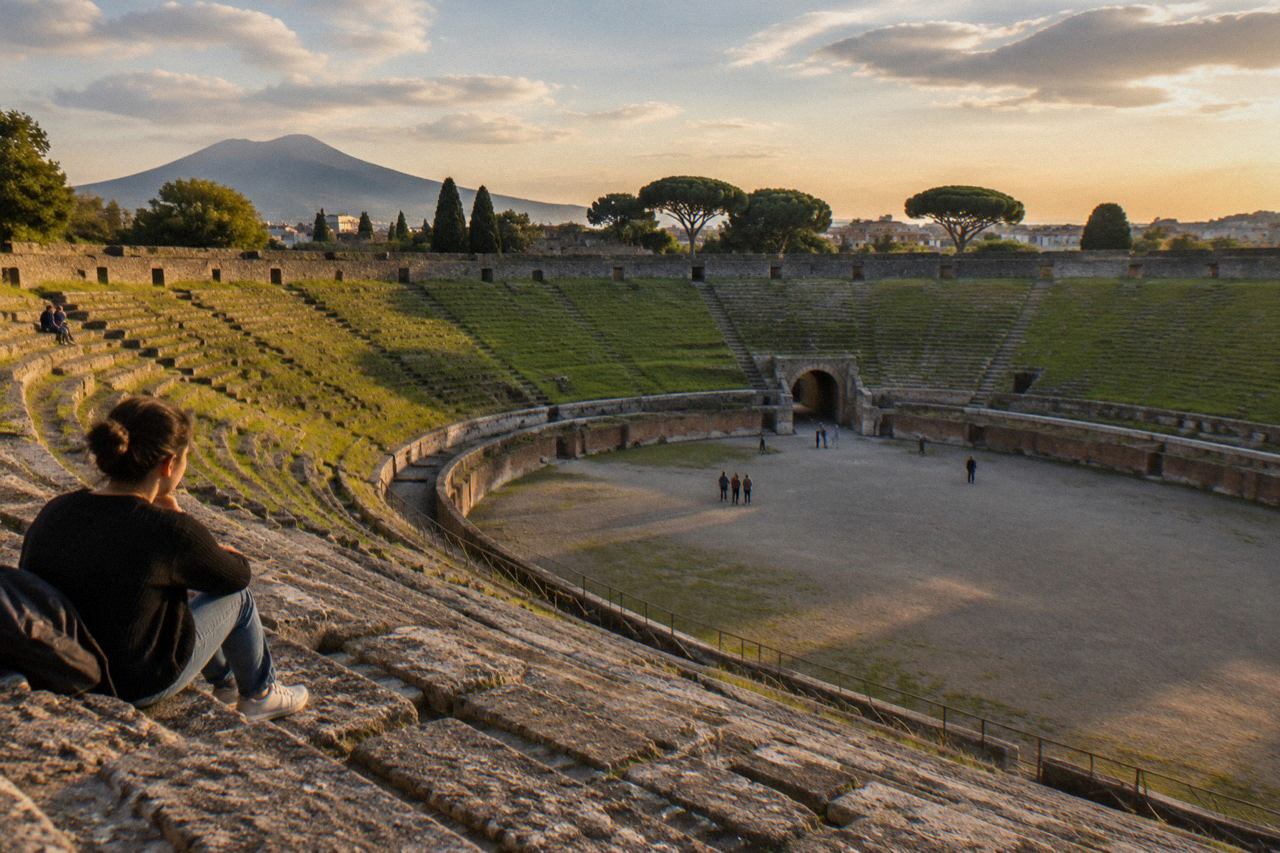
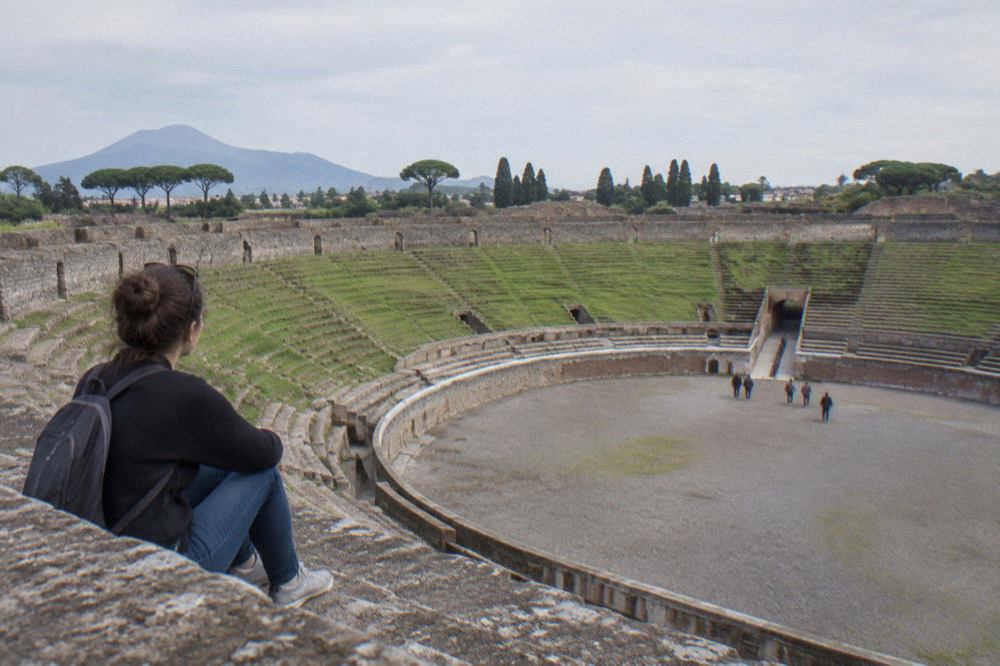
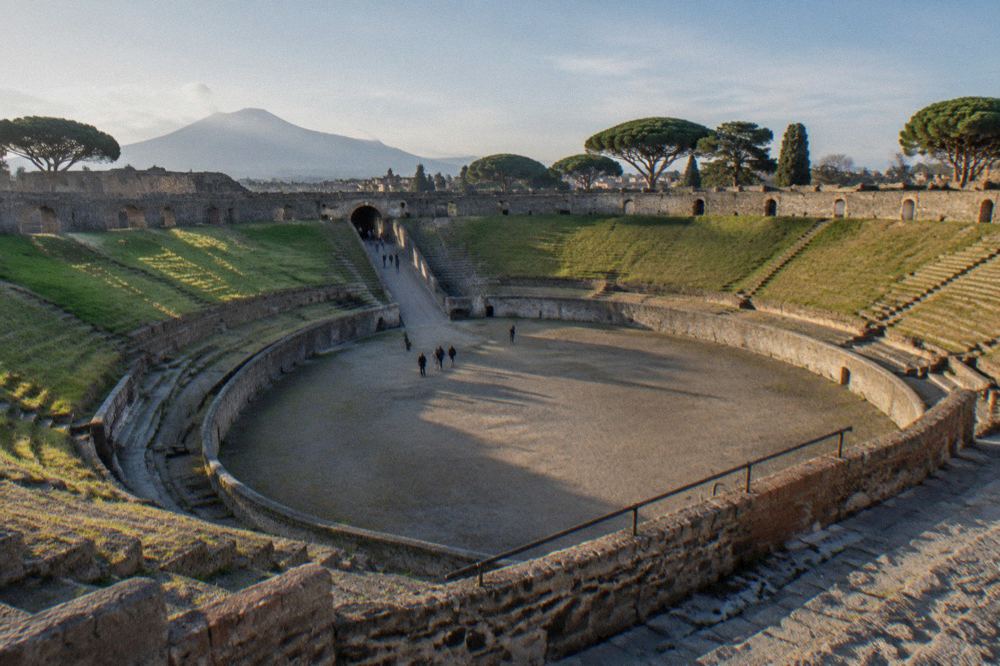
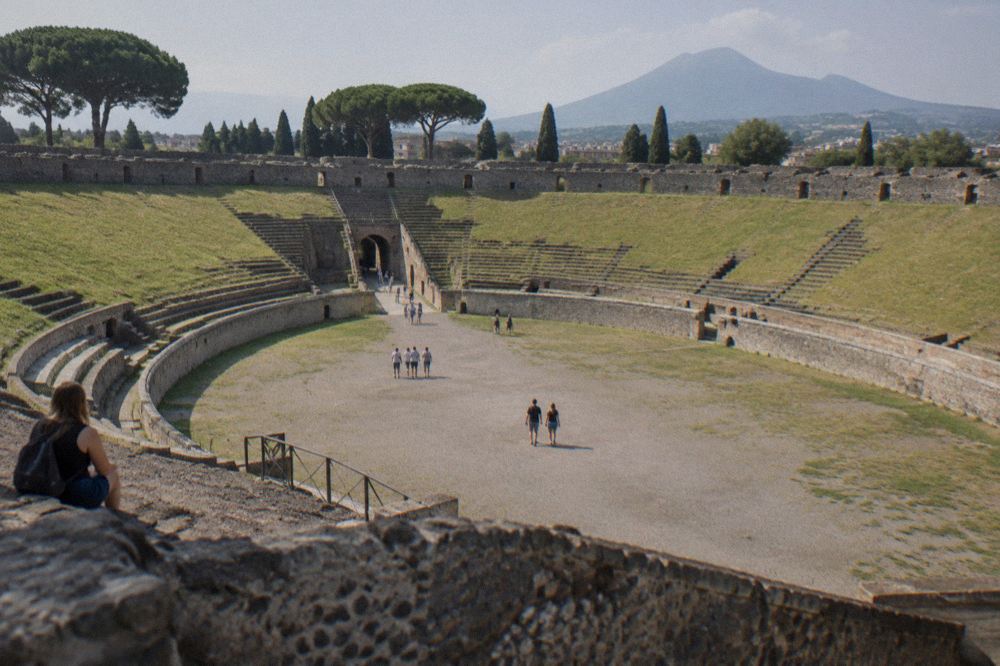
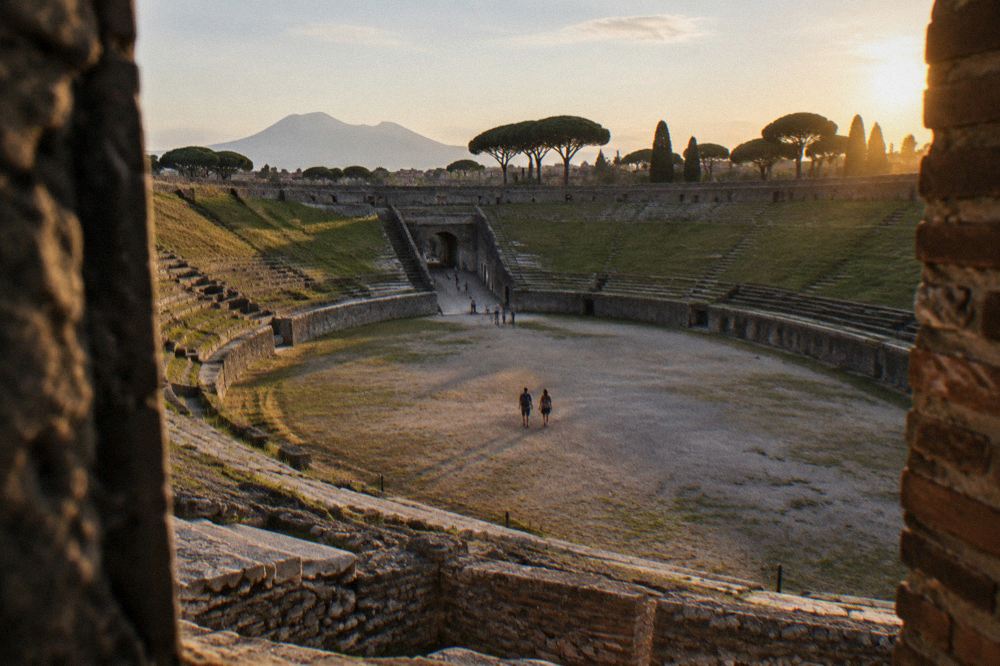
Enter at Piazza Anfiteatro, the amphitheatre entrance, with children. It is a ticket office, it connects directly to the step-free "Pompeii for All" route for visitors with mobility difficulties, and it puts the amphitheatre and gladiator barracks first, which is the most child-friendly corner of the city. Piazza Esedra and Porta Marina are the other ticket offices; the Porta Ercolano entrance serves only the suburban villas route.
The step-free route is the single most useful family facility at Pompeii. It enters at Piazza Anfiteatro and can finish at Piazza Esedra via the Antiquarium lift, and while it was designed for wheelchairs, it is equally kind to strollers, wobbly walkers and tired seven-year-olds. The paved streets off that route, by contrast, have deep wheel ruts and high stepping stones that strollers cannot cross unaided.
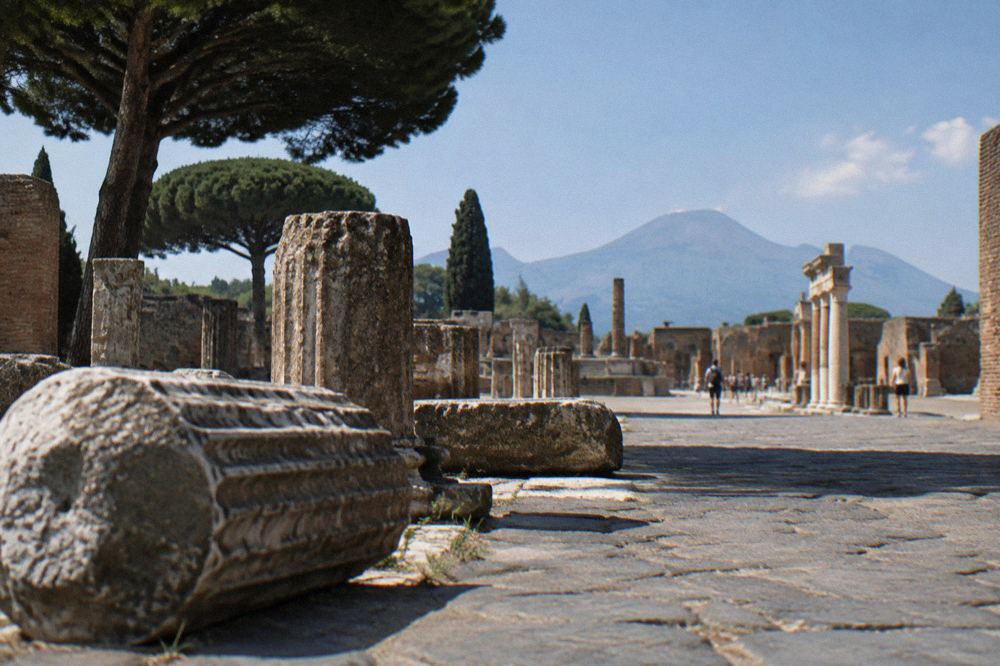
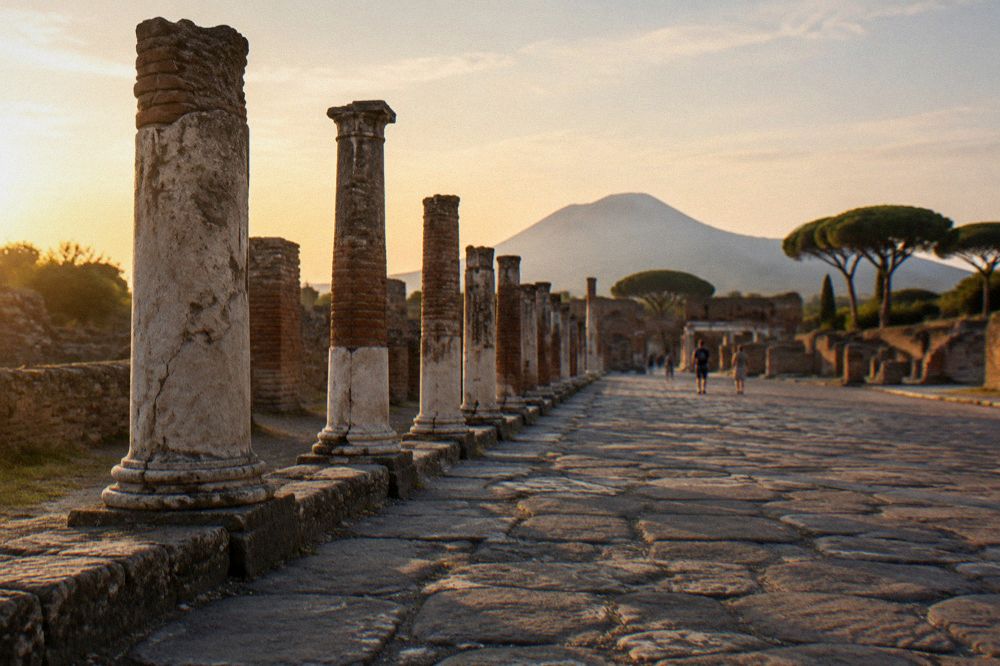
A sensible family shape for the walk is the two-hour highlights loop: amphitheatre, gladiator barracks, the Via dell'Abbondanza main street, the forum with Vesuvius behind it, then out. The family itinerary page lays this out stop by stop with timings, and the how long to spend in Pompeii question covers the walking difficulty honestly: it is hard paving, it is hot in summer, and two hours of actual walking with breaks is a realistic child-sized dose. The overall park map page helps set expectations before you arrive.
Should A Family Take A Guided Tour Or Go Alone?
A guided tour is worth it for families with children aged seven or more, because a guide turns stones into stories and a two-hour small-group tour with a ticket included removes both the queue and the planning. With younger children, going alone at the family's own pace is often better. Self-guiding is entirely allowed, the site has an official app and audio options, and an audio-guide ticket is the budget middle path.
The trade-off is genuinely even, and the fuller argument is in the guided versus self-guided comparison. The case for a guide: an archaeologist-led small group holds children's attention in a way a guidebook cannot, the entry ticket is usually bundled, and the guide knows which houses are open. The case for independence: children set the pace, a break can happen whenever it is needed, and nothing is lost if a five-year-old fixates on the bakery for fifteen minutes.
Families travelling from Rome face a different calculation, since the journey alone eats most of a day; the Rome to Pompeii day trip guide and the train options breakdown cover that in detail. For families based in Sorrento, the Sorrento to Pompeii guide compares the ways across.
A half-day guided trip from Naples with skip-the-line tickets and a guide, such as the one above, is the format that suits families best: one booking, transport and entry handled, and a fixed end time. Read what the operator's live listing says about the age minimum before booking, since some small-group tours set one.
For families who prefer the independent route, the entry ticket with an audio guide is the budget-friendly option and works for older children who will actually wear the handset.
Where Do Families Eat In And Around Pompeii?
Inside the park there are food points and picnic space near the forum area, so carry water and snacks. Park rules limit bags brought in to 30x30x15 cm, which still fits a family day-pack of fruit and biscuits. Outside the gates, the modern town of Pompei and the streets around the Porta Marina and Piazza Esedra entrances have pizzerias and gelaterie within a short walk, so nobody has to eat inside the site at all.
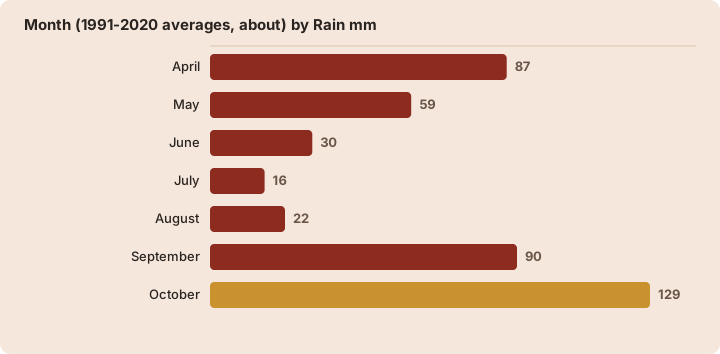
The family-friendly options near each entrance, entrance by entrance, are listed in the where to eat in Pompeii guide. Heat and hydration are the real issues on the food front. There is little shade on the site, and the weather and best-time guide shows why: Pompei's August mean daily maximum is about 29.4 C, and even May sits around 21.6 C on average. Carry more water than feels reasonable, one bottle per person, and refill where the park allows.
| Month (1991-2020 averages, about) | Mean daily max C | Mean daily min C | Rain mm | Family verdict |
|---|---|---|---|---|
| April | 17.7 | 10.4 | 87 | Ideal |
| May | 21.6 | 14.1 | 59 | Ideal, book early |
| June | 25.8 | 18.2 | 30 | Go at opening |
| July | 28.7 | 21.1 | 16 | Earliest slot only |
| August | 29.4 | 21.8 | 22 | Earliest slot only |
| September | 25.3 | 18.6 | 90 | Very good |
| October | 21.3 | 15.1 | 129 | Good, some rain |
The food itself can be part of the day rather than a chore. Naples, twenty-nine to thirty-five minutes from Naples Garibaldi to Pompei Scavi-Villa dei Misteri on the Circumvesuviana, is one of the great eating cities in Europe, and a street food walk there is a genuine child-pleaser before or after the ruins.
How Do You Get To Pompeii With Children?
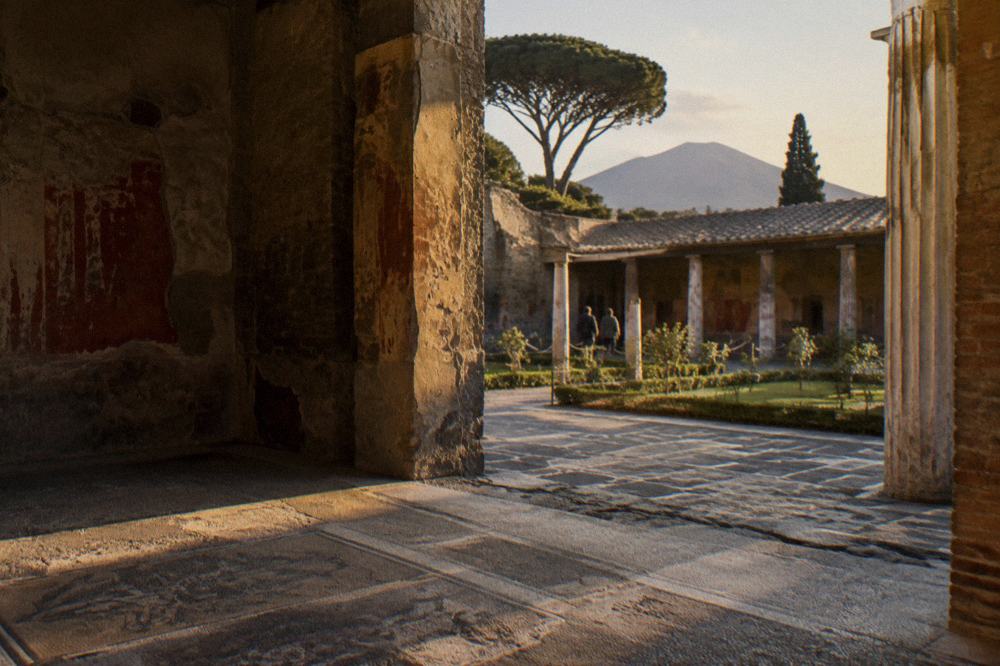
By train to the Pompei Scavi-Villa dei Misteri station, which sits beside the Porta Marina entrance. The Circumvesuviana line from Napoli Garibaldi takes 29 to 35 minutes; from Sorrento the same line takes 34 to 40 minutes to Pompei Scavi. The Campania Express service, the more comfortable alternative, has been suspended since 1 October 2026, so the regional line is the current rail option. Check EAV's own timetable for the day.
The rail practicalities for families, including the station itself, are covered in the Circumvesuviana guide and the Campania Express status page; from Naples, the Naples to Pompeii guide covers the whole door-to-door picture, and the Pompei Scavi station page covers the arrival end.
| Route | Distance by road | Notes for families |
|---|---|---|
| Naples to Pompei Scavi | 24 km | Circumvesuviana 29-35 min from Napoli Garibaldi |
| Sorrento to Pompei Scavi | 26 km | Circumvesuviana 34-40 min |
| Salerno to Pompei Scavi | 31 km | Rail via Naples or road |
| Rome to Pompei | 234 km | Day trip only; see the Rome guides |
Families arriving from the Amalfi Coast should read the Amalfi Coast to Pompeii options, since the coastal road with motion-sick-prone children is a different decision from the Sorrento train. Cruise families have their own timings, and the shore excursion guide addresses them directly.
Can You Combine Pompeii And Vesuvius With Kids?
Yes, but as a full day with older children only, roughly ten and up. The Vesuvius Gran Cono trail is a 2 to 3 hour round walk, tickets are online-only at EUR 11.68 full and EUR 9.55 reduced as sold, children under 6 go free, and access hours vary by month, 9-16 in March and October, 9-17 from April to June and in September, 9-18 in July and August. The path closes automatically on orange weather alerts.
The volcano is the second half of the story children already know, and standing on the crater rim after walking the buried city is the kind of day a twelve-year-old remembers. The practical detail is in the Vesuvius tickets guide and the how to visit Vesuvius page. Timed tickets sell out and are released 30 days ahead, with ten last-minute nominative tickets per slot from 30 minutes before, a rule in force since 11 April 2026.
| Vesuvius Gran Cono (2026) | Detail |
|---|---|
| Full ticket | EUR 11.68 as sold |
| Reduced ticket | EUR 9.55 as sold |
| Free entry | Children under 6 |
| Excursion length | 2 h return shortest, 3 h longest |
| Group entry | 60 per 10 min, 3 groups of 20 |
| Booking window | 30 days ahead, online only |
For families who would rather not assemble the two sites themselves, full-day combination tours from Naples or Sorrento bundle the transport, and the Vesuvius skip-the-line ticket with digital guide is the light-weight option for families driving their own car.
What Should Families Pack And Know Before Going?
Pack one litre of water per person, sun hats, closed shoes with grip, snacks, and identity documents for every family member, since nominative tickets can be checked. Bags larger than 30x30x15 cm go to left luggage. Pushchairs struggle on the paving, so a carrier is better for toddlers. Winter hours apply from 15 October to 15 March: 9:00 opening, last entrance 15:30, close 17:00; from 16 March to 14 October last entrance is 17:30 and close is 19:00.
Those are the practicalities that decide whether the day succeeds. The full opening-hours picture, including the closure days of the smaller satellite sites, is in the opening hours guide, and dress and footwear guidance sits in the what to wear page. Toilets and facilities are covered in the facilities guide, a question families ask more than any other once inside.
| Family need | What to do |
|---|---|
| Shade and breaks | Picnic points near the forum area; Antiquarium for cover |
| Step-free access | Piazza Anfiteatro entry, exit via Antiquarium lift at Piazza Esedra |
| Bags over 30x30x15 cm | Left luggage at the site |
| Documents | Carry ID for each person, nominative tickets checked |
| Lost-child risk | Agree a meeting point at the amphitheatre or forum on arrival |
| Luggage between sites | Artebus shuttle has storage but no disabled access |
Two dated notes matter for route planning. The Praedia of Julia Felix has been closed to the public since 7 September 2026 for maintenance, so any printed itinerary that lists it is out of date. And if your family plan includes Herculaneum, its Villa dei Papiri and Ancient Theatre are both closed for works, though the rest of that site is open daily.
For families who want the whole story but not the planning, a private tour with an official guide, priced per group of up to 14, lets a family of five move at exactly the children's pace with a guide who can shorten or extend at will.
What Else Is Worth Adding To A Family Pompeii Trip?
Naples itself is the natural add-on: the Circumvesuviana reaches it in under forty minutes, and the National Archaeological Museum holds the mosaics and treasures removed from Pompeii, which children enjoy more after seeing the empty houses they came from. Beyond that, Sorrento, the Amalfi Coast and Capri are all reachable, and Paestum's Greek temples are a memorable long-day option.
The museum pairing is the classic move and the museum guide explains what to point at. Naples with children also deserves a page of its own, and the Naples area guide covers the funicular, the castles and the pizza streets. The is Pompeii worth visiting question is worth reading if the family budget forces a choice between sites.
| Add-on | Travel basis | Family verdict |
|---|---|---|
| Naples National Archaeological Museum | Circumvesuviana to Naples, under 40 min | Best after the ruins |
| Herculaneum | Same rail line, Ercolano station | Compact, partly shaded |
| Vesuvius Gran Cono | 2-3 h walk, timed online tickets | Ages 10 and up |
| Sorrento and Amalfi Coast | Road or rail via Sorrento | Longer days, motion-sickness risk on the coast road |
A cooking class is the other family favourite, and a pizza and tiramisu class in Naples suits children well because it is hands-on, indoors and ends in eating the results. This site's cooking classes page lists the options.
Common Questions About Visiting Pompeii With Kids
Is Pompeii suitable for children?
Yes, from around age six. The body casts, gladiator barracks, bakery and graffiti grip children quickly, but the site is large, hot and uneven underfoot, so plan around two hours of walking with breaks. Children under five often enjoy it only briefly; compact, partly shaded Herculaneum can suit that age better.
Do children pay to enter Pompeii?
No. Entry is free for everyone under 18 year-round. Adults pay EUR 20 on the 2026 Pompeii Express ticket, EU citizens aged 18 to under 25 pay EUR 2 reduced, and everyone enters free on the first Sunday of the month. From 1 January 2027 the adult structure becomes a single EUR 25 ticket, with free under-18 entry retained.
Which Pompeii entrance is best for families?
Piazza Anfiteatro. It has a ticket office, it starts the step-free "Pompeii for All" route, and it puts the amphitheatre and gladiator barracks first. Piazza Esedra and Porta Marina are the other ticket offices; Porta Ercolano serves the suburban villas route only.
Can you take a pushchair into Pompeii?
With difficulty. The ancient paving has deep wheel ruts and stepping stones that most pushchairs cannot cross. A baby carrier is the practical choice for toddlers; the step-free route from Piazza Anfiteatro is the friendliest stretch for wheels.
Is a guided tour of Pompeii worth it with kids?
For children around seven and up, usually yes: an archaeologist-led small group turns the stones into stories and bundles the entry ticket. With younger children, self-guiding at the family's own pace often works better, and an audio-guide ticket is the budget middle path.
Can you combine Pompeii and Vesuvius with children?
Yes, as a full day from about age ten. The Gran Cono walk is 2 to 3 hours return, tickets are online-only at EUR 11.68 full as sold, under-6s go free, and the path closes automatically on orange weather alerts. Full-day combination tours from Naples or Sorrento handle the transport.
Planning a family day at Pompeii comes down to three choices: the right entrance, a child-sized route, and tickets secured in advance. Get those right, carry the water, and the buried city does the rest; for the fuller planning picture, the Pompeii Travel Guide homepage collects every route, ticket and tour page in one place, and the family itinerary page turns this advice into a hour-by-hour walk.