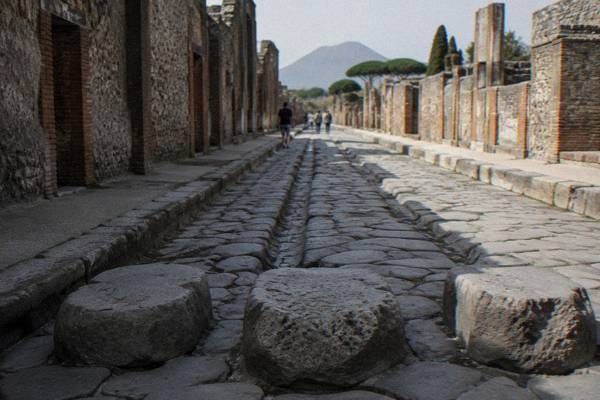
Pompeii Gladiators
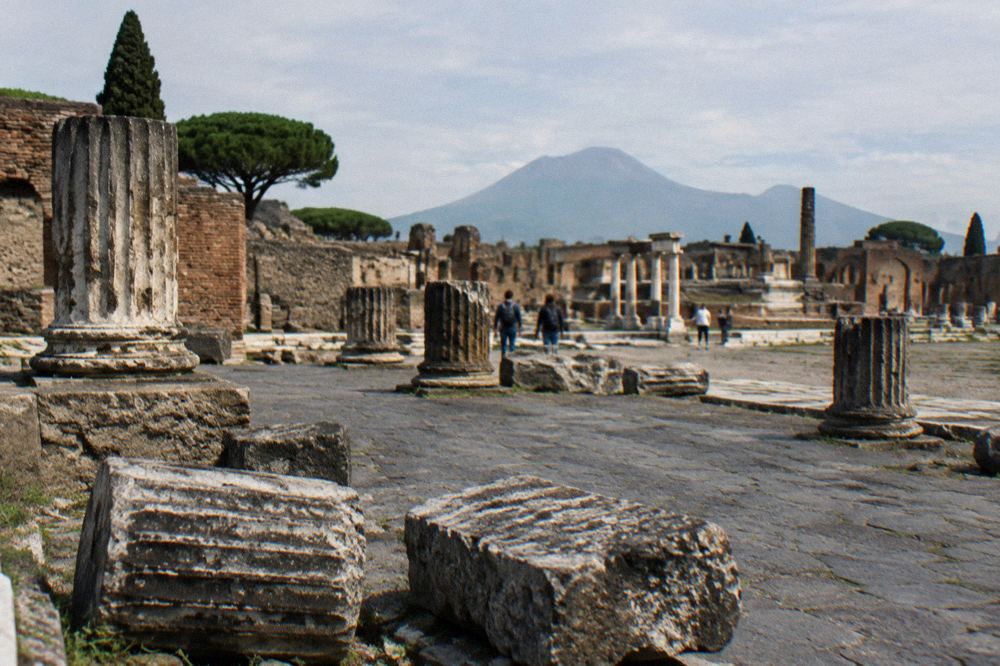
Pompeii, the Roman city buried by Mount Vesuvius in AD 79 and now an archaeological park in Campania, southern Italy, preserves the places where gladiators trained, slept and fought, from the colonnaded barracks near the Large Theatre to the great stone amphitheatre at the eastern edge of the excavations.
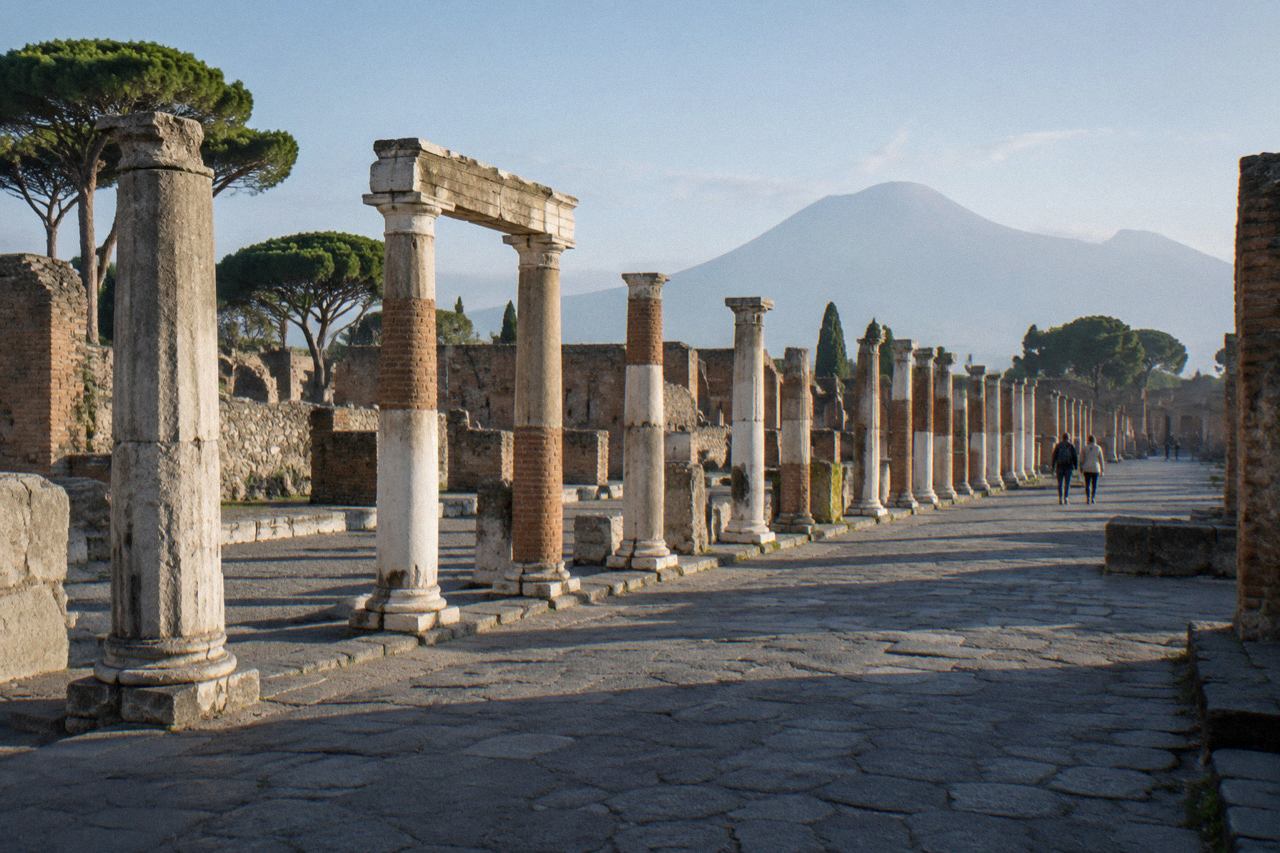
Short answer
The gladiator sites at Pompeii sit inside the archaeological park, about 24 km by road from Naples in Campania, Italy. A 2026 Pompeii Express ticket costs EUR 20 and covers the ancient city, where the barracks and the amphitheatre both stand. Hours run 9:00 to 19:00 with last entry at 17:30 in the summer season, and the park caps entries at 20,000 visitors a day.
Pompeii, the Roman city buried by the eruption of Mount Vesuvius in AD 79, lies in Campania, southern Italy, beside the modern town of Pompei and about 24 km by road from Naples. Within its 44 hectare excavated area stand two places that carry the gladiator story more vividly than anywhere else in the Roman world: a colonnaded training compound next to the Large Theatre that excavators labelled the gladiators' barracks, and the great elliptical amphitheatre at the city's eastern edge, the earliest large stone arena of its kind known in the Roman Empire. Both are reached on a standard park ticket, and both reward visitors who arrive knowing what they are looking at. This guide covers where the gladiator sites are, what they show, how to fit them into a visit, and the practical details of tickets, hours and access in 2026.
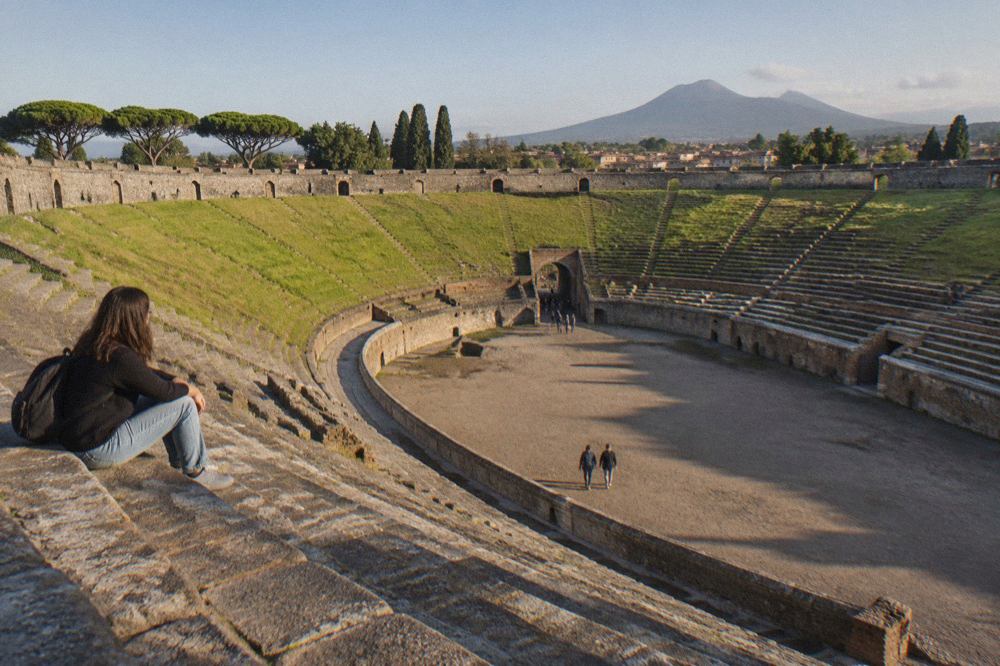
Where The Gladiators Trained And Fought At Pompeii
The two gladiator sites at Pompeii are the training compound beside the Large Theatre, in the south-west of the excavated city, and the amphitheatre in the far south-east near the Piazza Anfiteatro entrance. Both stand inside the archaeological park in Campania, Italy, and both are covered by the same entry ticket. Walking between them crosses a good part of the ancient city, so allow time rather than treating them as neighbours.
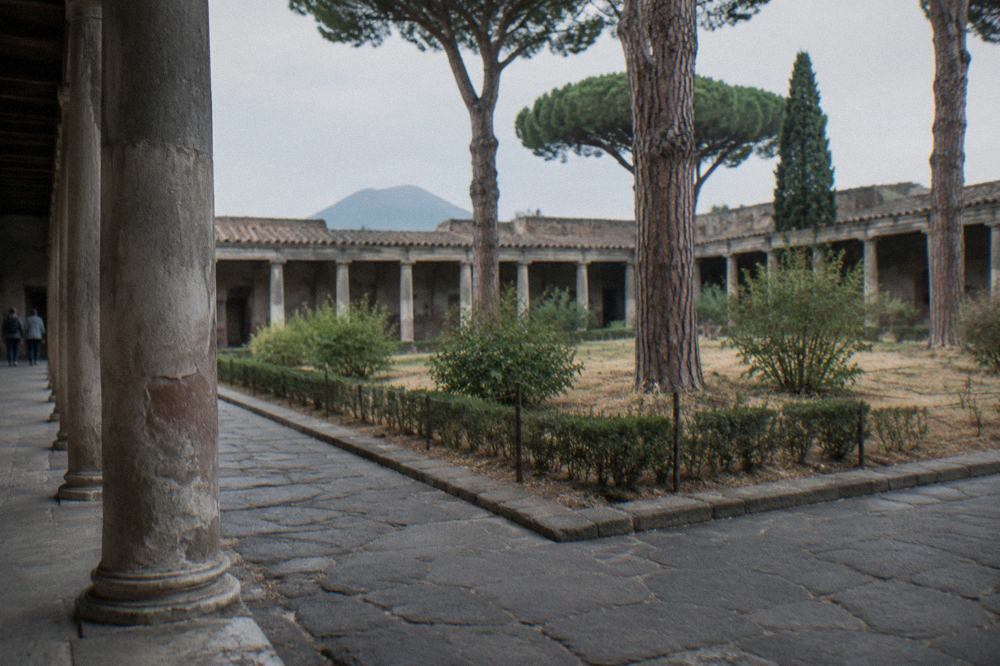
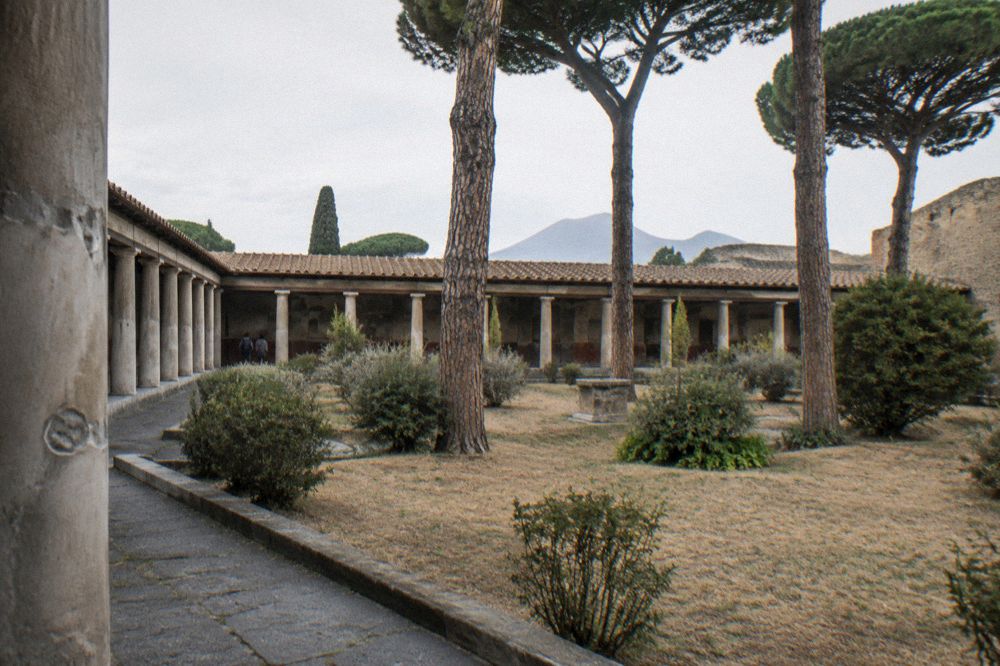
The training compound is a large rectangular portico, a colonnaded square that served the theatre district in earlier phases of the city's life and later held equipment, quarters and training space associated with gladiators. Excavation in the earlier era of the dig gave it the enduring modern label of the gladiators' barracks, a name that has stuck in guidebooks and on site signage even though scholars debate how exclusively the space was used by fighters. For a visitor, the appeal is the intimacy of it: low rooms opening off the courtyard, worn stone underfoot, and a sense of scale that the grand public spaces do not give.
The amphitheatre is a different experience altogether. It sits at the eastern extremity of the excavations, closest to the Piazza Anfiteatro entrance and ticket office, and its seating bowl rises in unbroken stone steps that hold thousands. Unlike later Roman arenas built with concrete vaults, this one banks earth and stone into the natural slope, which is part of why archaeologists treat it as a landmark in arena construction. Standing on the upper rim, with the modern town of Pompei on one side and Vesuvius on the other, delivers one of the park's signature views. The floor of the arena is below the surrounding ground level, and the vaulted corridors that ring it give a vivid sense of how crowds moved in and fighters waited.
Between the two sites the city itself tells the rest of the story: the streets, the graffiti, the tombs that line the roads outside the walls. Pompeii preserves written traces of everyday Roman life in extraordinary density, and gladiators appear in that record too, from painted notices advertising games to scratched names and boasts on plastered walls. Look closely at walls along the route between barracks and arena and you will see why scholars treat this city as a text as much as a ruin.
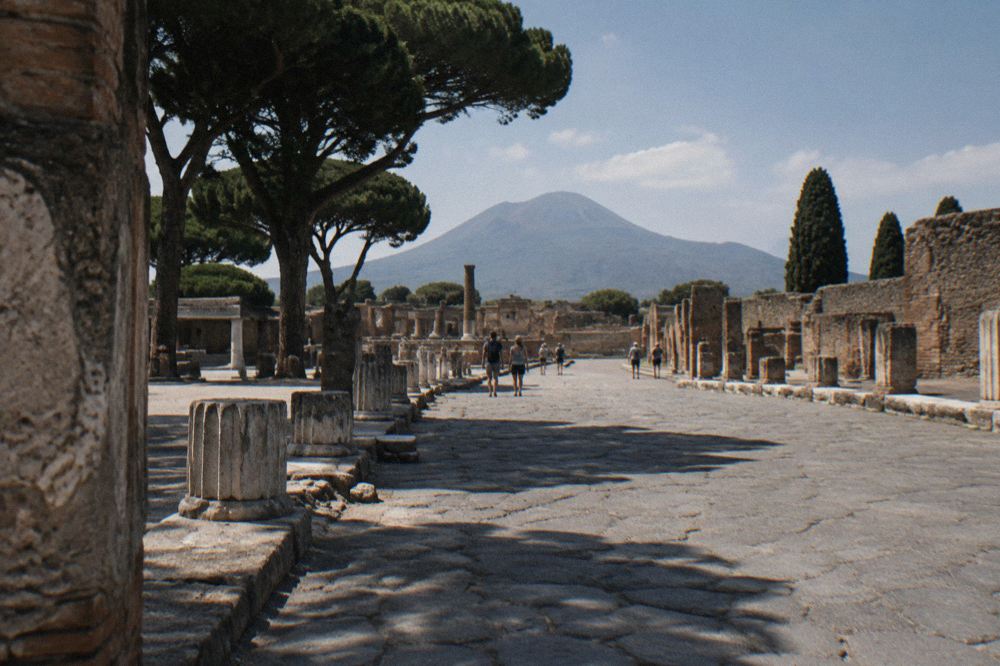
What The Gladiator Sites Show Visitors Today
Visitors today see a partially roofed portico with small rooms at the barracks, and a complete elliptical seating bowl with vaulted corridors at the amphitheatre. Finds made in the barracks during excavation, including armour and equipment, are among the evidence that tied the building to gladiators, and items of this kind from Pompeii are held in the Naples archaeological museum. Neither building is furnished as it was in antiquity, so a guide or good reading matters.
The barracks rewards a slow circuit. The columns of the portico still carry patches of original plaster, and the small chambers that open onto the courtyard are the spaces that excavation associated with fighters and their gear. The interpretive material on site is limited, which is precisely why guided walks of this area are so popular: an archaeologist can point at a doorway, a stair, a worn threshold and reconstruct the routines of training, eating and sleeping that filled the compound before the eruption. The park occasionally closes individual buildings for maintenance, as it did with the Praedia of Julia Felix, closed to the public since 7 September 2026, so a check of the park's own communications before a visit is wise if one building matters to you.
The amphitheatre, by contrast, explains itself the moment you climb into it. The tiered stone seating survives around the full ellipse, and the corridor that runs beneath it is walkable in part, letting you experience the space as a spectator arriving, or as a fighter waiting in shadow before stepping into the light. Signs of later history layer over the ancient fabric: the arena was reused for spectacles and events into modern times, long after its rediscovery, and the wear of centuries shows. For photography, the upper steps in the late afternoon give the best combination of raking light and a clear view of the bowl.
Around both sites the park continues to excavate and study. The nearby Large Theatre and Odeon, the palaestra and the tombs of the necropolis all sit within a few minutes' walk, and the region-by-region layout of the city means a gladiator-themed route can absorb a whole morning without repetition. Visitors with more appetite for the arena world often pair Pompeii with the museum in Naples, where much of the finest material dug from these streets is displayed.
How To Fit The Gladiator Sites Into A Pompeii Visit
Enter at Piazza Anfiteatro to meet the amphitheatre first, then walk west through the city to the theatre district and the barracks, finishing near the Forum or Porta Marina. That order goes downhill in effort and saves the intimate barracks for mid-morning rather than the end of a hot day. The full walk between the two gladiator sites passes the city's other landmarks, so nothing is wasted. Reverse it if you arrive by train at Pompei Scavi-Villa dei Misteri, which sits beside Porta Marina.
The classic mistake is to arrive at Porta Marina, the entrance closest to the Circumvesuviana station, and drift eastward without a plan, reaching the amphitheatre tired at the worst hour of the day. Flipping the route fixes that. Piazza Anfiteatro has its own ticket office, so a visitor starting there can buy a 2026 Pompeii Express ticket, EUR 20, on the spot or show a prebooked one, climb straight into the arena bowl while legs are fresh, and then work back through the east of the city: the palaestra, the amphitheatre district's tombs, the Via dell'Abbondanza toward the Forum, and finally the entertainment quarter around the Large Theatre where the barracks waits.
Time budget honestly. The park is enormous, 44 excavated hectares, and a walk from the amphitheatre to the barracks alone, with pauses, occupies well over an hour. Visitors who enjoy the site most either commit a full day or choose a tight half-day route and accept what they skip. The short two-hour route suits cruise passengers and day-trippers; the full-day pace suits everyone else. If gladiators are the theme, the half-day route that starts at Piazza Anfiteatro and ends at the theatre district is the shape that works.
For depth, a guided walk changes what the stones say. The small group archaeologist tours of the city are run by guides trained on the material, and the entry-ticket-plus-guide products bundle the logistics neatly.
A self-guided alternative works too, with a good audio guide and the park's own plan, and the choice between the two approaches is covered in detail on the guided versus self-guided comparison. What matters for the gladiator theme specifically is interpretation: the buildings are shells, and the story lives in what a guide or a good commentary can add.
Pompeii Tickets And Opening Hours For The Gladiator Route
A 2026 Pompeii Express ticket costs EUR 20 and covers the ancient city, including both gladiator sites, and the park is open 9:00 to 19:00 with last entry at 17:30 from 16 March to 14 October, and 9:00 to 17:00 with last entry at 15:30 from 15 October to 15 March. These prices end on 31 December 2026: from 1 January 2027 one EUR 25 ticket covers all park sites, valid 30 days, one entry per site.
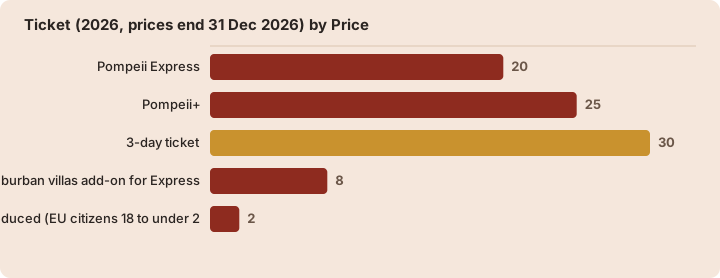
The ticket structure in force through 2026 is straightforward at the level a visitor needs. Express covers the ancient city alone, which is all the gladiator route requires. Pompeii+, at EUR 25, adds the suburban villas route at the Porta Ercolano / Street of the Tombs entrance, and the three-day ticket at EUR 30 extends to Oplontis, the Stabiae villas and museum, and Boscoreale. Express holders can add the suburban villas route later for EUR 8, card payment only, bought at the Porta Ercolano entrance. Entry is free for everyone on the first Sunday of the month, free for under 18s, and EUR 2 for EU citizens aged 18 to under 25. Full detail lives on the Pompeii tickets page.
| Ticket (2026, prices end 31 Dec 2026) | Price | What it covers |
|---|---|---|
| Pompeii Express | EUR 20 | The ancient city, both gladiator sites |
| Pompeii+ | EUR 25 | City plus suburban villas and shuttle |
| 3-day ticket | EUR 30 | Pompeii+ plus Oplontis, Stabiae, Boscoreale |
| Suburban villas add-on for Express holders | EUR 8 | Villas route, card only, at Porta Ercolano |
| Reduced (EU citizens 18 to under 25) | EUR 2 | Same coverage as the full ticket bought |
| First Sunday of the month | Free | Everyone, ticket collected on the day |
From 1 January 2027 the structure simplifies: a single EUR 25 ticket admits to all park sites, valid 30 days with one entry per site, while Oplontis, the Stabiae site and Boscoreale remain EUR 8 each individually and the MyPompeii Card stays EUR 45. Nominative tickets and the 20,000 visitors per day cap, in force since 15 November 2024, are retained. Identification may be checked at every entry, and tickets are non-transferable and non-refundable except for extraordinary closure.
| Season | Opens | Last entry | Closes |
|---|---|---|---|
| 16 March to 14 October | 9:00 | 17:30 | 19:00 |
| 15 October to 15 March | 9:00 | 15:30 | 17:00 |
Daily entry is managed in time bands in the summer season: from 9:00 to 13:00 up to 15,000 visitors are admitted, split between 12,000 Express and 3,000 Plus tickets, and from 13:00 to 17:30 up to 5,000 more, split 3,000 and 2,000. What that means in practice is that the morning band fills first, and an afternoon arrival after 13:00 often meets a quieter city. The park closes only on 25 December and 1 January unless otherwise communicated, and holds no weekly closing day, though the smaller satellite sites at Oplontis and Stabiae do close on Tuesdays.
Want someone else to handle the ticket and the storytelling at once?
Guided Tours Of Pompeii And The Gladiator Story
Guided tours of Pompeii are led by licensed guides, sometimes trained archaeologists, in small groups or private formats, and the strongest options bundle the entry ticket with the walk. The related tour on this page is a small group archaeologist tour of the city, starting in Pompeii itself, and it can be paired with the museum in Naples or the Vesuvius crater for a full day. Every price, rating and duration figure for these products appears on the live listing.
The value of a guide at the gladiator sites is concrete rather than atmospheric. The barracks is an unstaffed shell of plastered columns and small chambers, and the amphitheatre, though self-evidently impressive, hides its construction history from a casual eye. A guide who knows the excavation record turns a twenty-minute stroll into a reconstruction: who trained here, how the arena was built into the hillside, what the painted notices advertising games looked like. The small group tour with an archaeologist is this page's featured walk, a city tour with the ticket included, and the archaeologist framing is exactly what the gladiator theme wants, Check availability on the operator's live listing.
Format matters as much as subject. Small groups keep the guide audible in narrow streets; private tours allow a bespoke gladiator-focused route with time at the amphitheatre rim; entry-plus-ticket products remove the queue at the office. Travellers arriving from Naples or Sorrento can also buy whole-day products that fold transport in, and those are compared on the tours from Naples and tours from Sorrento pages. Whichever format you choose, book the first entry slot of the day in high season: the 20,000 daily cap and the morning time band make early slots the calm ones.
For visitors pairing the arena story with the wider world of the eruption, the Naples archaeological museum is the natural second stop, since material excavated at Pompeii fills its halls, and a two-day plan that splits park and museum is described in the two-day itinerary. The body casts made from the volcanic deposits, which carry the human weight of the eruption, are covered on the Pompeii body casts page.
Getting To Pompeii From Naples, Sorrento And Rome
The Circumvesuviana railway connects Naples with Pompei Scavi-Villa dei Misteri, the station beside the Porta Marina entrance, with scheduled times of 29 to 35 minutes from Napoli Garibaldi, and the site is about 24 km by road from Naples, 26 km from Sorrento and 234 km from Rome. The Campania Express service has been suspended since 1 October 2026, so the local line and road transport carry the traffic. The amphitheatre end of the park is a long walk from the Scavi station, which shapes route planning.
By rail, the Sorrento-Naples line of the Circumvesuviana is the workhorse. Pompei Scavi-Villa dei Misteri is the stop for the ruins, number 6049 on the EAV network, and computed scheduled times from the operator's own timetable data give 29 to 35 minutes from Napoli Garibaldi, with a median of 29. Consult the Circumvesuviana guide for station detail, and note that the dedicated Campania Express service, formerly the comfort option, has been suspended since 1 October 2026 until further notice, with refunds available through the operator's complaints form or the original seller.
By road, driving distances to the Scavi station area run about 24 km and 22 minutes from Naples, 26 km and 37 minutes from Sorrento, and 31 km and 30 minutes from Salerno, per routing data on OpenStreetMap. Rome is 234 km away, roughly 159 minutes of driving without stops, which is why the Rome day trip and Rome by train pages treat it as a committed full-day outing. Parking around the modern town fills early in season; the practicalities are on the Naples to Pompeii and Sorrento to Pompeii pages, and the Amalfi Coast approach is covered at Amalfi Coast to Pompeii.
| Route to Pompei Scavi (driving, OpenStreetMap routing) | Distance | Time |
|---|---|---|
| From Naples | 24 km | 22 min |
| From Sorrento | 26 km | 37 min |
| From Salerno | 31 km | 30 min |
| From Rome | 234 km | 159 min |
Once off the train at Scavi, you enter at Porta Marina, the westernmost of the three ticketed entrances, and the amphitheatre lies at the far eastern end of the city. That geography is the single strongest argument for planning the gladiator route in the direction described above, or for taking a guided product that starts where your energy is highest. The full entrance-by-entrance breakdown is on the Pompeii map and the Pompeii map guide.
Crowds, Weather And The Best Time To See The Gladiator Sites
The park counted 4,000,090 visitors to the Pompeii site in 2025, after 4,069,377 in 2024 and 3,985,424 in 2023, so crowding is a planning variable, not a rumour. May and October are the busiest single months in the official 2024 monthly table, at 516,923 and 481,255 visitors respectively, while January and December fall to 112,121 and 138,028. Afternoon entry after the 13:00 split, midweek days and the winter season all thin the crowds at the amphitheatre and barracks.
The monthly pattern from the park's own visitor table is unambiguous. In 2024 the site admitted 516,923 people in May, 481,255 in October and 468,340 in September, against 112,121 in January and 138,028 in December. Shoulder months are not quiet, they are merely less dense. Anyone who can visit between November and March trades heat and queues for shorter days and the 15:30 last entry of the winter timetable, a trade-off worth understanding before booking.
| Year | Visitors to the Pompeii site |
|---|---|
| 2022 | 2,972,159 |
| 2023 | 3,985,424 |
| 2024 | 4,069,377 |
| 2025 | 4,000,090 |
Weather shapes the gladiator route more than a museum visitor might expect, because both sites are open air and the walk between them is long and unshaded. Climate normals for the Pompei grid point, computed from the Open-Meteo historical archive for 1991 to 2020, put the mean daily maximum at about 29.4 C in August against about 12.2 C in January, with November the wettest month at about 180 mm of rain and July the driest at about 16 mm. Water, hats and real shoes are the standing advice, expanded on the weather and best time page and the summer heat plan page.
| Month | Mean daily max (C) | Mean daily min (C) | Rain (mm) |
|---|---|---|---|
| January | about 12.2 | about 6.6 | 119 |
| April | about 17.7 | about 10.4 | 87 |
| July | about 28.7 | about 21.1 | 16 |
| October | about 21.3 | about 15.1 | 129 |
Beyond the bare counts, the rhythm of the day matters. The morning band, up to 15,000 admissions between 9:00 and 13:00 in the summer season, concentrates coach groups and cruise parties at Porta Marina, and they walk the classic eastward route. Starting at Piazza Anfiteatro puts you ahead of that flow for the first hours, and the barracks in the early afternoon is often close to empty. The cruise ship day and half-day highlights pages work through the timing in detail.
Practical Rules For The Barracks And The Arena
Bags larger than 30x30x15 cm must be left in the left-luggage facility, drones are forbidden without authorisation, and identification may be checked at entry because tickets are nominative. There is no dress code beyond ordinary decency, no bare chests, and sturdy shoes matter on two thousand year old paving. The amphitheatre steps are uneven and unrailed, so visitors with mobility needs should use the Pompeii for All route entering at Piazza Anfiteatro.
The regulations in force are short and worth knowing before arrival. The permitted bag size is 30x30x15 cm, and anything bigger goes to left luggage rather than through the gate, a rule that catches day-trippers with weekend bags planning to move hotels through the park. Tickets are nominative, introduced with the daily cap on 15 November 2024, so the name on the ticket should match the holder's document. The luggage storage and what to wear pages expand on both points.
Access to the gladiator sites specifically has two features. First, the amphitheatre's seating is stepped stone without modern handrails through the bowl, and comfortable negotiation of it needs steady feet; the view from the rim rewards the climb but nobody should attempt more than they can safely descend. Second, the park's accessible route, Pompeii for All, enters at Piazza Anfiteatro and allows exit at Piazza Anfiteatro or Piazza Esedra via the Antiquarium lift, which puts the arena end of the park among the friendlier zones for visitors with mobility difficulties. Full detail is on the accessibility page.
Eating and drinking inside the park are limited, and the practical consensus is to carry water and take a proper meal in the modern town, where the options are mapped on the where to eat page. A gladiator-themed route that starts at Piazza Anfiteatro can end within a short walk of the town's cafés, which is one more argument for that direction of travel. Families should also skim Pompeii with kids, since the arena story grips children and the walking load needs trimming for short legs.
Common Questions About Pompeii Gladiators
Where did gladiators train in Pompeii?
In a colonnaded compound beside the Large Theatre in the city's entertainment quarter, labelled the gladiators' barracks after early excavation associated it with fighters and their equipment. It sits in the south-west of the excavated city, a short walk from the Stabian Baths, and is covered by the standard park ticket.
Can you see the amphitheatre at Pompeii?
Yes. The elliptical stone amphitheatre stands at the eastern edge of the excavations, closest to the Piazza Anfiteatro entrance and ticket office, and its tiered seating survives around the full bowl. It is included in the ordinary Pompeii Express ticket, EUR 20 in 2026.
How long does a gladiator-focused visit take?
A focused route from the amphitheatre to the barracks through the theatre district takes about half a day at a comfortable pace. Visitors who add the Forum, the baths and the villas along the way should plan a full day, keeping the last entry time, 17:30 in the summer season and 15:30 in winter, firmly in view.
Is a guided tour worth it for the gladiator sites?
Both buildings are unstaffed shells with limited signage, so interpretation is where a guide earns their fee. An archaeologist-led small group walk explains the training compound, the arena's construction and the written record of games in a way a casual visit cannot match.
When is the best time to visit the Pompeii gladiator sites?
Afternoons after the 13:00 entry split and midweek days in the shoulder months of spring and autumn offer the thinnest crowds. Official 2024 figures show May the busiest month at 516,923 visitors and January the quietest at 112,121, so winter visits trade heat for short days.
Do Pompeii tickets include the gladiator sites?
Yes. Every ticket that covers the ancient city, from the EUR 20 Express ticket upward, includes both the barracks compound and the amphitheatre. From 1 January 2027 the single EUR 25 ticket covering all park sites continues to include them.
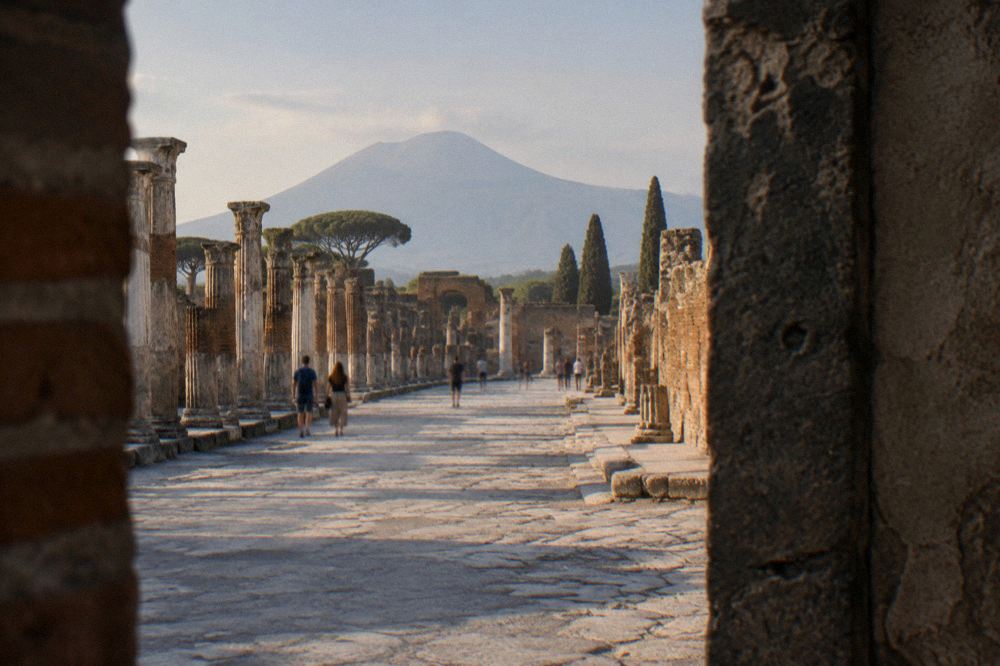
The gladiator story is one of the threads that makes Pompeii Travel Guide's subject city different from every other archaeological site in Italy: not a single showcase monument but a whole urban stage, barracks and arena still standing in one 44 hectare stretch of Campania. Plan the route east to west, book an early slot in high season, and let a guide fill the silence of the stones, and the fighters of Pompeii will seem far closer than two thousand years.