Ostia Antica Vs Pompeii
Two buried Roman cities, one on the Bay of Naples and one beside the Tiber: how the archaeological park of Pompeii and Ostia Antica actually compare for a visitor deciding between them.
Short answer
Pompeii is the larger and more famous of the two: an excavated area of 44 ha buried by Vesuvius in AD 79, with a 2026 Express ticket at EUR 20 and a daily cap of 20,000 visitors. Ostia Antica, near Rome, is quieter and greener, a port city slowly silted over rather than destroyed. Pompeii needs at least half a day; Ostia suits a shorter visit from Rome.
Pompeii is the ancient Roman city buried by the eruption of Mount Vesuvius in AD 79, now the Parco Archeologico di Pompei in Campania, southern Italy, beside the modern town of Pompei and about 24 km by road from Naples. Ostia Antica is its great rival for a day of Roman ruins: the port city of ancient Rome, in Lazio, close to the modern capital and reached from it by local train. The two are compared constantly by travellers building an Italy itinerary, and the honest answer is that they reward completely different trips. Pompeii is vast, dramatic and world famous; Ostia is quieter, greener and easier to reach from Rome. This guide compares them side by side on everything that matters: size, what survives, crowds, tickets, travel logistics and how long each deserves.
Which Site Is Bigger, Pompeii Or Ostia Antica?
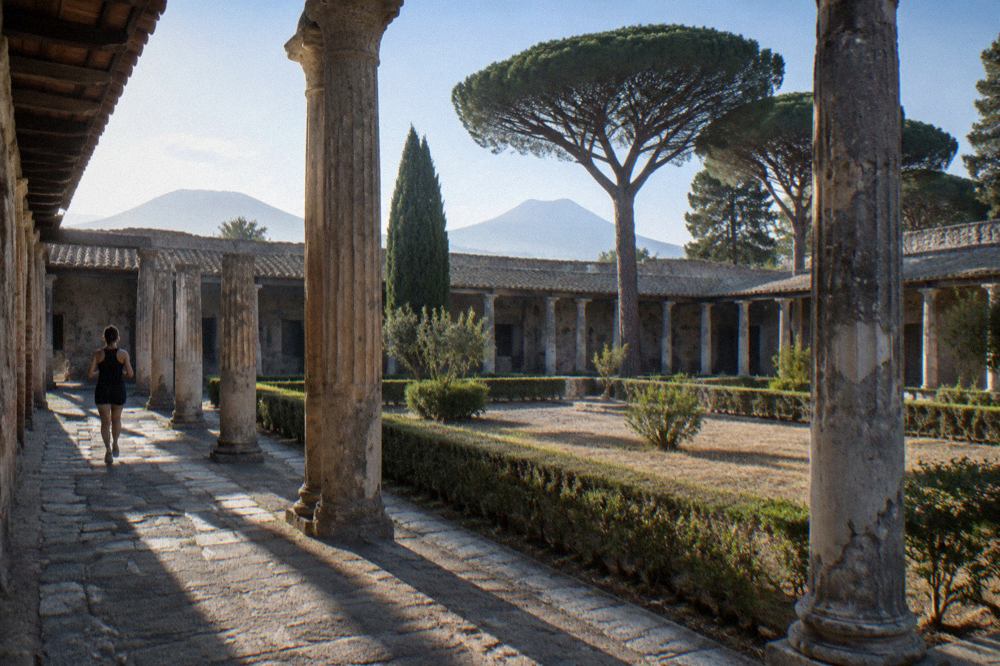
Pompeii is the larger site by a clear margin. UNESCO's listing for the property records an excavated area of 44 ha inside an inscribed property of 98 ha, and the park caps entry at 20,000 visitors per day, a figure it hit and exceeded in its record year. Ostia Antica is smaller in excavated extent, a compact spread of streets and apartment blocks that can be crossed on foot in well under an hour.
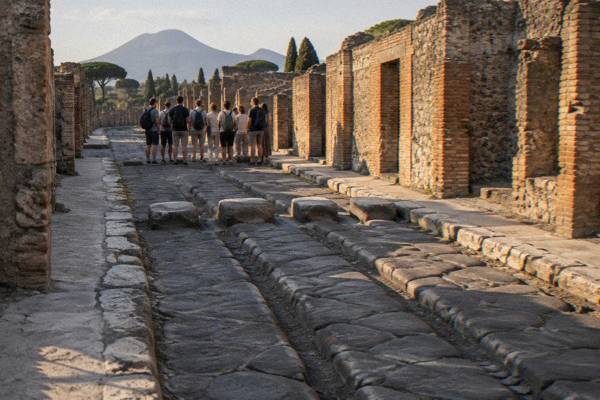
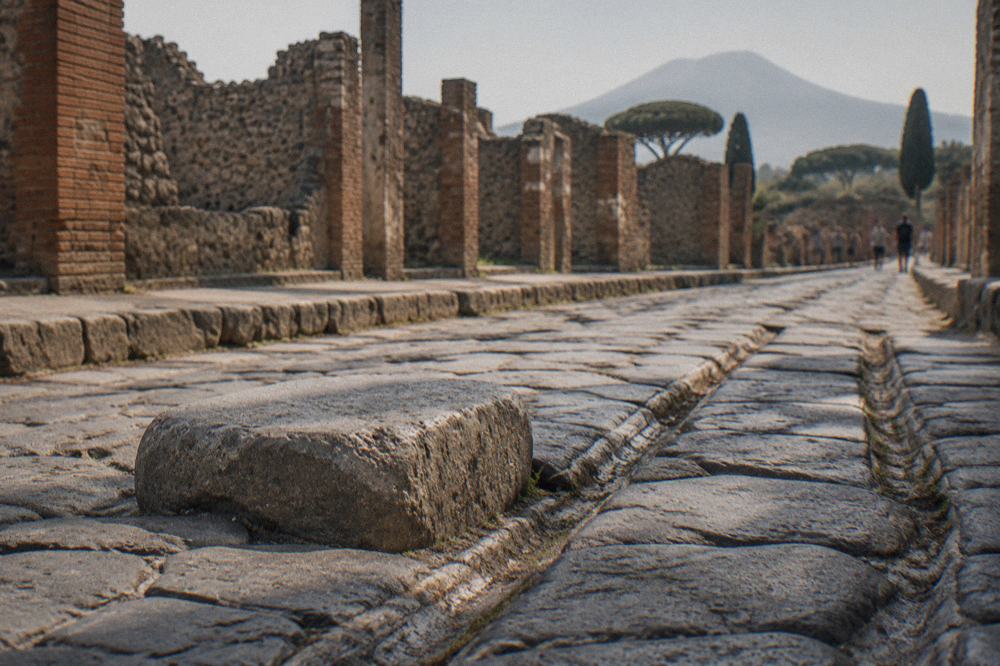
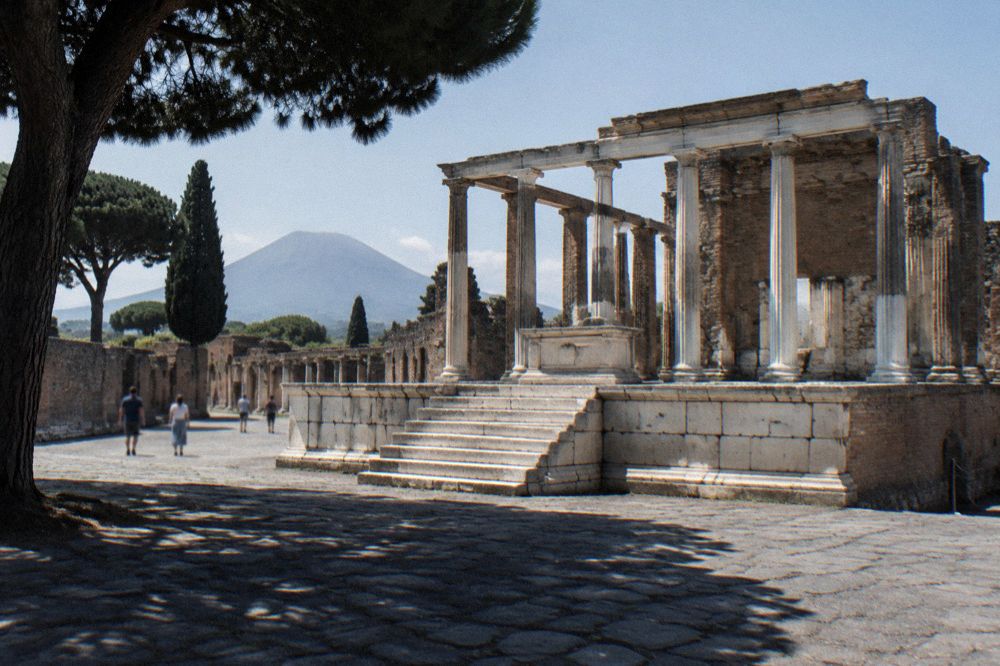
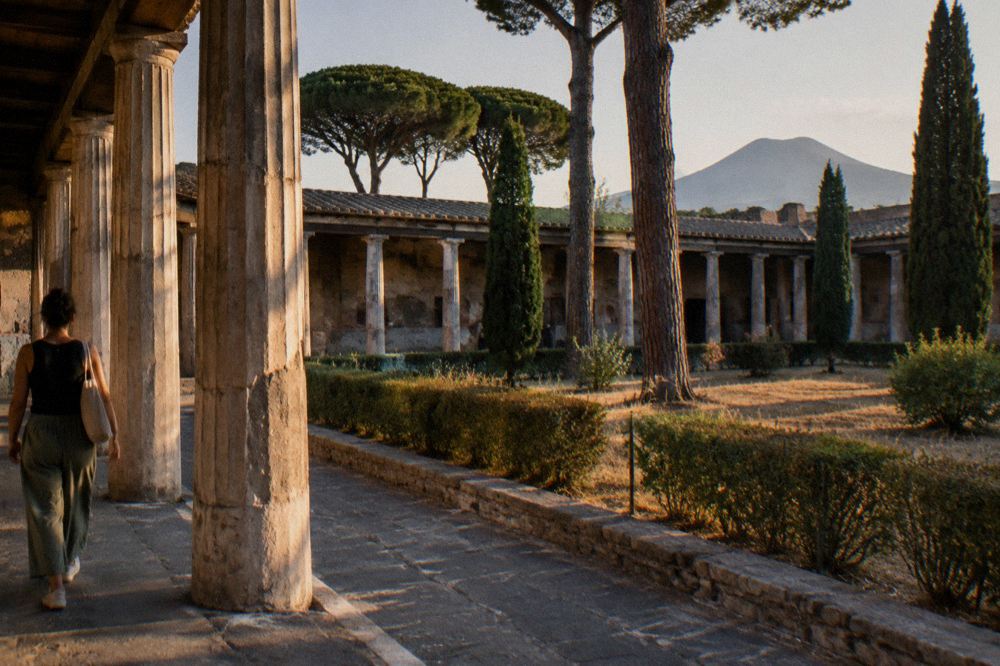
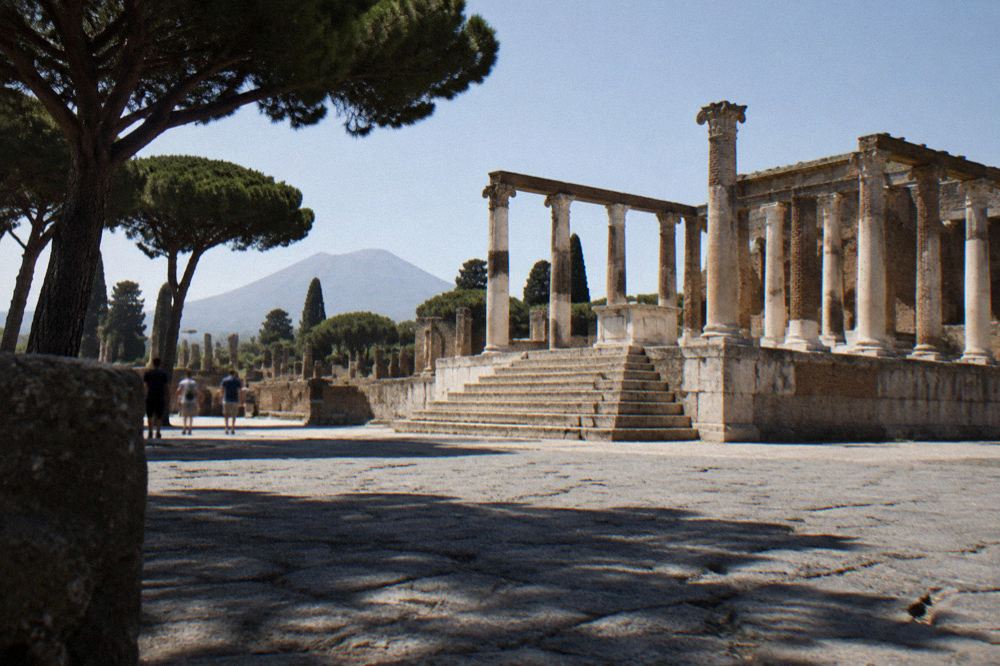
The difference in scale shapes everything else about the visit. Pompeii was a full city of streets, temples, bath complexes, theatres and an amphitheatre, frozen mid-life by the eruption traditionally dated to 24 August AD 79. Walking it end to end, from the Forum to the Piazza Anfiteatro entrance, is a commitment in itself, and the park's own guidance treats a full circuit as a day-scale undertaking. The site is described in detail in the Pompeii history guide.
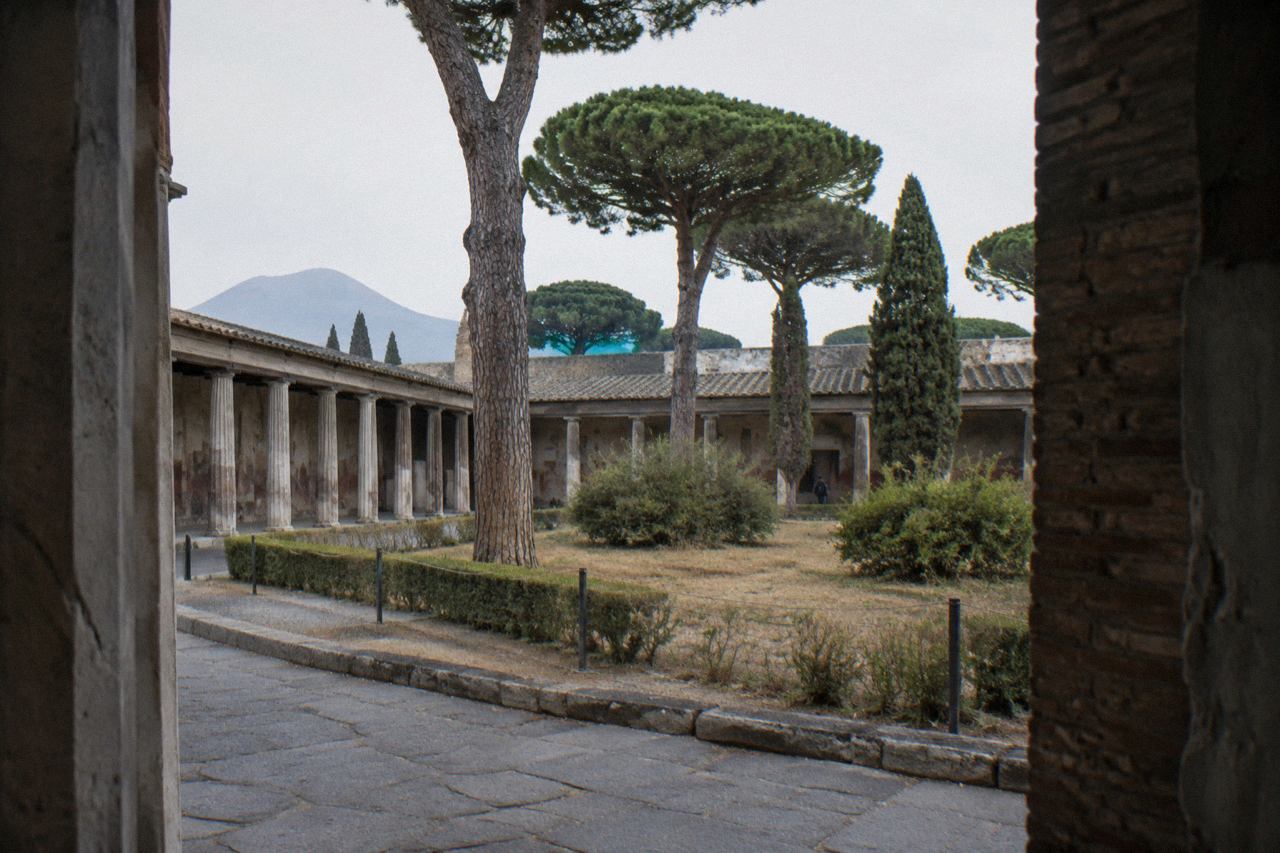
Ostia Antica was Rome's seaport at the mouth of the Tiber, and it died differently: not in a single catastrophe but slowly, as the river silted and the harbour function moved elsewhere. That slower end left a city of well-preserved everyday buildings, mosaics in situ and a famous theatre, set among umbrella pines. Because it was a working port town rather than a resort city on the Bay of Naples, its architecture skews commercial: warehouses, insulae, baths and the offices of shipping companies.
For pure scale and spectacle, Pompeii wins. For a site you can see substantially in a morning without route planning, Ostia is the easier proposition, and its shaded streets make summer walking less punishing than Pompeii's exposed stone.
What Survives At Each Site?
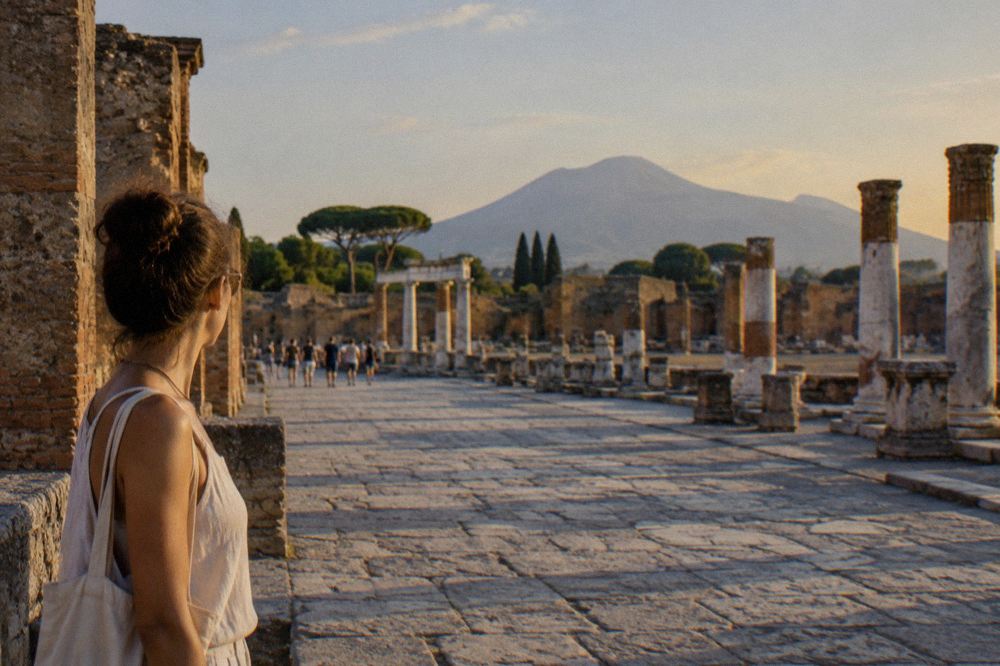
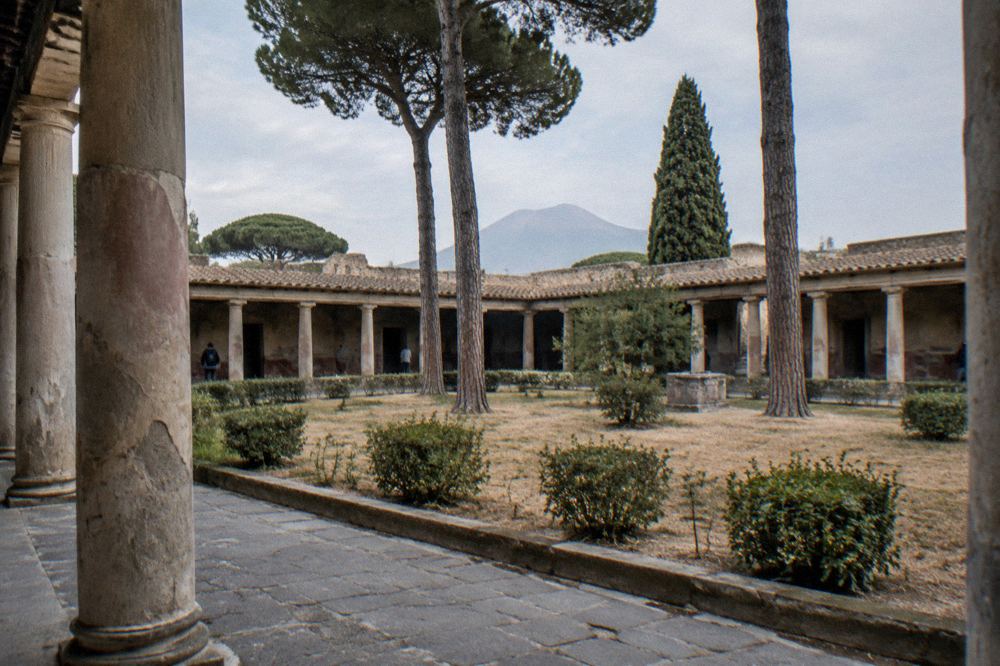
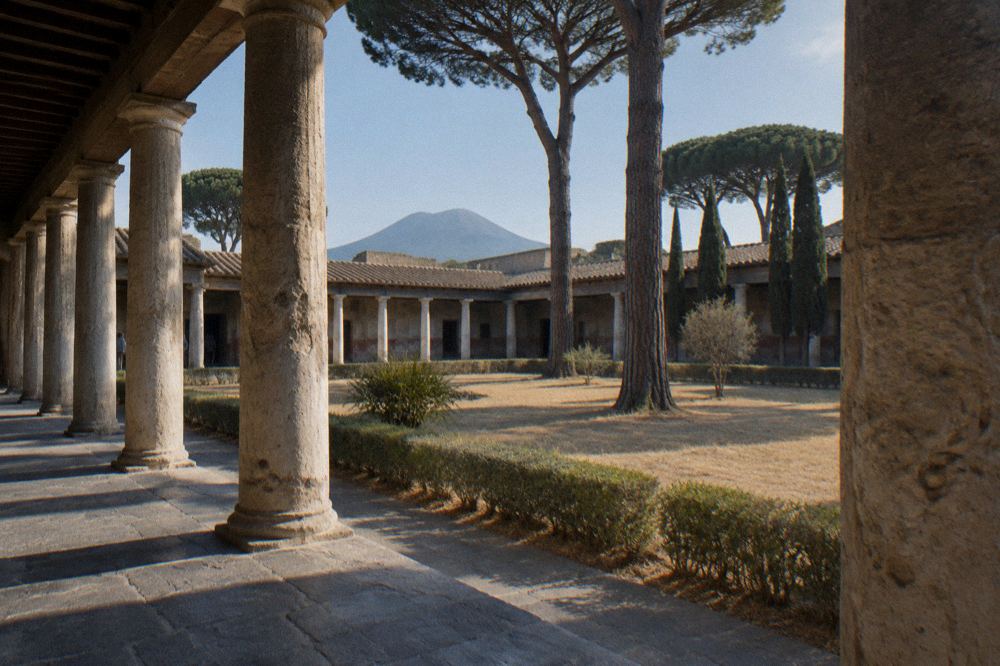
Pompeii preserves an entire city at the moment of its destruction: frescoed houses such as the House of the Vettii and the Villa of the Mysteries, plaster body casts of victims, a brothel with painted panels, bakeries with carbonised bread, gladiator barracks and an amphitheatre. Ostia Antica preserves city life rather than its end: apartment blocks several storeys high, black-and-white mosaics, a large theatre and the oldest-known synagogue in Europe's western half standing among pine trees.
The emotional register of the two sites is the real difference. Pompeii is famous for the casts, made by pouring plaster into voids left in the hardened ash where bodies decayed. They are the reason many visitors come, and the Pompeii body casts guide covers where they are displayed and how they were made. The eruption, whose exact date remains a genuinely open scholarly question, gives every wall a layer of tragedy that Ostia simply does not carry.
Ostia's appeal is architectural and domestic. Because it declined gradually, its buildings were not crushed by volcanic debris; they stand to a height that lets you read a Roman apartment block, shopfront and warehouse as living spaces. The mosaics remain in the courtyards where they were laid, and the scale of the theatre gives a sense of a busy port's public life. There are no casts and no catastrophic narrative, which some visitors find makes it easier to focus on how the city worked.
Both sites reward a guide more than a casual wander.
What Do Pompeii Tickets Cost, And How Does That Compare?
**Pompeii in 2026 charges EUR 20 for the Pompeii Express ticket, the ancient city alone, and EUR 25 for Pompeii+, which adds the suburban villas, Boscoreale and a shuttle; a 3-day ticket costs EUR 30. Entry is free for under-18s and for everyone on the first Sunday of the month, and EU citizens aged 18 to under 25 pay a reduced EUR 2.
The 2026 Pompeii prices end on 31 December 2026. From 1 January 2027, per the park's release of 14 September 2026, one EUR 25 ticket covers all the park's sites, valid 30 days with one entry per site, while the three smaller sites, Oplontis, the Stabiae museum and Boscoreale, stay at EUR 8 each and the MyPompeii Card stays at EUR 45. Anyone comparing budgets should plan against the ticket that will actually be in force on the day of the visit.
| Pompeii ticket (2026) | Price | What it covers |
|---|---|---|
| Pompeii Express | EUR 20 | The ancient city only |
| Pompeii+ | EUR 25 | City, suburban villas, Villa Regina, Antiquarium Boscoreale, shuttle |
| 3-day ticket | EUR 30 | Pompeii+ plus Oplontis, the Stabiae villas and museum, Boscoreale |
| Smaller sites individually | EUR 8 | Oplontis, Stabiae museum or Boscoreale |
| MyPompeii Card (annual) | EUR 45 | Annual pass, EUR 10 reduced |
| Reduced, EU 18 to under 25 | EUR 2 | Any ticket, on presentation of ID |
| Under 18, first Sunday of the month | Free | Everyone, on free-entry Sundays |
The full ticket rules, time slots and the 2027 change are broken down in the Pompeii tickets guide. One practical note that belongs here: Pompeii tickets are nominative, identity may be checked at entry, and they are non-transferable and non-refundable except for extraordinary closure. Bags larger than 30x30x15 cm go to left luggage.
What can be said is structural: like state sites across Italy it offers free first Sundays and reduced rates for young EU adults, and its ticket is a single flat entry rather than Pompeii's family of Express, Plus and multi-day options. Anyone with limited time who wants Pompeii handled end to end can compare guided products on the tours hub.
Want The Whole Ticket And Transport Question Handled?
A guided day trip from Naples with skip-the-line tickets and a guide bundles the entry and the transfer in one booking, with free-cancellation terms on the live listing.
How Do You Get To Pompeii And Ostia Antica?
Ostia Antica is far the easier day trip from Rome: it lies close to the capital and is reached by local metro and suburban rail in well under an hour of travelling. Pompeii from Rome is a long day on rail via Naples and the Circumvesuviana, or a coach or private transfer, about 234 km by road south-east. From Naples, Pompeii is close, roughly 24 km by road, with scheduled Circumvesuviana trains taking 29 to 35 minutes from Napoli Garibaldi to Pompei Scavi-Villa dei Misteri.
The geography decides the answer before the ruins do. If your base is Rome, Ostia is a short hop and Pompeii is a committed excursion; the Rome to Pompeii day trip guide and the Rome to Pompeii by train guide cover the rail routing, which runs via Naples. The Campania Express rail service has been suspended since 1 October 2026, which rules it out as an option on the Naples to Sorrento stretch.
If your base is Naples or Sorrento, the calculation flips entirely. The Naples to Pompeii guide and the Sorrento to Pompeii guide set out the Circumvesuviana options, and the Circumvesuviana train guide covers the line itself. Scheduled times computed from the operator's own data give 29 to 35 minutes from Napoli Garibaldi to Pompei Scavi-Villa dei Misteri, and 34 to 40 minutes from Pompei Scavi onward to Sorrento.
| Journey | Distance by road | Scheduled rail time |
|---|---|---|
| Naples to Pompei Scavi | 24 km, about 22 minutes | 29 to 35 minutes on the Circumvesuviana |
| Sorrento to Pompei Scavi | 26 km, about 37 minutes | 34 to 40 minutes on the Circumvesuviana |
| Rome to Pompei Scavi | 234 km, about 159 minutes | Via Naples, no verified time or fare |
Pompeii has three ticket-office entrances, Porta Marina, Piazza Esedra and Piazza Anfiteatro, plus the Porta Ercolano / Street of the Tombs entrance for the suburban villas route; the Pompeii entrances guide maps them against the train stations. The station named Pompei Scavi-Villa dei Misteri sits beside the Porta Marina entrance.
Which Site Has Fewer Crowds?
**Pompeii's daily cap is 20,000 visitors, introduced on 15 November 2024 together with nominative tickets, and the site recorded just over four million visitors in 2025. In the summer season the park splits entry into time bands, with a maximum of 15,000 in the 9:00 to 13:00 band and 5,000 from 13:00 to 17:30.
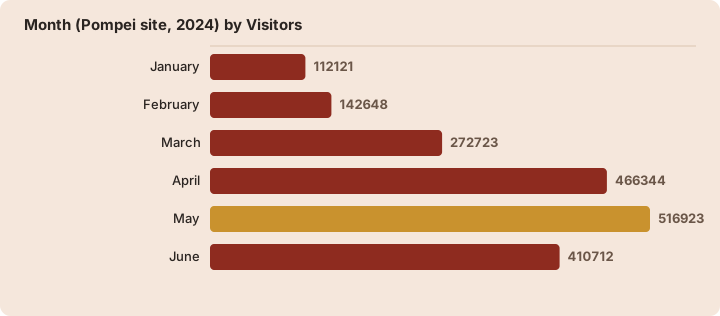
The month-by-month Pompei table from 2024 shows how the pressure distributes across the year: May and October were the heaviest months, at 516,923 and 481,255 visitors, while January counted 112,121. The first Sunday of the month is free for everyone, and the park has recorded more than 36,000 visitors on a single free Sunday, a figure that dwarfs even the cap-constrained ordinary days. Everything else covered here is indexed on Pompeii Travel Guide.
| Month (Pompei site, 2024) | Visitors | Month (Pompei site, 2024) | Visitors |
|---|---|---|---|
| January | 112,121 | July | 449,162 |
| February | 142,648 | August | 421,255 |
| March | 272,723 | September | 468,340 |
| April | 466,344 | October | 481,255 |
| May | 516,923 | November | 189,866 |
| June | 410,712 | December | 138,028 |
The practical reading is straightforward. Visit Pompeii on a weekday between November and March and you will share the 44 ha with a fraction of the summer crowd; visit on a free first Sunday in high summer and you will feel all 20,000 of the cap. Late-entry after 13:00 also lands you in the smaller afternoon band. Ostia, meanwhile, rarely needs such tactics, and its tree cover makes a hot afternoon walk gentler than Pompeii's exposed basalt streets, a factor covered in depth in the Pompeii summer heat plan.
Crowds matter most at the micro-sights, the small houses where a tour group fills the room. Two closures to know about at Pompeii: the Praedia of Julia Felix has been closed to the public since 7 September 2026 for maintenance, and at Herculaneum the Villa dei Papiri and the Ancient Theatre are closed for works. Anyone promised those sights on a booking should check the current listings before paying.
Which Is Better From Rome, And Which From Naples?
From Rome, Ostia Antica is the easy half-day option and Pompeii is the full-day commitment, at least 234 km by road each way, best done either as a long rail day via Naples or as an organised coach or private tour. From Naples or Sorrento, the comparison barely exists: Pompeii is 24 km from Naples with a Circumvesuviana station beside the Porta Marina entrance, while Ostia is on the far side of the country.
Rome-based travellers with one ruins day face the real version of this question. Ostia gives you more Rome time and no long transfers; Pompeii gives you the site the whole world has heard of, the casts, the amphitheatre and the Vesuvian setting, at the cost of a day dominated by travel. The genuine answer many visitors land on is that Pompeii from Rome works best as a tour, because the transfer, the ticket and the guide are handled together. The pick on this site is the Private Pompeii, Positano and Amalfi Coast Tour from Rome, a private full-day tour with a boat ride included, which converts the long transfer into a second destination rather than dead time.
There is a budget framing too. This site's blog comparison of what makes the best Pompeii tour walks through the formats, and a cheaper Rome option is a shared day trip that skips the private vehicle. You can weigh the private option directly on its listing: Check availability.
Naples-based travellers should not be comparing the two at all. Pompeii is a local trip, Herculaneum is a short Circumvesuviana ride further on, and the Pompeii vs Herculaneum guide is the comparison that actually matters from a Naples base. The Pompeii tours from Naples guide collects the day-trip formats, including the popular Pompeii Day Trip from Naples with Skip-the-Line Tickets & Guide, a half-day product built around the transfer and the queue.
Cruise passengers get their own version of the question. A ship calling at Naples makes Pompeii the natural shore excursion, and the dedicated Pompeii shore excursions guide covers timings against ship departure; the from-Naples cruiser excursion with guide and ticket included is the standard format.
How Long Should You Spend At Each Site?
Pompeii deserves a half day as a floor and a full day for the suburban villas and the quieter regions; the park's own hours allow a 9:00 entry with last entrance at 17:30 in the summer season, closing at 19:00, and last entrance at 15:30 closing 17:00 in winter. Ostia Antica is comfortably done in two to four hours, which is precisely why it pairs so well with a Rome afternoon.
The honest sizing for Pompeii is in this site's own how long to spend in Pompeii guide, and the headline is that the two-hour walk covers the Forum, a bath complex and a handful of houses, while the Villa of the Mysteries and the amphitheatre ends push the day long. Season matters: from 15 October to 15 March the park closes at 17:00, so winter days cannot stretch, and the time-band split from 16 March to 14 October shapes how the crowds arrive.
| Season at Pompeii | Opens | Last entrance | Closes |
|---|---|---|---|
| 16 March to 14 October | 9:00 | 17:30 | 19:00 |
| 15 October to 15 March | 9:00 | 15:30 | 17:00 |
Weather belongs in the timing decision. Pompei's climate, on 1991-2020 normals for the local grid point, runs mean daily maxima of about 29.4 C in August against about 12.2 C in January, with November the wettest month at about 180 mm of rain and July the driest at about 16 mm. The full picture, including which months balance heat and rainfall, is in the Pompeii weather and best time to visit guide.
| Month (Pompei normals, 1991-2020) | Mean daily max C | Mean daily min C | Rain mm |
|---|---|---|---|
| January | about 12.2 | about 6.6 | about 119 |
| April | about 17.7 | about 10.4 | about 87 |
| July | about 28.7 | about 21.1 | about 16 |
| October | about 21.3 | about 15.1 | about 129 |
| November | about 16.9 | about 11.5 | about 180 |
Visitors pairing both Roman cities with Herculaneum on a longer Campania stay can look at the two-day and three-site plans in the Pompeii and Herculaneum in one day guide.
Which Should You Choose If You Can Only Visit One?
Choose Pompeii if the drama of the site is the point: the city frozen by Vesuvius, the body casts, the amphitheatre and the villas, with the whole Bay of Naples around it; accept the crowds, the cap and the longer journey from Rome. Choose Ostia Antica if you are Rome-based, short on time, travelling with children who wilt in heat and queues, or want mosaics and pine shade over catastrophe. If you can spare a full day from Rome, Pompeii still wins on raw impact.
The tiebreakers are practical. Pompeii in 2026 costs EUR 20 for the ancient city, free for under-18s and on first Sundays, and from 1 January 2027 becomes a single EUR 25 ticket across all park sites; the money side is small next to the time cost. The decision really turns on where you sleep and what kind of ruins experience you want: spectacle and story at Pompeii, calm and domestic detail at Ostia. Plenty of visitors with ten or more days in Italy simply do both, Ostia as a relaxed Rome afternoon and Pompeii as the big day.
Further reading for the undecided: the honest case against rushing it in is Pompeii worth visiting and the format trade-offs in the guided tour vs self-guided guide.
| Question | Pompeii (verified) | Ostia Antica |
|---|---|---|
| Scale | Excavated area 44 ha, property 98 ha | Smaller, walkable in a morning |
| Free entry | Under 18 and first Sundays | State-site rules, check official site |
| Daily cap | 20,000, nominative tickets | No verified figure |
| Visitors 2025 | 4,000,090 | No verified figure |
| Main draws | Casts, Forum, amphitheatre, villas | Mosaics, theatre, apartment blocks |
| Best base | Naples or Sorrento | Rome |
| Half-day viable | Tight but possible | Yes, comfortably |
For the tour-supported versions of the Pompeii day, the selection below covers the private Rome format, the Naples half-day and the cruise excursion together.
Common Questions About Ostia Antica Vs Pompeii
Is Ostia Antica better than Pompeii?
Neither is simply better. Pompeii is larger, more dramatic and more famous, with an excavated area of 44 ha and the plaster casts; Ostia Antica is quieter, greener and much easier from Rome. Choose on your base city and your appetite for crowds.
Can you visit both Pompeii and Ostia Antica on one trip?
Yes, easily, but not on one day. Ostia suits a half day from Rome; Pompeii deserves a full day, travelled either as a long rail trip via Naples or as an organised tour from Rome.
Which site is less crowded?
Ostia Antica. Pompeii caps entry at 20,000 visitors a day and recorded just over four million in 2025; its heaviest month, May 2024, counted 516,923 visitors. Visit Pompeii on a winter weekday or after 13:00 to dodge the peak band.
How much are Pompeii tickets in 2026?
EUR 20 for Pompeii Express, EUR 25 for Pompeii+ and EUR 30 for the 3-day ticket, with EUR 2 reduced for EU citizens aged 18 to under 25 and free entry for under-18s and on the first Sunday of the month. From 1 January 2027 a single EUR 25 ticket replaces the range.
How long do you need at Ostia Antica compared with Pompeii?
Ostia Antica works as a two to four hour visit. Pompeii needs at least half a day for the core city and a full day if you add the suburban villas, with last entrance at 17:30 in the summer season and 15:30 in winter.
Is Pompeii worth the day trip from Rome?
For the site itself, yes: nothing else in Italy preserves a Roman city at the moment of its destruction, and the park recorded four million visitors in 2025 for a reason. Budget the whole day for the travel and consider a tour that bundles transport and ticket.
Whichever site you choose, book the Pompeii side around the 2027 ticket change and the seasonal hours, and treat the comparison as a question of time and base city rather than quality: both cities are extraordinary, and the traveller with room for both loses nothing by seeing them.