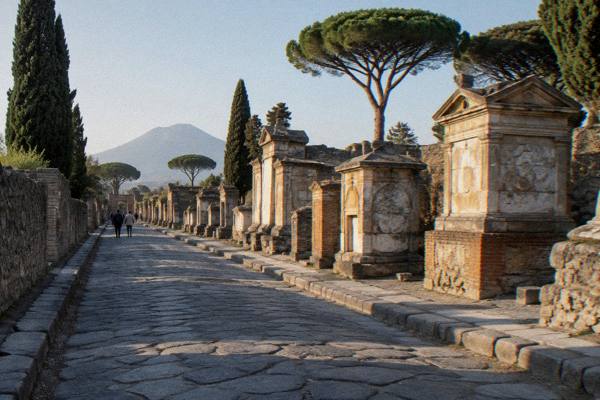
Pompeii Guide Book: Choosing The Right One For The Ancient City
A guide book still earns its place at Pompeii, the Roman city buried by Vesuvius in AD 79, but the right one depends on how you travel and how much of the park you plan to cover.
Short answer
The best Pompeii guide book depends on your trip: a compact site companion for a half-day walk, a fuller archaeological guide for the villa routes, and the park's own publications for rules, ticket changes and the eruption-date debate. In 2026 the Express ticket costs EUR 20, and from 1 January 2027 a single EUR 25 ticket covers all park sites.
Pompeii is the ancient Roman city buried by the eruption of Mount Vesuvius in AD 79, now the Parco Archeologico di Pompei in Campania, southern Italy, sitting beside the modern town of Pompei about 24 km by road from Naples. It is a vast site, an excavated area of 44 ha inside a UNESCO-inscribed property of 98 ha, and a guide book remains one of the few pieces of kit that genuinely changes the visit. Signs inside the park are thin, whole neighbourhoods look alike after an hour, and the stories that make the stones matter rarely announce themselves at the doorway. This page sets out what to look for in a guide book, what the park itself publishes, and how to pair the printed page with a route, a ticket and, for many travellers, a guided walk.
Which Pompeii Guide Book Fits The Way You Travel?
There is no single best Pompeii guide book, because the site rewards different books for different trips: a compact companion with a fold-out plan suits a two-hour walk from Porta Marina, a fuller archaeological guide suits a full day that includes the suburban villas, and a narrative history suits the train ride from Naples or Rome the evening before. Choose by route length first, depth second, weight last, since you will carry the book over broken Roman paving for hours.
The excavated city divides into regions, and a book that mirrors that structure is easier to use on the ground than one organised as a museum-style highlights tour. Entries that open with what a building was for, then what to look for inside, then one detail worth noticing, serve the site far better than long architectural essays.
Depth matters if you are staying longer than half a day. The Villa of the Mysteries, reached through the Porta Ercolano and Street of the Tombs entrance, deserves a book that gives the villa proper space rather than a paragraph. If your day combines the ancient city with the smaller park sites at Oplontis, the Stabiae villas or Boscoreale, a book that stops at the city walls will strand you exactly where the crowds thin out and the interpretation matters most.
| Trip shape | Book type that serves it | What to check before buying |
|---|---|---|
| Two-hour walk from Porta Marina | Compact companion with a fold-out plan | Covers the Forum, the Forum Baths and one dining street |
| Full day in the ancient city | Full archaeological guide with region-by-region entries | Includes the amphitheatre end and the Large Palaestra |
| Day including the suburban villas | Guide covering the Villa of the Mysteries route | Notes the Porta Ercolano and Street of the Tombs entrance |
| Multi-site day, Oplontis or Stabiae | Regional guide to the Vesuvian sites | Separate chapters, not a footnote to Pompeii |
| Reading before and after the trip | Narrative history of the city and the eruption | Discusses the eruption-date debate honestly |
For the historical background that any good book builds on, the site's own Pompeii history overview collects the same foundations: a Roman city, an eruption traditionally dated to 24 August, and a burial that preserved streets, frescoes and bread in ovens. A guide book then layers the street-level detail on top.
What Should A Pompeii Guide Book Tell You About The Eruption Of AD 79?
Any trustworthy Pompeii guide book should present the eruption date as an open question rather than a settled fact: 24 August AD 79 is the traditional date from Pliny the Younger's oldest manuscripts, while the park's own e-journal states that the alternative 24 October date has zero evidentiary basis and results from a 1929 misreading, adding that 24 August is not necessarily correct either. A book that prints one date as certainty, in either direction, has not kept up with the debate.
This matters more than it sounds. The date shapes every reconstruction of the disaster: an August eruption means a summer town at its fullest, an October one a quieter season and heavier clothing on the victims. The park's own publications are themselves split, which a good guide book will say plainly. Its scholarly e-journal dismantles the October date, while the park's children's guide still presents 24 October, and that internal disagreement is itself a lesson in how Pompeii's story keeps being rewritten.
The 2018 charcoal graffito, dated by many scholars to mid-October, reopened the argument rather than closing it, and the park's position on that find is not settled. A guide book worth shelf space treats this as a live scholarly debate and tells you why the manuscripts disagree. The same honesty test applies elsewhere: books that explain what is conjecture, such as the identities of the body casts, and what is documented, such as Pliny's own account of his uncle's death, age far better than ones that dramatise everything equally.
For the casts themselves, and where the human remains visible today actually came from, the site's Pompeii body casts explained page covers what a book can only summarise. Read the two together and you will spot immediately which authors did their homework.
Do The Park's Own Publications Beat A Commercial Guide Book?
For practical facts the park's own pages beat every commercial guide book, because they are the source the books copy: the ticket page sets the prices in force since 12 January 2026, the regulations page sets the bag limit of 30x30x15 cm and the ID checks, and the official visitor-data table records 4,069,377 visitors to Pompeii in 2024 and 4,000,090 in 2025. For atmosphere, story and route-craft, a good commercial book still wins, so the honest answer is to carry both.
The single most important thing a commercial book cannot do is stay current, and 2026 proves the point. The ticket structure in force now ends on 31 December 2026, and from 1 January 2027 a single EUR 25 ticket covers all park sites, valid 30 days with one entry per site, while Oplontis, the Stabiae museum and Boscoreale stay EUR 8 individually and the MyPompeii Card stays EUR 45. Any book printed before September 2026, when the park announced the change, is already wrong about next year's prices, and no reprint schedule can fix that.
| Ticket, 2026 prices | Price in 2026 | What it covers | From 1 January 2027 |
|---|---|---|---|
| Pompeii Express | EUR 20 | Ancient city only | Replaced by single ticket |
| Pompeii+ | EUR 25 | City, suburban villas, Boscoreale, shuttle | Single EUR 25 ticket, all sites |
| 3-day ticket | EUR 30 | Pompeii+ plus Oplontis, Stabiae villas, Boscoreale | Single EUR 25 ticket, 30 days |
| Other park sites, each | EUR 8 | Oplontis, Stabiae museum, Boscoreale | EUR 8, unchanged |
| MyPompeii Card | EUR 45 | Annual pass | EUR 45, unchanged |
The park's pages also carry the operational detail books skim past: nominative tickets and the 20,000 visitors per day cap in place since 15 November 2024, free entry for under-18s and for everyone on the first Sunday of the month, and the EUR 2 reduced rate for EU citizens aged 18 to under 25. The full ticket guide on this site tracks those rules in one place, which is the practical compromise between a printed book and the park's own pages.
A guide book you enjoy reading is still worth buying for the weeks before and after the visit. The park's publications are reference material: accurate, dry and essential. The best trip pairs the two, the book for the train and the evening, the official pages for everything with a price or a date attached.
If reading whets the appetite for company on the ground, one option stands out for travellers based on the Sorrento side of the bay: the Sorrento skip-the-line Pompeii express tour by train, which pairs the Circumvesuviana ride with a guided walk of the ruins. It has its own page on this site, and live dates and prices sit on the operator's listing, so Check availability if the timing of your trip is already fixed.
Which Guide Book Coverage Do You Need For Herculaneum And Vesuvius?
Most Pompeii guide books stop at the city walls, so if your trip includes Herculaneum or the Vesuvius crater you need coverage beyond the main site: Herculaneum is a separate park with its own EUR 16 ticket and its own closures, and the Vesuvius Gran Cono is a national park trail sold only as an online timed ticket at EUR 11.68 full or EUR 9.55 reduced as sold. Check that any book you buy treats these as destinations in their own right, not footnotes.
Herculaneum rewards a different kind of reading. It is smaller, darker in its preservation, and currently missing two of its headline names: the Villa dei Papiri and the Ancient Theatre are closed for works, a fact printed on the official ticketing page and absent from every book published before the closures. A book can still carry you through the boat sheds and the carbonised woodwork, but pair it with the live pages for what is open on your date.
Vesuvius is simpler and stricter than books usually admit. Tickets for the Gran Cono trail exist online only, released 30 days ahead in batches of 50 every 10 minutes, with 10 nominative last-minute tickets per slot from 30 minutes before, a rule in force since 11 April 2026. The trail closes automatically on an orange weather alert or above, with an automatic refund when it does. Access hours shift by month, which is exactly the kind of table a book gets wrong and a website gets right.
| Months | Gran Cono access hours | Excursion length |
|---|---|---|
| January, February, November, December | 9-15 | 2 h return to 3 h longest route |
| March and October | 9-16 | 2 h return to 3 h longest route |
| April, May, June, September | 9-17 | 2 h return to 3 h longest route |
| July and August | 9-18 | 2 h return to 3 h longest route |
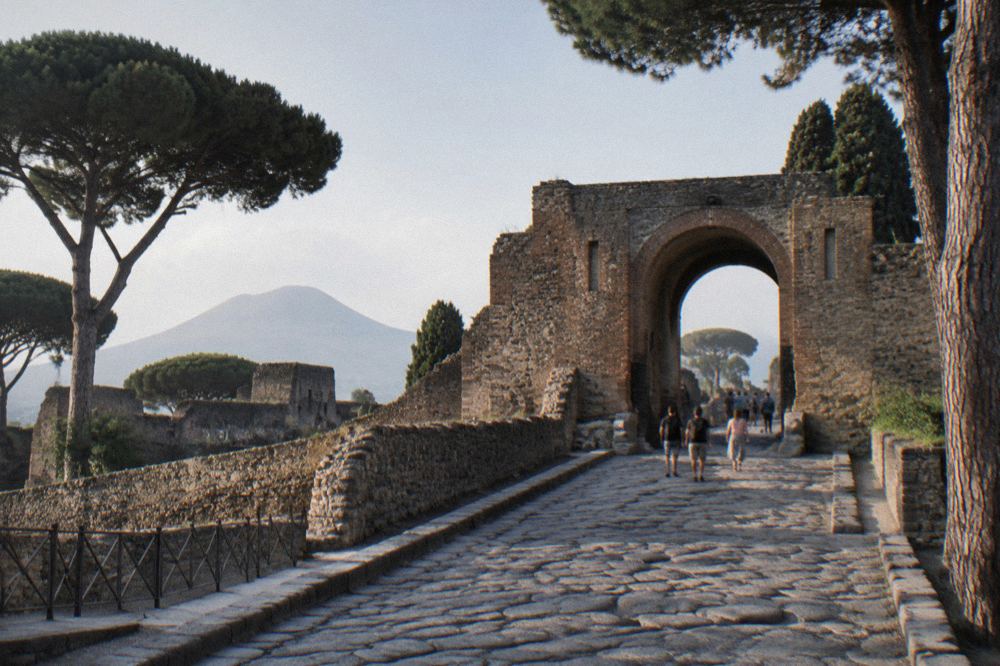
For deciding whether the second site earns a day of your trip at all, the site's Pompeii versus Herculaneum comparison works through the trade-offs, from preservation style to how long each deserves. If Herculaneum wins its place on your itinerary, a guided option with tickets included removes the coordination work of doing both parks in one day.
Reading about the volcano before standing on it also changes what you notice. Vesuvius is an active, monitored volcano rather than a dormant backdrop, and the question of future activity is treated seriously by the monitoring bodies rather than as cinema. A book that covers the mountain as a working volcano, not just a backdrop, earns its space in the bag.
Does A Guide Book Replace A Guided Tour Of Pompeii?
A guide book and a guided tour do different jobs and the strongest visits often use both: the book gives you the background and the freedom to linger, while an archaeologist-led small group gives you answers to the questions the book raises, entry logistics handled, and the details a printed page cannot point at in real time. Cost, rating and duration aside, the decision rests on how independently you like to move and how much of the site you want explained rather than discovered.
The honest case for the book is autonomy. Pompeii rewards wandering: an hour in the quiet eastern regions with a good companion can beat a brisk highlights march, and there is no schedule to keep. The honest case for the guide is that the site is genuinely hard to read alone, and the best-preserved houses open and close on the park's own rhythm, not a book's. A guide also carries the answers to the questions every reader ends up asking, from how the casts were made to why the eruption date is debated. The rest of the planning pages sit on Pompeii Travel Guide.
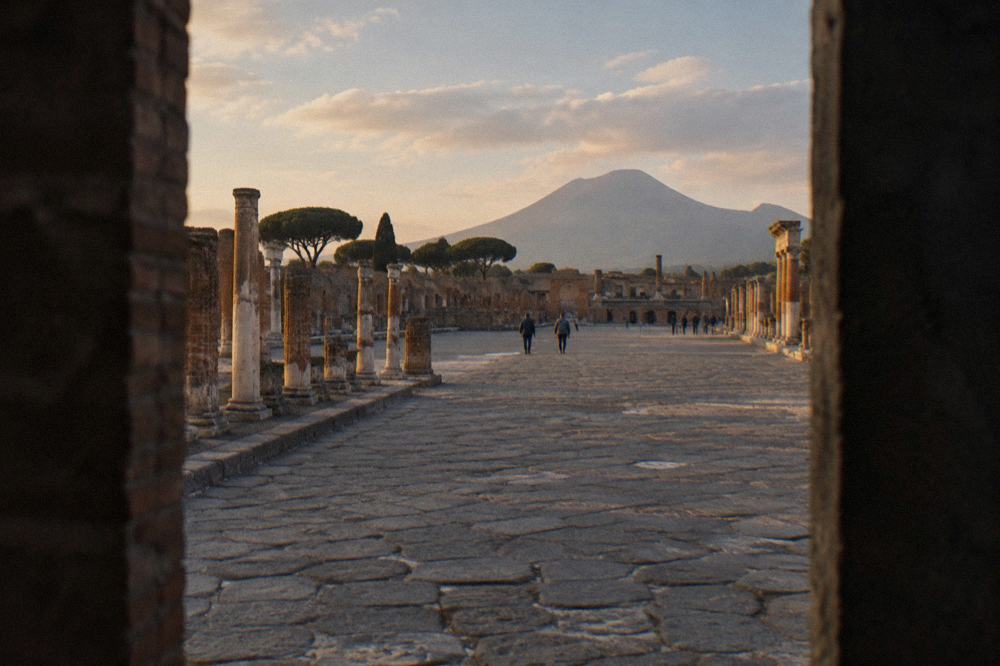
There is a middle path, and it is the one many travellers land on: read the book on the way, then take a short guided walk for the core of the city and return to the book for the corners. The site's guided tour versus self-guided breakdown compares the formats in detail, including who benefits from skipping the guide entirely.
Whatever you choose, do the reading before you arrive rather than during. Two hours of background on the train transforms two hours on the ground, because you stop asking what things are and start asking why they are there. That shift is the entire value of a good book, and no audio track replaces it.
How Do You Match A Guide Book To Your Route Around The Ruins?
Match the book to the entrance and the route, not the other way round: ticket offices sit at Porta Marina, Piazza Esedra and Piazza Anfiteatro, the suburban villas route uses the Porta Ercolano and Street of the Tombs entrance, and the Pompeii for All accessible route enters and exits at Piazza Anfiteatro with an Antiquarium lift option at Piazza Esedra. A book organised around one entrance will fight you if you start at another.
Entrance choice quietly shapes the whole day. Porta Marina drops you at the Forum end, the classic first impression; Piazza Anfiteatro starts you at the amphitheatre and works back through the quieter east; Piazza Esedra sits between them beside the Antiquarium. If your plan pairs the ancient city with the Villa of the Mysteries, the Porta Ercolano entrance is the one that serves it, and Express ticket holders can add the suburban villas route there for EUR 8, card only.
| Entrance | What it serves | Practical note |
|---|---|---|
| Porta Marina | Forum, Forum Baths, western city | Ticket office, closest to Pompei Scavi-Villa dei Misteri station |
| Piazza Esedra | Antiquarium, central city | Ticket office, Antiquarium lift on the accessible route |
| Piazza Anfiteatro | Amphitheatre, Large Palaestra, eastern city | Ticket office, entry point of the Pompeii for All route |
| Porta Ercolano / Street of the Tombs | Suburban villas route, Villa of the Mysteries | Express holders add the route here for EUR 8 |
For orientation before you go, the site's interactive map of the park and the printable Pompeii map guide cover the layout the book in your hands may render at postage-stamp scale. Fold the map into the book on day one and you will save yourself a dozen wrong turns.
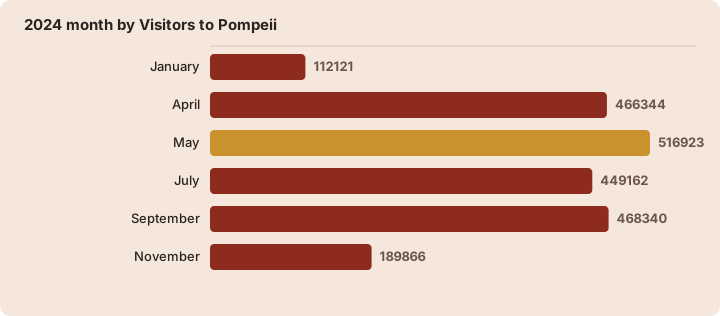
Timing matters as much as routing. The park's own monthly figures for 2024 show May at 516,923 visitors and September at 468,340 against November at 189,866 and December at 138,028, so shoulder-season readers get the luxury of lingering over a chapter while peak-season readers need a book that works at speed.
| 2024 month | Visitors to Pompeii |
|---|---|
| January | 112,121 |
| April | 466,344 |
| May | 516,923 |
| July | 449,162 |
| September | 468,340 |
| November | 189,866 |
Weather belongs in the same calculation. The 1991-2020 normals for the Pompei grid point, computed from the Open-Meteo historical archive, show a mean daily maximum of about 29.4 C in August against about 6.5 C as the mean February minimum, with about 180 mm of rain in November, the wettest month, against about 16 mm in July, the driest. A book that ignores heat will not survive an August afternoon; the site's Pompeii weather and best time to visit guide plans around the same numbers.
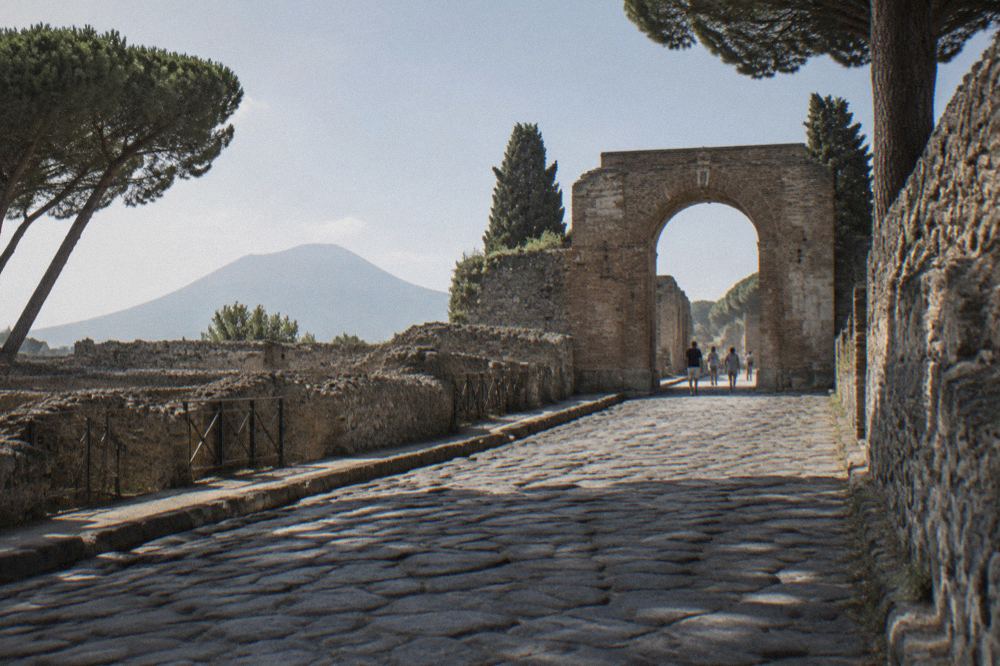
What About Digital Guides, Audio Guides And Free Reading?
A printed book, an audio guide and the park's free pages solve different problems: the audio guide walks you step by step while you look at the walls, the printed book gives depth before and after, and the park's own pages, plus the free first-Sunday entry scheme, cost nothing and stay current. Many travellers now take the audio guide for the walk and the book for the week around it, which is cheaper than buying a heavyweight guide they will discard.
The audio-guide format suits Pompeii unusually well because the site is linear once you commit to a route, and your eyes should be on the frescoes rather than a page. Pairing an entry ticket with an audio guide is sold as a single product, and the token below carries the live price and rating from the operator's listing.
Free reading is better than its reputation. The park's e-journal, its regulations page and its visitor-data table are all public, and this site's answer to which book about Pompeii is best summarises the standby titles against them. If your budget is tight, first Sundays are free for everyone year-round, which releases ticket money for a book that will outlast the trip. One caution belongs here: the free first-Sunday scheme has drawn more than 36,000 visitors on a single day, so a book that helps you escape the crowd is worth more that day than any audio track.
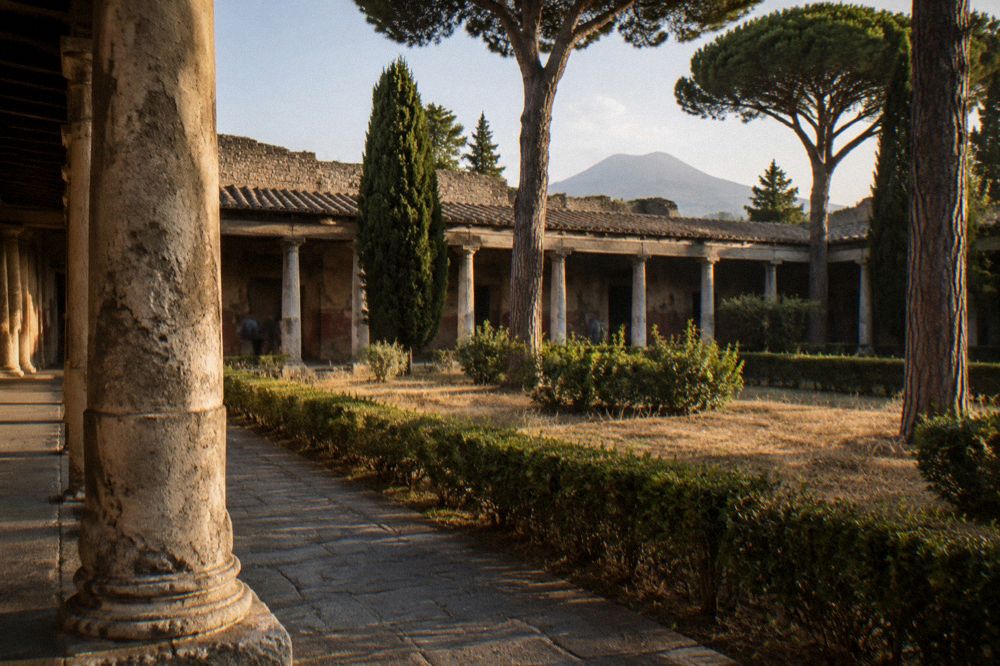
For families, the children's angle is genuinely useful even for adults: shorter entries, more pictures, and stories that stick. Just read the eruption-date section above before trusting any children's title on when the disaster happened, since even the park's own children's guide and its e-journal currently disagree.
Where Do You Buy, And What Should You Skip?
Buy the current edition, check the publication date against the 2027 ticket change, and skip any book that promises prices, opening hours or house openings as fixed facts, because at Pompeii those change on the park's schedule, not a publisher's: the Praedia of Julia Felix has been closed since 7 September 2026, winter hours cut last entry to 15:30 from 15 October, and the ticket structure itself is replaced on 1 January 2027. A book is for the city, the official pages are for the calendar.
The practical checklist is short. A plan that survives being folded. Region-by-region entries rather than a highlights parade. Honest treatment of the eruption-date debate. Coverage that matches your route, including the villas or the second sites if they are on your itinerary. And a publication date recent enough that the practical sections are not actively misleading, or a preface honest enough to say where to check.
Skip, meanwhile, is equally short. Skip books that settle the eruption date as certain fact in either direction. Skip any that promise a fixed daily timetable of house openings. Skip guides that blur Pompeii with the modern town of Pompei, a different place with its own sanctuary, or that treat Herculaneum as a Pompeii suburb. The spelling alone, Pompeii for the ancient city and Pompei for the modern town, is a fast credibility test: get it wrong and the practical details deserve doubt too.
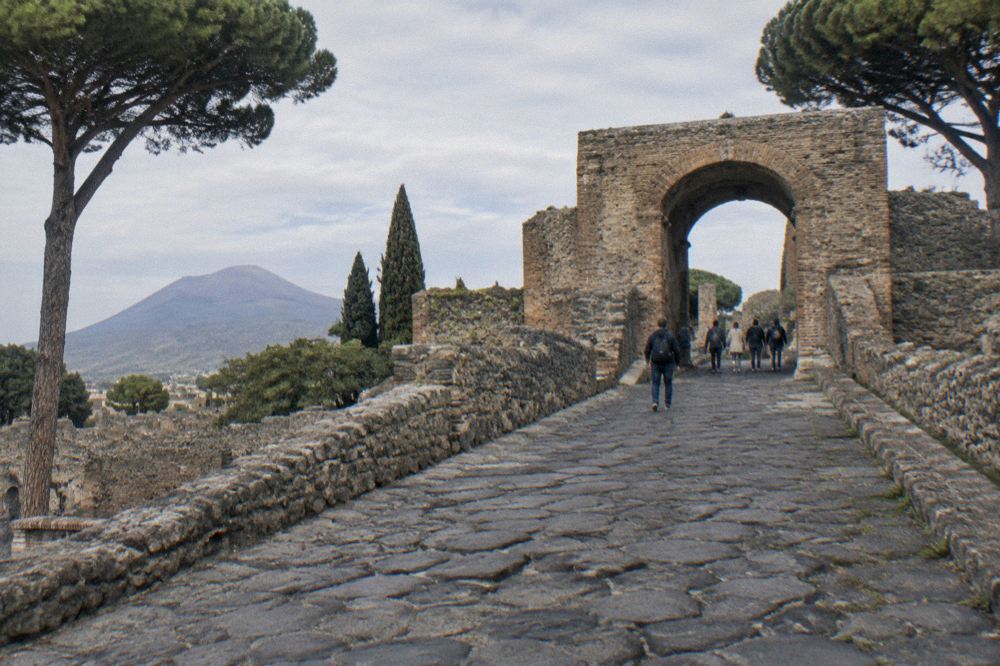
Getting there shapes the reading list too. Travellers from Rome can plan the journey with the Rome to Pompeii day trip guide or the Rome to Pompeii by train guide, while the Naples to Pompeii, Sorrento to Pompeii and Amalfi Coast to Pompeii pages cover the bay. The Circumvesuviana line serves the Pompei Scavi-Villa dei Misteri station, and the Circumvesuviana train guide has the detail; note that the Campania Express, covered separately, has been suspended since 1 October 2026.
The train ride is reading time. Scheduled Circumvesuviana times computed from the operator's own timetable data put Naples Garibaldi to Pompei Scavi at 29 to 35 minutes and the station at Sorrento to Pompei Scavi at 34 to 40 minutes, enough for a chapter apiece. Arrive with the book half-read and the map folded, and the city will meet you halfway.
Common Questions About Pompeii Guide Books
Do I need a guide book if I take a guided tour of Pompeii?
A guide book still adds value before and after a guided tour, because the tour covers the core route while the book carries you through the quieter regions and the weeks of reading around the trip. Many travellers read beforehand, take a short guided walk, then return to the book for the corners.
Are Pompeii guide book prices and opening hours reliable?
Not for long. The 2026 ticket prices end on 31 December 2026 and a single EUR 25 ticket starts on 1 January 2027, and individual houses open and close on the park's own schedule, with the Praedia of Julia Felix closed since 7 September 2026. Use the book for the city and the park's own pages for prices and hours.
Which eruption date should a good Pompeii book give?
The honest answer is the debate itself: 24 August AD 79 is the traditional date from Pliny the Younger's oldest manuscripts, while the park's own e-journal says the 24 October date has zero evidentiary basis and comes from a 1929 misreading, without declaring 24 August certain either. A book that settles the question has oversimplified it.
Is one book enough for Pompeii and Herculaneum together?
Only if it treats Herculaneum as a full chapter rather than a footnote, since Herculaneum is a separate park with its own EUR 16 ticket, its own hours and its own closures, currently including the Villa dei Papiri and the Ancient Theatre. Otherwise pair a Pompeii companion with the official Herculaneum pages.
Can I visit Pompeii with just a free guide instead of buying a book?
Yes, if you read selectively: the park's own e-journal, regulations and ticket pages are public and current, and this site's route pages cover the walking options. Free entry applies on the first Sunday of each month, though a single free day has drawn more than 36,000 visitors, so a good route plan matters most on those dates.
What makes a Pompeii guide book out of date fastest?
Tickets, hours and house openings. The nominative ticket rule and the 20,000 visitors per day cap date from 15 November 2024, the current ticket structure is replaced on 1 January 2027, and winter hours cut last entry to 15:30 from 15 October. Check the publication date before buying, and the park's own pages before travelling.
A guide book is the one piece of Pompeii kit that improves with a little forethought: buy for your route, verify against the park's own pages, and read the eruption chapter with the date debate intact. The city has been misunderstood confidently for centuries, and the best books are the ones honest enough to say so, then hand you the stones anyway.