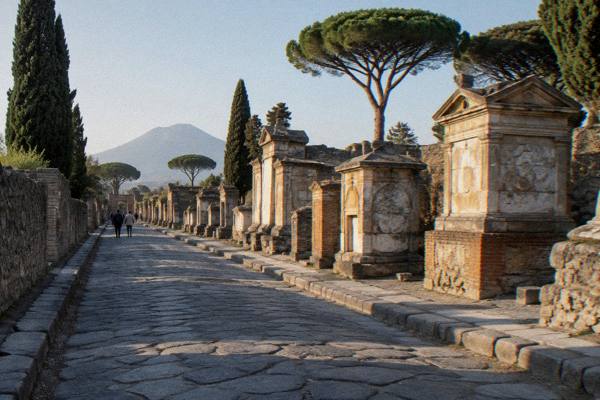
Pompeii Audio Guide
The archaeological park of Pompeii, in Campania, southern Italy, lets you walk the streets of a Roman city buried by Vesuvius in AD 79 at your own pace, and an audio guide is the cheapest way to put a voice on what you are looking at. This guide compares the options, from the park's own bundled ticket to full-day combinations, and sets out what the site itself provides.
Short answer
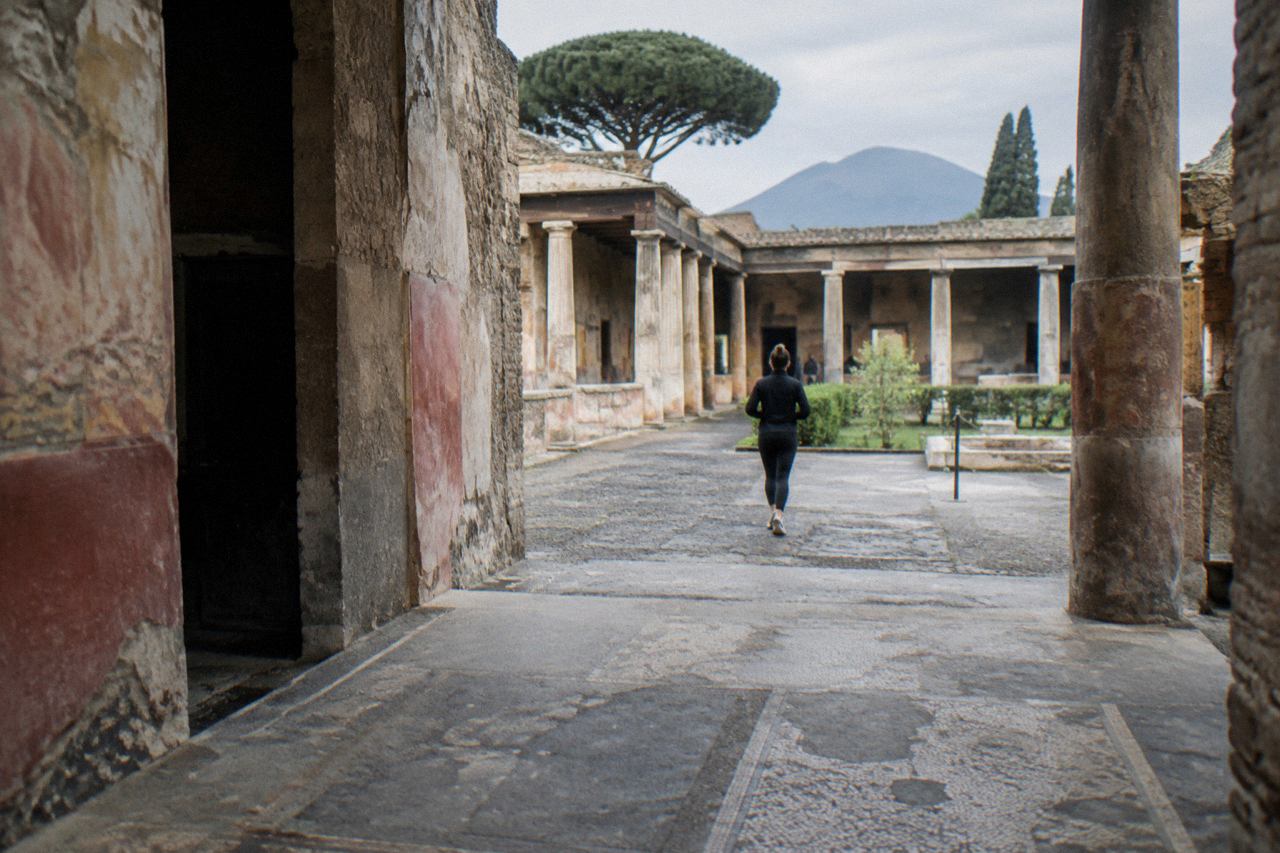
The practical route is a bundled entry ticket with audio guide from about EUR 20 in park entry terms for 2026, Pompeii Express, plus the audio option sold on the operator's listing. The park is open 9:00 to 19:00 in the summer season with last entry at 17:30, and 9:00 to 17:00 with last entry at 15:30 in winter. Bring headphones, a charged phone and downloaded content.
The archaeological park of Pompeii, the ancient Roman city buried by the eruption of Mount Vesuvius in AD 79, stands beside the modern town of Pompei in Campania, southern Italy, about 24 km by road south-east of Naples. Walking it with no commentary at all is possible, and plenty of people do, but the site is a whole city rather than a single monument, and a voice in your ear telling you which house held which fresco, and why a bakery counter looks the way it does, changes the character of the visit entirely. An audio guide is the middle path between silence and a live guide: you keep your own pace, stop where a view catches you, and still get the story.
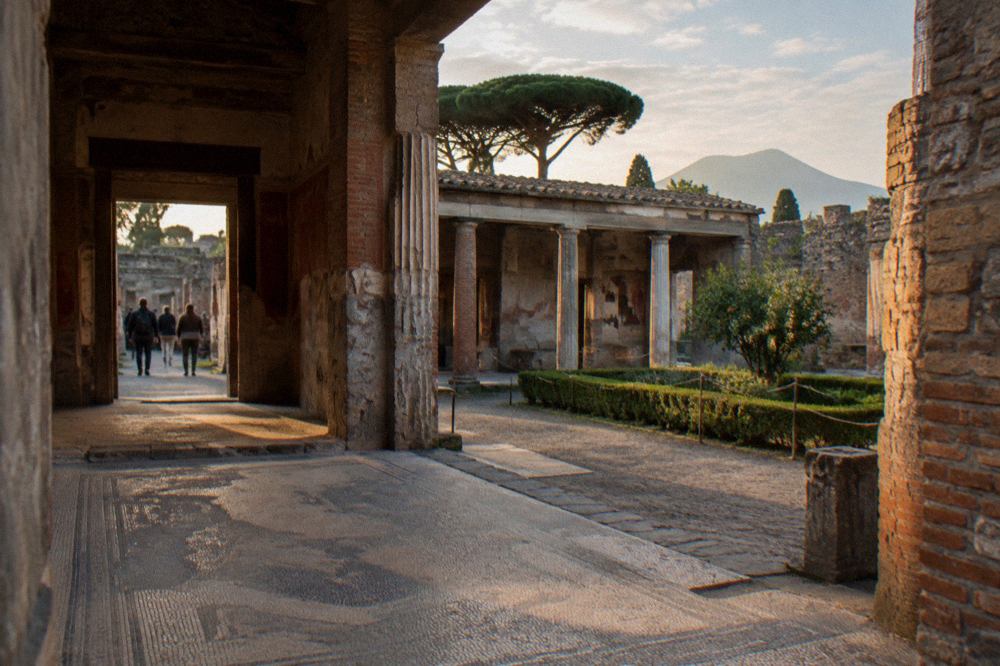
This page sets out the choices in plain terms: what an audio-guided visit of Pompeii actually includes, how the bundled ticket-and-audio products compare, what to sort out on your phone before you arrive, and how to pace the day around the park's opening hours and entry caps. Prices for bookable products render on their own cards throughout, and the park's own 2026 entry fees are listed separately where they apply.
What Is A Pompeii Audio Guide And How Does It Work?
An audio guide at Pompeii is recorded commentary you play on your own phone while walking the excavated city, organised stop by stop so you can follow the streets in any order. It involves no live person and no meeting point, and it never replaces the park's entry ticket: you buy entry, then add the voice. In 2026 the park's Express entry alone is EUR 20, so the audio product is an add-on, or a bundle folding both together.
The bundled products sold on operator listings work the same way: one purchase covers the nominative park ticket plus a code or link for commentary, delivered to your phone. Because the park's tickets are nominative and capped at 20,000 visitors per day since 15 November 2024, booking the bundle in advance also secures your entry slot rather than leaving it to the day. The alternative, arriving and buying a bare ticket at Porta Marina, Piazza Esedra or Piazza Anfiteatro, leaves you with no commentary unless you sort something at the last minute.
What the format gives you is control. A live guided walk moves at the guide's pace and stops where the guide stops; a recording waits while you photograph the Forum, doubles back to a house you liked, or skips a section altogether. The trade-off is that nobody answers questions, and if you misread the numbering of stops you can end up listening to the wrong house. The full comparison of guide styles, including small-group archaeologist walks, sits in the site's guided tour versus self-guided guide.
Which Pompeii Audio Guide Option Should You Choose?
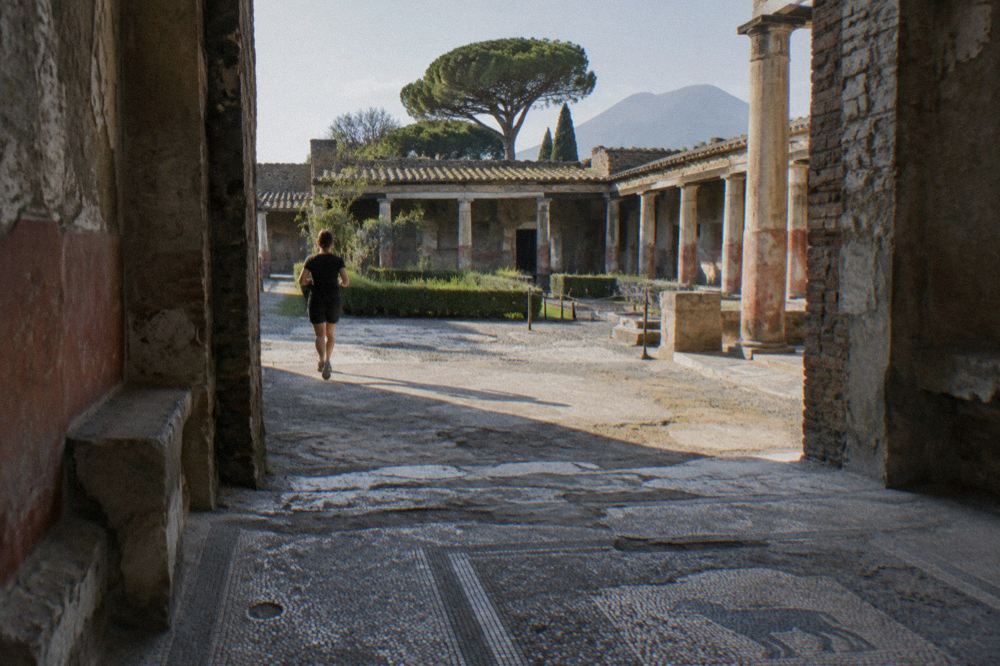
For a first visit with a fixed budget, the bundled entry ticket with audio guide is the cleanest choice: one purchase, entry secured, commentary included. If you also plan Herculaneum on the same trip, a matching bundle exists there. If you want the commentary plus Vesuvius on one day, a full-day combined tour from Naples bundles the driving, the crater stop and lunch, though it swaps the self-paced walk for a group format. The three cards below carry the live prices and review figures for each.
The deciding factors are pace and range. The audio bundle suits a traveller who wants to linger: you set the duration, from a dash past the Forum and the baths to a full morning across the whole excavated area. The Herculaneum equivalent suits the second-day visitor, since the two sites are separate parks with separate tickets, and the Pompeii versus Herculaneum guide weighs the two honestly. The full-day Vesuvius combination suits a one-shot day out of Naples, where transport time is the scarce resource.
What Does The Entry Ticket With Audio Guide Include?
The bundle includes a nominative entry ticket to the ancient city of Pompeii plus audio commentary played on your own device, with nothing to collect at a desk beyond your scan at the gate. It does not include a guide in person, transport to the park, food, or access to the separate suburban villas route unless the listing for your date says otherwise. Entry alone, on the park's 2026 tariff, is EUR 20 Express or EUR 25 Pompeii+; the bundle's own price shows on its card.
Because the ticket is nominative, carry the ID you booked with: the park's visitor regulations allow a check at every entry, and tickets are non-transferable and non-refundable except on extraordinary closure. The 2026 tariff, and the 2027 change, are worth knowing before you buy anything:
| Ticket (2026, ends 31 Dec) | Price | What it covers |
|---|---|---|
| Pompeii Express | EUR 20 | The ancient city only |
| Pompeii+ | EUR 25 | City, suburban villas route, Villa Regina and Antiquarium, shuttle |
| 3-day ticket | EUR 30 | Pompeii+ plus Oplontis, Stabiae villas and museum, Boscoreale |
| Other park sites individually | EUR 8 | Oplontis, Stabiae museum or Boscoreale, each |
| My Pompeii Card (annual) | EUR 45 (EUR 10 reduced) | Annual pass |
| Under 18 | Free | No fee at all |
| EU citizens 18 to under 25 | EUR 2 | Reduced rate on presentation |
From 1 January 2027 the Express, Plus and 3-day structure is replaced by a single EUR 25 ticket for all park sites, valid 30 days with one entry per site, while Oplontis, the Stabiae museum and Boscoreale stay EUR 8 individually and the My Pompeii Card stays EUR 45. If your trip falls either side of New Year, the calendar decides which tariff you pay. The full detail, including free first Sundays, sits in the site's Pompeii ticket guide.
The related product for this page is the entry ticket with audio guide itself: you can read its own detail and see live availability at its card above, or go straight to Check availability for your date. Book the date you actually want, not an open voucher, because the daily cap means popular days genuinely fill.
What Should You Sort Out On Your Phone Before You Arrive?
Three things: a full battery or a power bank, headphones, and whatever the audio product needs downloaded or activated before you lose signal, all done on hotel wifi rather than at the gate. Pompeii's excavated streets have little shade and fewer places to sit and troubleshoot an app, and the park's bag rule of 30x30x15 cm means a large bag goes to left luggage anyway, so travel light. Downloading commentary in advance also avoids the site's congested mobile data on busy days.
The practical checklist is short. Charge overnight. Load the audio content and open it once to confirm it plays. Bring wired or wireless headphones, both work, and a single earbud is a sensible compromise if you also want to hear announcements around you. Note your entry gate: Porta Marina, Piazza Esedra and Piazza Anfiteatro hold the ticket offices, and the suburban villas route uses the Porta Ercolano / Street of the Tombs entrance. If you are coming by rail, the Circumvesuviana train guide covers the Pompei Scavi-Villa dei Misteri station, which sits by the Porta Marina side of the park.
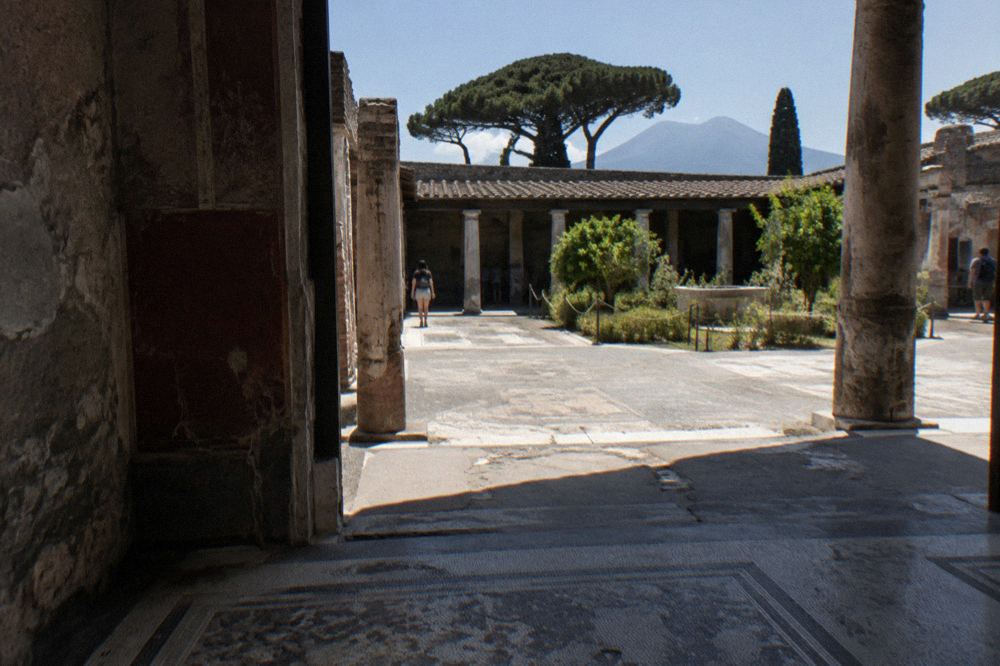
Timing matters as much as equipment. The park runs two entry bands in the summer season, 9:00 to 13:00 with a maximum of 15,000 entries and 13:00 to 17:30 with a maximum of 5,000, so the afternoon is structurally quieter. An audio visitor benefits twice from a late start: shorter queues and cooler streets. The rest of the planning pages sit on Pompeii Travel Guide.
| Season | Opens | Last entry | Closes |
|---|---|---|---|
| 16 Mar to 14 Oct | 9:00 | 17:30 | 19:00 |
| 15 Oct to 15 Mar | 9:00 | 15:30 | 17:00 |
Pompeii itself has no weekly closing day, though Oplontis, the Stabiae villas and museum close on Tuesdays, and the whole park closes 25 December and 1 January unless otherwise communicated. Entry is free for everyone on the first Sunday of the month, a monthly event the park has recorded peaks above 36,000 visitors on, which is a day for early arrival rather than a calm audio stroll. More detail is in the site's opening hours guide.
How Should You Route An Audio Tour Of Pompeii?
A workable self-guided audio route runs from Porta Marina or Piazza Esedra to the Forum first, then along the main street to the baths and the better-known houses, finishing at the amphitheatre end where the accessible Pompeii for All route begins, roughly two to four hours depending on how often you stop. The stop numbering on your commentary is your spine: match it to where you are standing before pressing play, because the streets repeat their layout.
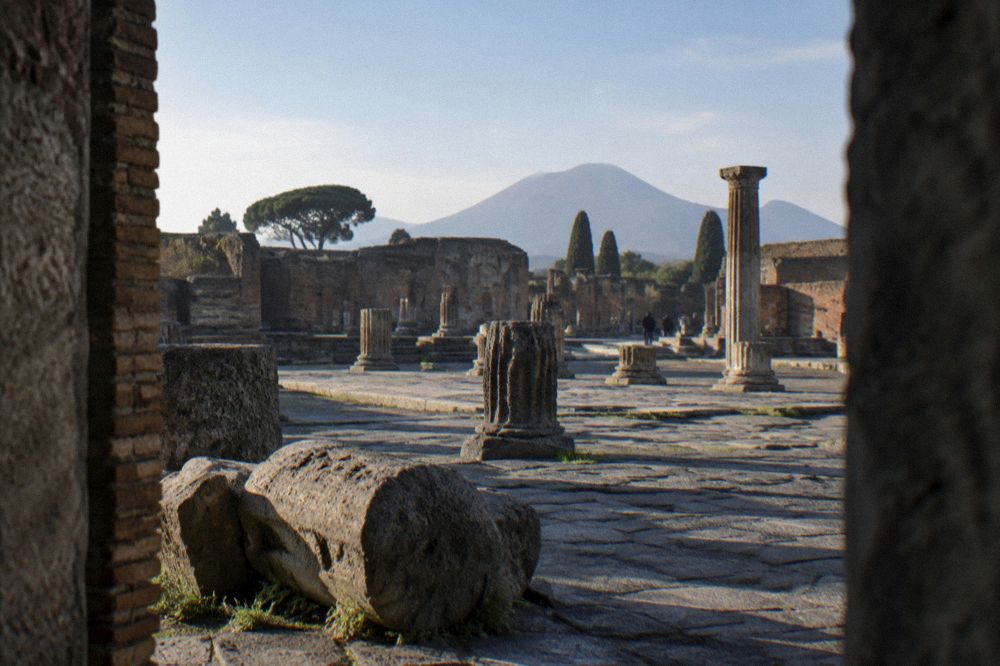
Start at the Forum, the city's civic centre, where temple columns and the basilica's shell give the commentary its opening frame. From there the main east-west street carries you past shops, thermopolia and the larger houses; the Forum of Pompeii guide and the Via dell'Abbondanza guide describe what to look for street by street. The painted walls and mosaics that survive in place are covered in the site's frescoes and mosaics guide, and the plaster body casts, which many visitors rank as the site's most affecting stop, have their own page.
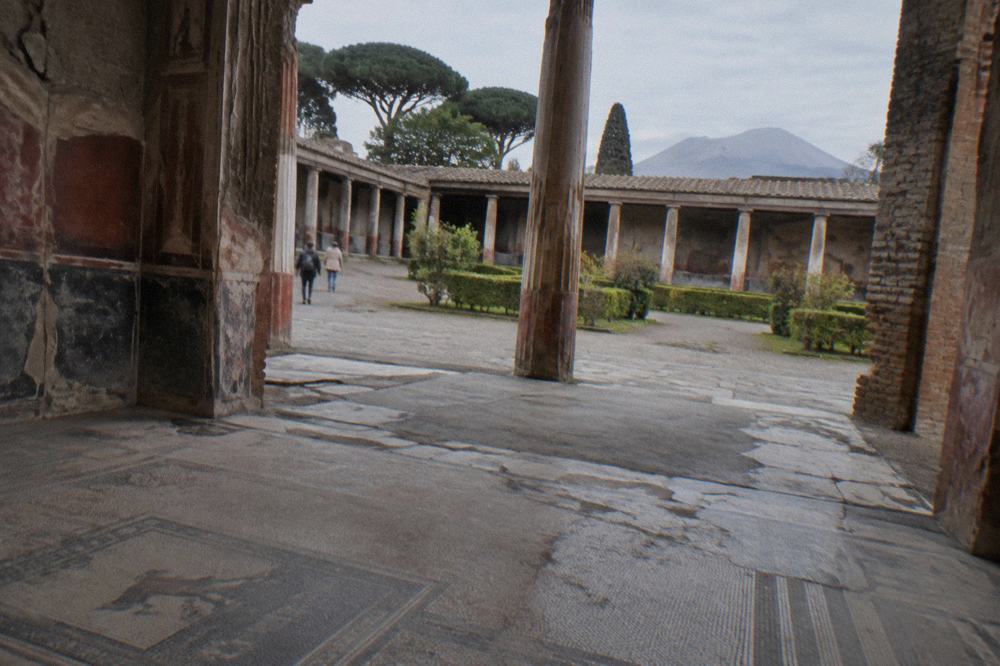
One honest caveat about pacing: the excavated area covers 44 hectares, and no audio itinerary covers all of it. Choose depth over coverage. A route built around the Forum, two or three houses, a bath complex and the amphitheatre end leaves you with a story rather than a blur.
For orientation before you go, the site's map and layout guide marks the entrances, the main streets and the named houses, and the entrances guide explains which gate suits which direction of travel. Paper maps are available at the ticket offices, and they pair well with a recording: eyes on the map, ears on the voice.
Audio Guide Or Live Guide: Which Suits Your Visit?
Pick the audio guide if certainty matters most, because it never cancels, never runs late and never fills up beyond the park's own cap; pick the live guide if you would rather hear the same stones become a conversation. Neither choice is wrong, so the one that suits your visit is simply the one that matches how you like to move through a place.
| Format | Who leads | Pace set by | Ticket included |
|---|---|---|---|
| Entry ticket with audio guide | Recorded commentary | You | Yes, bundled |
| Small-group archaeologist walk | An archaeologist | The guide | On the listing |
| Private tour with official guide | An official guide | You and the guide | On the listing |
| Bare park ticket, no guide | Nobody | You | It is the ticket |
Families and school-age children often do better with a live guide, whose delivery adjusts to the audience; the site's Pompeii with kids itinerary builds on that premise. Photographers and slow walkers lean the other way, and the is Pompeii worth visiting guide addresses the underlying question honestly for anyone unsure the site merits a full day at all.
Can You Use An Audio Guide At Herculaneum, Vesuvius And The Other Sites?
Herculaneum, the second great Vesuvian site at modern Ercolano, sells its own entry ticket with an optional audio guide, and its 2026 entry fee is EUR 16 full, EUR 2 reduced for 18 to under 25, free on first Sundays. Vesuvius's Gran Cono trail has no audio guide: it is a hike on a timed online-only ticket, EUR 11.68 full as sold, with a digital guide rather than commentary. The smaller sites are compact enough for printed material.
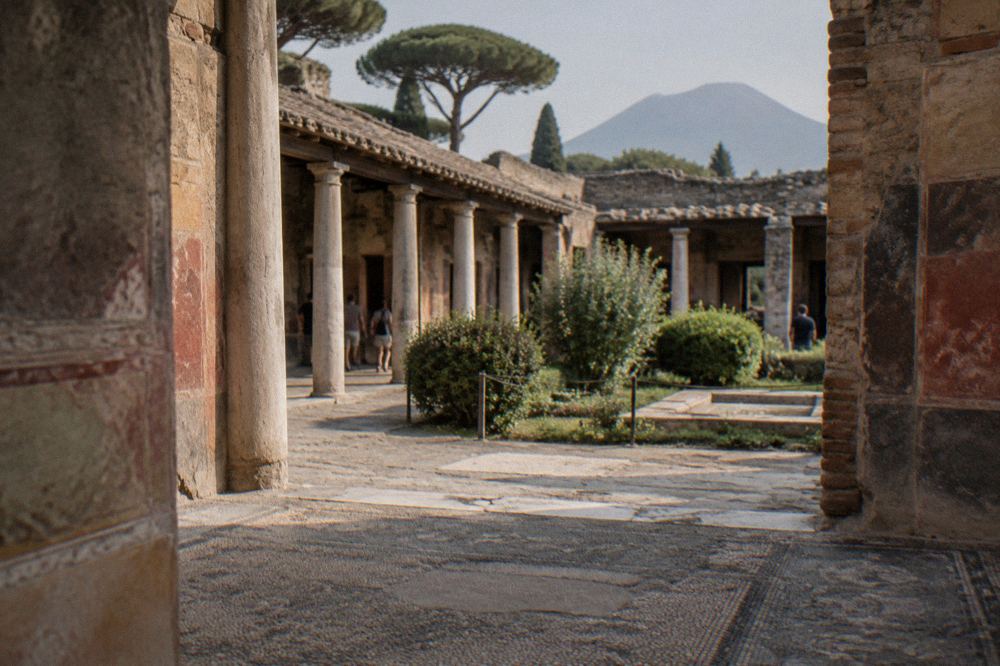
The pairing works well as a two-day plan: an audio day at Pompeii, an audio day at Herculaneum, and the crater on whichever morning has the clearest sky, since the Vesuvius ticket office and path close automatically on an orange weather alert or above. Herculaneum's two headline structures, the Villa dei Papiri and the Ancient Theatre, are closed for works, so build its route around the boat sheds and the drowned streets instead. The Herculaneum guide and the Vesuvius tickets guide carry the detail.
| Vesuvian site | 2026 entry | Audio option | Closed notes |
|---|---|---|---|
| Herculaneum | EUR 16 (EUR 2 reduced) | Optional audio guide on ticket | Villa dei Papiri and Ancient Theatre closed |
| Vesuvius Gran Cono | EUR 11.68 as sold | Digital guide, no commentary | Closes automatically on orange weather alert |
| Oplontis | EUR 8 | Ticket and digital guide product | Closed Tuesdays |
| Stabiae villas and museum | EUR 8 | On site | Closed Tuesdays |
| Boscoreale, Villa Regina | EUR 8 | Antiquarium on site | Check seasonal opening |
Visitors with reduced mobility should note the Pompeii for All route, entered at Piazza Anfiteatro with exit options at Piazza Anfiteatro or Piazza Esedra via the Antiquarium lift; the site's accessibility guide covers it fully. An audio guide is, for that route, the natural companion, since it removes both the pace and the group-size constraints of a guided walk.
When Is The Best Time Of Year For An Audio Tour Of Pompeii?
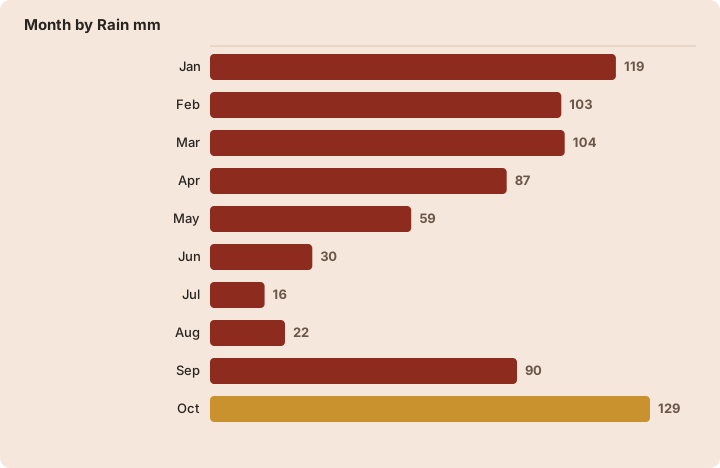
The shoulder months, April to June and September to October, give the best balance of open hours and walkable temperatures, with the park on its summer schedule and daily maxima around 17 to 25 degrees. Rain matters less than you would think, but November is the wettest month at about 180 mm.
The climate at Pompei, from 1991-2020 normals computed on the Open-Meteo archive for the local grid point, is Mediterranean, with the wettest months in late autumn:
| Month | About daily max C | About daily min C | Rain mm |
|---|---|---|---|
| Jan | 12.2 | 6.6 | 119 |
| Feb | 12.6 | 6.5 | 103 |
| Mar | 14.9 | 8.1 | 104 |
| Apr | 17.7 | 10.4 | 87 |
| May | 21.6 | 14.1 | 59 |
| Jun | 25.8 | 18.2 | 30 |
| Jul | 28.7 | 21.1 | 16 |
| Aug | 29.4 | 21.8 | 22 |
| Sep | 25.3 | 18.6 | 90 |
| Oct | 21.3 | 15.1 | 129 |
| Nov | 16.9 | 11.5 | 180 |
| Dec | 13.2 | 8.0 | 147 |
Crowd pressure follows the calendar rather than the thermometer. The park's own monthly figures for 2024 show May as the heaviest month at 516,923 visitors, with October close behind at 481,255 and September at 468,340; November collapsed to 189,866. An audio visitor can use that: the same stones, the same commentary, and a fraction of the footfall, simply by shifting a week either side of the peaks. The site's weather and best-time guide develops the point.
| 2024 month | Pompeii visitors |
|---|---|
| Jan | 112,121 |
| Mar | 272,723 |
| May | 516,923 |
| Jul | 449,162 |
| Sep | 468,340 |
| Oct | 481,255 |
| Nov | 189,866 |
How Do You Build A Full Day Around An Audio Tour Of Pompeii?
A full audio day pairs the ancient city in the morning with Vesuvius in the afternoon, returning through Naples or Sorrento by early evening. The practical version without a car is a combined coach day tour from Naples that handles the driving and the crater timing while keeping the Pompeii section guided rather than audio. With train and legs, the same shape is Pompeii at 9:00, lunch near modern Pompei, and the crater inside its 9 to 17 access hours in spring and early autumn.
The two building blocks are covered elsewhere on this site: the Naples to Pompeii guide and the Sorrento to Pompeii guide handle arrival logistics from each base, including the suspended Campania Express, and the Pompeii and Vesuvius in one day itinerary sequences the pair hour by hour. Cruisers should instead read the cruise ship day guide, where port timing dictates everything. If you would rather the whole day arrive pre-assembled, this full-day Naples combination is the format to compare against the audio plan:
For eating, the modern town of Pompei and the area around the Scavi station hold the practical options, and the site's where to eat in Pompeii guide lists what is genuinely near the gates rather than a pleasant drive away. If you are staying over, the where to stay guide compares the modern town against Naples and Sorrento as bases.
What Do Visitors Ask About Pompeii Audio Guides?
The questions below come up again and again from travellers planning a self-guided visit: whether the ticket and the commentary arrive together, whether headphones matter, how an audio day compares with a live archaeologist walk, and how long the whole thing takes. The cards that follow collect the three products this page recommends, so the answers and the booking choices sit on the same screen rather than a scroll apart.
Common Questions About Pompeii Audio Guides
Does the Pompeii audio guide include the entry ticket?
The bundled product does: one purchase covers the nominative park entry plus the audio commentary on your own device. A recording bought separately never replaces entry, so if you already hold a park ticket, buy the commentary only if the listing offers it that way, and otherwise use the bundle.
Can I do Pompeii with just an audio guide and no tour?
Yes. Pompeii is fully walkable on your own, the streets are signposted, and paper maps are handed out at the ticket offices at Porta Marina, Piazza Esedra and Piazza Anfiteatro. An audio guide supplies the interpretation, and you supply the pace. The site's guide to touring Pompeii on your own covers the details.
Do I need headphones for the Pompeii audio guide?
Headphones are strongly preferable. The streets are open air and often busy, phone speakers struggle against wind and conversation, and a single earbud keeps one ear on your surroundings. Bring a charged phone too: the park offers little shade in which to stand troubleshooting an app.
Is an audio guide or a guided tour better at Pompeii?
An audio guide suits travellers who want pace control and a lower cost; a live archaeologist guide suits those who want questions answered and a route that adapts on the day. Families and anyone who wants dialogue generally prefer the live format, while photographers and slow walkers prefer the recorded one.
How long does an audio tour of Pompeii take?
It takes as long as you give it, which is the format's strength. A focused two-hour loop covers the Forum and nearby houses; a four-hour session reaches the amphitheatre end and the larger residences. The park's summer last entry is 17:30 and closing is 19:00, and winter last entry is 15:30 with closing at 17:00.
Are there audio guides at Herculaneum too?
Yes, Herculaneum sells an entry ticket with an optional audio guide, and its 2026 entry fee is EUR 16 full, EUR 2 for EU citizens aged 18 to under 25, free on the first Sunday of the month. Note that the Villa dei Papiri and the Ancient Theatre are closed for works, so plan the visit around the streets and the boat sheds.
A last note on what the format cannot fix: Pompeii rewards whoever arrives prepared, and the audio bundle is the cheapest form of preparation there is. Sort the ticket, charge the phone, check the park's notices for closures such as the Praedia of Julia Felix, shut since 7 September 2026, and let the recorded voice handle the rest as the city opens up street by street.